
The Established Collaborator
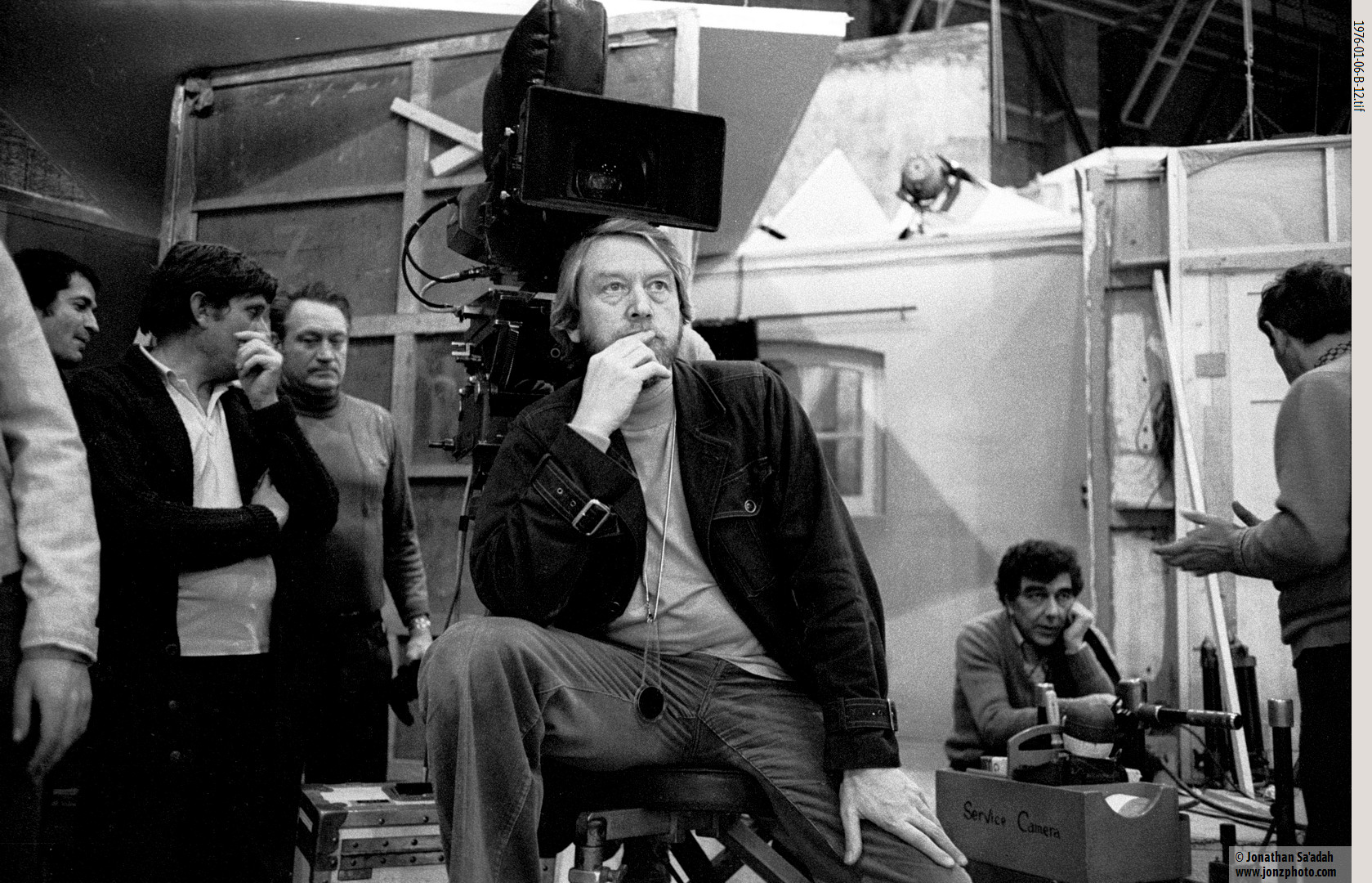
By 1976, when Gerry Fisher began work on M Klein, he had already accumulated twenty seven film credits as Director of Photography, with this project marking his sixth collaboration with director Joseph Losey. Their professional relationship had evolved into a well-oiled machine, characterized by mutual understanding and respect that transcended the need for excessive verbal communication.
Fisher approached cinematography as storytelling through visuals, preferring his work to enhance rather than overshadow the narrative. His unassuming personality and steady temperament, combined with meticulous precision and clear vision, made him particularly well-suited for the high-pressure environment of film-making. For M Klein, Fisher chose a visual style that balanced documentary-like authenticity with Losey’s signature visual richness, creating tension through sparsely lit scenes that subtly highlighted the film’s moral complexities.
Morning Meetings and Declined Spirits
Fisher’s workdays (when shooting on location) typically began with an early morning planning session in Losey’s trailer, where the director would with good-natured persistence (born of friendship) offer Fisher some Stoli with pomplemousse. While not abstaining from alcohol entirely, Fisher wisely maintained his professional composure on set—a prudent choice given the demands of his role.
Despite feeling free to disagree with Losey in private, Fisher maintained the line that “the director always had the final say” in public – the correct stance to take since Losey never reacted well when challenged in public. Their relationship, however, was founded on mutual respect and friendship, with Fisher feeling particular loyalty to Losey for giving him his first opportunity as Director of Photography in 1967 – a significant milestone in his career and the most difficult step for a cameraman to take.
The Silent Partnership of Filmmaking
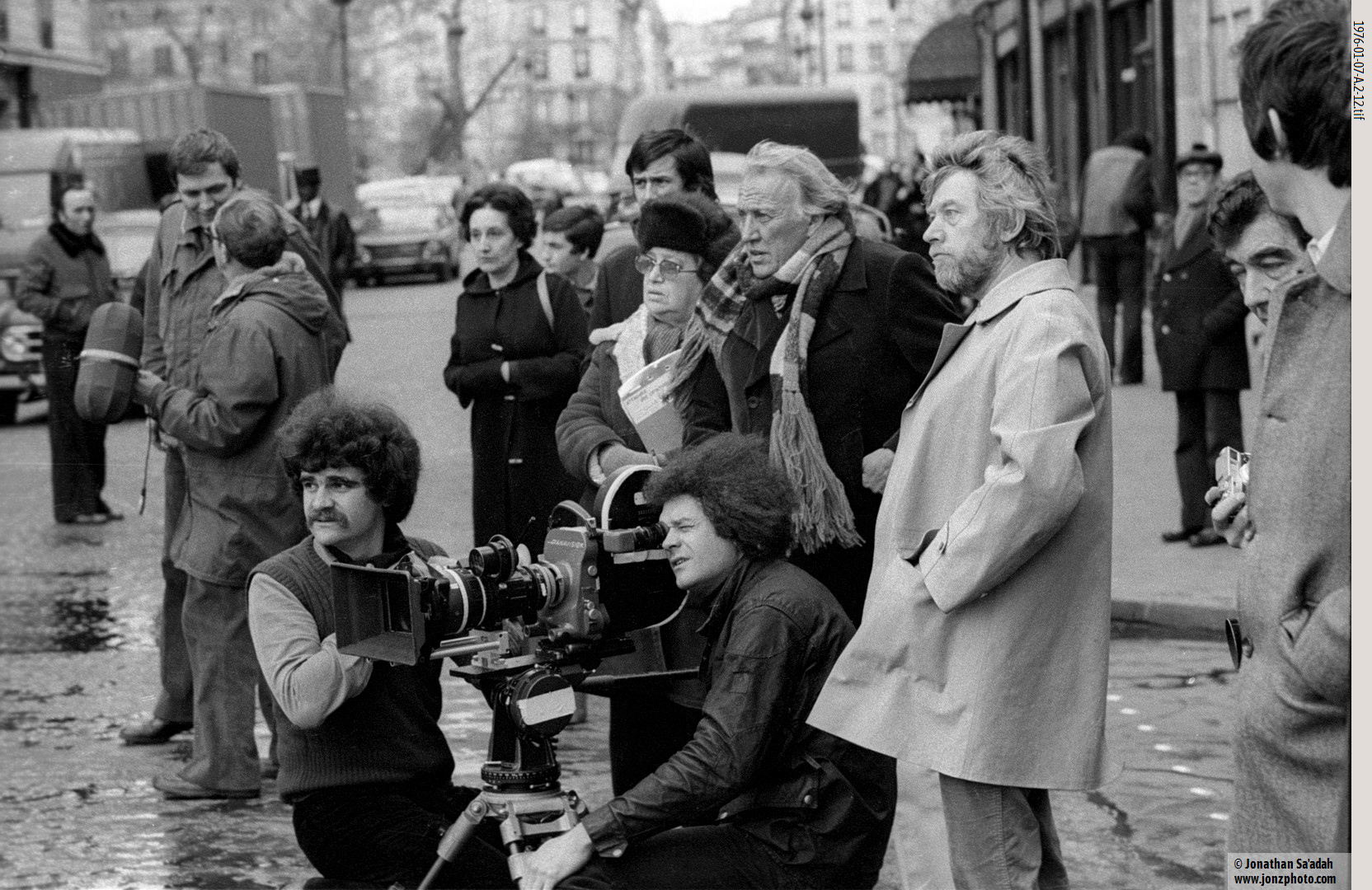
Perhaps the most remarkable aspect of the Losey-Fisher partnership was how little they needed to speak to each other. During setups, Fisher would quietly survey the set from various angles, giving concise instructions to electricians about lighting adjustments and discussing camera positioning with his crew. His efficiency stemmed from clarity of vision—knowing precisely what he wanted and how to achieve it without unnecessary elaboration.
Fisher’s innovative approach to actor movement involved creating “zones” rather than specific marks, allowing performers greater freedom and naturalism in their movements. This method facilitated more spontaneous performances while maintaining visual coherence. Losey, confident in Fisher’s abilities, could focus his attention on directing actors, knowing the visual elements were in capable hands.
From Darkroom to Director of Photography
Born into a working-class London family, Fisher showed an early passion for photography, purchasing a film camera and constructing a darkroom in his parents’ home as a young boy. During the early years of World War II, too young to enlist, he contributed to the war effort by helping manufacture large-format reconnaissance cameras for the Royal Air Force. Later, when old enough to serve, he joined the Royal Navy as an electrician repairing landing craft.
Fisher’s career followed the traditional studio system path in England, beginning with entry-level positions loading film magazines and working as a clapper boy before gradually advancing to camera operator and beyond. Each step of his professional journey reinforced the discipline and technical precision that would later distinguish his work as a cinematographer.
Bridging Cultural Divides
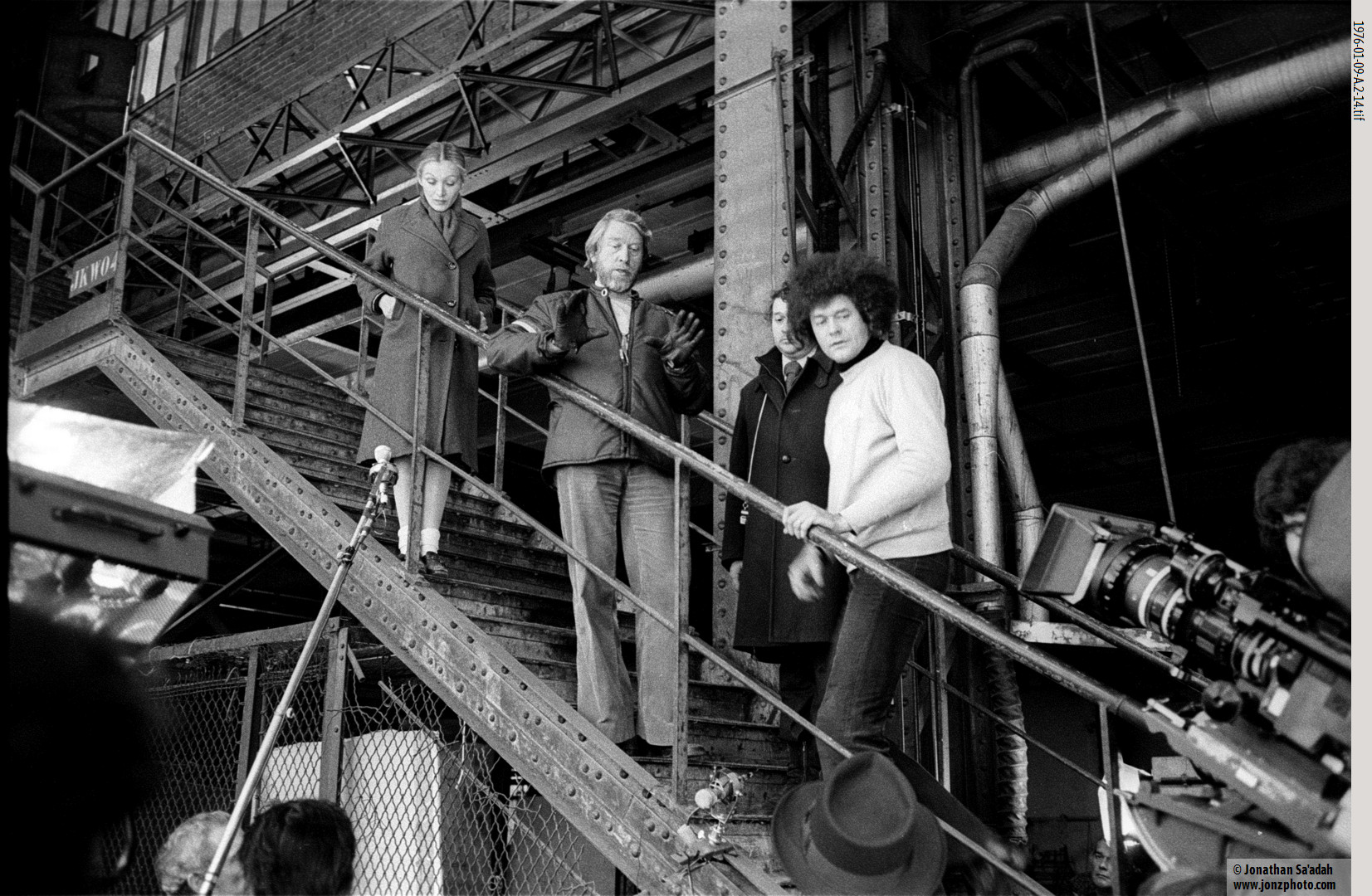
M Klein presented Fisher with the challenge of working in a French cultural and linguistic context while maintaining the sophisticated visual style associated with Losey’s films. His collaboration with bilingual cameraman Pierre-William Glenn proved invaluable, providing a crucial communication link with the predominantly French-speaking crew. Despite not speaking French himself, Fisher’s work in France eventually earned him the prestigious title of Chevalier de l’Ordre des Arts et des Lettres in 1997, recognizing his significant contributions to French cinema.
The Orchestrator of Light and Movement
As Director of Photography, Fisher coordinated three distinct groups: the camera crew handling complex equipment, electricians managing lighting, and grips responsible for camera support and movement. His lighting philosophy for M Klein favored strategic placement over abundance, creating textured illumination rather than flat, even lighting.
The pressures of film-making—described as “a bit like fighting a war, with less drastic results”—required quick, confident decision-making in view of avoiding significant financial costs. This was particularly challenging when shooting on location, where equipment had to be adapted to confined spaces. Through it all, Fisher maintained his resolute attitude: “we are not giving up”.
Innovation and Recognition
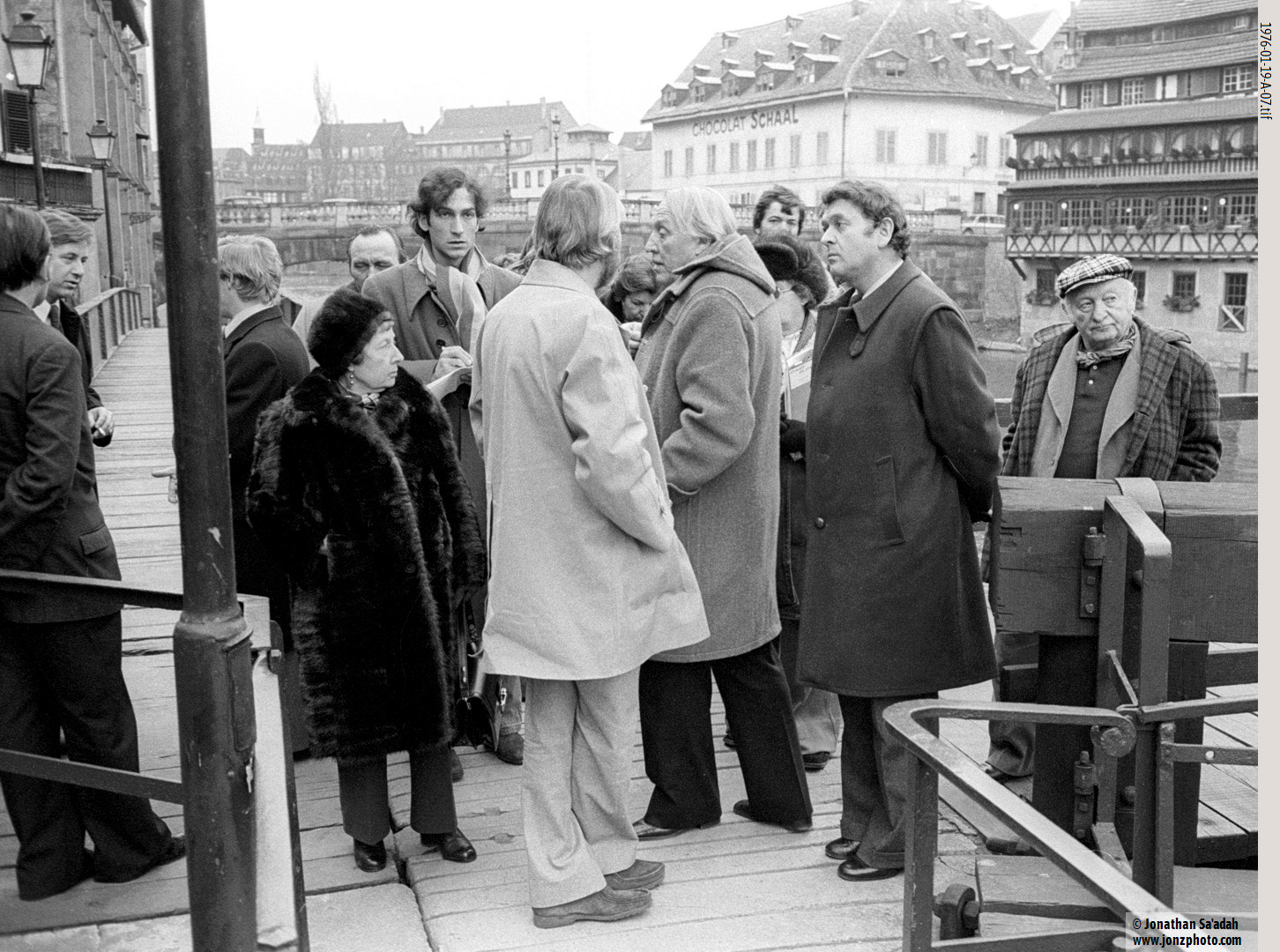
Throughout his career, Fisher demonstrated technical innovation and willingness to experiment with new approaches. For M Klein, he selected a special film stock better suited to capture the predominant greens and browns of the film’s color palette. His commitment to pushing technical boundaries while serving the emotional and psychological themes of the screenplay earned him both a César nomination for M Klein and his later appointment as Chevalier de l’Ordre des Arts et des Lettres. These honors placed him among the most respected cinematographers of his generation, recognized for both technical excellence and artistic achievement.
A List of Fisher’s Films as Cinematographer (adapted from Wikipedia):
| Year | Film | Director |
|---|---|---|
| 1967 | Accident | Joseph Losey |
| The Mikado | Stuart Burge | |
| 1968 | Sebastian | David Greene |
| Interlude | Kevin Billington | |
| Amsterdam Affair | Gerry O'Hara | |
| Secret Ceremony | Joseph Losey | |
| The Sea Gull | Sidney Lumet | |
| 1969 | Hamlet | Tony Richardson |
| 1970 | Ned Kelly | Tony Richardson |
| Macho Callahan | Bernard L. Kowalski | |
| All the Right Noises | Gerry O'Hara | |
| 1971 | The Go-Between | Joseph Losey |
| See No Evil | Richard Fleischer | |
| Man in the Wilderness | Richard C. Sarafian | |
| Malpertuis | Harry Kumel | |
| 1972 | The Amazing Mr. Blunden | Lionel Jeffries |
| 1973 | The Offence | Sidney Lumet |
| Bequest to the Nation | James Cellan Jones | |
| A Doll's House | Joseph Losey | |
| 1974 | Butley | Harold Pinter |
| S*p*Y*S | Irvin Kershner | |
| Juggernaut | Richard Lester | |
| 1975 | Brannigan | Douglas Hickox |
| Dogpound Shuffle | Jeffrey Bloom | |
| The Romantic Englishwoman | Joseph Losey | |
| The Adventure of Sherlock Holmes' Smarter Brother | Gene Wilder | |
| 1976 | Aces High | Jack Gold |
| Monsieur Klein | Joseph Losey | |
| 1977 | The Island of Dr. Moreau | Don Taylor |
| The Last Remake of Beau Geste | Marty Feldman | |
| 1978 | Roads to the South | Joseph Losey |
| Fedora | Billy Wilder | |
| 1979 | Wise Blood | John Huston |
| Don Giovanni | Joseph Losey | |
| 1980 | The Ninth Configuration | William Peter Blatty |
| 1981 | Rends-moi la del | Gerard Pires |
| Escape to Victory | John Huston | |
| Wolfen | Michael Wadleigh | |
| 1982 | Un matin rouge | Jean-Jacques Aublanc |
| Lovesick | Marshall Brickman | |
| 1983 | Yellowbeard | Mel Damski |
| Les mots pour le dire | Jose Pinheiro | |
| 1985 | The Holcroft Covenant | John Frankenheimer |
| 1986 | Highlander | Russell Mulcahy |
| 1987 | Man on Fire | Elie Chouraqui |
| Orn | Fred de Fooko | |
| 1988 | Running on Empty | Sidney Lumet |
| 1989 | Dead Bang | John Frankenheimer |
| Black Rainbow | Mike Hodges | |
| 1990 | The Fourth War | John Frankenheimer |
| The Exorcist III | William Peter Blatty | |
| 1991 | Company Business | Nicholas Meyer |
| 1992 | Diggstown | Michael Ritchie |
| 1994 | Cops and Robbersons | Michael Ritchie |
| 1996 | When Saturday Comes | Maria Giese |
| 1997 | K | Alexandre Arcady |
| 1999 | Furia | Alexandre Aja |
It strikes me every time you post: every one of these amazing pictures tells a story on its own. I can hear the street sounds, the mix of voices arguing in English and French. I can picture you on the sidelines—curious, confused (the French!), amused—not wanting to miss a single thing.
As for your introductory note: I’m not sure there IS a single truth when it comes to filmmaking—or the retelling of it. But your perspective as someone who was there is invaluable. I’m grateful you’re preserving and sharing the memory of all these people’s work—AND your own.
Hi Martine – I wasn’t meaning to imply that there aren’t multiple points of view on events. There are, even with an event like Strasbourg. What I’m seeing though is that in some cases, when a film gains a certain amount of respect, people want to claim credit for work they didn’t do because it puts a feather in their cap and there are only a few people still living to contradict them. That seems to me a case of untruth. I appreciate though what you say about multiple truths! Thanks a lot for the comment.
This really feels like a time machine. Enjoying the repeated visits to this set! I didn’t realize Fisher worked on Hamlet ’69–and also that he worked with Sidney Lumet, one of my favourite directors. That is very cool. When two people like Fisher and Losey work together over a number of years so that they don’t require a lot of yapping about things, and they can kind of read each others’ minds, that’s when the best work happens. It’s also cool that Fisher could disagree in private, but chose not to do it in public. That shows wisdom and sensitivity. Every shoot has its moments of drama, and it looks like you really captured one of them! Would like to hear more about that moment. Glad the French decided to honour him.
Hi Edward – About that moment (photo of Losey livid). It’s the front end of the problem that I described in the “locations” post where the cobblestones in the plaza and the slats in the elevated walkway were all making it *really* difficult to do tracking shots. Someone just had not considered that as a problem when approving the location. Plus Losey had just had a huge asthma attack the night before and everyone had freaked out, which was not the way to help him. So all in all, not a great start at Strasbourg. Hope you’re able to stay cool in this ridiculously hot weather!