
The Enduring Stigma: How Pizza’s Working-Class Roots and Ethnic Identity Shaped Its Journey from Naples to North America
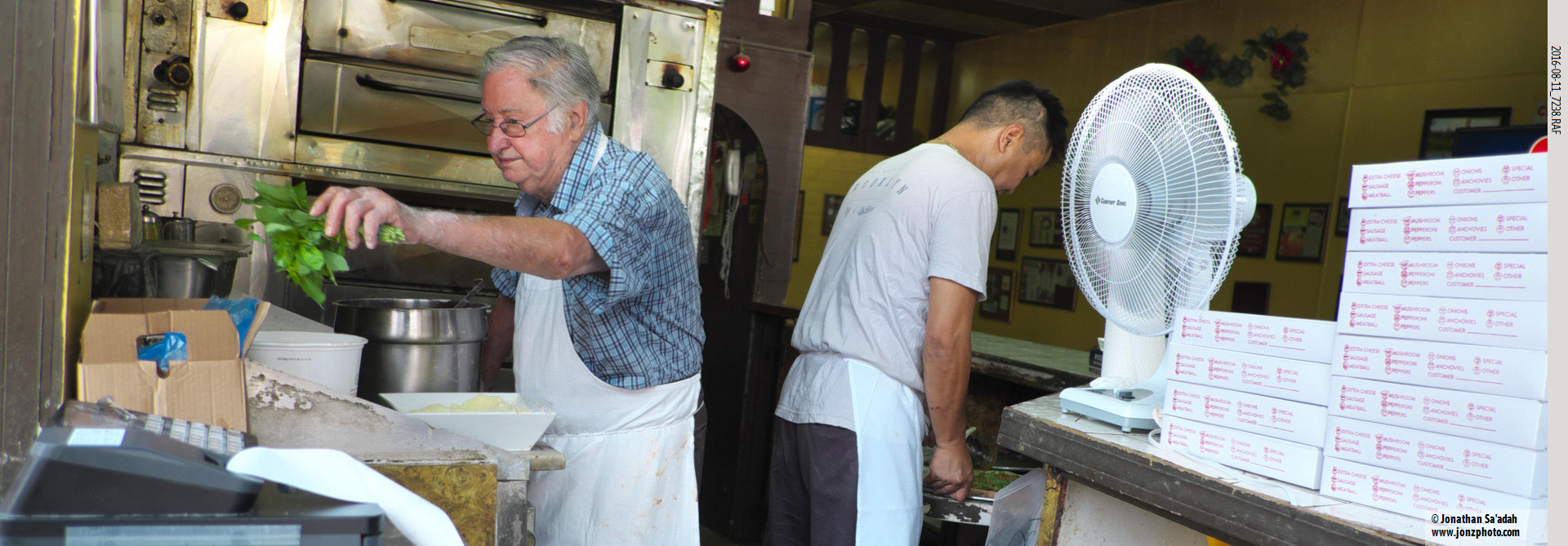
Pizza’s story in North America is far more complex than the simple tale of an Italian dish finding universal love. While today for many of us pizza ranks among our most beloved foods its journey from the narrow streets of Naples to North American ubiquity carries with it a persistent narrative about class, ethnicity, and the ongoing struggle for acceptance that defines the immigrant experience.
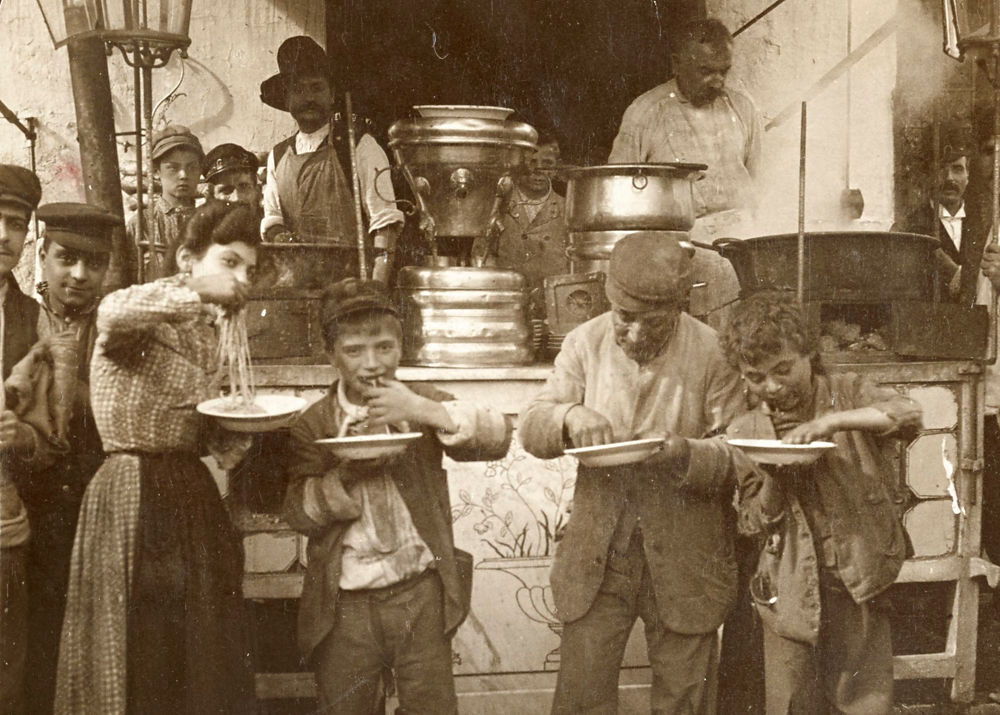
Pizza began as food for society’s most marginalized. In 18th century Naples, pizza served as sustenance for the lazzaroni – the disheveled working poor who flocked to the thriving seaport city seeking labor. These street vendors balanced hot tin stoves on their heads, selling simple flatbreads topped with whatever was affordable: oil, garlic, tomatoes, and occasionally fish or cheese for those with extra coins. The food embodied desperation and survival – Alexandre Dumas noted in 1835 that Naples’ poor “existed exclusively on pizza in winter and watermelon in summer”. Even a credit system emerged called “Pizza al Otto,” allowing the destitute to pay for stale pizza eight days later, grimly nicknamed “the last supper” if they died before settling their debt.
The Double Burden of Ethnicity and Class
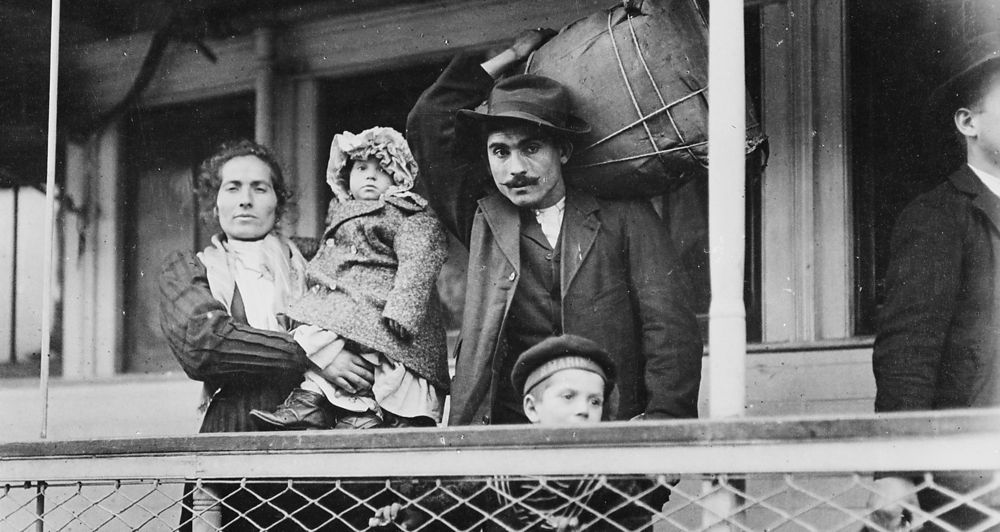
When Italian immigrants began arriving in North America during the late 19th and early 20th centuries, they carried with them not just their culinary traditions, but also their association with poverty and marginalization. Between 1880 and 1920, over 4 million Italians immigrated to the United States and about 70,000 to Canada (about 70,000)1, most fleeing the grinding poverty of Southern Italy and Sicily. They encountered hostile societies that viewed them as racially inferior, culturally unassimilable, and dangerously foreign.
Italians faced systematic discrimination that went far beyond mere prejudice. In the US they were subjected to lynchings – approximately 50 documented cases between 1877 and 1920, including the infamous New Orleans massacre of 1891 where eleven Italian men were killed by a mob. The New York Times editorial response to that lynching reveals the depth of anti-Italian sentiment: “These sneaking and cowardly Sicilians, the descendants of bandits and assassins…are to us a pest without mitigation. Our own rattlesnakes are as good citizens as they”.2
Within this climate of hostility, pizza remained what it had always been – food for the poor and marginalized. Italian immigrants, crowded into urban slums and “Little Italy” neighborhoods, continued making pizza as they had in Naples, both as sustenance and as a connection to their homeland. But pizza’s association with these discriminated communities meant it carried a double stigma: it was both the food of the poor and the food of an undesirable ethnic group.
Over time things changed. In the United States those changes were brought on largely by the Second World War, when Italian Americans demonstrated their patriotism through military service and “mainstream” American servicemen encountered pizza in its homeland, returning with appetites for the dish.
In this changing culinary landscape traditional family pizzerias began to form the foundation of the nascent industry. These small, neighborhood establishments – often identified by their red-and-white checkered tablecloths, a symbol that emerged from Italian American restaurant culture rather than authentic Italian tradition – served as both businesses and community gathering places. Operated by immigrant families who worked grueling hours, these pizzerias provided a pathway to economic stability while preserving cultural identity.
The Family Restaurant as Immigrant Vehicle
The small, family-owned pizzeria became a quintessential vehicle for immigrant advancement, offering advantages that few other businesses could provide. Pizza required minimal startup capital, used simple ingredients, and could be learned through family apprenticeship rather than formal training. This business model allowed entire families to work together, with children learning the trade while contributing labor.
These establishments served multiple functions beyond mere commerce. They provided employment for newly arrived relatives, created spaces where Italian was spoken and cultural practices maintained, and generated the capital necessary for families to purchase homes, educate children, and establish themselves in society. The pizza business became a pathway to the success precisely because it built upon skills and traditions immigrants already possessed.
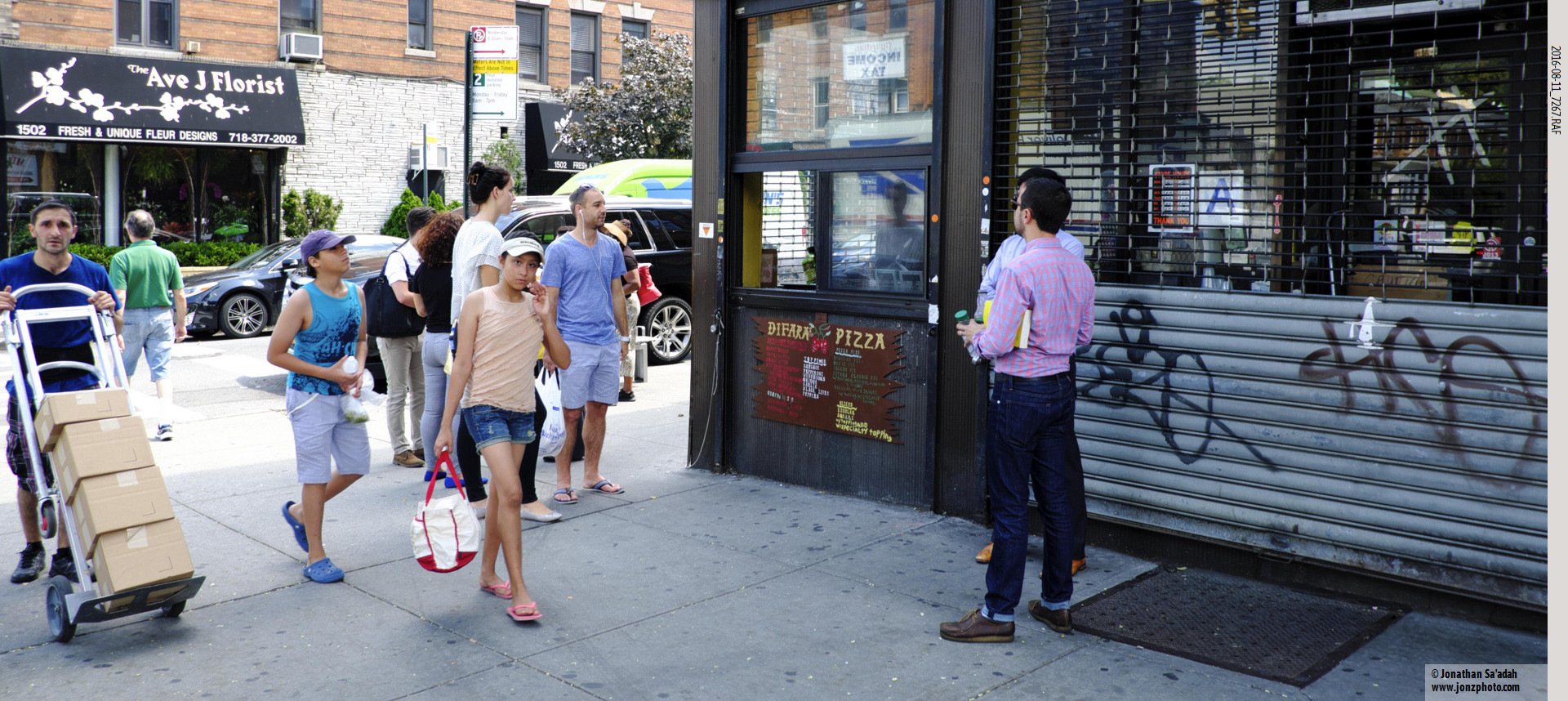
Di Fara Pizza: The Apotheosis of Immigrant Pizza Culture
Di Fara Pizza in Brooklyn represents the perfect embodiment of pizza’s immigrant success story while maintaining its artisanal, working-class character. Domenico DeMarco arrived from the Province of Caserta in 1959 with typical immigrant circumstances – he worked on a Long Island farm before opening his pizzeria in 1965 with partner Franco Farina (whose surname provided the “Fara” in “Di Fara”).
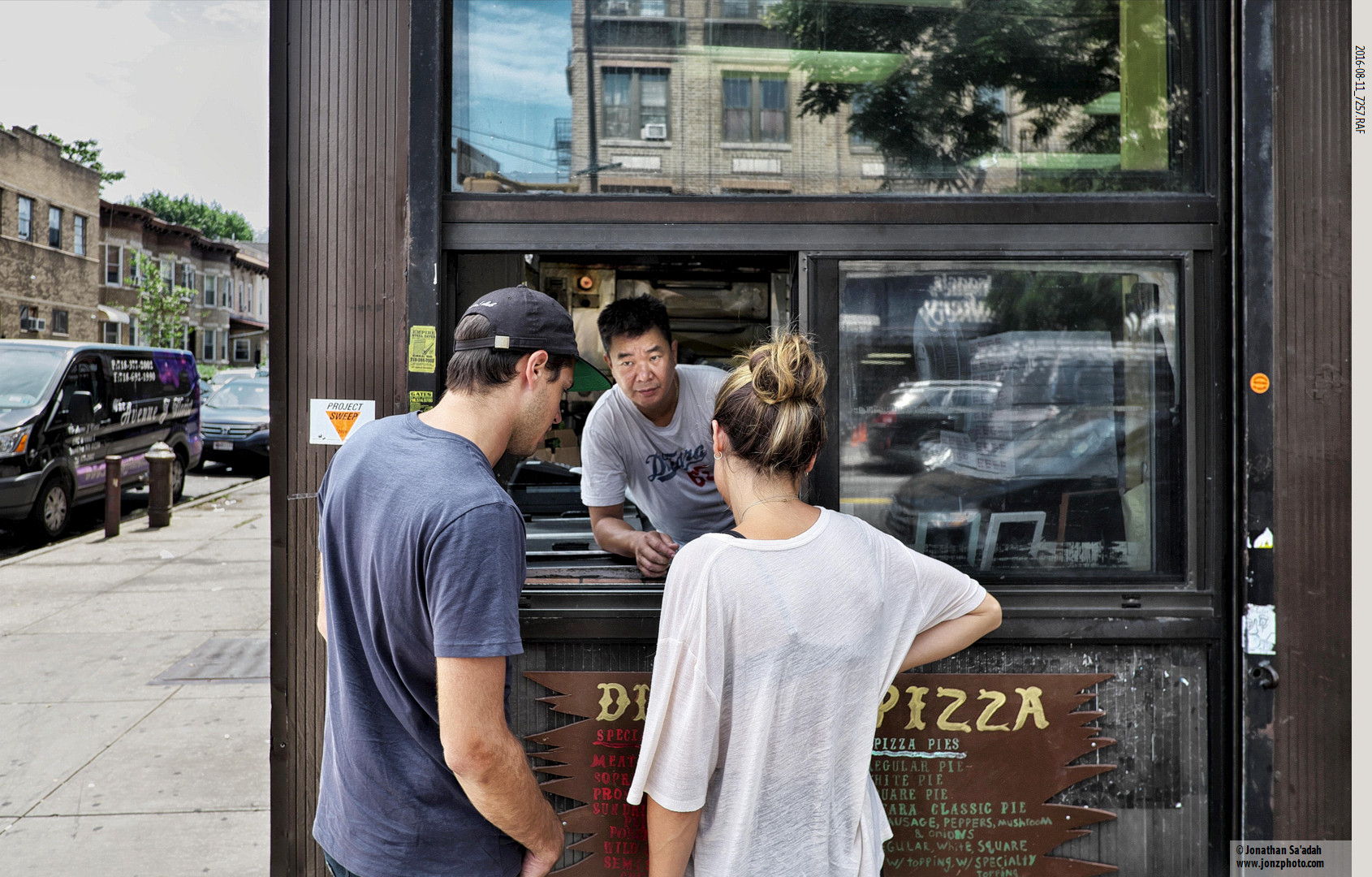
DeMarco’s story exemplifies the immigrant work ethic that built America’s pizza culture. For over 50 years, he worked seven days a week, making each pizza by hand with obsessive attention to detail. He sourced the finest Italian ingredients – San Marzano tomatoes, imported olive oil, fresh basil – creating pies that food critics consistently rated among New York’s best. His dedication was legendary: he rarely took vacations and personally made virtually every pizza sold at Di Fara until well into his seventies.
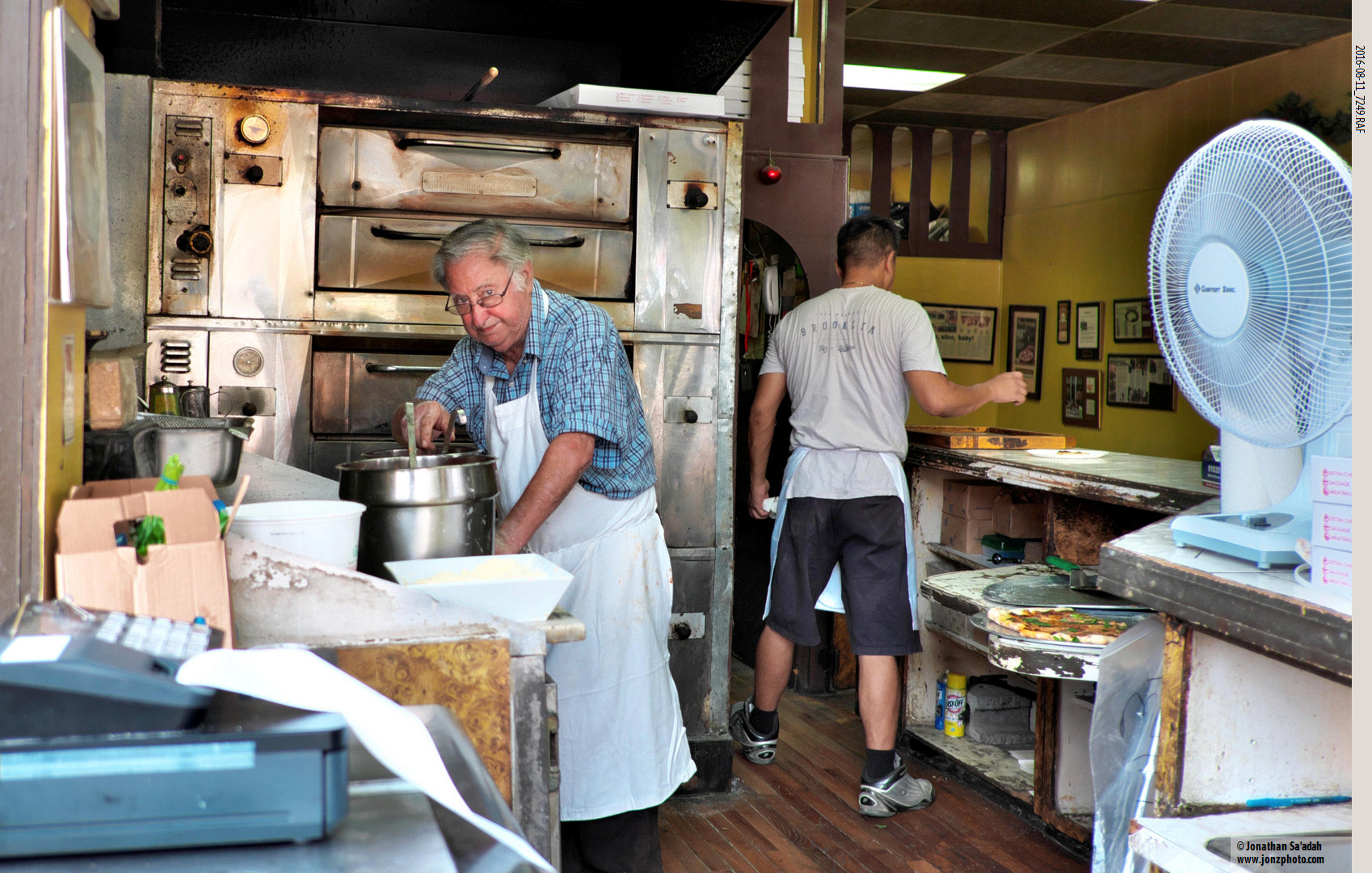
What makes Di Fara particularly significant is how it bridges pizza’s working-class origins with its elevation to culinary art. DeMarco never abandoned the fundamental character of pizza as accessible, honest food, yet his meticulous craftsmanship attracted celebrities like Leonardo DiCaprio and Anthony Bourdain. The restaurant’s success came not from gentrification or marketing but from unwavering commitment to quality and authenticity.
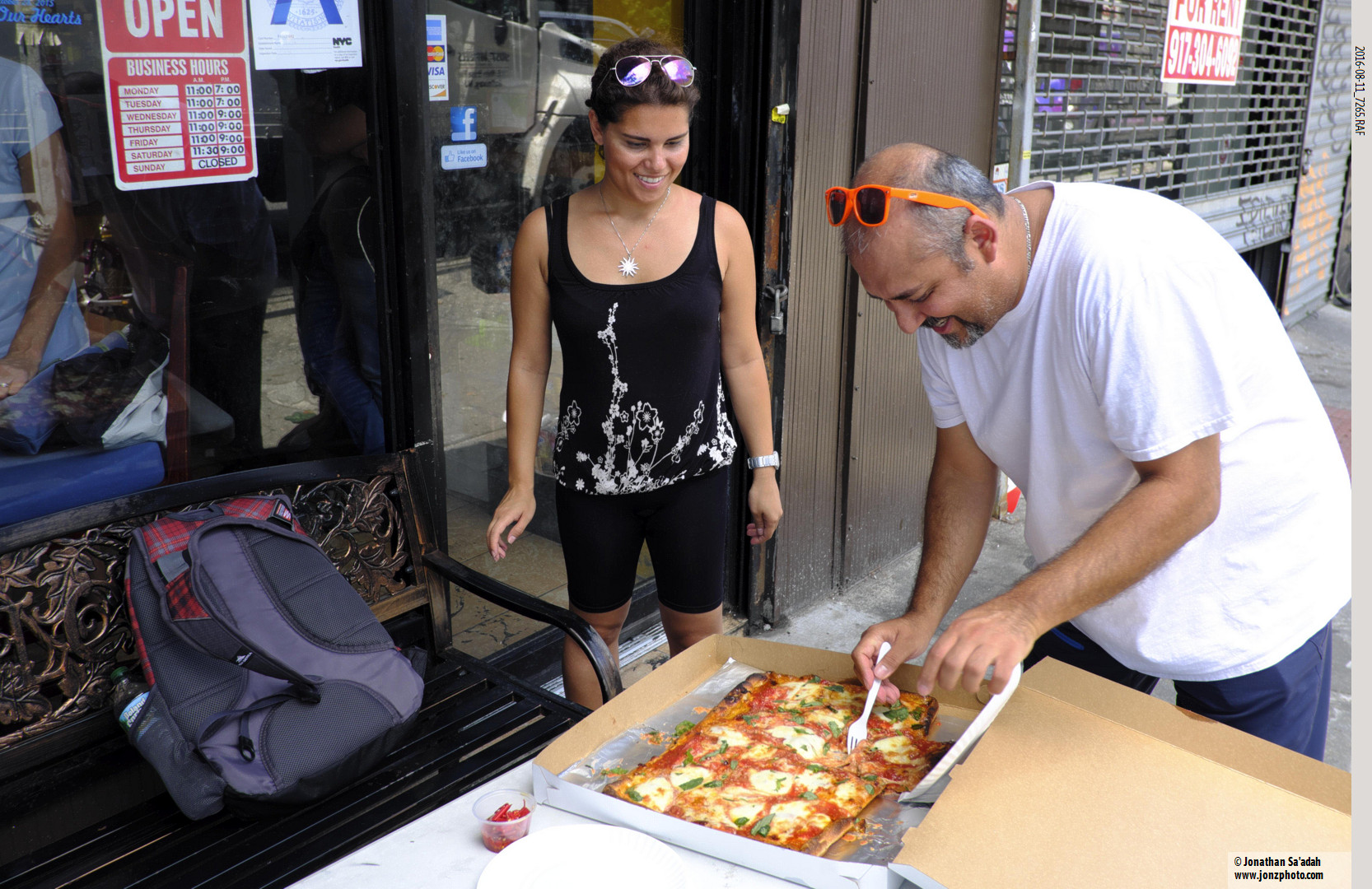
The Persistent Labels and Continuing Evolution
Despite pizza’s mainstream acceptance, traces of its original stigmas persist in subtle ways. Premium artisanal pizza often emphasizes its “authentic” Italian character, suggesting that standard American pizza remains somehow lesser or inauthentic.
Yet pizza’s success story demonstrates how immigrant foods can break out of their origins while maintaining cultural significance. Today’s pizza landscape includes innovations from subsequent immigrant waves – Indian pizza joints, Lebanese-owned establishments, Mexican-influenced toppings – showing how the model pioneered by Italian immigrants continues serving new generations of fledgling ethnic entrepreneurs.
It’s a long way from Naples to Brooklyn, however, and pizza’s journey reflects the broader immigrant experience – the struggle against prejudice, the gradual building of acceptance, and the transformation of survival strategies into success stories. While pizza may have somewhat shed its reputation as poor people’s food, its institutional memory remains embedded in the thousands of family pizzerias that dot the North American landscape, many representing individual family stories, served up one slice at a time.
1: The Canadian government did not actively encourage Italian immigration during this period, as they were considered “ill-suited to the pioneering lifestyle” and were not the preferred northern European farmers sought to settle the prairies. Instead, most Italian immigrants found work as seasonal laborers on railways and in mining and construction industries.
2: March 15, 1891 New York Times. I can’t link directly to the NYT but here’s a related article.
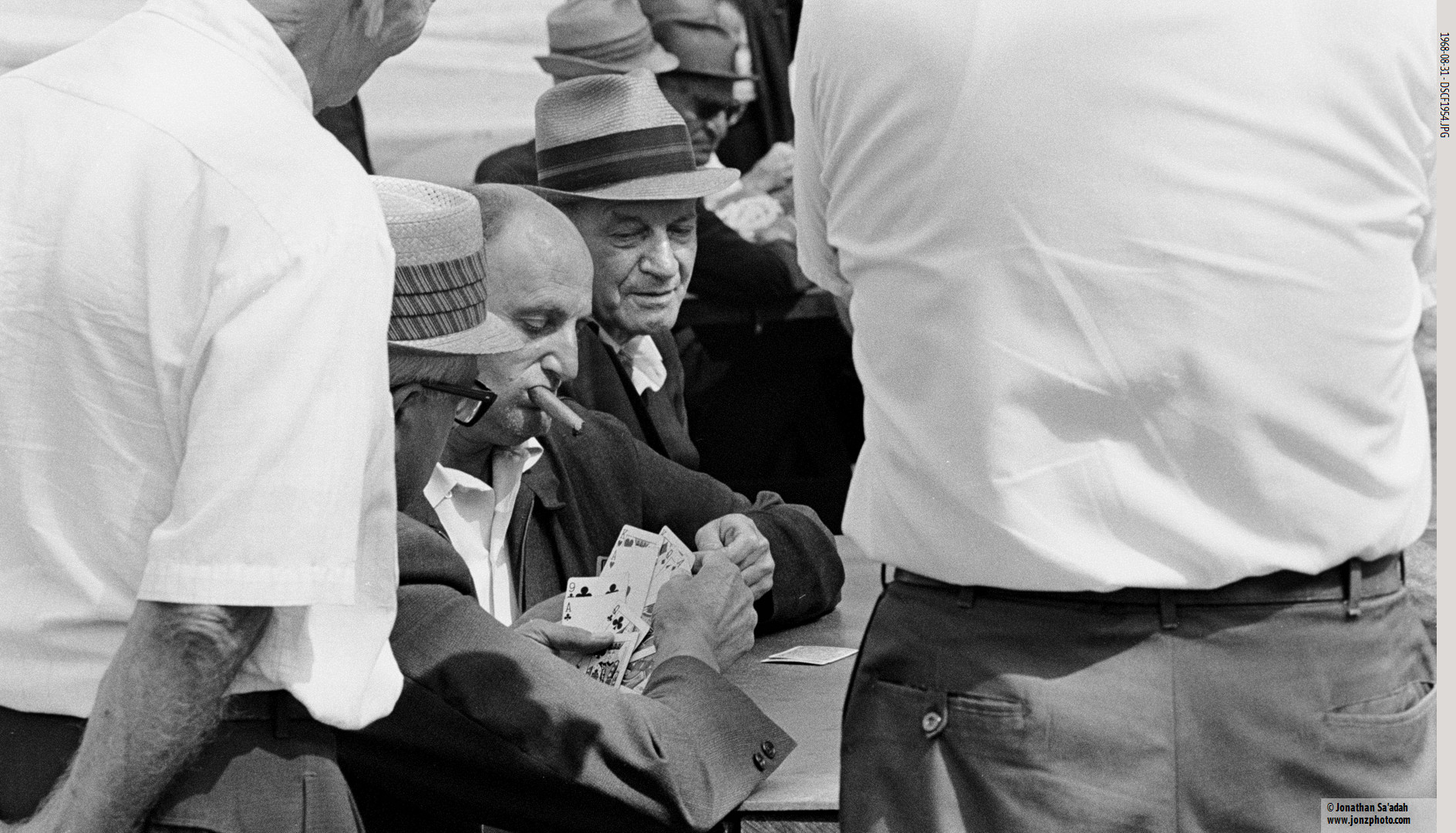
What a great post! Even though I’ve been there with you at innumerable pizza places, including that day at Di Fara’s, I’ve never seen that photograph of the poker game or thought as hard as you obviously have about what Italian immigrants went through. That NYT response to the lynching of Italians is despicable, but I fear that society just trades one immigrant group for another as the latest scapegoat, while appropriating the “artisanal” aspect of its best food for its own, and making it expensive and exclusive. I hope you’ll write more about some of the great but unassuming family pizza restaurants we’ve visited.
I love this pizza thread and hope you continue it!
I’ve always found regional pizza histories really interested, especially the one that we both grew up with – Greek style pizza . I though this was “the best” my whole childhood. Now I know better. I still find the history of how it became ubiquitous in northern new england pretty interesting:
https://www.nhpr.org/nh-news/2018-02-16/you-asked-we-answered-why-are-there-so-many-houses-of-pizza-in-new-hampshire