
This is the fourth and final post in a series introducing my new photo book “Return to Damascus: A Personal Journey.” The book’s text is mainly about Christian immigration through my family’s experiences, examining how that history resonates from two perspectives: mine as a descendant and my father’s as an immigrant. But to me the photographs show more than that, revealing an other story concerning issues in urban society. The book is available at this link and will ship in the first week of November.
Exploring Syria through Photography
There’s one photograph in this collection that stops people in their tracks. It captures the main hallway of the Al-Hamidiya Souq, Damascus’s legendary covered market, where late afternoon light filters through corrugated metal roofing installed decades ago to protect the ancient stone walkways below. The light creates cathedral-like beams that illuminate an empty souk, stalls closed and people gone for Friday prayers.
This photograph tells a story Western media has never bothered to share. It shows a place deeply embedded in community life – a place that is as normal to Damascenes as it is foreign to us as we rush through florescent lit grocery aisles. The textures leap from the frame weathered by decades of Damascus use, Arabic calligraphy painted directly onto shop front signs by local artisans, stone curbs and sidewalks worn smooth by millions of footsteps.
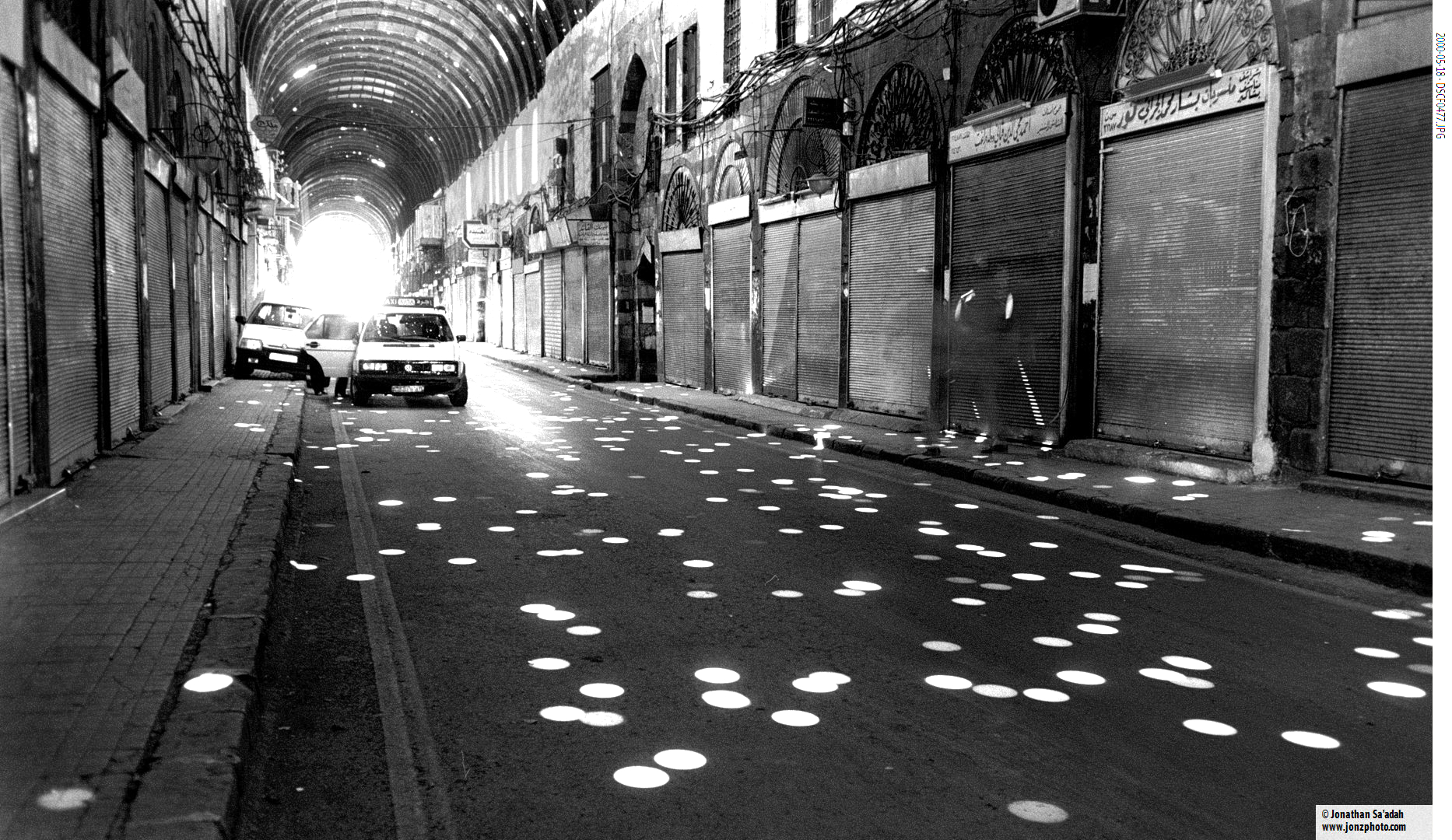
This is Syria in 2000 – not the Syria of headlines, but the Syria of heartbeats. We are seeing Syria in the last moments of an era and to me it holds lessons that most of us in the West are only beginning to think about. These 88 photographs capture a view that most Western media has never invited its audience to witness: a complex, ancient civilization that had figured out some of what we’re still searching for.
What Damascus Looked Like Under Unbiased Observation
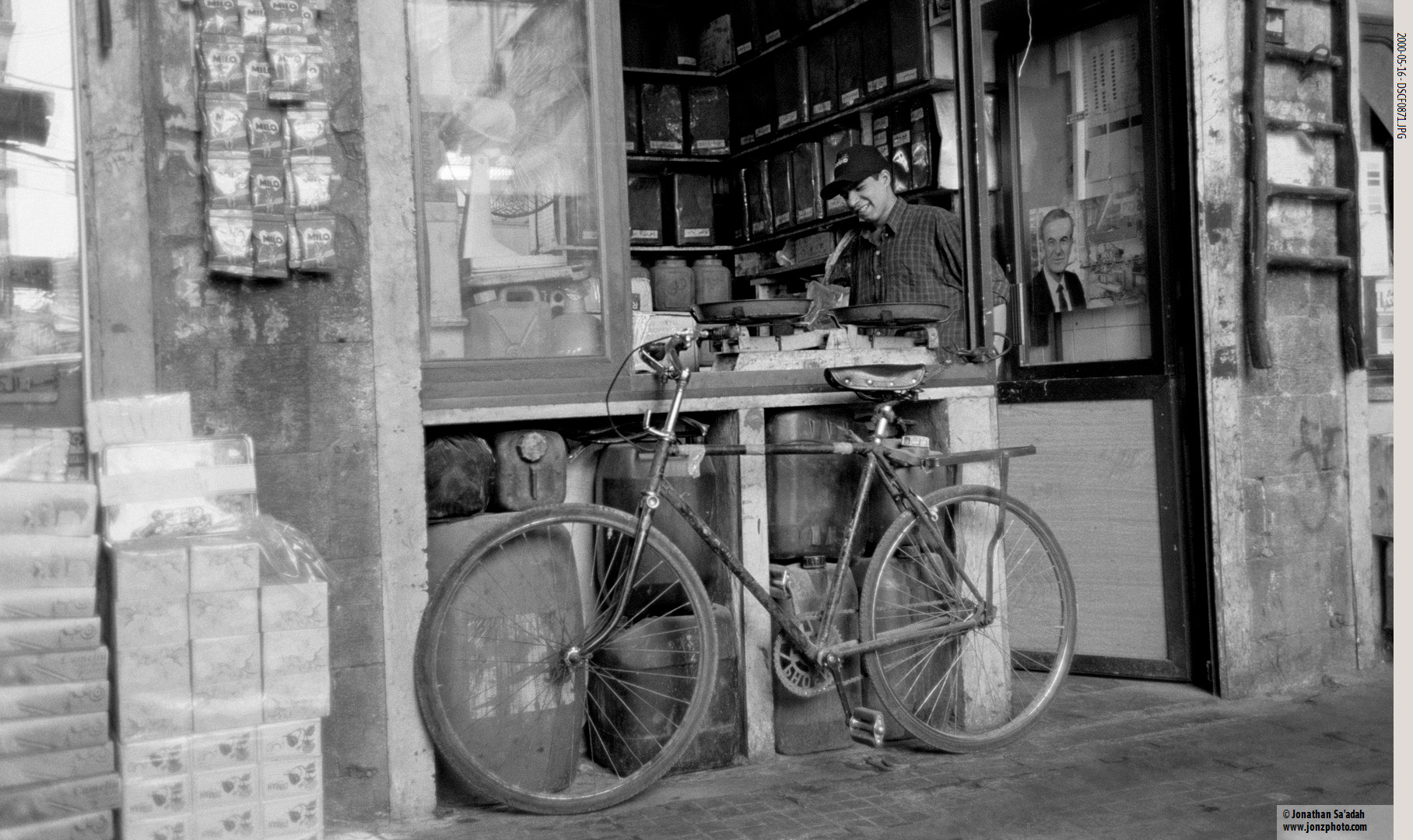
Step into the photographs in this collection and you’ll find yourself questioning what you thought you knew about Syria. Look past the obvious lack of material wealth. Here are bustling markets where vendors remember their customers’ names and children’s ages. Local businesses passed down through generations, their hand-painted signs faded but proud. Young people playing soccer in narrow streets between buildings that have sheltered families for centuries. Ethnic and religious diversity woven into daily life.
The architectural layers tell Damascus’s story in stone and mortar: Roman foundations supporting Ottoman courtyards where contemporary Damascenes conduct their daily business, drink tea, and solve neighborhood problems. These aren’t museum pieces and often it’s messy and decrepit – but yet they’re living, breathing spaces where community life unfolds with a sophistication that puts many Western urban planning efforts to shame. Street photography in Damascus reveals something we’ve largely lost in North America: spontaneous community interaction as the default mode of urban existence.
Look closely at these images and you’ll see the sophisticated values of a four millennium city in action. Shopkeepers who close during prayer times not out of religious obligation, but because the community rhythm expects it. Neighbors who share meals across religious and economic lines. Children who play freely in streets because everyone knows everyone, and community safety emerges naturally from social connection rather than surveillance systems.
While we’ve known the stories of a dictator-ruled nation, which were true, these images show a people who never stopped building, creating, and trying to find a better future, even under difficult conditions. The Syria captured in these photographs challenges us in what we think about the Middle East, revealing a society that preserved what we’ve spent decades trying to rebuild: authentic community life.
Community Architecture: What We in the West Lost That Damascus Kept
The most striking contrast in these photographs isn’t between wealth and poverty – it’s between connection and isolation. Damascus in 2000 maintained urban design principles that Western cities abandoned in pursuit of efficiency and individual privacy. Together the images tell a story of community architecture: spaces designed for human relationship.
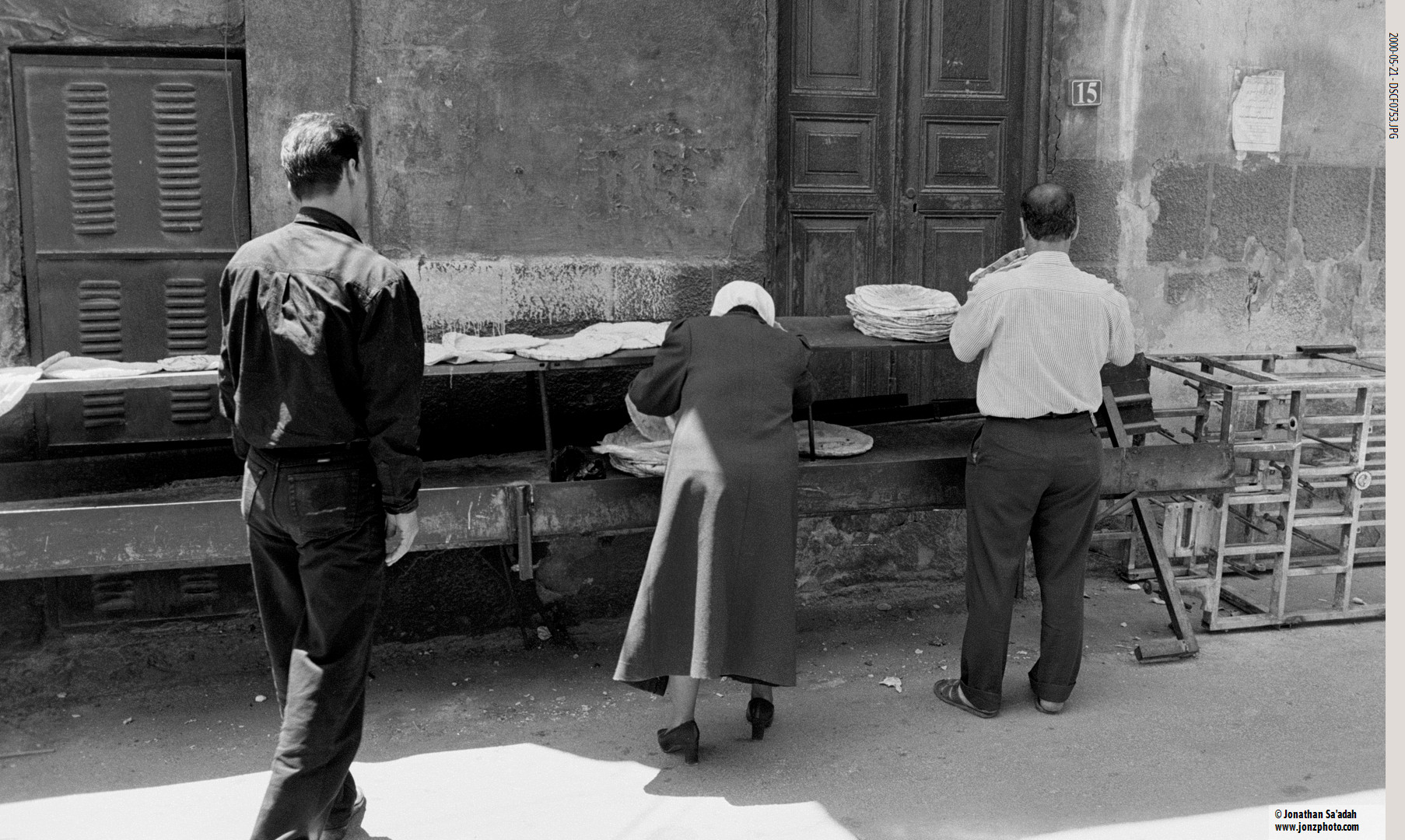
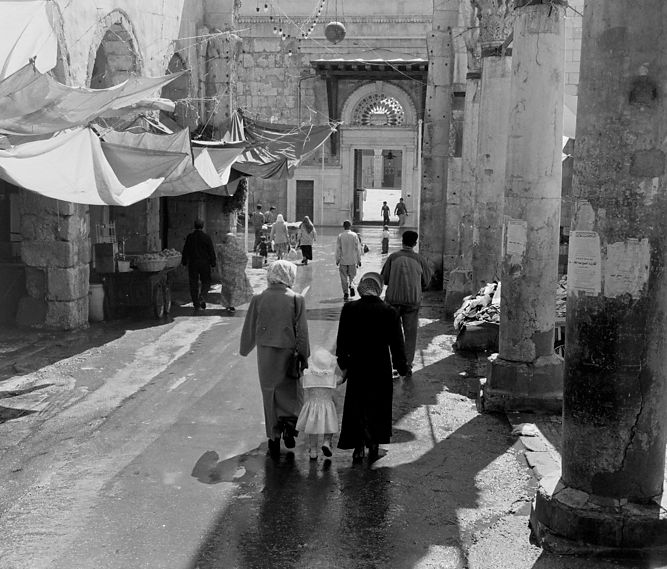
Consider the Damascus public spaces, people gather for business and social reasons. Vendors, even bakeries, have little or no interior retail space, instead they face out towards the public space. The difference isn’t just aesthetic; it’s philosophical. Damascus is built to encourage social interaction; our spaces are built for independence.
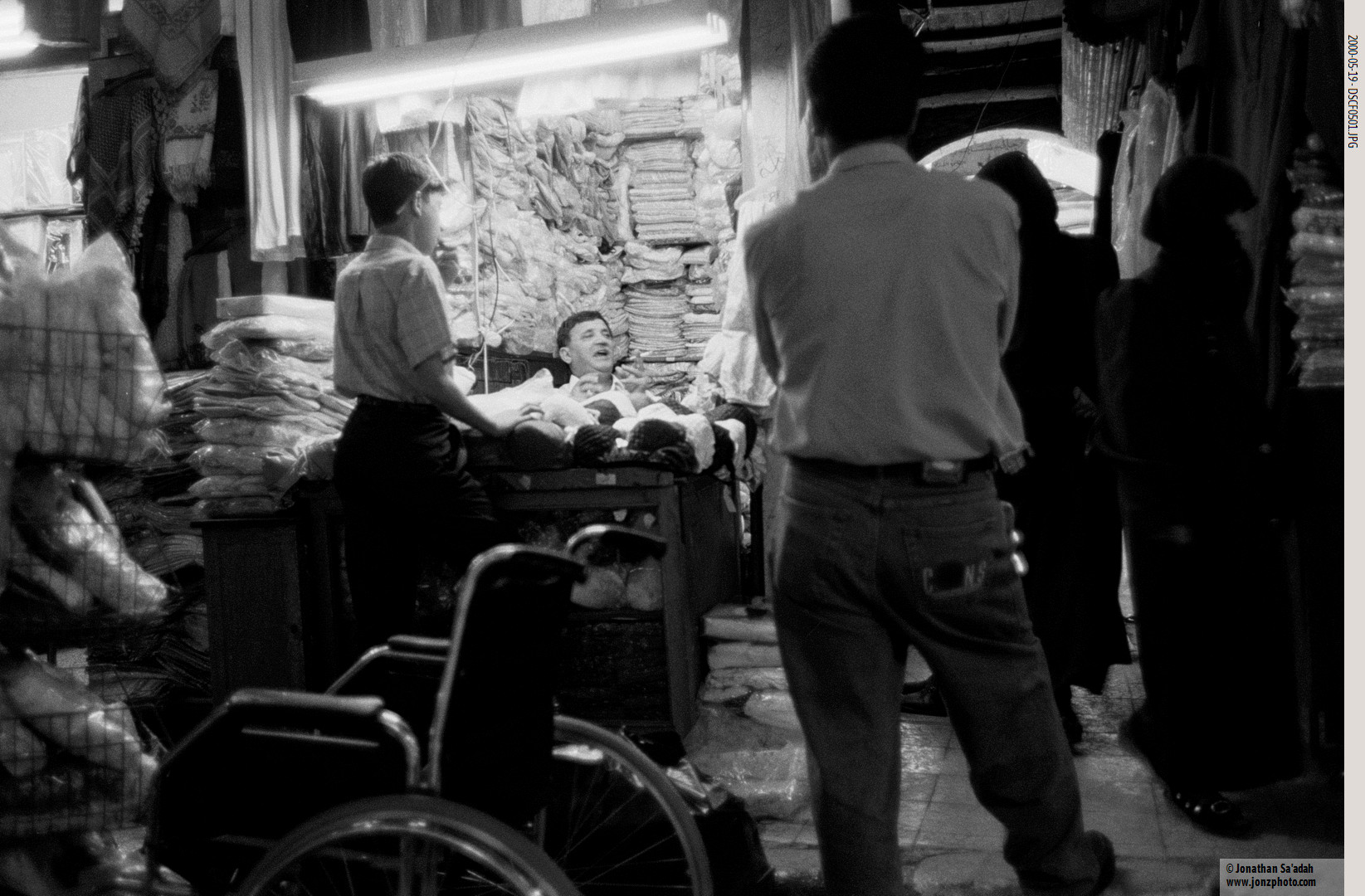
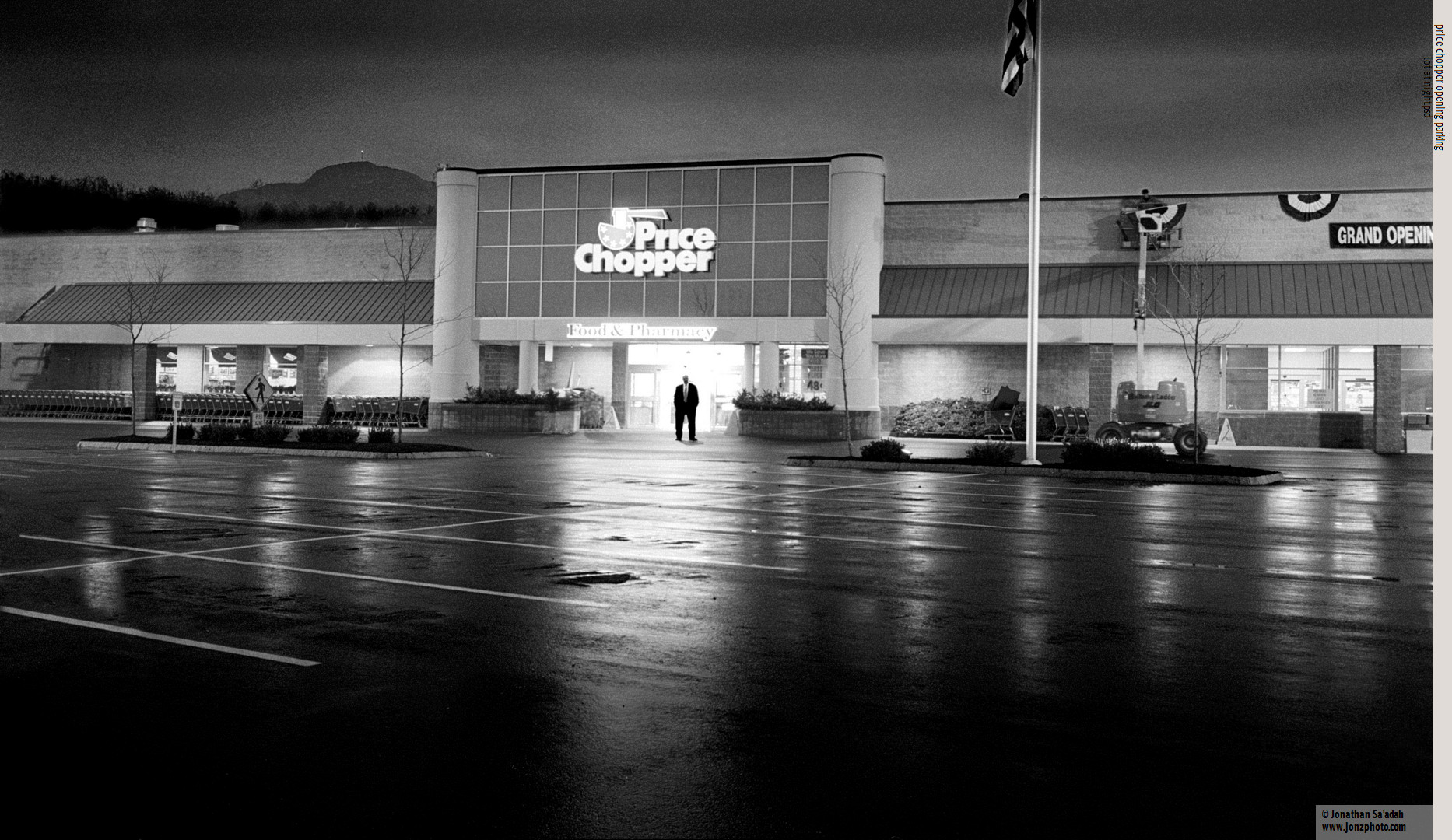
Street life in these photographs reveals vendor relationships that span decades. The baker knows not just what each family prefers, but whose daughter is getting married, whose son needs work, whose grandmother prefers a certain cookie. These aren’t transactions – they’re social connections that happen to include commerce. Contrast this with our anonymous grocery chains where self-checkout machines are replacing even minimal human interaction.
The visual textures in these images tell stories of sustained craftsmanship: stones polished by generations of feet creating organic pathways through neighborhoods, hand-painted shop signs in Arabic calligraphy that announce not just businesses but family legacies, faces that show curiosity about strangers rather than the urban wariness we’ve normalized. In Damascus markets, haggling isn’t about getting the best price – it’s relationship-building, a dance of mutual respect that creates ongoing social bonds.
Look at the light filtering through ancient souq ceilings, creating natural gathering spaces where people linger, children play, and business happens at human speed. These aren’t accident architectural features – they’re designed for community life. The intricate geometric patterns in everyday objects, from mosque balconies to door hardware, represent a design philosophy that values beauty in daily life over mass-produced efficiency. Most of the people are poor and struggling, but there is still awareness of community and looking beyond simple economic survival.
The University of Damascus Streets
The photographs in this collection underline community resilience in the face of adversity. These images capture neighborhoods that maintained social cohesion through economic challenges, political pressures, and cultural changes – lessons particularly relevant as Western communities struggle with atomization, mental health crises, and civic disengagement.
Community Resilience While Western communities fracture under much lesser stresses – think of how rarely we know our neighbors’ names – Damascus neighborhoods in 2000 demonstrated social structures that automatically activated during difficulties. Extended families, religious communities, and neighborhood networks created overlapping safety nets that no government program could replicate.
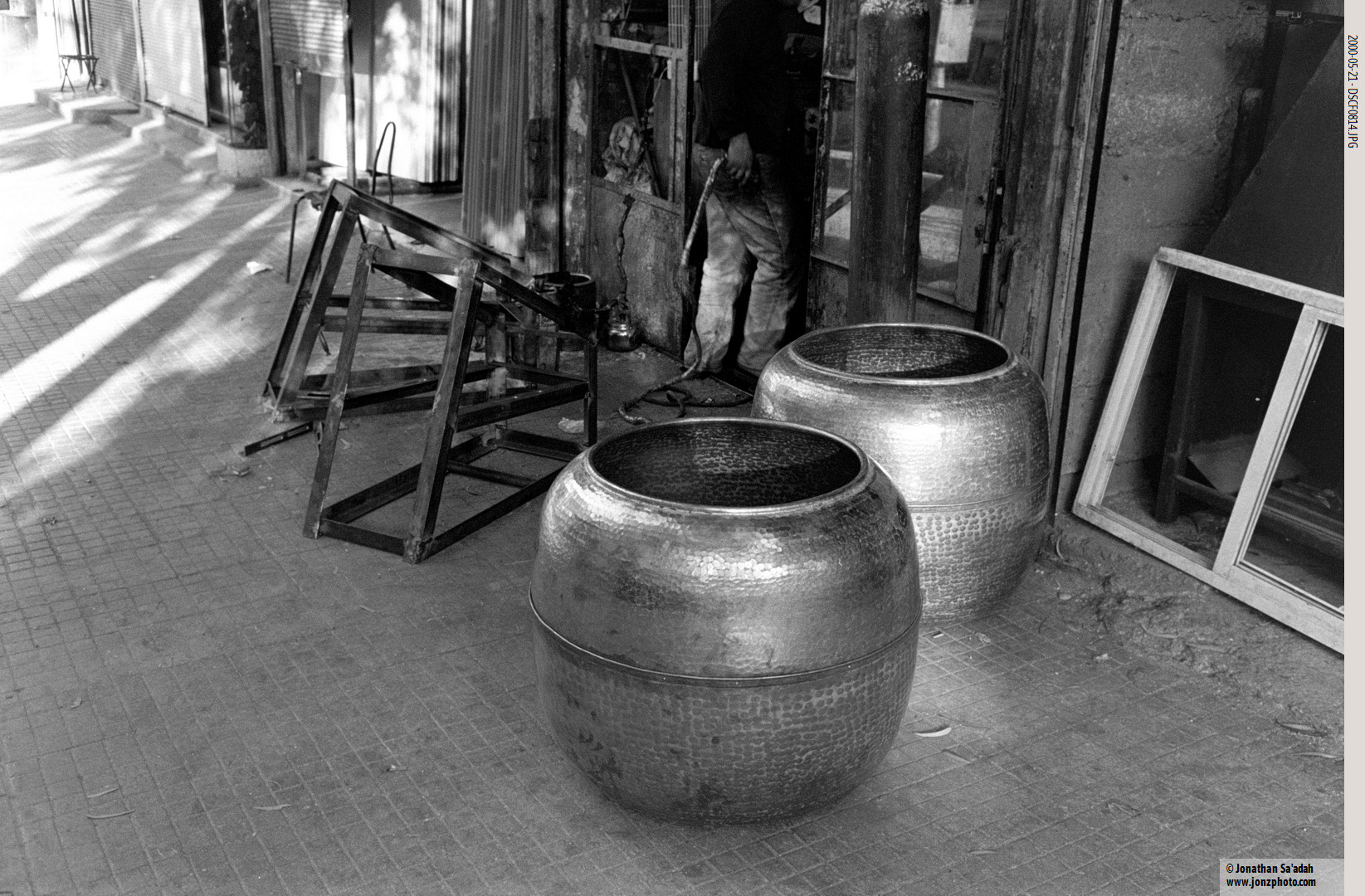
Cultural Preservation emerges in photographs of traditional crafts continuing alongside modern life. The optician whose family has served the neighborhood for generations, using techniques perfected over decades while adapting to modern lens technology. Traditional techniques surviving modernization not through museum preservation, but through continued relevance to community life.
Western cities losing their cultural identities to globalization could learn from Damascus’s integration of old and new knowledge.
Sustainable Living appears throughout these images: repair culture over disposal culture, walking cities over car dependence, local production over global supply chains. Damascus in 2000 was necessarily resource-conscious, but the visual evidence shows this creating stronger communities, not deprivation. Cobbler shops, tailors, mechanics – all embedded in neighborhood life, all contributing to local economic circulation.
Damascus is an example of cultural evolution without cultural abandonment.
Your Invitation to See Differently
These 88 photographs aren’t asking you to visit Damascus – they’re asking you to question what you think you know about resilience, community, and cultural continuity. They’re asking you to see our own Western cities with fresh eyes: What did we lose in our pursuit of efficiency? What did we abandon in our quest for individual freedom? What can Damascus teach us about building communities that survive?
This collection challenges comfortable assumptions about progress and development. Damascus in 2000 wasn’t primitive or backward – it was sophisticated in ways we’re only beginning to understand. While we’ve been perfecting individual liberty, they were perfecting community sustainability. While we’ve been optimizing economic efficiency, they were optimizing social connection.
The lessons here aren’t nostalgic – they’re practical. Urban planners struggling with social isolation, community organizers trying to build civic engagement, anyone wondering why Western cities feel increasingly lonely despite unprecedented connectivity will find answers in these images. Damascus demonstrates that community life isn’t about returning to the past; it’s about integrating human-scale values with contemporary possibilities.
This book should appeal to anyone interested in urban planning and community design that prioritizes human flourishing over economic optimization. For cultural preservation and revival strategies that keep traditions alive through relevance, not museums. For understanding the Middle East beyond headlines and finding hope and practical wisdom for Western urban challenges.
This is Syria in 2000 – not the Syria you see typically portrayed, but the Syria that has lessons for us all.

Such evocative words and images.
A gift to the soul during these changing and uncertain times…
Great photos as always. I’ve really enjoyed this series on Syria. What you say about the main dichotomy being connection v. isolation instead of wealth v. poverty is food for thought. Our culture has much to learn from a city like that. Nobody loathes self-checkout at Provigo and Pharmaprix more than I do. It is an abomination to the Lord. A city like Damascus has something we certainly lack.