I’ve lived on the edge of two parks in Montreal. The first was an established historic park known for its beauty (Parc Lafontaine), and the second a recently constructed city park (Parc Saidye-Bronfman) where we live now in an “up and coming” neighborhood, the “Triangle” section of Côte-des-neiges. Soon after we moved in we invited a friend from our first neighborhood over and looking out she exhaled “¿That’s a park?!?!!??”.
She’s actually a very kind person, it was just a momentary slip.
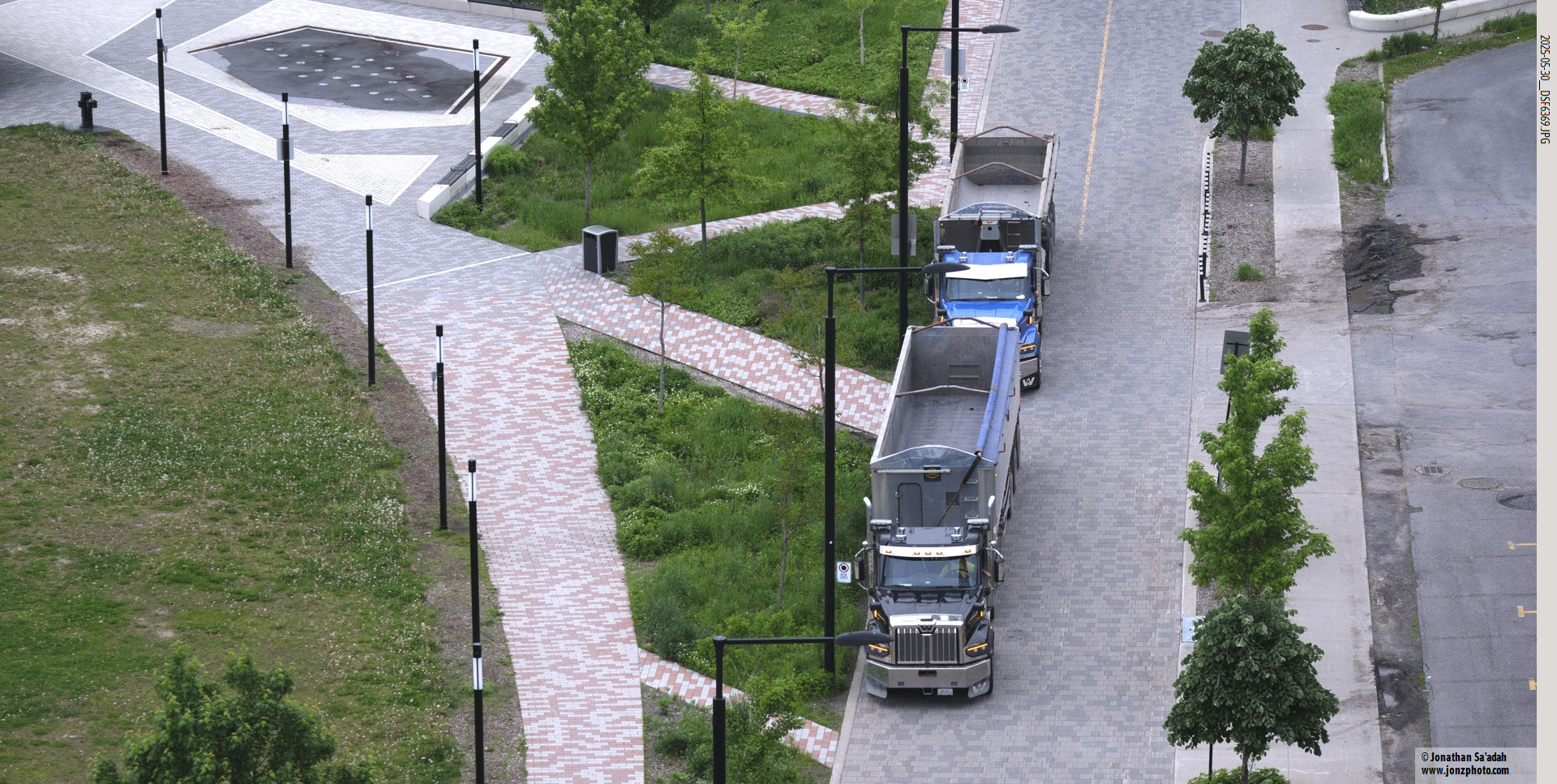
She had a point. It’s not much of a park right now, and it may never be. There’s a difference between a park that inhabits a large parcel of land and evolves over decades, weaving its way into people’s lives, and one that’s a relatively soulless small pocket park, put in because developers are required to tick a box called “green spaces”. The whole thing comes off as if no one really has their heart in it.
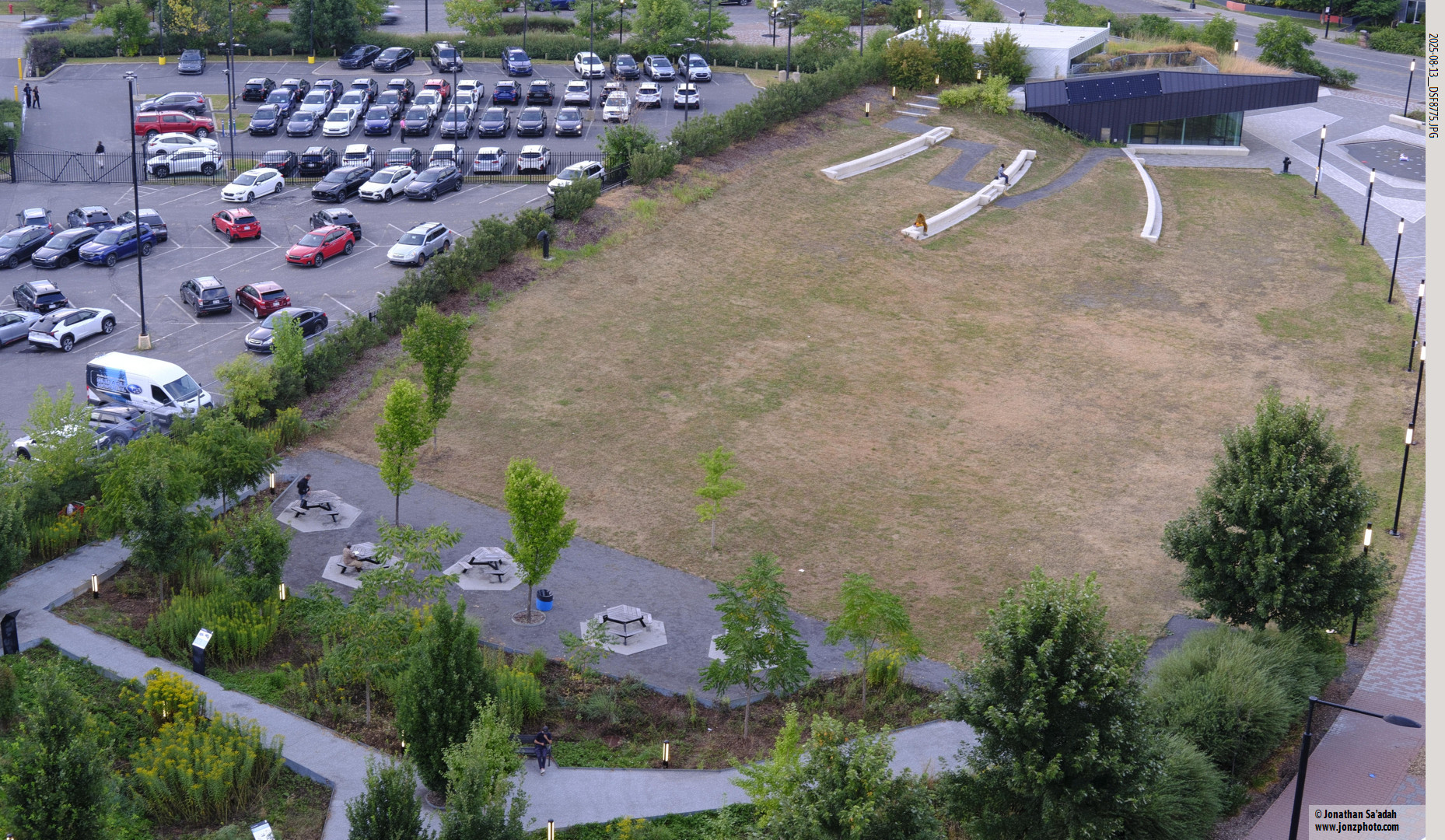
The history of our present park runs something like this: it was envisioned as being twice its current size (which would still have been small), but somewhere along the way its boundaries got whittled down. It was also planned to showcase the use of indigenous plants, but that too is falling short as the messy natives are uprooted and replaced by fabric cloth and the standard city plantings. It’s a bit like after the check-box we’re moving on.
Beth, who blogs occasionaly about the city with an invariably philosophical and generous eye, goes down when she spots the city gardeners. They hem and haw, in the end sighing and saying they’re just doing what they are ordered to do (and “could she write a letter….”) But I wonder what the real story is, and what it is we will probably never know.
What I do know is that humans need places where they can exhale a little, and it’s in parks where the air tastes a little greener and the asphalt recedes enough that you can hear your own heartbeat. I do miss Parc Lafontaine where I used to go out for an early morning and walk on damp paths, hearing children chattering on their way to school. It’s too bad that in these new neighborhoods the city more often than not bows to developer’s wishes rather than taking a long step back and acting with a vision that’s more than a future of promised bike paths and trolleys and two-lane roads, which won’t work. Parks matter because cities are not built of steel and ambition alone. We need the quiet space true parks give. We need green sanctuaries where the earth remembers itself, and invites us to remember it too, even if it is a bit messy.


Leave a Reply