
When Joseph Losey set out to make M Klein in 1976, he turned to one of Europe’s most celebrated art directors, Alexandre Trauner, to help bring wartime Paris to life. Their collaboration on this film was not just a meeting of two accomplished professionals, but a convergence of personal histories and artistic philosophies that shaped the film’s haunting atmosphere and visual authenticity.
The Art Director’s Legacy
Alexandre Trauner was already a legend in the world of film design by the time he joined M Klein. Trained as a painter in Hungary, Trauner had built a career in France, working with some of the greatest directors of his era. His credits included an Oscar for Billy Wilder’s The Apartment and a reputation as the “dean of European art directors.” But for Trauner, M Klein was more than another prestigious project – it was deeply personal. Born Sándor Trau, he was a Hungarian Jew who had fled anti-Semitism in Hungary, only to face it again in Nazi-occupied France, where he went underground to survive.
Building the World of M Klein
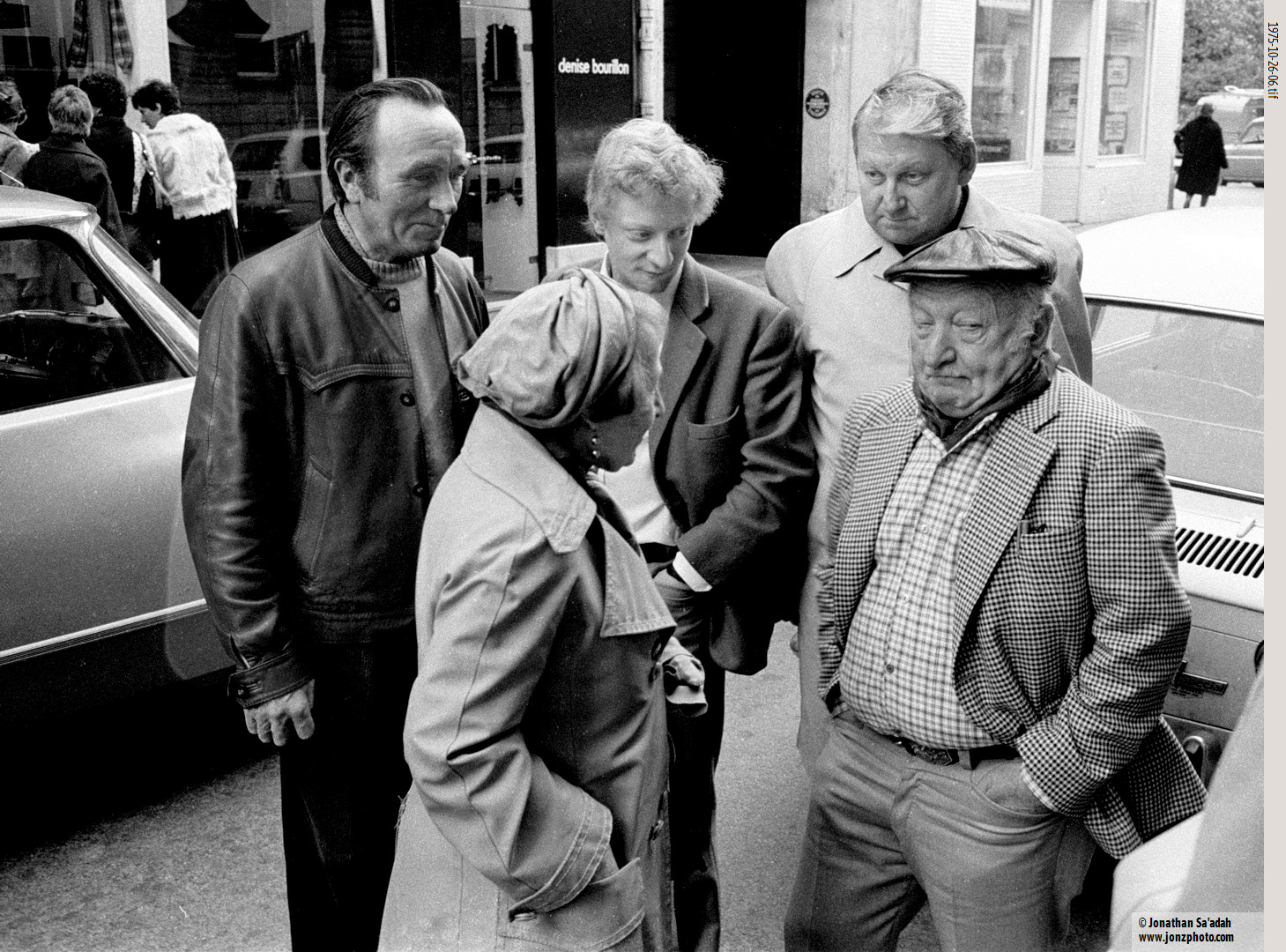
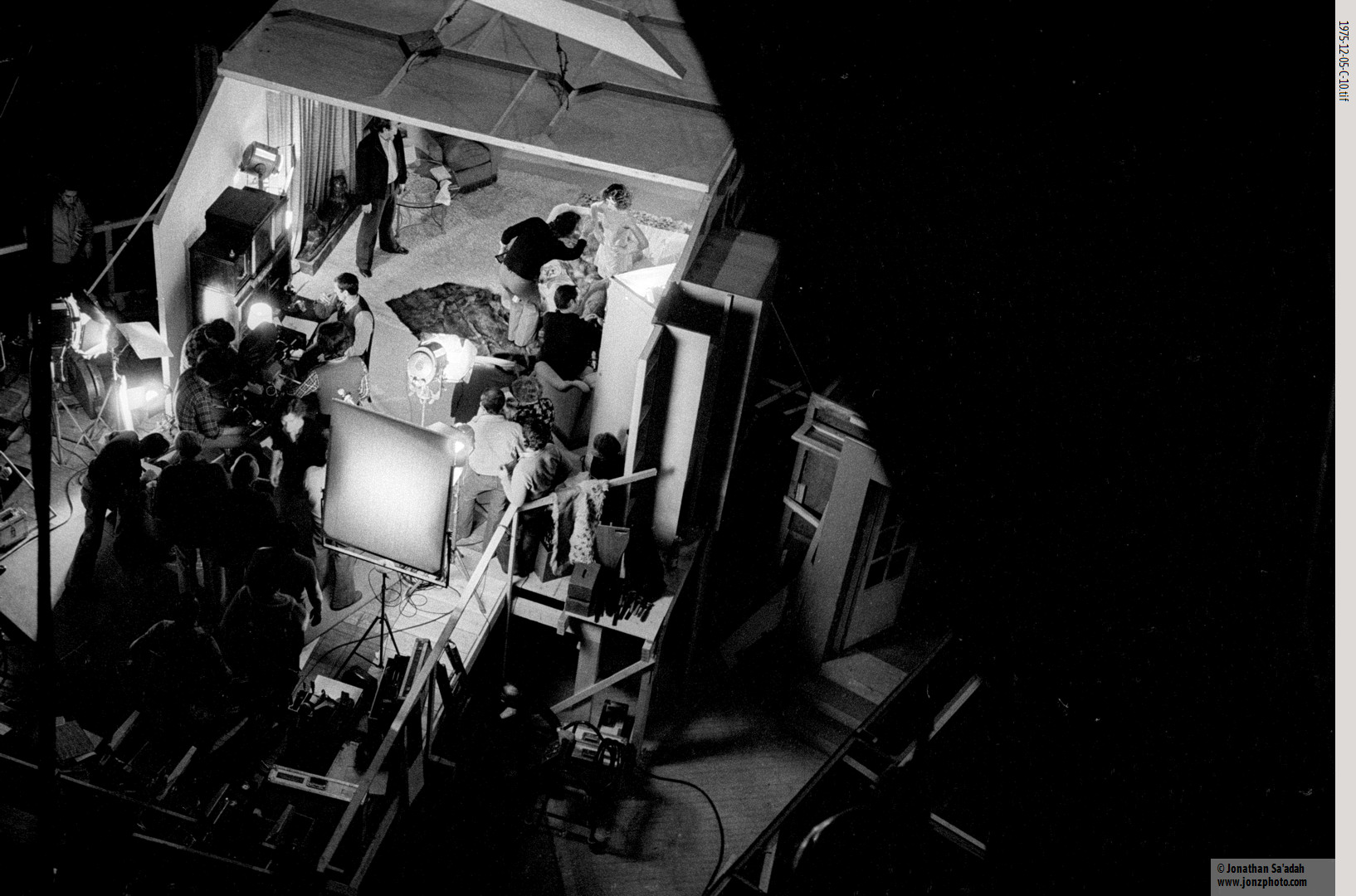
Losey’s vision for M Klein demanded a level of realism and atmosphere that only a master like Trauner could deliver. The film was shot both in the controlled environment of Studios de Boulogne and on locations throughout Paris. While Losey preferred the unpredictability and grit of real locations, he grudgingly acknowledged the advantages of studio work: flexibility, control over lighting, and the ability to reconfigure sets as needed. Trauner’s skill lay in making these studio sets feel as authentic and lived-in as the city streets outside.

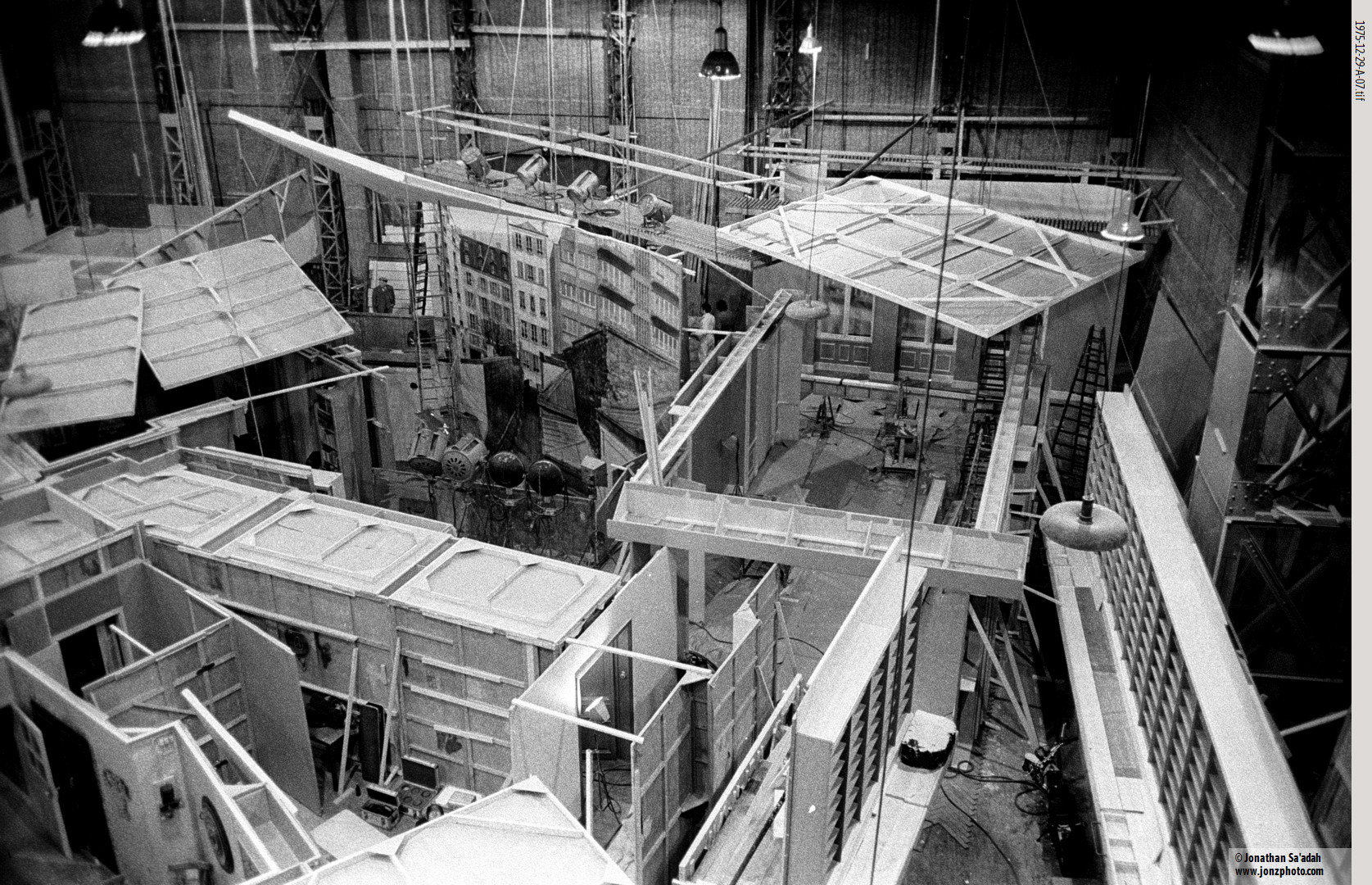
- Studio Mastery: Trauner and his team transformed the cavernous Stage A at Boulogne into convincing interiors, using movable walls and ceilings to create dynamic spaces for the camera and actors.
- Location Expertise: Trauner’s intimate knowledge of Paris allowed him to identify and secure locations that captured the city’s wartime character, from rundown tenements to grand public buildings.
- Visual Storytelling: Trauner’s approach was less about literal storyboarding and more about mood, color, and the “dressing” of the set. With Losey’s input he translated the screenplay’s emotional cues into physical spaces that reflected the film’s themes of identity, suspicion, and moral ambiguity.
A Partnership of Trust and Professionalism
Losey’s previous long-term collaboration with art director Richard Macdonald had ended before M Klein, making his partnership with Trauner especially significant. Trauner brought a different energy: more structured, less chaotic, but equally committed to artistic excellence. Losey praised Trauner’s professionalism and his ability to immediately grasp and adapt to the director’s needs, saying, “There’s a kind of professionalism about Trauner and a kind of immediate recognition of what I want. Also, if I say to Trauner that something that he’s doing is wrong for me, whatever it may be…he understands and can change this immediately”.
Personal History Meets Artistic Vision
What made Trauner’s contribution to M Klein so powerful was the way his personal history resonated with the film’s subject. Like Margot Capelier, the casting director, Trauner had lived through the Nazi occupation and the persecution of Jews in France. This experience gave him a unique sensitivity to the film’s themes and a determination to render them truthfully on screen. His bond with Capelier – her husband, Auguste Capelier, often collaborated with Trauner after the war – further deepened the sense of shared purpose among the creative team.
The Lasting Impact
The world that Trauner built for M Klein is more than a backdrop; it is a character in its own right, shaping the film’s mood and immersing viewers in the paranoia and uncertainty of occupied Paris. His work stands as a testament to the power of art direction in cinema and to the importance of personal history in shaping artistic achievement.
Through his collaboration with Joseph Losey, Alexandre Trauner helped make M Klein not just a film about history, but a living, breathing evocation of a world on the edge – crafted by someone who had survived its darkest days.
Alexandre Trauner’s Film Credits
| Year | Film | Director | Credit | Awards | ||
|---|---|---|---|---|---|---|
| 1932 | À nous la liberté | René Clair | Assistant Set Designer | |||
| 1935 | La Kermesse héroïque | Jacques Feyder | Assistant Set Designer | |||
| 1937 | Drôle de drame | Marcel Carné | Set Designer | |||
| 1938 | Port of Shadows (Quai des brumes) | Marcel Carné | Set Designer | |||
| 1938 | Hôtel du Nord | Marcel Carné | Set Designer | |||
| 1939 | Le jour se lève | Marcel Carné | Set Designer | |||
| 1942 | Les Visiteurs du soir | Marcel Carné | Set Designer | |||
| 1943 | Lumière d'été | Jean Grémillon | Set Designer | |||
| 1945 | Children of Paradise (Les Enfants du paradis) | Marcel Carné | Set Designer | |||
| 1946 | Les Portes de la nuit | Marcel Carné | Set Designer | |||
| 1948-1950 | Othello | Orson Welles | Production Designer | |||
| 1954 | Du rififi chez les hommes | Jules Dassin | Production Designer | |||
| 1955 | Land of the Pharaohs | Howard Hawks | Art Director | |||
| 1956 | Love in the Afternoon | Billy Wilder | Art Director | |||
| 1957 | Witness for the Prosecution | Billy Wilder | Art Director | |||
| 1959 | The Nun's Story | Fred Zinnemann | Art Director | |||
| 1960 | The Apartment | Billy Wilder | Art Director | Academy Award for Best Art Direction (1961) | ||
| 1961 | One, Two, Three | Billy Wilder | Art Director | |||
| 1961 | Paris Blues | Martin Ritt | Art Director | |||
| 1961 | Goodbye Again | Anatole Litvak | Art Director | |||
| 1962 | Five Miles to Midnight | Anatole Litvak | Art Director | |||
| 1964 | Behold a Pale Horse | Fred Zinnemann | Production Designer | |||
| 1966 | How to Steal a Million | William Wyler | Production Designer | |||
| 1967 | The Night of the Generals | Anatole Litvak | Production Designer | |||
| 1970 | The Private Life of Sherlock Holmes | Billy Wilder | Production Designer | |||
| 1974 | The Man Who Would Be King | John Huston | Production Designer | |||
| 1976 | Mr. Klein | Joseph Losey | Production Designer | César Award for Best Production Design (1977) | ||
| 1977 | Fedora | Billy Wilder | Production Designer | |||
| 1978 | Don Giovanni | Joseph Losey | Production Designer | César Award for Best Production Design (1979) | ||
| 1981 | Coup de torchon | Bertrand Tavernier | Production Designer | |||
| 1982 | La Truite | Joseph Losey | Production Designer | César Award for Best Production Design (1983) | ||
| 1983 | Tchao Pantin | Claude Berri | Production Designer | |||
| 1985 | Subway | Luc Besson | Production Designer | César Award for Best Production Design (1986) | ||
| 1985 | Harem | Arthur Joffé | Production Designer | |||
| 1986 | Round Midnight | Bertrand Tavernier | Production Designer | |||
| 1989 | Reunion | Jerry Schatzberg | Production Designer | |||
| 1990 | The Rainbow Thief | Alejandro Jodorowsky | Production Designer |
More about Alexandre Trauner
“Alexandre Trauner.” In Wikipedia, March 18, 2023. https://en.wikipedia.org/w/index.php?title=Alexandre_Trauner&oldid=1145366800.
“Alexandre Trauner | Film Art, Production Design & Cinematography | Britannica.” Accessed July 7, 2025. https://www.britannica.com/biography/Alexandre-Trauner.
Europe of Cultures. “Europe of Cultures – Alexandre Trauner, Decorator of Film Sets. – Ina.Fr.” http://fresques.ina.fr/europe-des-cultures-en/fiche-media/Europe00130/alexandre-trauner-decorator-of-film-sets.html.
Forbes, Jill. “Alexandre Trauner.” Sight and Sound, London: British Film Institute, Fall 1986. 1305511273. ProQuest One Literature.
Giquello, Binoche et. Alexandre Trauner – Jacques Prévert: Correspondances, Dessins, Maquettes, Carnets, Photographies, Collages, 1932-1976. Binoche et Giquello, 2012.
Imdb. “Alexandre Trauner | Production Designer, Art Director, Set Decorator.” https://www.imdb.com/name/nm0871202/.
McCann, Ben. “What Trauner Did next: The Continuation of a French Design Aesthetic in an American Context.” French Cultural Studies 20, no. 1 (February 1, 2009): 65–81. https://doi.org/10.1177/0957155808099344.
McCann, Benjamin Edward. “Set Design, Spatial Configurations and the Architectonics of 1930s French Poetic Realist Cinema,” n.d.
Mubi. “Images of the Day. From Sketch to the Screen: ‘Hôtel Du Nord’ (1938),” October 9, 2010. https://mubi.com/notebook/posts/images-of-the-day-from-sketch-to-the-screen-hotel-du-nord-1938.
Webformance. “Trauner, Sándor (Alexandre Trauner) (1906 – 1993) – Famous Hungarian Painter, Graphic.” Kieselbach. https://www.kieselbach.hu/artist/trauner_-sandor-_alexandre-trauner__1948.
Kathy and I recently watched The Apartment. The art design is fresh in my head. I can well imagine that M Klein was a hugely passionate project for him. It’s amazing how many kinds of talent must converge into one room to make a movie. Love your photos as always.
The office shot which is in the opening sequence of The Apartment is what undoubtedly won Trauner the Oscar. It’s a great film, isn’t it? Trauner used the same false perspective in Klein for the receding background in the government archive about halfway through the film, where bureaucrats are sorting papers. He was a master at the huge painted flats that were used to make backgrounds look like they went on forever. You’re making me want to see the Wilder film again!