
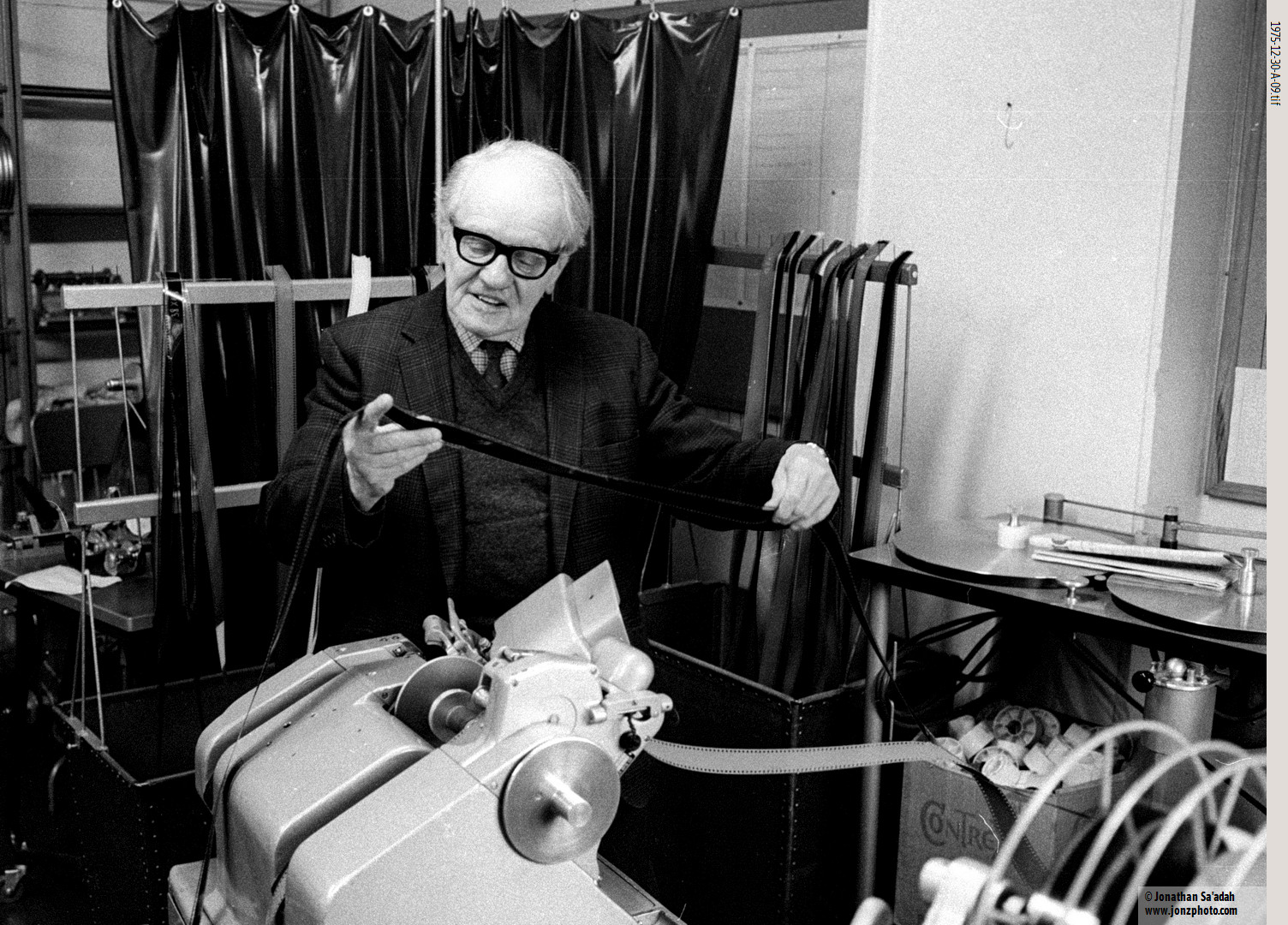
Reginald Beck (1902-1992) edited eighteen films of Losey’s, beginning in 1958 and stretching to Losey’s last, in 1985. It was a multi-decade professional partnership based on mutual respect. Beck was a small man, of modest manner and somewhat taciturn yet insightful in his opinions and generous in training younger editors. He and cinematographer Gerry Fisher formed the core team that supported Losey’s second career as an European director.
Beck’s demeanor deceitfully feigned that of a small bland Englishman, but inside burned a brightly shining personality with an unusual background. His career, spanning from the early days of British cinema through the European auteur movement, illustrates a complex mix of artistic vision, political conviction, and professional self-determination.
The M Klein Credit Controversy: Union Rules and Artistic Recognition
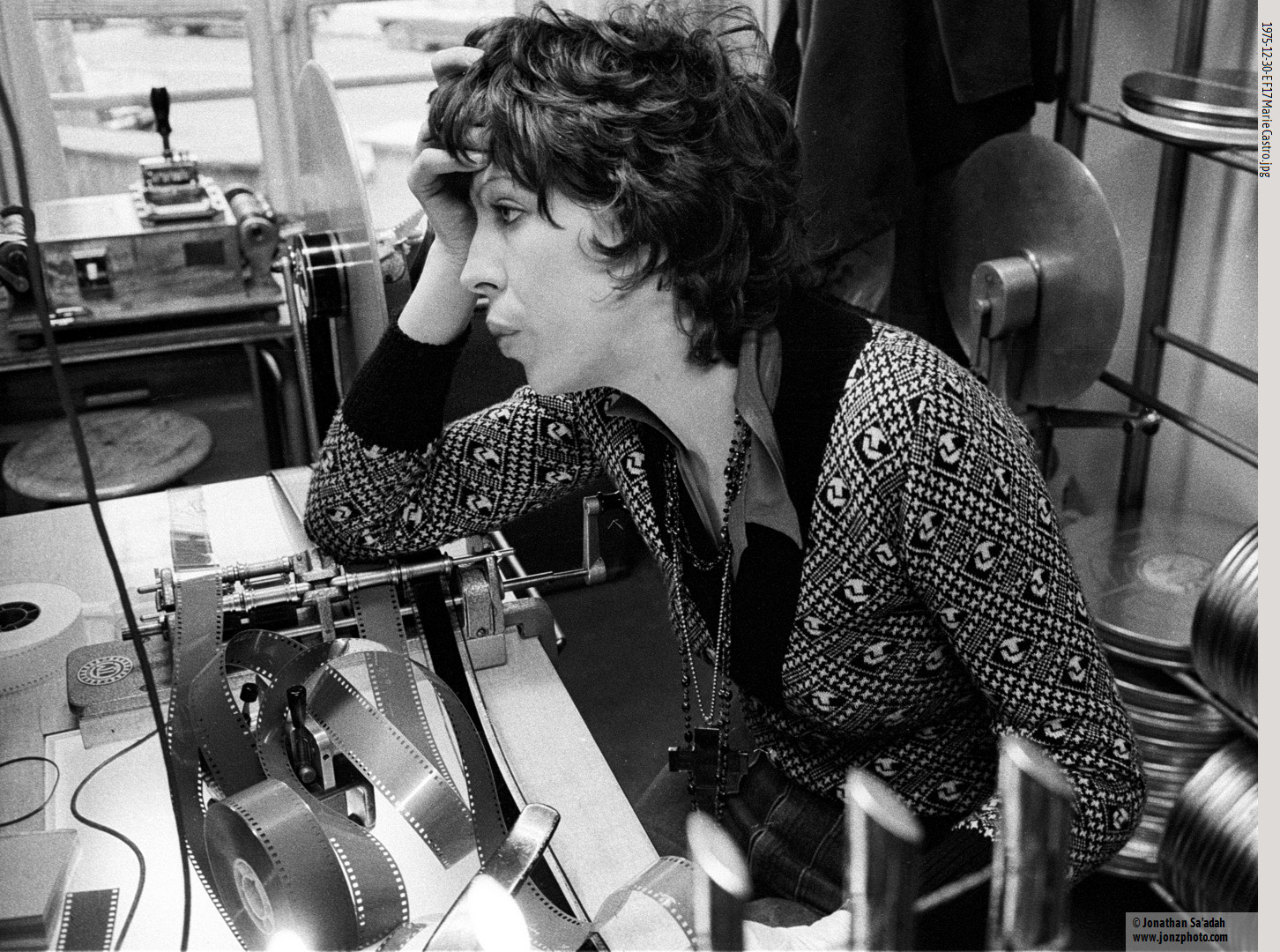
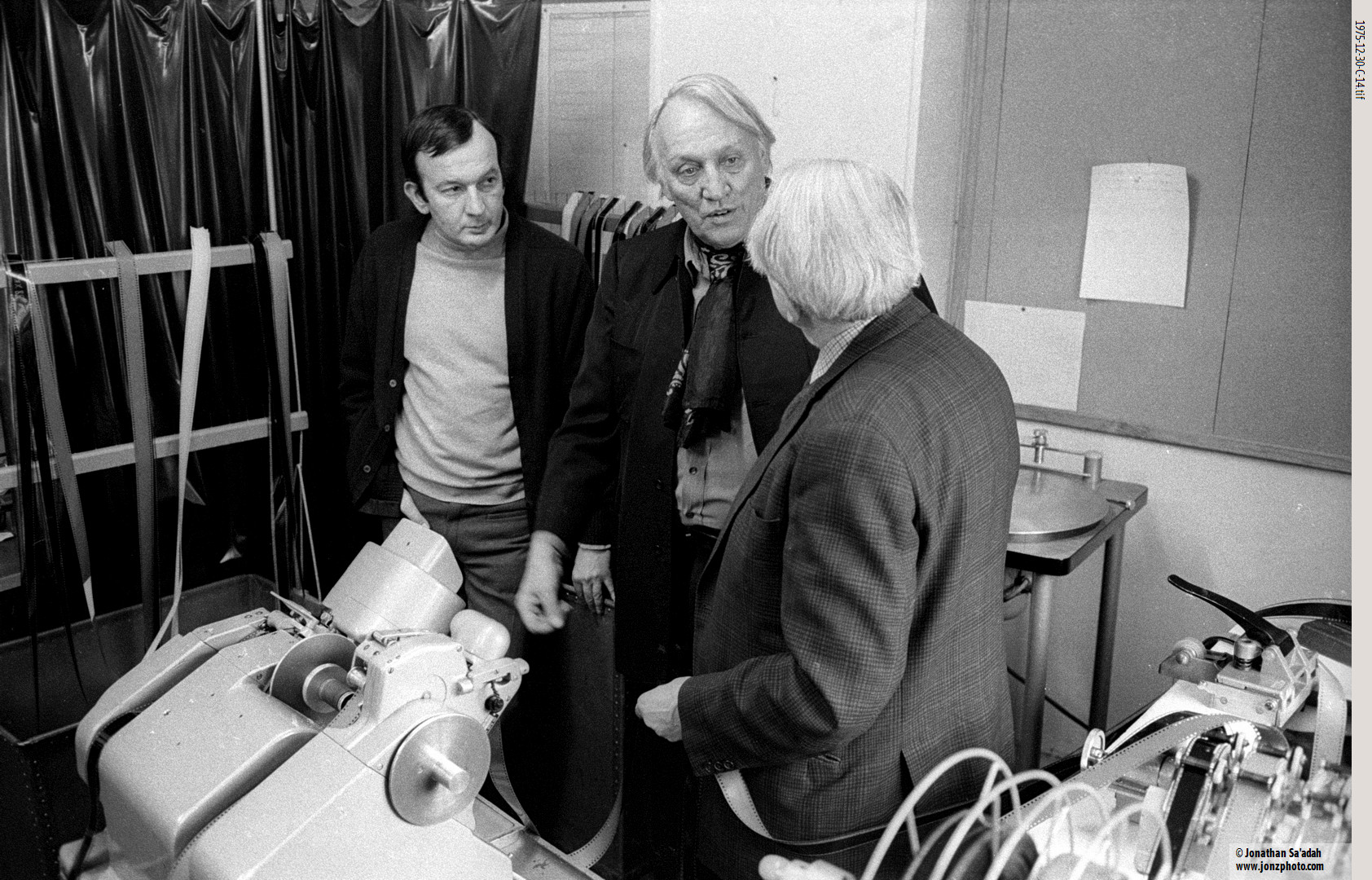
The case of M Klein exemplifies the bureaucratic obstacles that could overshadow artistic collaboration in the film industry. Despite Beck’s editing M Klein, he was unable to receive proper screen credit due to British film union regulations. The film’s credits instead list Henri Lanoë, Marie Castro-Vasquez, and Michèle Neny as editors. Beck gets credit but as a “Adviser to Joseph Losey”. Indeed!
British film union rules, particularly those enforced by the Association of Cinematograph, Television and Allied Technicians (ACTT), strictly governed credit allocation during the 1970s. These regulations often prevented editors from receiving recognition for work performed outside their home territories or under specific contractual arrangements. The ACTT, founded in 1933 and representing over 20,000 members by 1982, maintained rigid protocols about screen credits that sometimes conflicted with the realities of international film-making. The solution in the case of this film was to employ a French editor who was credited for Beck’s work. This arrangement, though unfair to Beck, preserved the artistic continuity of the Losey-Beck collaboration while accommodating the logistical requirements of filming in France. It was the only time Beck didn’t receive credit for his work through his entire collaboration with Losey.
Artistic Freedom: The Freelance Editor’s Independence
Beck’s career was unusual because he was able to make (and stick to) a deliberate choice to work as a freelance editor rather than being tied to any particular studio. This independence, which he was proud of, allowed him artistic freedom but also created difficulties in an industry that was increasingly dominated by corporate structures. His freelance status enabled him to work with diverse directors across different production systems, from the quota quickies of the 1930s to the art films of the 1970s.
Working outside the studio system affected Beck’s approach to editing. Unlike editors employed by major studios who were often constrained by house styles and executive interference, Beck could develop distinctive collaborative relationships with individual directors. This freedom was particularly evident in his work with Losey. Beck pursued skillful editing techniques that supported Losey’s complex thematic concerns without outside pressure to conform to commercial formulas.
Beck’s independent status also meant he could select projects based on artistic merit rather than contractual obligations. His filmography reflects this selective approach, spanning from Laurence Olivier’s Henry V (1944) to works by international auteurs, illustrating his commitment to cinematic excellence over financial security. Importantly, the freelance model allowed Beck to maintain creative autonomy while building long-term partnerships with directors who valued his unique skills. Like Fisher’s camerawork, Beck’s editing was central in supporting Losey’s complex themes and visual identity.
Political Beliefs: Russian Origins and Radical Sympathies
Beck’s political world-view was fundamentally shaped by his early experiences as a Russian-born émigré. Born in St. Petersburg in 1902 to a British father and Finnish mother, Beck’s family emigrated to Britain when he was thirteen (1915). Beck’s childhood exposure to revolutionary Russia and his family’s subsequent displacement instilled in him an understanding of political persecution and the arbitrary nature of state power. These experiences resonated with the themes explored in many of his later collaborations, particularly Losey’s films that examined outsiders, persecution, and the abuse of authority.
The intersection of Beck’s political beliefs with Losey’s anti-establishment stance created a powerful creative partnership. Beck’s Russian origins and immigrant experience gave him a unique perspective on British class society that proved invaluable in interpreting Losey’s critiques of social hierarchies. His editing choices consistently supported narratives that exposed the violence and corruption underlying respectable facades, reflecting a political sensibility forged in revolutionary upheaval. What Losey found in Beck was an editor who intuitively understood the psychology of displacement and persecution. Their collaboration on films like Accident (1967) and The Go-Between (1971) explored themes of class oppression and social hypocrisy that reflected both men’s critical views of established power structures.
Style as an Editor: Invisible Craft and Sustained Tension
Beck’s editing style was rooted in the theories of Vsevolod Pudovkin which held that the assembly of shots served as bricks in creating narrative. His approach emphasized psychological complexity over flashy technique (contrasting with the theories of Sergei Eisenstein).
In M Klein, Beck’s editing supported the film’s Kafkaesque atmosphere of paranoia and identity confusion. The film’s exploration of a French Catholic being mistaken for a Jewish namesake required editing that could sustain psychological tension while maintaining narrative clarity. Beck’s work created a labyrinthine with life-or-death consequences through careful pacing and strategic withholding of information. A mark of his work with Losey was lengthy shots that built tension through duration rather than cutting. This technique demonstrated Beck’s understanding that editing’s power often lay in restraint rather than flashiness, and in M Klein this approach supported the film’s meditation on identity and persecution by allowing scenes to develop psychological complexity through sustained observation.
Relationship with Losey: Mutual Respect and Creative Partnership
The professional relationship between Beck and Losey represented one of cinema’s most productive editor-director partnerships, spanning eighteen films from The Gypsy and the Gentleman (1958) through Steaming (1985). Losey considered Beck one of the two best editors he ever worked with, the other being his first editor, Reginald Mills. Beck’s collaboration with Losey began after the director’s public falling-out with Mills over The Servant (1963). Beck then edited all of Losey’s subsequent films, establishing a working relationship characterized by shared political sensibilities and complementary artistic approaches. Their partnership proved particularly fruitful in films that explored themes of persecution, identity, and social hypocrisy.
What is ironic about the contribution that Reginald Beck made to M Klein, and Joseph Losey’s films in general, was that they were two people who worked on the margins of established systems, both dealing with issues of political exile and artistic displacement, and together they transformed these restraints of blacklisting and emigration into innovative film-making that challenged social norms as well as cinematic conventions. In some ways this wasn’t a surprising outcome for two such talented people, but it certainly represented a struggle and an opposition to forces and obstacles quite similar to those that many artists face today.
If you would like further information:
‘Association of cinematograph, television and allied technicians’ (2025) Wikipedia. Available at: https://en.wikipedia.org/w/index.php?title=Association_of_Cinematograph,_Television_and_Allied_Technicians&oldid=1278926362 (Accessed: 29 June 2025).
BFI Screenonline: Beck, Reginald (1902-1992) Biography (no date). Available at: http://www.screenonline.org.uk/people/id/1299434/index.html (Accessed: 13 March 2023).
BFI screenonline: beck, reginald (1902-1992) biography (no date). Available at: http://www.screenonline.org.uk/people/id/1299434/index.html (Accessed: 28 June 2025).
Burman, J. (no date) An Age of Transition and Turmoil: Editors Guild History 1965-75 -, CineMontage Journal of the Motion Pictures Editors Guild. Available at: https://cinemontage.org/an-age-of-transition-and-turmoil-editors-guild-history-1965-75/ (Accessed: 28 June 2025).
‘Reginald Beck’ (2022) Wikipedia. Available at: https://en.wikipedia.org/w/index.php?title=Reginald_Beck&oldid=1108833609 (Accessed: 9 April 2023).
Ryder, W. and Lawson, A. (1987) Reginald Beck Interview. (The British Entertainment History Project). Available at: https://historyproject.org.uk/interview/reginald-reggie-beck (Accessed: 13 March 2023).
Sloman, T. (1992) Obituary: Reginald Beck, The Independent. Available at: https://www.independent.co.uk/news/people/obituary-reginald-beck-1536223.html (Accessed: 29 March 2023).
Films Beck Edited (List adapted from “Reginald Beck.” In Wikipedia, September 6, 2022. https://en.wikipedia.org/w/index.php?title=Reginald_Beck&oldid=1108833609)
| Year | Film Name | Director(s) |
|---|---|---|
| 1932 | The Return of Raffles | Mansfield Markham |
| 1933 | Death at Broadcasting House | Reginald Denham |
| 1935 | Late Extra | Albert Parker |
| 1935 | Blue Smoke | Edwin L. Ince |
| 1936 | Wedding Group | Alex Bryce & Campbell Gullan |
| 1936 | Find the Lady | Roland Grillette |
| 1937 | Calling All Ma's | Redd Davis |
| 1937 | Variety Hour | Redd Davis |
| 1938 | Father O'Nine | Maclean Rogers (aka Oswald Mitchell) |
| 1938 | This Man Is News | David MacDonald |
| 1939 | This Man in Paris | David MacDonald |
| 1939 | The Stars Look Down | Carol Reed |
| 1940 | The Stars Look Down | Carol Reed |
| 1941 | Freedom Radio | Anthony Asquith |
| 1941 | Quiet Wedding | Anthony Asquith |
| 1942 | In Which We Serve | Noël Coward & David Lean |
| 1942 | Unpublished Story | Harold French |
| 1943 | The Lamp Still Burns | Maurice Elvey |
| 1944 | Henry V | Laurence Olivier |
| 1945 | Journey Together | John Boulting (supervising editor) |
| 1947 | They Made Me a Fugitive | Alberto Cavalcanti (supervising editor) |
| 1947 | I Became a Criminal | Alberto Cavalcanti (editorial supervisor) |
| 1948 | Hamlet | Laurence Olivier (associate producer) |
| 1950 | The Angel with the Trumpet | Anthony Bushell (supervising editor) |
| 1951 | The Long Dark Hall | Reginald Beck & Anthony Bushell |
| 1952 | The Wonder Kid | Karl Hartl |
| 1953 | The Beggar's Opera | Peter Brook |
| 1953 | Laughing Anne | Herbert Wilcox (supervising editor) |
| 1953 | The Big Frame | David MacDonald |
| 1954 | Trouble in the Glen | Herbert Wilcox (supervising editor) |
| 1954 | Let's Make Up | Denis Kavanagh (supervising editor) |
| 1955 | King's Rhapsody | Herbert Wilcox (supervising editor) |
| 1957 | Island in the Sun | Robert Rossen |
| 1958 | Harry Black and the Tiger | Hugo Fregonese |
| 1958 | The Gypsy and the Gentleman | Joseph Losey |
| 1959 | Serious Charge | Terence Young |
| 1962 | Eva | Joseph Losey |
| 1963 | The Leather Boys | Sidney J. Furie |
| 1965 | The Leather Boys | Sidney J. Furie |
| 1966 | Modesty Blaise | Joseph Losey |
| 1967 | Accident | Joseph Losey |
| 1967 | Robbery | Peter Yates |
| 1968 | Boom! | Joseph Losey |
| 1968 | Secret Ceremony | Joseph Losey |
| 1971 | The Go-Between | Joseph Losey |
| 1971 | Figures in a Landscape | Joseph Losey |
| 1971 | Something to Hide | Alastair Reid |
| 1972 | The Assassination of Trotsky | Joseph Losey |
| 1973 | A Doll's House | Joseph Losey |
| 1973 | Galileo | Joseph Losey |
| 1975 | The Romantic Englishwoman | Joseph Losey |
| 1977 | Un amour de sable | Christian Lara |
| 1978 | Despair | Rainer Werner Fassbinder |
| 1978 | Roads to the South | Joseph Losey |
| 1979 | Don Giovanni | Joseph Losey |
| 1985 | Steaming | Joseph Losey |
This is great. I just read a bit more about Beck. Cool that he worked on Olivier’s Henry V and Hamlet! That photo of Marie Castro-Vasquez is worth a thousand words on the tedium of editing.
Amazing insight into a time gone by…and yet, here we go again.
Finally renewed our Criterion subscription and watched the film! Wow… These posts and photos are taking on a new dimension now. (And we did get to see you sitting up there in the cabaret scene.)