
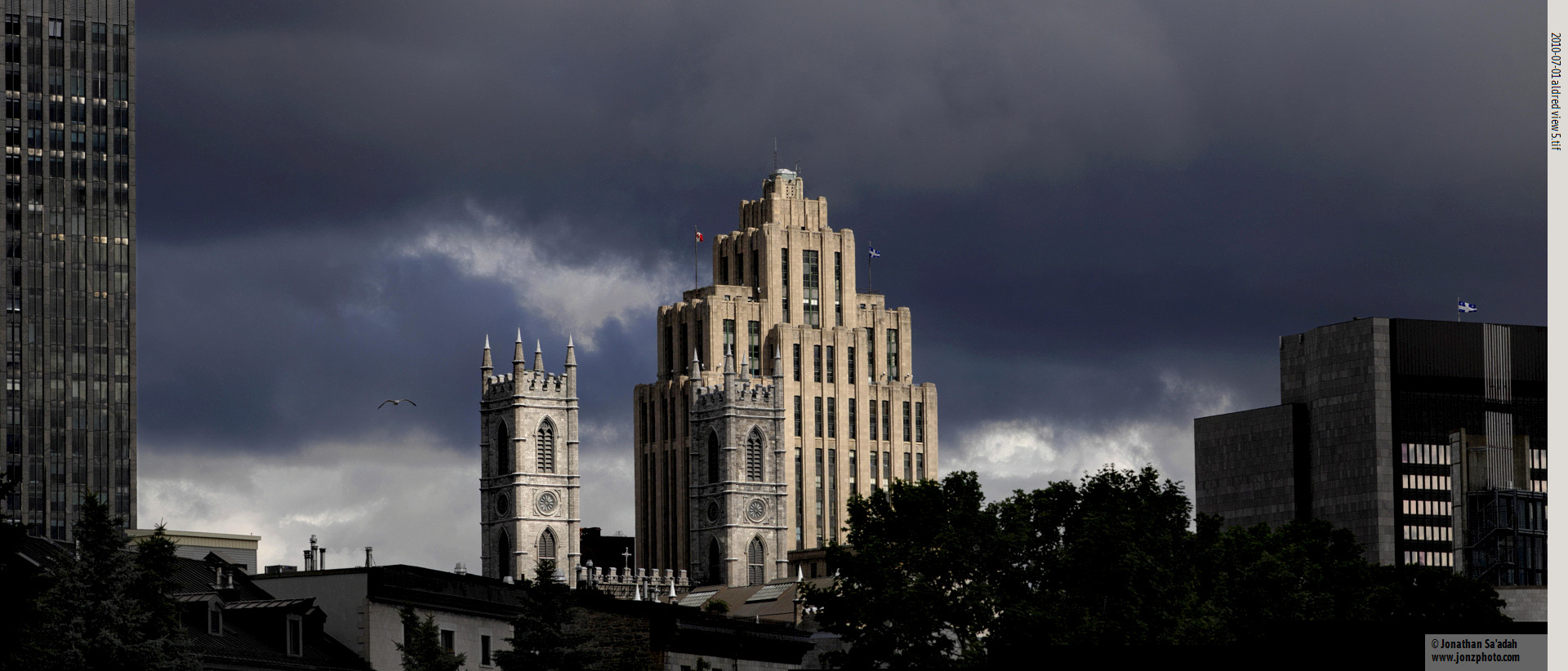
The Art Deco Aldred building is a 94 year-old office tower on Place d’Armes’. It’s Montreal’s own “little Empire State”, completed in the same year as the New York building (1931) but of considerably smaller stature. Ironically, though, it’s the one that hasn’t been dwarfed by surrounding buildings and still stands proudly. That’s not to say that it doesn’t have problems. It’s suffering from the same disease many downtown office towers have contracted since the pandemic – a lot of empty space and the listing by brokers who represent owners eager to get out of the market.
A Living Landmark
It wasn’t always that way. When it was built it was a proud, if misplaced, statement of financial-district confidence. Architect Ernest Isbell Barott masterminded the setbacks that characterize its stepped shape in order to take advantage of an 1929 Montreal by-law allowing extra height if sunlight reached the square. The move allowed the building enough height to express its modern ambition. From street level you see limestone that mirrors older façades. The building’s massing feels almost ecclesiastical, yet it projects a kind confidence that was probably in short supply during the Depression.
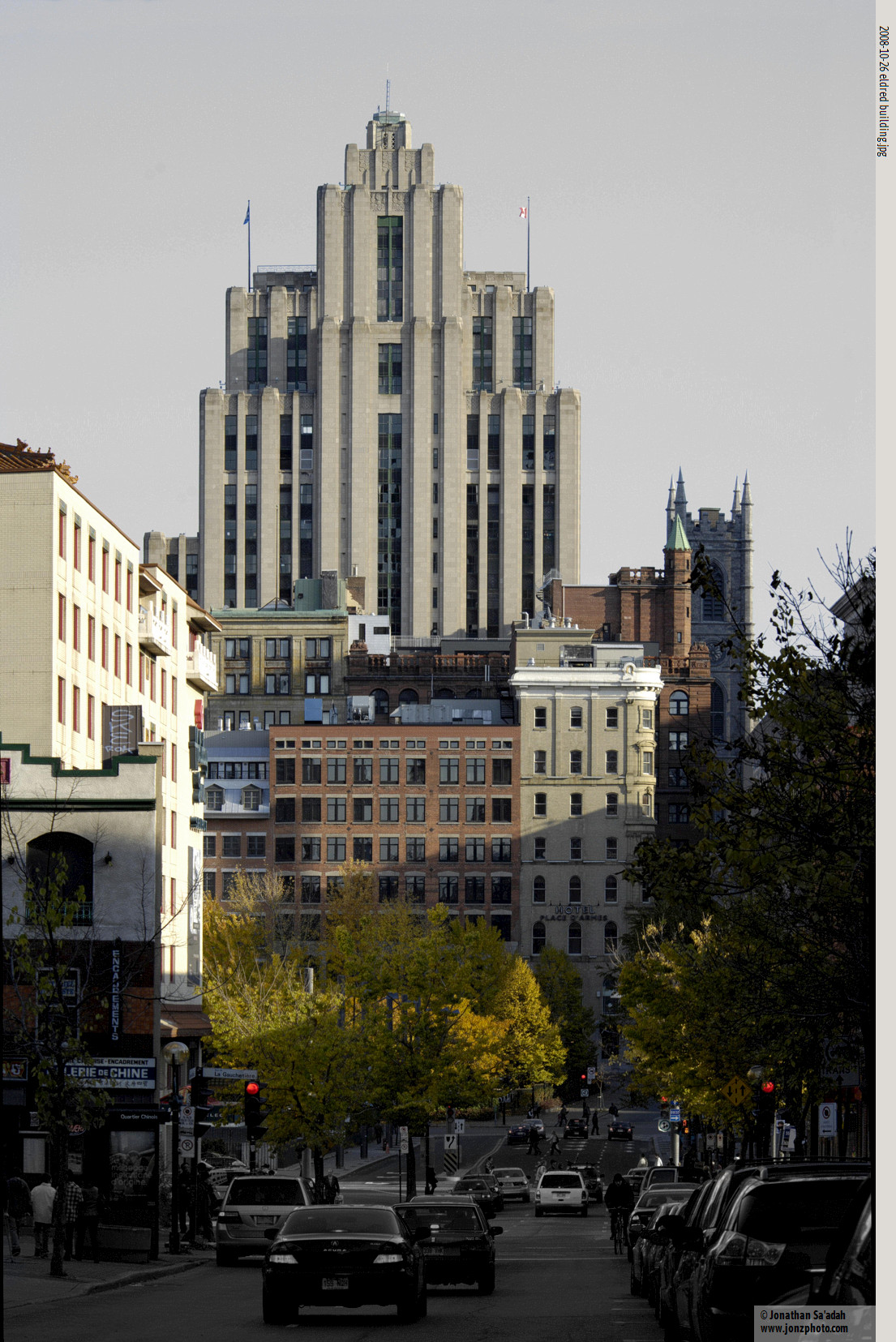
Stitching Into Montreal’s Economic Fabric
When the tower opened in the teeth of the Great Depression, its $2.85-million price tag signaled bullish faith in Montreal as Canada’s financial hub. Aldred & Company, a New York finance firm, anchored the top floors; local banks soon clustered nearby. Even today, in its diminished state, real-estate brokers list the address as commanding premium leases. Yet vacancy hovers near 30 percent and it’s touted as an opportunity for residential or boutique-hotel conversion.
That tension mirrors Montreal’s broader economy as the city navigates a post-pandemic recovery. Tourist visits were up 7 percent in 2024 and projected higher for 2025 – but older offices struggle to meet post-pandemic hybrid demands. The Aldred thus sits at the crossroads of heritage preservation and economic reinvention, with no clear plan of where it will go.
Past and Future in the Same Gaze
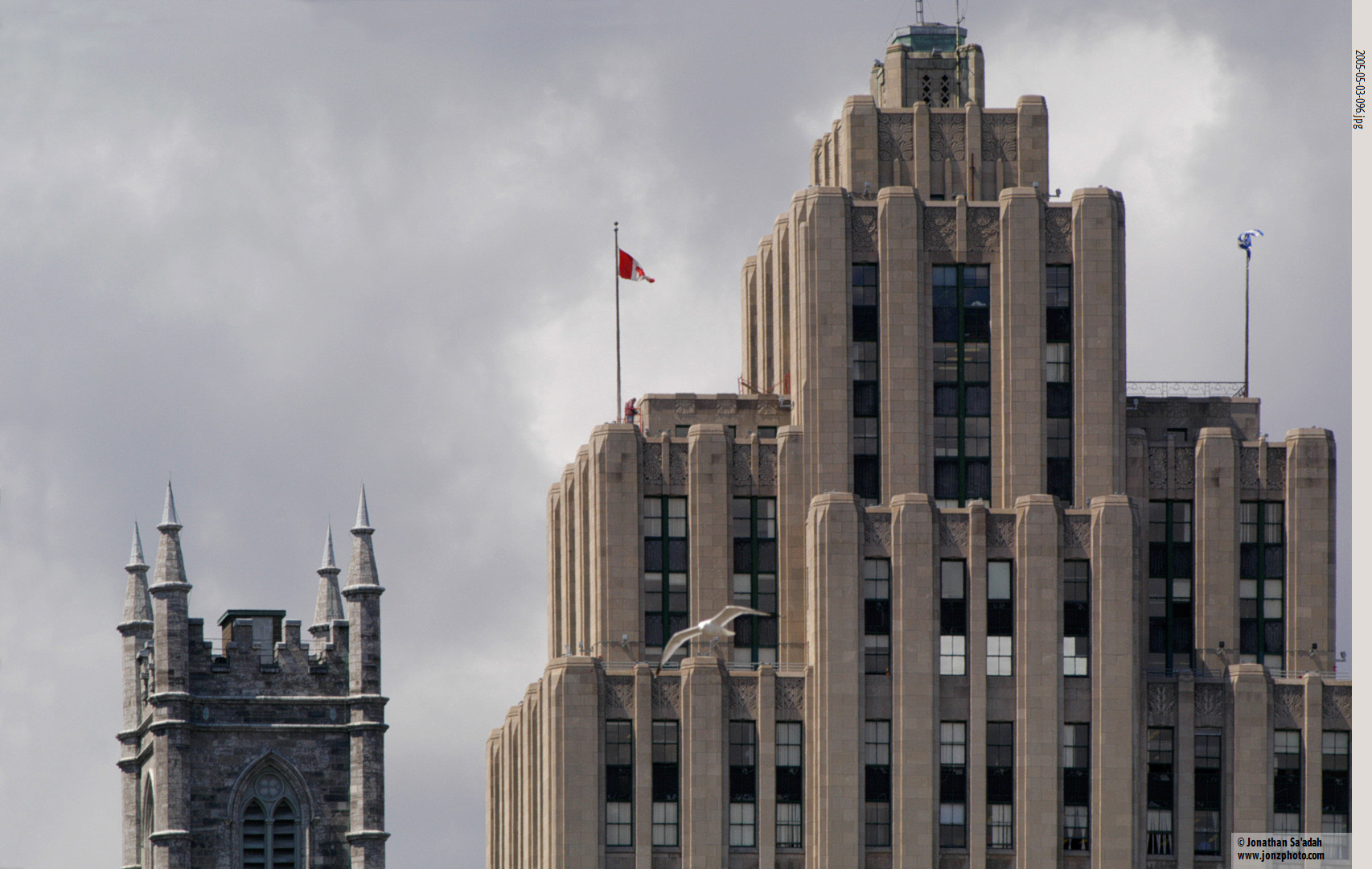
There’s never a lack of discussion about what to do. Preservationists argue for light-touch retrofits, citing UNESCO principles that balance cultural value with economic use. Urbanists argue for adaptive reuse to keep the historic city core alive. But in any case, the building seems perfectly at ease with being photographed and appreciated.
An Unmistakable Part of Montreal
For me, I’m lucky – I don’t have to worry about its elevator systems or quirky partitions, or any of the many other worries that haunt building owners. For me The Aldred is a 96-metre miniature gem we can honor in its Art Deco glory while still debating office-to-housing policy. I appreciate its confident limestone ribs and see it as being an unmistakable part of Montreal.
“…the building seems perfectly at ease with being photographed and appreciated.” Yes it does! I sure love this building. The lobby is also photogenic beyond all singing of it.
Great post. I hadn’t seen that first photograph for a long time — what an atmospheric, masterful shot it is! I wonder if the Empire State Building also has the same problems, post-pandemic. Thanks for this historical background, which I knew nothing about.