Hollywood exile Joseph Losey transformed from a promising American filmmaker into one of Europe’s most celebrated auteurs after fleeing McCarthyism in the 1950s. His journey from blacklisted director to celebrated European master of psychological cinema reveals both the destructive power of political persecution and the resilience of artistic vision.
Decades after his death, critical studies continue to emerge about Joseph Losey’s work and life. In an industry where few directors achieve lasting recognition, Losey’s enduring influence stems from his unique position as an American artist who found his voice in European exile, creating films that bridged continental sensibilities with Hollywood craftsmanship.
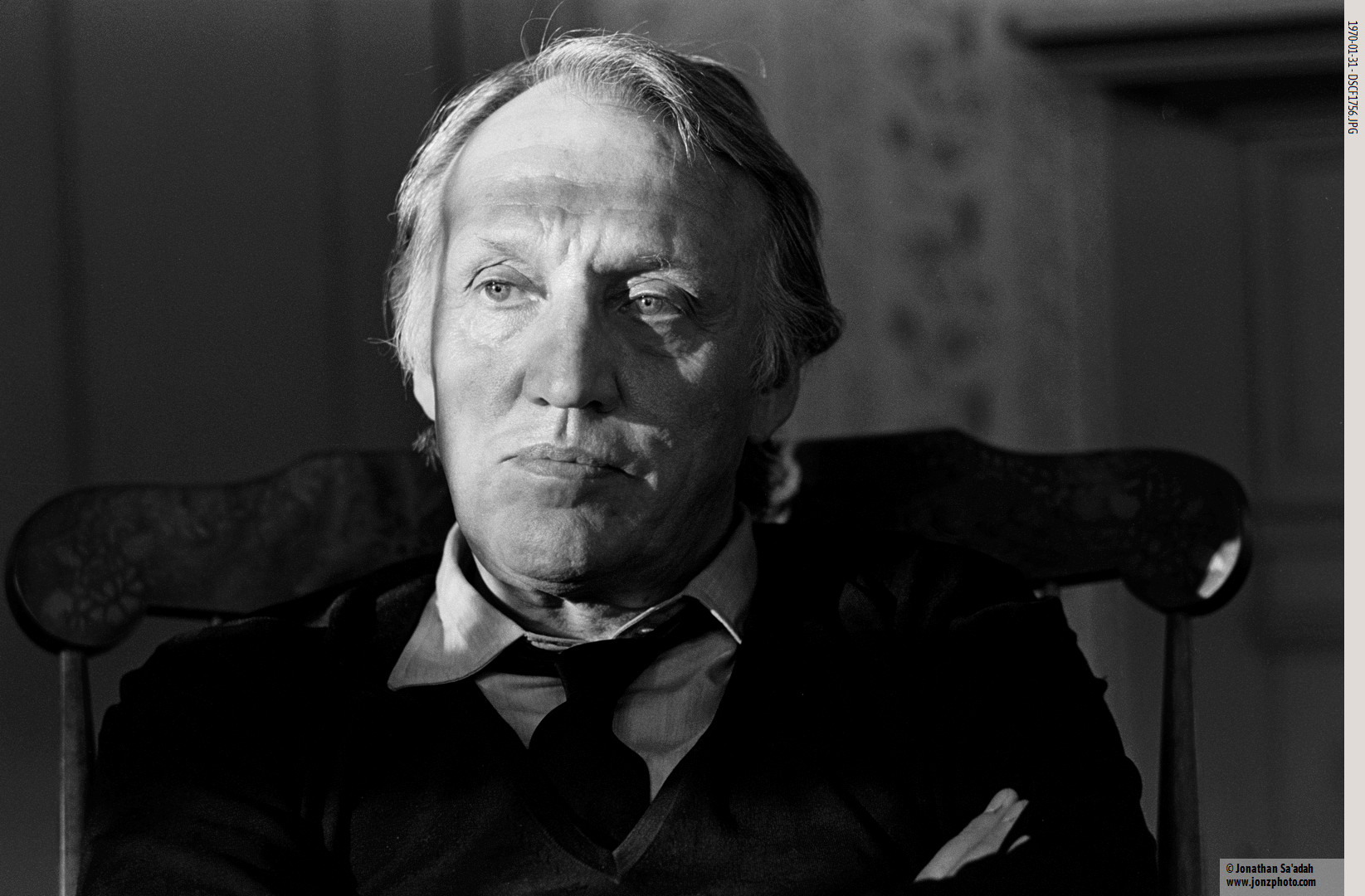
From Privilege to Exile: The Making of an Artist
Born into a family with a history of wealth and privilege, Losey’s immediate circumstances were more modest. His grandfather had not bequeathed his fortune to Losey’s father, Joseph Losey II, who worked as a claim agent for the Burlington Railroad after failing to complete college. Despite reduced circumstances, Losey grew up surrounded by culture and arts through his aunt’s connections in La Crosse, Wisconsin. Her home was a large estate where renowned musicians like Sergei Rachmaninoff and Jascha Heifetz would stay (and rehearse) when they visited the city for performances.
This early exposure to high culture shaped Losey’s artistic sensibilities. He pursued undergraduate studies at Dartmouth and graduate work at Harvard, later traveling to Russia to study film. Upon returning to the United States, he was hired by Hallie Flanagan, National Director of the Federal Theater Project, to work on the groundbreaking Living Newspaper project in New York. The work, already controversial with right-wing critics, would later contribute to his political troubles.
Losey’s career trajectory seemed destined for success when Dore Schary, head of production at RKO, offered him his first directorial position in 1948. However, his fortunes changed dramatically when Howard Hughes acquired controlling interest in RKO. Hughes offered Losey a “poison chalice” – directing I Married a Communist – which Losey categorically refused. This decision effectively ended his relationship with RKO. A year later, and after much trouble, he was released from his contract and allowed to work for Paramont, but by then J. Edgar Hoover’s FBI had flagged him as a communist sympathizer.
The European Renaissance
Rather than testify before Joseph McCarthy’s committee and implicate fellow leftists, Losey chose exile. His departure from the United States was hurried and unplanned, arriving in Europe without work and with tenuous legal status. His passport renewals were always uncertain, often valid for only two years, and work permits presented constant challenges.
The early European years were marked by financial hardship and professional humiliation. Losey directed low-budget genre films under pseudonyms to protect his collaborators from blacklisting. Yet these difficult circumstances proved transformative. The European film industry, particularly French critics, proved more receptive to his evolving style as he developed the complex themes of alienation, outsider status, and social critique that would define his mature work.
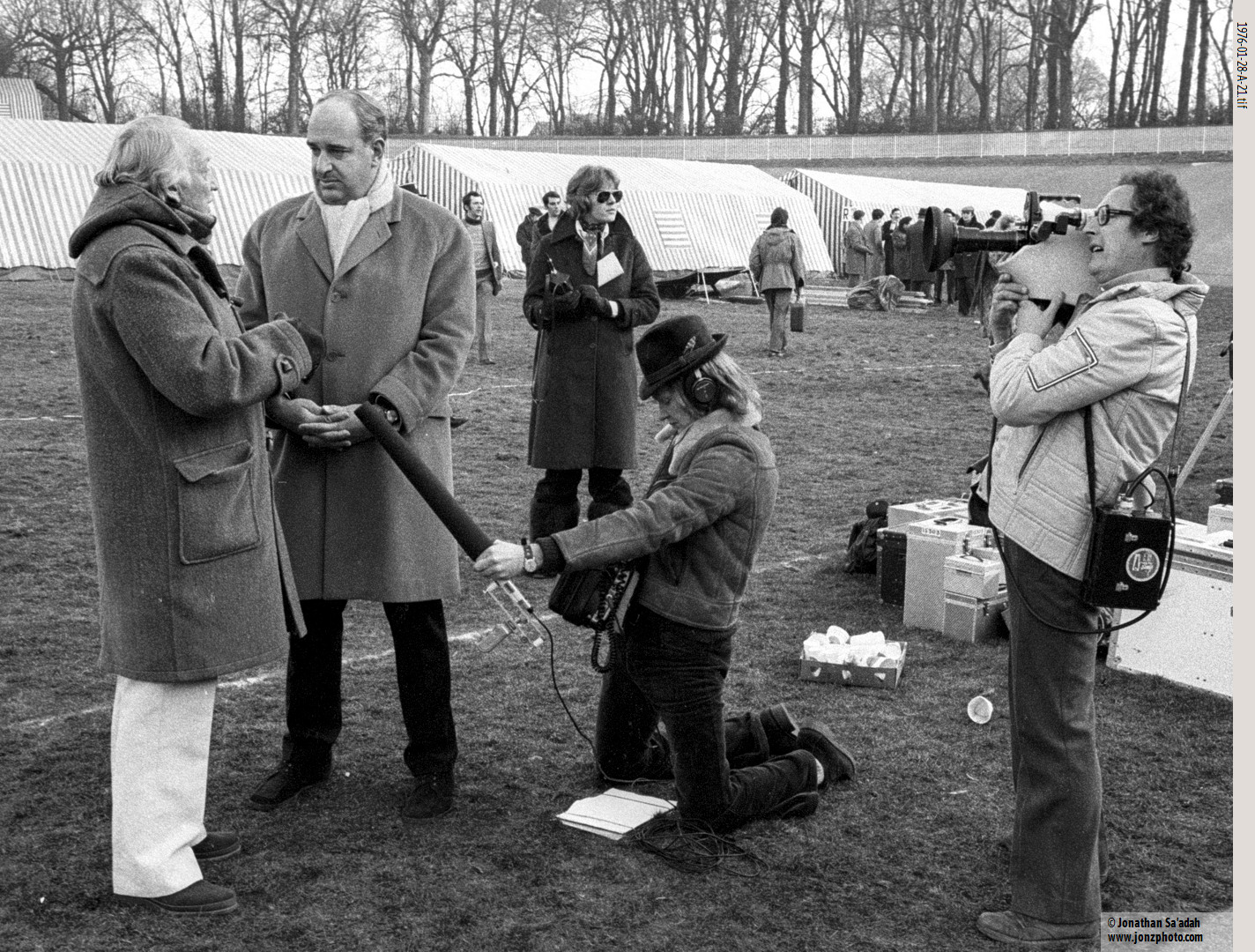
Despite the constraints, Losey repeatedly found projects that resonated with his moral and political beliefs. He later acknowledged that being blacklisted had been a blessing, removing him from Hollywood’s commercial temptations and allowing him to develop as a serious filmmaker. His European period saw acclaimed collaborations with screenwriter Harold Pinter on The Servant, Accident, and The Go-Between.
The M Klein Production: A Career Pinnacle
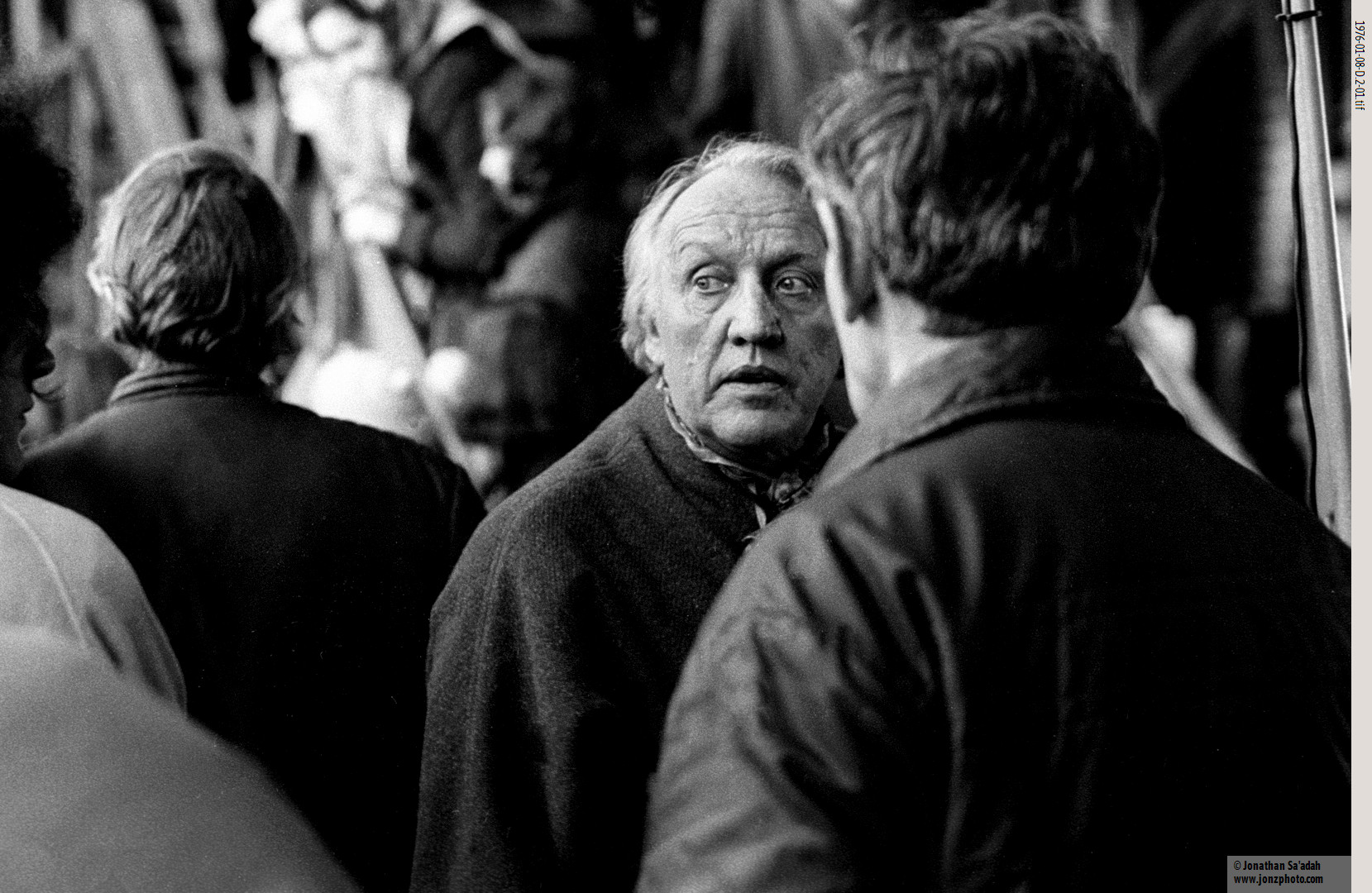
By 1975, when Losey began work on M Klein in France, he had established himself as a major auteur in European cinema. The project came to him through actor Alain Delon, who owned the rights to the screenplay. Losey heard that Greek director Costa-Gavras had declined directing the film, and he contacted Delon. Delon was eager to work with a recognized auteur to enhance his serious acting credentials. Having previously collaborated successfully with Losey on The Assassination of Trotsky, the project went forward.
Losey’s personal history of political persecution and exile deeply informed his approach to M Klein, a film exploring themes of identity, persecution, and moral complicity in wartime France. Before production began, he worked with screenwriter Franco Solinas in the Italian coastal town of Fregene, with his wife Patricia serving as translator. Losey significantly revised the script, cutting an hour of material to create greater intensity and developing characters more fully, particularly the female roles.
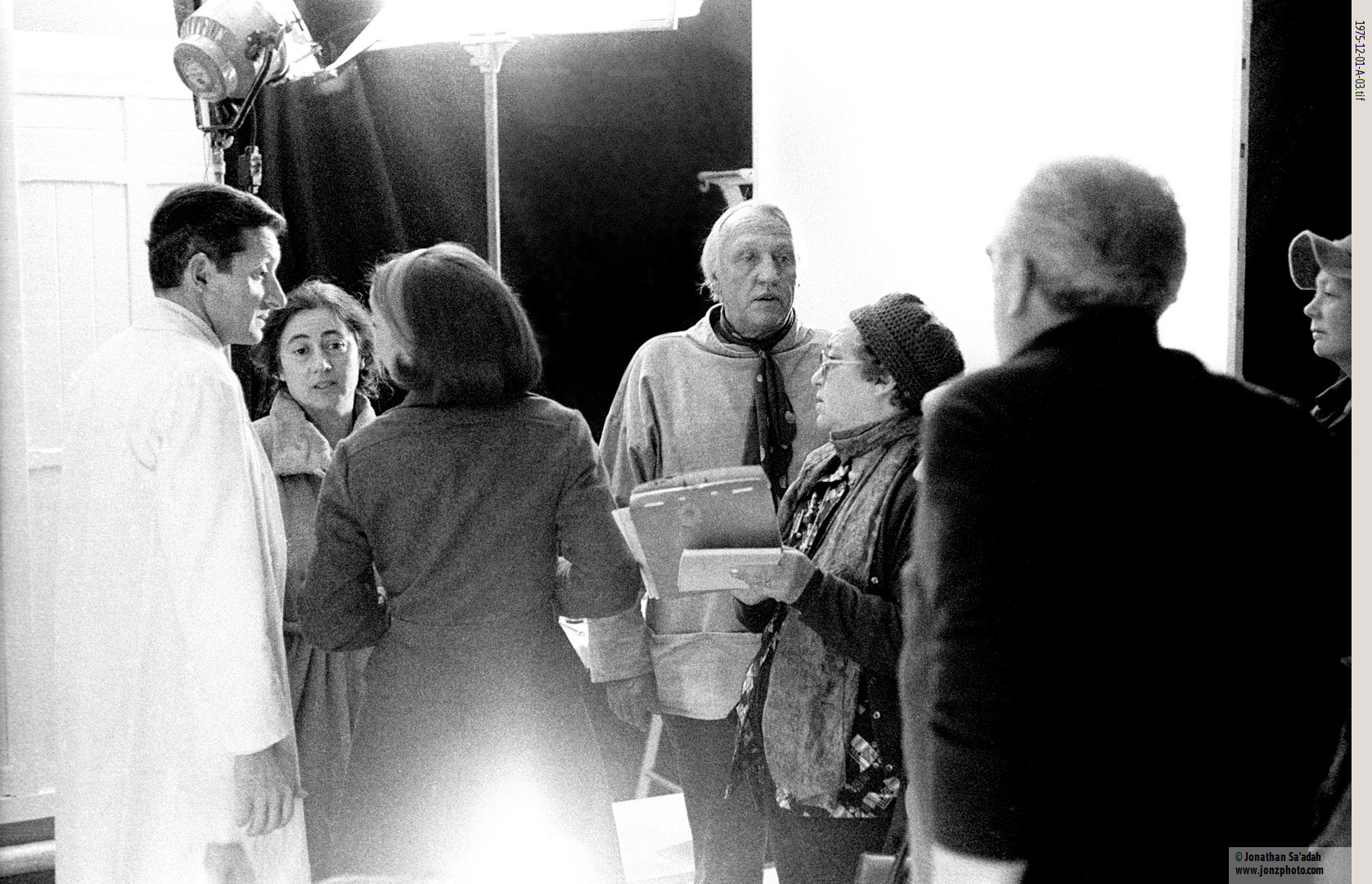
The production process revealed Losey’s meticulous approach to film-making. His days began at 6:30 AM and extended past 7:00 PM with dailies, followed by planning for upcoming filming, business negotiations, and correspondence. The demanding schedule reflected his total commitment to the craft, a work ethic that impressed cast and crew alike.
The Director’s Burden and Vision
Losey’s approach to directing embodied the complex demands of the role – balancing financing, writing, casting, and countless daily decisions while maintaining artistic vision under commercial pressure. His reputation for integrity and refusal to compromise attracted top professionals who knew he would “stick to his guns.”
The production of M Klein exemplified these qualities. From the first day of shooting at Cachan, where actress Isabelle Sadoyan performed a brutal nude scene under carefully controlled conditions, Losey established a tone of mutual respect and professionalism. The international crew, including professionals from England, France, and Italy, responded to his leadership with enthusiasm and dedication.
Not every aspect of production went smoothly. On January 20, 1976, Alain Delon left the production in anger, threatening the film’s completion. Yet through Losey’s consistent honesty and professional integrity Delon was brought back in. Losey built sufficient trust among his collaborators to overcome such crises. He neither pulled punches nor compromised the truth, qualities that sustained his reputation throughout his career.
Legacy of an Artist in Exile
Joseph Losey’s career represents a unique trajectory in cinema history – an American artist who found his authentic voice only after being forced from his homeland. His story illustrates both the destructive power of political persecution and the possibility of artistic redemption through exile. The films he created in Europe, particularly his collaborations with Harold Pinter and works like M Klein, demonstrate how personal adversity can fuel artistic achievement.
Losey’s enduring influence lies not just in his films but in his embodiment of the artist as exile – someone who transformed displacement into creative advantage. His work continues to resonate with contemporary audiences because it addresses universal themes of alienation, identity, and moral choice while maintaining the technical excellence and narrative sophistication that mark great cinema.
The blacklisted director who fled McCarthyism ultimately created a body of work that stands as testament to artistic integrity. In losing his American career, Joseph Losey found his authentic voice as a filmmaker, proving that sometimes the greatest creative breakthroughs emerge from the most challenging circumstances.
Joseph Losey’s films
| Date of release | Film | Country |
|---|---|---|
| 1948 | The Boy with Green Hair | United States |
| 1950 | The Lawless | United States |
| 1951 | M | United States |
| 1951 | The Prowler | United States |
| 1951 | The Big Night | United States |
| 1952 | Stranger on the Prowl | Italy |
| 1954 | The Sleeping Tiger | United Kingdom |
| 1956 | The Intimate Stranger | United Kingdom |
| 1957 | Time Without Pity | United Kingdom |
| 1958 | The Gypsy and the Gentleman | United Kingdom |
| 1959 | Blind Date | United Kingdom |
| 1960 | The Criminal | United Kingdom |
| 1962 | Eva | Italy/France |
| 1963 | The Damned | United Kingdom |
| 1963 | The Servant | United Kingdom |
| 1964 | King & Country | United Kingdom |
| 1966 | Modesty Blaise | United Kingdom |
| 1967 | Accident | United Kingdom |
| 1968 | Boom! | United Kingdom |
| 1968 | Secret Ceremony | United Kingdom |
| 1970 | Figures in a Landscape | United Kingdom |
| 1971 | The Go-Between | United Kingdom |
| 1972 | The Assassination of Trotsky | Italy/France/United Kingdom |
| 1973 | A Doll’s House | United Kingdom |
| 1975 | The Romantic Englishwoman | United Kingdom |
| 1975 | Galileo | United Kingdom |
| 1976 | Monsieur Klein | France |
| 1978 | Roads to the South | France |
| 1979 | Don Giovanni | Italy/France |
| 1982 | La Truite | France |
| 1985 | Steaming | United Kingdom |
More about Joseph Losey
Archer, Eugene. “Expatriate Retraces His Steps: Joseph Losey Changes Direction with His British ‘Servant.’” New York Times (1923-), March 15, 1964. 115707295. ProQuest Historical Newspapers: The New York Times.
Barthel, Joan. “I’m an American, for God’s Sake!” New York Times (1923-), March 26, 1967. ProQuest Historical Newspapers: The New York Times.
“BFI Screenonline: Losey, Joseph (1909-1984) Biography.” Accessed January 23, 2024. http://www.screenonline.org.uk/people/id/451136/index.html.
Canby, Vincent. “Cool, Elegant ‘Mr. Klein’ Is a Metaphorical Movie.” New York Times (1923-), 1977, 44.
Caute, David. Joseph Losey: A Revenge on Life. New York: Oxford University Press, 1994.
Ciment, Michel. Michel Ciment Interview Losey in Paris, 1976.
Film Director Joseph Losey and Playwright Harold Pinter Discuss “Accident”, 1967, 2024. https://www.youtube.com/watch?v=hhQQ-wBSQkI.
Galileo Protal. “Life of Galileo with Bertolt Brecht.” Museum, 2010. https://portalegalileo.museogalileo.it/egjr.asp?c=36300.
Gardner, Colin. “Joseph Losey.” In Joseph Losey, 1st ed. Manchester Film Studies. Manchester, UK: Manchester University Press, 2019.
Gavrik Losey, Son of Elizabeth Hawes, Oral History Interview, 2016 September 12, 2016. https://www.youtube.com/watch?v=yZkZTxWgMO8.
Goldberg, Eva. “Politics in American Popular Culture.” American Popular Culture. Accessed July 2, 2025. https://americanpopularculture.com/archive/politics/galileo.htm.
Goodman, Ezra. “Meet Pete-Roleum.” Sight and Sound, London: British Film Institute, Summer 1939. 1305505140. ProQuest One Literature.
Houston, Beverle, and Marsha Kinder. “The Losey-Pinter Collaboration.” Film Quarterly 32, no. 1 (1978): 17–30. https://doi.org/10.2307/1211896.
Houston, Penelope, and John Gillett. “Conversations with Nicholas Ray and Joseph Losey.” Sight and Sound, London: British Film Institute, Fall 1961. 1305505087. ProQuest One Literature.
Joseph Losey : Je n’irai Pas En Angleterre, 2012. https://www.youtube.com/watch?v=gTLxYCVUfSU.
Joseph Losey Tribute, 2018. https://www.youtube.com/watch?v=IMNxtkGpWtc.
Losey, Gavrik. Gavrik Losey Interview. The British Entertainment History Project, 2019. https://historyproject.org.uk/interview/gavrik-losey.
Losey, Joseph. Conversations with Losey. Edited by Michel Ciment. London ; New York: Methuen, 1985.
Palmer, James. The Films of Joseph Losey. Cambridge Film Classics. Cambridge: University Press, 1993.
Prime, Rebecca. “‘The Old Bogey’: The Hollywood Blacklist in Europe.” Film History: An International Journal, Indiana University Press, 2008.
Sarris, Andrew. . . . “. . . And the Man Who Made It: Joseph Losey.” New York Times (1923-), November 17, 1968. 118367559. ProQuest Historical Newspapers: The New York Times.
Weiss, Jason. “Screenwriters, Critics and Ambiguity: An Interview with Joseph Losey.” Cineaste Publishers, Inc., 1983.

Leave a Reply