
This is the second in a series introducing my new photo book “Return to Damascus: A Personal Journal.” This post is about my family’s connection to Damascus and my own personal journey.
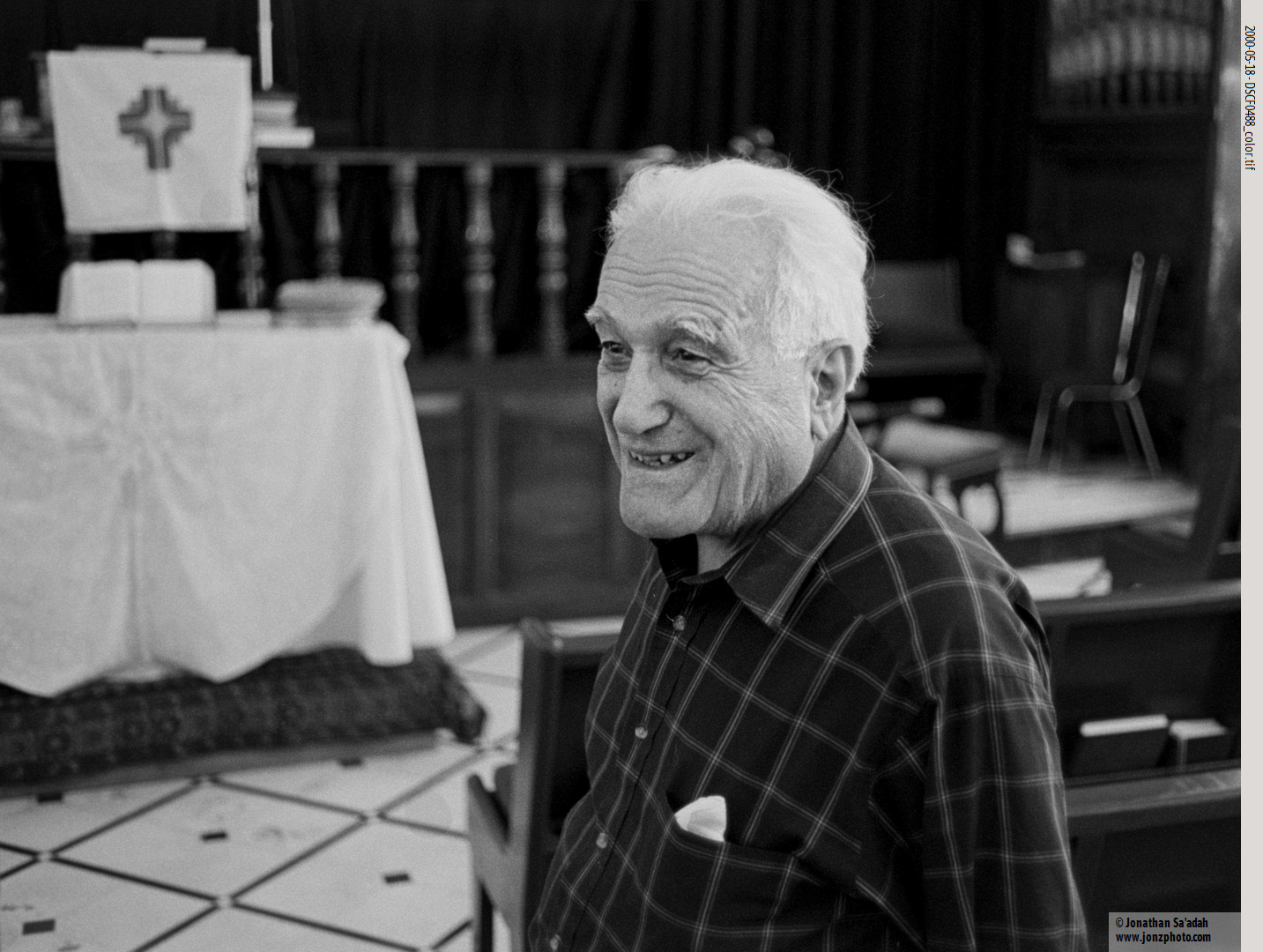
“This was all different,” my father murmurs as we walk through Bab Tuma (Saint Thomas’s Gate) which gives its name to the old Christian quarter of Damascus. “And yet, somehow the same.”
His paradoxical statement captures something essential about Syria that most of us never get to see. At ninety years old, walking slowly through the streets he once knew as a boy, my father was experiencing something profound: the simultaneous recognition and alienation that comes from returning to a homeland that exists partly in memory, partly in reality.
It was May 2000, and I had traveled to Damascus with him. This was a man who left Syria in 1928, moving to Beirut for his education before eventually emigrating to the United States in 1946. He wanted to share the city with his American-born son, and I wanted to learn more about how Syria intertwined with our family history. What I discovered challenged everything I thought I knew about this ancient crossroads of civilizations.
The Problem with How We See Syria
The morning light filtered through the ornate wooden shutters of my room at the Sultan Hotel, casting intricate patterns across the tiled floor. I awoke at dawn to the foreign sound of the muezzin’s call to prayer from the nearby Takiyyee Mosque pulling me from sleep. Outside my window, Damascus was already stirring to life in the warm May sunshine, the air carrying the mingled scents of cardamom, exhaust fumes, and jasmine that seemed to define this ancient city.
This Damascus – vibrant, complex, culturally rich – bears little resemblance to the Syria portrayed through media coverage. Even in 2000, before the devastating civil war that would begin eleven years later, Western portrayals consistently framed Syria and Syrians through a lens of “otherness” and conflict. The tendency to classify entire nations and peoples as exotic, dangerous, or fundamentally different from “us” was already well-established, focusing on political tensions while ignoring the rich cultural heritage, intellectual traditions, and everyday humanity of Syrian people.
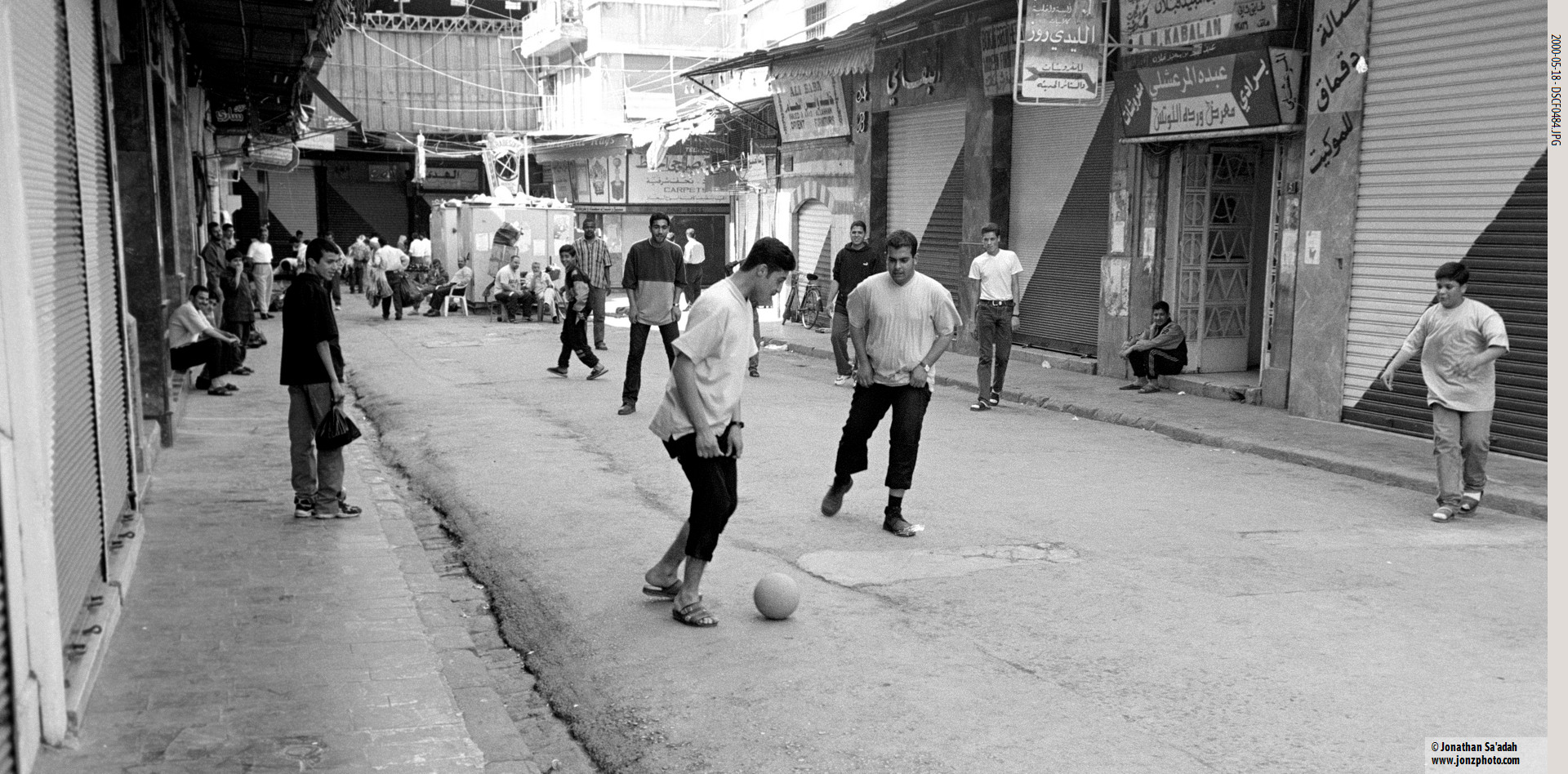
Since 2011, this pattern has only intensified. Coverage focuses almost exclusively on war, refugees, and extremism – creating a one-dimensional image that flattens the complexity of a civilization that has been a crossroads of culture for millennia. We hear about Syria as a problem to be solved, a tragedy to be pitied, or a threat to be contained. We rarely hear about Syria as a place where people wake up to the smell of jasmine, where ancient traditions of hospitality still flourish, and where people from different traditions have coexisted for centuries.
My two weeks in Damascus revealed a cultured society that contradicted these stereotypical portrayals. I encountered university professors debating philosophy in coffee houses, artists preserving traditional crafts passed down through generations, and merchants whose families had operated the same shops in the al-Hamidiyah Souk for centuries. This was not the monolithic, threatening “other” of Western imagination, but a complex society grappling with modernity while maintaining deep roots in history.
Syria at a Crossroads
The Syria I encountered in 2000 was a nation holding its breath. President Hafez al-Assad, who had ruled with an iron fist since 1971, was visibly ailing. His health, which had begun deteriorating in 1983 due to diabetes and heart problems, had become a matter of quiet speculation among Damascenes. Though no one spoke openly about succession, the question of what came next hung in the air like the scent of cardamom from street vendors’ carts.
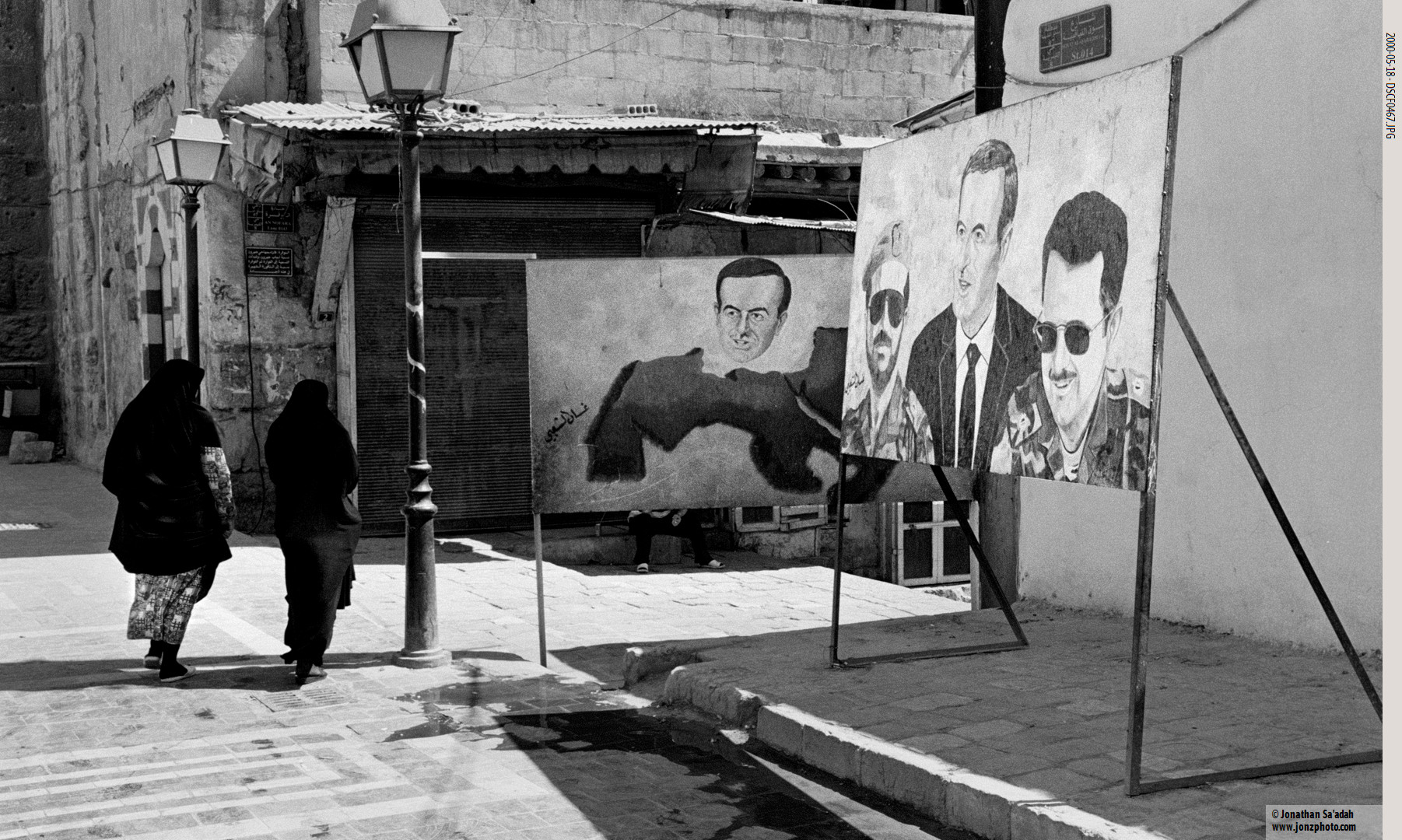
The city was plastered with images of Assad – stern Assad in camouflage, smiling Assad in a suit, saluting Assad in formal military dress. His presence was inescapable, appearing on billboards along major roads. But there was a disconnect between the vigorous leader of the posters and the pale, weight-lost figure who appeared on television. Military checkpoints dotted the city, their sandbagged bunkers a reminder of authority, though the soldiers manning them often looked more bored than alert.
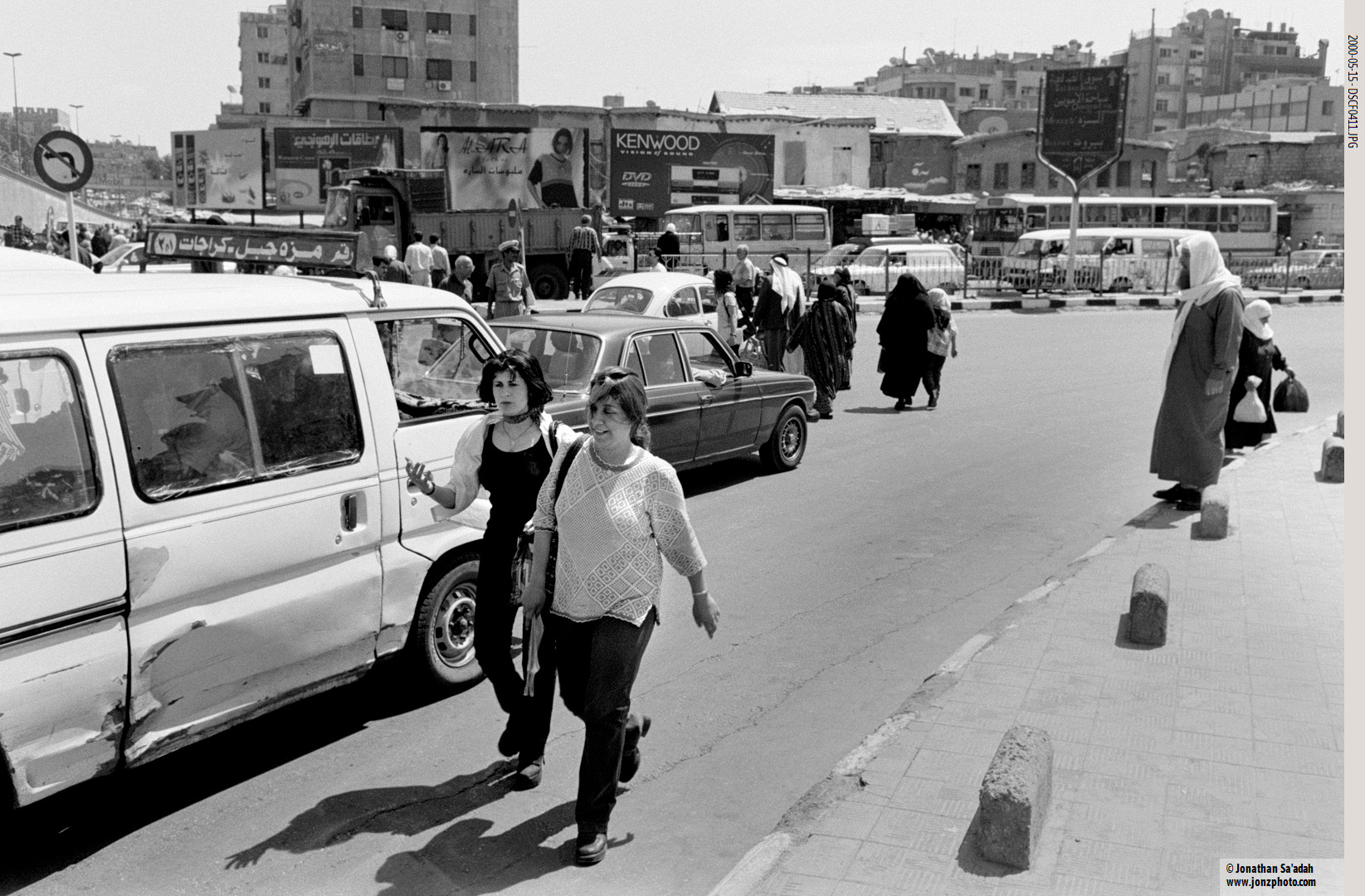
Yet beneath this atmosphere of controlled stability, Damascus pulsed with life. By 7 AM, the streets were already teeming with activity. Small cars screeched through narrow alleys, buses overflowed with passengers, and motorbike-based delivery vehicles navigated the chaos with surprising agility. Street vendors set up their carts, selling everything from fresh bread to household items. The smells of brewing coffee and frying falafel permeated the morning air as cafés and food stalls prepared for the day’s business.
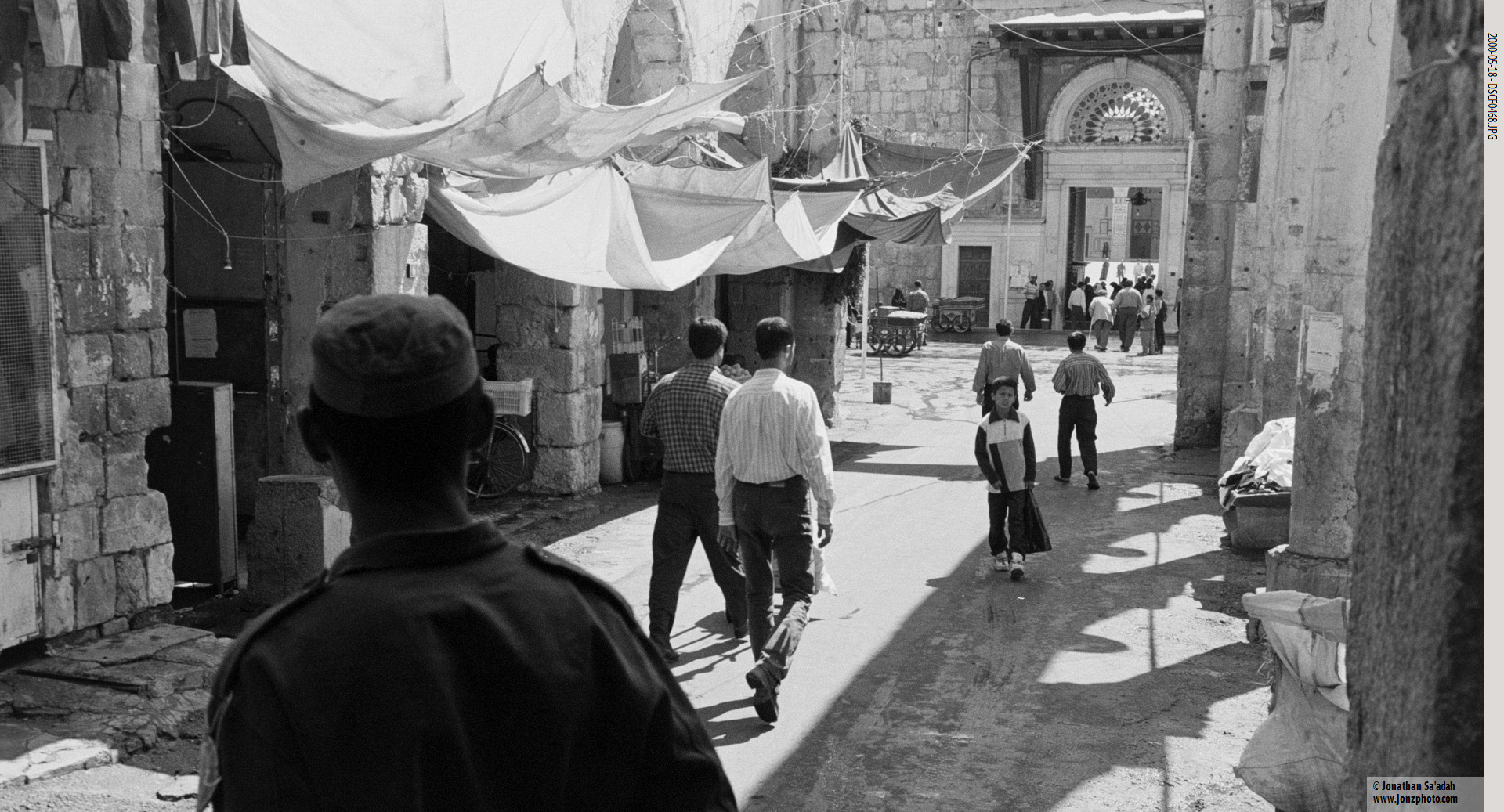
The Old City, with its division into distinct quarters revealed a historical coexistence that had characterized Damascus for centuries. The Christian Quarter, formed by a complex pattern of alleys and small streets, housing families whose roots stretched back generations. Though some areas were experiencing gentrification, with homes being converted to museums and restaurants, the sense of continuity remained palpable.
This was Syria on the cusp of change – a mixture of ancient traditions and modern aspirations, of political uncertainty and cultural vitality. The atmosphere was one of anticipation, a sense of waiting for something to shift, while daily life continued with its eternal rhythms.
From America to Syria: A Photographer’s Journey Home
My path to Damascus began decades earlier, rooted in my interest in using photography for social documentation. Growing up in Vermont after my family immigrated to the United States, I became fascinated with the camera as a tool for understanding human experience. My earlier work had focused on American social change – documented in my book “How Many Roads?” which featured images of America in the late 1960s and early 1970s during the turbulent Vietnam War era.
As a photographer trained in portraiture and street photography, I approached Syria with the same documentary instincts that had driven my work in America. But this journey was different – deeply personal in ways that challenged my usual professional objectivity. Walking through Damascus with my ninety-year-old father, I was simultaneously documenting a foreign country and exploring my own heritage.
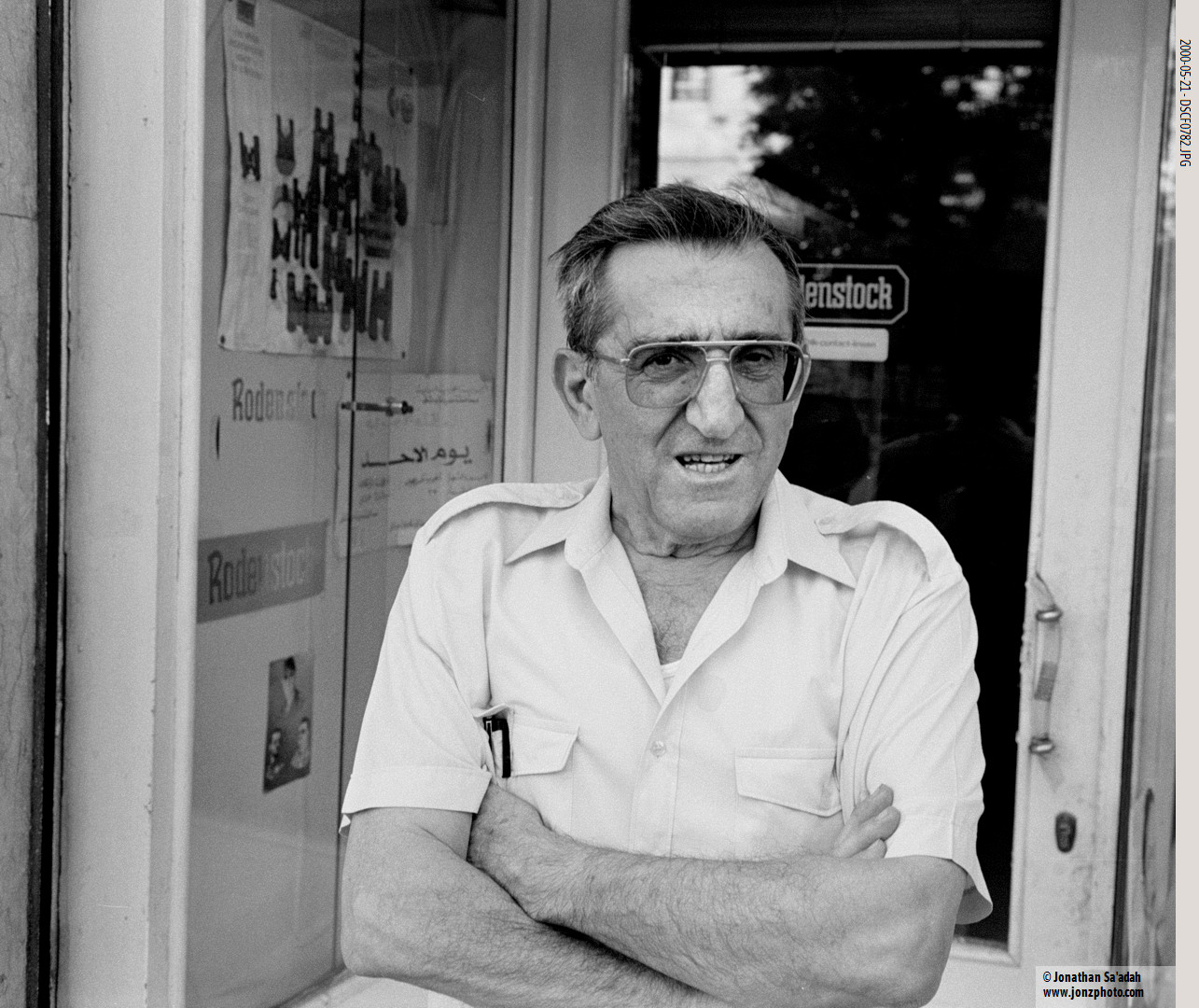
My father’s perspective provided a unique lens for understanding both continuity and change in Syrian society. He had left in 1928 as a young man, spent decades teaching Arabic and Islamic studies in private high schools in Vermont and Connecticut, and was now returning to find a Damascus transformed yet somehow familiar. His memories of al-Salihiyah as “all orchards” overlaid the present reality of urban development, revealing the layers of change that had accumulated over seven decades.
Watching him move through the city – standing silently in Byzantine churches, recognizing the shape of mountains against the sky while acknowledging how everything else had changed – I realized I was witnessing something profound about heritage and belonging. This wasn’t about nostalgia or simple homecoming, but about the complex relationship between memory and place, between individual identity and cultural continuity.
Through my camera lens, I began to see Syria not as an exotic destination but as a homeland I had never known – a place where my family’s stories originated, where the Arabic language my father had taught was the natural medium of daily conversation, where the cultural traditions that had survived in diaspora continued to flourish in their original context.
The Mission Behind the Camera
What emerged from this experience was both a personal journey and a larger mission of cultural preservation. The 88 photographs in my book represent more than tourist snapshots or even professional documentation – they constitute an act of cultural counter-narrative, showing Syria’s humanity, complexity, and beauty before the widespread destruction that would follow.
This isn’t political advocacy. I’m not arguing for any particular government or policy position. Rather, it’s cultural documentation – an attempt to preserve and share the everyday dignity of Syrian life, the richness of its traditions, the warmth of its people, and the depth of its history. In an era when entire societies are reduced to headlines and sound bites, photography can serve as a bridge to deeper understanding.
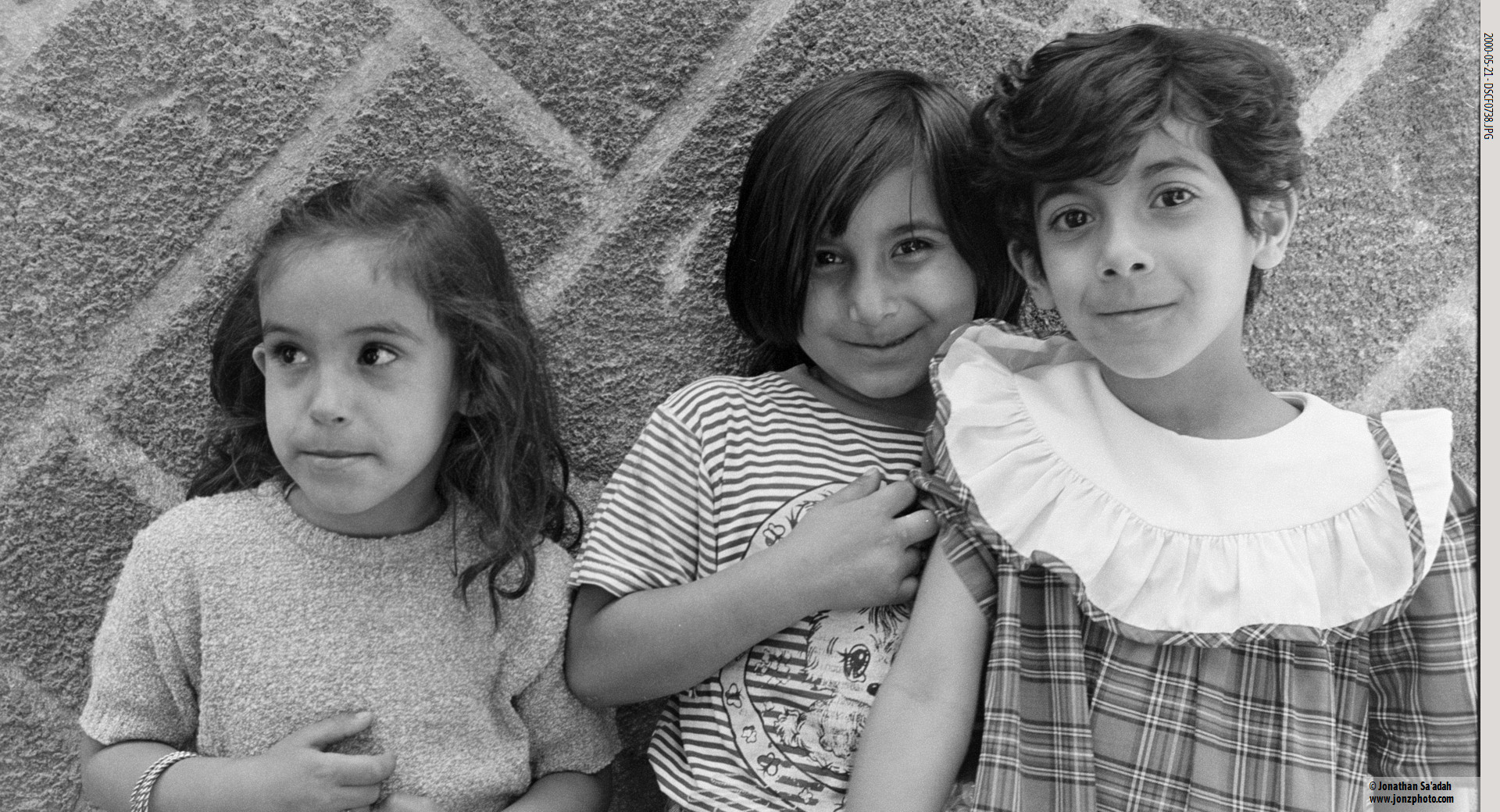
My photographs capture Damascus awakening early – streets teeming with life by 7 AM, vendors setting up carts, the gentle hum of conversation rising above street noise as families emerge in the evening to shop and socialize. They document the architectural marvels of the Old City, where narrow streets wind like ancient rivers and balconies almost touch overhead. They preserve moments of daily grace – children playing in shadowed alleys, conservative Muslims waiting for taxis alongside bareheaded Christians, with no notice being given by either.
These images matter because they show Syria as more than a problem to be solved or a tragedy to be pitied. They reveal a society with the same universal human experiences that connect us all – people working, celebrating, worshiping, raising families, maintaining traditions while adapting to change. They document the complex religious diversity that has characterized Damascus for centuries, the intellectual curiosity that fills coffee houses with debate, the artistic traditions that continue despite political uncertainty.
Understanding Our Shared Humanity
As the muezzin’s call to prayer rose from minarets across Damascus on our last evening, creating a haunting melody that seemed to suspend time, I understood something fundamental about the relationship between documentation and understanding. Photography, at its best, doesn’t just capture images – it creates bridges between different worlds, different experiences, different peoples.
The Syria I documented in 2000 no longer exists in the same form. The civil war that began in 2011 has transformed the country, displaced millions, and damaged or destroyed countless cultural sites. Many of the people I photographed have likely fled, and some of the places I captured may be ruins. This reality makes the photographs even more precious as historical documents, preserving a moment of relative peace and normalcy before the storm.
But the deeper value of this work lies in its challenge to simplistic narratives about who Syrians are and what Syria represents. By showing the country’s complexity – its religious diversity, its cultural sophistication, its deep historical roots, its essential humanity – these images resist the reduction of an entire civilization to political conflicts or security concerns.
In our interconnected world, such understanding matters more than ever. When we see others as fully human – with the same hopes, fears, joys, and struggles that characterize our own lives – we create the possibility for genuine dialogue and mutual respect. When we reduce them to stereotypes or threats, we lose the chance for the kind of understanding that makes peace and cooperation possible.
My father’s words that final evening – about feeling both stranger and connected to Damascus – capture something universal about the human experience of belonging and identity. We all carry multiple histories, multiple connections, multiple ways of understanding home. The photographs in this book are my attempt to honor that complexity, to preserve a moment when I glimpsed my own family’s homeland through both familiar and foreign eyes, and to share that experience with others who may never have the chance to see Syria beyond the headlines.
In the end, this is what photography can offer: not just documentation, but invitation – an invitation to see beyond our assumptions, to recognize our shared humanity, and to understand that every place, every people, every culture contains depths that deserve our attention and respect.
I am so glad that you, your brother, and your father were able to make this priceless trip together, and will never forget your father’s exuberant, infectious happiness as we drove him home from the airport. Travel is such a privilege and life-opening experience, and that trip is still giving to you and to a wider audience. How wonderful.
Looking forward to receiving my copy in November
The words and the photos combined are sublime. The photos are worth a thousand words, but the few words you supply are wonderful accompaniment. This is art, history, journalism, and philosophy combined. “We all carry multiple histories, multiple connections, multiple ways of understanding home.” Yes, and you are definitely honouring that complexity. Looking forward to seeing and reading more.
This has been really wonderful to read and see Jonathan, thanks so much for sharing it with us. I’m learning so much about your story and about this part of the world. I’m very excited for the full book now. Very cool to better understand what photography means to you- something I’ve always been curious to understand.