
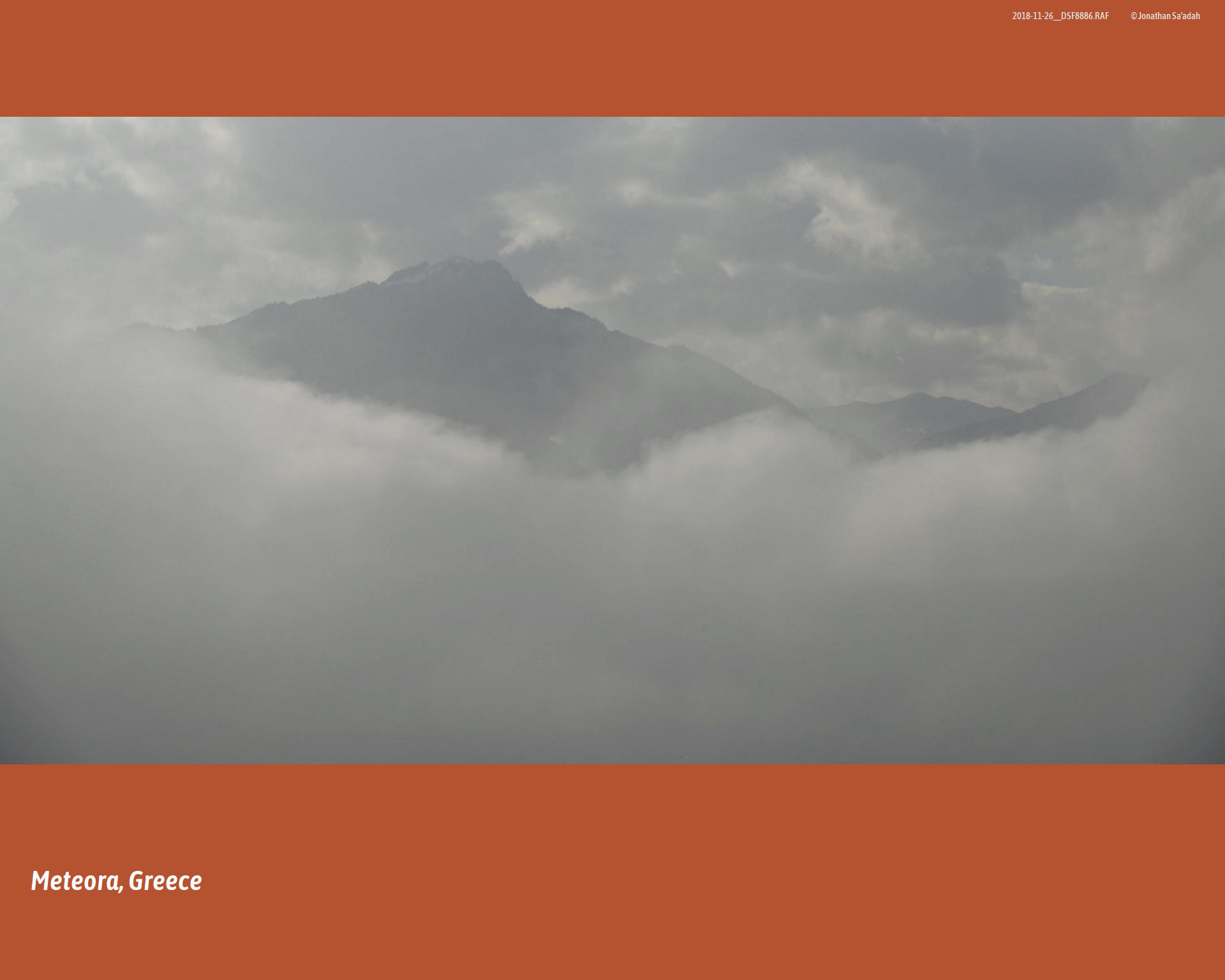
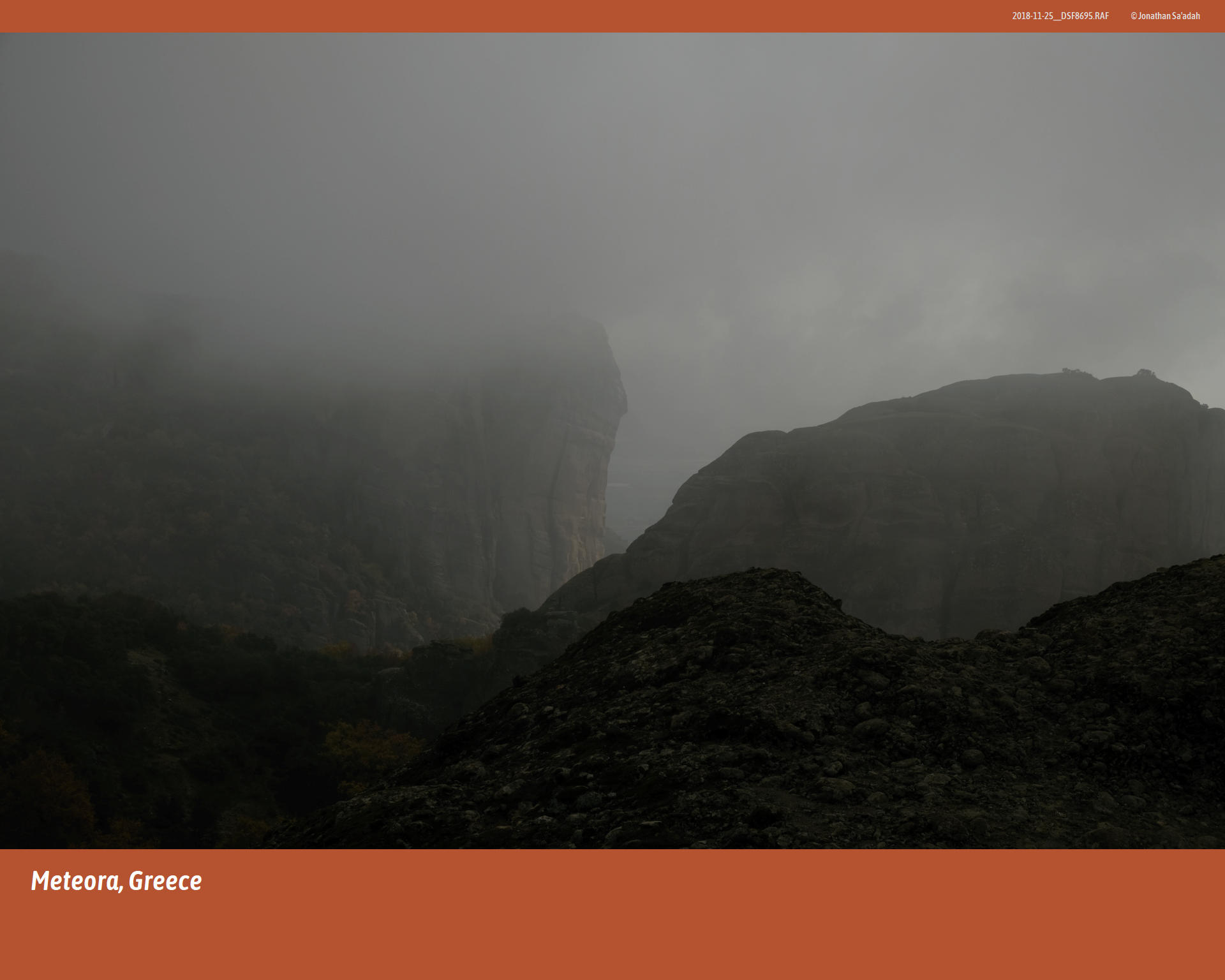
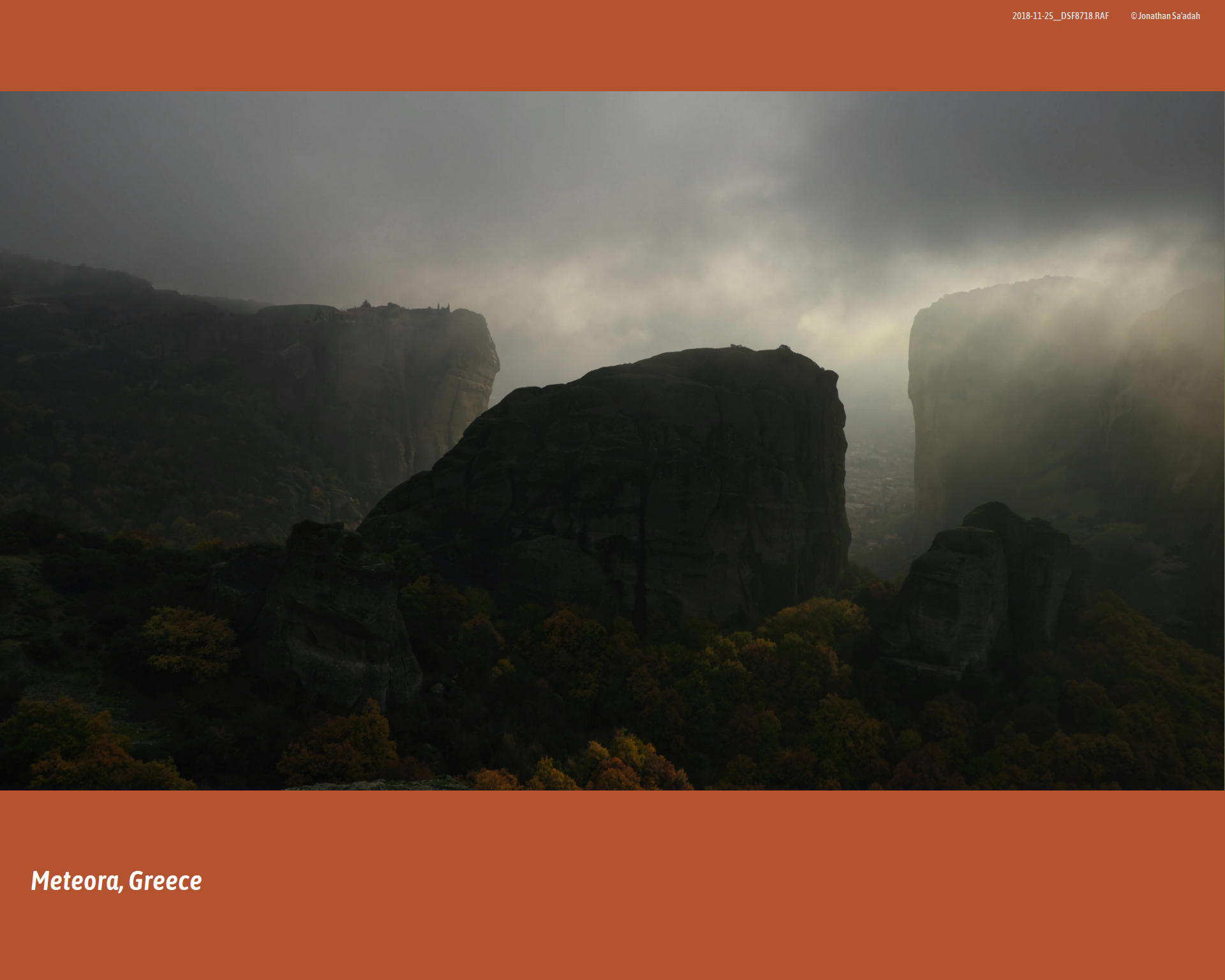
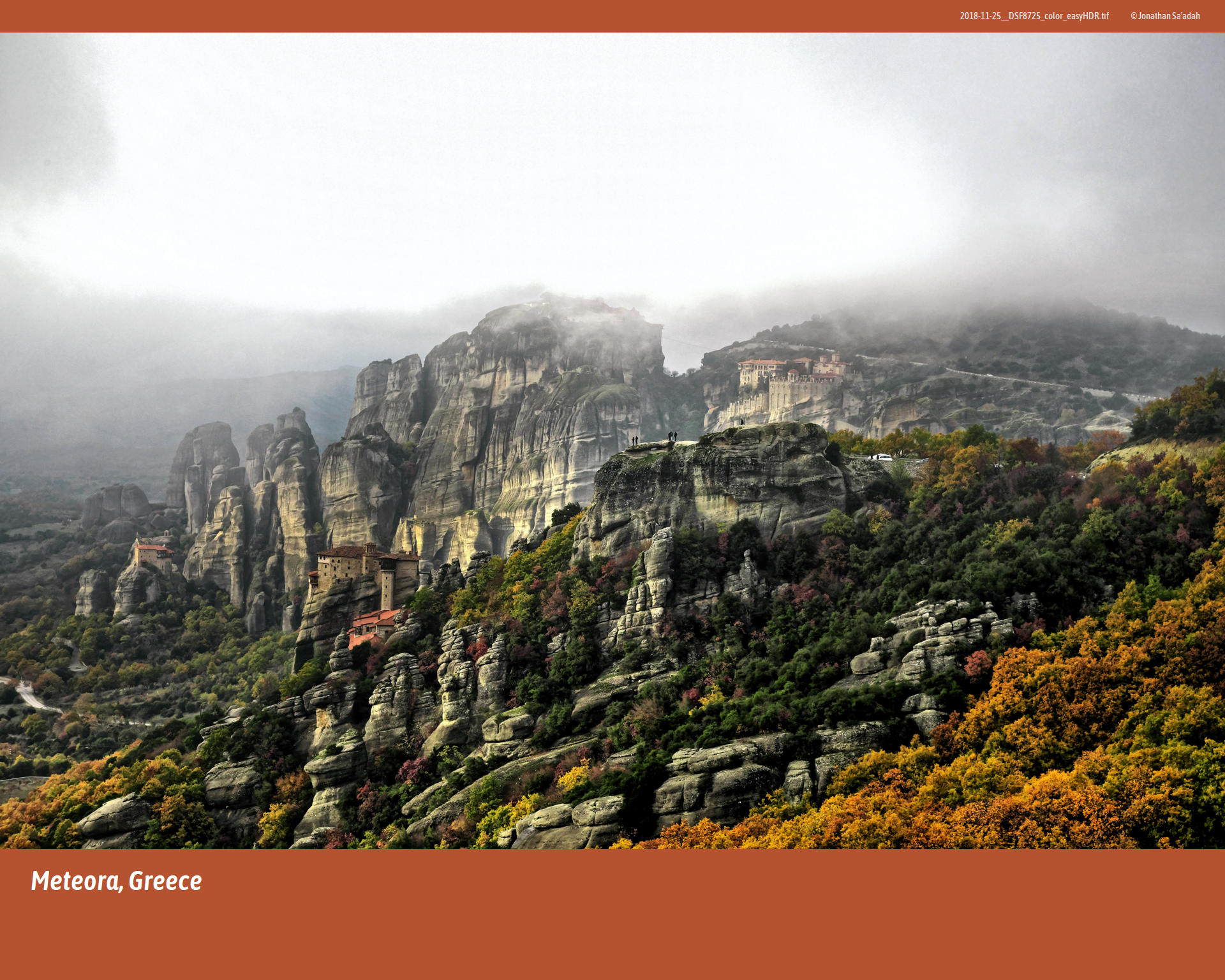
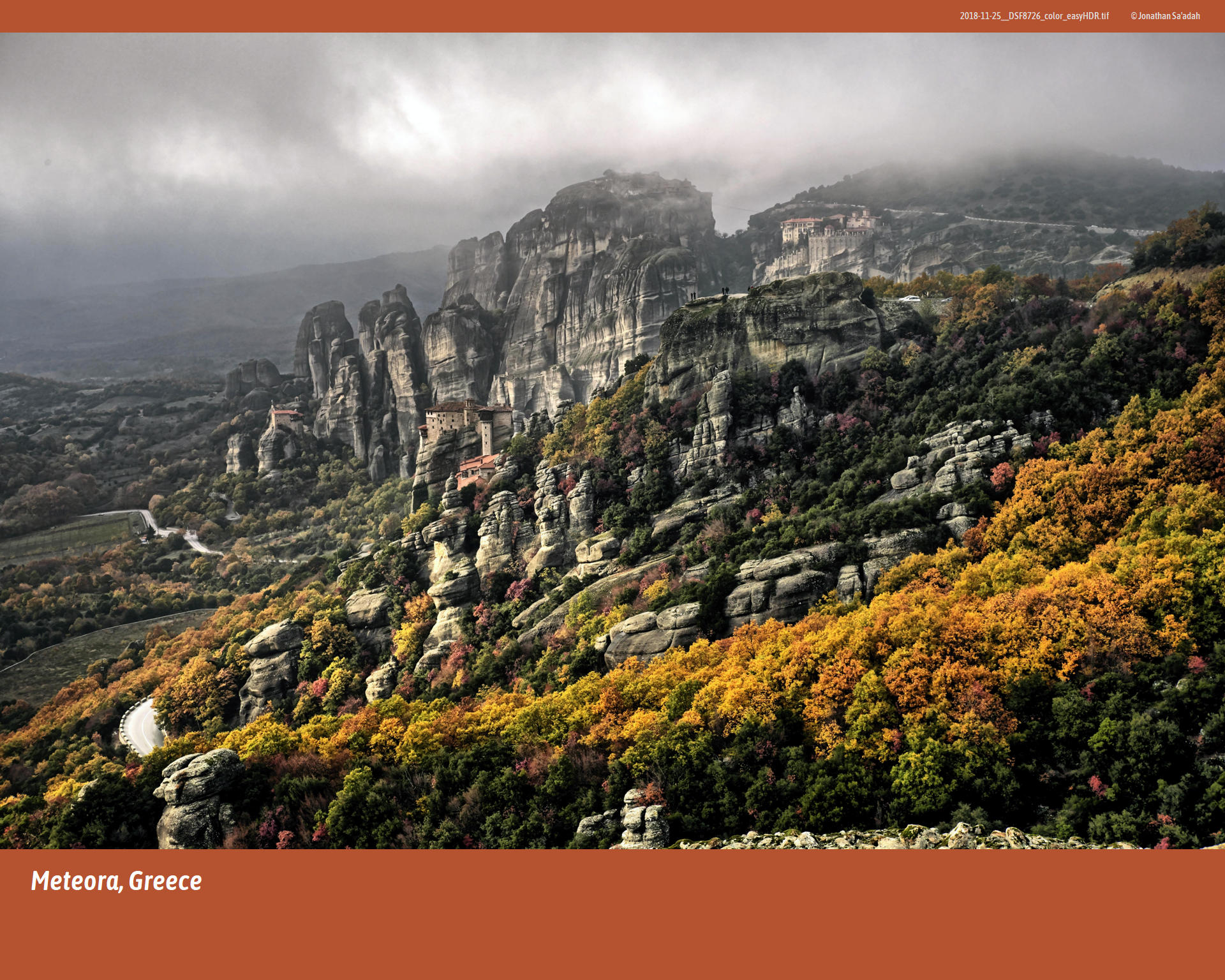
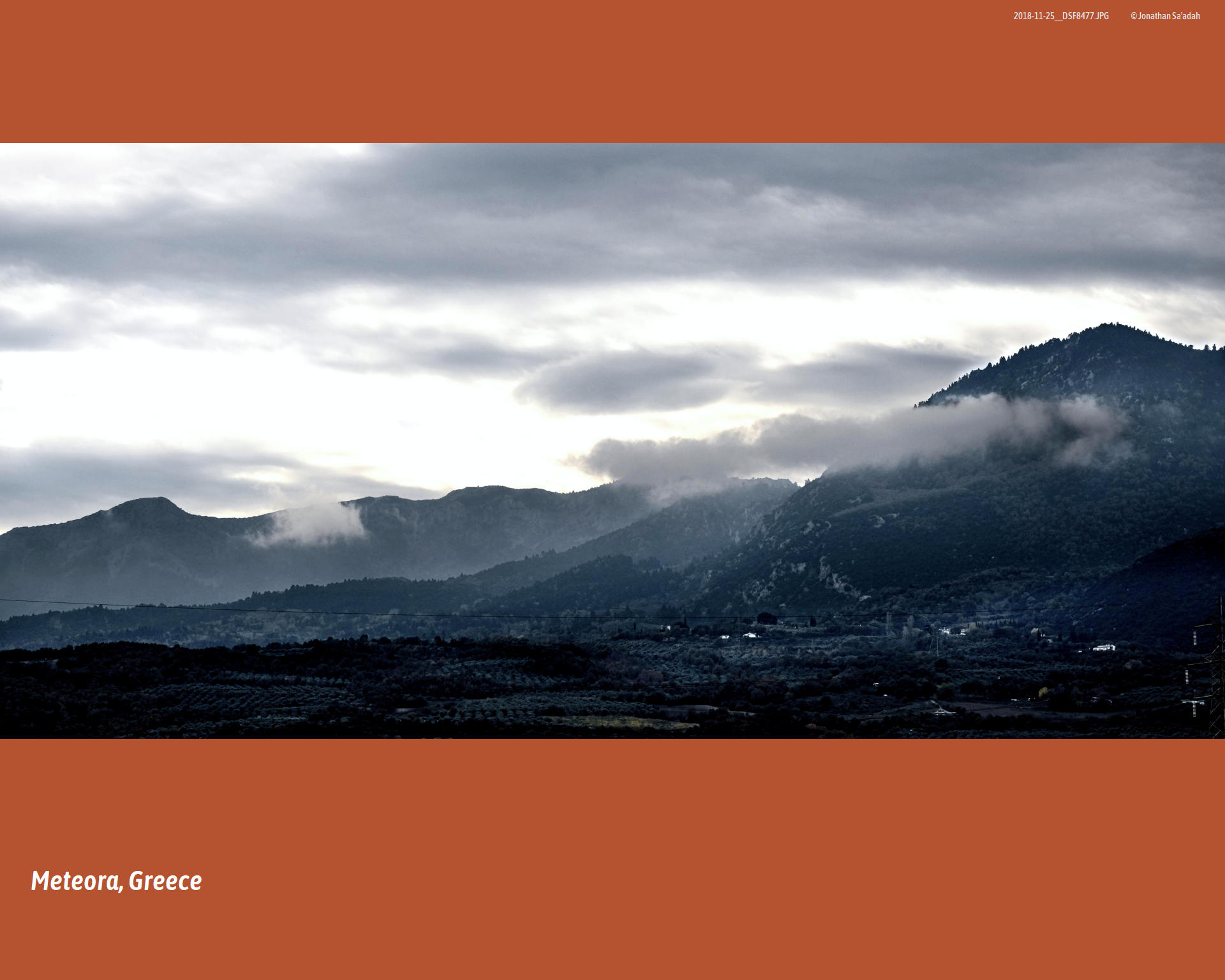
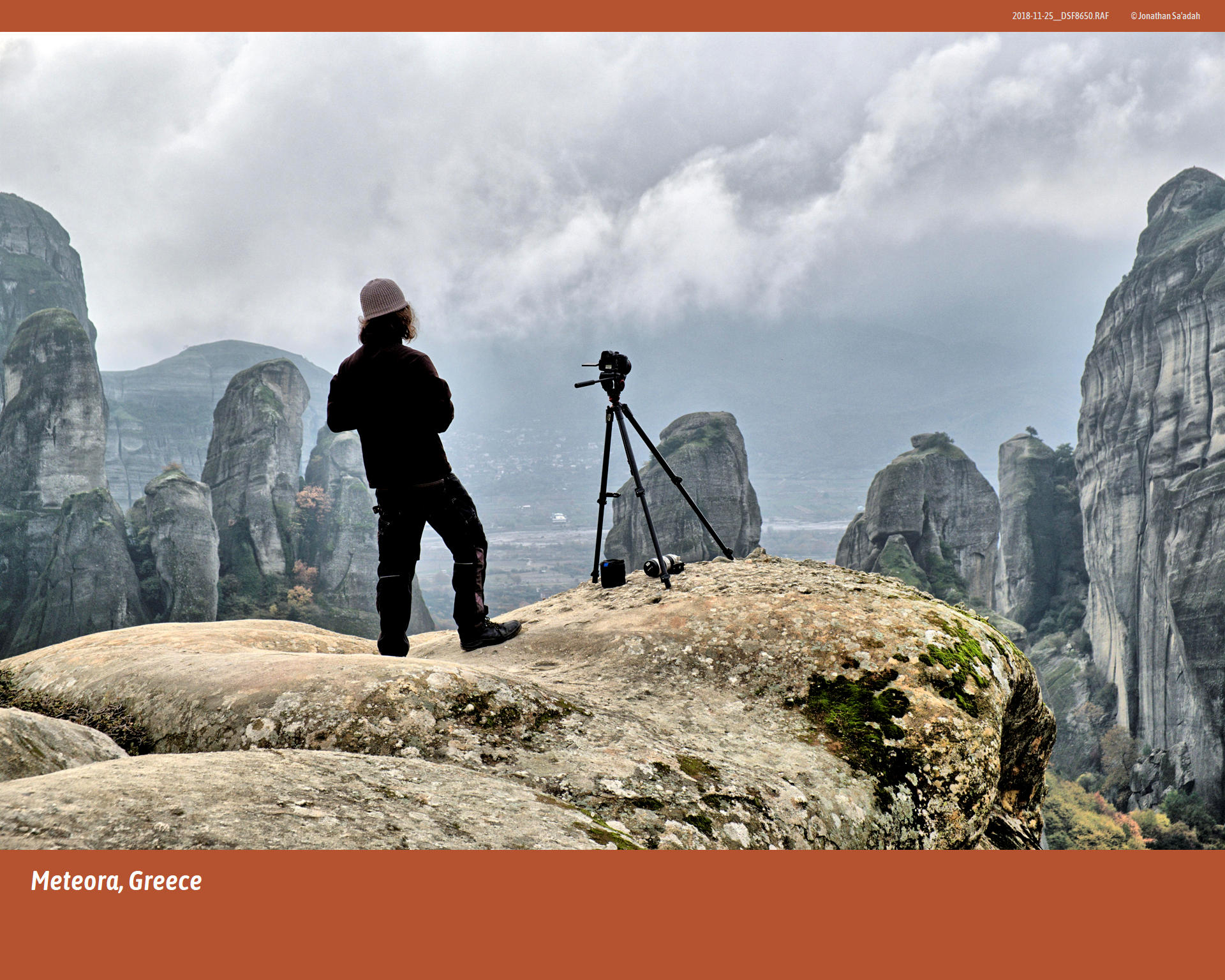
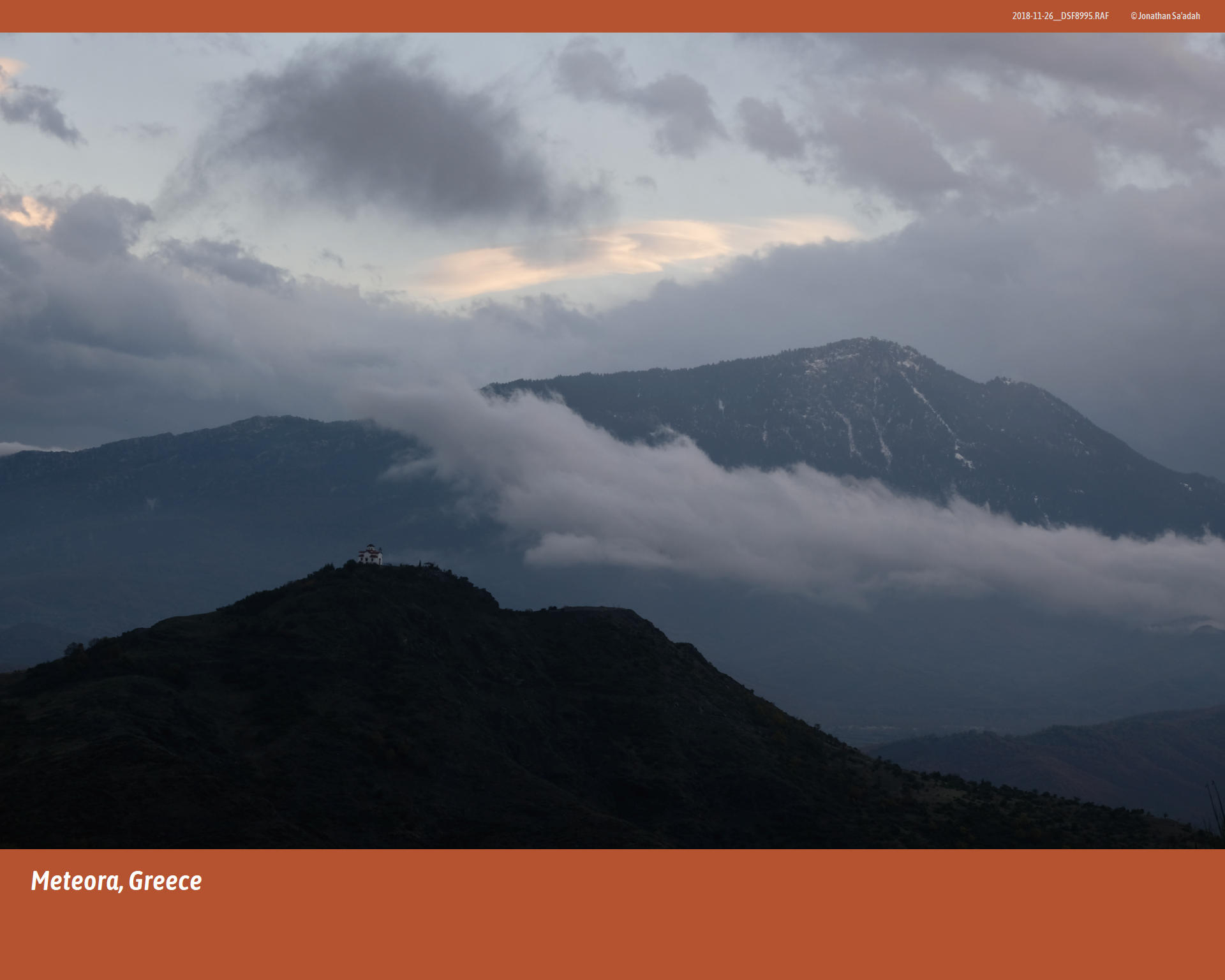
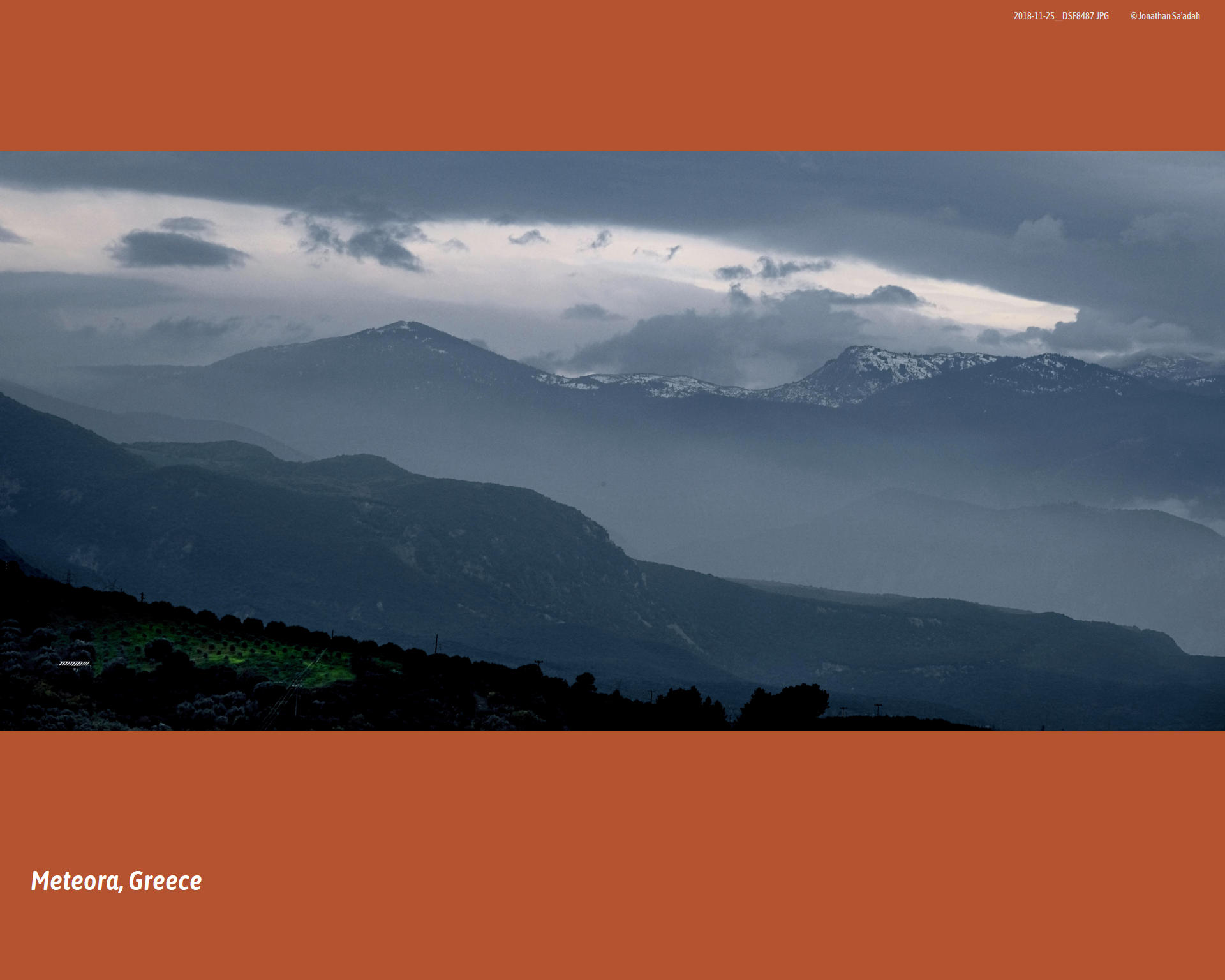
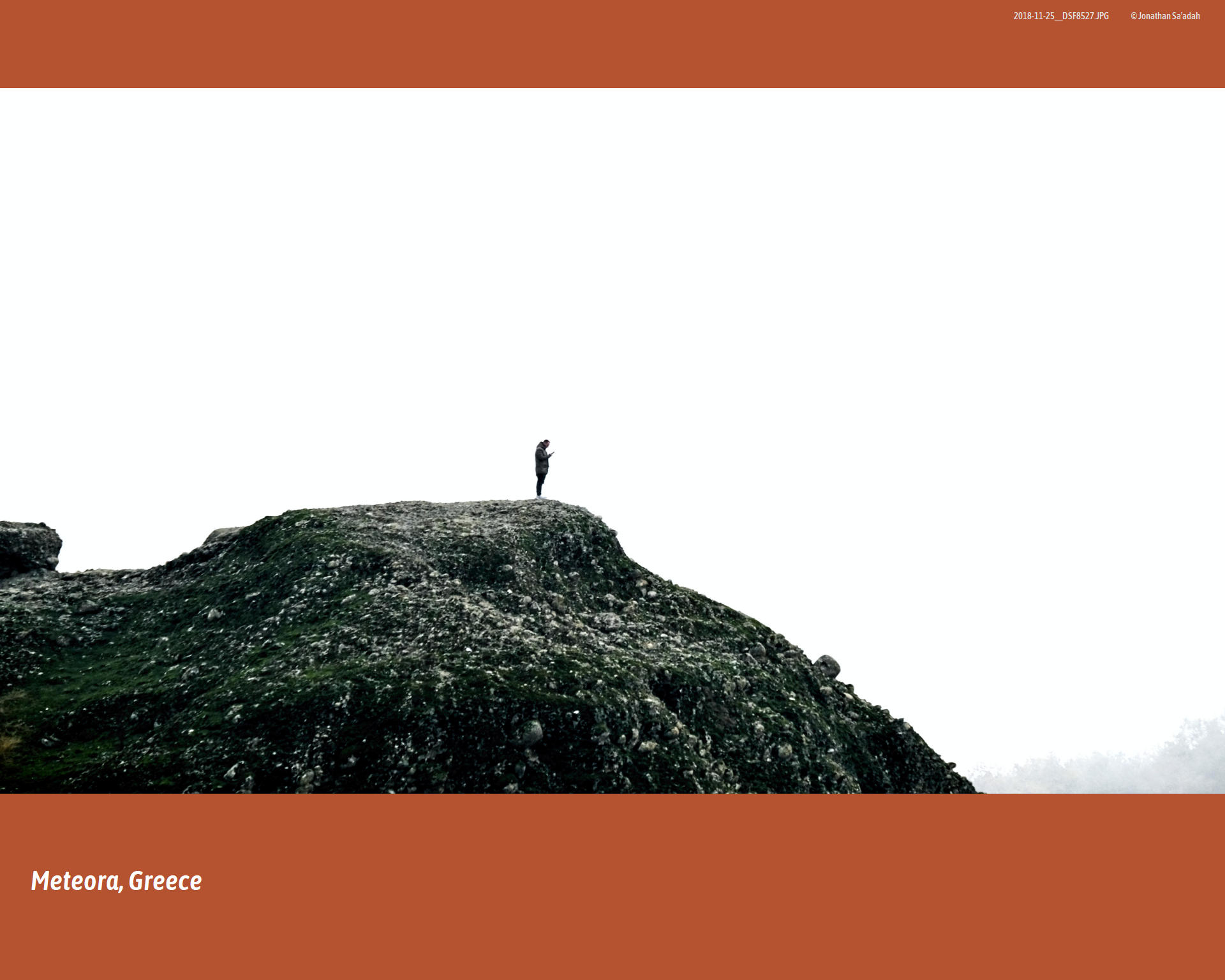
We had come to see Meteora on a misty morning in November, 2018. The ground-hugging fog drifted like a low cloud across the Thessalian plain, swallowing the road ahead and the hulking silhouettes of rock that we knew were there but could not yet see. Somewhere above, the monasteries of Meteora – “suspended in the air,” as their name has been translated for centuries – waited in the whiteout, as they have since the first hermits began climbing into caves up there in the 11th century.
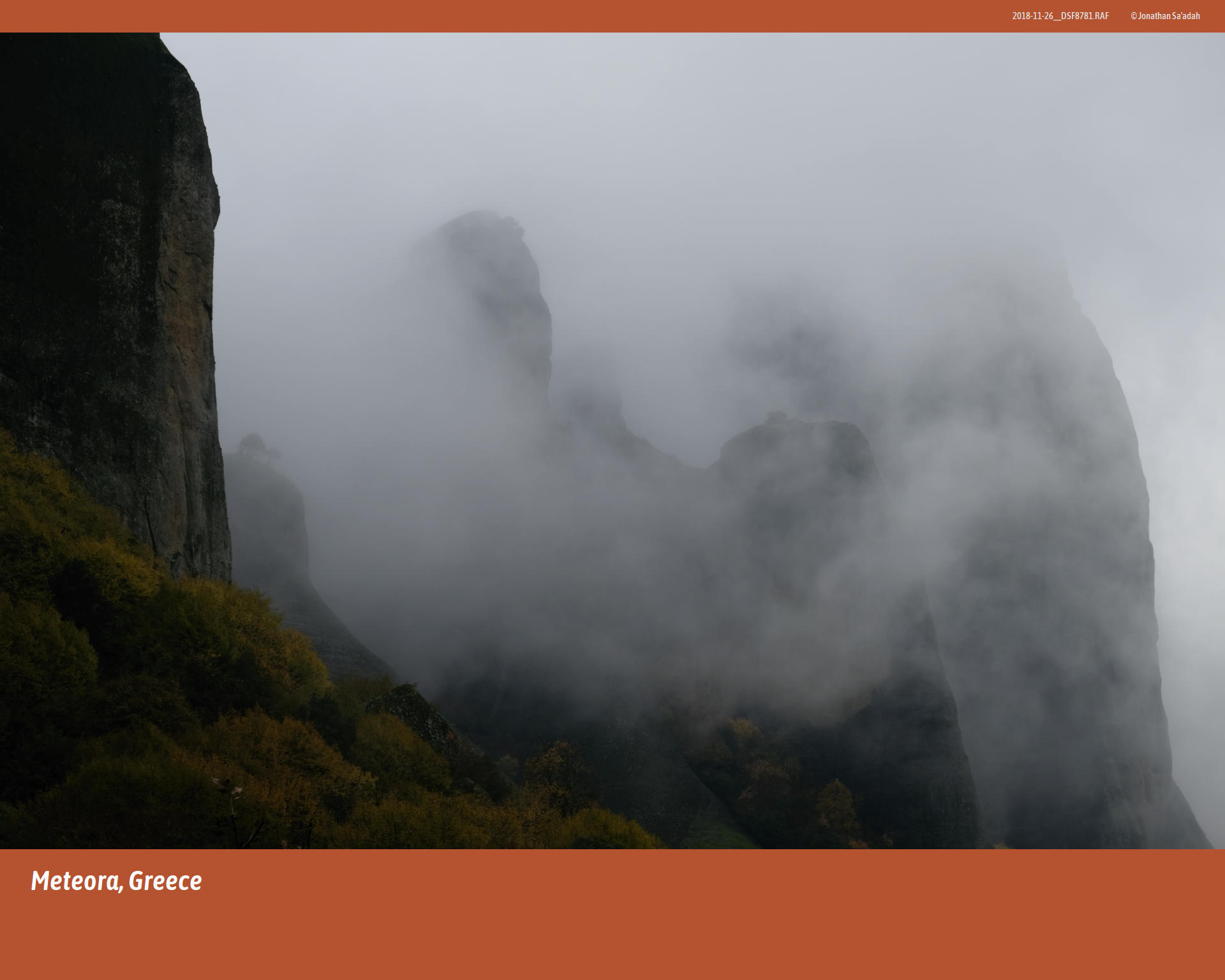
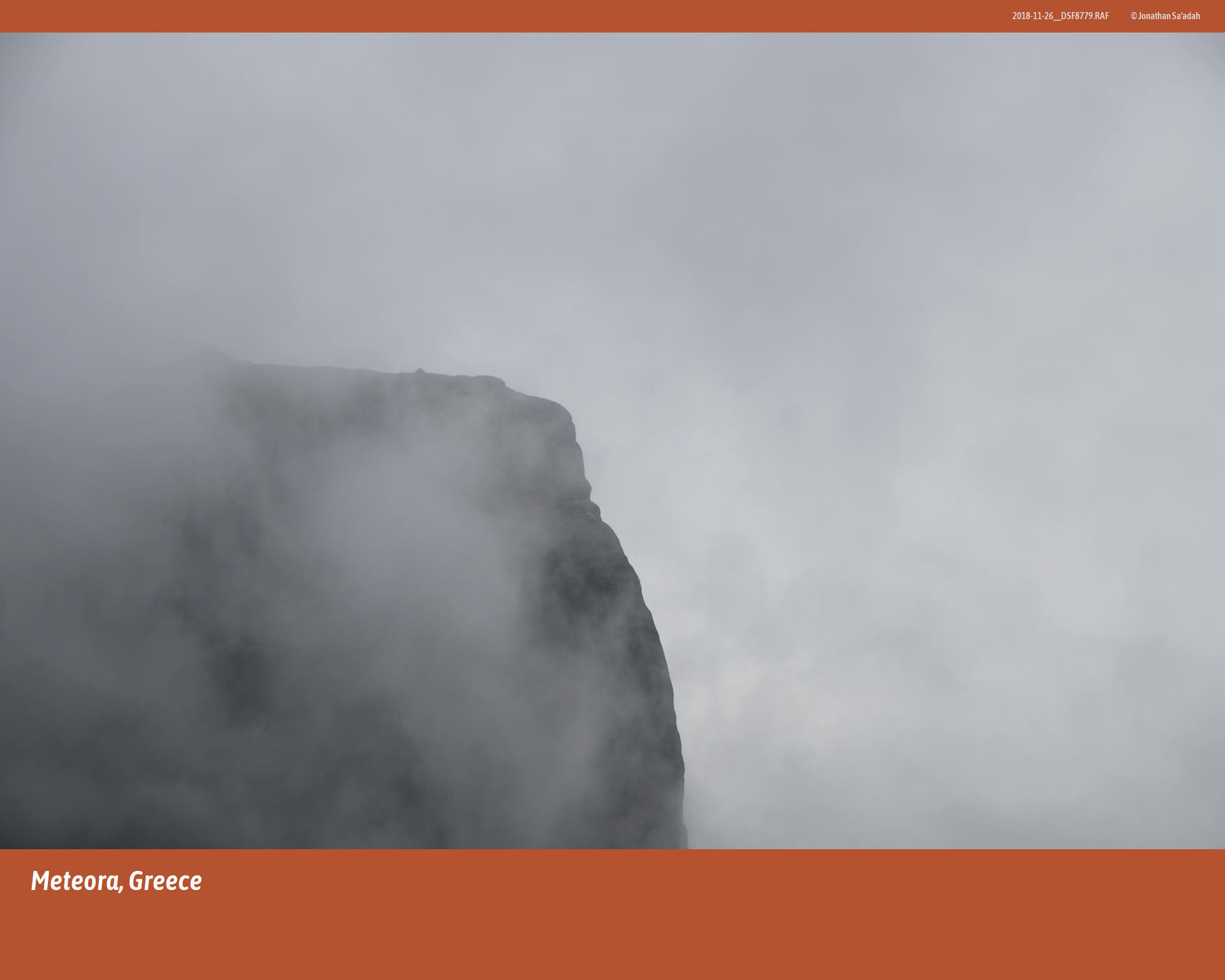
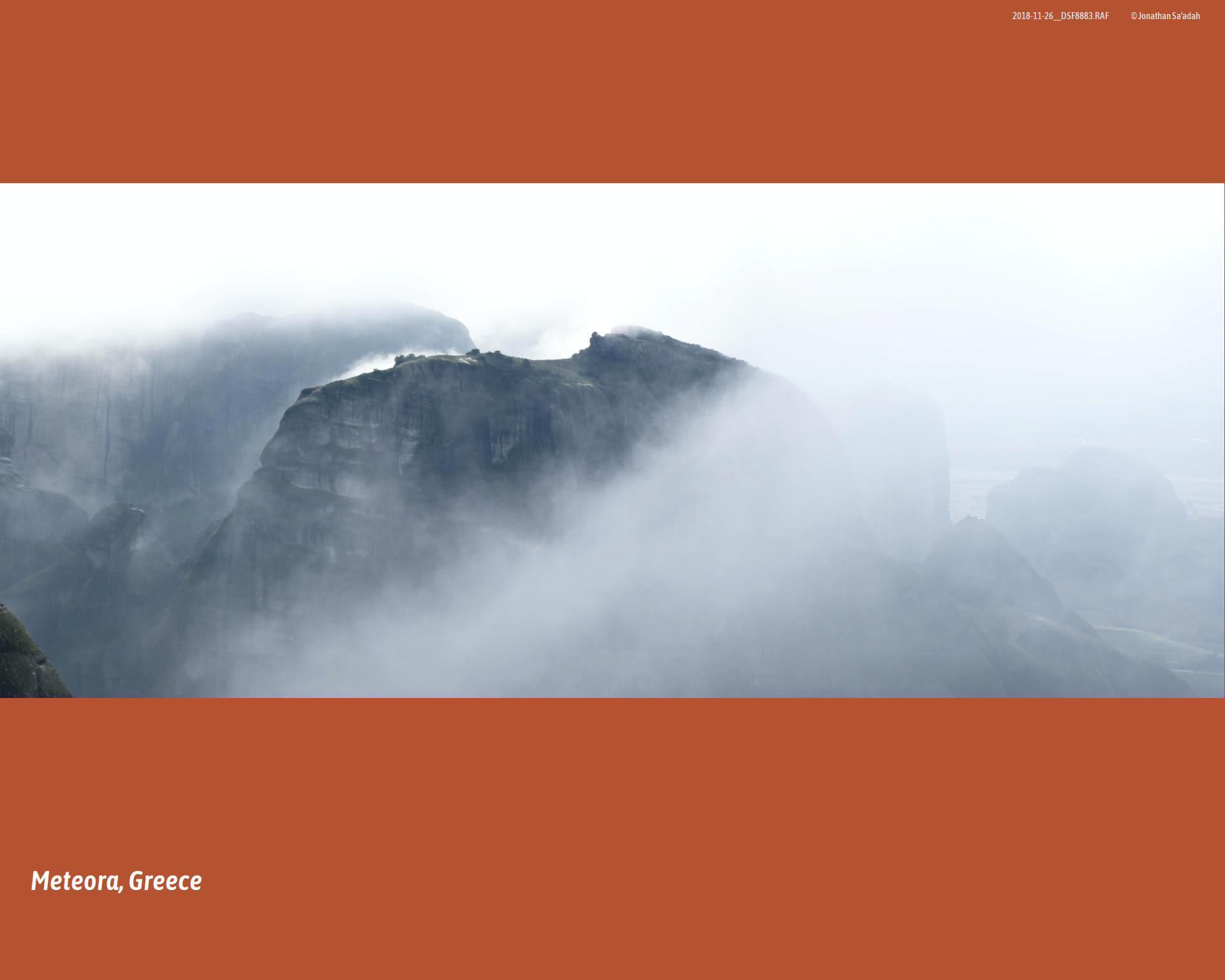
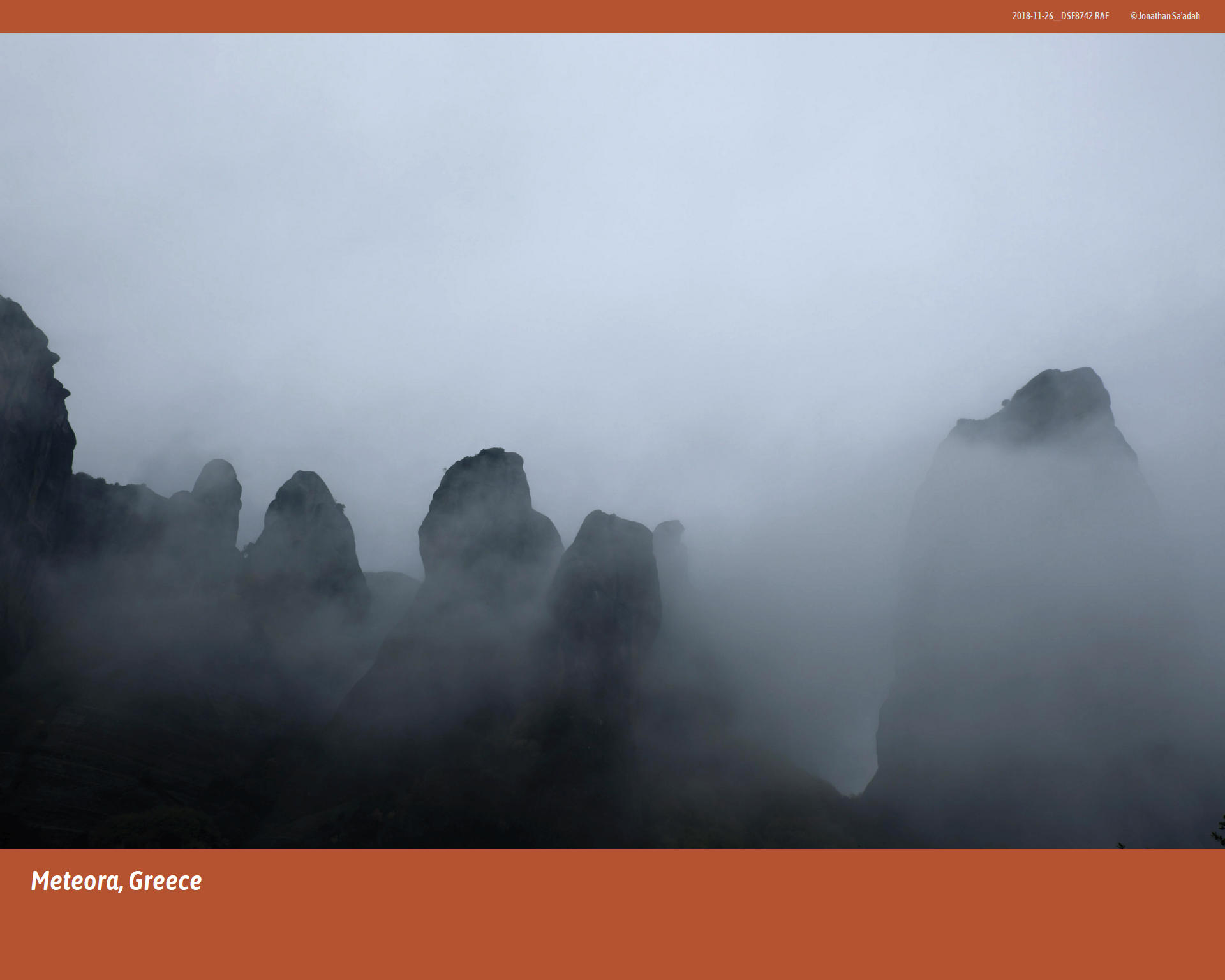
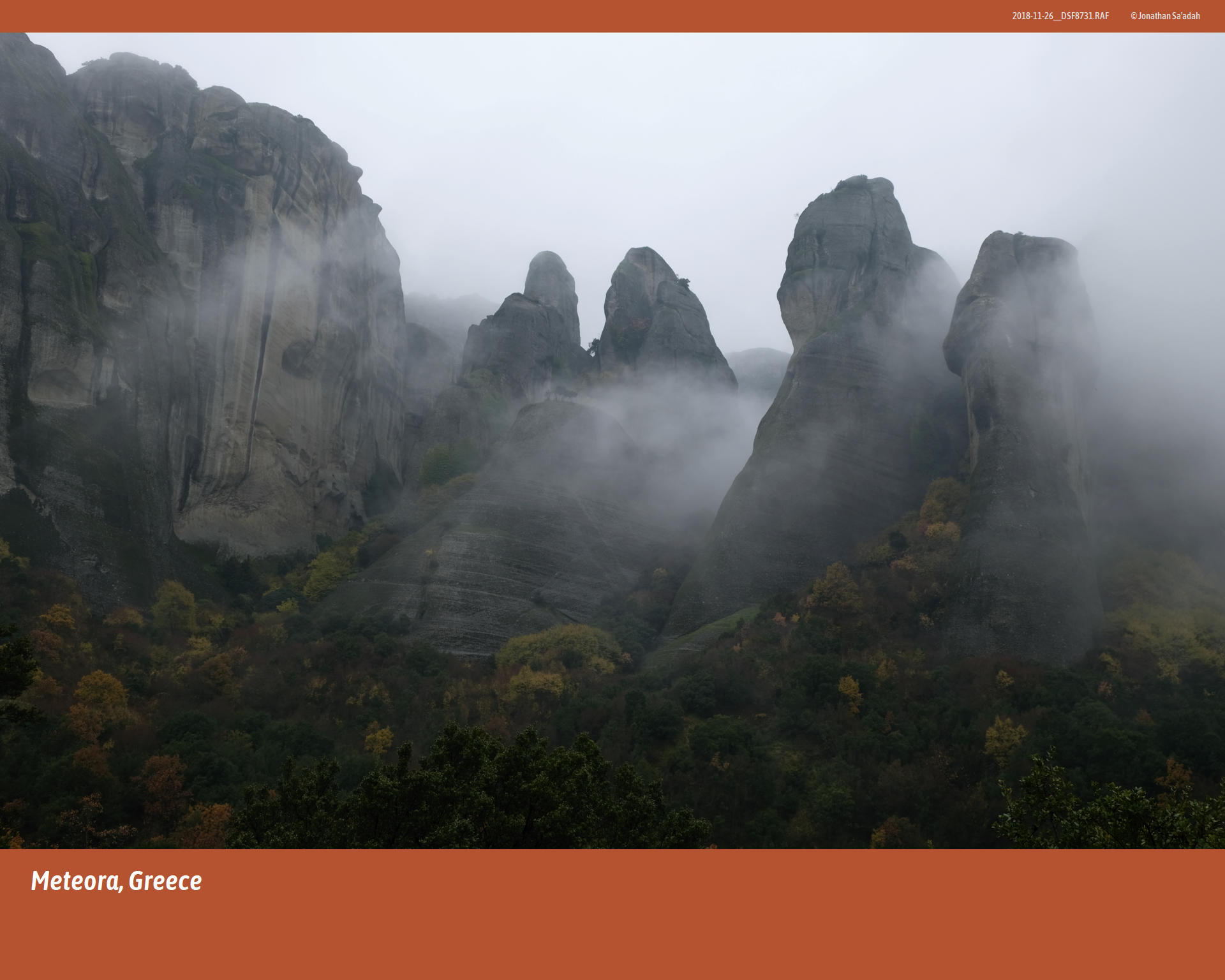
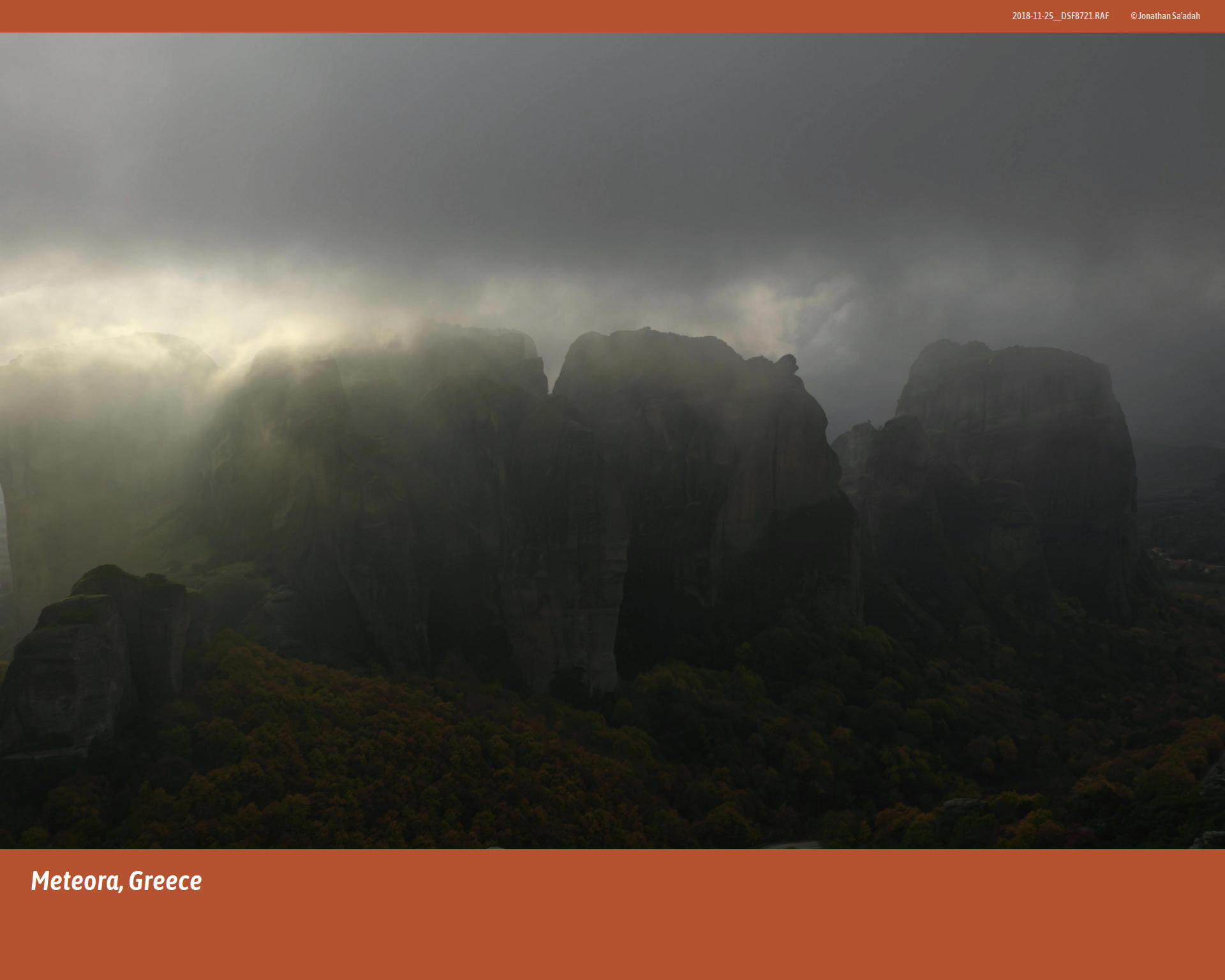
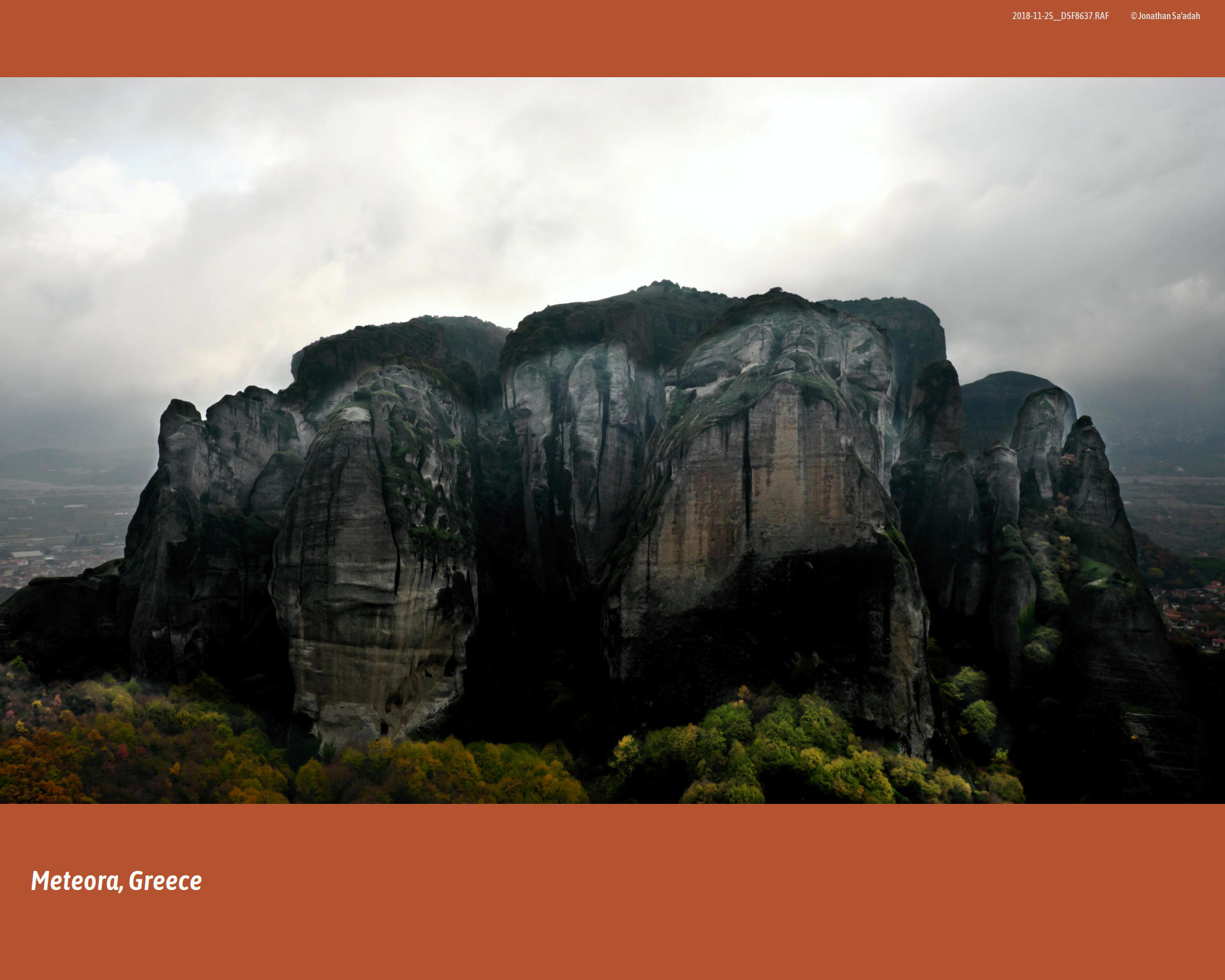
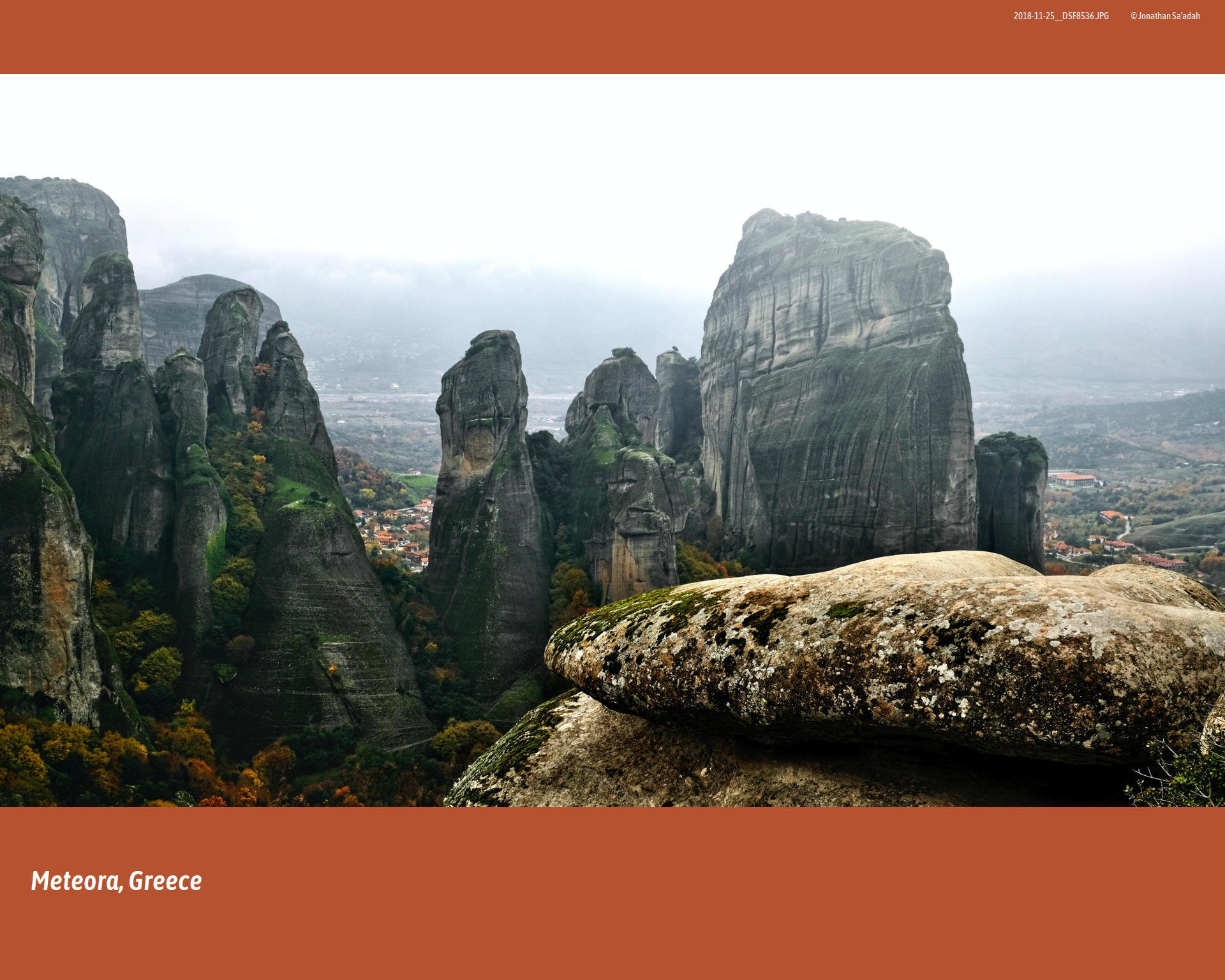
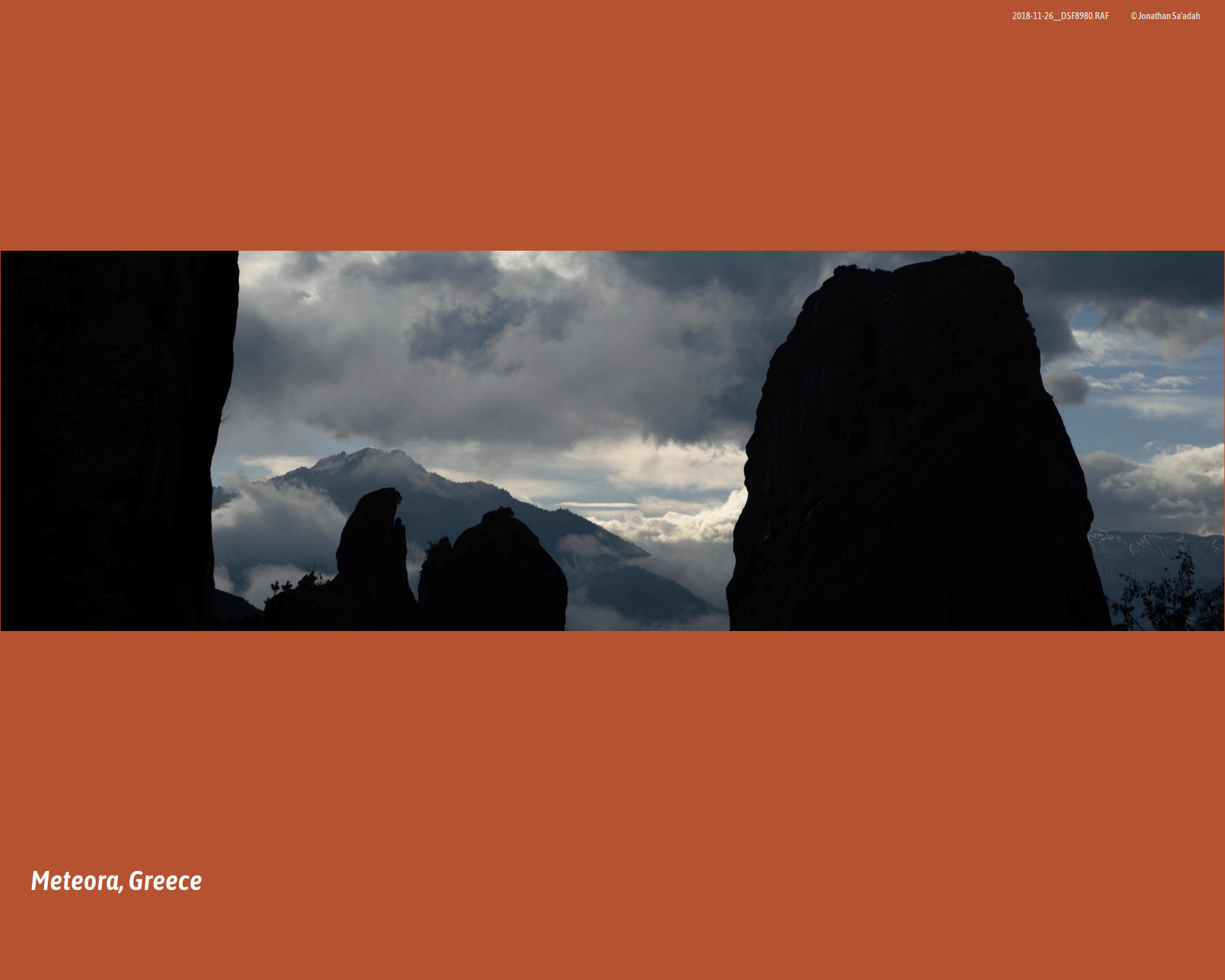
As the sun rose higher, the fog began to thin, tearing open in slow, luminous veils that revealed vertical sandstone columns, their flanks slick and dark from the night’s moisture.
These towers were born some 60 million years ago, when a vast river emptied into an inland sea and left behind a thick delta of sand and stone that erosion later carved into cliffs and pinnacles. In that shifting light, each rock appeared to detach from the earth itself, justifying the medieval monks’ sense that this was not simply landscape, but a kind of natural ladder between ground and sky.
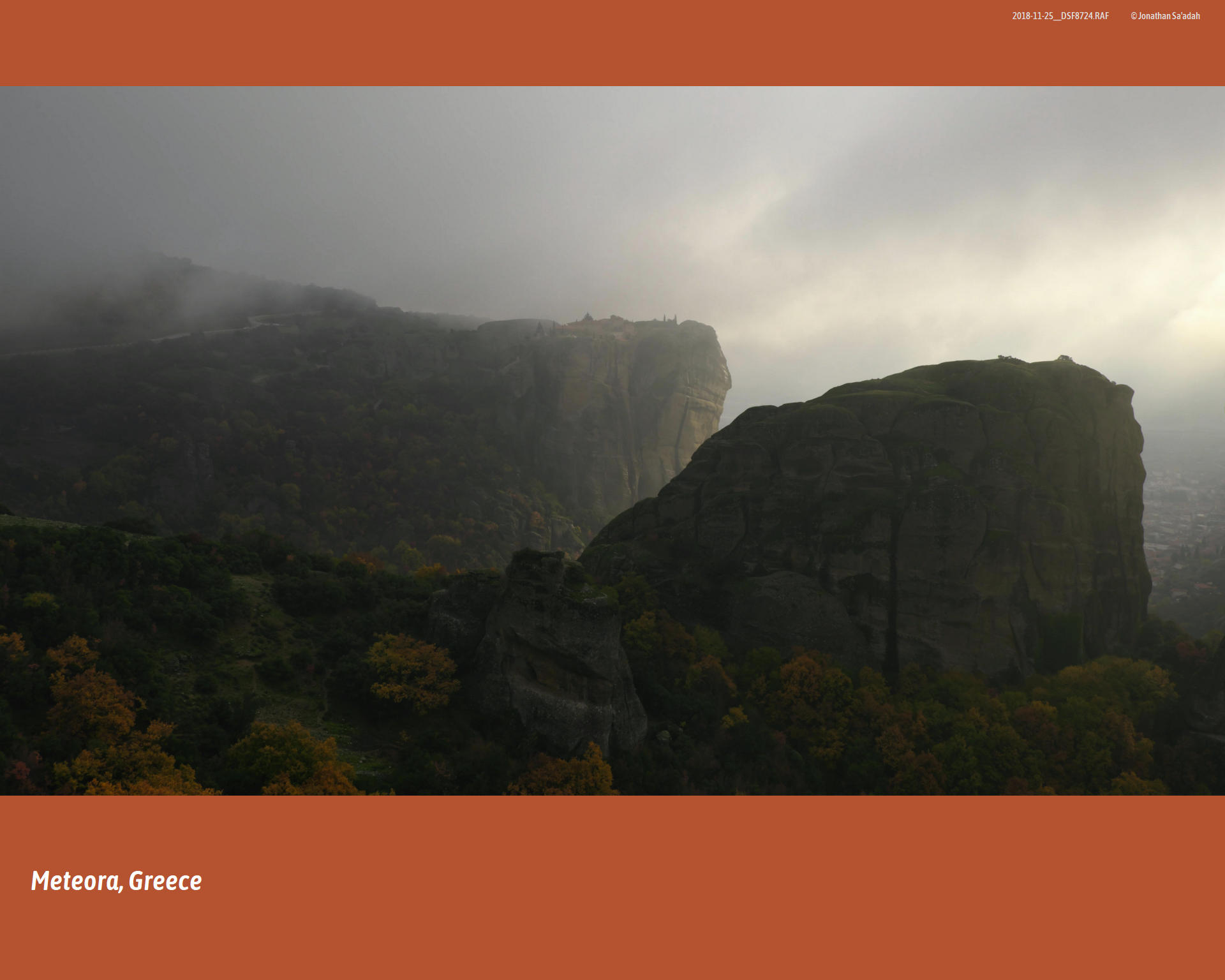
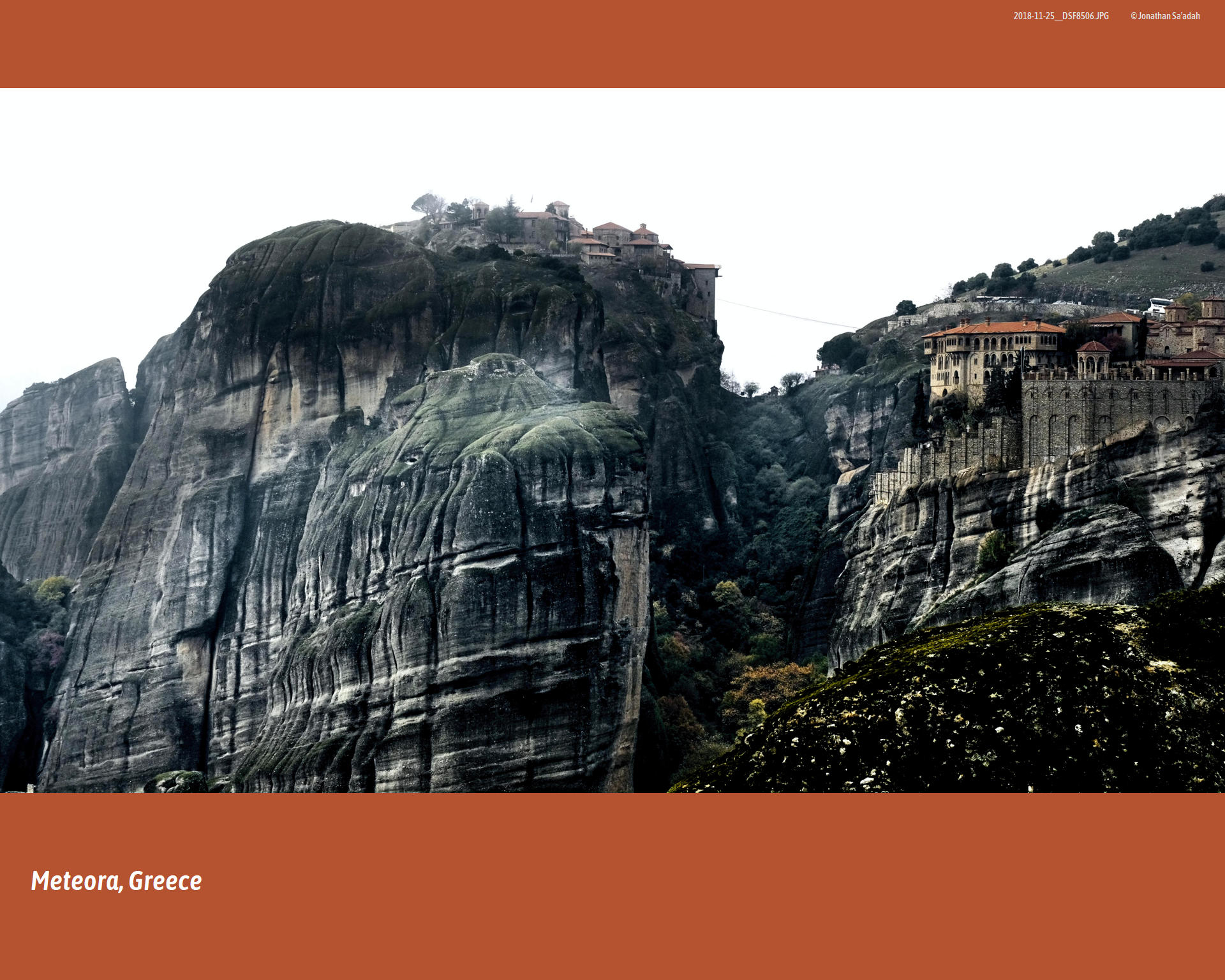
High on the cliffs, a monastery emerged from the mist: a cluster of ochre walls and red-tile roofs clinging to the summit as if it had grown from the stone. In the 14th century, Athanasios Koinovitis, later known as Athanasios the Meteorite, chose one of these broad rock platforms to found the Great Meteoron, hauling every beam and stone up the sheer face by rope and ladder. The isolation offered protection in that age of raids and political upheaval; access once depended on nets and retractable stairways, a deliberate barrier between the cloistered world above and the dangerous valley below.
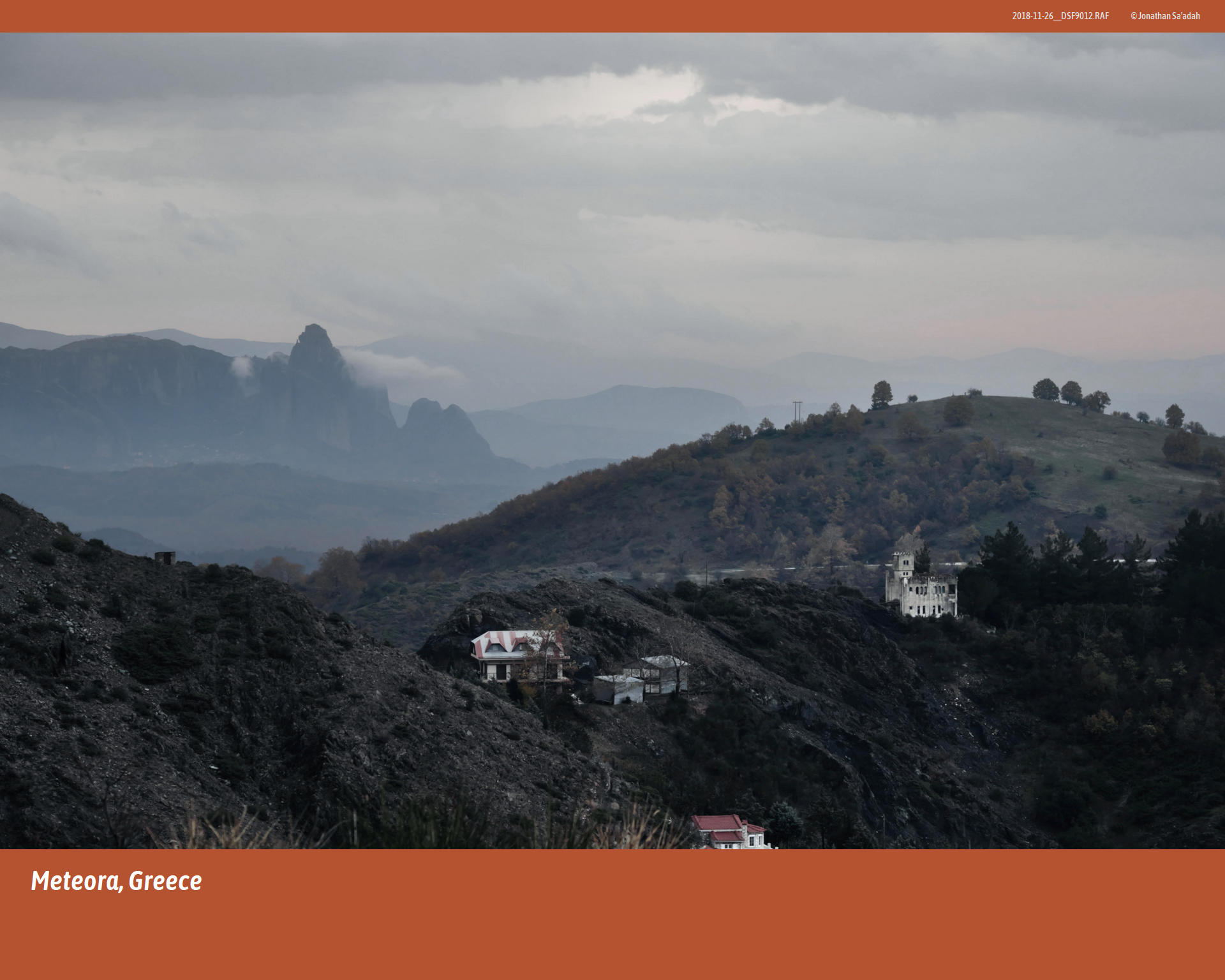
By the time the sun finally broke through, the valley below had turned into a tapestry of autumn color: rust-red oaks, yellowing plane trees, and dark green pines pooling at the bases of the rocks. In the era of Ottoman rule, when these monasteries flourished under sultans who left Orthodox institutions largely intact, the same slopes hid rebels and sheltered refugees; in the 19th and 20th centuries, walls that once enclosed prayer were scarred by shells and mortars.
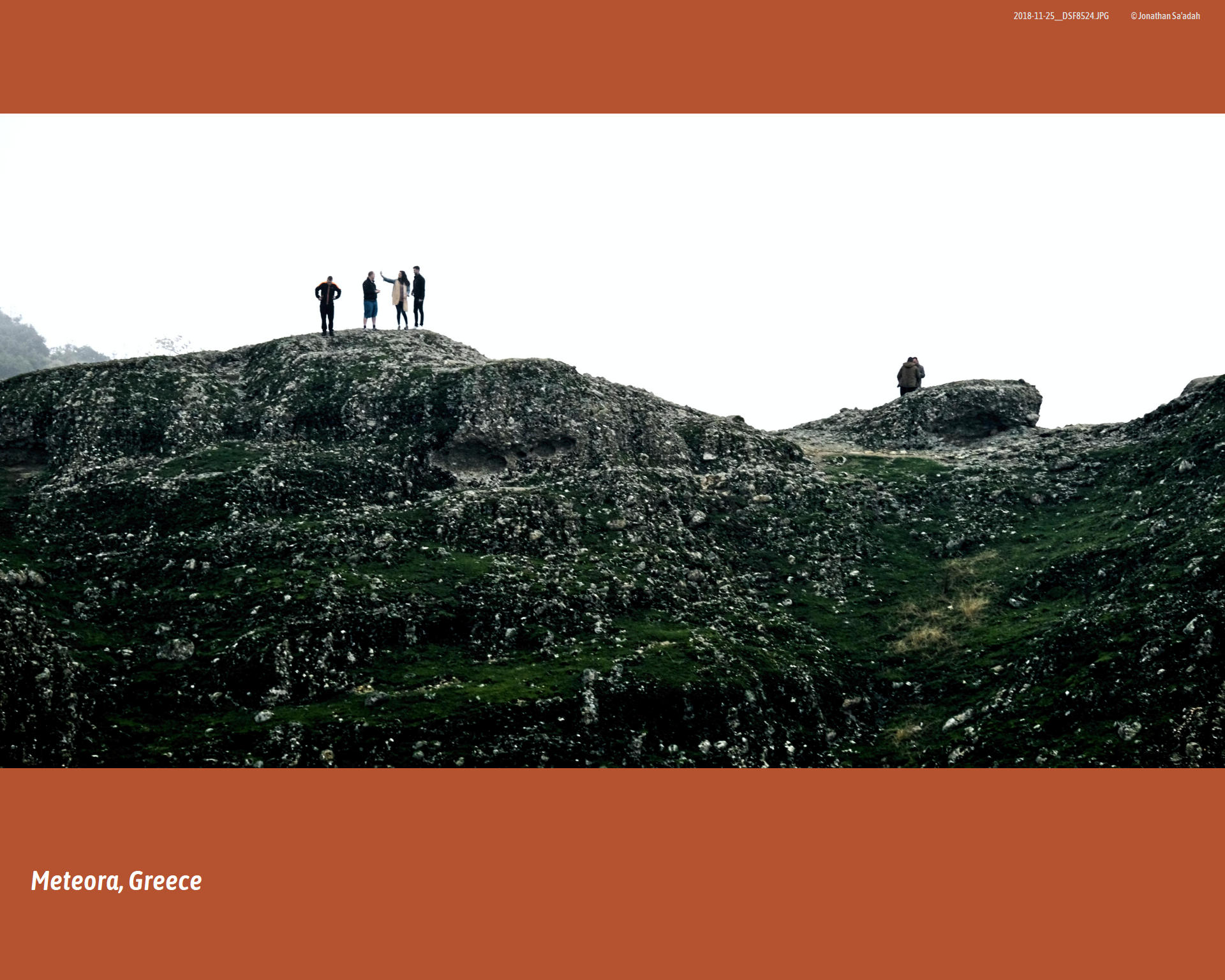
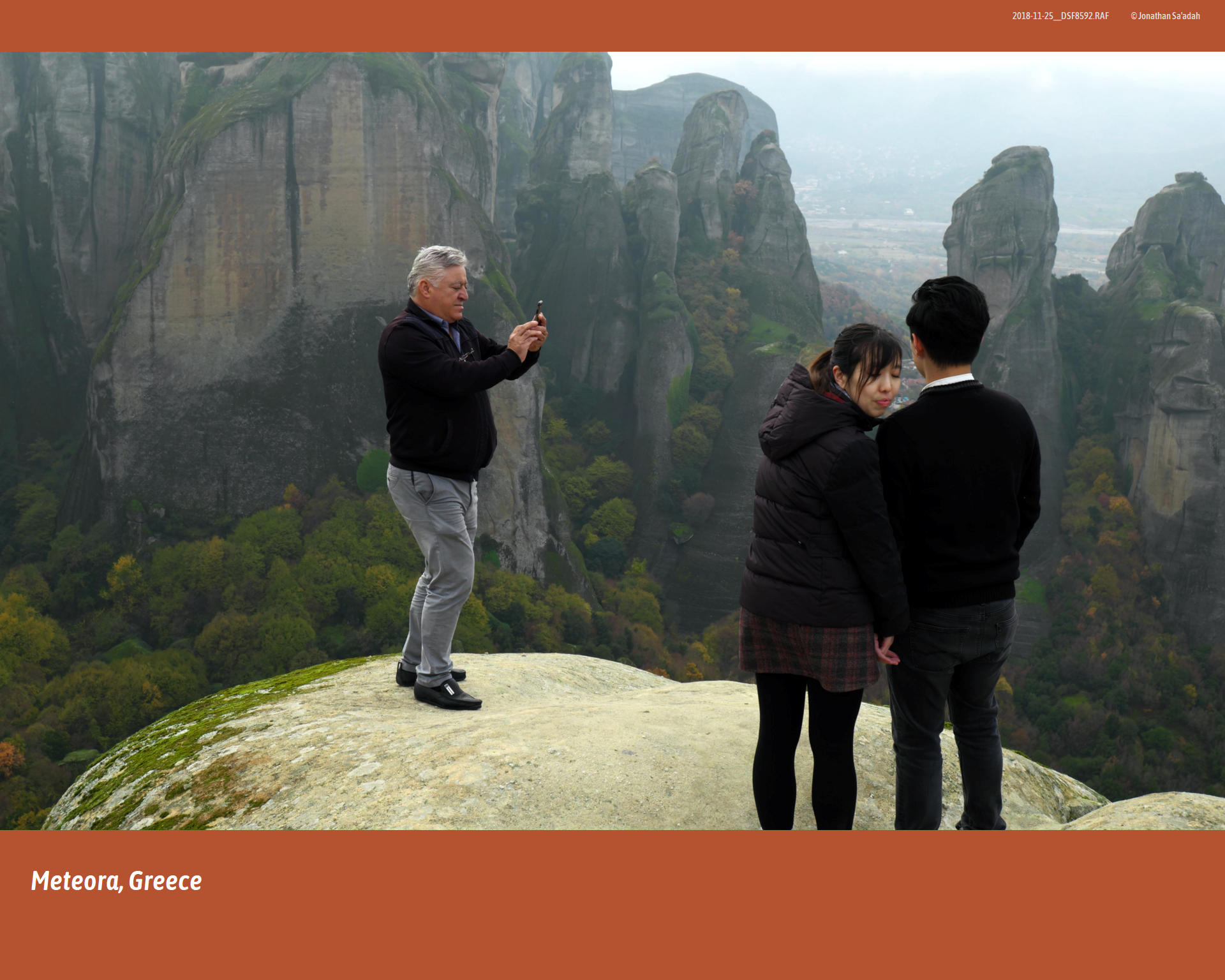
As we moved along the viewpoints that early morning, each gap in the fog offered a new alignment of rock, monastery, and forest, a sequence of tableaux that seemed staged by the weather itself. Looking out across the chasm to another monastery perched on its own pillar, it was possible to imagine the first hermits edging out of their caves at dawn, watching mist lift from this same plain and reading it as a sign – of judgment, of mercy, of simple passing time – in a landscape that felt charged with meaning. Today, buses replace mules and carved stairways replace rope ladders, but the choreography of fog and light still resists domestication; for a few minutes on that November day, the cliffs and their glowing trees belonged less to the age of mass tourism than to the long, solitary devotion that first drew human beings to live in the air.
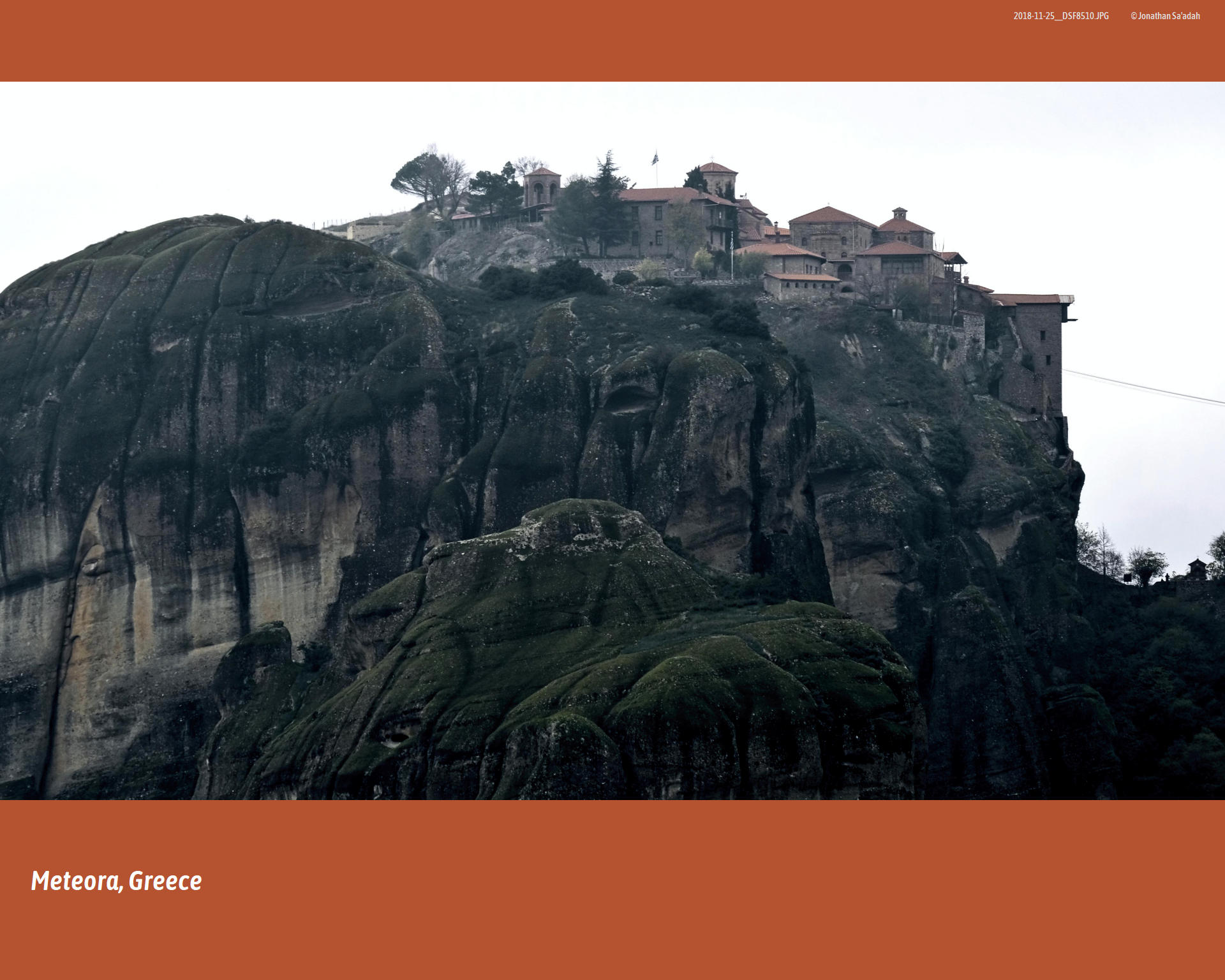

WOW! Absolutely mind-blowing. What a place! And you were certainly in your glory as a photographer. It looked familiar to me, and I knew I’d seen it in a James Bond movie back in the day. So I looked it up. The Monastery of The Holy Trinity in Meteora was an exotic location (the bad guys’ hideout if I recall) in For Your Eyes Only. Probably not the easiest place to bring a film crew.
Not easy and also not especially appreciated! I read that the monks hung their dirty clothes outside their windows in vain protest against the filming, knowing that use of Meteora for a Bond film location would eventually subject them to a deluge of tourists and the ensuing commercialism would essentially end their way of life. They were right. The Greek courts ruled that the orders controlled their buildings, but not the rocks themselves, so the production was allowed to go ahead. Some actually left to start more remote communities. I’m sure the surrounding towns had the opposite reaction. We stayed in a nondescript place nearby where the whole community was supported by tourists! It was the end of the season so we were there almost alone, but it wasn’t hard to imagine what it must be like in summer.
An unforgettable place. You’ve written about it so beautifully as well as photographing it in a way that captures its mystery. Will you do another post that shows the monasteries themselves (please)?
Good idea Beth. I’ll put it on my list to do a post about the monasteries.
Amazing photographs and evocative commentary. Mist is so powerful in novels as well as photographs. Fiction writers often use it to create fear, but your photographs suggest serenity as well as awe. I would love to learn more about these moanastic communities. Did any of the monks leave written records? Their faith must have been very strong to endure such isolation.
Hi Ann – I did find some writing that sounds like it fits what you’re asking for. It’s titled Meteora: The Rocky Forest of Greece by Sister Theotekni, and was published in Athens about 1977. There seem to be used copies around, so maybe you can find it through the library. Let me know if you do!
Sublime. Thank you for these photographs.
You’re welcome Amanda. There are some places that just lodge in your memory, and Meteora is one of those for me so I’m happy to be able to share the photos.