
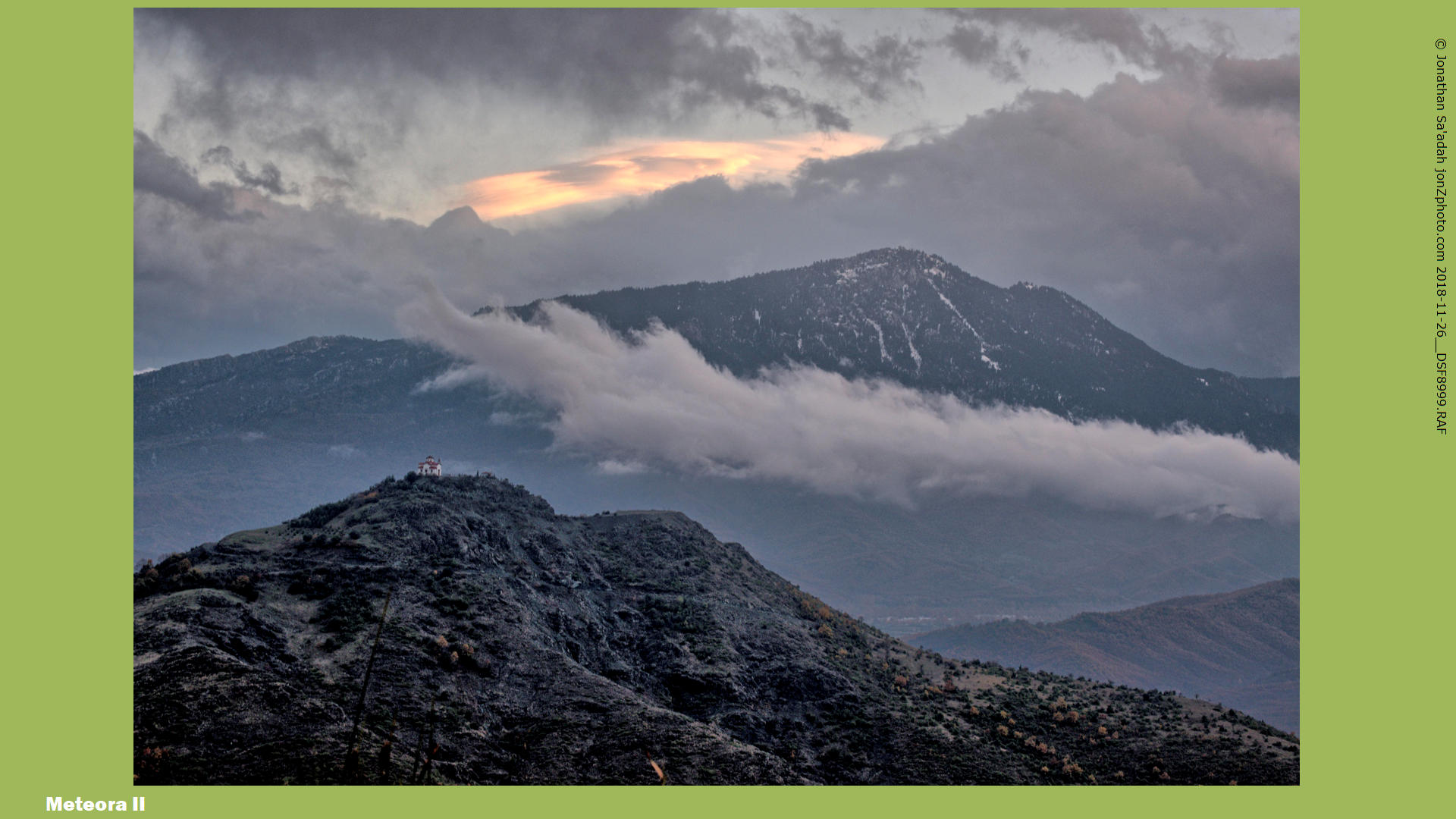
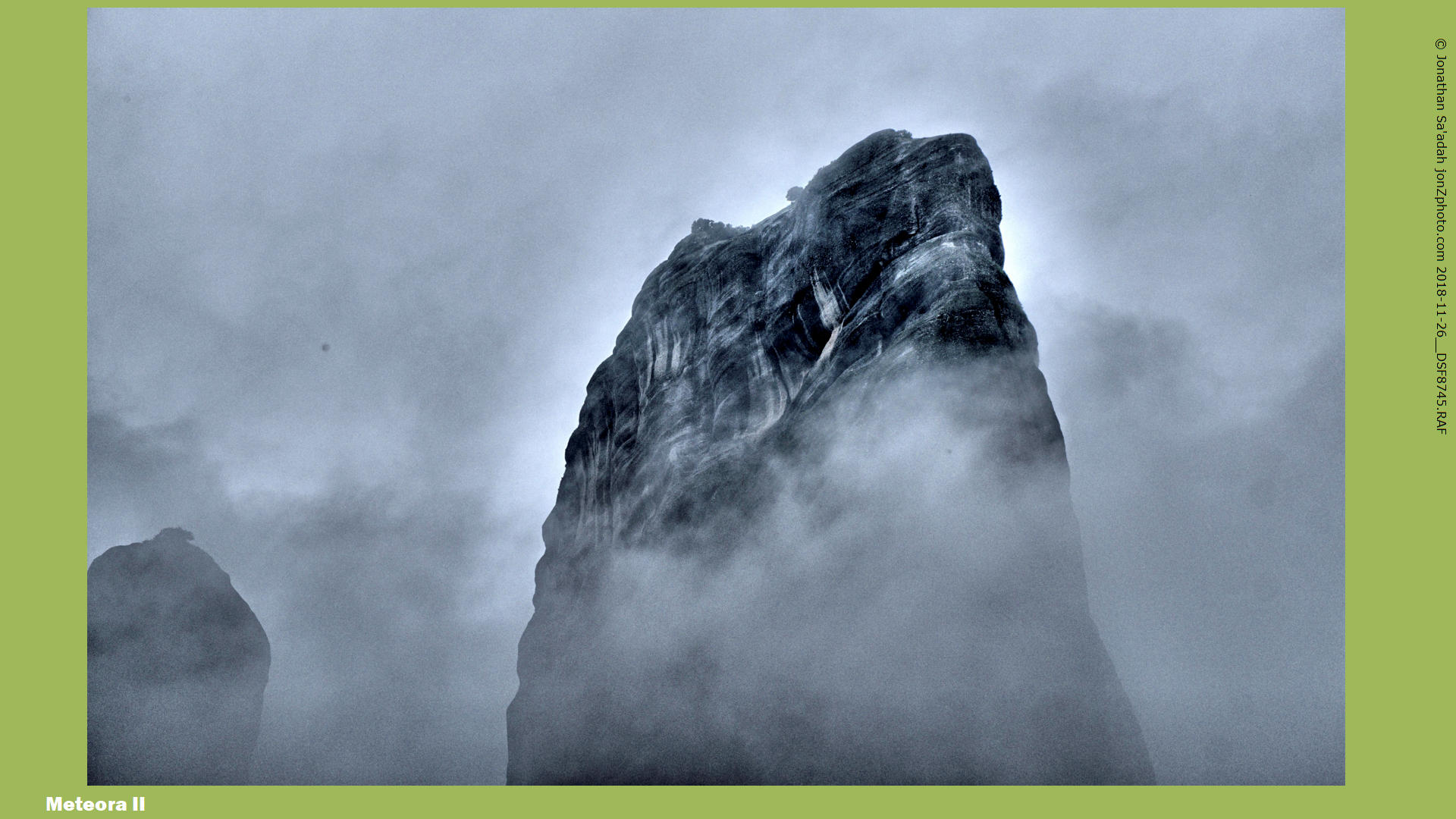
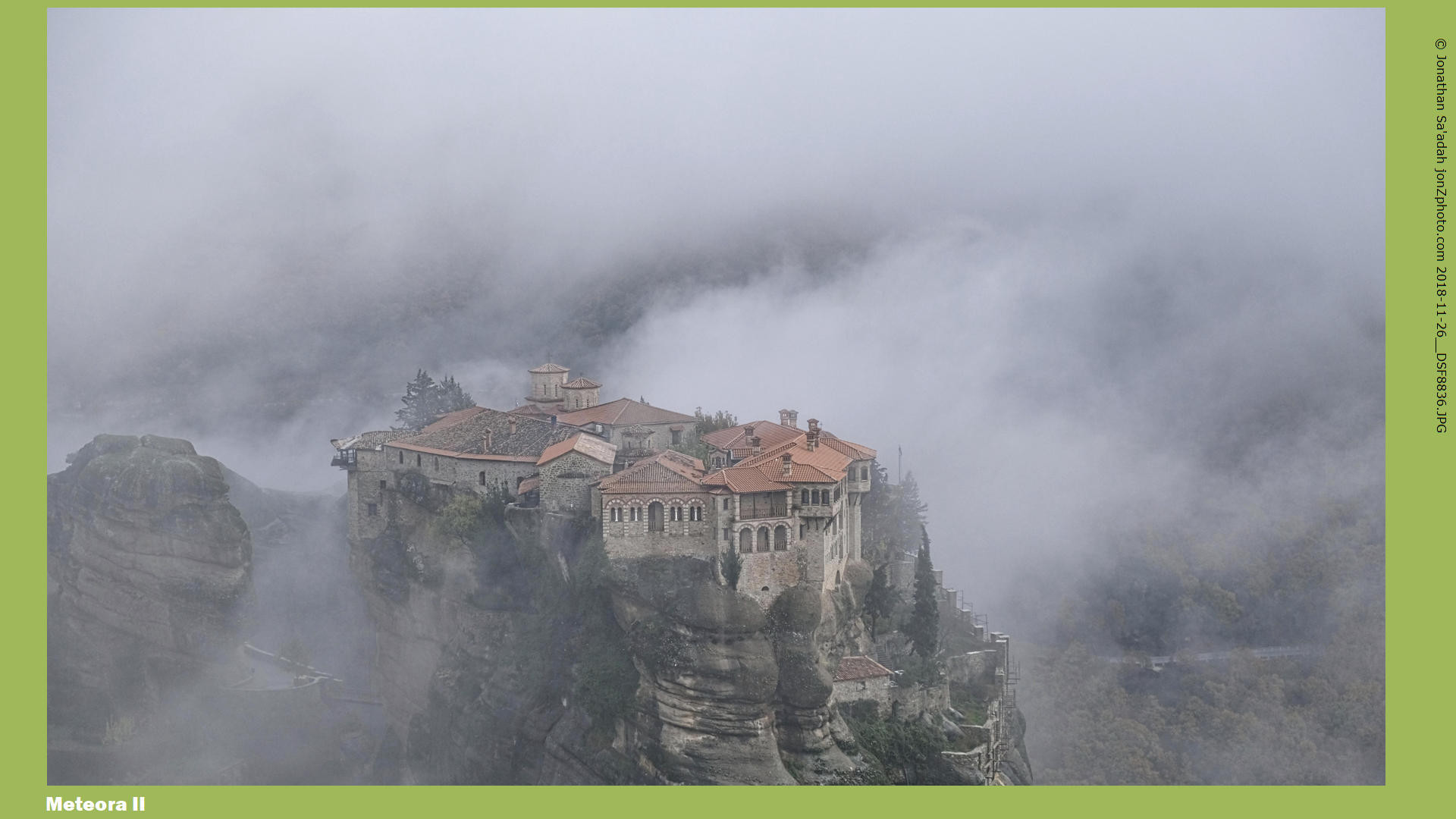
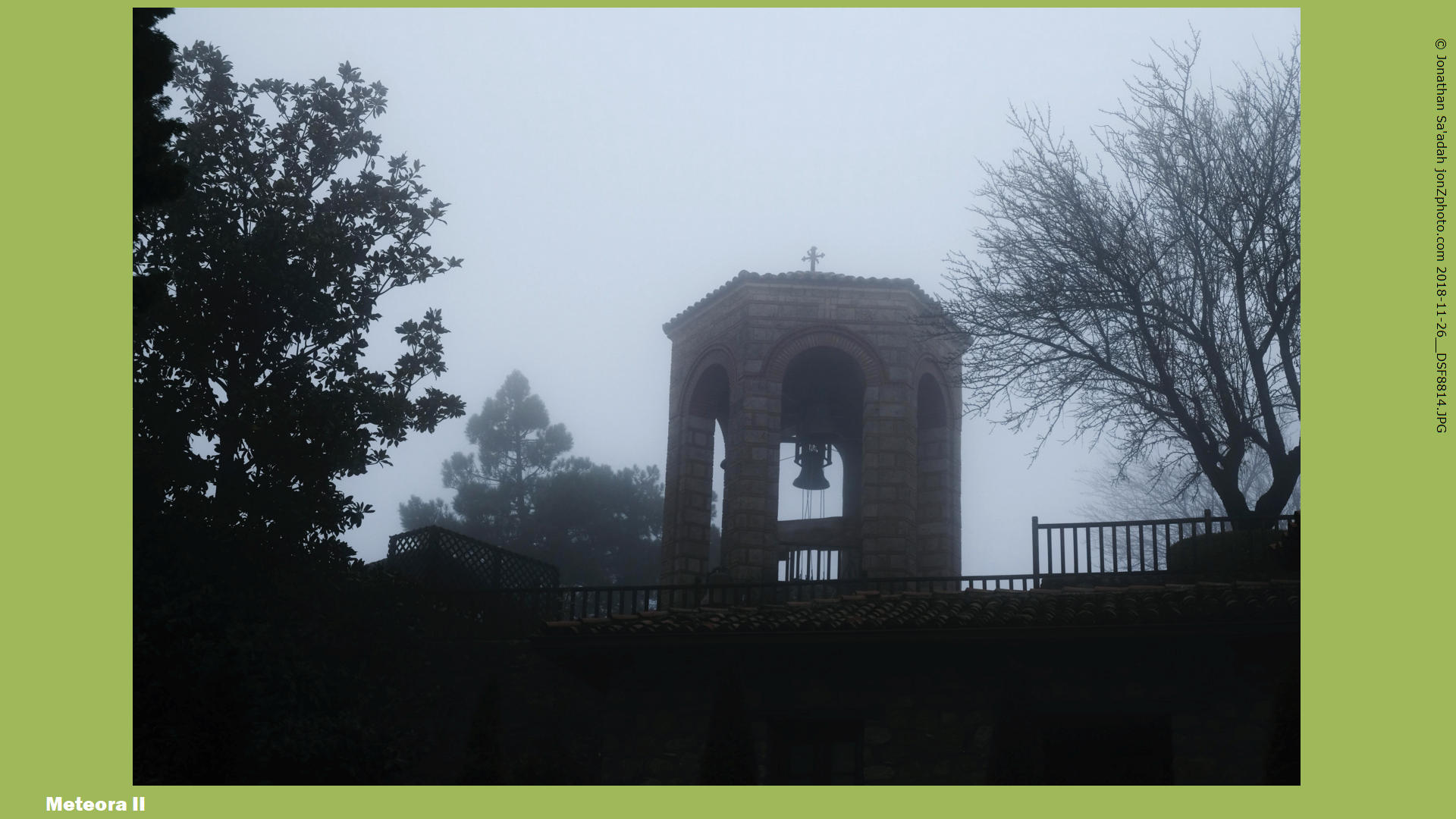
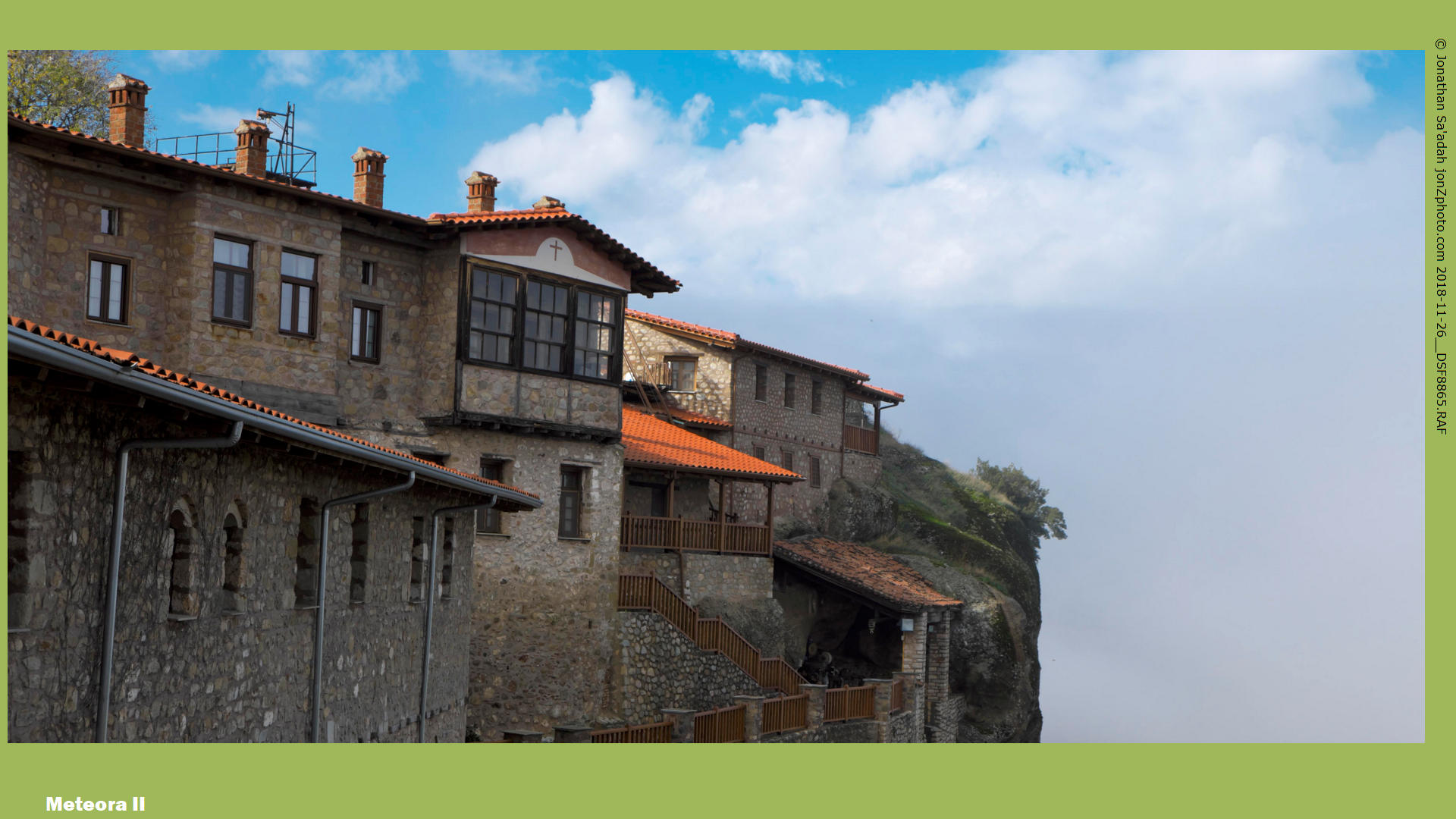
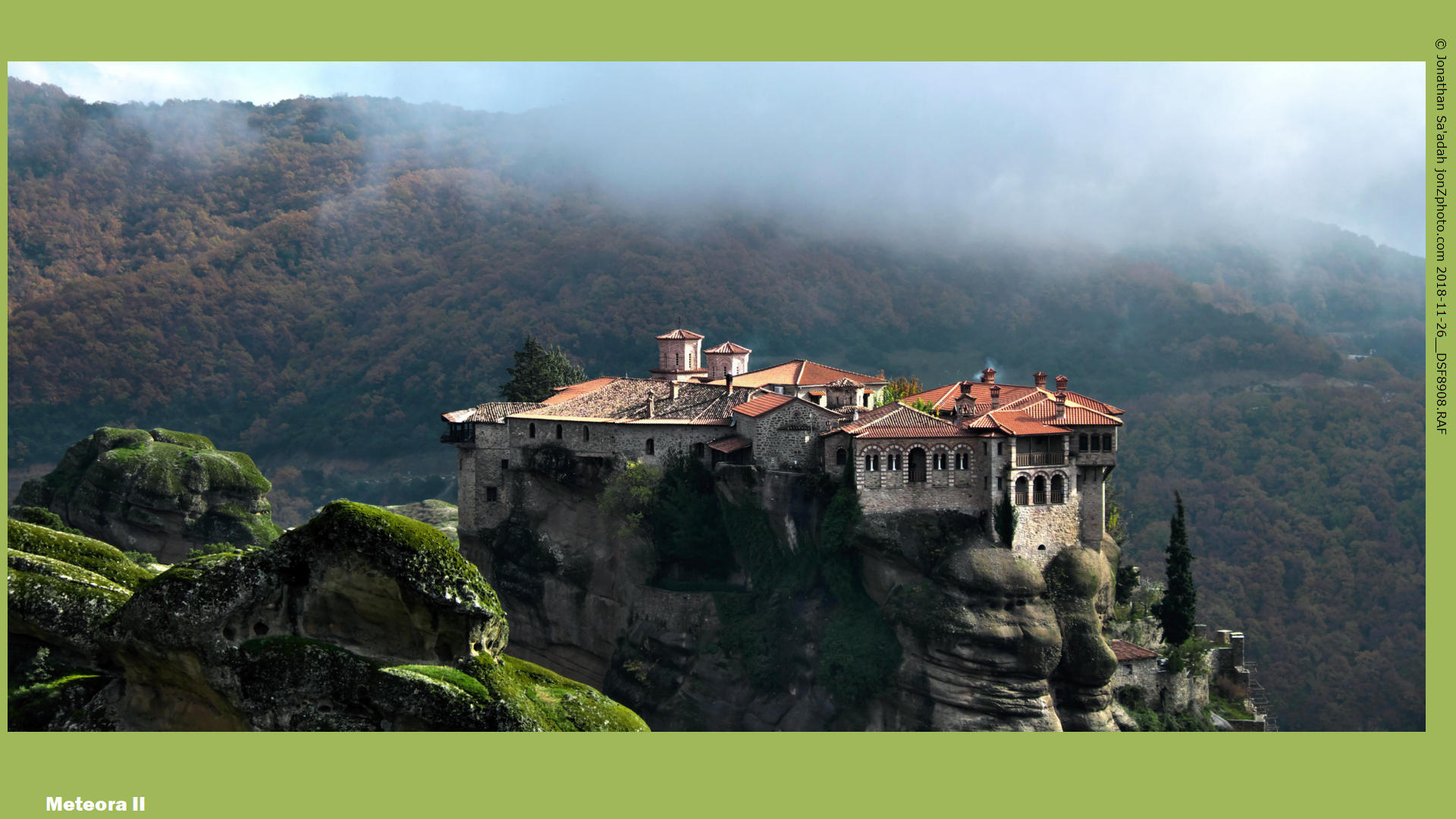
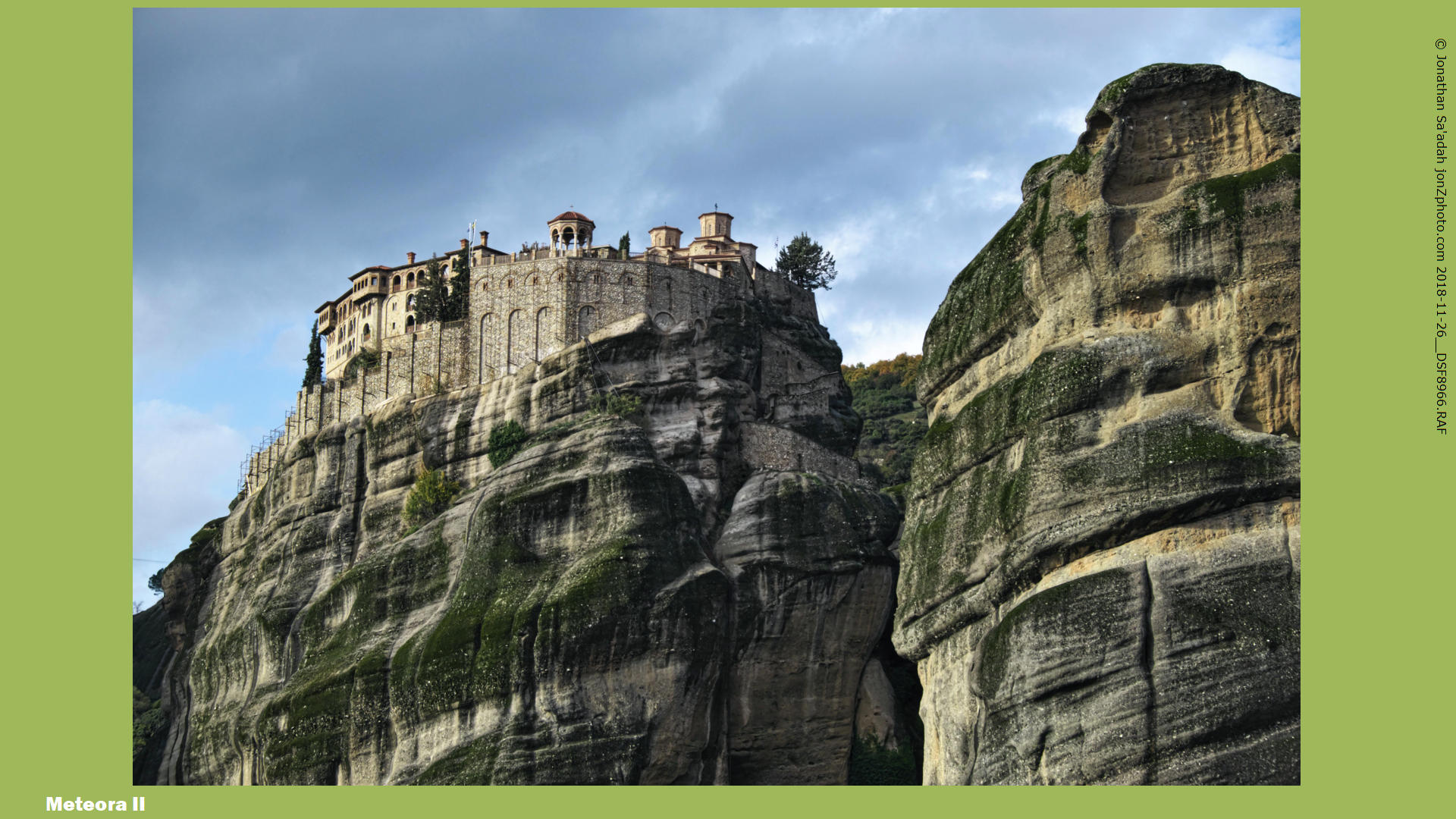
The fog rolls in before dawn, thick as wool and heavy with moisture. It slides down the stone towers of Meteora, wrapping itself around ledges, dripping from the pine needles, muting the world into a hush. The monastery bells sound closer in this weather, their slow toll absorbed by the air before it can echo off the cliffs.
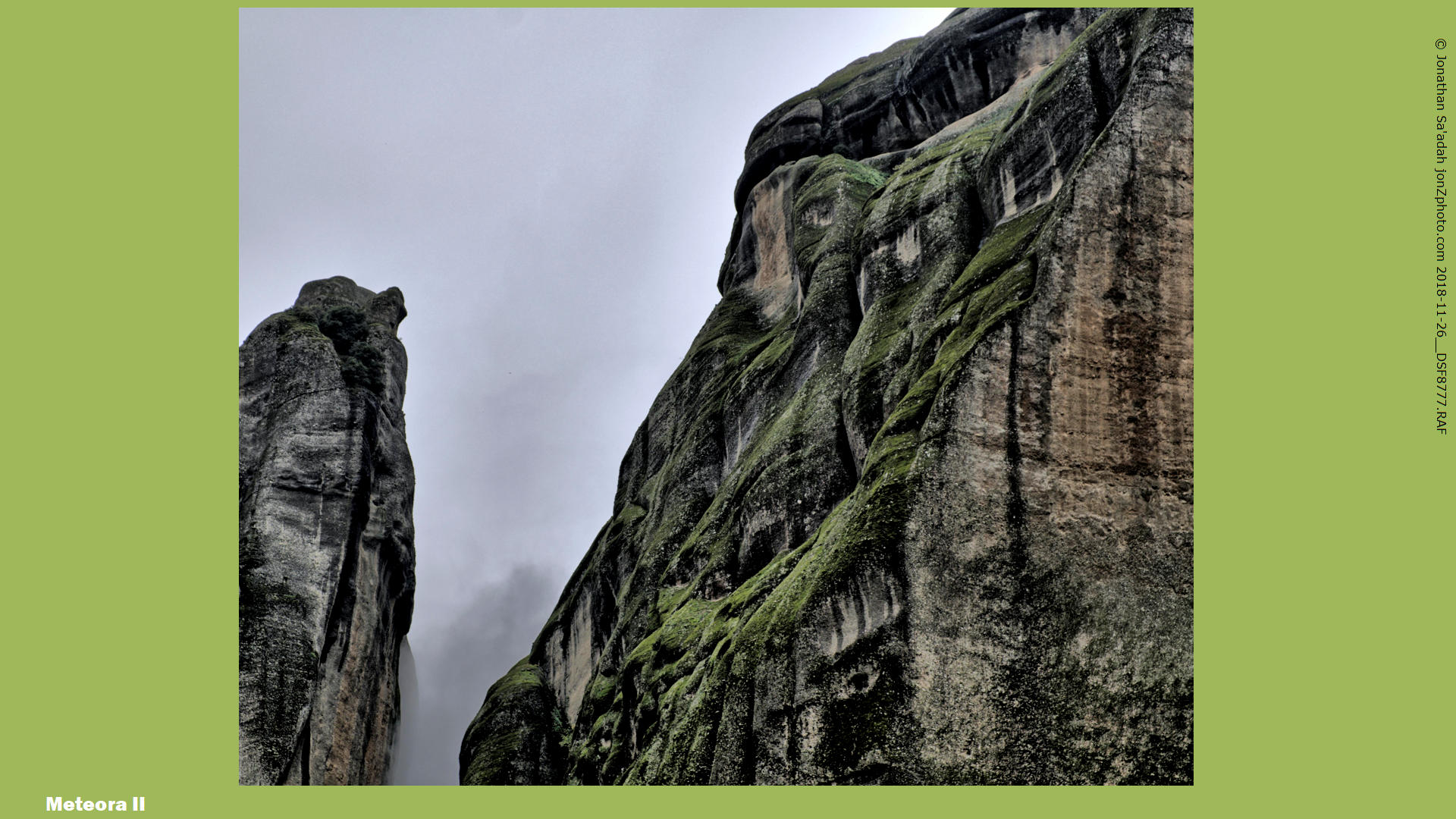
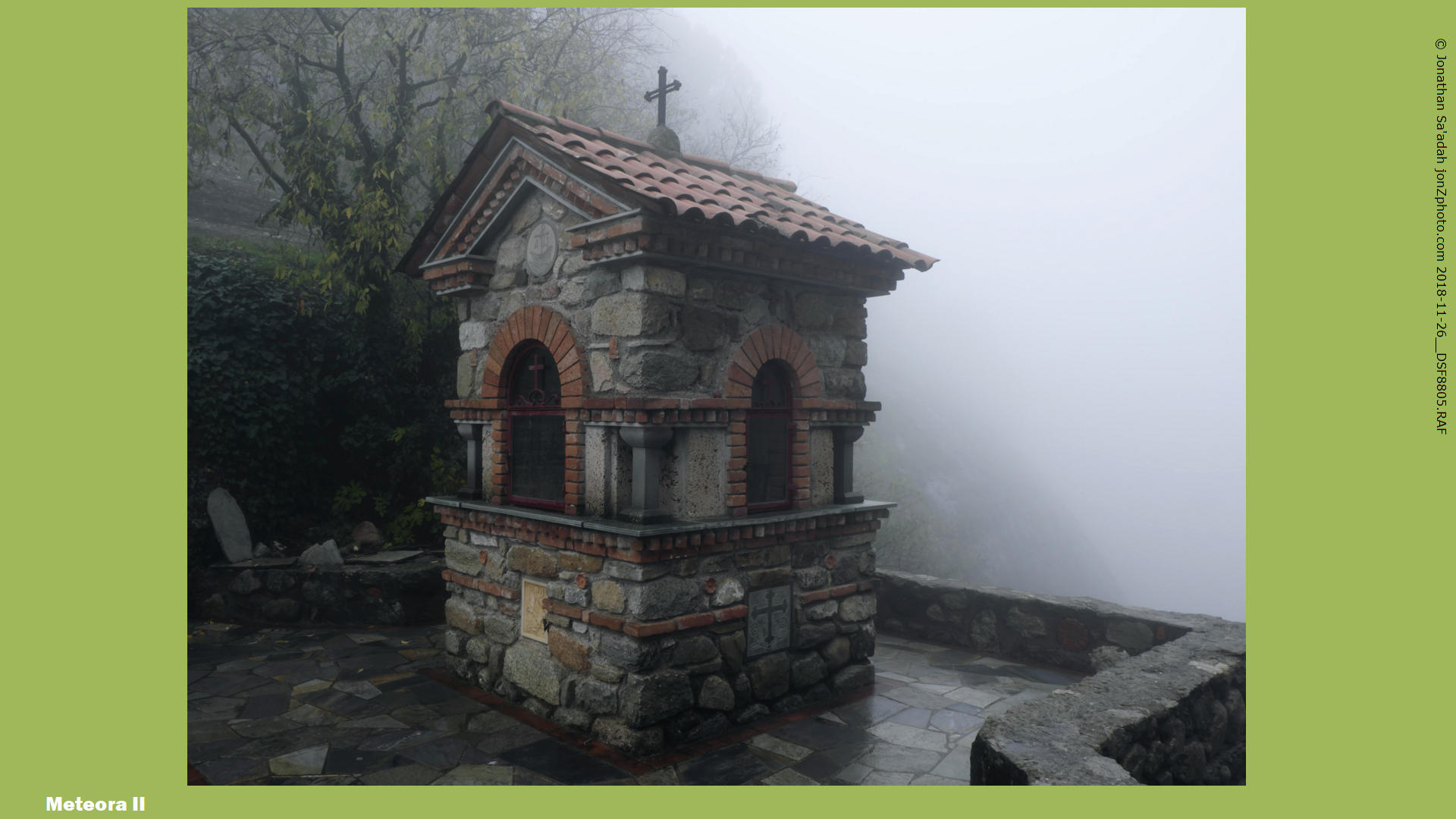
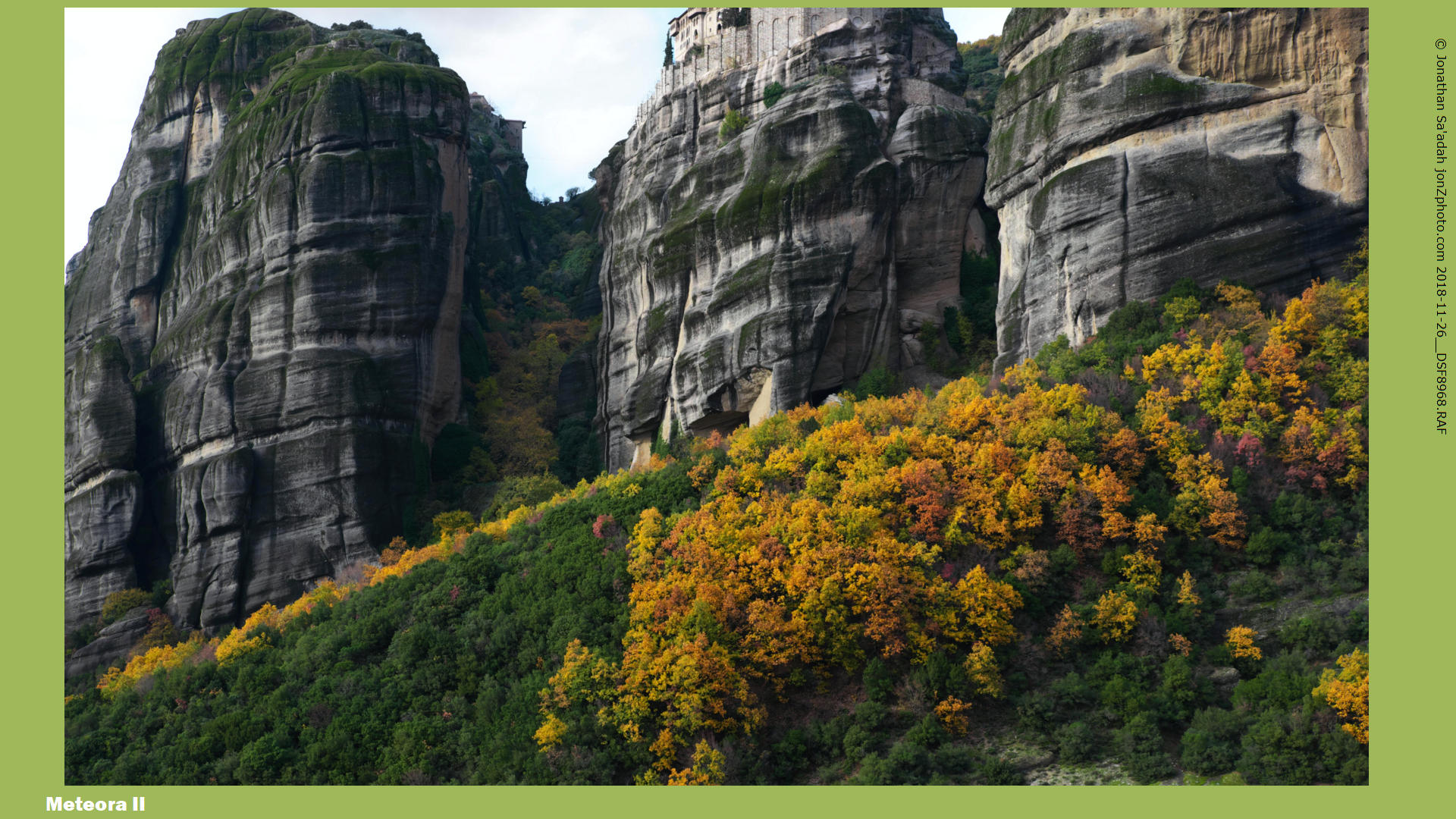
The sandstone smells damp and raw, its ancient layers darkened almost to bronze. Steps cut into the rock are slick; your hand finds the cold iron of the rail, wet to the touch. Even your breath feels visible here, joining the drifting mist that curls across the paths. From below, the valley disappears entirely—there is no distance, only the whiteness that erases edges and scale.
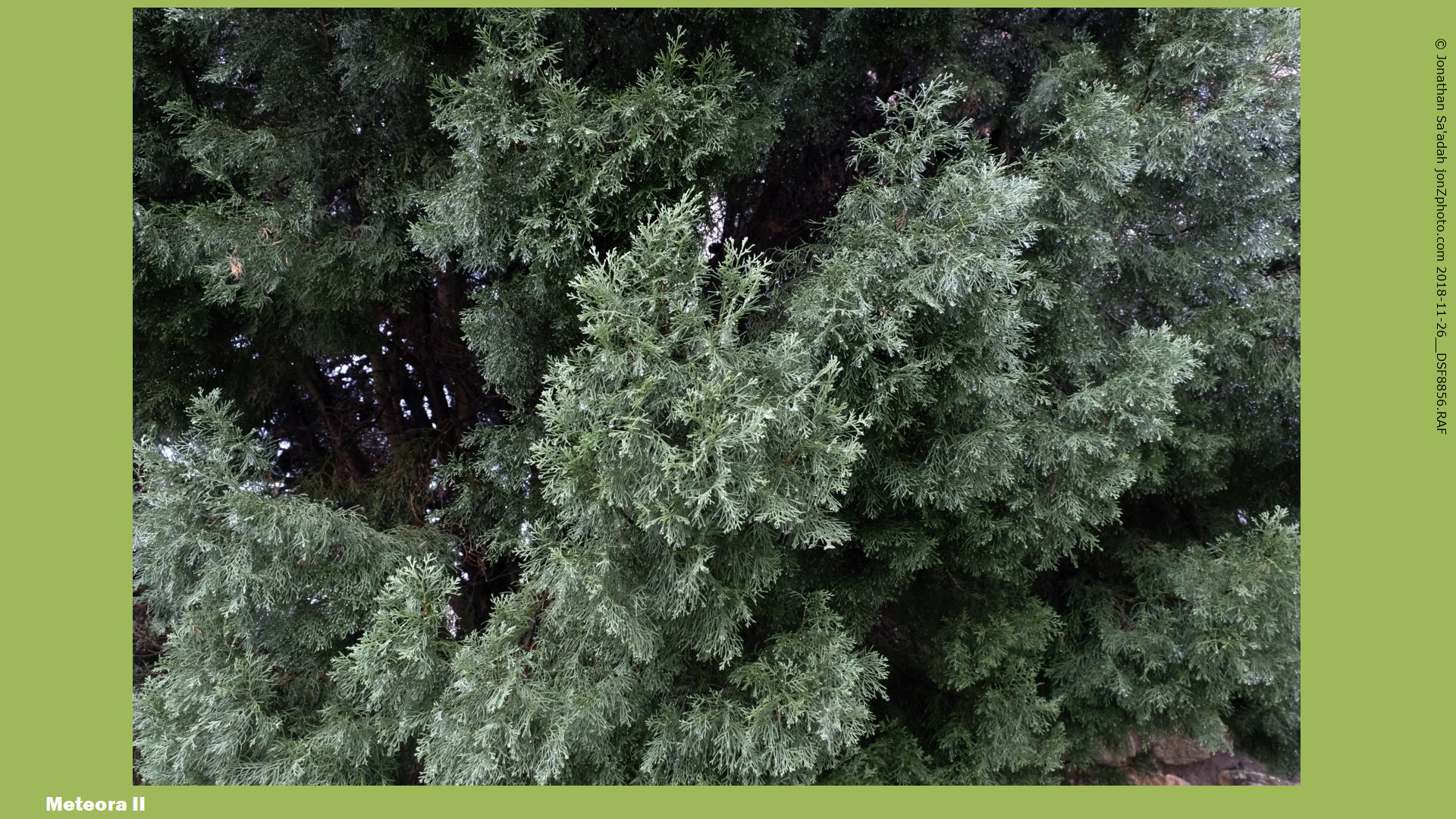
When the fog begins to thin, it leaves beads of water on every surface: railings, ferns, camera lenses. A patch of blue cracks open above one monastery roof, sudden and startling. For a few seconds, the whole landscape gleams—stone, sky, and lingering veil of fog turning silver together, as if the world were exhaling after holding its breath all morning.
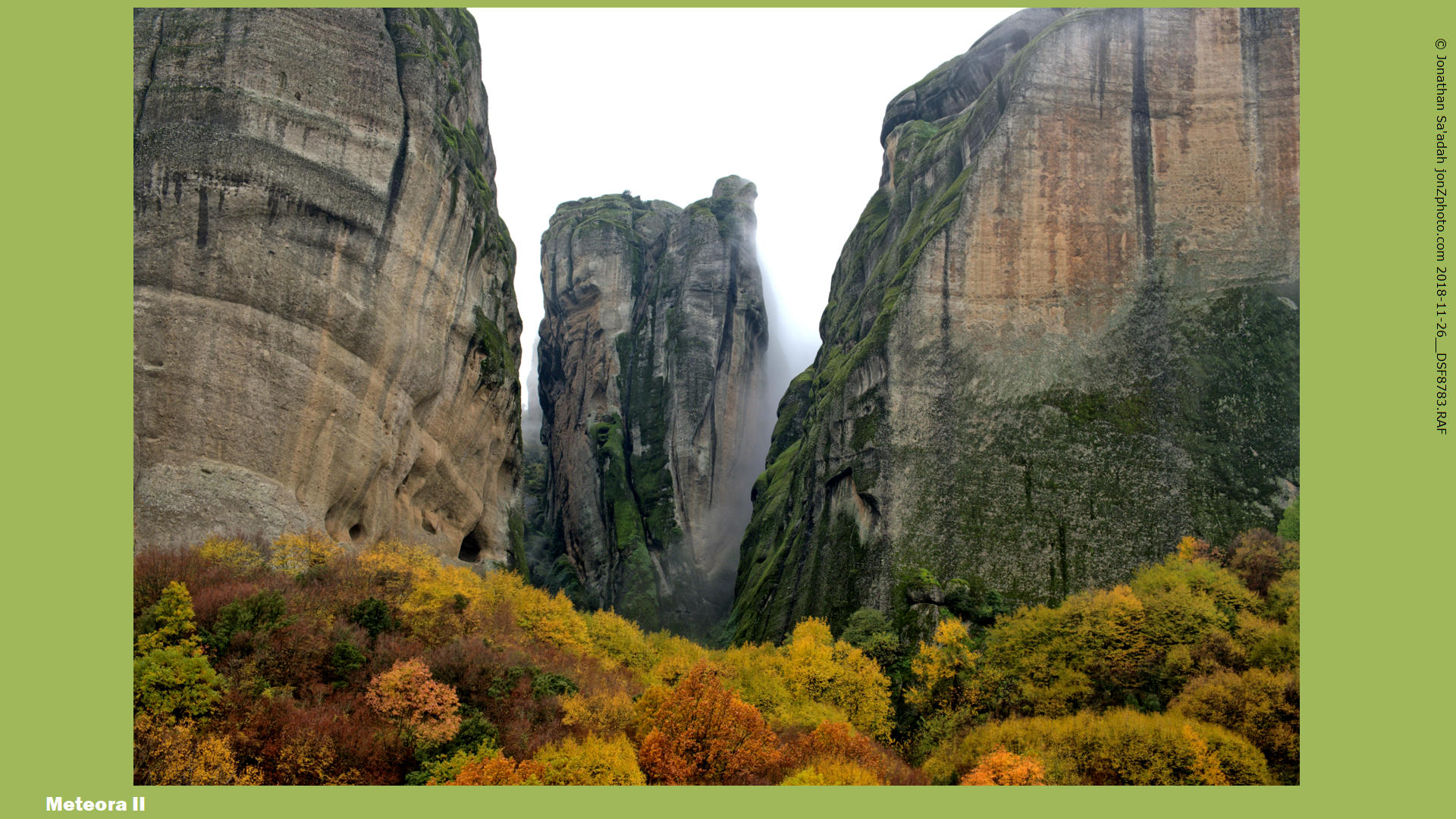
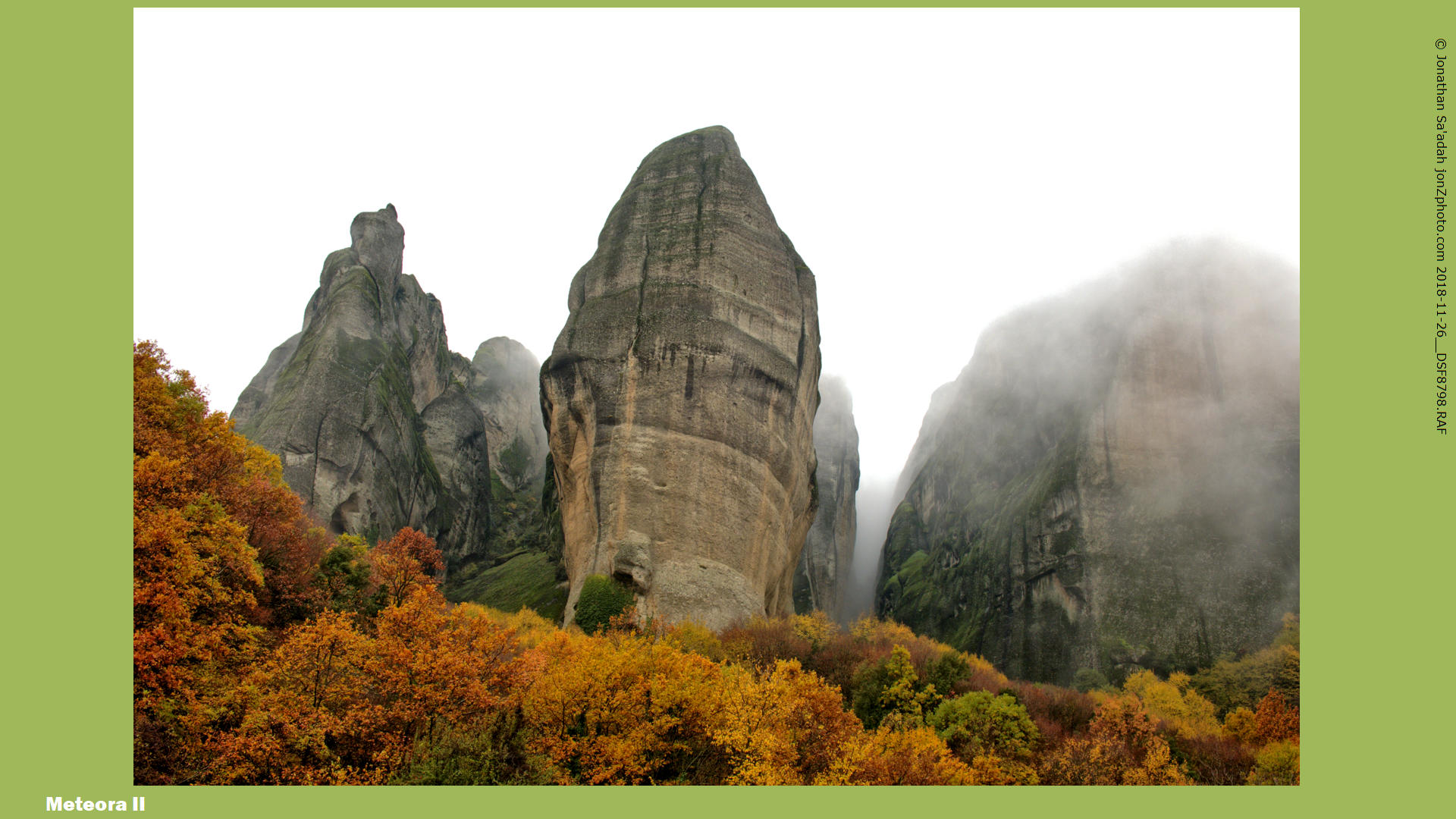
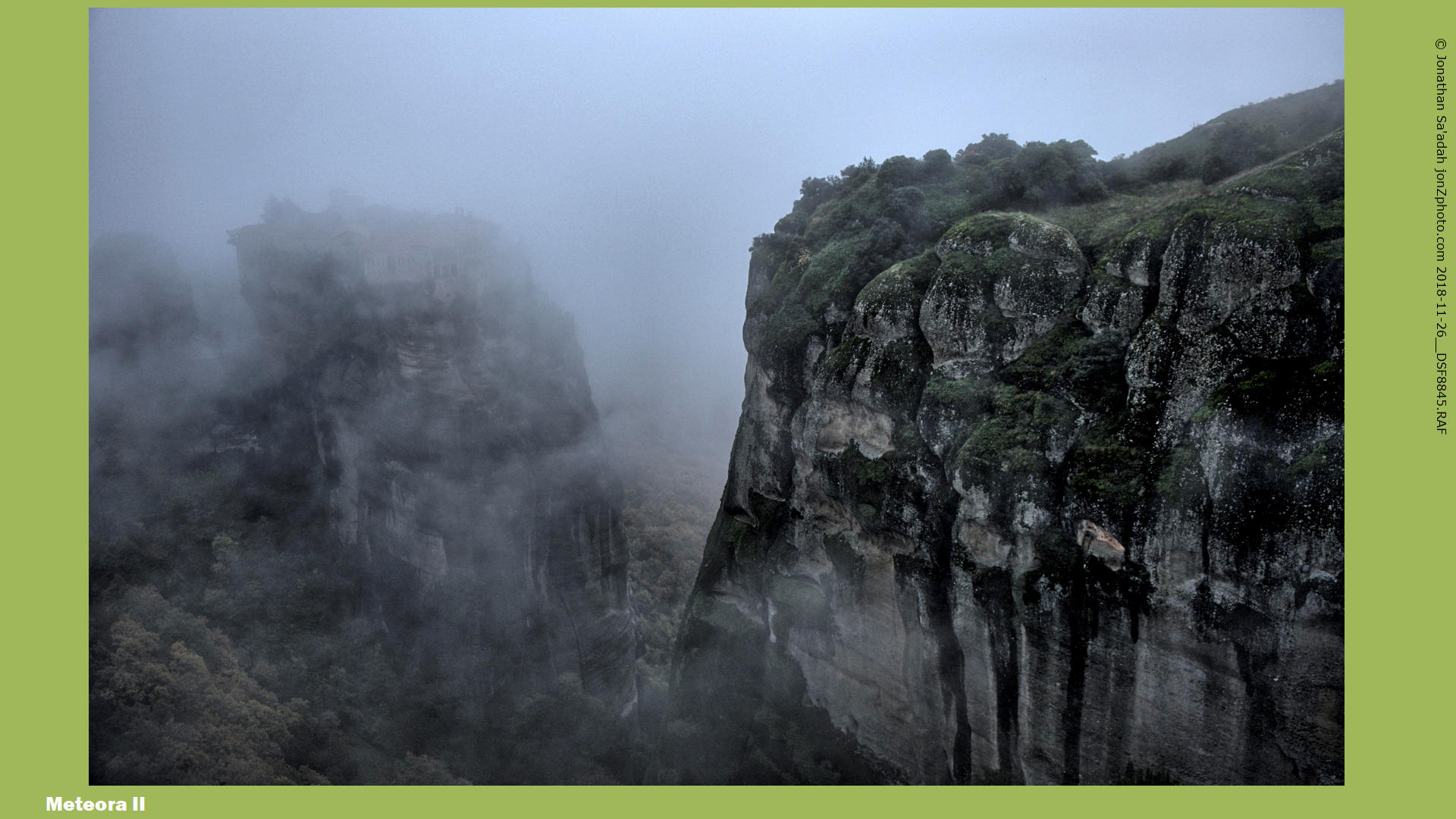
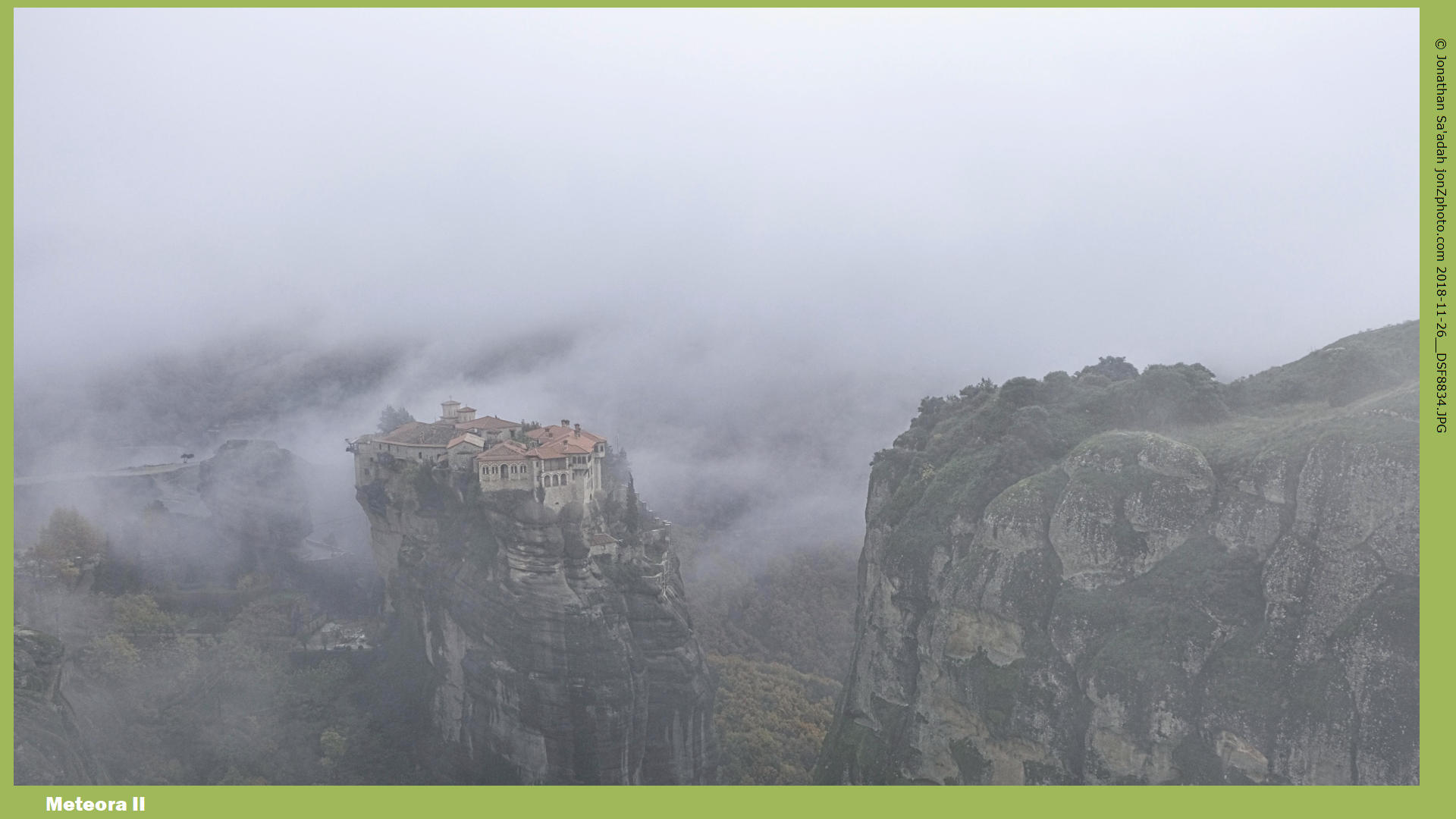
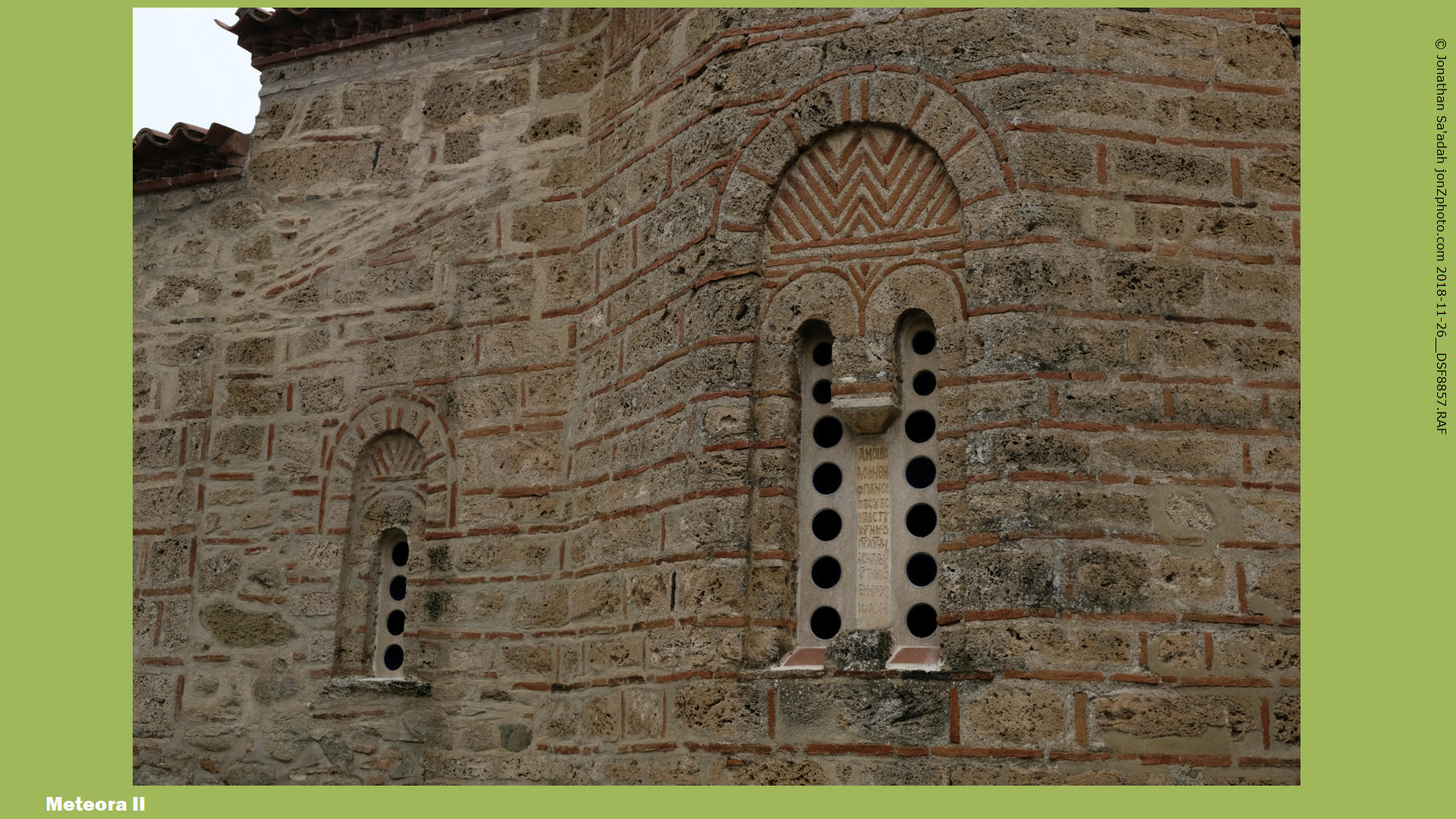
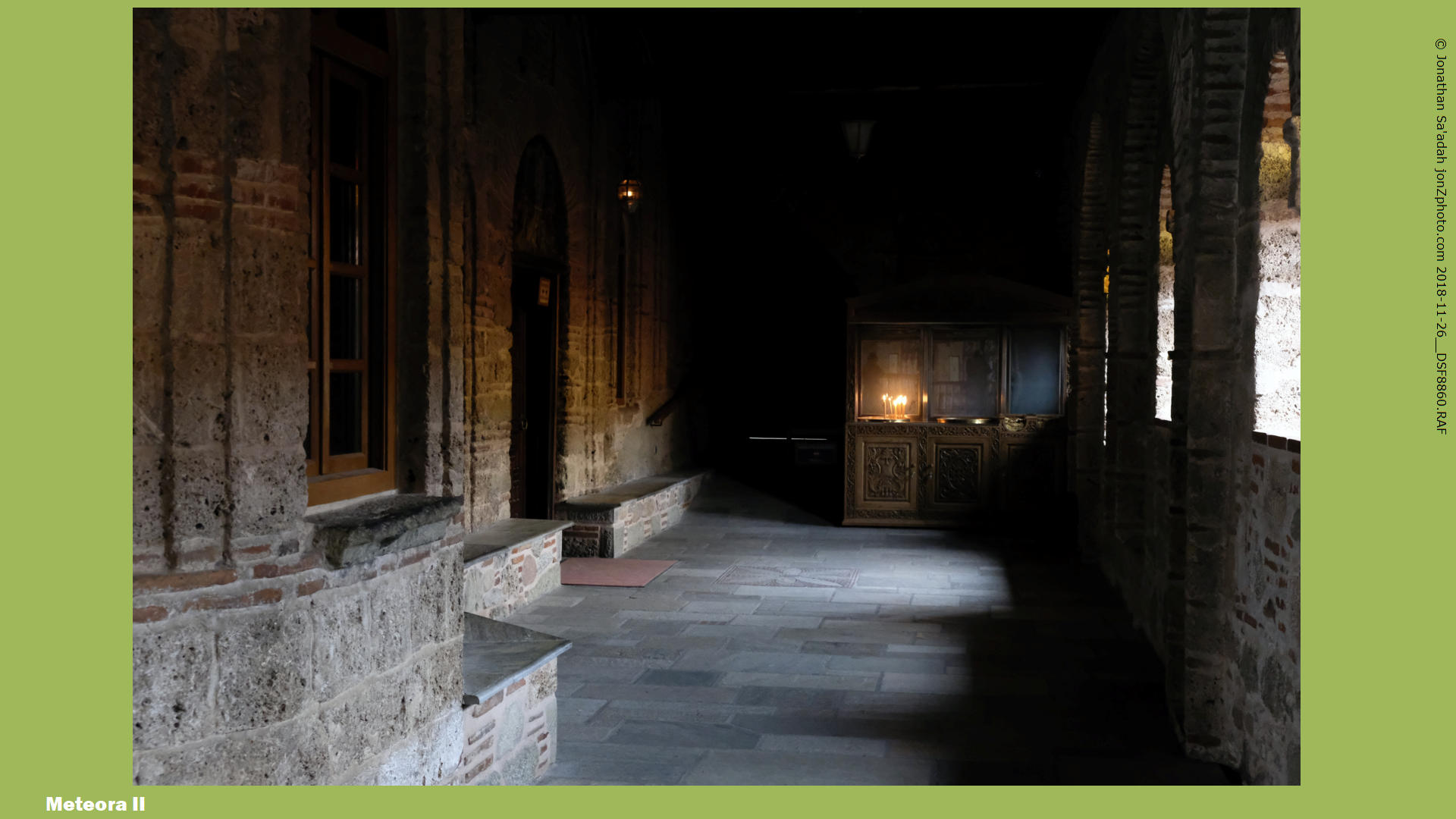
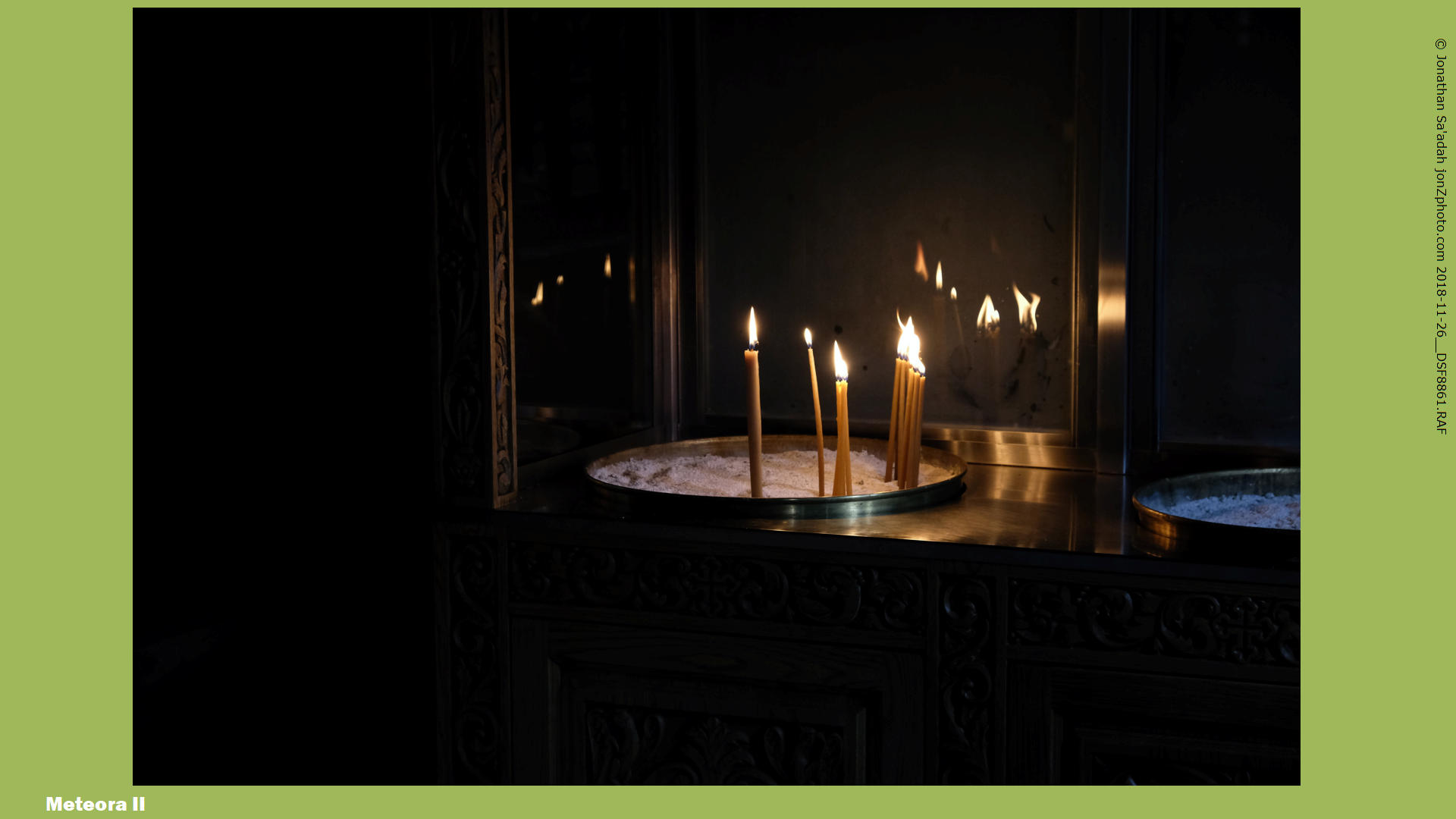
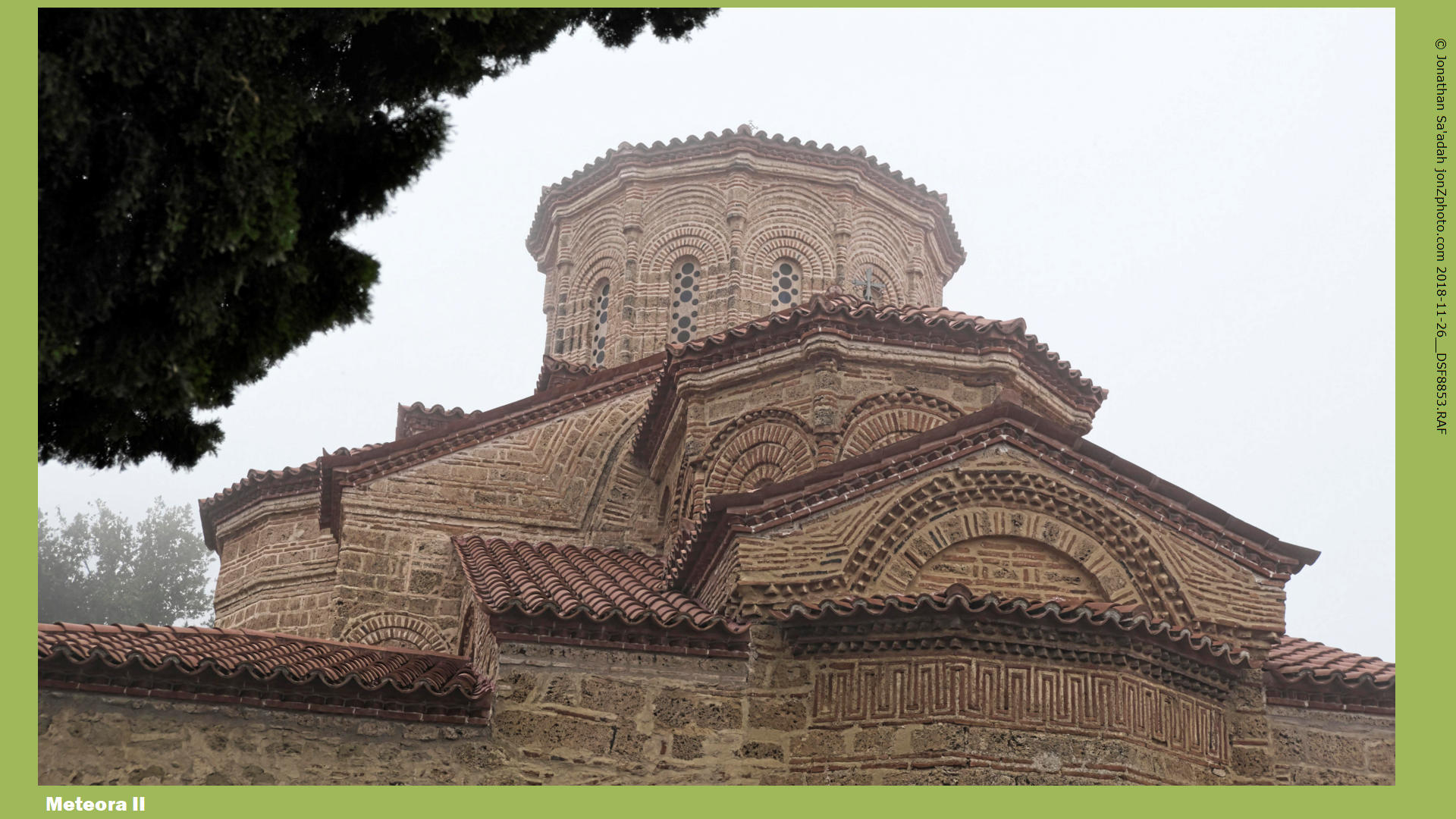
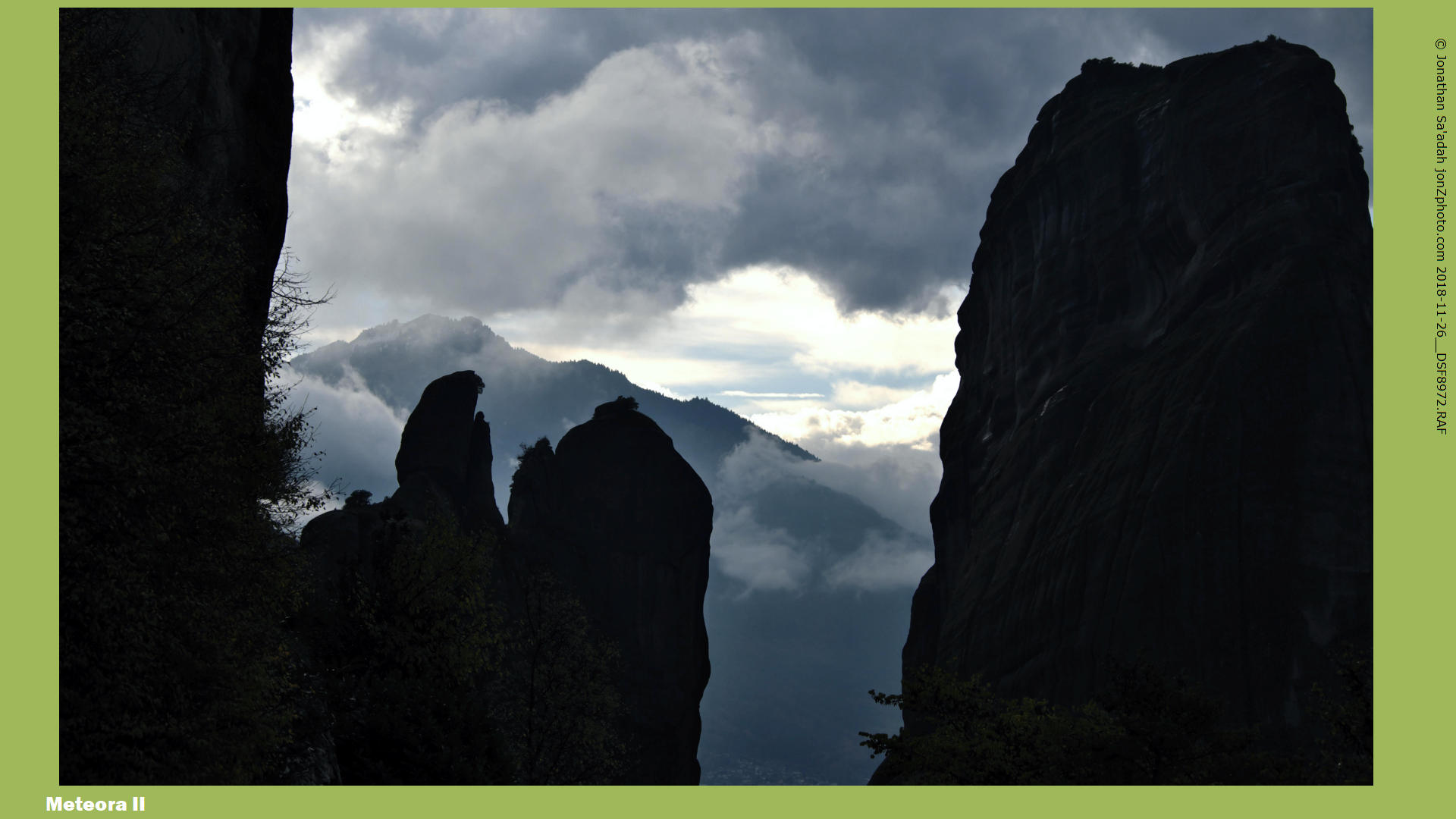
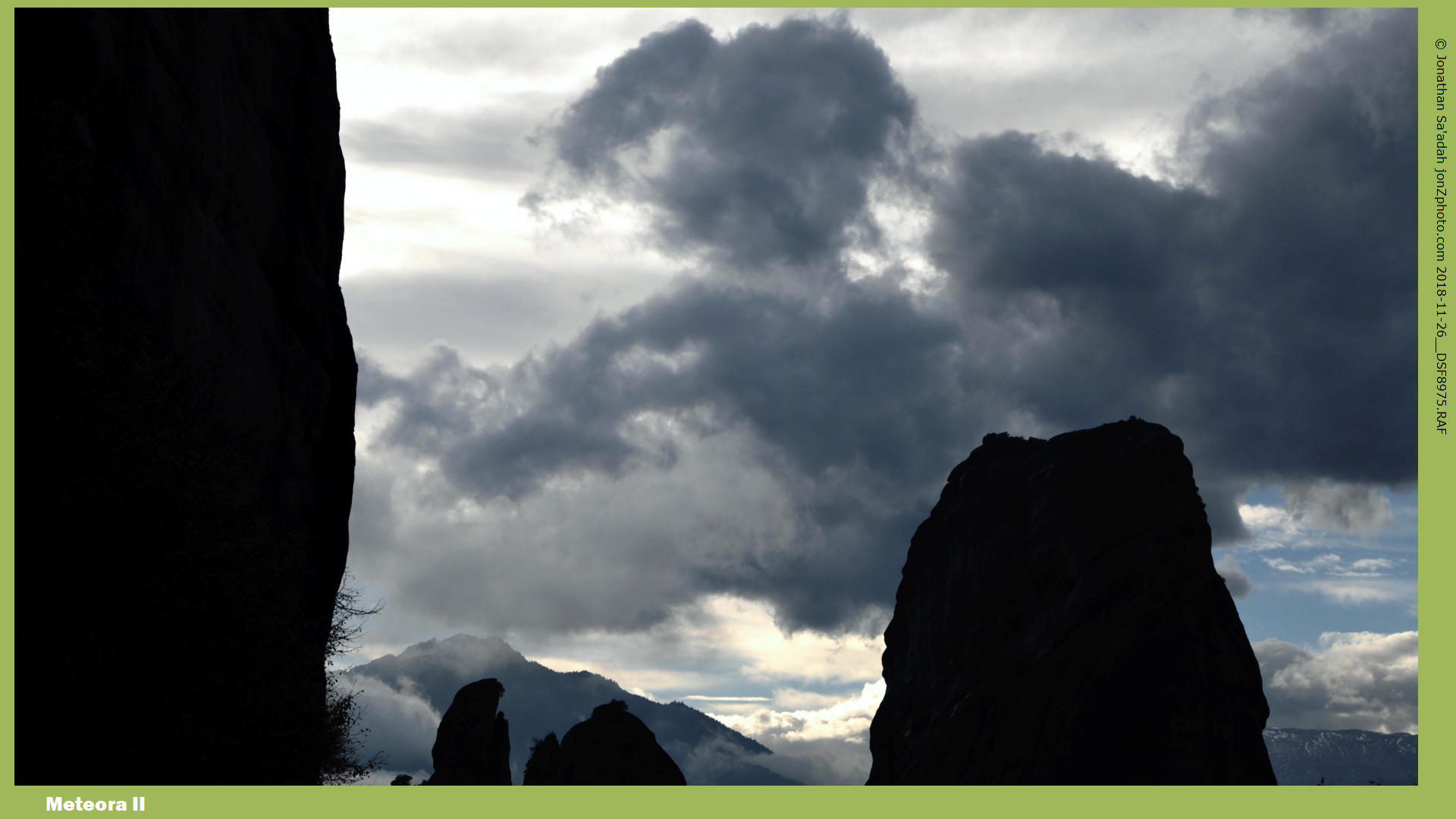
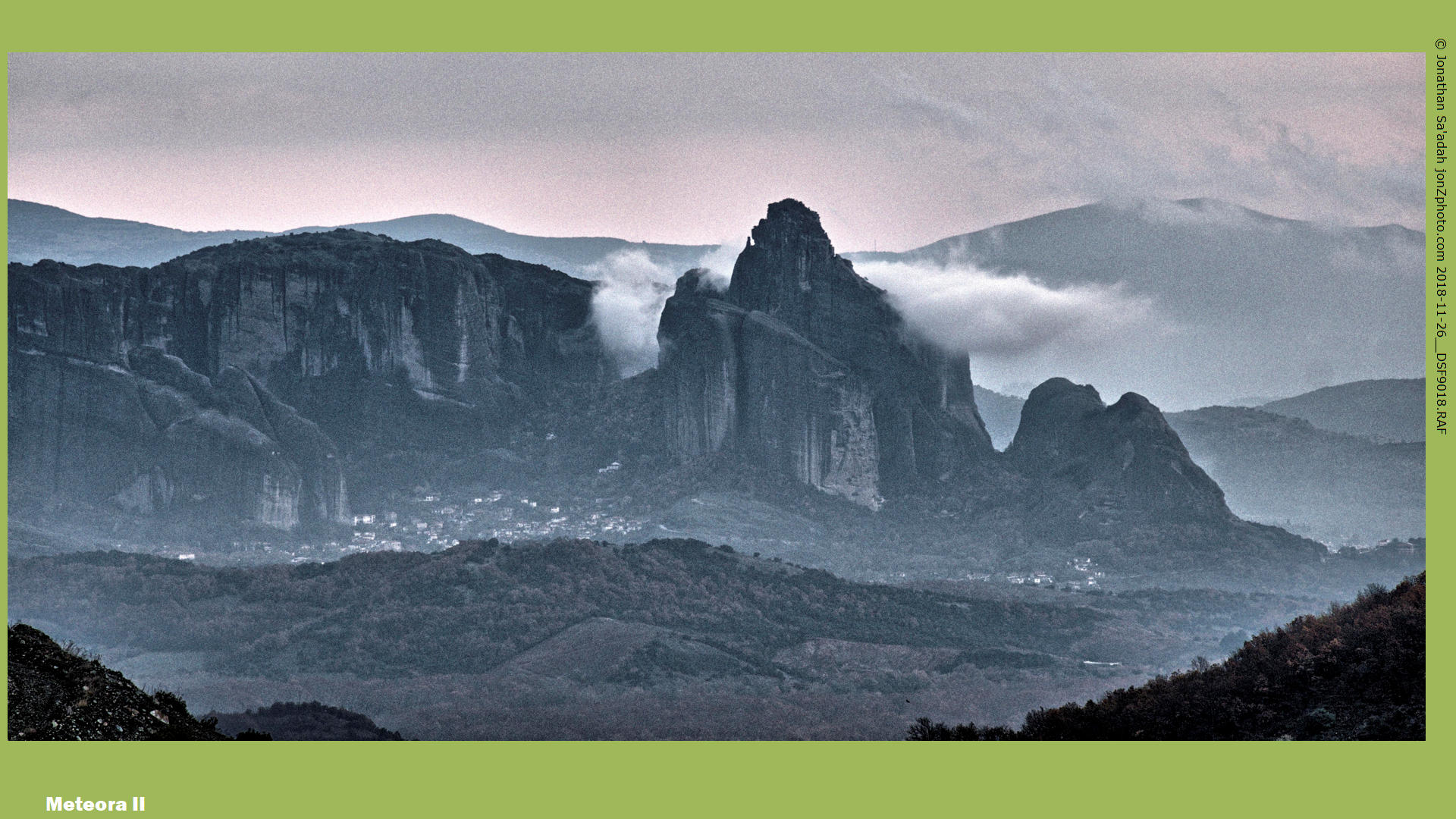
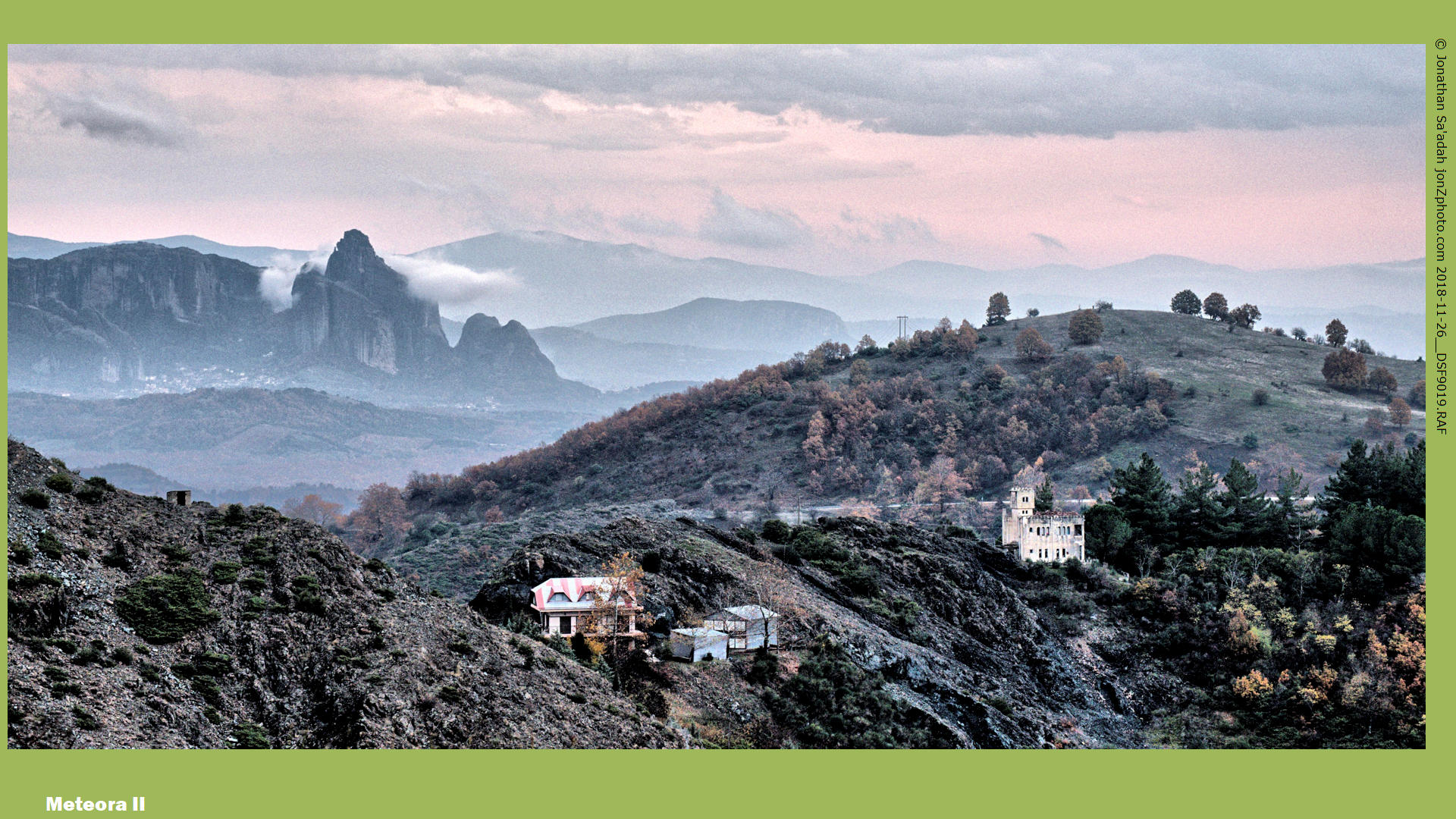

More photos and writing about Meteora
What an astonishing place. It doesn’t even feel real. Blown away by these photos! This batch is even more striking than the first.
Breathtaking!
Unreal beauty. The contrast with the Fall foliage!
Martine, Edward, and Anne thanks for your comments. There are only a few places I’ve ever been that are as transcendentally beautiful as Meteora. It helped too that we were able to visit when it was mostly empty – I think that during the summer it’s engulfed with tour buses. To be in those spaces with hardly any sound, and the mist roiling through … well, you can imagine.