When we arrived in Naples my first impressions were of physical deterioration, vandalism, and filth. When thrown suddenly into the chaos and traffic just outside the airport the contrast with Montreal felt like too much! A visceral body blow.
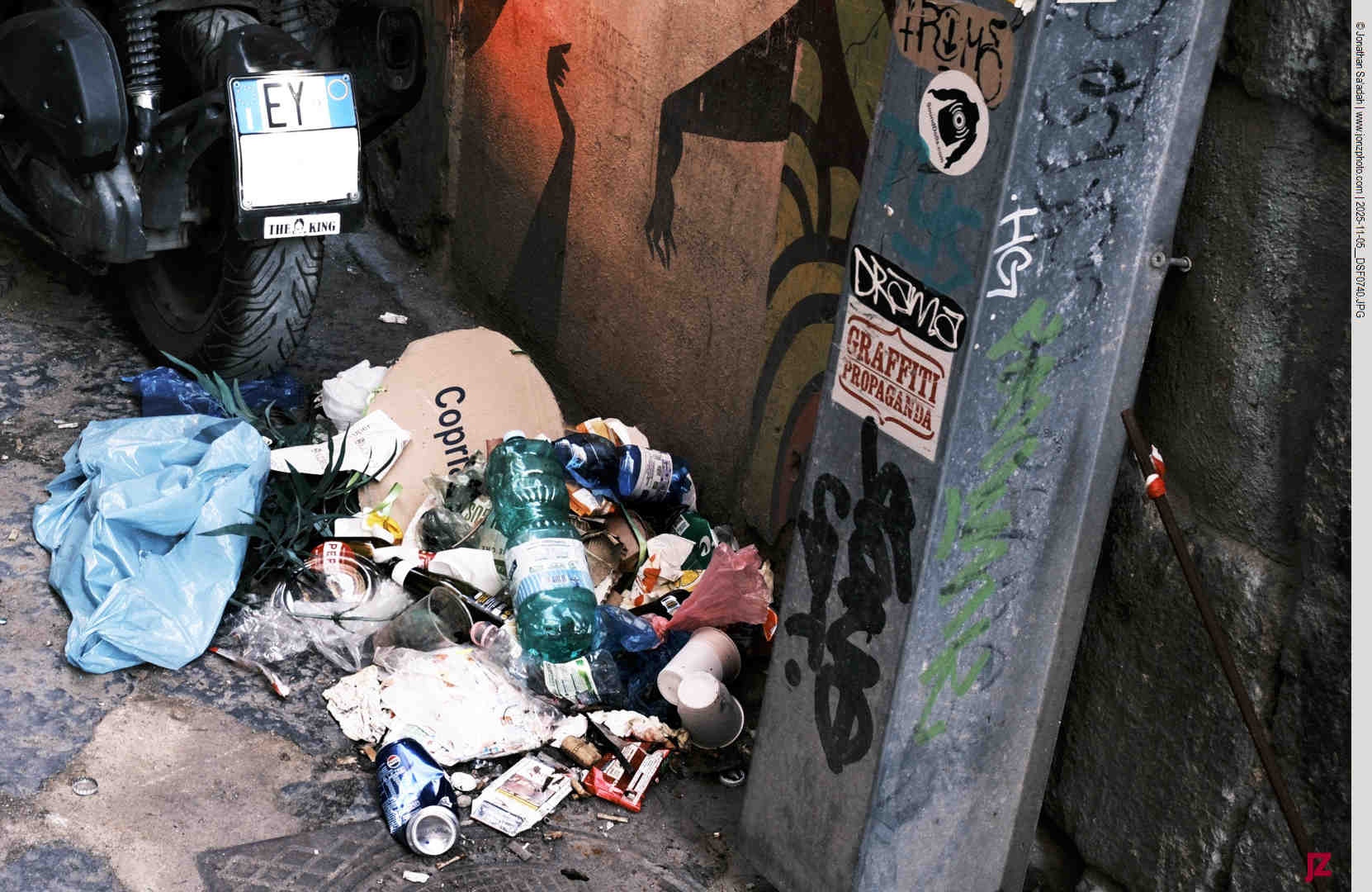
Looking back now I can see how wrong I was. Yes, Naples is chaotic, smelly and, in ways, a maddening place but its lifeblood and character transcend its drawbacks. I came away feeling lasting affection and respect.
Disclosure: Alas, I have no blood connection to Italy, so what I write is based on a short period – nine days in the city, though I’ve had other visits to the country. Italy, and Naples especially, inspires strong opinions so chime with your experiences.
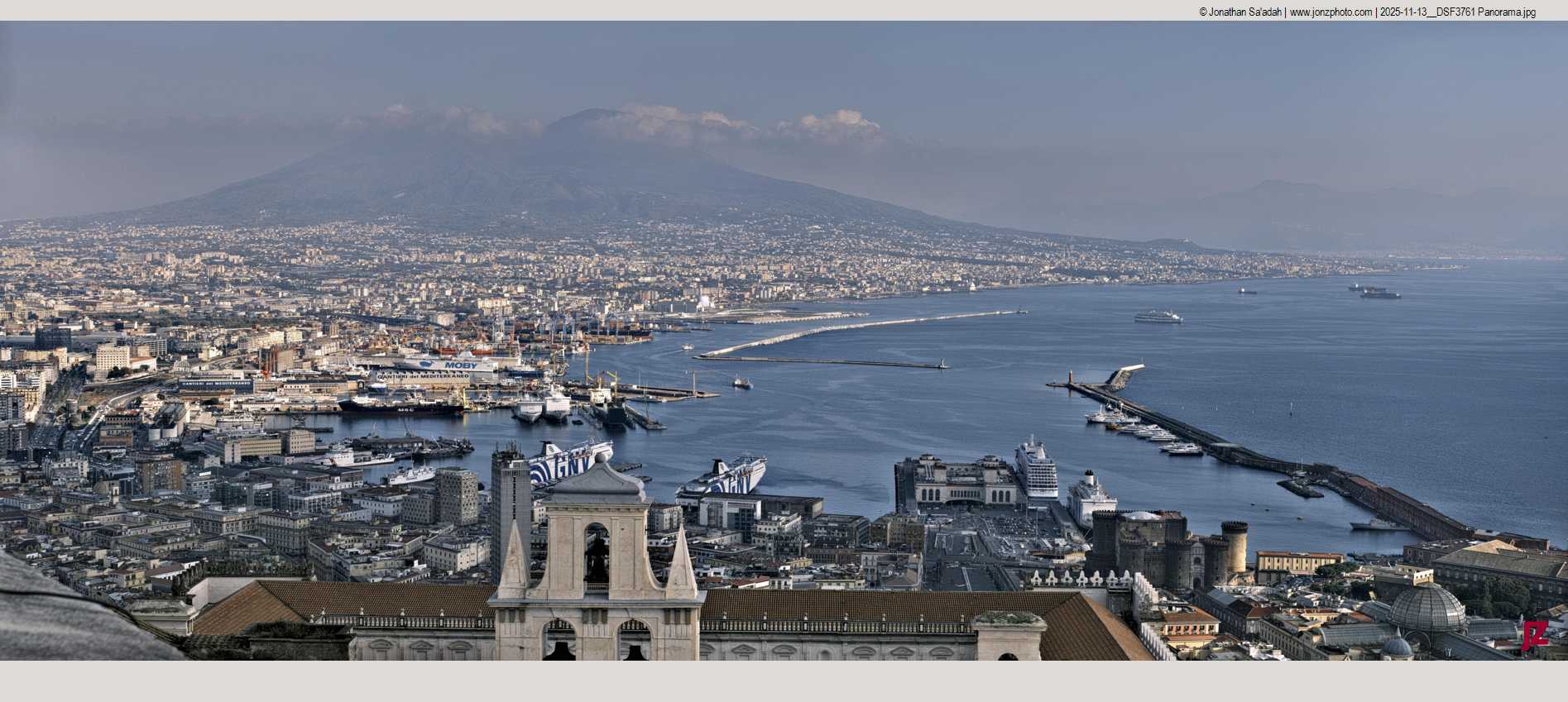
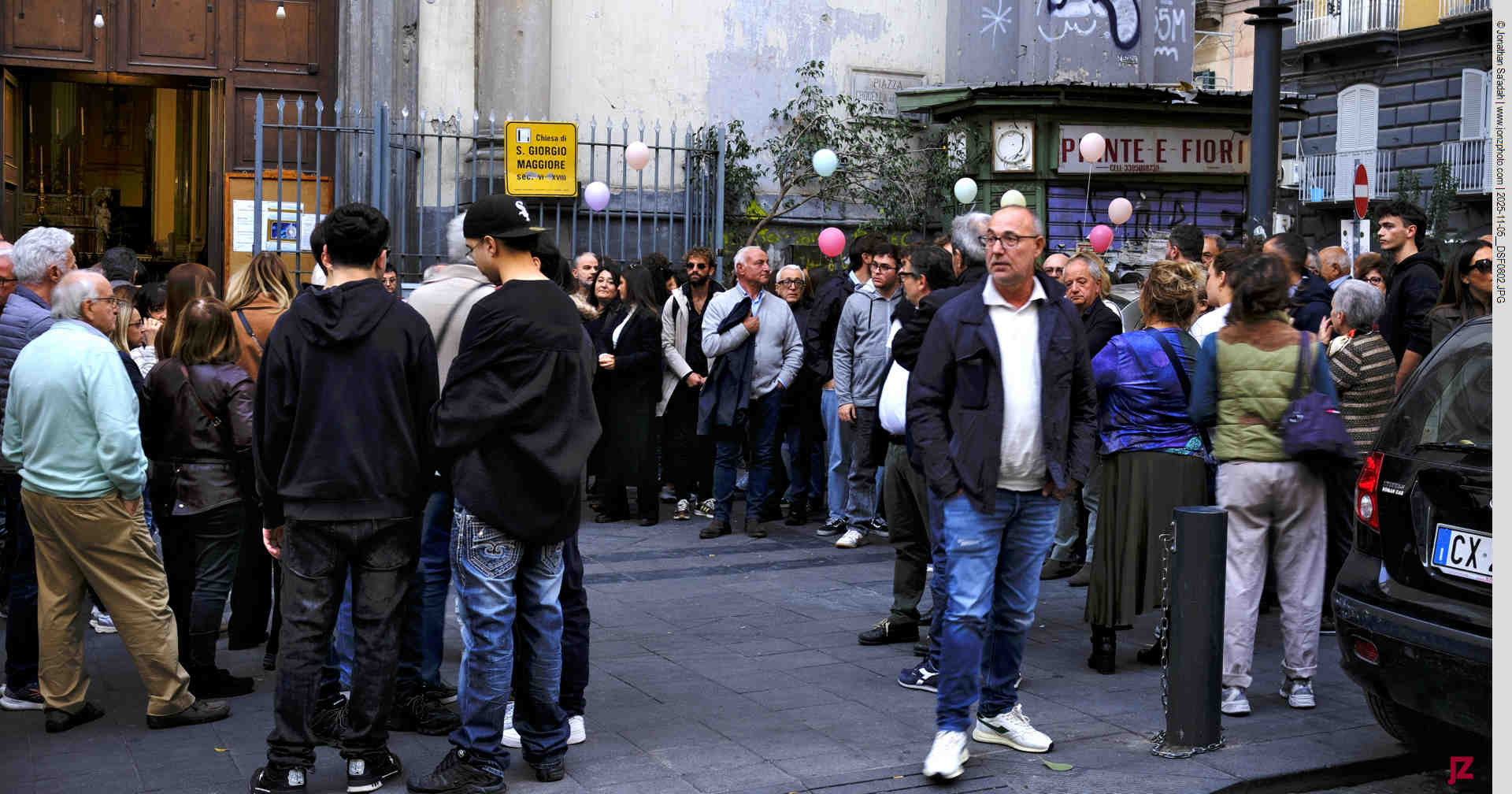
What I saw in Naples and what excited me the most was life unfolding in a continuous present. Damascus had a similar feel, but lacking the lively social give-and-take. History is not a frozen backdrop but a living participant in the present. The city’s streets compress centuries of urban life into a narrow, vertical spaces in which architecture, religion, commerce, and society are densely layered and constantly in motion. Everyday life spills outward from apartments and courtyards onto sidewalks, alleys, and piazzas, turning public spaces into hybrid spaces of living rooms, marketplaces, and theatres. It’s a feeling that I’ve fractionally experienced in other cities, but nothing like what washed over us in Naples.
A city built for the street
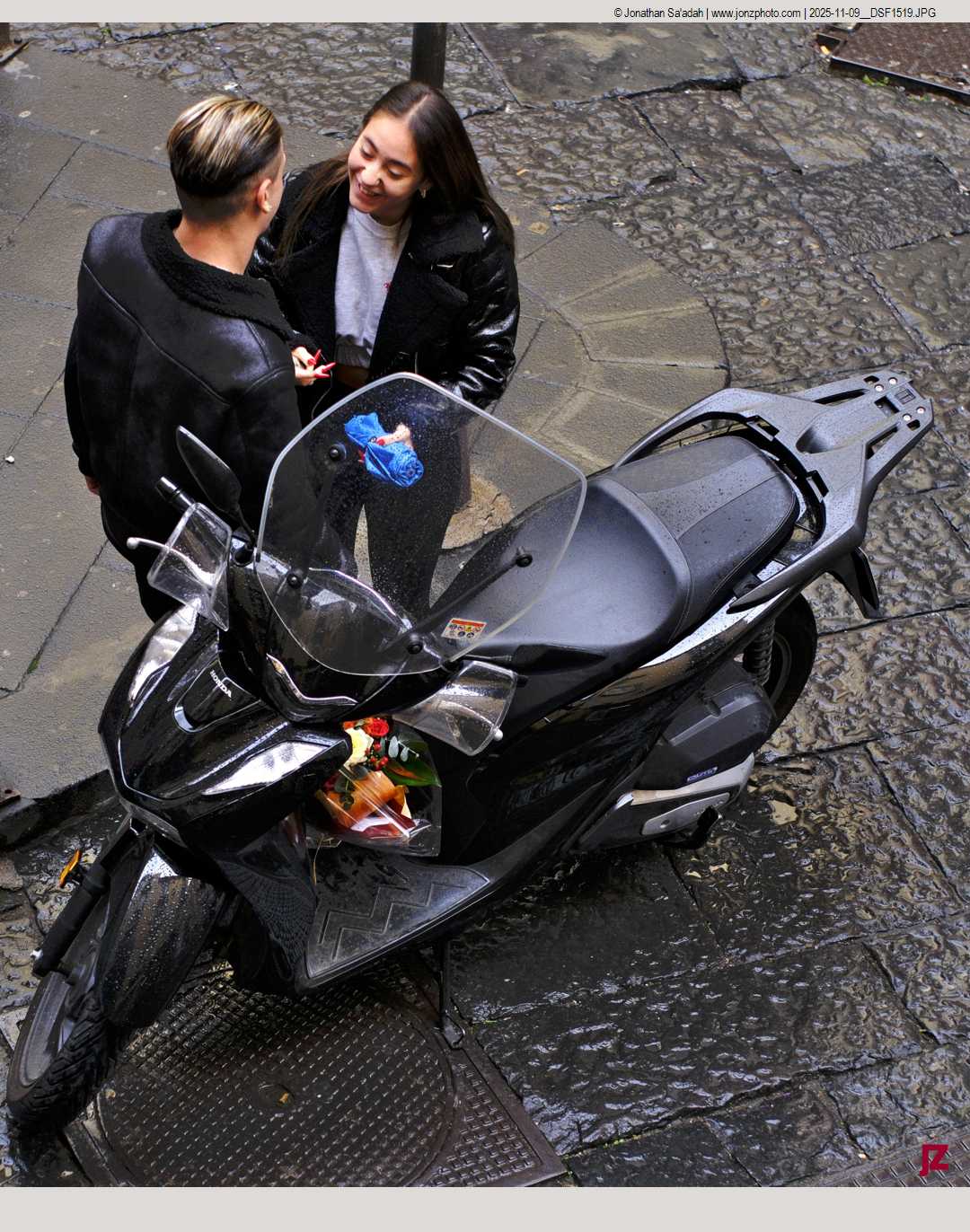
Naples’ street culture is inseparable from its urban fabric, especially in the historic center. Narrow streets and tall palazzi push life outward: balconies overhang the stone alleys, laundry stretches from window to window, and voices carry easily across the void. The result is a public realm where boundaries between inside and outside are porous, and where residents use doorsteps, stoops, and thresholds as extensions of domestic space.
Rituals, religion, and everyday devotion
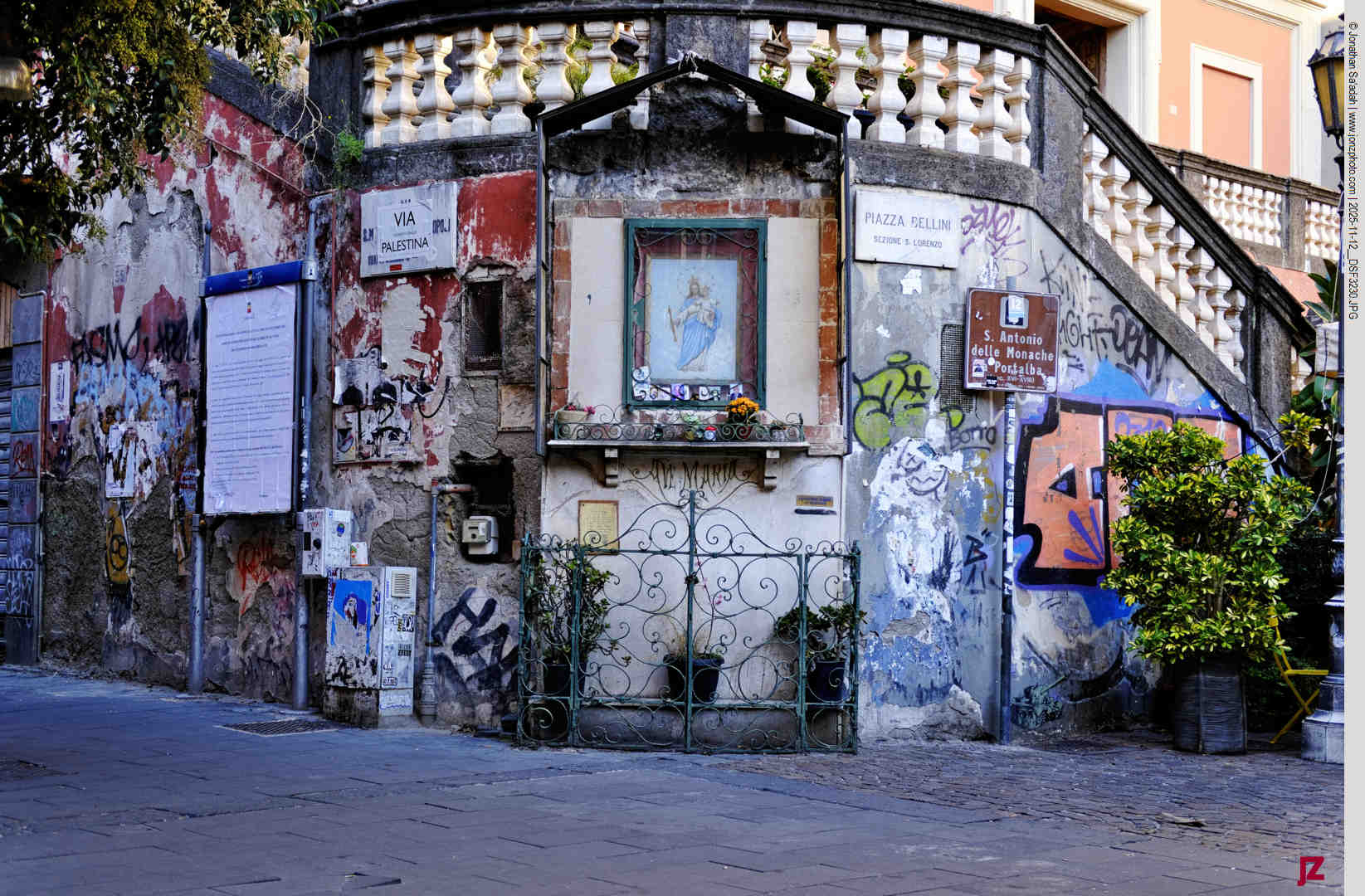
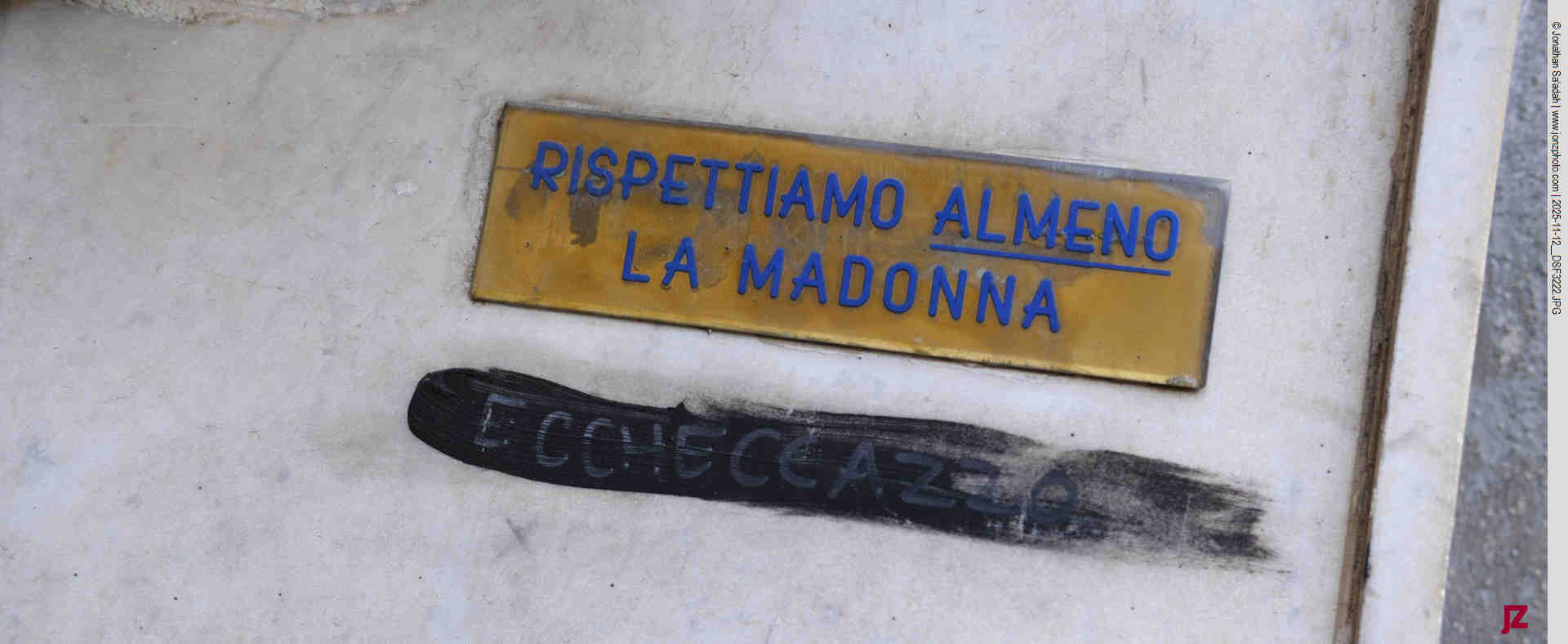
Street shrines – dedicated to the Madonna, local saints, and more recently figures like Diego Maradona – punctuate corners and facades, anchoring a popular religiosity that is both deeply felt and casually integrated into routine. Grief and celebration remain visible rather than privatized. Processions, move through the same streets that serve as commercial arteries, briefly reorganizing traffic and commerce around communal rites.
Commerce, food, and the social economy
Street-level culture in Naples is also a culture of commerce, from formal shops along Via Toledo and other main arteries to informal stalls, barrow vendors, and door-front sellers. Food is central: pizza al portafoglio, fried snacks, and pastries are eaten on the move, reinforcing an urban tempo in which eating, talking, and walking blur into a single activity. Small businesses – tailors, repair shops, artisan workshops – often have doors flung wide open, allowing passersby to watch work in progress and which favors a network of long-standing relationships.
Noise, performance, and conflict
Sound is one of the principal mediums of Neapolitan street life: motor scooters, shouts, arguments, laughter, and music densely fill the acoustic space. Conversation easily becomes performance; the theatricality has roots in a real culture of gestural communication and public argument, where disagreement is aired loudly but does not always imply rupture.
Graffiti, stickers, and visual claims
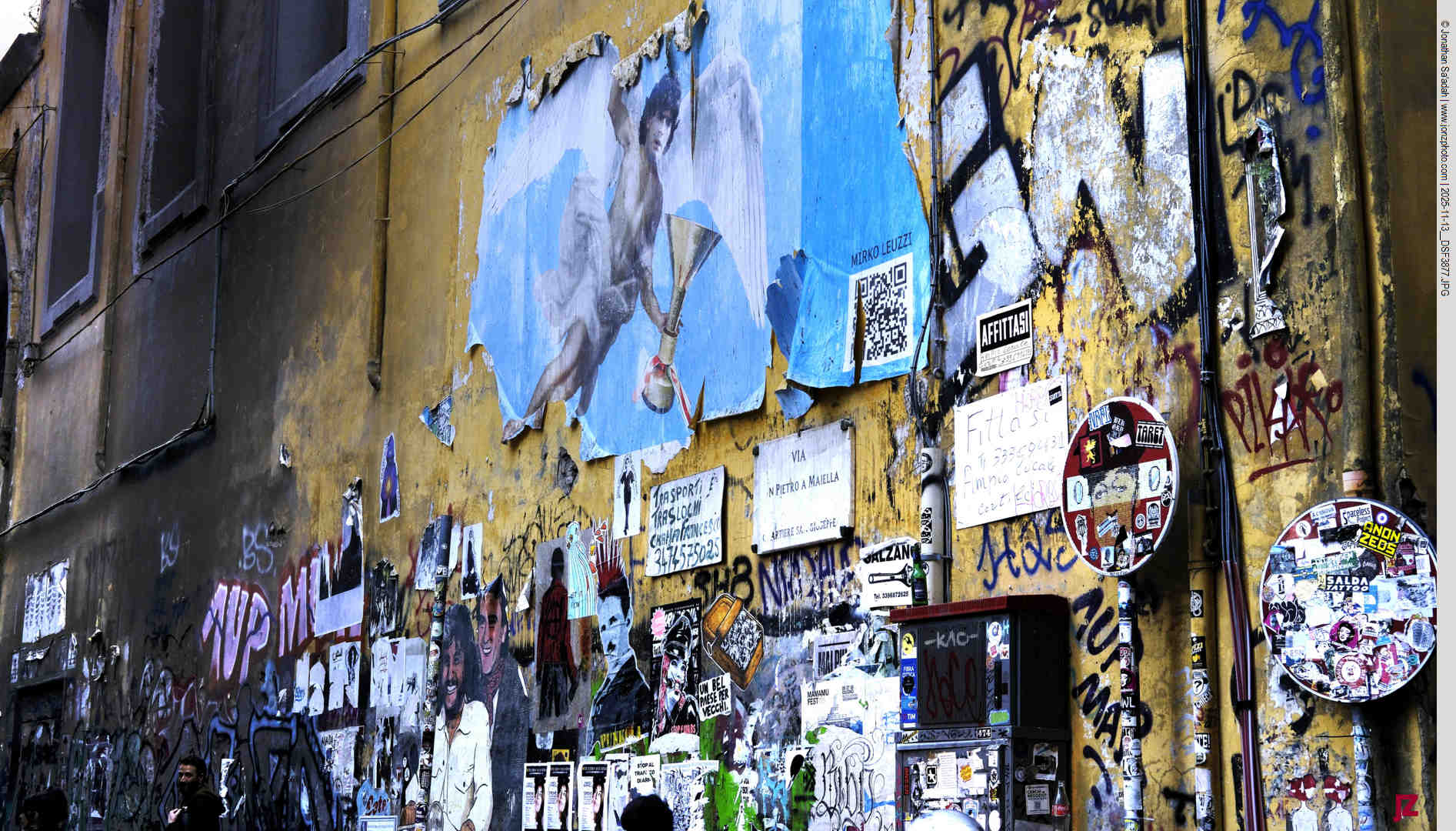
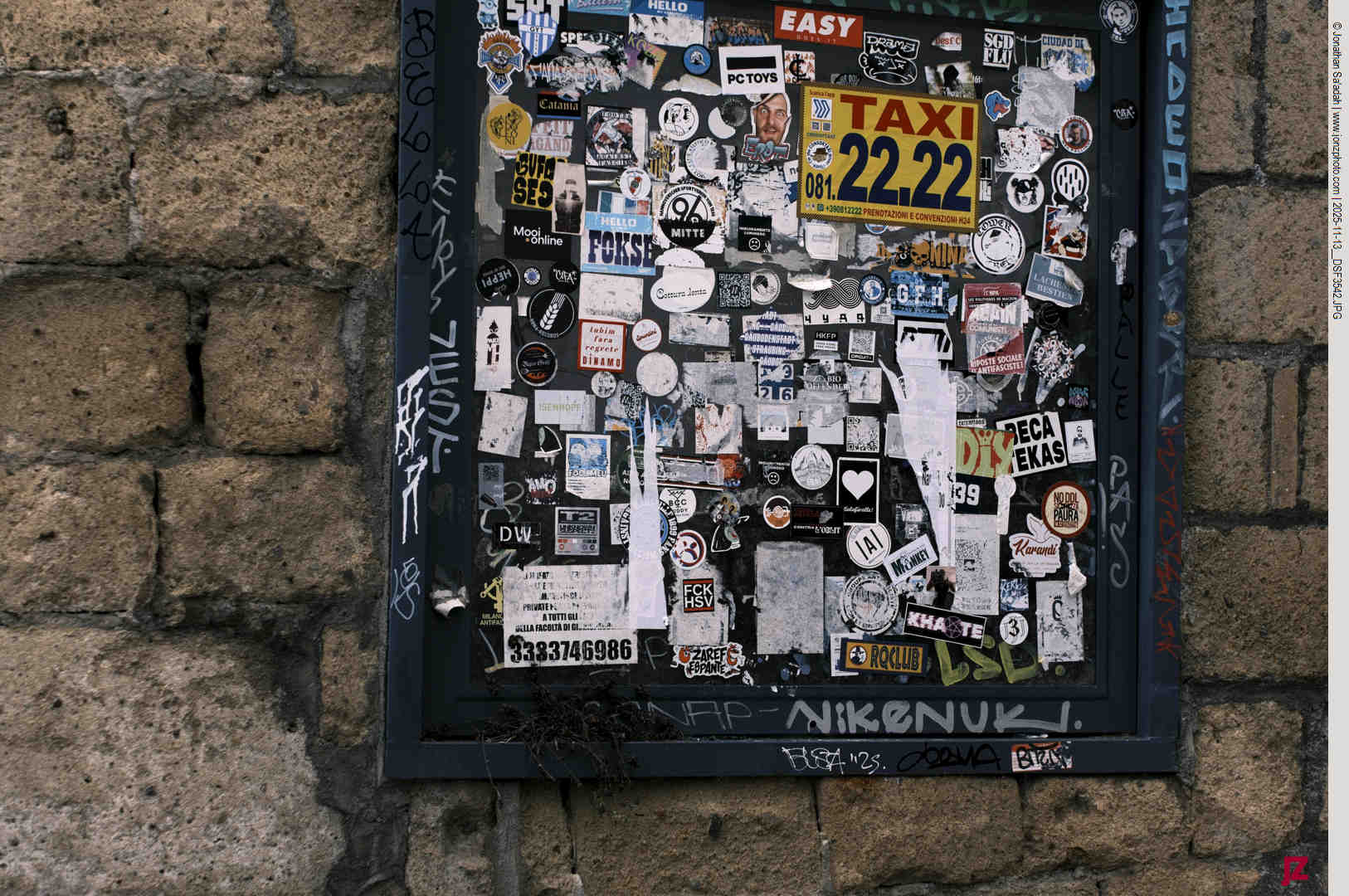
Walls, shutters, and street furniture function as a visual gallery of tags, murals, stickers, posters, and hand-painted signs, through which individuals and groups claim presence and allegiance. Football imagery – especially around Maradona and SSC Napoli – intertwines with political symbolism, memorials, and commercial advertising, producing surfaces that narrate loyalties, losses, and local pride. Municipal regulation and cleanup are uneven, so these layers are rarely erased; instead, they accumulate, reflecting a city in which informal expression is both tolerated and expected as part of the everyday street-level environment.
Return to North America
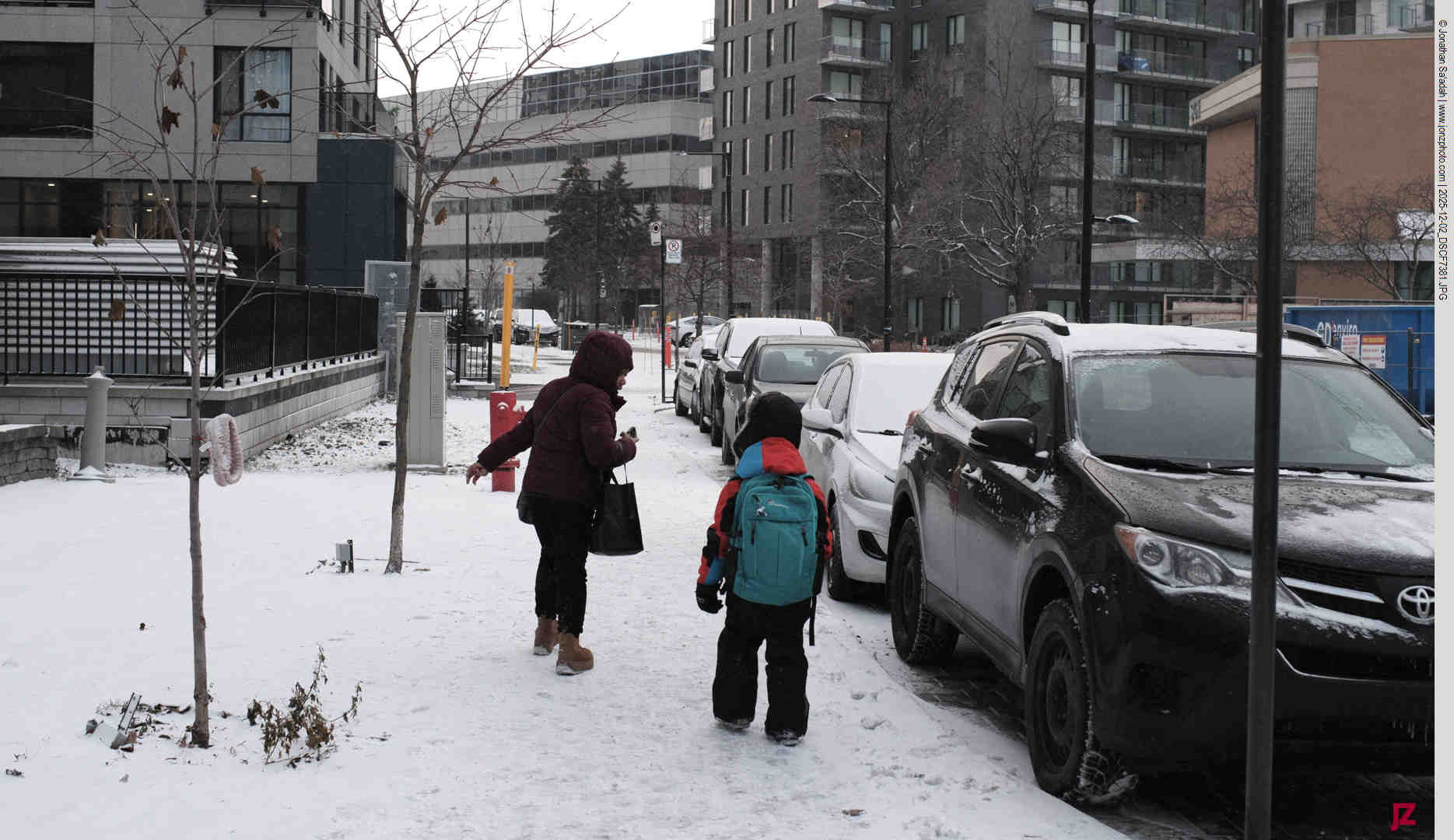
There’s almost no obvious overlap between Naples and Montreal. If I pulled my car out into an intersection and acted like a normal Neopolitan driver, I would so shock my fellow Montrealers that counseling teams would be called in by arriving cops, to say nothing of where I’d end up. But even though we sit like silent glum blobs glued to our phones while we ride our public transport, I still ask if we’re not chronically depressed because we don’t have an easy life dealing with northern-latitude weather. There’s no light a lot of the year and grocery stores ask high prices for food that in Naples would be classified as road kill. If we were en masse moved south and fed the foods of Italy I could see us lighting right up – sparking around with high energy collisions off each other and making noise in the metro. We have the spirit, just not the environment. Watch out, dear residents of Naples!


Leave a Reply