Category: Architecture

  • Watching the Aldred | Montreal Unfiltered

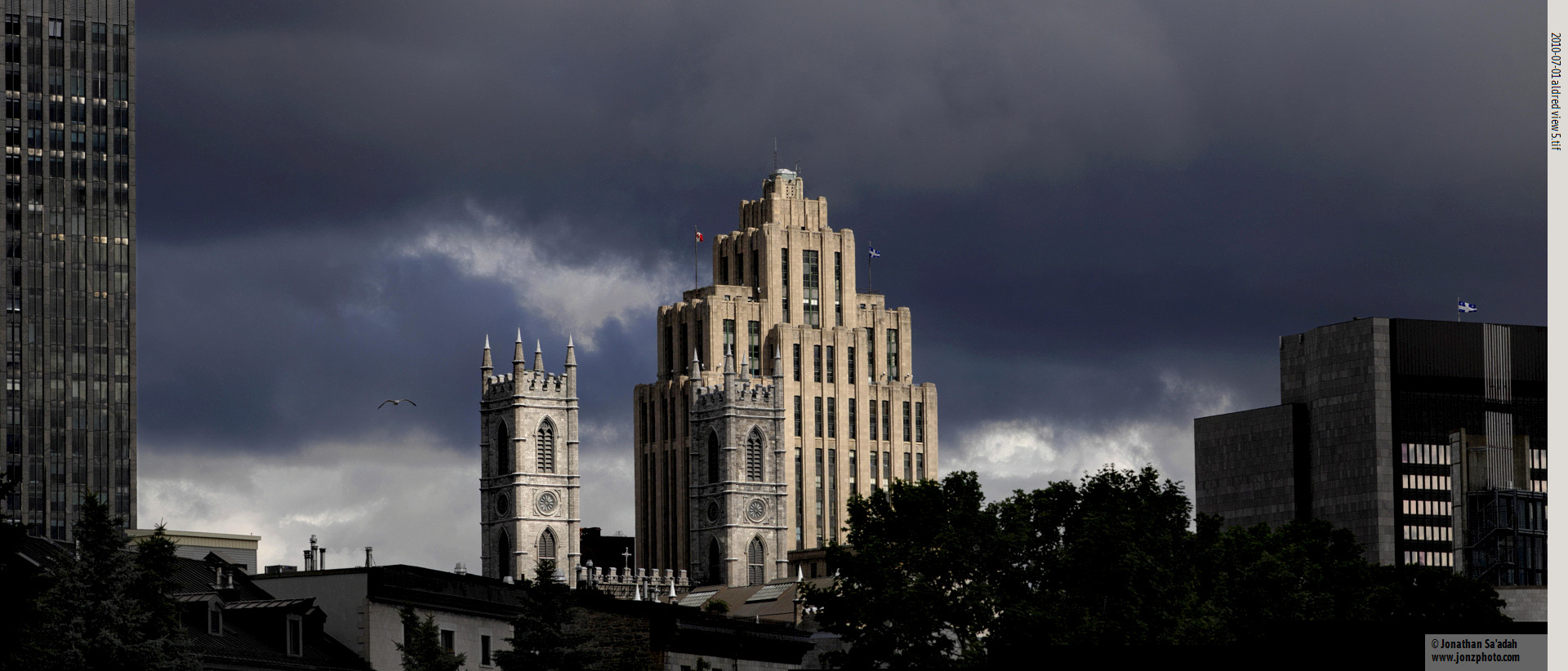
    The Art Deco Aldred building is a 94 year-old office tower on Place d’Armes’. It’s Montreal’s own “little Empire State”, completed in the same year as the New York building (1931) but of considerably smaller stature. Ironically, though, it’s the one that hasn’t been dwarfed by surrounding buildings and still stands proudly. That’s not to say that it doesn’t have problems. It’s suffering from the same disease many downtown office towers have contracted since the pandemic – a lot of empty space and the listing by brokers who represent owners eager to get out of the market.

    A Living Landmark

    It wasn’t always that way. When it was built it was a proud, if misplaced, statement of financial-district confidence. Architect Ernest Isbell Barott masterminded the setbacks that characterize its stepped shape in order to take advantage of an 1929 Montreal by-law allowing extra height if sunlight reached the square. The move allowed the building enough height to express its modern ambition. From street level you see limestone that mirrors older façades. The building’s massing feels almost ecclesiastical, yet it projects a kind confidence that was probably in short supply during the Depression.
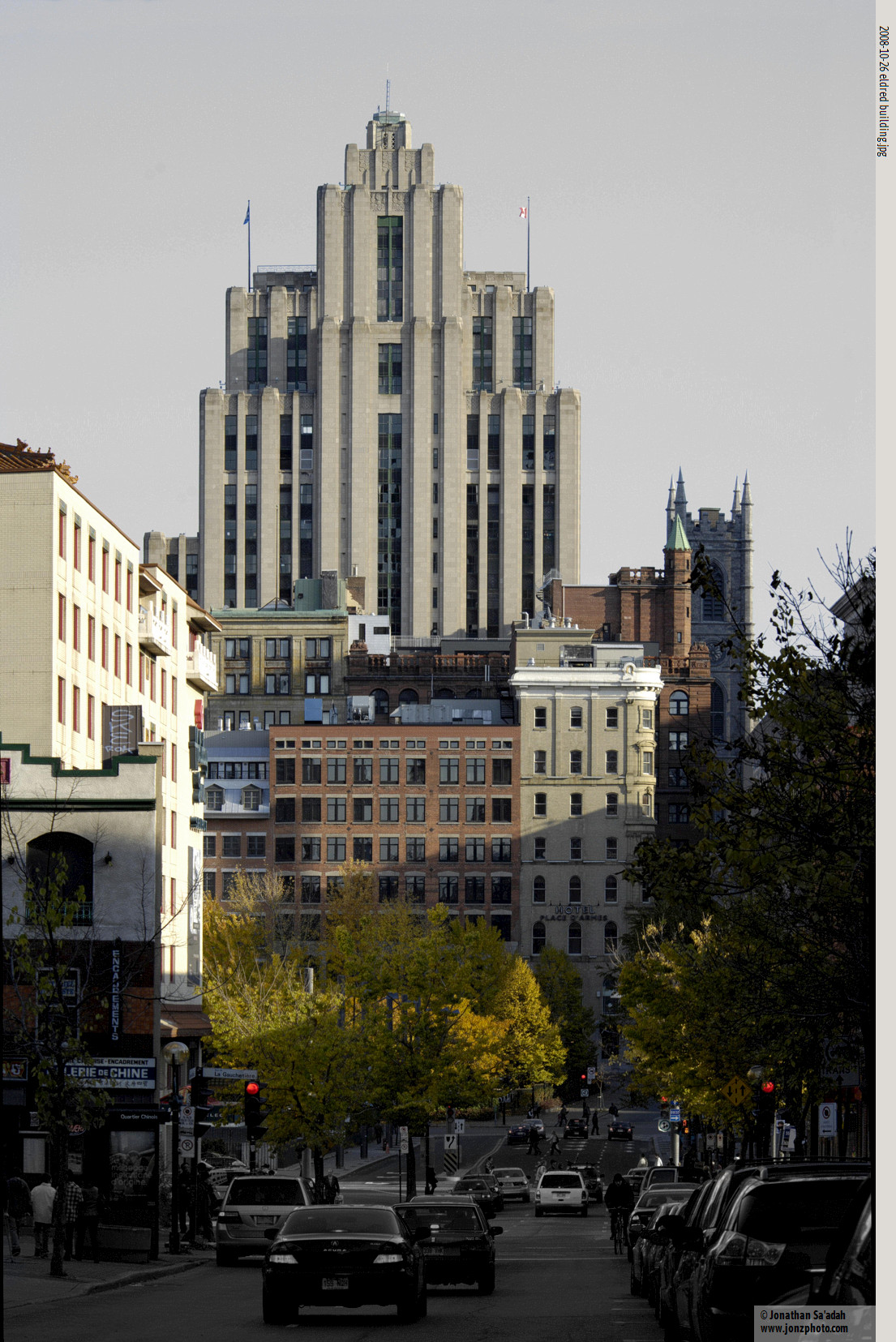
    ▲ The view looking south on St-Urbain.

    Stitching Into Montreal’s Economic Fabric

    When the tower opened in the teeth of the Great Depression, its $2.85-million price tag signaled bullish faith in Montreal as Canada’s financial hub. Aldred & Company, a New York finance firm, anchored the top floors; local banks soon clustered nearby. Even today, in its diminished state, real-estate brokers list the address as commanding premium leases. Yet vacancy hovers near 30 percent and it’s touted as an opportunity for residential or boutique-hotel conversion.

    That tension mirrors Montreal’s broader economy as the city navigates a post-pandemic recovery. Tourist visits were up 7 percent in 2024 and projected higher for 2025 – but older offices struggle to meet post-pandemic hybrid demands. The Aldred thus sits at the crossroads of heritage preservation and economic reinvention, with no clear plan of where it will go.
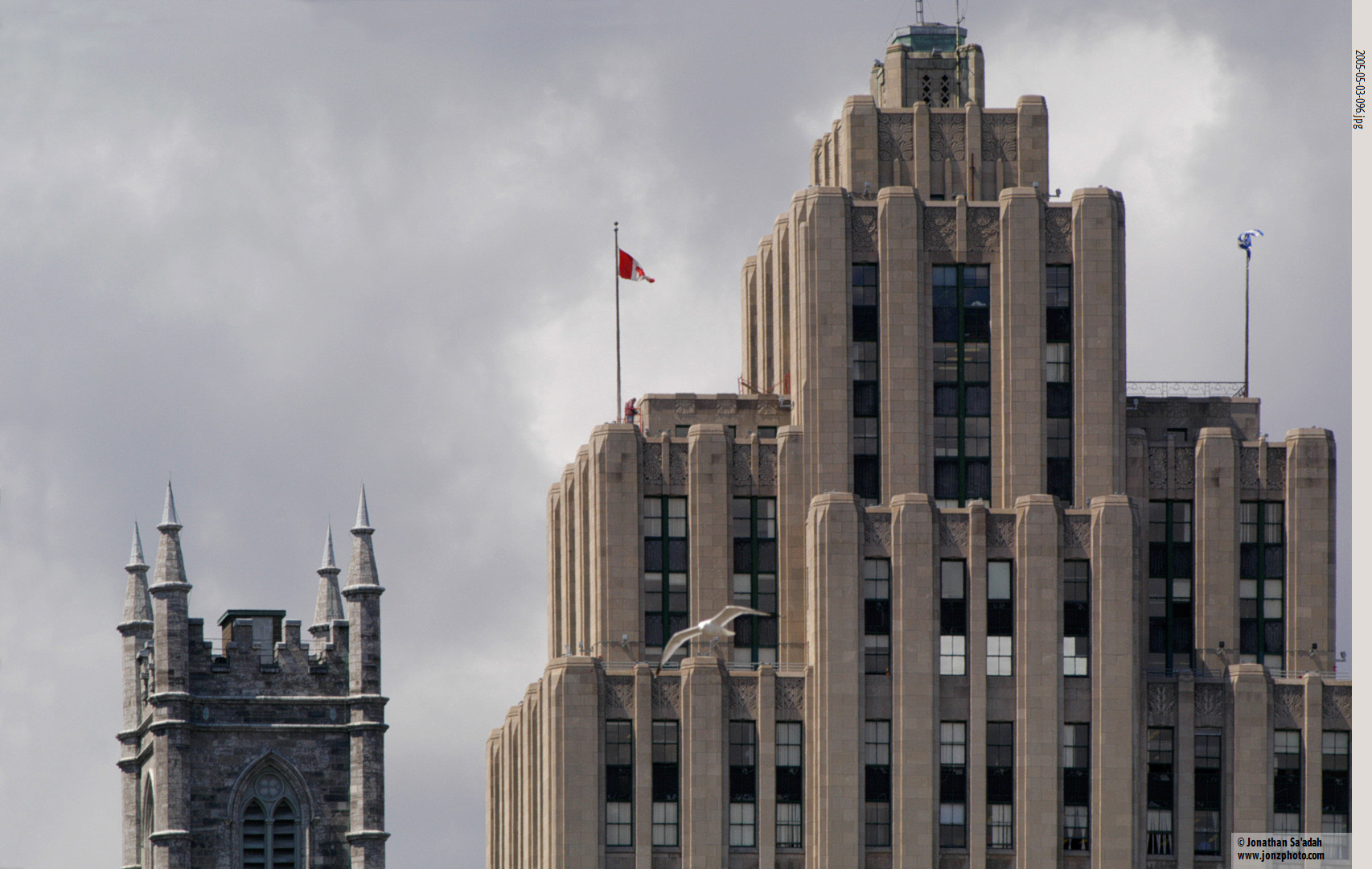
    ▲ Notre-Dame Basilica doesn’t quite match its height. The architect was able to take advantage of a by-law allowing stepped buildings extra height.

    Past and Future in the Same Gaze

    There’s never a lack of discussion about what to do. Preservationists argue for light-touch retrofits, citing UNESCO principles that balance cultural value with economic use. Urbanists argue for adaptive reuse to keep the historic city core alive. But in any case, the building seems perfectly at ease with being photographed and appreciated.

    An Unmistakable Part of Montreal

    For me, I’m lucky – I don’t have to worry about its elevator systems or quirky partitions, or any of the many other worries that haunt building owners. For me The Aldred is a 96-metre miniature gem we can honor in its Art Deco glory while still debating office-to-housing policy. I appreciate its confident limestone ribs and see it as being an unmistakable part of Montreal.
  • The impossible miracle of Biblioteca Vasconcelos

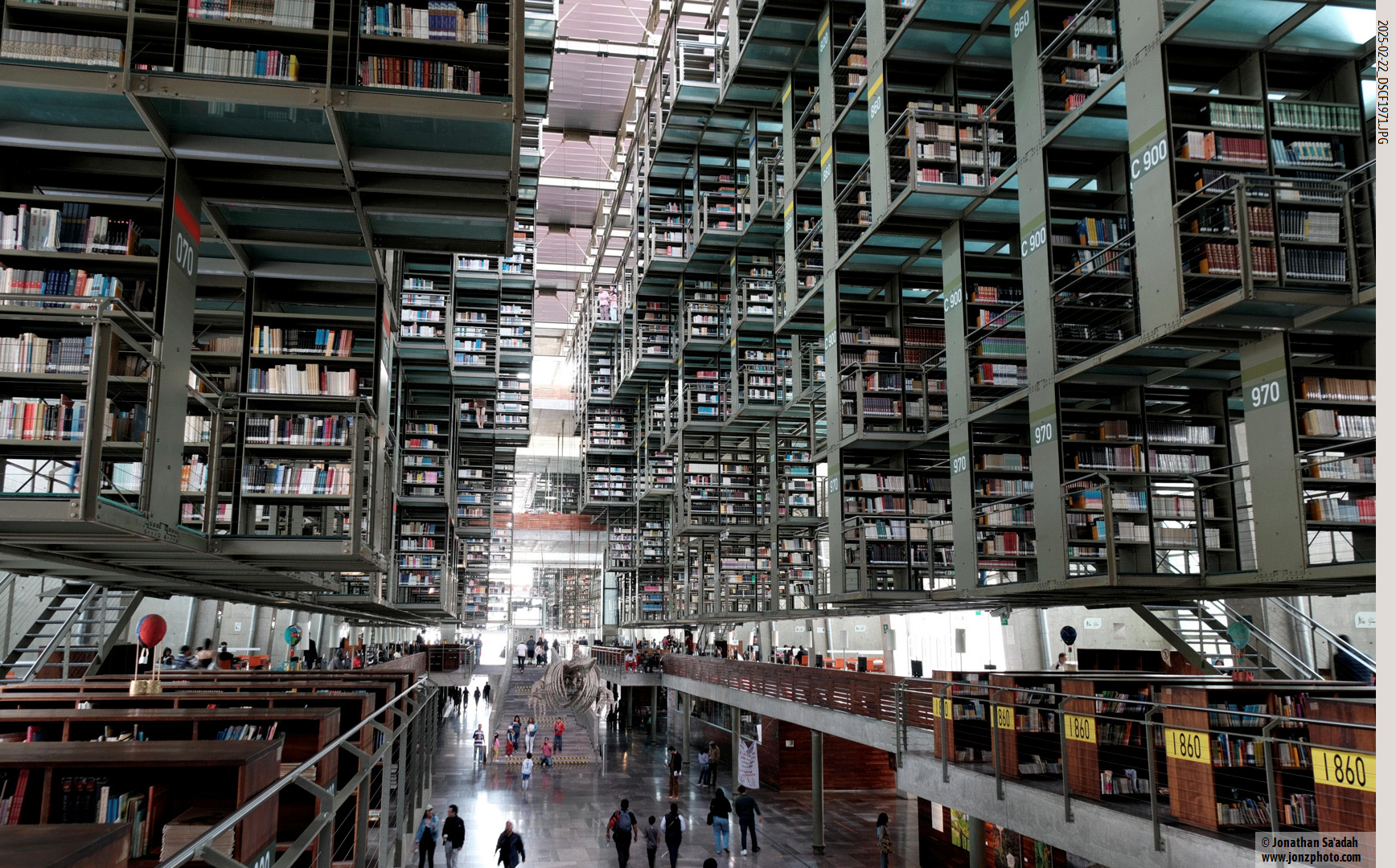
    Anyone who has moved boxes of books around knows how heavy they are. To have 600,000 volumes suspended in space is close to a miracle! Biblioteca Vasconcelos in Mexico City achieves this remarkable feat, extending the creative practice of Mexico City architecture by floating its stacks in the air. This unique architectural marvel not only serves as a library but also as a cultural hub, attracting visitors who are eager to experience its stunning design.

    Biblioteca Vasconcelos Mexico City Architecture at its best!
    Architect Alberto Kalach made a significant contribution to Mexico City architecture with his daring design – suspending the stacks from the ceiling of the building.

    The architectural design of Biblioteca Vasconcelos is an example of modern creative ingenuity. The building’s side windows allow natural light to flood the interior, creating a serene reading environment that inspires contemplation and study. The stacks, suspended from the ceiling, give the impression of books floating in mid-air, challenging conventional library design and offering a visually striking experience. This innovative concept encourages visitors to engage with the space in a more dynamic way, as they navigate through the airy layout.

    I’ve always photographed in libraries. I enjoy books and the spaces designed for their use. This time there was a problem though. A woman in a semi-official uniform approached me, informing me in Spanish that photography was not allowed. To be honest, it seemed quite permitted, given the number of people snapping pictures on their phones. Unfortunately, a “Real Camera” is viewed differently. There was a loophole: I could apply for a permit at a specific office, allowing me to capture the stunning Mexico City architecture within. I was determined to document this unique space, since to me its beauty and functionality was worth sharing with a wider audience.

    As I filled out the form for the photography permit, I couldn’t help but admire the intricate details of the library’s design. The open spaces were filled with the soft sounds of pages turning and quiet whispers. The atmosphere felt filled warmed by the shared love of literature, making it an inspiring environment for both photographers and bibliophiles alike!

    The office I had been directed to was in the back of the library. I faced another woman, this one sitting at a crowded L-shaped desk near one of the doors that opened out onto the gardens. I asked if I could take pictures and was given a form to fill out. That, coupled with a Quebec driver’s license, and soon I received a plastic tag on a lanyard which gave me Official Status. Hooray, okay to use a camera!

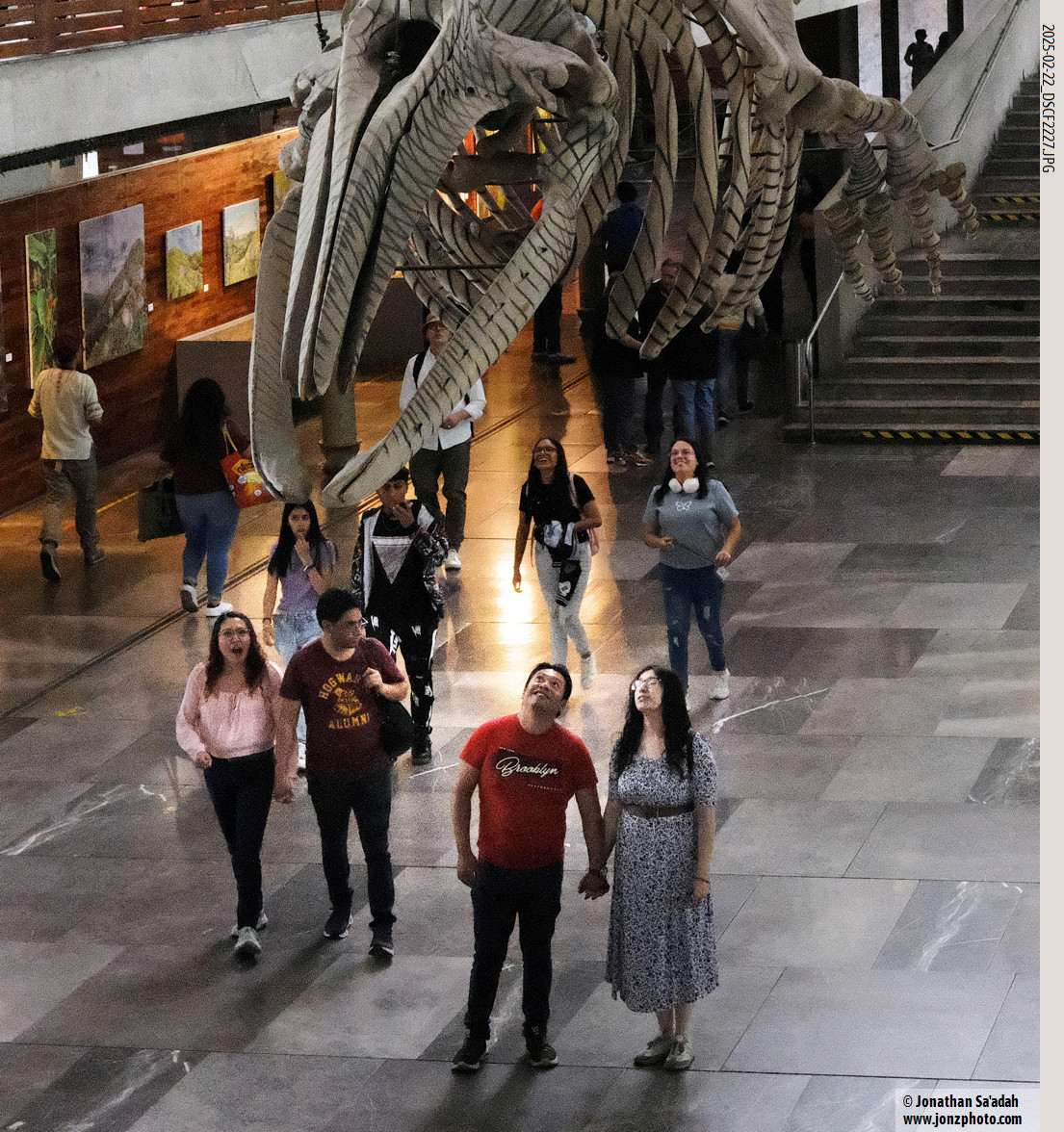
    Visitors reacting to the reworked white whale skeleton by Mexican-born artist Gabriel Orozco at Biblioteca Vasconcelos.
    Visitors reacting to the reworked white whale skeleton by Mexican-born artist Gabriel Orozco, which adds a unique artistic element to the library’s ambiance.

    Mexico City’s Biblioteca Vasconcelos is such an unusual space – one can see the surprise and glee on the faces of people entering for the first time. Any resident can use the library, and many people do. The manner in which the stacks are suspended in mid-air creates a faceted and irregular space, playing with light and transparency. It’s a brilliantly imaginative way to design a library, and brave too in a city prone to powerful earthquakes. The library not only serves its primary purpose but also acts as a community gathering space, hosting events, workshops, and exhibitions that engage the public and foster a love for reading and learning. I don’t know if perhaps a part of what I was sensing was the public pride in the hard-fought win to break away from the book-banning controls of the Catholic Church – but it seems possible that this space embodies some of that pride too.

    The library opened in May of 2006, designed by the architect Alberto Kalach and built next to the old Buenavista railway station, north of the city center. Housing a collection of 600,000 books (using the Dewey Decimal System!), it also features the hanging skeleton of a large gray whale decorated by the artist Gabriel Orozco called “Matrix Móvil”. I saw a retrospective of Orozco’s work in the Museo Jumex (March, 2025) which I’ll describe in a later post. The whale creation is well traveled, having been shown at the Museum of Modern Art in New York in 2009.

    Biblioteca Vasconcelos stands as a beacon of modern architecture and culture in Mexico City. Its unique design honors the communities, reading public, artists, and scholars that use it. The library exemplifies how architecture can inspire a love for literature and create a sense of belonging among its visitors. Whether you are an avid reader, a photography enthusiast, or simply curious about innovative design, a visit to Biblioteca Vasconcelos is sure to leave a lasting impression. If you are in Mexico City it’s a must. It’s a short Metrobus ride north of the city center, and there’s a metro stop (Buenavista) nearby. The combination of literature, art, and innovative design makes Biblioteca Vasconcelos an essential stop for anyone visiting the city.