My Favorite Pizzerias: Ai Marmi in Rome
I noticed the place because it always seemed to be closed, metal-shutters drawn tight to the ground. Since it was nearby the apartment we were renting and I passed by it frequently, wondering what was this phantom pizzaria. A failed business? A front for some nefarious project? It was hard to tell.
One evening I was out in the neighborhood and to my surprise the shutters had just been pulled up and the pizzeria was open. Not only was it open but it was large, bright, and beginning to fill up. I went back to the apartment and alerted Beth, and together we returned just early enough to get in among the first sitting.
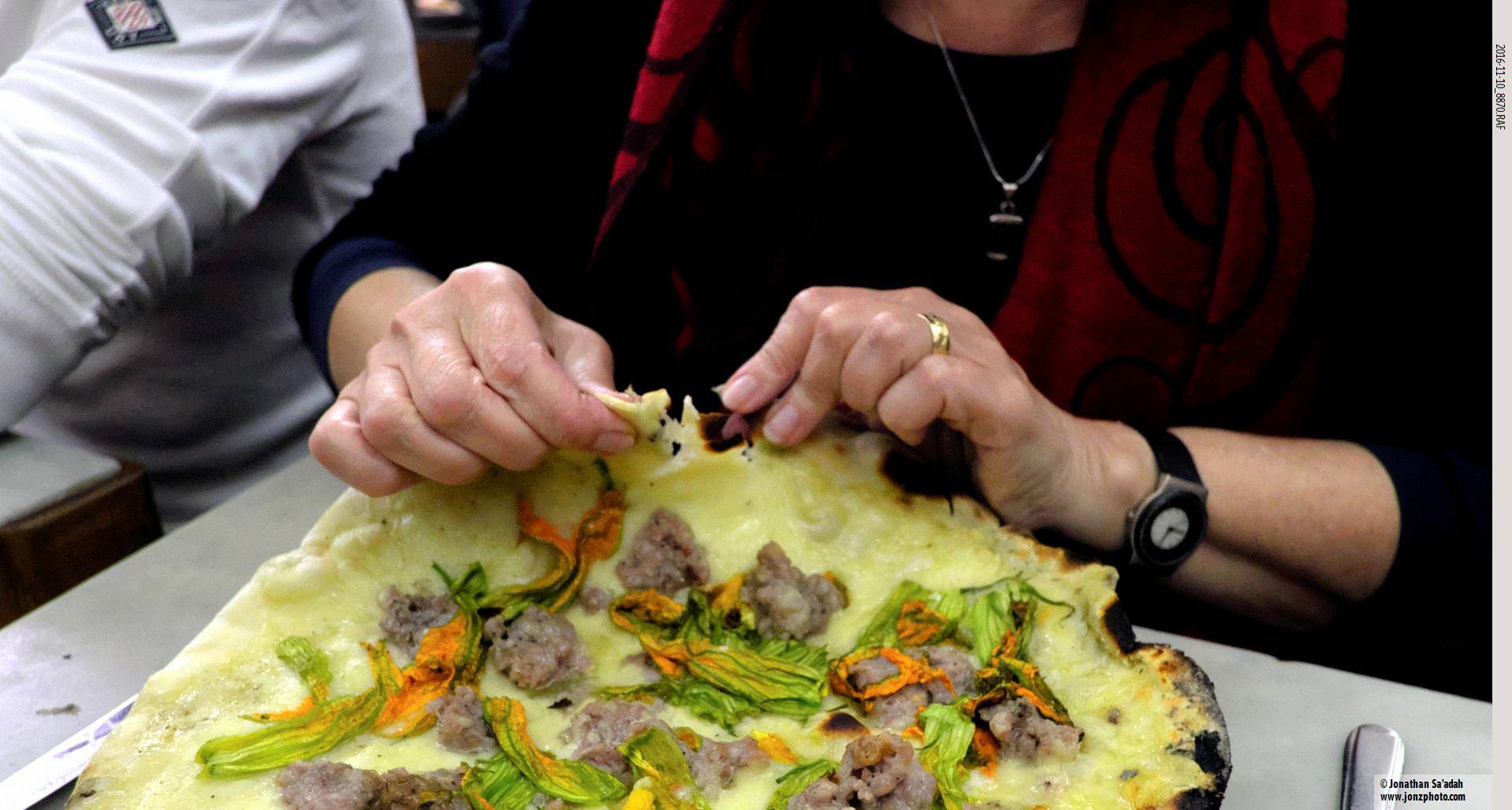
Ai Marmi is my dream pizzeria. Not self-conscious, delicious food, with an easy, social atmosphere. It should know what it’s doing, it’s been in business in the same place for over 90 years, serving thin crust Roman-style pizzas. It’s easily one of my favorite restaurants on earth.
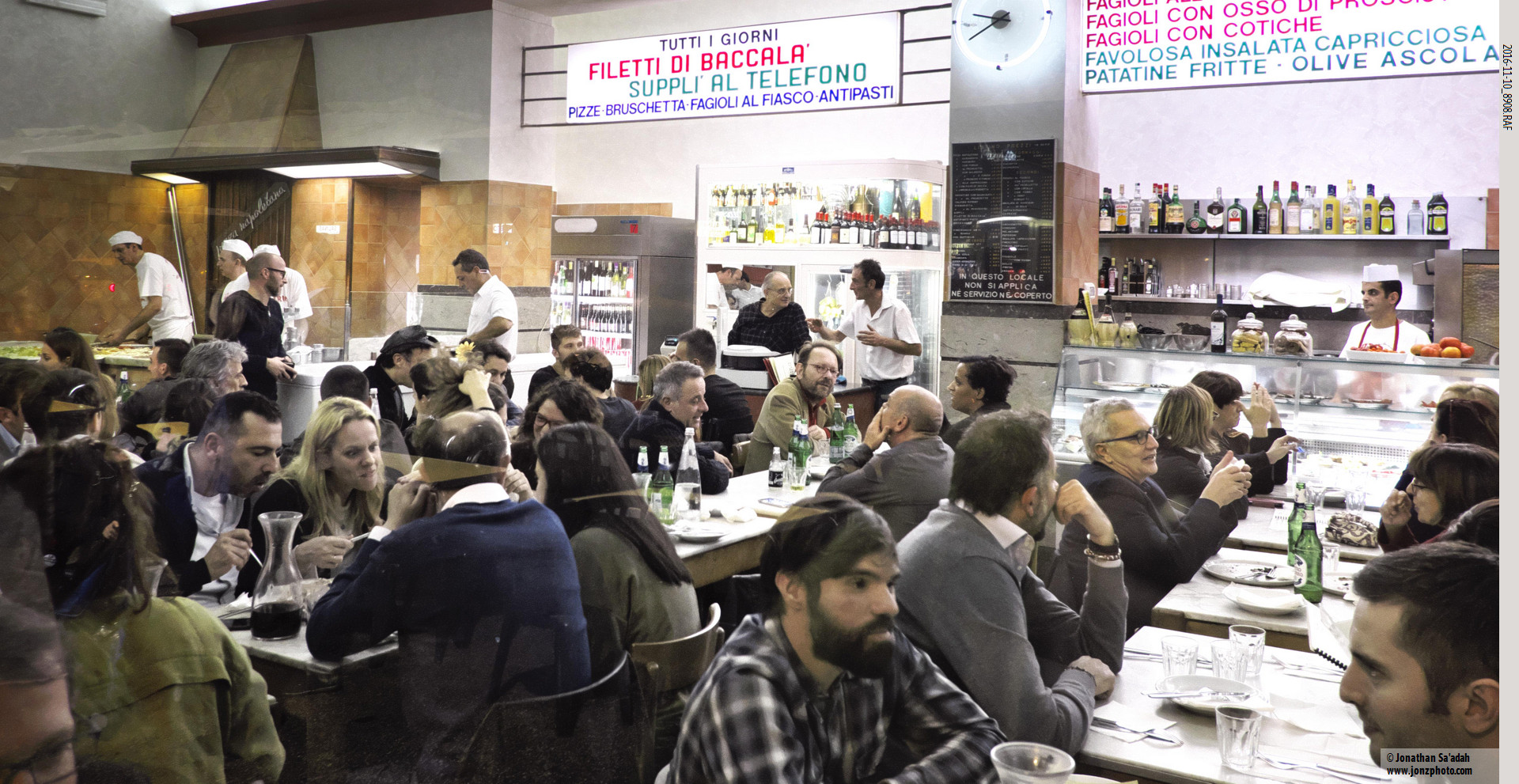
History of Pizzeria Ai Marmi in Trastevere
Ai Marmi has been serving pizza since it opened its doors in 1931 as an ancient wood-fired oven bakery. The restaurant was originally known as “Panattoni Pizza,” named after its founding family. Since 1980, it has been operated by the Panattoni brothers – Paolo, Renzo, and Carlo – who inherited the business and continue to use pizza recipes handed down from their great-grandfather.
Distinctive Characteristics and Nicknames
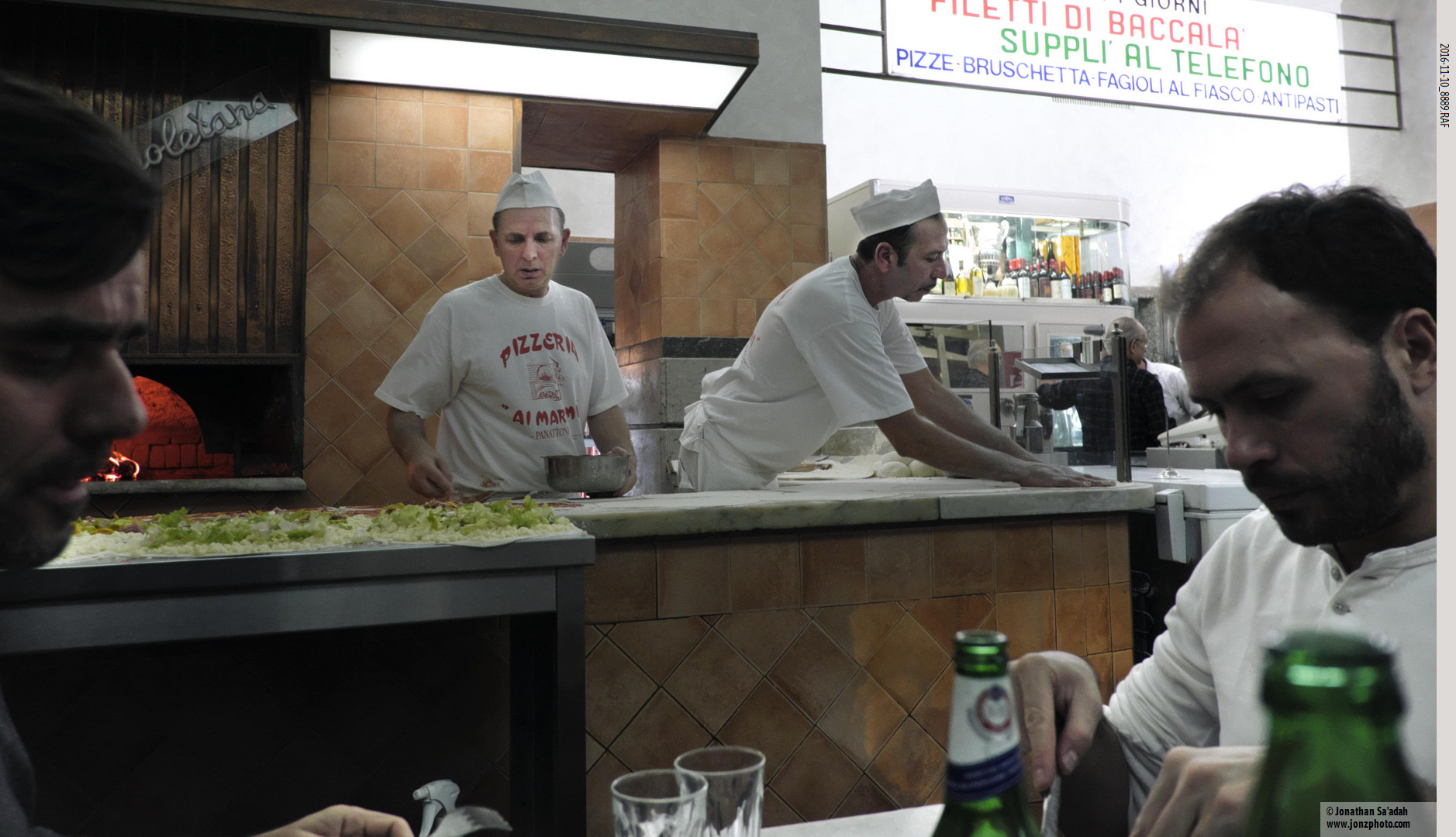
The establishment is affectionately known by Romans through two distinctive nicknames:
“Ai Marmi” (The Marble Slabs) – This name derives from the restaurant’s signature marble-slab tables that have remained a constant feature since its opening. These thick marble surfaces serve both functional and aesthetic purposes in the pizza-making process.
“L’Obitorio” (The Morgue) – This more colorful nickname was coined by renowned Italian poet Pier Paolo Pasolini, who lived nearby and frequently dined at the its tables. The moniker refers to the cold marble tables that resemble those found in traditional morgues or classic old-style Neapolitan pizzerias.
Cultural Impact and Atmosphere
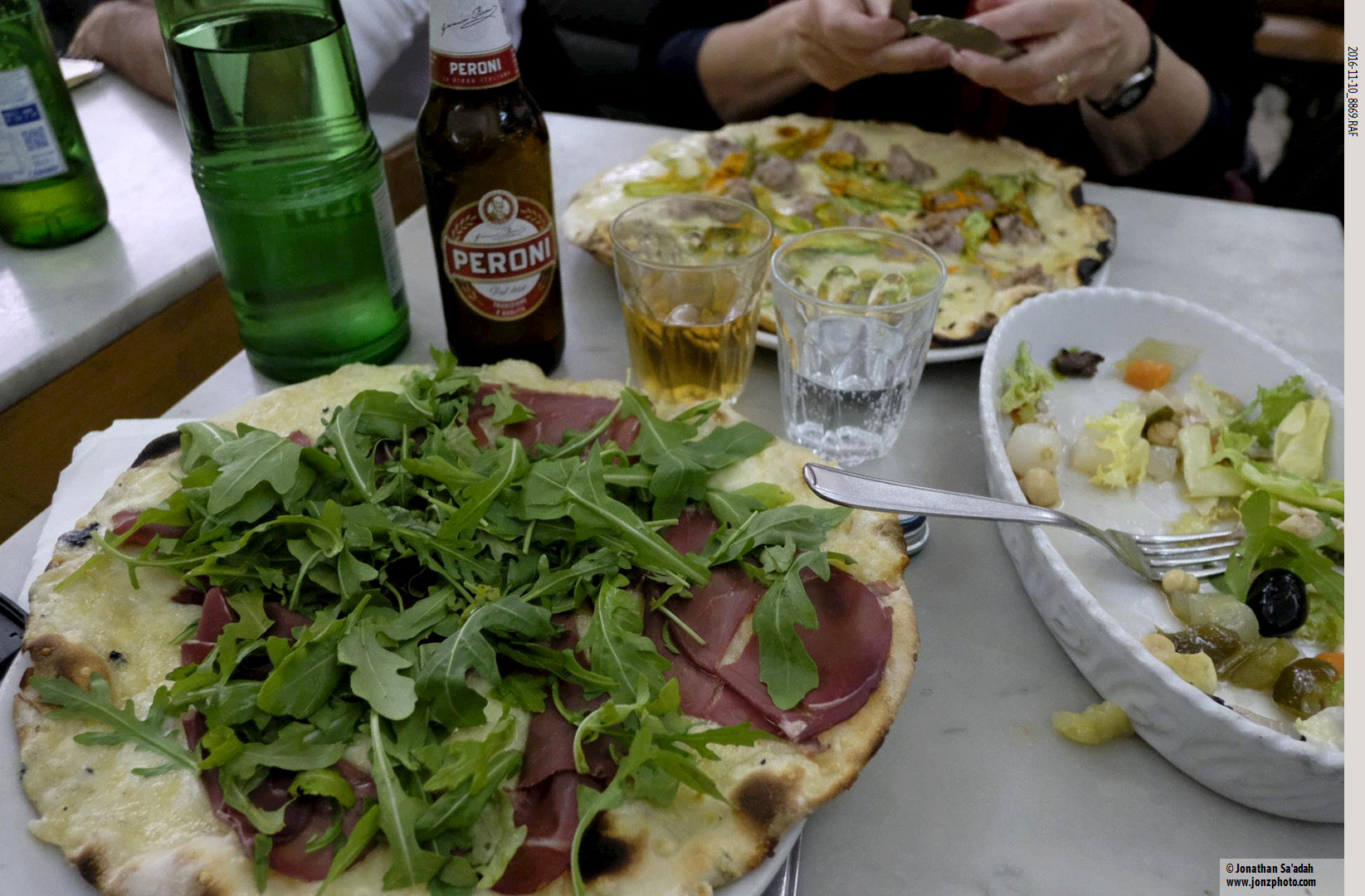
Throughout its nine decades of operation, Ai Marmi has maintained its authentic Roman character, creating a gastronomic and cultural experience that to me puts it at the pinnacle of the pizza world. The restaurant’s bustling, hectic atmosphere, where tourists are consistently outnumbered by local Romans, creates an authentically chaotic environment that’s part of the Marmi’s charm.
The pizzeria serves as a time capsule of Roman dining culture, with fluorescent lighting, no tablecloths, and communal marble tables where diners sit elbow-to-elbow. This unpretentious setting has remained largely unchanged since its founding, maintaining the authentic experience of a working-class Roman pizzeria.
Culinary Tradition
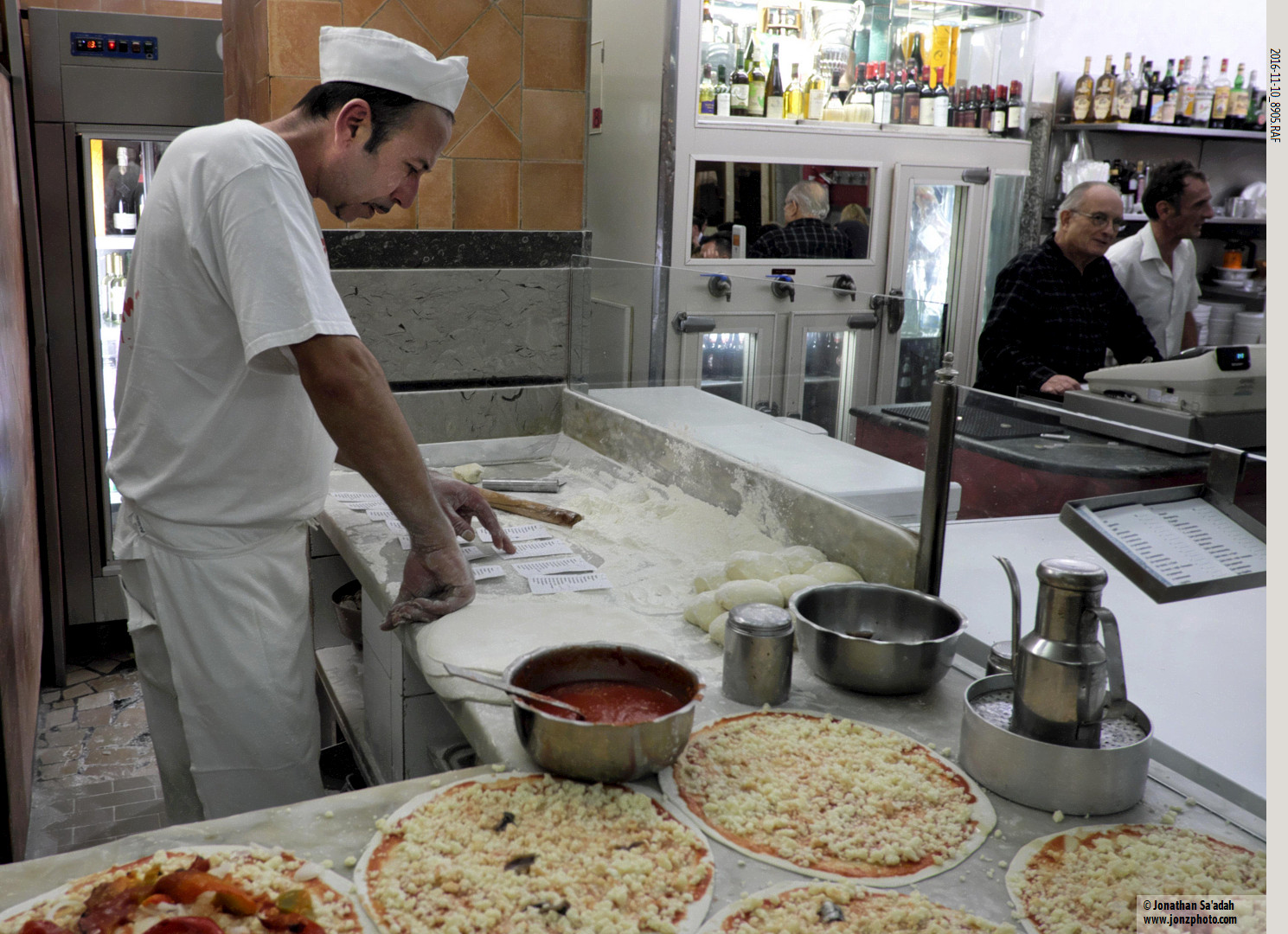
Ai Marmi specializes in traditional Roman-style pizza – characterized by its thin, crispy crust that’s rolled out with a traditional rolling pin and baked in their original wood-fired oven dating back to 1931. The restaurant continues to prepare pizza using time-honored techniques, with pizzaiolos working continuously to serve the constant stream of customers who nightly queue outside. Being there when Marmi opens, just when the shutters are rolled up, is an exciting experience and not at all like what’s happening at the more curated restaurants in Trastevere and Rome.
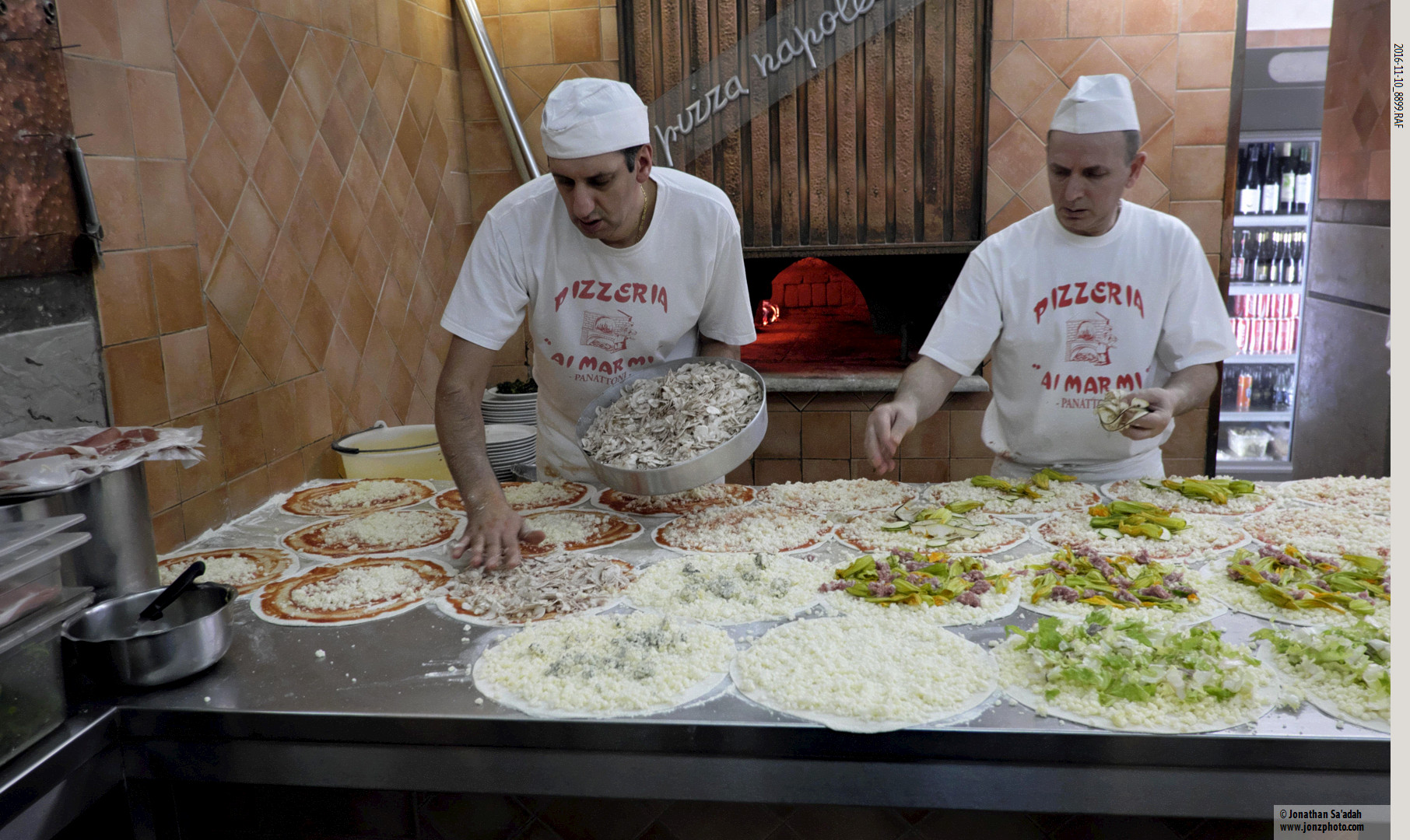
Beyond pizza, the establishment is known for traditional Roman appetizers including supplì (rice croquettes), fiori di zucca (fried zucchini flowers), and baccalà (fried cod), maintaining the full spectrum of authentic Roman street food culture.
This is pizza authenticity at its best – a restaurant serving the same style of super-thin, slightly burnt crispy Roman-style pizza that has been its signature for nearly a century. It’s no wonder that it’s a beloved institution for both locals and visitors seeking an authentic taste of Roman culinary history.

Knezovic, Jasmina. “Roman Holiday: Pizza Mia!” Zamezi, May 28, 2013. https://zamezi.wordpress.com/2013/05/28/roman-holiday-pizza-mia/.
Macchioni, Phyllis. “This Italian Life: AUNTIE PASTA: When in Rome.” This Italian Life, November 15, 2012. https://thisitalianlife.blogspot.com/2012/11/auntie-pasta-when-in-rome.html.
Old Friends, New Places Pizzeria Ai Marmi Trastevere. July 5, 2013. http://www.gillianslists.com/2013/07/old-friends-new-places-pizzeria-ai.html.
“One Last Pizza in Rome, Italy-Trastevere’s Pizzeria Ai Marmi Is Magnifico!” The Pizza Snob, October 11, 2015. https://thepizzasnob.net/2015/10/11/one-last-pizza-in-rome-italy-trasteveres-pizzeria-al-marmi-is-magnifico/.
Roma food, dir. The INCREDIBLE Work in the Roman Pizzeria “Ai Marmi” in Rome Trastevere Since 1931 – SUBTITLES. 2023. 9:09. https://www.youtube.com/watch?v=gGMVmetvHXA.
So Hungry Italy, dir. For Over 90 Years! Rome’s Artisanal Iconic Pizzeria! “Pizzeria Ai Marmi.” 2024. 26:05. https://www.youtube.com/watch?v=qwFjj-OtXd0.


Leave a Reply