Category: Montreal

  • Montreal living: Triangle vs the Plateau

    Living in Montreal is a moving target and this is even more apparent when one compares life in the Plateau with with what it’s like to live in the new “Le Triangle” district. We lived in the Plateau for 16 years and now we’re in the 3rd year of calling the Triangle home. The two experiences are quite different, so comparing them is a bit like vintage vinyl vs a Bluetooth speaker, but I’m going to try anyway. Both play music but the similarities end there. I hope to be even-handed since I’ve enjoyed living in both places.
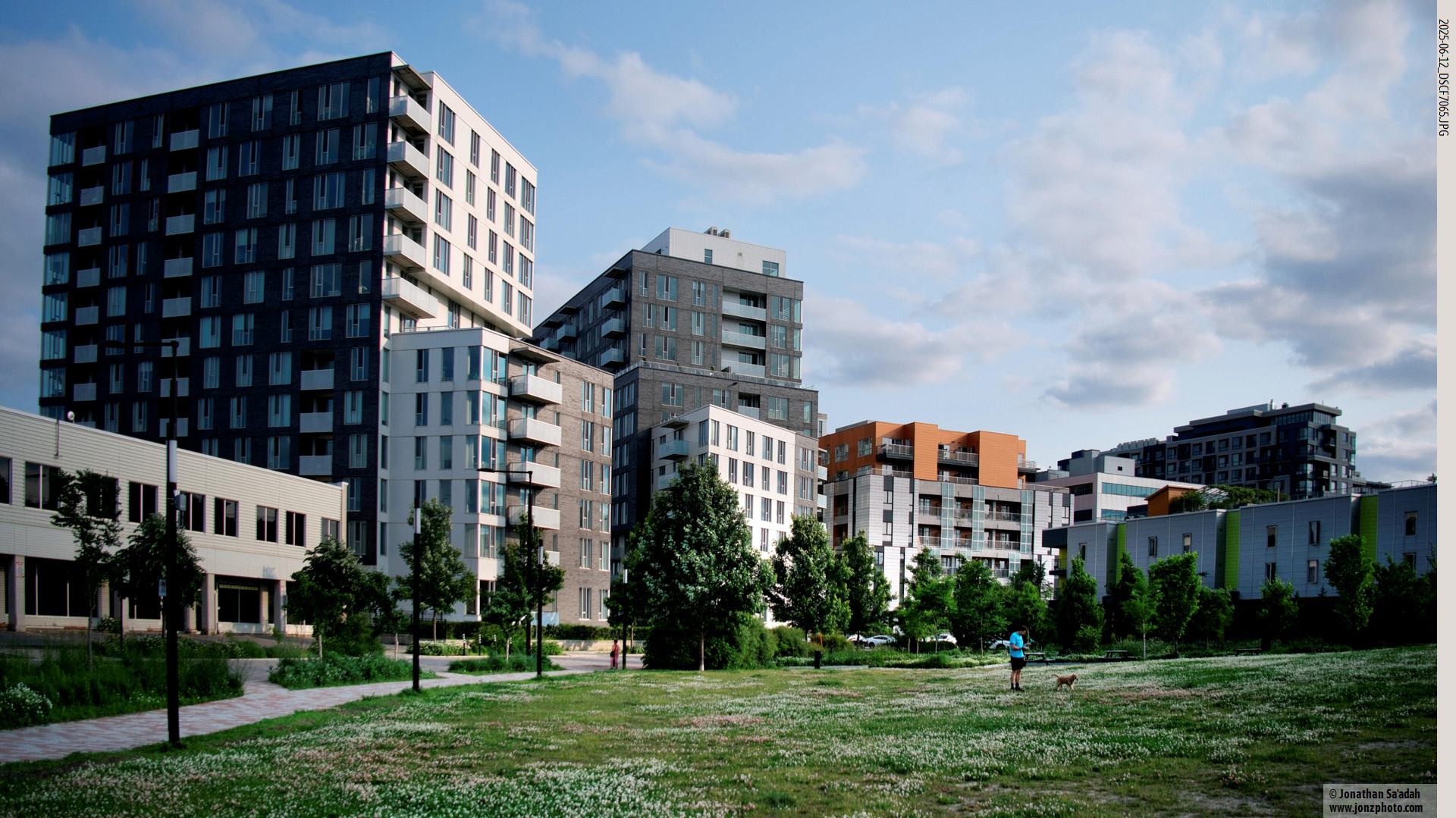
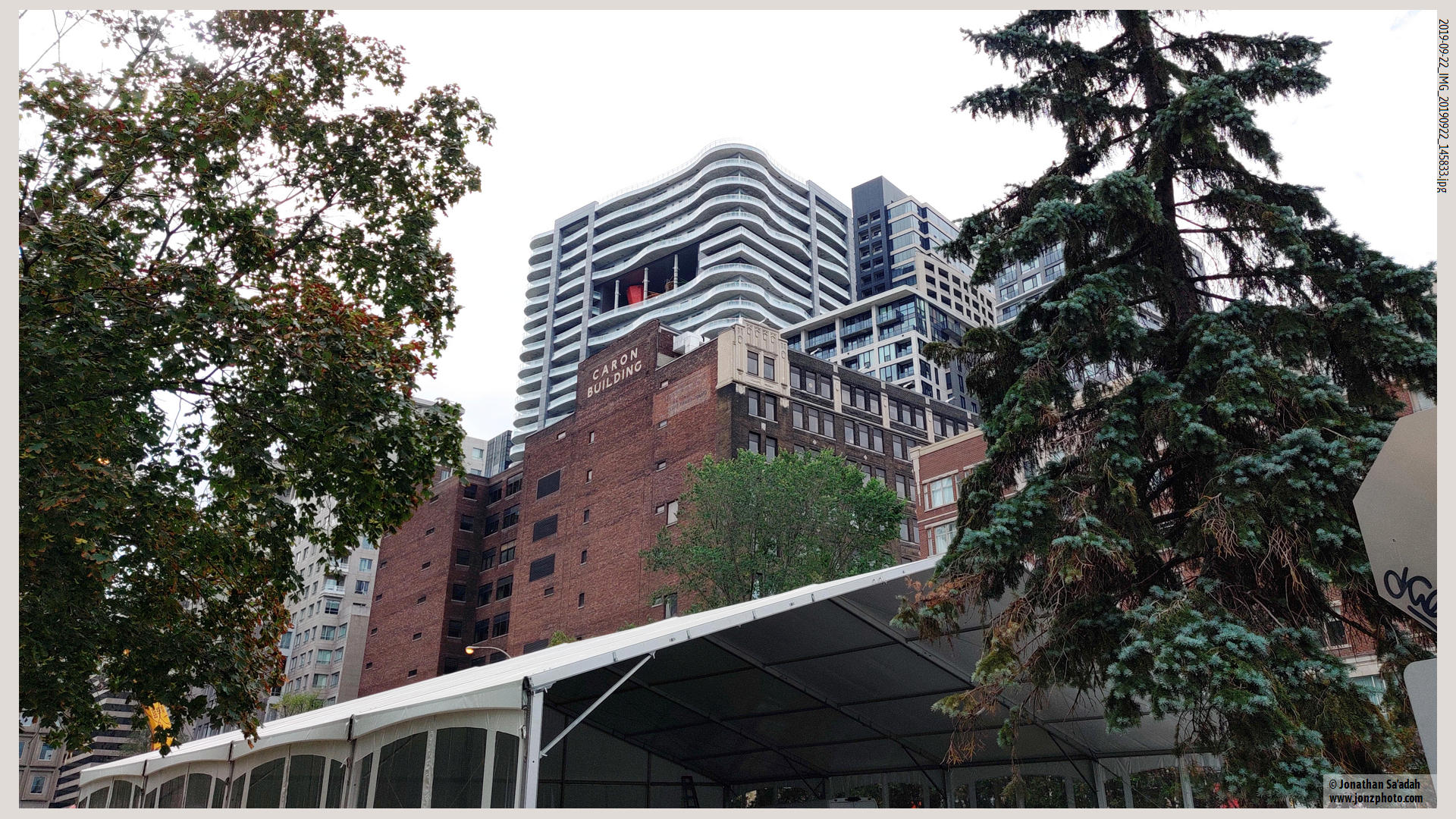
    ▲ The current south-east corner of the Triangle. The newer buildings are the taller ones. The city has set a goal of 3,200 new units in this area. Currently about 2,500 have been built.

    Le Triangle: Shiny new kid on the block

    Le Triangle represents Montreal’s latest attempt at creating a “smart neighborhood” – which is Montreal real estate speak for “we bulldozed some old car dealerships and built a lot of new condos”. In a neighborhood historically known for low income housing, shady enterprises, and car dealers, having multiple developers show up with their “sustainable development” mandates obviously causes a lot of tension. And that’s definitely been the case here.
    On the other hand, most of the social housing in the Triangle remains intact, located on Mountain Sights Avenue. I don’t see that there are any plans to replace it, and all people benefit from the improvements being made to the area. Those improvements have been to develop two parks, build two handsome community buildings, create a protected pedestrian walkway, a bike-path, and improved sidewalks to soften up the area, as well as creatively dampening street traffic through pavers and bump-outs. However, there’s still no school nearby, difficult on-street parking, and limited small businesses.
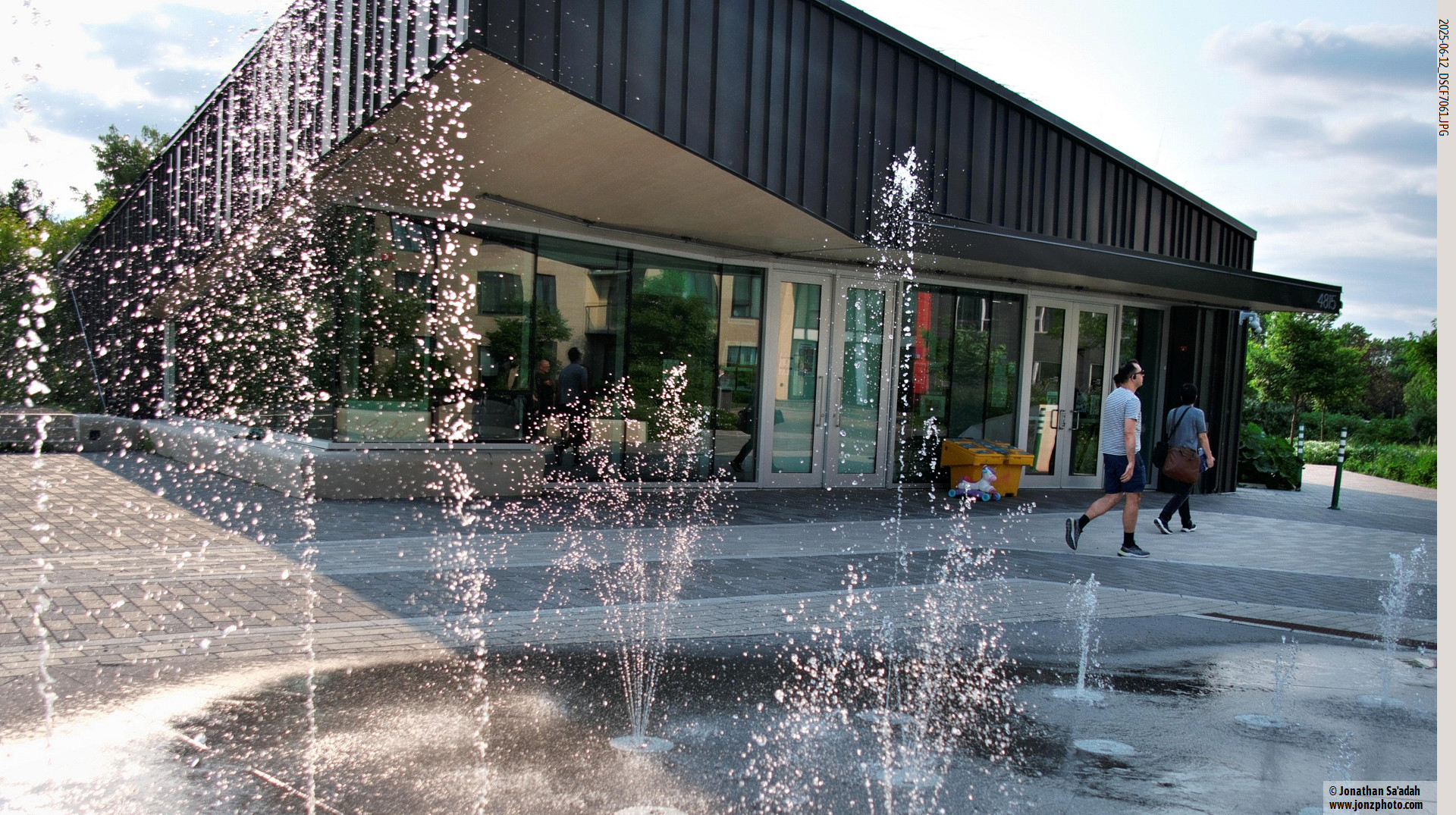
    ▲ Bordering the park this innovative building (which has a sod roof and solar panels) was designed to be a community centre. It’s sparsely used since program money is a problem.

    The fight over housing policy seems to have moved over now to the large plot of land nearby, where the city claims to have future plans for balanced development but where, for many reasons, nothing ever really happens. The 43 hectre (103 acre) “Hippodrome” (an old race track) was purchased by the province in 1995 for an undisclosed price and in 2017, after much drama, ownership was transferred to the city. Just to the west a fight over a connector road has been raging for close to eight decades, so it’s probably not healthy to hold your breath concerning any plans for the Hippodrome. Comparatively the work in the Triangle looks like a high-speed sprint.
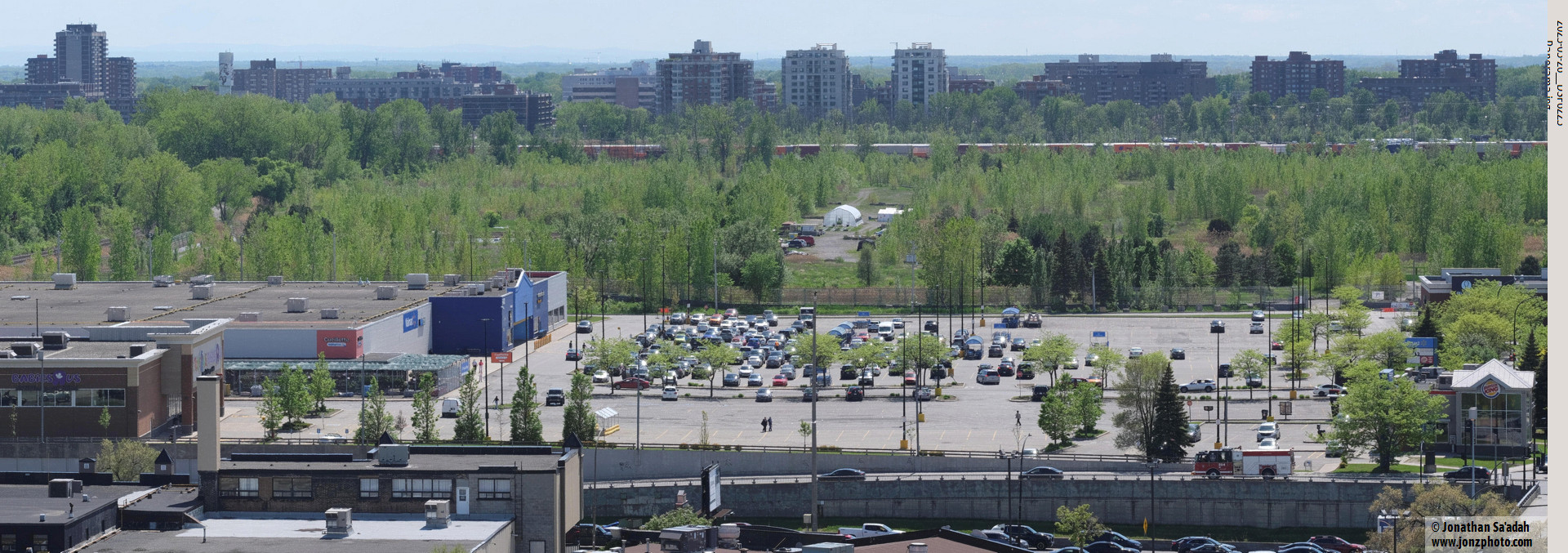
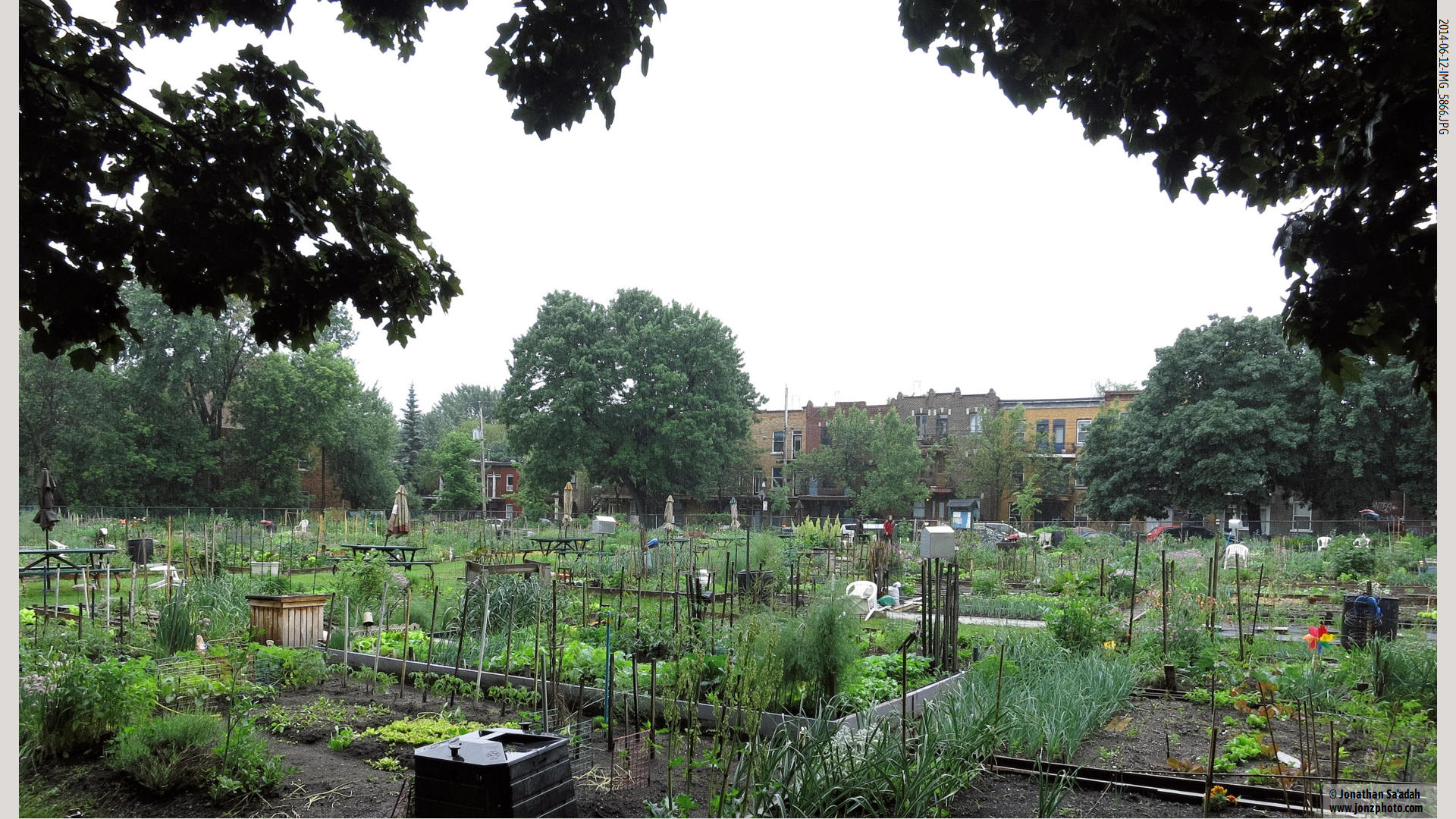
    ▲ Without a doubt the most exciting thing that’s happened in the old Hippodrome site since horse racing closed in 2009 was a 2011 U2 concert. Otherwise its only use appears to be as a city gardening space. This is a partial view of the site, there’s a bit more to the right. The back boundary abuts a railroad, the horizontal line in the back being railroad cars.

    From the point of view of a city resident, Le Triangle is a good example of what happens when city planners get excited about Transit-Oriented-Development (TOD) and decide to create a neighborhood. It’s now fifteen years after the project was announced, and the area is still being talked about as the poster child for modern urban living. It’s filling up with 10-story condo buildings, all promising variations on “life at another level”, which from a practical point of view, means a small swimming pool, a fitness center, indoor parking (extra), and shared working spaces. The pretty drawings fade away and reality cuts in as the condo developers expand their buildings out to the edges of their lots and the green spaces that were supposed to surround them either disappear or are created without conviction. The mandate to include a lot of open space too often seems to be interpreted by the developers as “we’ll plant a few trees and then flatten them a bit later with front loaders.”
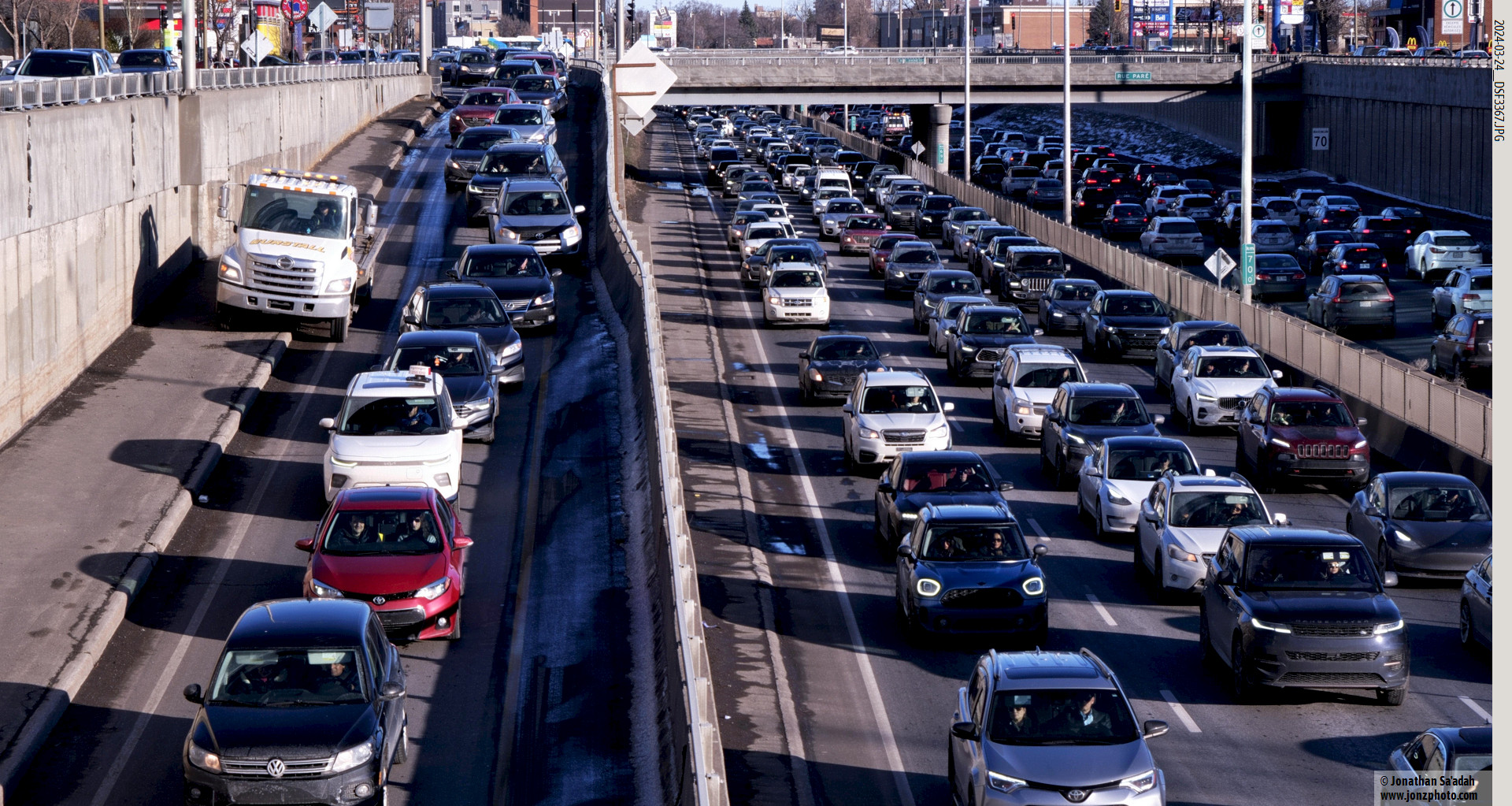
    ▲ The Décarie is often overburdened with traffic. In theory it is an asset, but in practice it’s a problem. The nearby Metro stations are the best option.

    Le Triangle as a daily experience

    In Le Triangle the day starts with indoor parking – which is a concept so foreign to the Plateau that it might be mistaken for a new art installation. You then get into your car and head out into the thicket of traffic-blocked streets, driving past construction sites that promise to become “vibrant urban living environments”. You head on to the Décarie, where emergency vehicles claw their way down side shoulders past cars inhabited with trance-eyed motorists.
    As an alternate approach you can try the Namur metro, where the STM (the agency that runs the Montreal metro) seems set on preventing a complete set of the escalators functioning at any one time as you drop down 24.1 meters to the platform.
    What you gain from living in the Triangle is primarily the quality of your personal residence and the resources provided by communal living. Large, professionally-managed buildings can have problems but no sane person would argue that they approach the nightmares guaranteed when living in century-old duplexes or triplexes in the Plateau.
    As the city likes to point out, proximity to the metro system is a big advantage too. There’s nothing like having a blizzard raging outdoors and being able to drop down into the metro for a safe ride to your destination. Especially if you don’t need to even consider digging your car out.
    Socially the newness of everything means that no one has a corner on being “born in the neighborhood” and there are a lot of people, often with interesting backgrounds, who are looking to make friends. Multiculturalism is in full bloom in this part of the city, and it’s usually fun to meet the people and navigate the different behaviors and traditions. As a fall-back position, anonymity is possible too in this style of living.
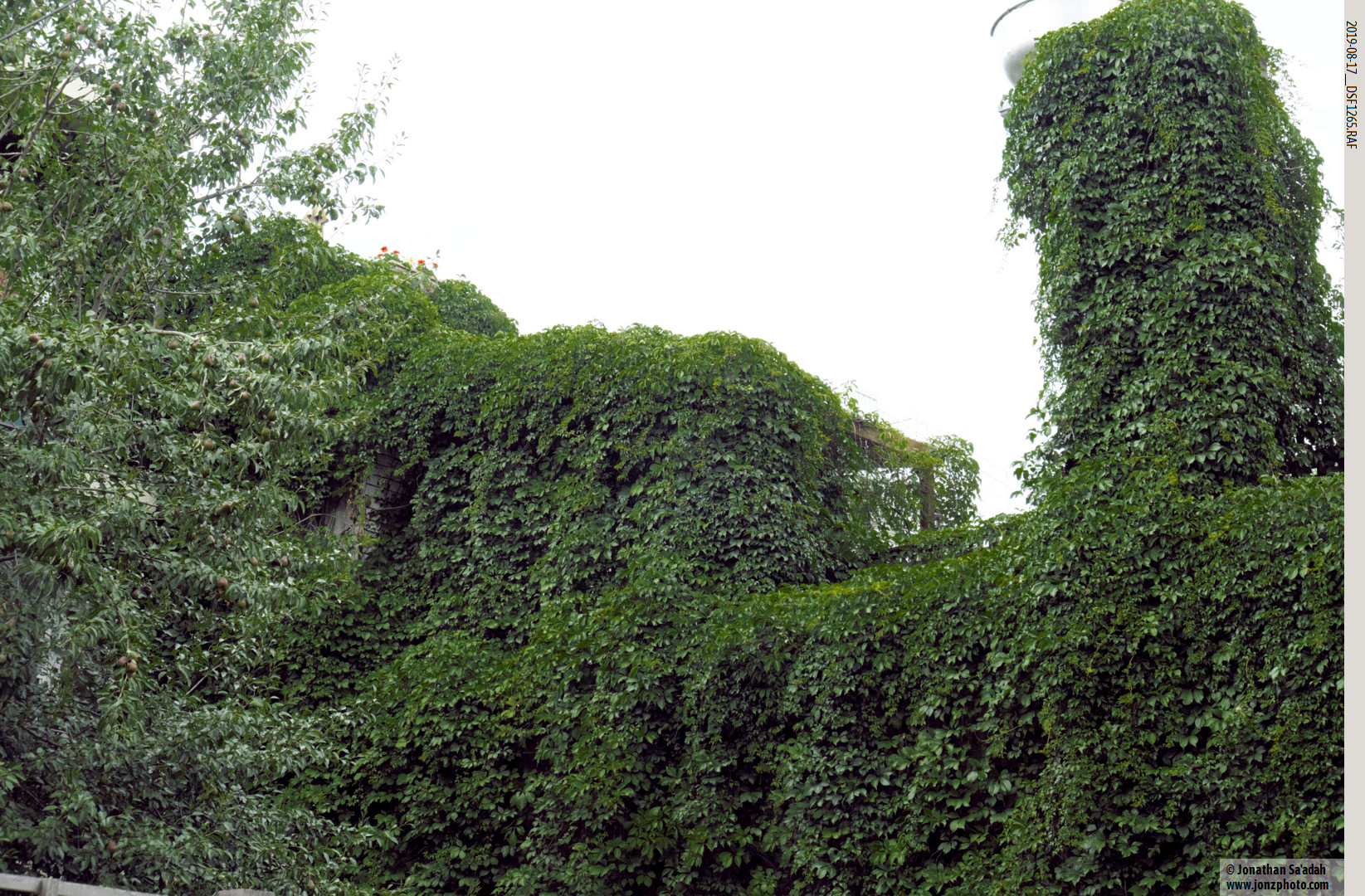
    ▲ An old Plateau triplex overrun with vines. Pretty but a problem. You would hardly know that the Triangle and its environs existed in the same city. While this is a funny picture, the vines do no favors to their host.

    The Plateau as a daily experience

    In the Plateau a day starts with the spiral staircase, where during wintertime you can clip on with technical ropes to rappel down through the ice. Following that, and for all four seasons, you get to dodge the cyclists who come at you from all directions, while trying at the same time to calculate in your head the most likely construction-free path to the metro. The city is repeatedly digging up the streets to fine tune its vision of multi-modal transport while strong-arming property owners to replace private parking spaces with groves of trees. There’s lots of traffic and lots of congestion. It’s a mature neighborhood and that means that human behavior is highly developed and stylized. Unlike the condo living of the Triangle, anonymity is not an option in the Plateau. You have neighbors and they are part of your life (especially if you are in a shared-ownership building).
    What you gain in the Plateau goes under quality-of-life. You don’t fake the patina of life that’s gained from old neighborhoods. Everything is small. You can walk a block and purchase your food from someone who recognizes you. Your neighbors have outside street gardens and you can sit on the front steps and talk with them about life and its problems.
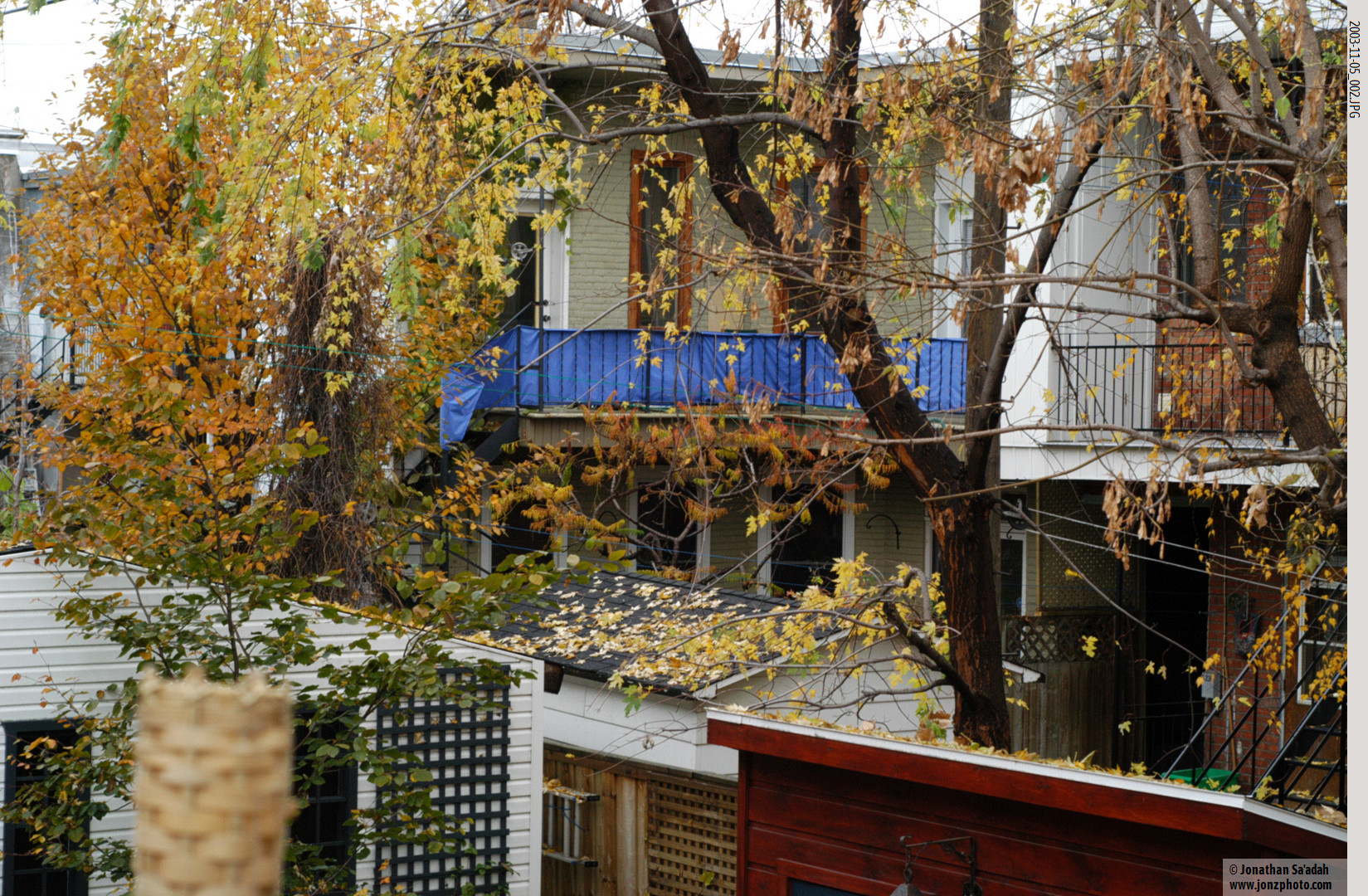
    ▲ Back yards in one of the older sections of the Plateau. A few months after this picture was taken in 2013 these same buildings were purchased and, for a large sum, converted into a private compound.

    There’s shade, and quiet ruelles, and people who often are considerate of each other. It’s a good feeling. Truthfully, we would have stayed in the Plateau but we didn’t have the option. Living spaces are small and expensive, and upkeep often involves major expenditures. We had reached a point where we had to close a separate artist studio space where we had worked for years and which had added to our living space, and we needed a home with enough space to continue our work. It would have taken too much money to have what we needed in the Plateau, and the Triangle was a workable option. We’ve missed our old neighborhood there and our friends, but having a place to continue our work and at the same time having a reasonable lifestyle was the responsible decision. It’s what made sense for us.
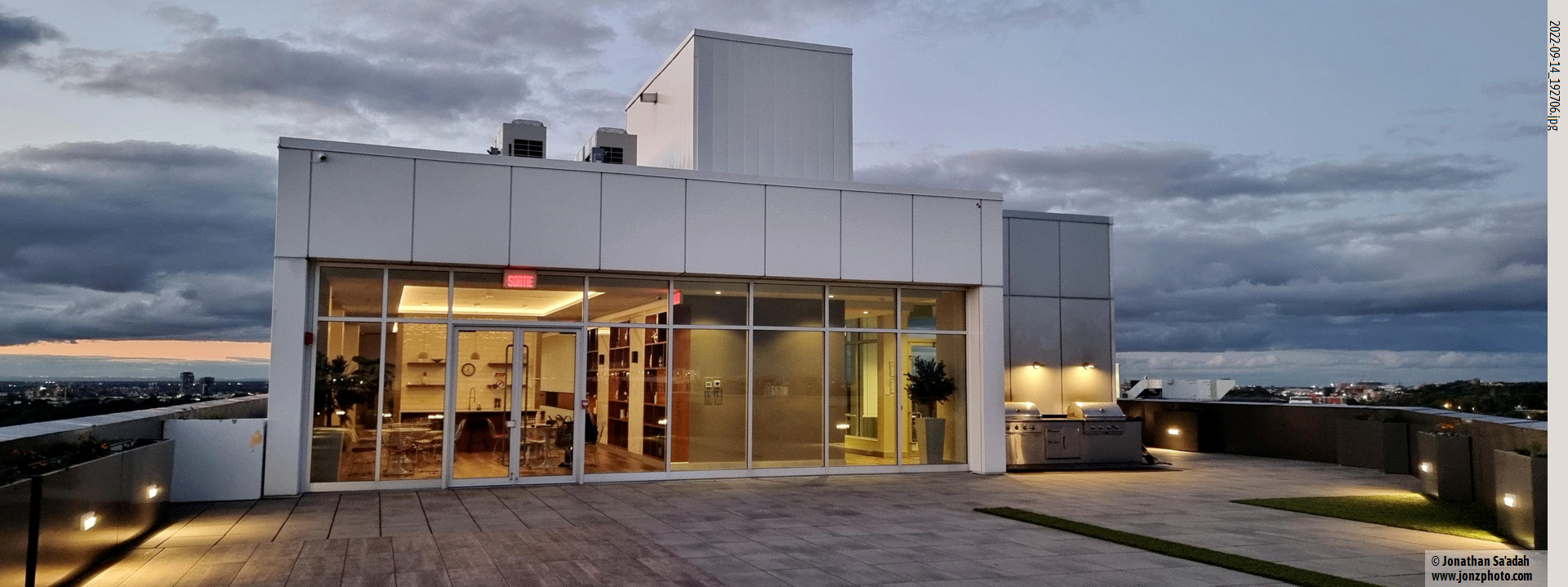
    ▲ Rooftop common space meant to be used as a back yard in a condo project. In a practical sense it’s used by family and friend groups and not as a community space.

    On the other hand, I look at families and younger people (of which there are many) who are living and bringing up their children in this new and modern environment, and I wonder about it. I recognize it’s not possible to make a new neighborhood mature and multi-textured instantly, and I don’t at all dismiss that the Triangle represents a valid approach to living in a different and more outwardly-looking way. But one environment hands it to you on a plate, and the other leaves it to individual responsibility and initiative.
    If you’ve had experiences living or working in these environments please leave a comment. I don’t pretend to have all or even most of the answers and I’m curious what others think.

    I do personally feel that as a society it’s in our interests to creatively address what these newly-built environments represent. It’s not just the Triangle, but other similar neighborhoods in this city and others too. Embedded schools should not be built as an afterthought, but as a priority. Cultural and educational events/programs should be integrated into the planning of new neighborhoods from the start – it’s not enough to build attractive community buildings and then not fund them, leaving them locked and dark most of the time. Urban planning should be open and transparent. And it’s not giving the right message to disregard upkeep in neighborhoods through differing levels of public services. I know there are many people who have been working to improve things in these areas, but we have to do better.
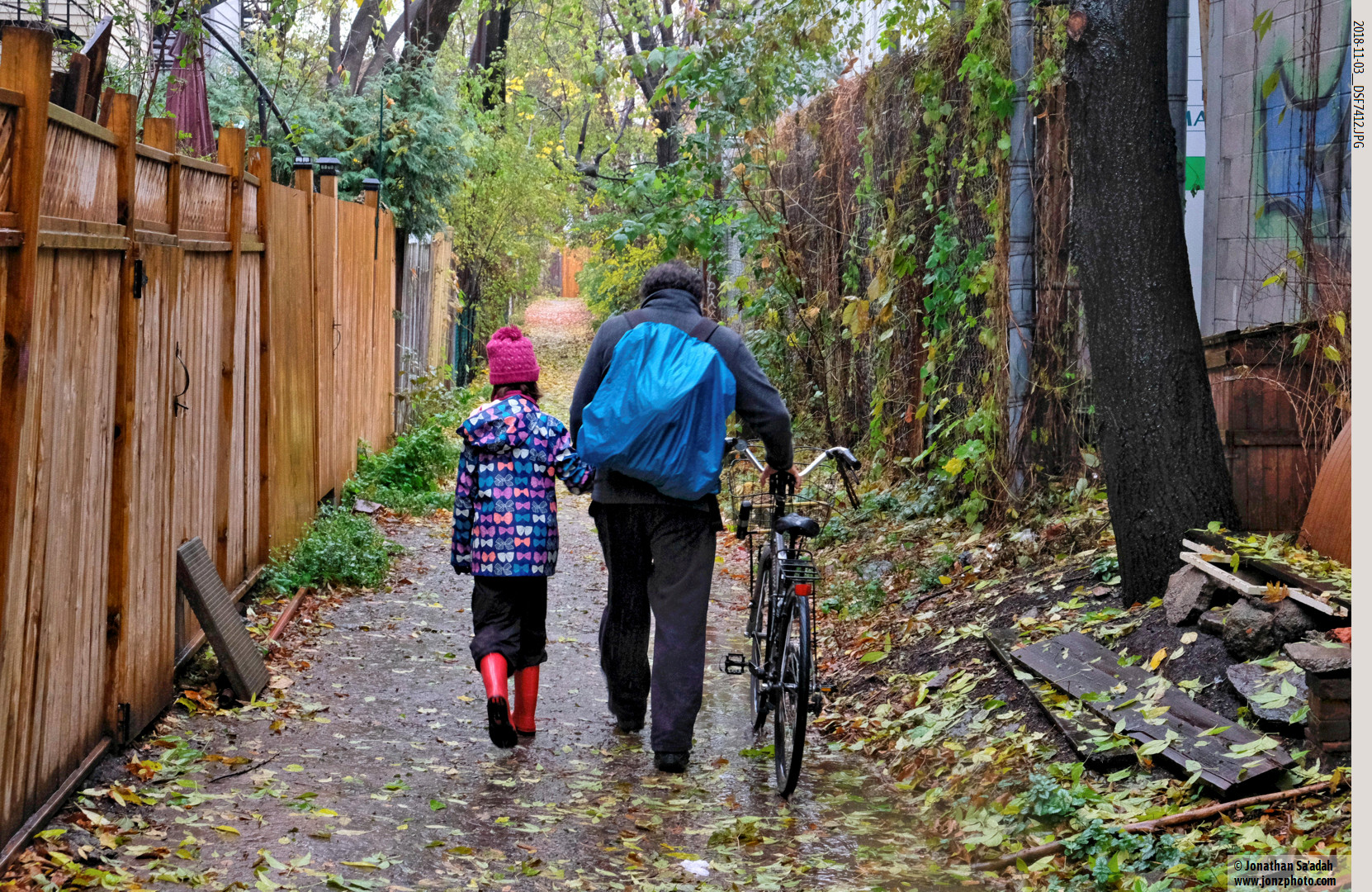
    So in the end choosing between the Plateau and Le Triangle is like choosing between a vintage leather jacket and a new technical ski parka. One has character and the other has more pockets. Both neighborhoods offer their own unique version of Montreal. Either way you’re still in Montreal, so you get to spend 50% of your time complaining about the construction while still actually loving being here. Living in the Plateau vs. The Triangle? It’s a big contrast – but for me there isn’t a simple answer…
  • Unfiltered Montreal

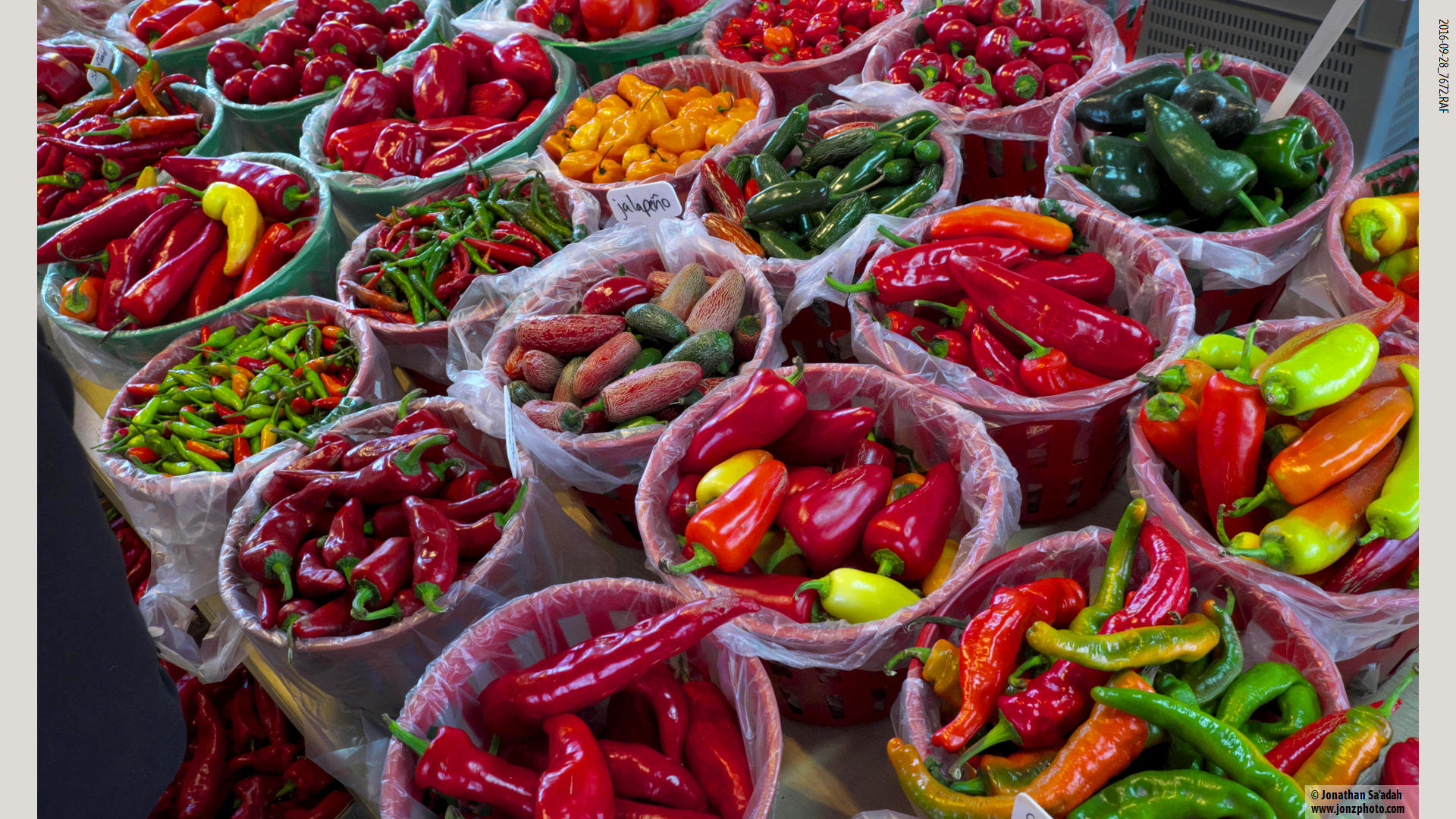
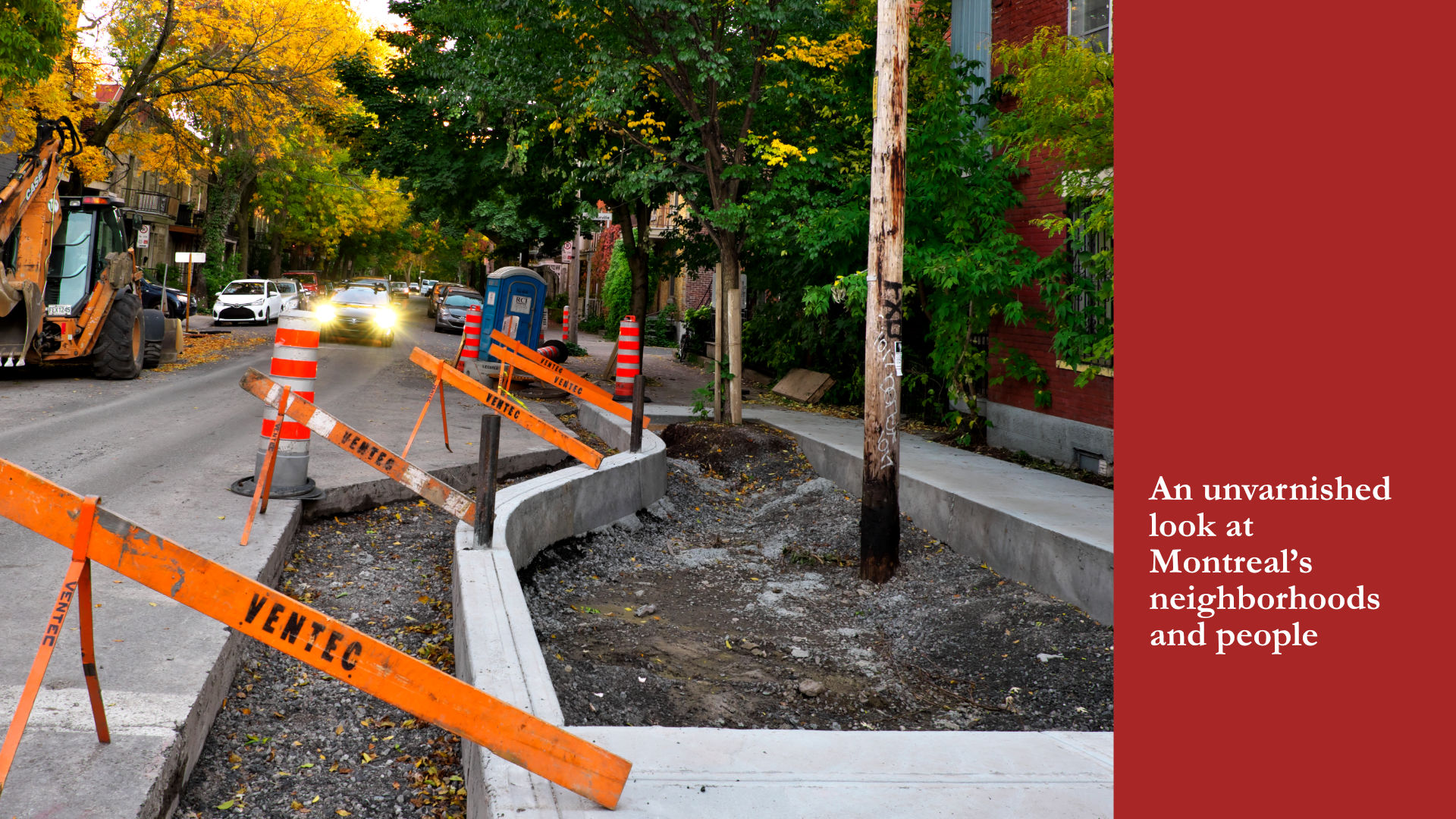
    Montreal is a city that refuses to be reduced to picture postcard clichés. Here, the gritty dep and styled food-market, the narrow ruelles and the wide boulevards, the laughter and longing, all exist side by side, unposed and unrehearsed. Montreal Unfiltered is an invitation to witness the city as it truly breathes: raw, restless, and radiant in its imperfection.
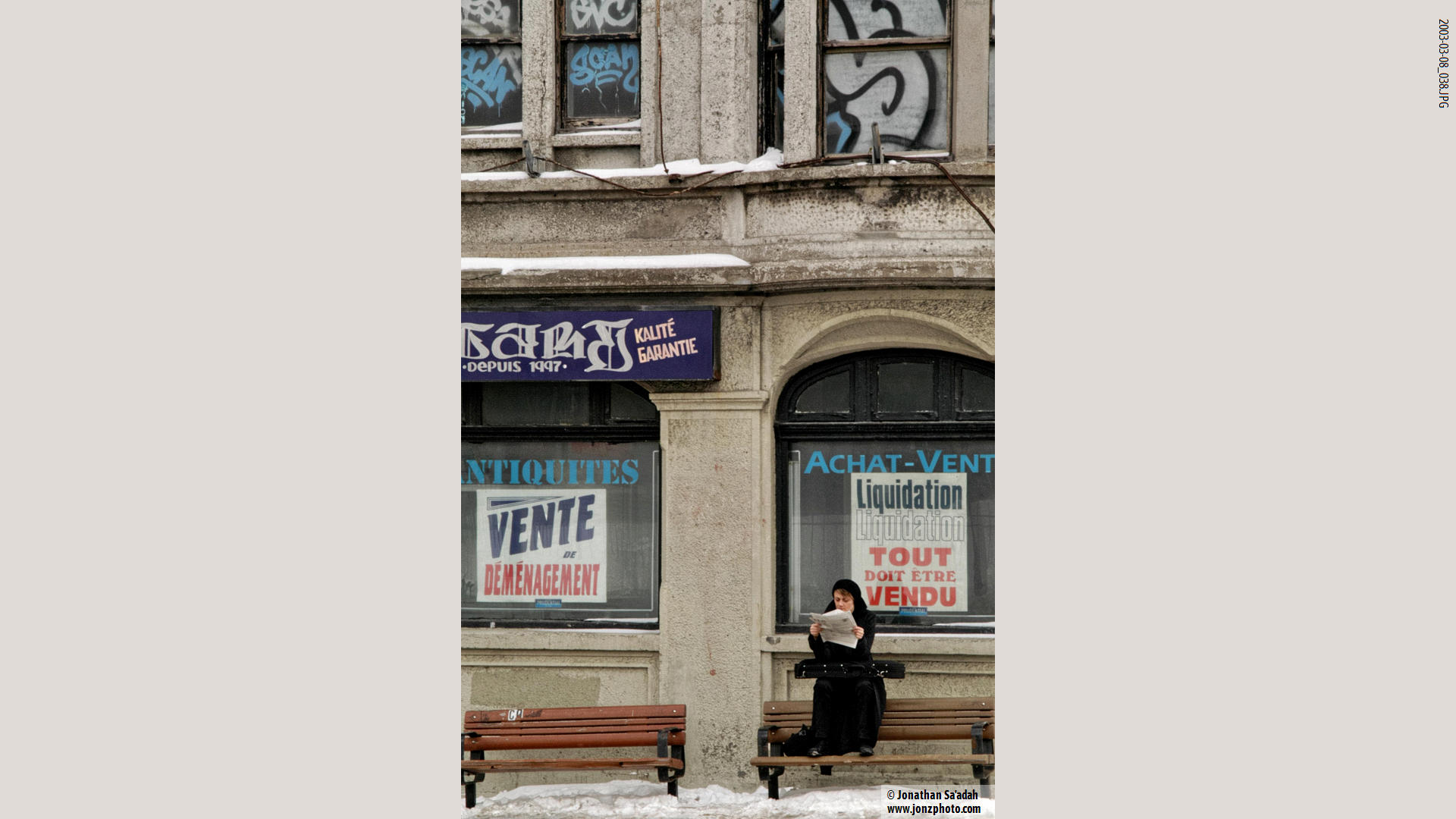
    These photographs trace the pulse beneath the surface, capturing moments where the city’s true spirit flickers – in the crunch of a cyclist powering through snow at night, in the quiet dignity of a solitary reader, in the small sidewalk flower plots and community gardens. This is a city of contradictions: winter’s hush and the noisy summers, solitary figures and crowded streets, languages colliding and coexisting.
    Let these images draw you into Montreal’s daily poetry – its grit and grace, its shadows and sudden bursts of color. Here, nothing is staged, nothing is concealed. This is Montreal, seen not through a filter, but through the honest lens of life itself.

  • A 23-year streak, broken

    Exceptionalism exists in Canada too

    Last weekend I was at a friend’s party in Montreal and sitting next to a man I had never met. It was noisy, a lot of people speaking excitedly and simultaneously, so the man leaned over towards me and asked me my name. I told him and he looked me straight in the eyes with narrowed pupils while still leaning forward, and let loose The Question: “what kind of a name is that”? I almost fell off my chair. I’ve been living in Canada now for twenty three years and I’ve never been asked that question. When I lived in the United States it was common follow-on to an introduction, but not here. He seemed kindly enough so I explained that my father was Syrian blah blah blah but I was pretty shocked, and I was (and I am) sorry that my multi-decade string of non-exceptionalist Canadian behavior has ended.

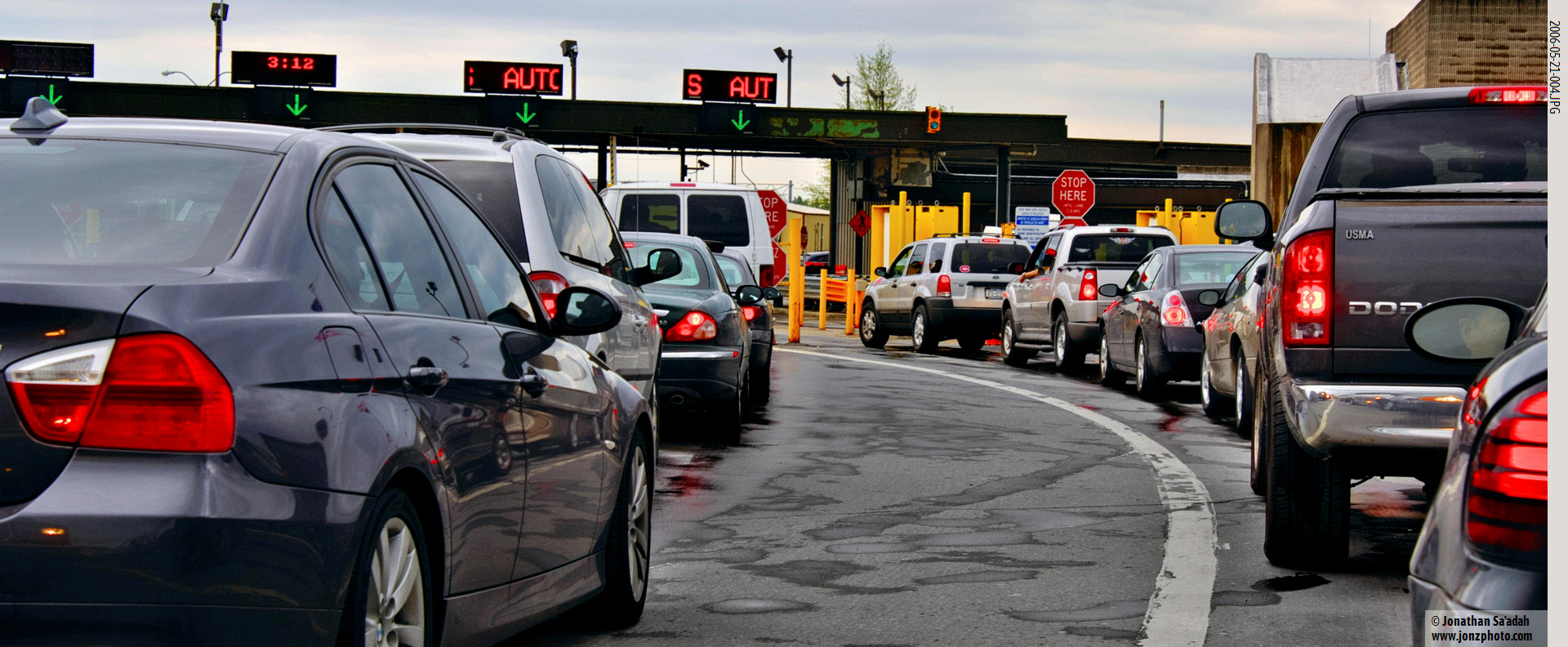
    Canadian-US border crossing in different times.

    Crossing the border

    Yesterday my wife drove down to the Canadian/US border. We hadn’t gone across it since the new US president’s inauguration but she needed to have a paper notarized. Faced with the choice of either driving to Ottawa (183km) and presenting herself at the US embassy (50USD fee) or going across the border (100km) to the always-friendly town clerk in Champlain NY (∅USD), it was a no-brainer.

    She found the main border crossing a desolate place, not a single other car waiting. There’s been a lot of talk in Canada about phones being searched and hostile border control guards, but she had no problem entering the US. Returning to Canada she was asked to roll down her back window and given a one-over, so it’s pretty obvious that Canada is not encouraging its citizens to enter the US. And why should it? Things have happened quickly since January 6, on both sides of the border, and a lot has changed.

    A different view

    As a dual Canadian-US citizen I get to see things from an unusual vantage point, having lived in the US until I was fifty, and then having lived more than two decades in Quebec. It’s only been during the Vietnam War, and now more recently, when some few Americans have looked seriously to Canada as an alternative place. We left earlier than the current wave, but for similar reasons – we saw what was coming, and thought that the move north to a saner country would be a good idea – even if we didn’t know quite what we were getting into.

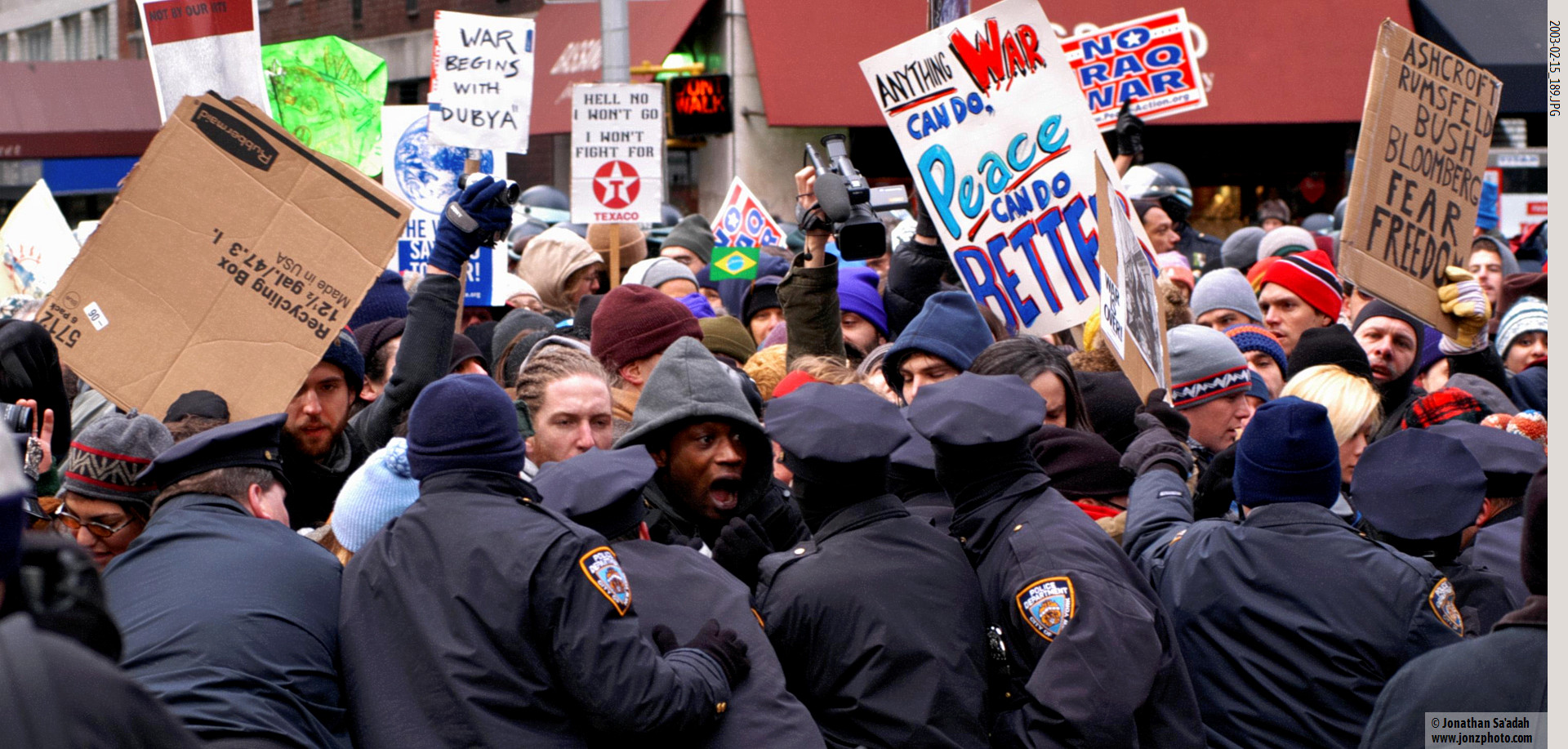
    The lead-in to the second Iraq war, New York City demonstration February 2003. The names change, but the issues remain.

    The federal election this week, where Mark Carney was elected the new Canadian Prime Minister, has capped a rude Canadian awakening to the dangers of sharing a border with a rogue elephant of a state. It’s been a revealing election. Nothing has done more to make me feel Canadian than this period, and the election results reinforced our choice (though we were pretty blind) in making Quebec our home province. The election vote stripped away the weepy rhetoric that often prevails in Quebec, and what was revealed was a province that supported Carney and the Liberal government (43%) versus the American-Elon-Musk inspired Conservative party of Pierre Poilievre (23.4%) by a margin not even closely matched in any of the other provinces. In December of last year you would have been hard pressed to find anyone in the province who would call themselves a Liberal. That’s an exaggeration, but not much. So it’s been quite a change. I don’t see Carney quite as positively as I’d like to, but I was still pleased.

    Prior to Trump II many Canadians possessed a romantically foggy view when looking south. So the last few months have been like the breakup of a formerly “idyllic” marriage: first disbelief, then anger. Trump’s ascendancy this time has only been lightly garbed in reality show politics. His second ascent represents an amplified and aggressively threatening continuation of the bullying conservatism that, over the years, has shown its face in many guises – from the blatant McCarthyism of the Forties and Fifties, through the filth and duplicity of Nixon, morphing into the smoothly front-facing corporate faces of Reagan and the Bush family. That’s not even getting into the Democratic side, which has had its share of failings too. The toxicity has always been around, either in the foreground or just below the surface. The difference now is that it’s fully out and fully vengeful, with a clear road map driving its behavior. Whether Trump II will “succeed” in its destructive course is no longer in question, the damage has already been widespread and generational in scope. The question for us in Canada is how to minimize its effect while steering a way through the geo-political/economic storm. Even if the US courts reign in the Executive branch, and Congress reasserts itself instead of playing dead, trust has been broken. Canada has largely been able to avoid the militarization of society and social breakdown that’s been happening in the United States for decades. However, even though the economic consequences of tariffs have been enough to dramatically accelerate political change here, dealing with them is nothing compared to prospect of having to deal with an increasingly aggressive and politically fragmented country thrashing around to the south. That’s the scary prospect. Let’s hope a path can be found, both internally in the US as well as for us and others.

  • Eating camel

    I probably have the distinction of being the only member of my family ever to have eaten camel. Or is it the shame? My father was so shocked when I told him what I had done that his normally eloquent vocabulary left him stammering. I think he was, in reality, half-horrified and half-amused.

    Camel meat restaurant in centre with vertical windows. The street vendor on the far right is selling fresh almonds. Al Malek Faisal Street, Damascus, 2000.

    There was a comment in the last thread about how different my experiences seem. I’ve always enjoyed a kind of rough-and-tumble form of travel, which is how I ended up in the camel restaurant. But in a larger and more general sense I’ve been wondering if I gloss over the negative sides of places too much – Montreal and Mexico City, for example.

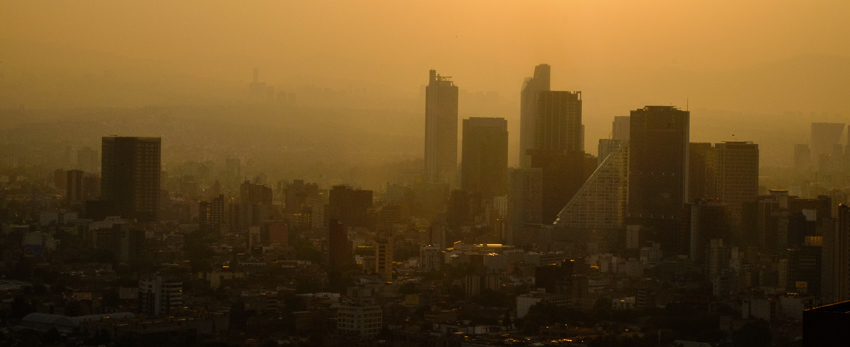
    I’ve also been thinking how I could, just as easily, take my photographs from Mexico City and paint a rather dismal picture of the place – make it into a place that no sane person would want to travel to.

    Is this the sort of thing you want to breathe? Afternoon in Mexico City…  This hurts both the eyes and the lungs. According to WHO statistics, Mexico has the dubious distinction of placing four cities in the top 35 pollution rankings worldwide. Mexico City ranks 23rd. Above it are Torino (12), Milano (16), Beirut (18), Athens (20) and just below Paris (28). Full rankings here, based on 2009 data. View from Torre Latinoamericano late in the day, March 2016.
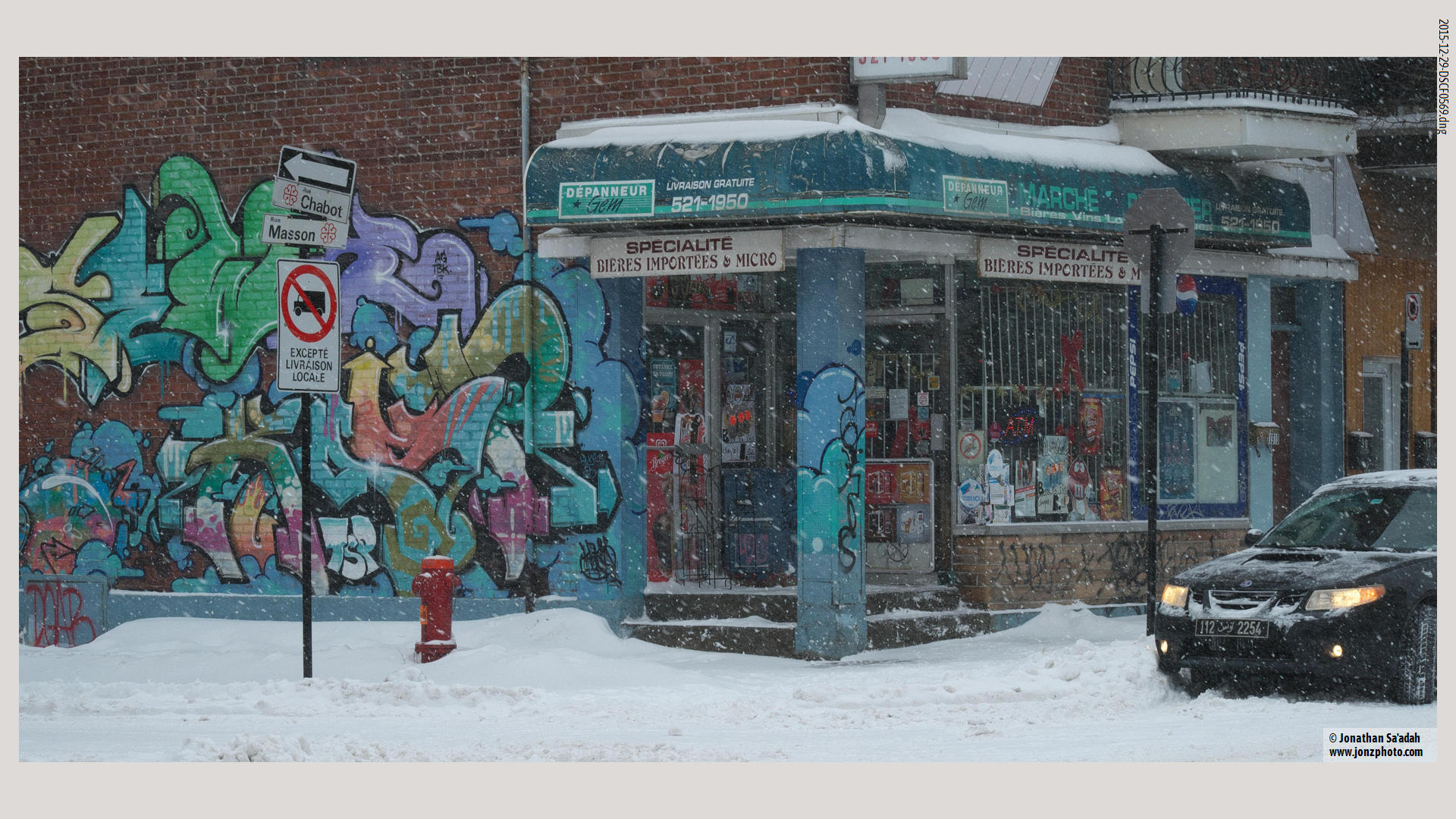
    Do you see what I mean? And that’s not all, by any means … there’s plenty that I have photographed – and could show – to back up an argument about the badnesses and injustices in Mexico, or Montreal, or even Vermont.

    It’s a requirement in journalistic photography that you’re supposed to be honest about what’s shown, but the warp lies in what’s not shown (or talked about). I certainly am showing what I like about Mexico, but I also have plenty of negative opinions (and photos to support them), and not limited to Mexico.

    I do think, however, that it’s important to see both sides of a coin. Is that glossing over? Yes, I think it is sometimes. But I think it’s also useful to talk in different terms, especially about a place that gets editorially stomped on. I said in an early post, before going there, that I wanted to present a positive view, since so much of what’s published is negative.

    On our last day in Mexico I was speaking to a young Mexican man who was working behind the desk in our hotel. He was young and hip-city-relaxed, with spiky black hair and lime-green framed glasses. He and I had just settled up the bill so he knew we had been there for a relatively long period of time and he wanted to know why. It’s not a hotel frequented by North Americans – most of the people who stay there come up from the South instead. In an abbreviated answer I said we liked the hotel and the neighborhood. He response was that most North Americans – by which I assume he meant Americans – complain about staying there because they don’t want to stay in a “ghetto”.

    Well, if that’s a “ghetto”, then I guess I’m really out to lunch. But I don’t think I am. It’s a relatively affluent upper class neighborhood, nothing like the rich ones but nothing like the poor ones either.

    I’ve always liked living in these in-between neighborhoods. In Montreal we live in a pretty swanky part of town – The Plateau – but under the caché it too has its rough edges (though nothing like the other places).

    I hope I won’t avoid politics, the environment, and social issues on this blog. But most of the time I’d rather not go at them head-on. There is a lot to talk about, in Canada as well as in Mexico.  I’m not blind about this, but personally I get tired of feeling inundated by other points of view. I know that mine seep out, and whether you agree or disagree, I hope most of all that you will feel welcome here (and able to say what you think). That’s the way I’d like it to be, and it’s a roundabout answer in my general approach to this blog. I hope it comes through, because it’s not always easy.

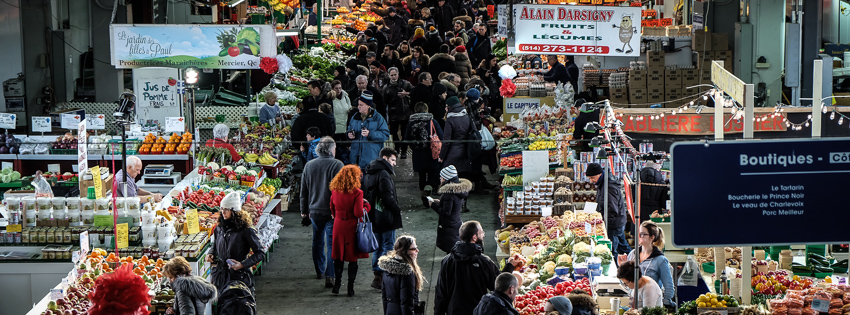
    Perhaps you remember the market photo a few posts ago (scroll down). I thought, as a contrast, a photo from last weekend would be fun. It’s Montrealers coming out of the winter funk and flocking to one of our largest markets – the stalls are still confined to the indoors but in everyone’s mind it’s already spring!

    Jean-Talon Market the first weekend in March.


  • It’s about more than food

    It’s ironic that Bernie Sanders gets tagged as insensitive to race issues – it’s not his problem – it’s Vermont’s. Vermont has a lot of positive qualities, but one is not ethnic diversity.

    The situation was worse in the 1960s though.

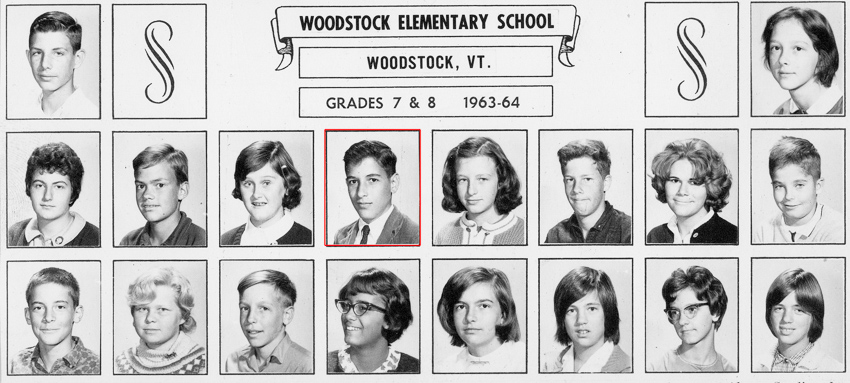
    As a kid I always felt like I didn’t fit in. I didn’t. My classmates, almost without exception, came from old New England stock and to me, a youngster, it felt like cultural and personal exclusion. In our family we ate different foods, we talked about different things, and we were almost completely ignorant of pop culture. It may not have been exclusion, but it certainly was difference.

    I don’t know what I was thinking dressing in a coat and tie, it certainly didn’t help. Perhaps my warped mind thought if I did wear a tie I’d be mistaken for a teacher, and I could hide behind that.

    Directly below me is the only other person (I believe in the school of about 200 children) who didn’t fit into the white ethos – she is part Native American.

    People often think of Montreal as being binary between French and English, but the delicious reality is that it’s a jumbled pastiche of many ethnic groups. That’s been something that has greatly enhanced our lives. Even the people who think of themselves as “Francophone” or “Anglophone” are often quite sophisticated in their knowledge of other cultures, and often follow that up with speaking other languages. We had not always dreamed of Mexico. Our interest sprung from two sources.

    One source was two of our best friends – Éric and Diana.  Their lives are a jumbled mix of both their Francophone and Spanish families. Diana grew up in Cartagena. Their home resonates with Spanish, which they speak as their base language, French, and English and the warm smells of a lot of good food. Éric and I became fast friends based on interests and personalities. Diana too loves her heritage and language (which she teaches at a college level) and has done a lot to encourage our interests in Latin America.

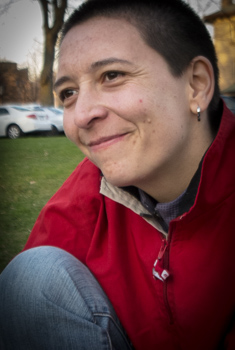
    The second source, and where the interest in Mexico specifically started, is with our friend Magda. She has a quiet centering and wisdom that’s rare and which I greatly admire. When we first told her we wanted to go to Mexico (four years ago) she sat down with us and made a list of all her favorite places in the City, and it was from that list that we started our attachments.

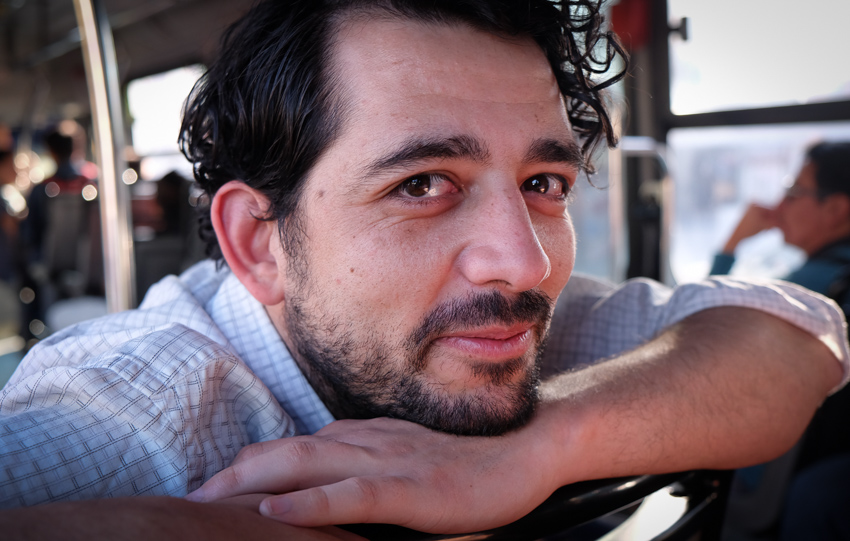
    I didn’t talk about it at the time (because I didn’t have his permission) but we were with Pablo, Magda’s brother, when my phone was stolen. He was angry because he hadn’t picked up on what was happening either. This photo of him was the same day, on the Metrobus, after things calmed down and we coming back down towards the Centro.

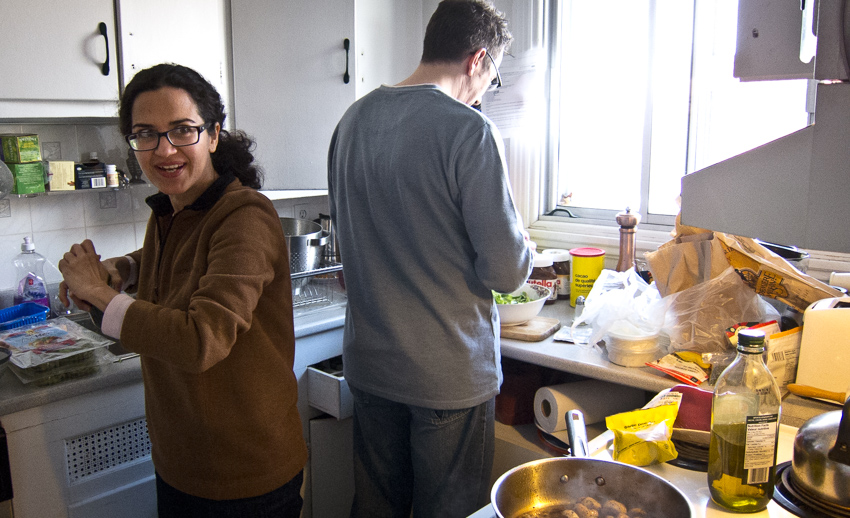
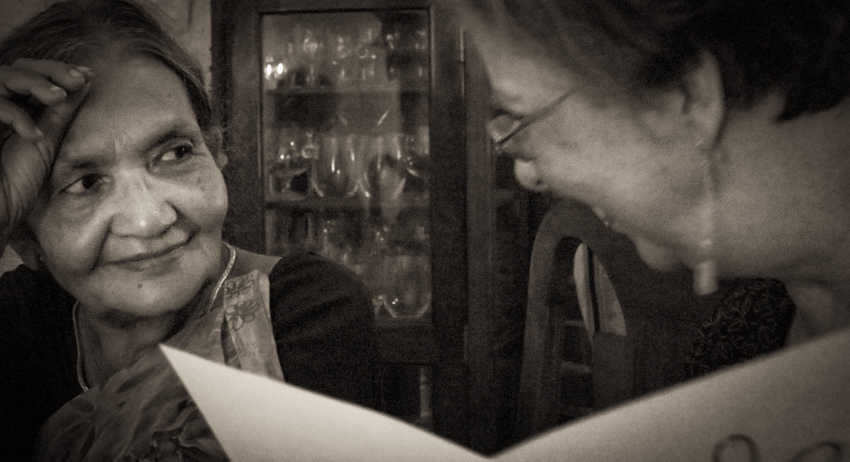
    I would be totally remiss if I made it sound like solely Mexico connects personally with Montreal. There are many strong ties especially to the US, to England, and to France. Another of my earliest and best friends is from Bangladesh (with many other places in-between). His mother, Gayatri (here visiting), and I have developed an affection for each other. She visits each summer, and in this photo she is with our good friend Vivian.

    I’ve been thinking about these ethnic mixings because last night I watched the documentary film Discordia detailing the student conflict at Concordia surrounding the (attempted) visit by Benjamin Netanyahu in 2003. It’s not a pretty story, but it’s emblematic of society trying to work out differences in a way more profound than superficial sharing of foods. I recommend it if you are at all interested. This link should play to all countries.