
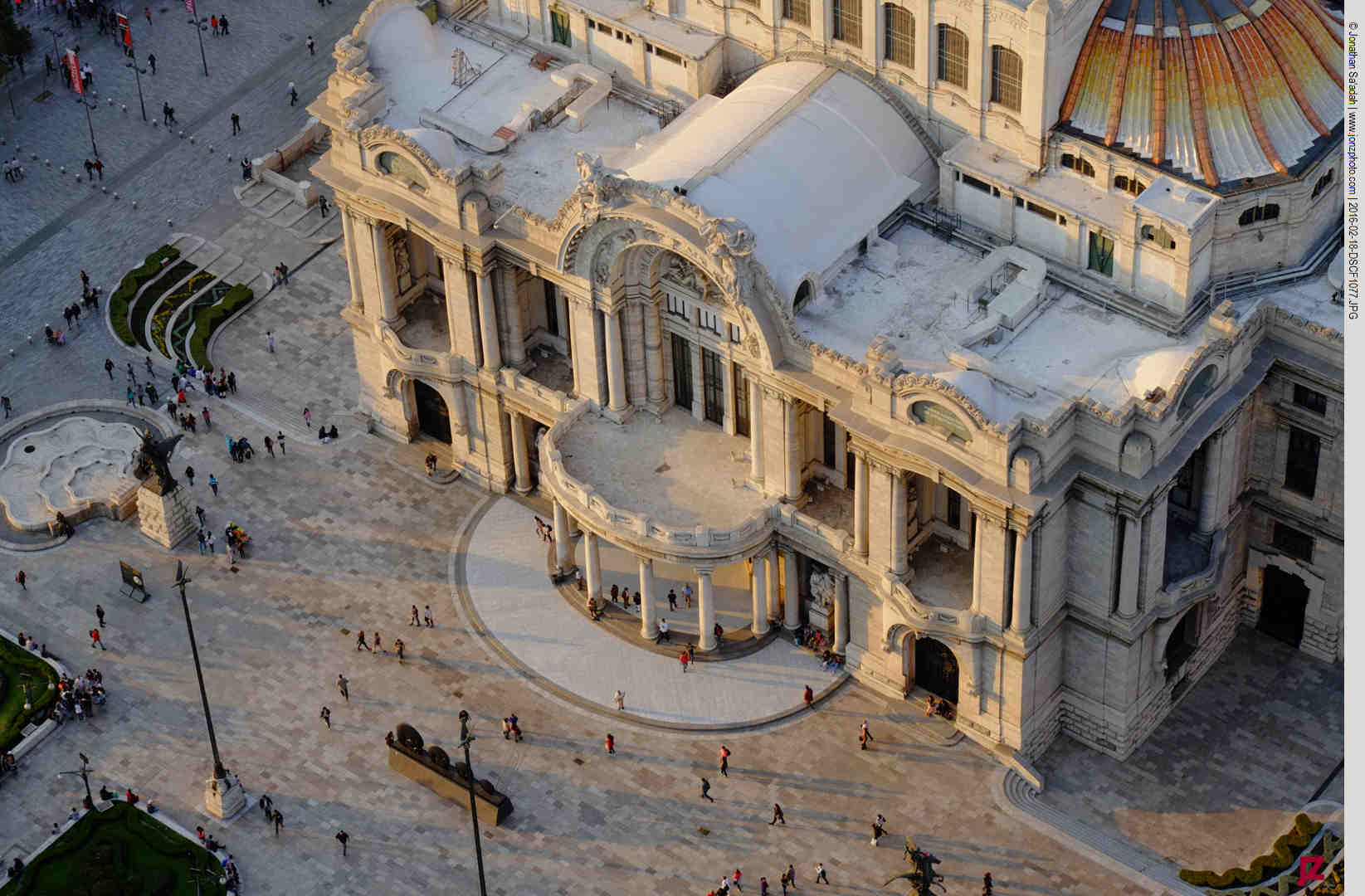
I was riding along in perfect touristic bliss on my rental bike until I wasn’t, and I hit the pavement hard with the bike on top of me. In that moment I learned several important lessons. One was don’t ride a bike during a rain storm on polished marble.

Other lessons I learned were about how people around me reacted to my injury, and how the physical location of the accident became an important place in my own life story. Luckily my knee recovered and though it had been a long time since I’d fallen off a bike, my ego did too. What stayed with me was the location. It was in front of the Palacio de Bellas Artes, Mexico City’s grand cultural landmark, and the subject of this blog post. It’s the first of two. This week is about the amazing murals that inhabit this building. Next week will be about the building itself, and its galleries and performance space.
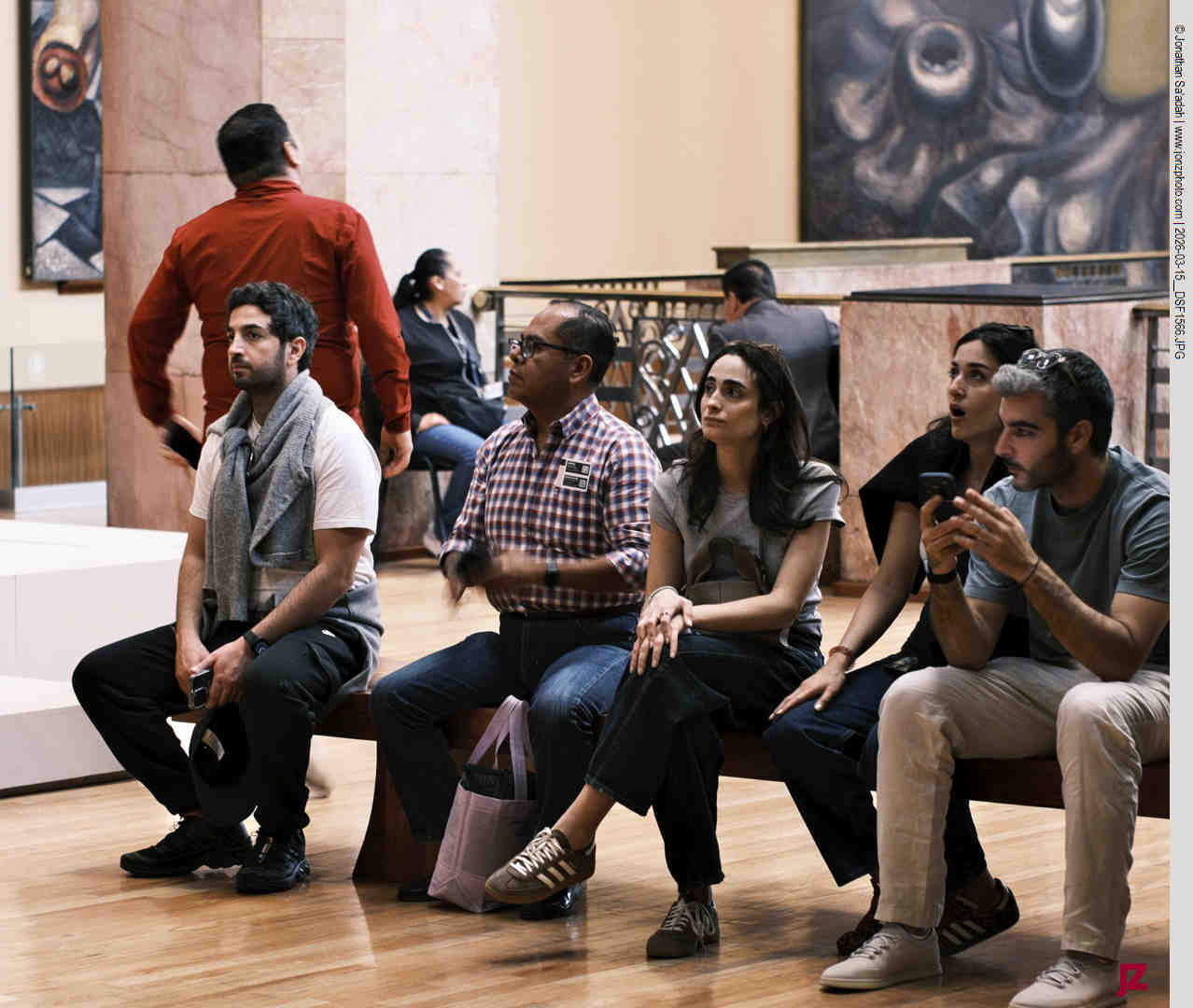
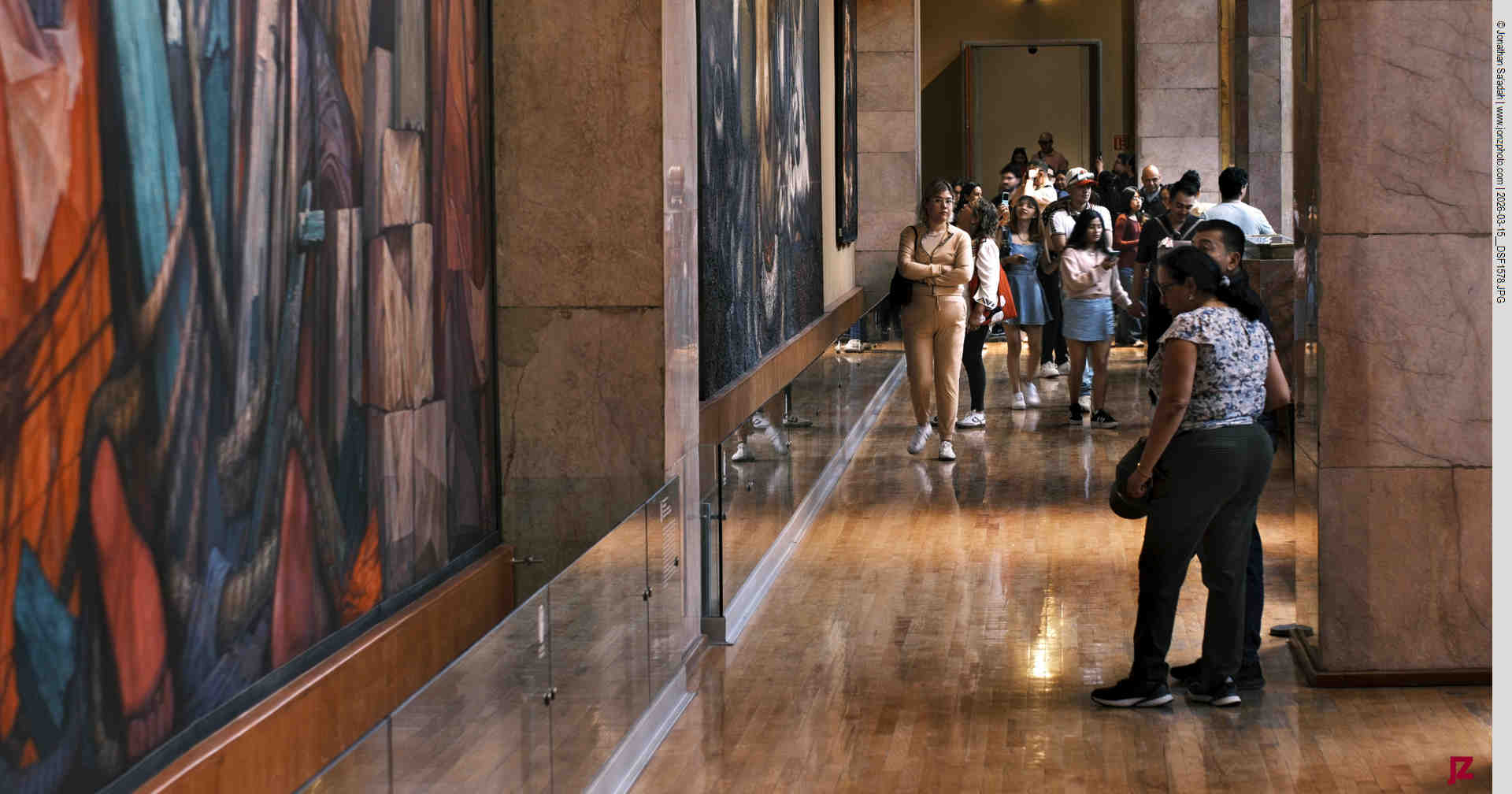
Bellas Artes is a white Carrara-and-Mexican-marble palace that rises above Avenida Juárez on the western edge of the historic center, facing the Alameda Central. It is home to many aspects of Mexican art, but especially to Mexican muralism. Lining two floors of its deep four-storey attrium are some of the most famous murals ever painted.
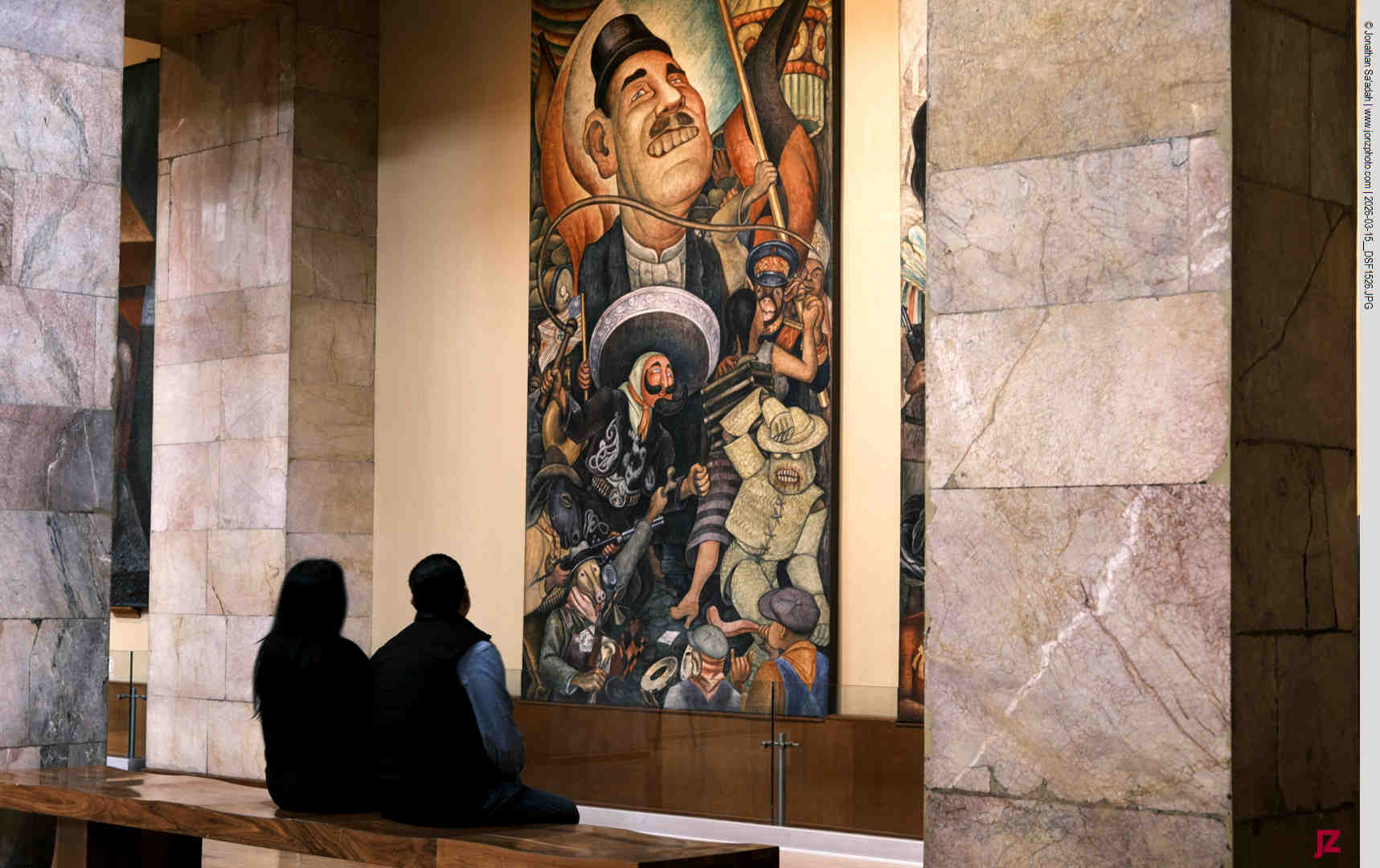
The Mural Floors
The second floor carries work by “Los Tres Grandes”: José Clemente Orozco, David Alfaro Siqueiros, and Diego Rivera. Also joining these three are Jorge González Camarena, Roberto Montenegro, and Manuel Rodríguez Lozano.
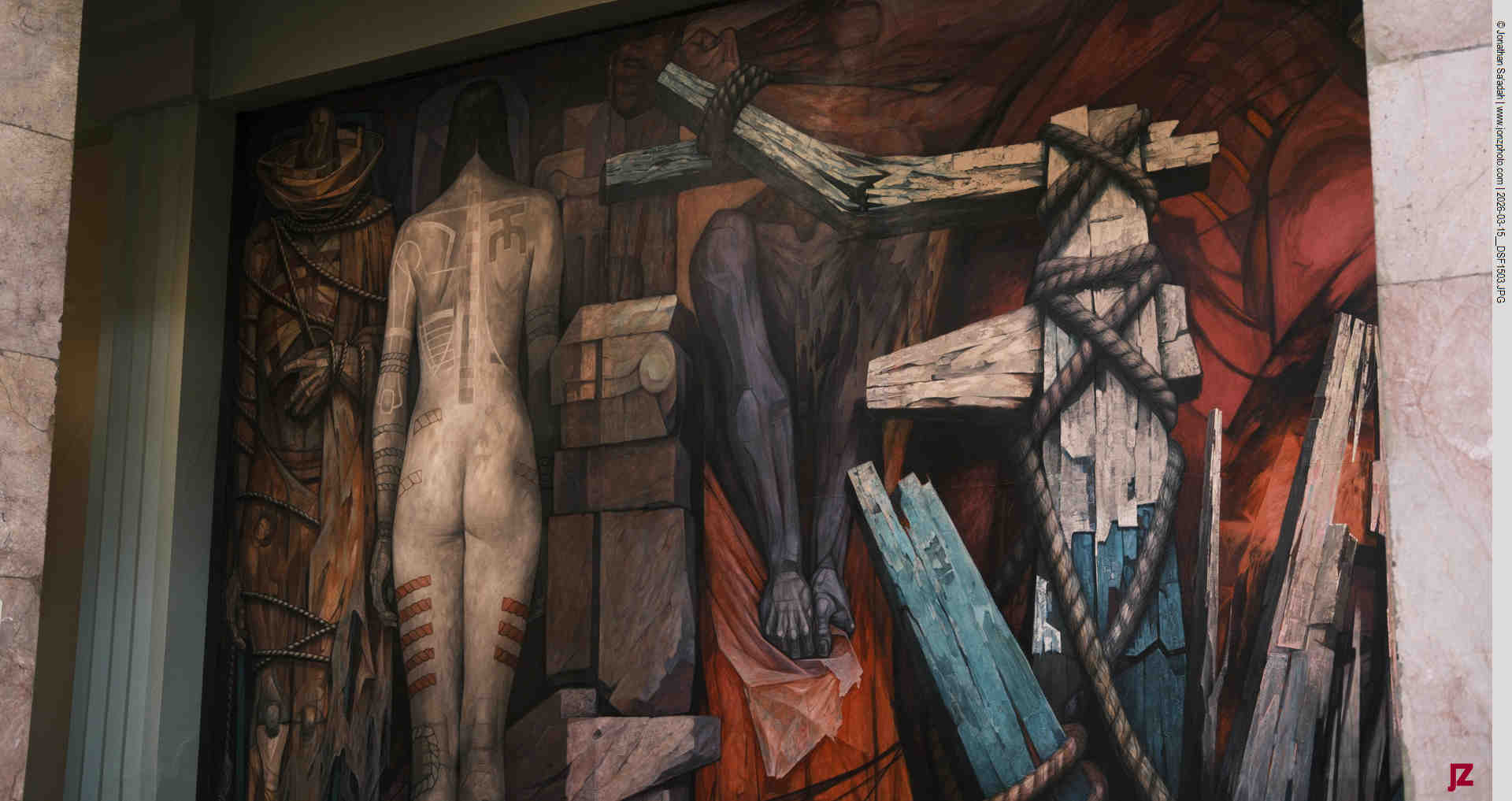
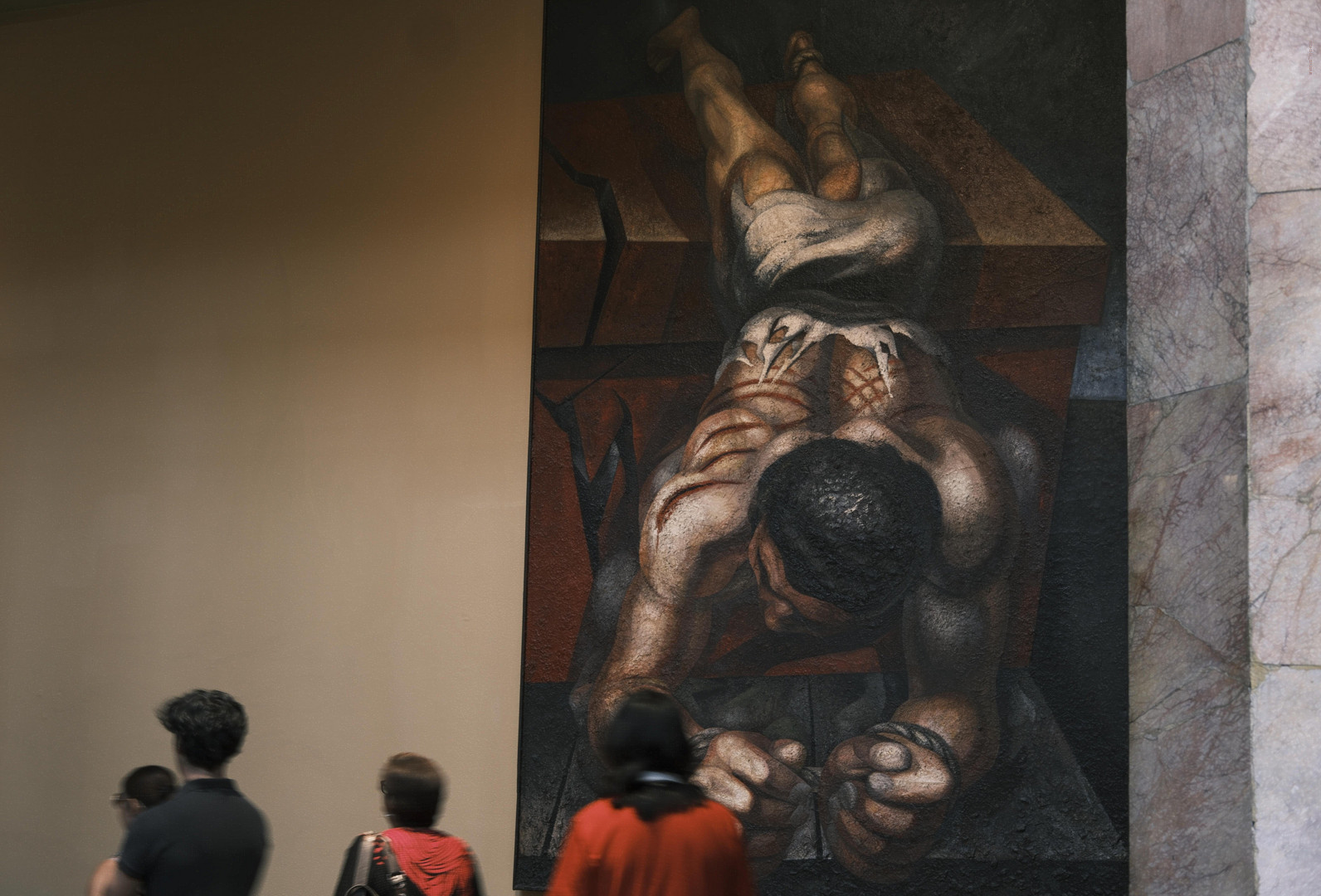
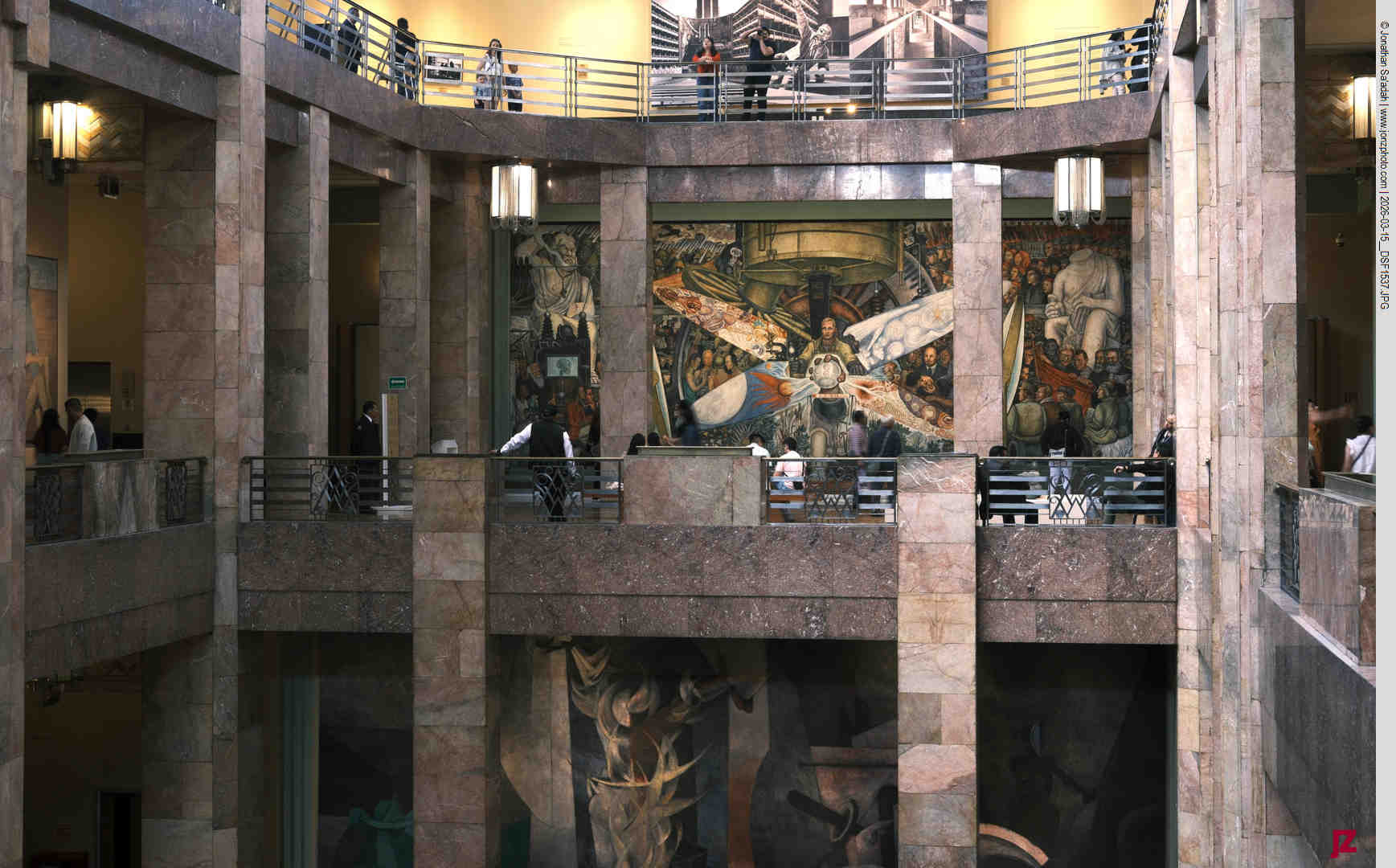
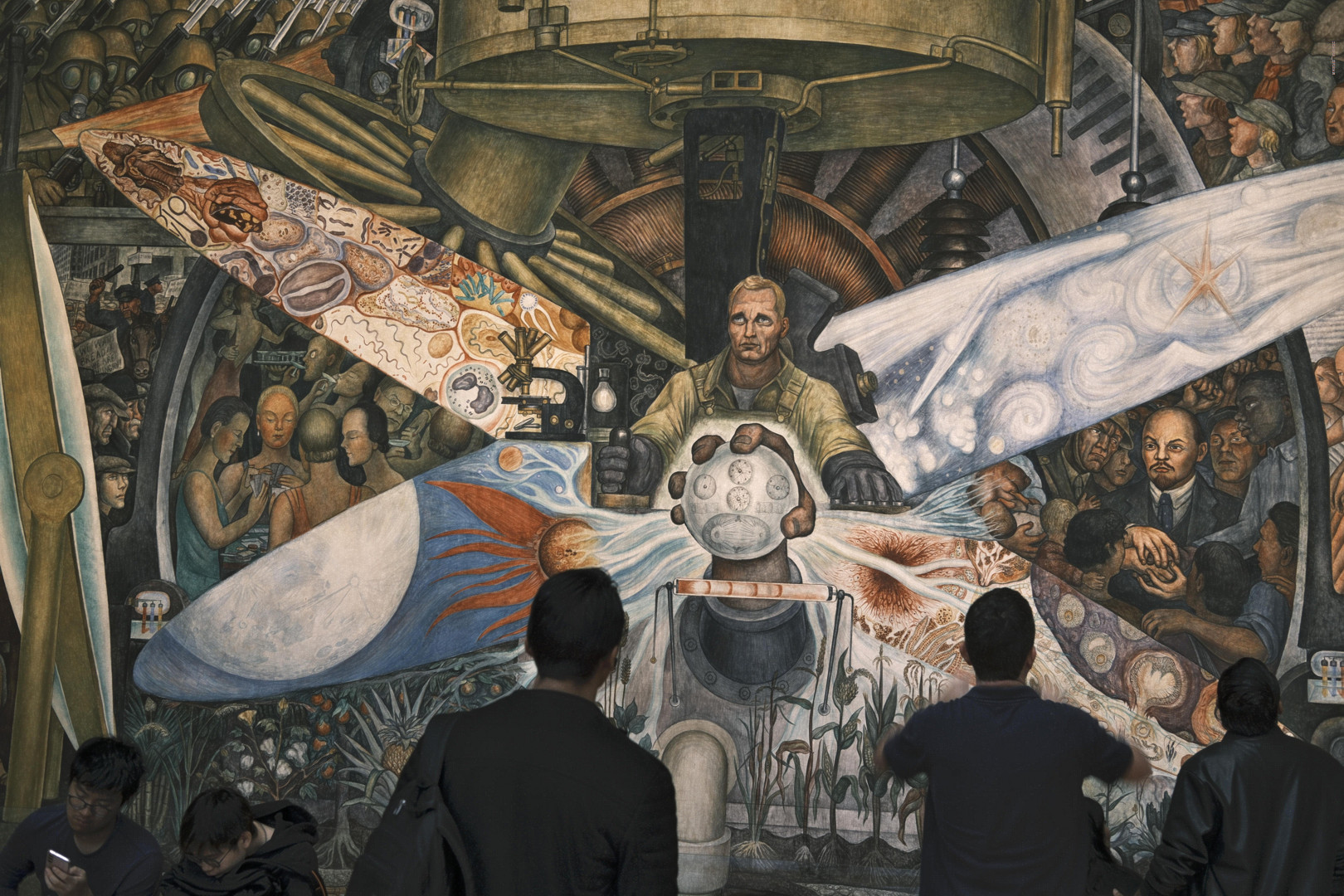
The third floor holds the building’s most famous single work — Diego Rivera’s El hombre controlador del universo, his defiant recreation of the destroyed Rockefeller Center mural — along with Siqueiros’s three-part La Nueva Democracia, Rivera’s four-panel Carnaval de la vida mexicana, and Orozco’s La Katharsis. These are works that you will never forget seeing.
The Siqueiros – Rivera Feud
These murals were a part of the post-revolutionary project taken on by Mexican artists to educate a largely illiterate public. The project’s objectives were honoring Indigenous and working-class Mexicans, while at the same time propagating the ideology of the revolution into every school, hospital, and union hall.
However, underlying these murals are stories that are often overlooked. Rivera and Siqueiros met in 1919 in Paris and they travelled together that summer studying Italian frescos. In the early 20s they worked inside the same state-funded program creating content in support the Mexican Revolution.
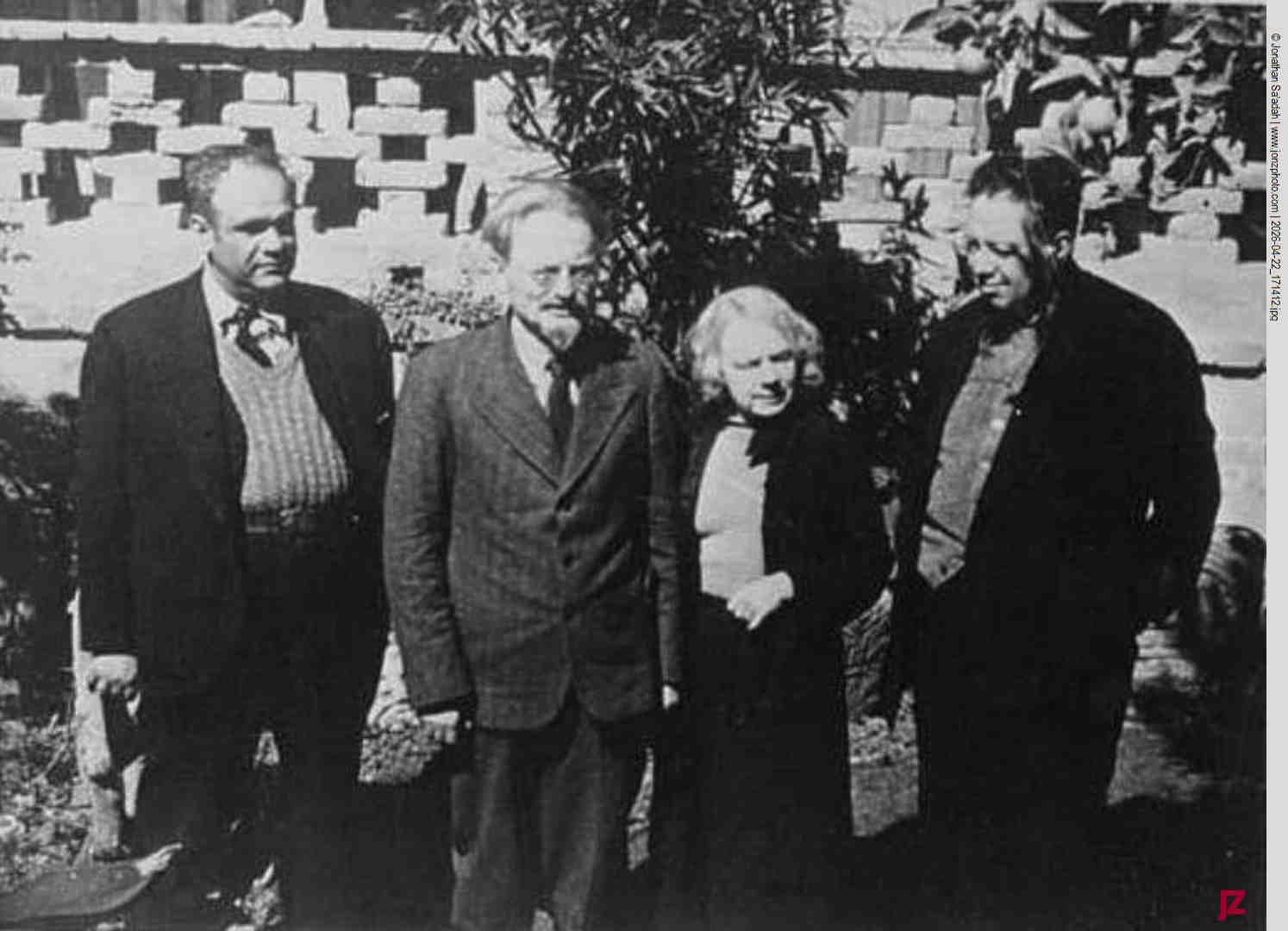
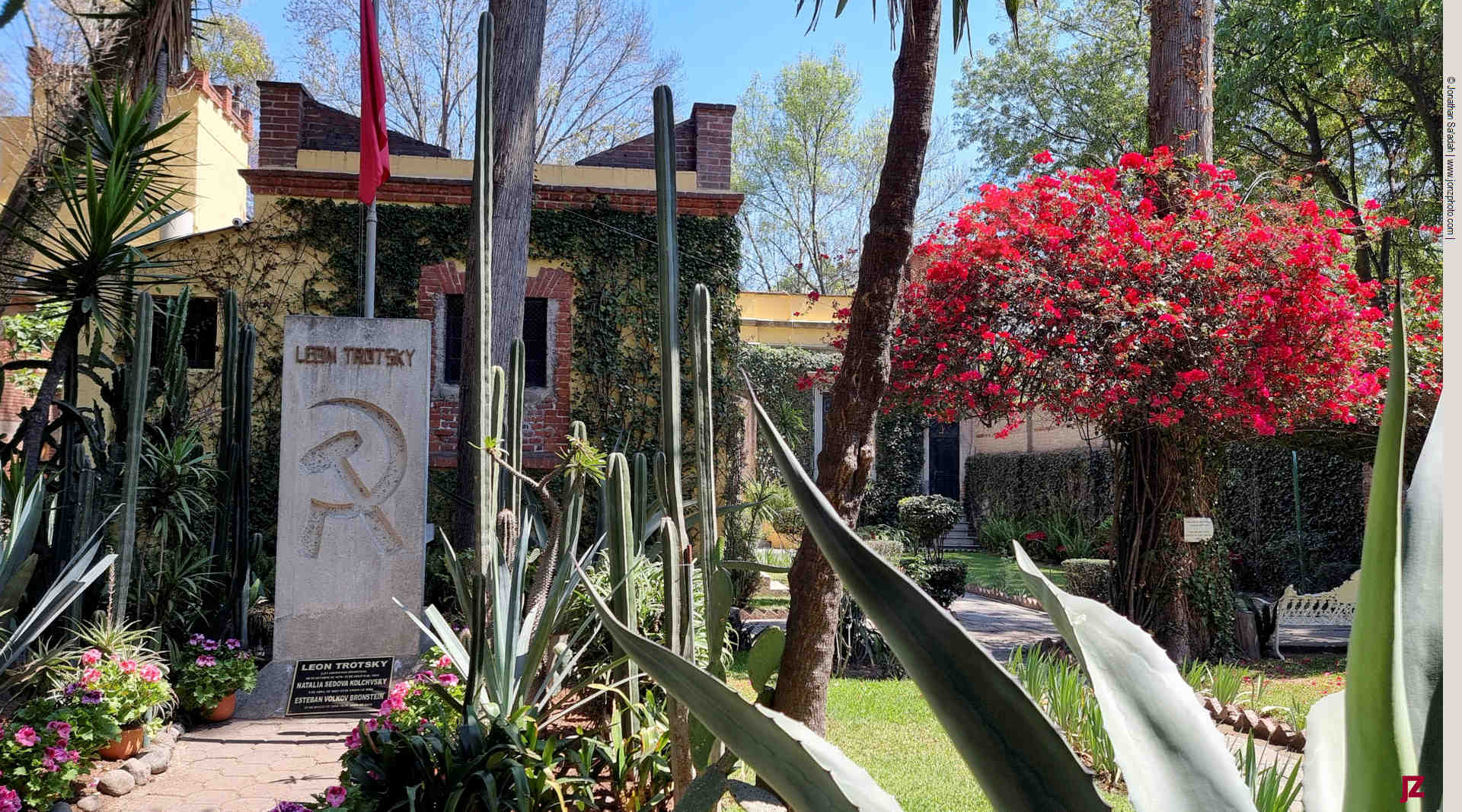
The relationship went south, however, with Rivera becoming a celebrity artist with strong leftist beliefs, and Siqueiros being a more doctrinaire strict Stalinist. These were serious differences. The feud came to its most famous moment at a 1935 conference held at Bellas Artes. Siqueiros was onstage expounding his theories of revolutionary art when Rivera — seated in the audience — became enraged, stood up, and, by contemporary accounts, drew a pistol and attempted to shoot him. He was restrained by audience members at the last moment. A formal debate was arranged for the following day; the nominal charge each leveled against the other was that “neither was sufficiently Communist.” Needless to say, the two ended up on different ends of many episodes throughout their careers, including the assassination of Leon Trotsky, for which Siqueiros was imprisoned and Rivera fled the country (though innocent).
“It’s My Wall” Diego Rivera, the Rockefeller Center Commission, and the Mural That Crossed the Border
A second story about the murals starts in 1932. In that year the Rockefeller family commissioned Rivera to paint the centerpiece fresco in the lobby of their new RCA Building in Manhattan. Eighteen months later, before the work was finished, the mural was covered with canvas, then chiseled off the wall in the middle of the night, then destroyed entirely. The fight that produced this outcome — over a single added portrait of Vladimir Lenin — ended Rivera’s American career, embarrassed the Rockefellers for decades, and sent the composition south, where Rivera repainted it, enlarged its politics, and installed it where we now see it in Bellas Artes.
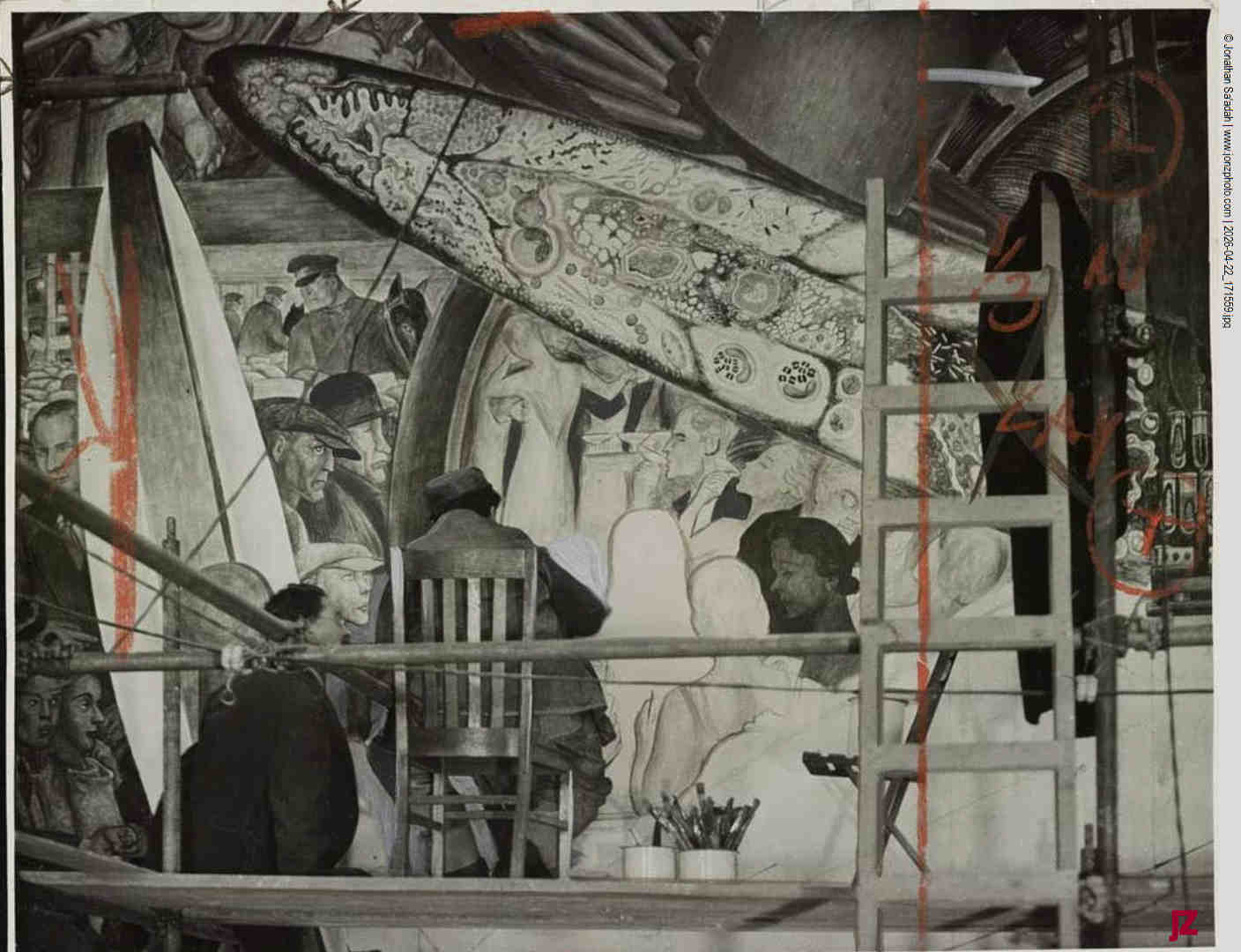
The New York contract for the mural was drawn up by Todd, Robertson & Todd, the development agents for Rockefeller Center. Rivera would be paid $21,000 for the mural. A detail in the fine print that would matter enormously later was evidently overlooked by Rivera: in exchange for the $21,000, Rockefeller Center Inc. would hold full ownership of the finished mural.
The public trouble began on April 24, 1933, when the New York World-Telegram ran a front-page attack under the headline “Rivera Paints Scenes of Communist Activity for RCA Walls — and Rockefeller, Jr., Foots Bill.” The article accused the mural of being anti-capitalist propaganda paid for by the Rockefellers themselves. It placed the family in a politically untenable position at the height of the Depression.
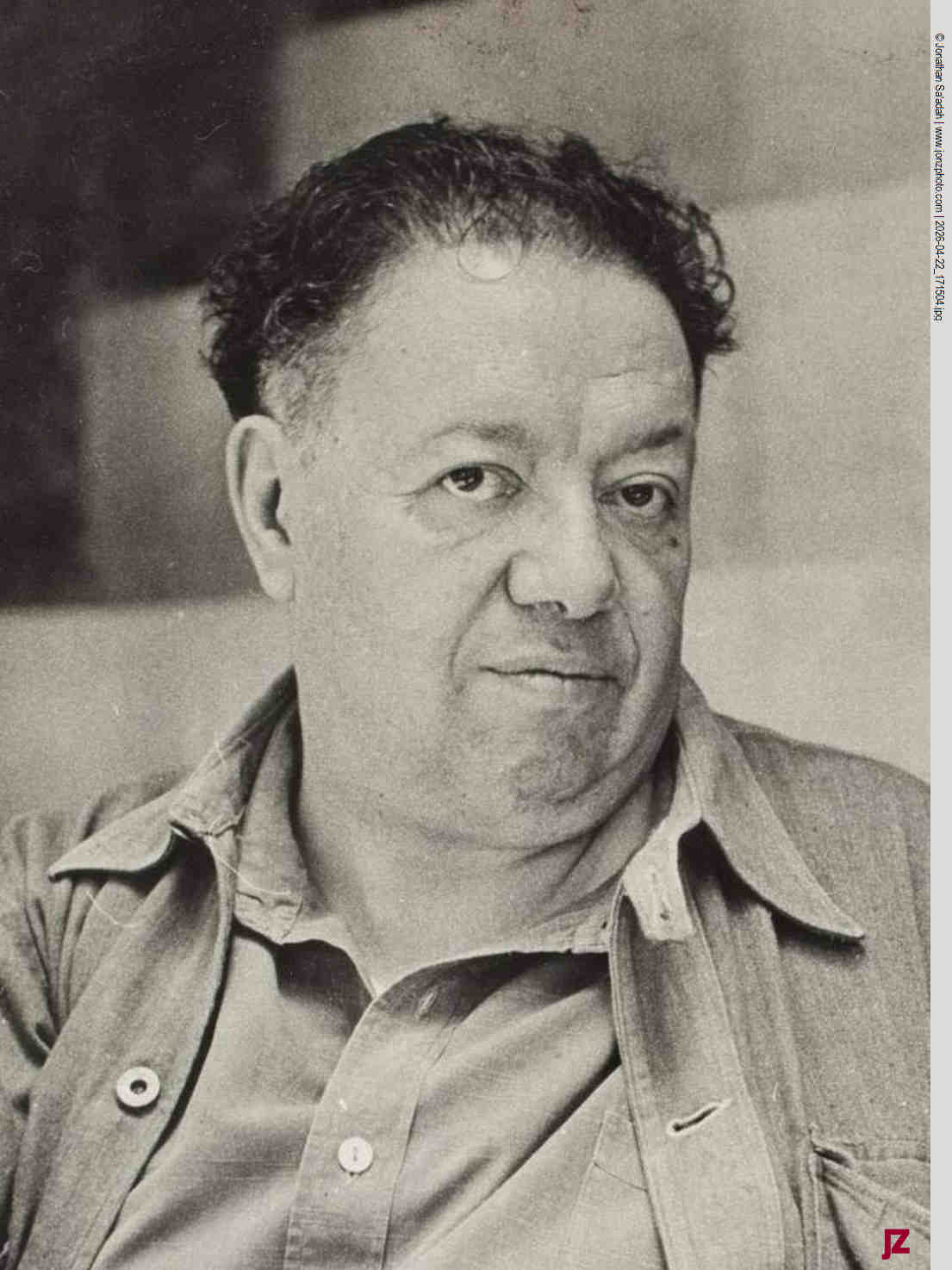
Rivera had signed an agreement that committed him to an approved sketch, but in executing the mural he added a recognizable portrait of Vladimir Lenin. Nelson Rockefeller, then 25 and director of Rockefeller Center, asked Rivera to remove Lenin but the dispute rapidly escalated. The result was that Rivera received his full $21,000 fee, and was then escorted off his working scaffold and locked out of the building. Rivera must have known this was a danger, because he originally specified that the fresco would be painted onto a specially built metal substructure so it could be removed intact if needed. The only problem was that the Rockefeller Center’s management had never allowed that substructure to be installed. So on the night of February 10, 1934, workmen carrying axes chiseled Man at the Crossroads off the wall. Rockefeller Center Inc. issued a two-sentence press release stating that the walls had been re-plastered, resulting in the mural’s demolition. Rivera responded from Mexico: “In destroying my paintings the Rockefellers have committed an act of cultural vandalism,” and added, with characteristic defiance, that the destruction “will advance the cause of the labor revolution.”
Rivera persuaded the Mexican federal government to give him the wall in Bellas Artes where he could repaint the mural. The one we see now is smaller, and painted as a single unified piece rather than as a triptych. Its Spanish title is El hombre controlador del universo (“Man, Controller of the Universe”). The Rockefeller Center contract had insisted that the completed mural “not differ from the approved sketch.” At Bellas Artes, Rivera made sure it did.
Wikimedia link to many of the murals, unfortunately most not very well photographed. The Mexican government seems to block access to the official museum site, something I’ve found typical.

Wow–what a story–being an NYC history buff, how did I never hear of this until you told me of it? I read up a bit on Man at the Crossroads–it really was an act of barbarism and vandalism on the part of Rockefeller. He could have at least invited the artist for a sit down and a coffee. He doesn’t exactly emerge smelling like a rose. Ah capitalism!
What a story! Rockefeller does not emerge smelling like a rose. He could have invited the artist for a sit down and a coffee. Ah, capitalism! It was an act of barbarism and vandalism.
Whoops! I didn’t mean to leave 2 comments! So here’s a third one!