Where there’s a crowd there’s a photo

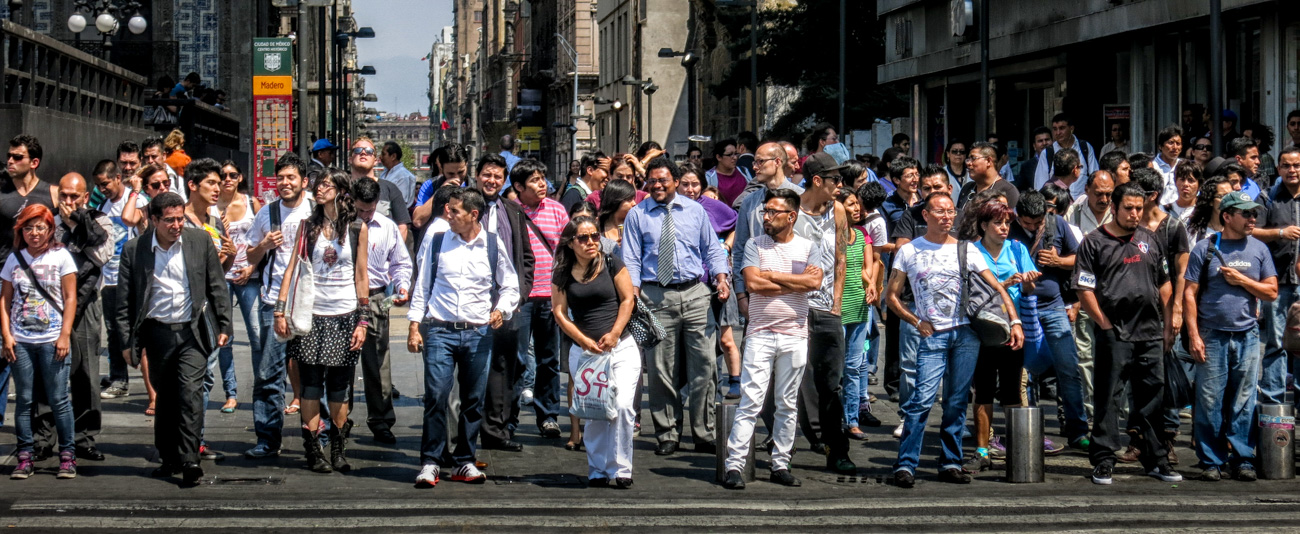
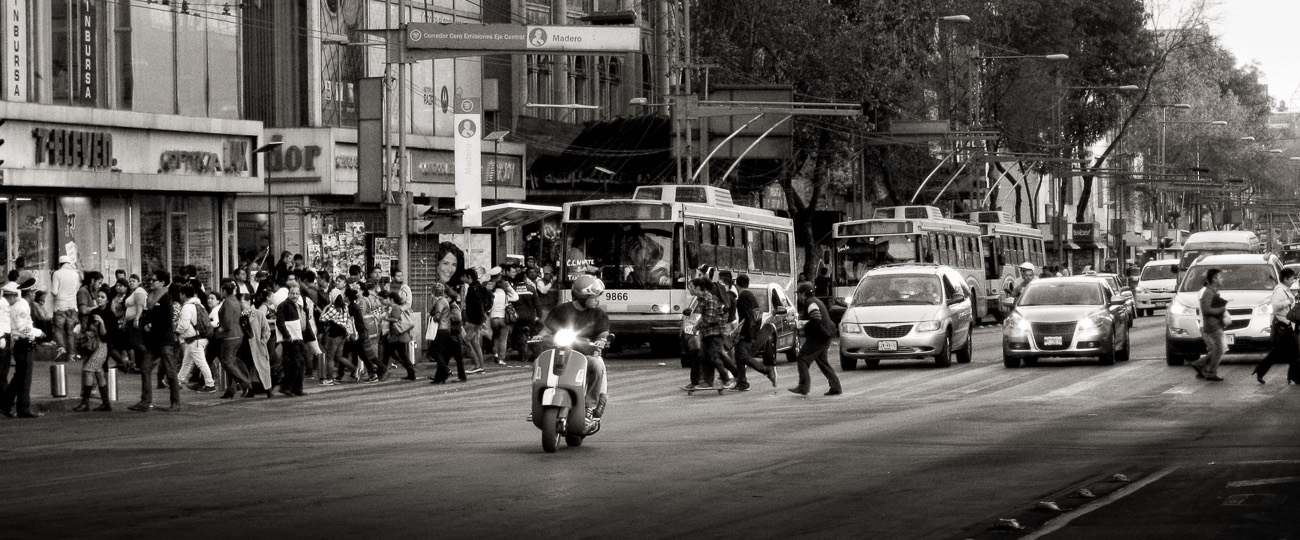
Detail of street crowd, Mexico City, 2014 (click through for full photo)

Detail of street crowd, Mexico City, 2014 (click through for full photo)

I’ve always liked photographs of crowds. Cameras are great at recording a lot of detail quickly and for me they give a way of studying the people, and seeing how I do (or don’t) fit in. I remember when I first came to Quebec I took so many pictures of people on the street, just trying to understand about my new home. Unfortunately, one of the things I came to understand is that you don’t generally do that here! But it did help me to feel a connection and start to find my place.

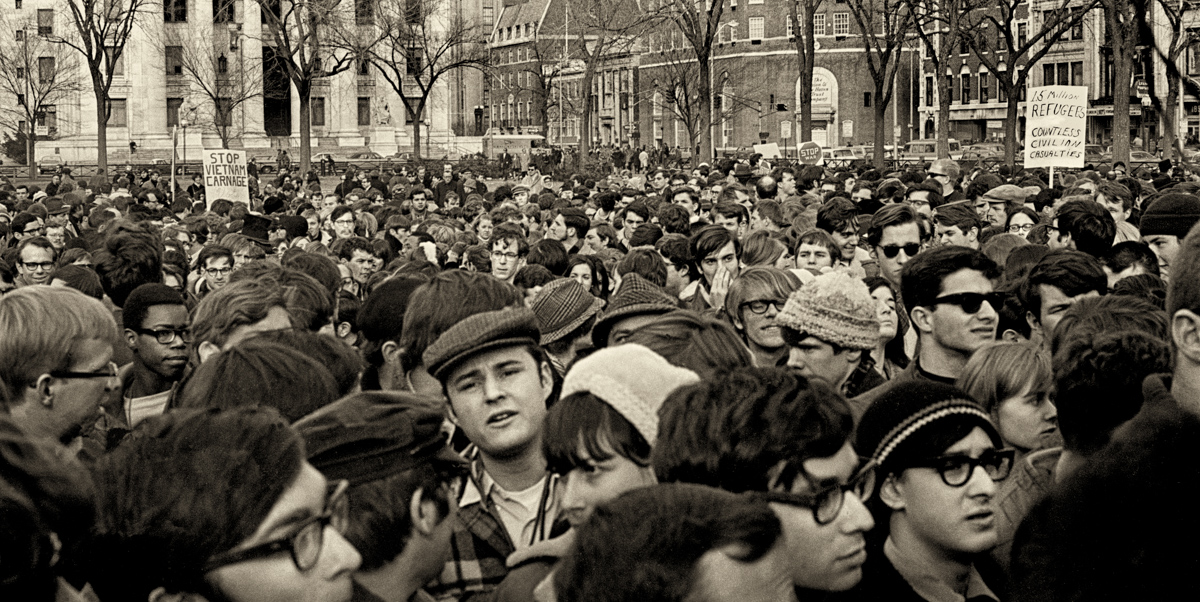
New Haven Green looking south towards Federal Courthouse, March 1968

New Haven Green looking south towards Federal Courthouse, March 1968

Photos age well too. A picture taken now looks like, well, now. But a picture taken more than four decades ago records something that’s gone. That can be precious if it’s of one person. When the photo is of a lot of people it gives a feeling of the time, the place, and customs.

These are (mostly) Yale students, on the New Haven Green. It was one of the early large East Coast demonstrations against the Vietnam War and as such was covered by the international media and watched closely – by both friend and foe.

Posted in Mexico, Photography, Social Documentary
Tags: , ,

Minor White

South Pomfret, Vermont, 1970

South Pomfret, Vermont, 1970

From Fall, 1970 through the following June I was a student of Minor White’s. Though I was chronologically an undergraduate he placed me in his graduate program. It’s people from that class that you see in the circle above.

If history is written by victors it also contains a good measure of current social mores. I was pleased to be sent a link to this recent essay by Susan Stamberg. White died almost thirty years ago. The essay has candor and judgement in its measurement of the man, who I knew only in the context of school and a few extended workshops. But I think there is a poignancy in this photo that’s correct.

I’m also attached to the photo for a personal reason. If you look closely there is a hill hiding in the background fog. It is a small ski area in Vermont called “Suicide-Six”, which was the local ski hill when I was young. So seeing it always makes me smile.

Posted in Artists, Woodstock


The Other Hagop

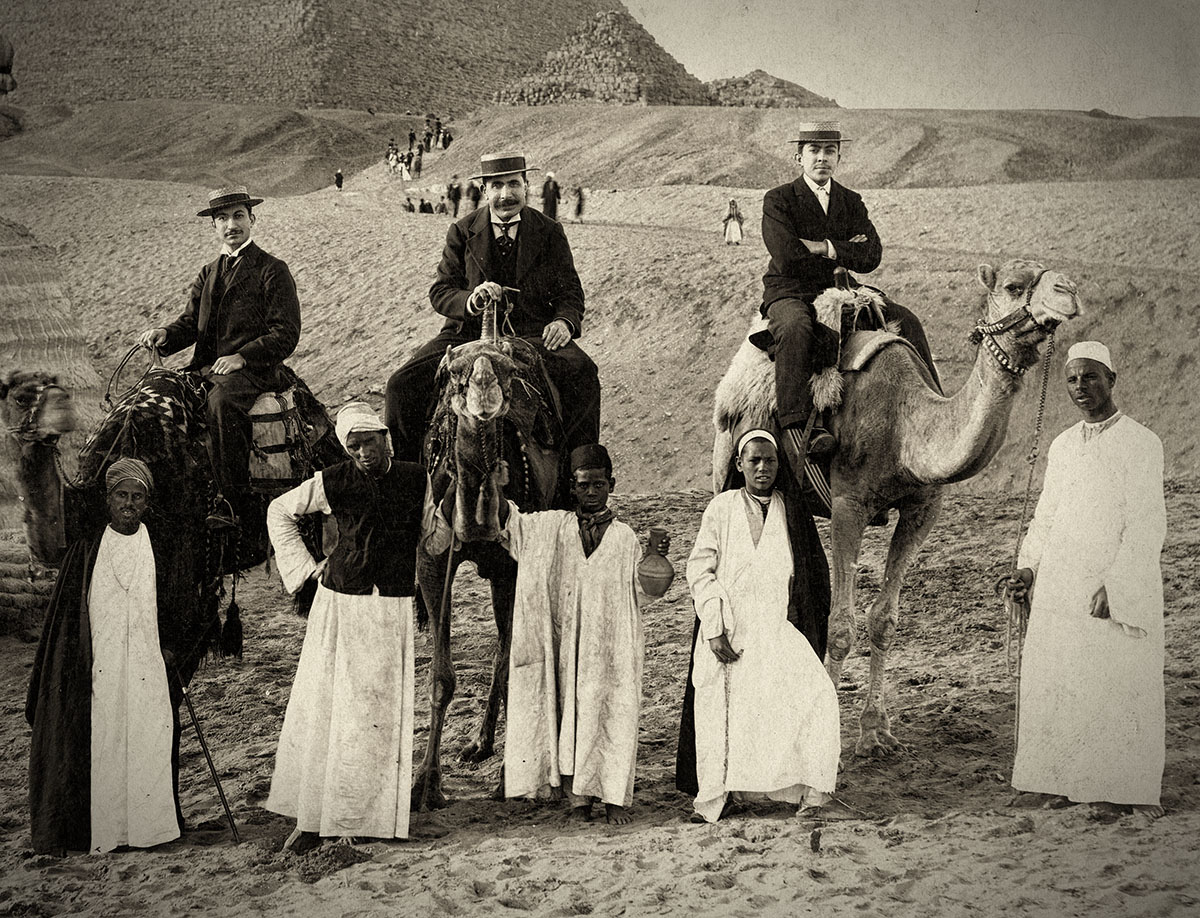
About 1925. Hagop has his arms crossed, on the right.

About 1925. Hagop Topalian has his arms crossed, on the right.

I’ve been reading Paris 1919, a multi-threaded account of the six month period at the end of World War One when the French, British, and American leaders met in Paris to sort out the debris from the war and set the way forward. Nobody comes out looking too good. The author is a Canadian and the grand-daughter of Lloyd-George.

Embedded in the book are stories of many ethnic groups and how the Paris Conference attempted to deal with their claims. The Armenians were a medium-sized piece in this puzzle. What remained of them was a ragged, male-depleted group living outside the bounds of present-day Turkey. What supported them at the conference were the Americans, who actually had tried to help the Armenians as they were being slaughtered by their Ottoman tormentors.

Hagop Topalian – the other Hagop – had been lucky. His parents Kevork and Ardem lived in Cairo, where he was born in 1897. The family had a relatively safe place to grow up. At least it was safer than Konya, in the Anatolian highlands, where my mother’s family was from.

Some time soon after the remains of my maternal side of the family settled in Alexandria (about 1920) Hagop became a family friend, and remained one right up until his death in the late 1980s. The photo that you see him in here is a scan from an 8-10 silver contact print (it’s cropped in this blog version), shot complete with Somali camel guides.

Back to the book, though.

Perhaps if you identify yourself as long-generational from England, France, or the United States the experience of reading it is different, but I was quite aware of the different ethnic groups being discussed and found myself getting critical as I read about “my” tribes. The story of the Armenians was horrible, and told with details I had never read. I had a hard time stomaching that the author allows the Turkish side to even voice the argument that Armenians were traitors, but she does. On the other hand, it doesn’t really matter. As the UK/FR/US leaders politicians shifted their view eastward (and past the Balkans, where they made enough of a hash) their objectives also shifted – from at least an attempt at power/economics balanced with societal/ethnic fairness to more obvious self-interest: mainly buffering the new Bolsheviks and the black stuff that pooled up on the ground around Mosul. They knew that a military based on a liquid petroleum had a big advantage over one burning coal, and Mosul looked like a good supply bet – especially for the British. Anyway, as was said, “who’s ever going to remember the Armenians?”


Posted in Middle East


Hagop the optician

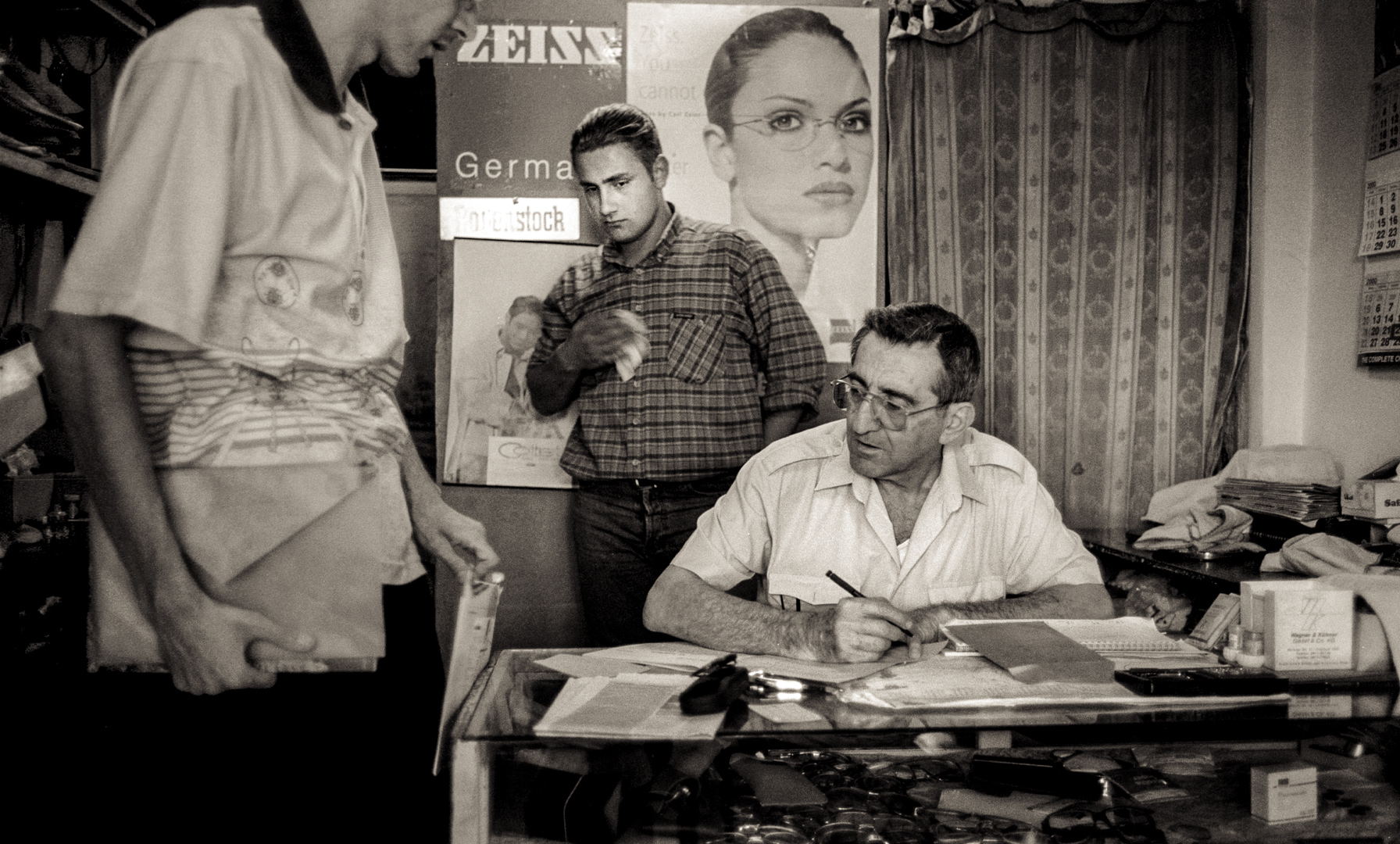
Hagop the optician
A large number of Armenians lived in Damascus, including this man with his two sons. I felt a connection to Hagop because his family endured the same Turkish/Ottoman exodus that had engulfed my mother’s side of the family. Added to that connection was his name – Hagop. It was the same as an elderly man who had been a surrogate grandfather to me.

On this day Hagop was displeased. He complained to me (in English) that his sons were not as capable of running the store as he was. Here they don’t look happy either. He probably wasn’t an easy person to work for.

Posted in Middle East, Social Documentary


Mexico City transit

Lázaro Cárdenas looking south near Bellas Artes

Mexico City trolley line and traffic on Lázaro Cárdenas

Mexico City always gets a bad rap – crowded, worn, dangerous, polluted – take your choice. The stereotyping gets a little tiring. Yes, Mexico has its problems, but so too does Montreal, or New York, or  for that matter any other city in the world. On a recent trip to Chicago, for example, the daughter of a friend who picked me up at the airport couldn’t help but tell me how many recent killings there had been block by block as we approached her parent’s home. Thanks but no thanks.

One of the things I like about travel is comparing the places I go to the place I live. I’m especially attuned to public transport and traffic; one I like and the other I don’t. My best traffic avoidance technique is a bike. In Montreal we have an extensive and expanding bike path system, but also serious problems with bike-truck accidents and figuring out how to balance the shared use of roadways and sidewalks. So when I got to Mexico City I had my antennas out.
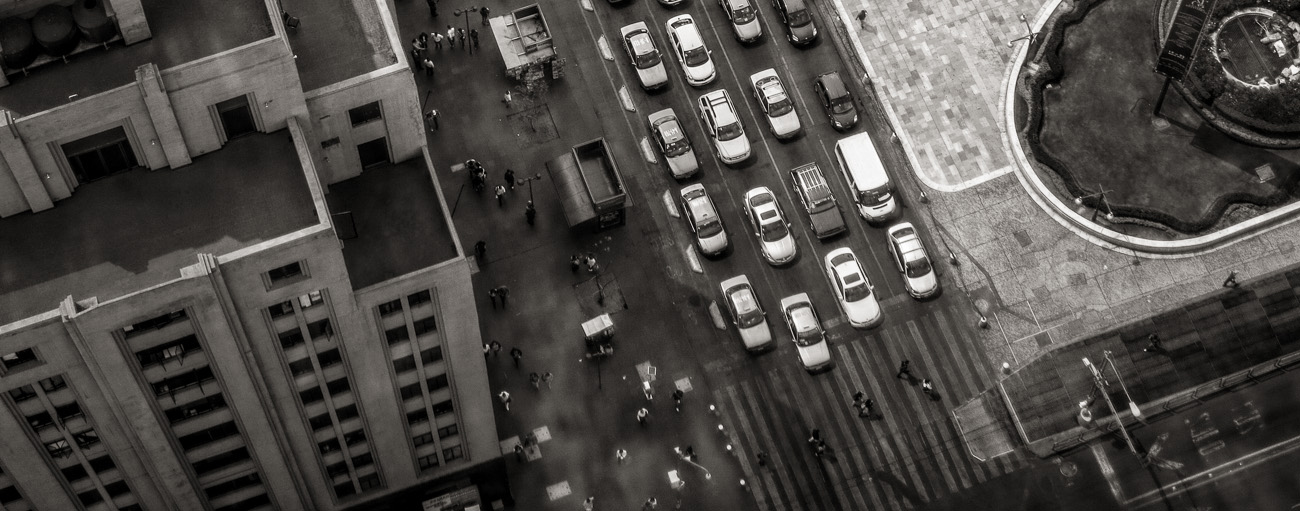
View of Juárez and Lázaro Cárdenas from Torre Latinoamericana

Traffic looking down on Juaréz from the Tower Latinoamericana

We travelled by taxi from the airport and the right away the experience seemed like an invitation to take public transit. In Montreal we talk about using different forms of transport but in Mexico City it’s being done. Their systems handle a lot of people, often with creative solutions to difficult problems. An example would be extending the popular Metrobús system through the narrow streets of the Centro Histórico.
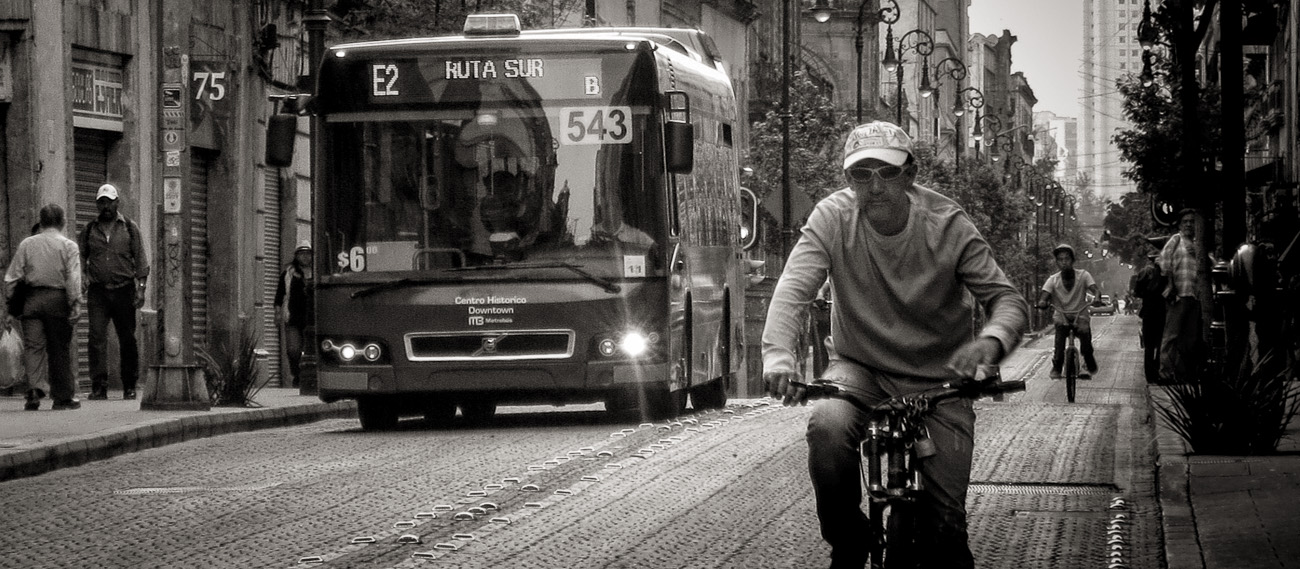
Metrobús line through Centro Histórico - notice bikes

Narrow lane Metrobús line through Centro Histórico – notice bikes using other lane

Mexico City is the third largest city in the world – and the metro system carries 4.4 million people a day (2012), versus the Montreal metro system’s .975 million (2013) people per day  – that’s roughly four and a half  times more volume per day, ranking  it eighth in the world.
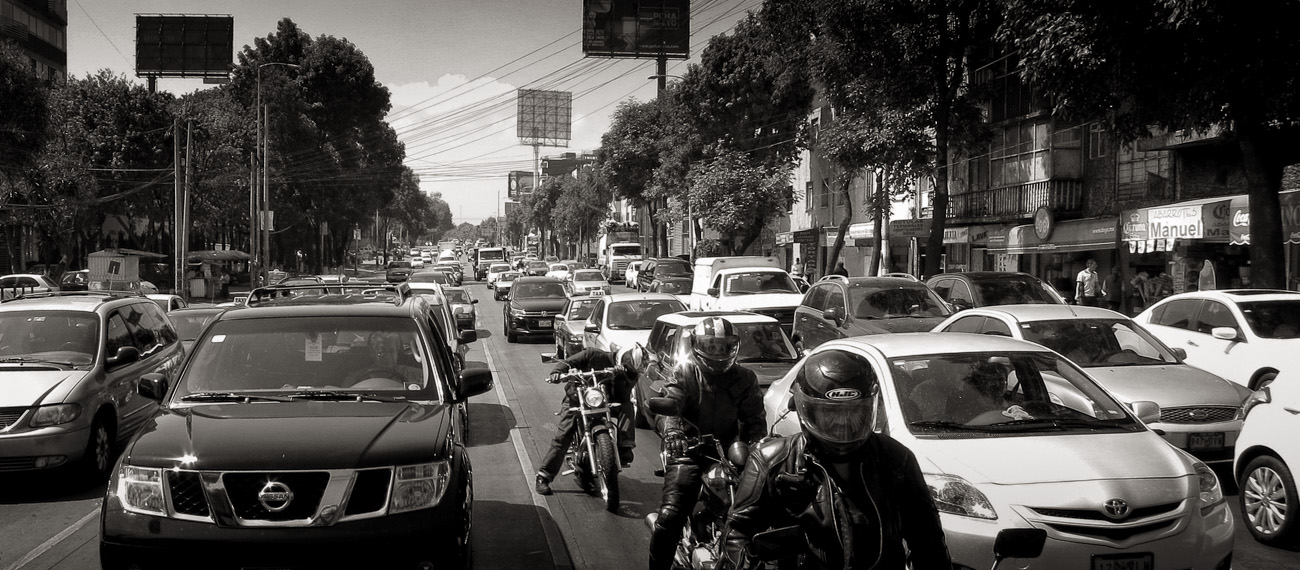
The only time this street quiets is on holidays or late at night

Main artery traffic: The only time this street quiets is on holidays or late at night

The main avenues are rivers of traffic. They start flowing as soon as the light turns green and run fast until the next red. On the main arteries merges are not anything that can be called polite. The protocol is to barge in and whoever is chicken ends up last.
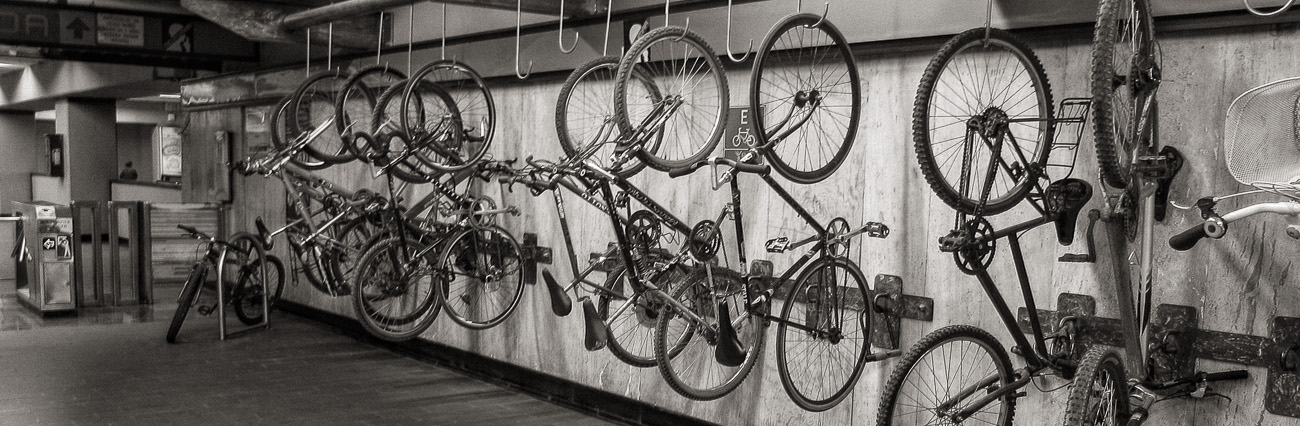
Locked personally owned bikes near Tacubaya turnstiles

Not for the weak: Locked personally owned bikes near Tacubaya turnstiles

It’s that same vehicular aggressiveness that makes it hard to believe that biking in the city would have a happy ending. To be honest, my first reaction was that biking was out in Mexico City. That was my first impression. But I always watch people on bikes trying to gauge what it would be like to be one myself. I saw hopeful signs. Some riders had their own bikes but a lot of people were using bikes from the ecobici rental system. After exploring around on foot I found easy (and used) ways through neighborhoods that avoided the main arteries. I also found well constructed bike paths.

Next post: bikes in the city

Posted in Mexico, Social Documentary, Transit, Travel
Tags: , ,


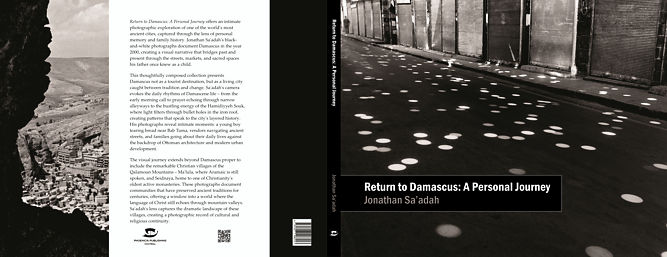
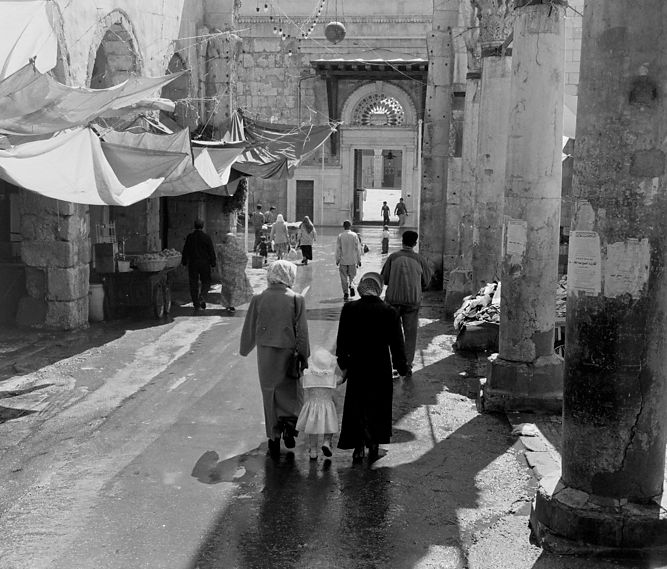
Return to Damascus is my new book of photographs, available for order, that preserves fleeting impressions and the spirit of a place through the lens. Accompanied by brief reflections and memories, the photographs offer a tribute to the place and its people, focusing on enduring character and the subtle interplay of light, architecture, and tradition. Return to Damascus is a quiet celebration of observation and memory, inviting viewers to participate.

Recent Comments

custom styled page
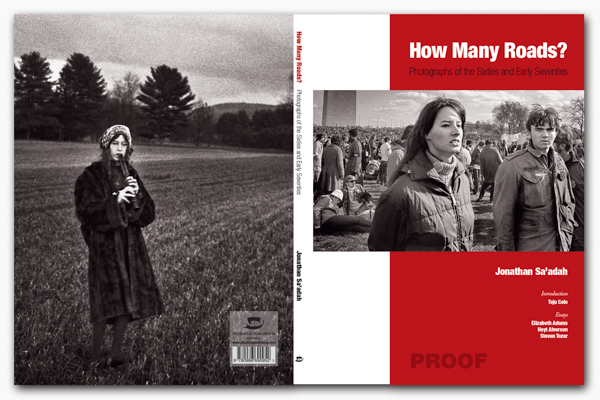
How Many Roads? is a book of photographs by Jonathan Sa'adah, available for order, offering an unglossy but deeply human view of the period from 1968 to 1975 in richly detailed, observant images that have poignant resonance with the present. Ninety-one sepia photographs reproduced with an introduction by Teju Cole, essays by Beth Adams, Hoyt Alverson, and Steven Tozer, and a preface by the photographer.
If you'd like more information, please have a look at this page.
Jonathan's photo blog

Sign up to receive an email
each time I post new content

Please check your email for a confirming link to click on.

No spam! Read my privacy policy for more info.

To see more work
To visit my blog

Contact information

All material © Jonathan Sa'adah no use without written permission