Pizza’s Enduring Stigma

The Enduring Stigma: How Pizza’s Working-Class Roots and Ethnic Identity Shaped Its Journey from Naples to North America

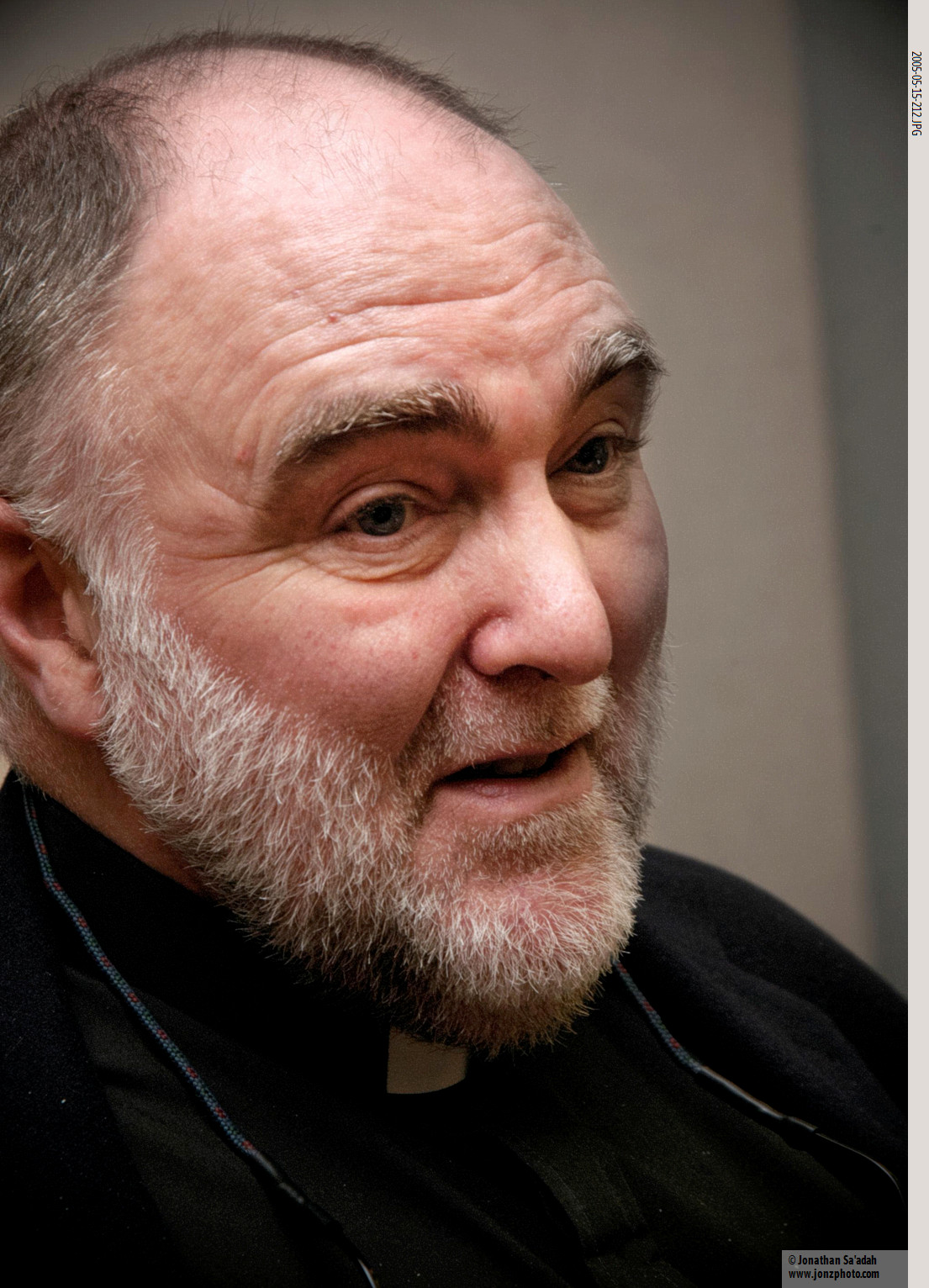
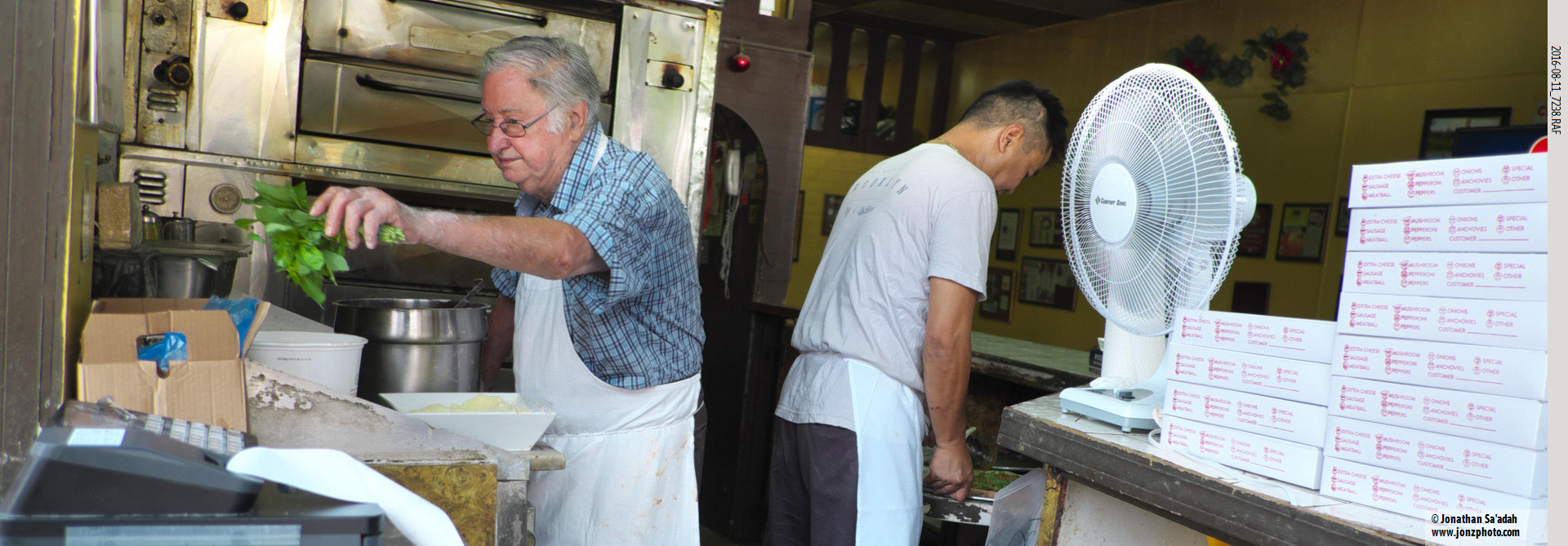
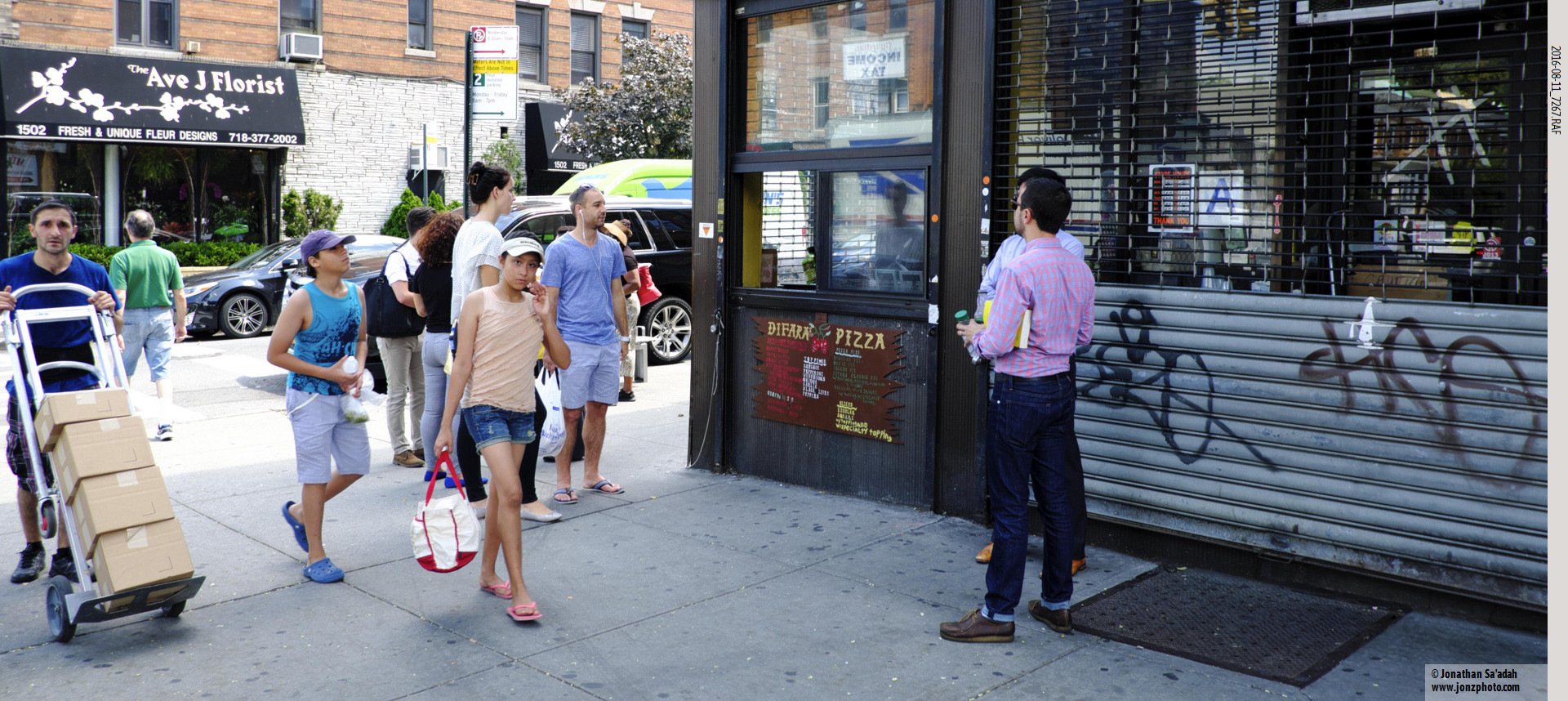
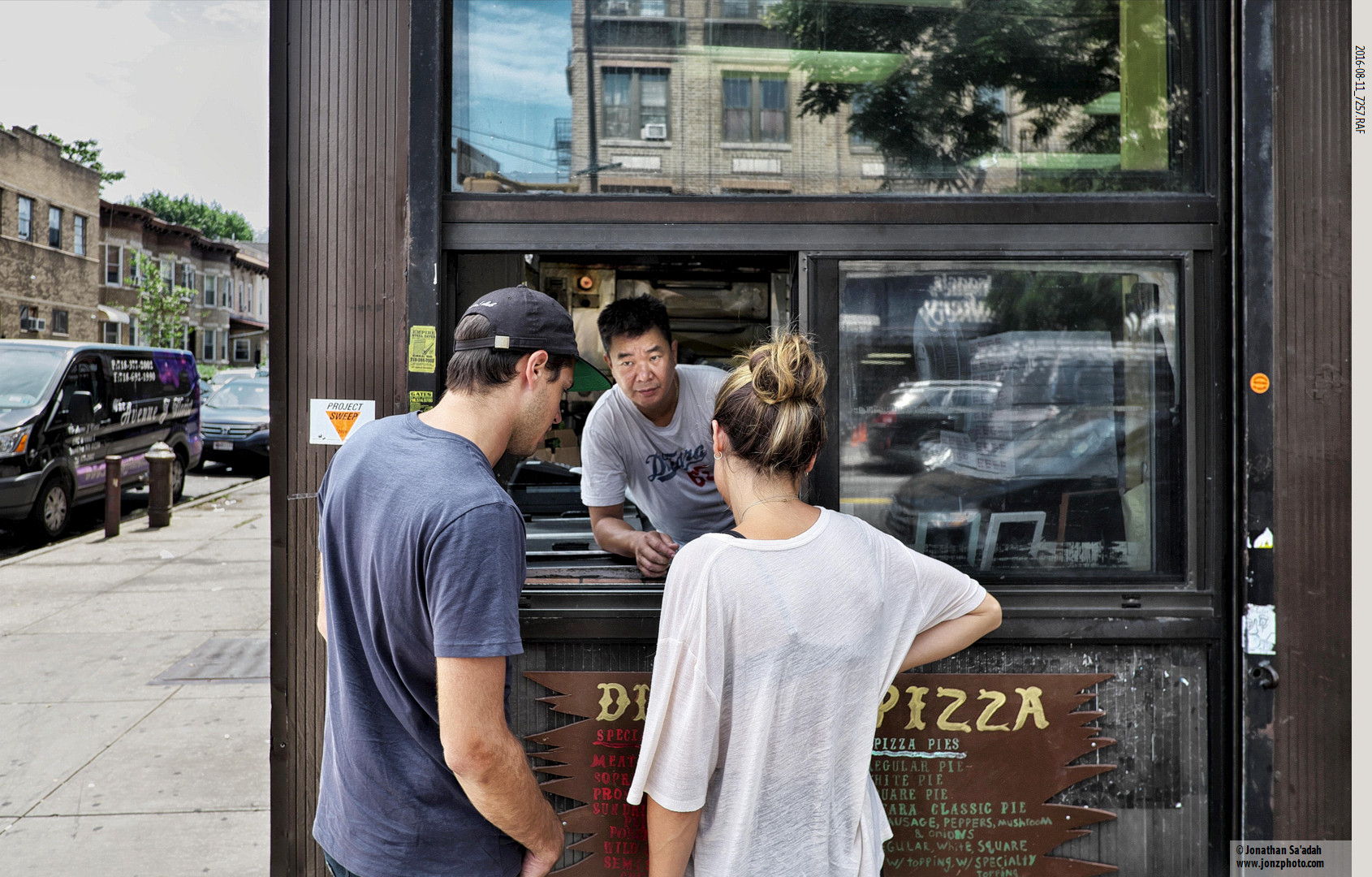
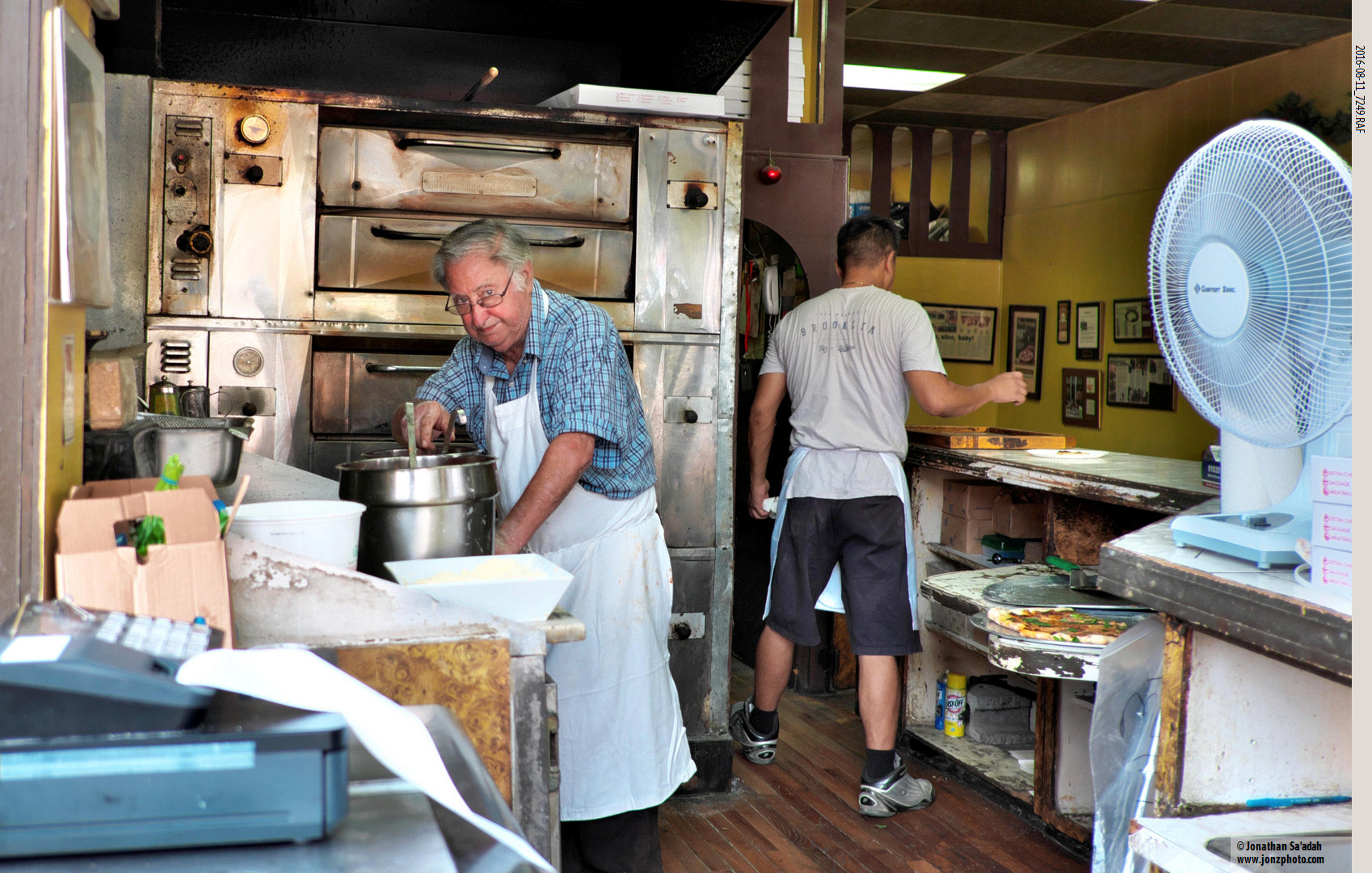
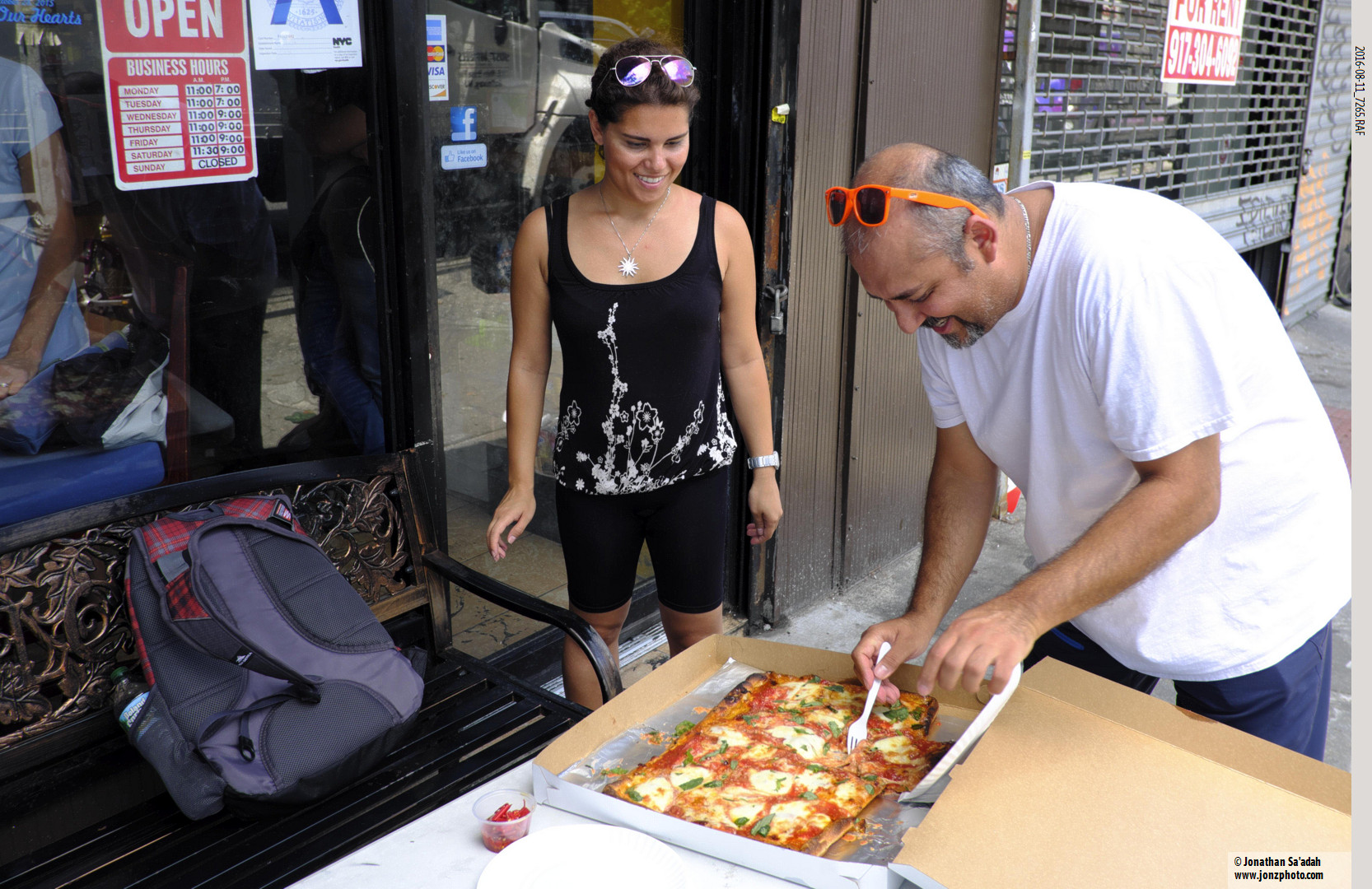
Domenico DeMarco arrived from the Province of Caserta in 1959 and opened his Brooklyn pizzeria in 1965, making pizzas personally by hand for over fifty years. He became a touchstone to younger chefs because of his unwavering commitment to quality. In spite of the recognition, he never stepped out of his working-class background. He died in 2022. I took this picture in 2016.

Pizza’s story in North America is far more complex than the simple tale of an Italian dish finding universal love. While today for many of us pizza ranks among our most beloved foods its journey from the narrow streets of Naples to North American ubiquity carries with it a persistent narrative about class, ethnicity, and the ongoing struggle for acceptance that defines the immigrant experience.

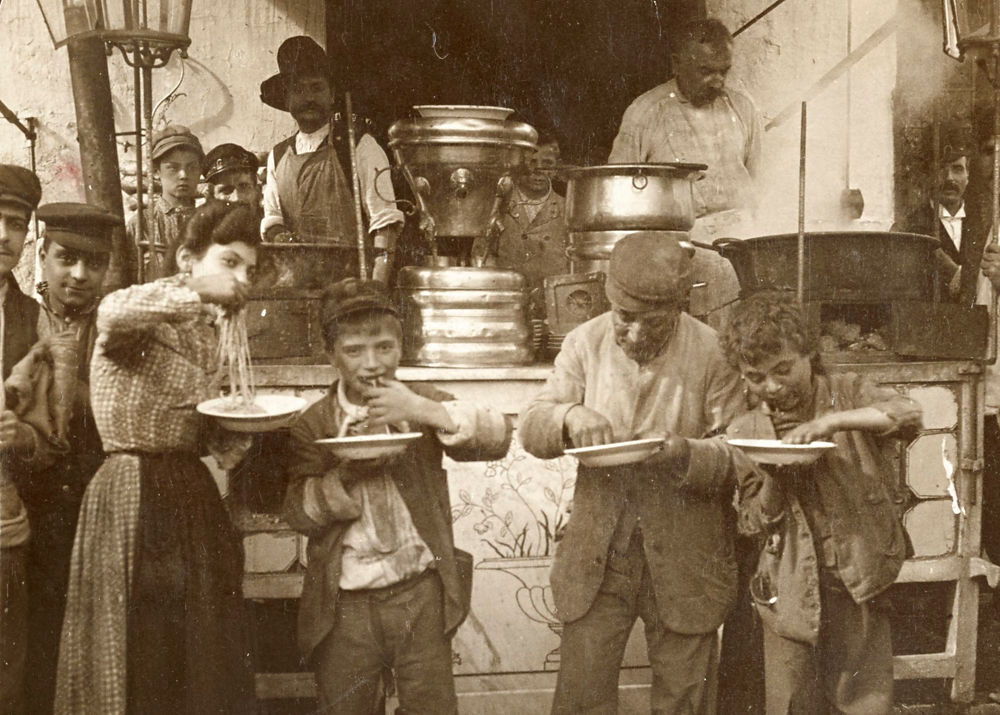
The Lazzaroni (“Happy Beggars”), Naples, Italy, about 1903. (Credit: H.C. White Co. taken from a stereograph, US Library of Congress)

Pizza began as food for society’s most marginalized. In 18th century Naples, pizza served as sustenance for the lazzaroni – the disheveled working poor who flocked to the thriving seaport city seeking labor. These street vendors balanced hot tin stoves on their heads, selling simple flatbreads topped with whatever was affordable: oil, garlic, tomatoes, and occasionally fish or cheese for those with extra coins. The food embodied desperation and survival – Alexandre Dumas noted in 1835 that Naples’ poor “existed exclusively on pizza in winter and watermelon in summer”. Even a credit system emerged called “Pizza al Otto,” allowing the destitute to pay for stale pizza eight days later, grimly nicknamed “the last supper” if they died before settling their debt.

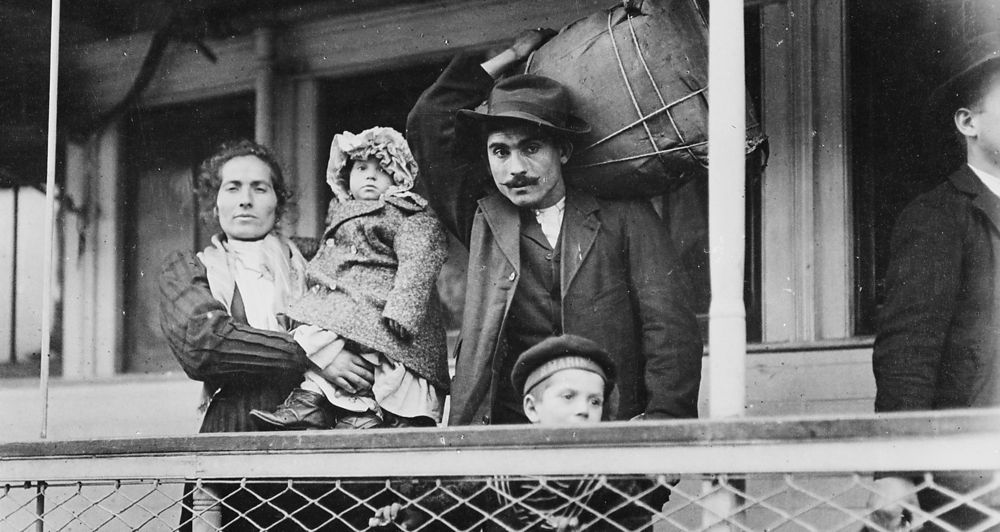
Italian immigrant family on ferry, leaving Ellis Island. (Credit: Lewis Hine, US Library of Congress)

The Double Burden of Ethnicity and Class

When Italian immigrants began arriving in North America during the late 19th and early 20th centuries, they carried with them not just their culinary traditions, but also their association with poverty and marginalization. Between 1880 and 1920, over 4 million Italians immigrated to the United States and about 70,000 to Canada (about 70,000)1, most fleeing the grinding poverty of Southern Italy and Sicily. They encountered hostile societies that viewed them as racially inferior, culturally unassimilable, and dangerously foreign.

Italians faced systematic discrimination that went far beyond mere prejudice. In the US they were subjected to lynchings – approximately 50 documented cases between 1877 and 1920, including the infamous New Orleans massacre of 1891 where eleven Italian men were killed by a mob. The New York Times editorial response to that lynching reveals the depth of anti-Italian sentiment: “These sneaking and cowardly Sicilians, the descendants of bandits and assassins…are to us a pest without mitigation. Our own rattlesnakes are as good citizens as they”.2

Within this climate of hostility, pizza remained what it had always been – food for the poor and marginalized. Italian immigrants, crowded into urban slums and “Little Italy” neighborhoods, continued making pizza as they had in Naples, both as sustenance and as a connection to their homeland. But pizza’s association with these discriminated communities meant it carried a double stigma: it was both the food of the poor and the food of an undesirable ethnic group.

Over time things changed. In the United States those changes were brought on largely by the Second World War, when Italian Americans demonstrated their patriotism through military service and “mainstream” American servicemen encountered pizza in its homeland, returning with appetites for the dish.

In this changing culinary landscape traditional family pizzerias began to form the foundation of the nascent industry. These small, neighborhood establishments – often identified by their red-and-white checkered tablecloths, a symbol that emerged from Italian American restaurant culture rather than authentic Italian tradition – served as both businesses and community gathering places. Operated by immigrant families who worked grueling hours, these pizzerias provided a pathway to economic stability while preserving cultural identity.

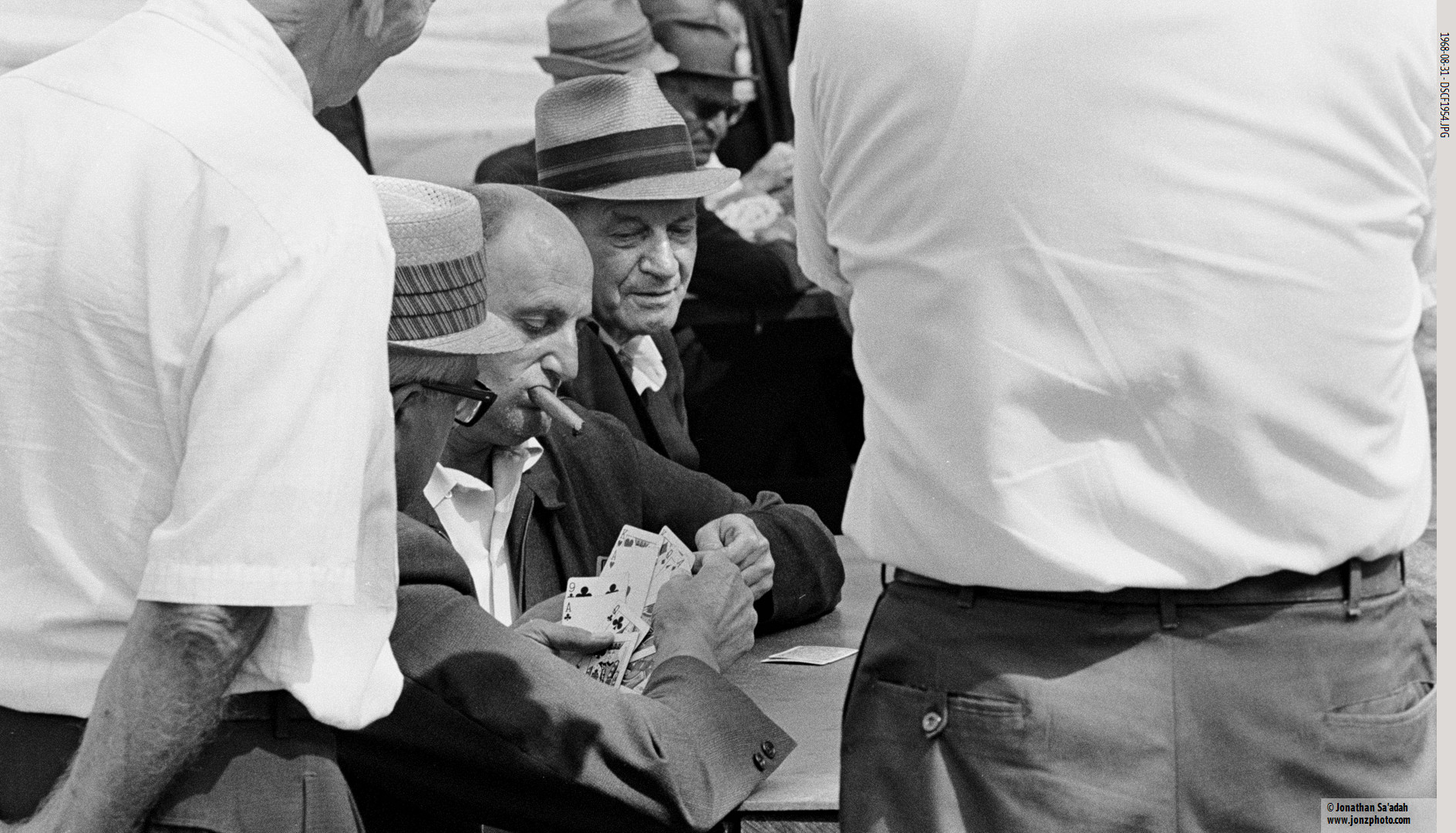
New Haven Green Sunday poker game One of the reasons there was so much good pizza in New Haven was the city’s Italian community. Other US cities such as Chicago, Detroit, Buffalo, Trenton (NJ), Boston, and New York had been magnets for Italian immigration and after WWII those families started outward-facing pizzerias to satiate the newfound American taste for pizza.

The Family Restaurant as Immigrant Vehicle

The small, family-owned pizzeria became a quintessential vehicle for immigrant advancement, offering advantages that few other businesses could provide. Pizza required minimal startup capital, used simple ingredients, and could be learned through family apprenticeship rather than formal training. This business model allowed entire families to work together, with children learning the trade while contributing labor.

These establishments served multiple functions beyond mere commerce. They provided employment for newly arrived relatives, created spaces where Italian was spoken and cultural practices maintained, and generated the capital necessary for families to purchase homes, educate children, and establish themselves in society. The pizza business became a pathway to the success precisely because it built upon skills and traditions immigrants already possessed.

Di Fara Pizza: The Apotheosis of Immigrant Pizza Culture

Di Fara Pizza in Brooklyn represents the perfect embodiment of pizza’s immigrant success story while maintaining its artisanal, working-class character. Domenico DeMarco arrived from the Province of Caserta in 1959 with typical immigrant circumstances – he worked on a Long Island farm before opening his pizzeria in 1965 with partner Franco Farina (whose surname provided the “Fara” in “Di Fara”).

DeMarco’s story exemplifies the immigrant work ethic that built America’s pizza culture. For over 50 years, he worked seven days a week, making each pizza by hand with obsessive attention to detail. He sourced the finest Italian ingredients – San Marzano tomatoes, imported olive oil, fresh basil – creating pies that food critics consistently rated among New York’s best. His dedication was legendary: he rarely took vacations and personally made virtually every pizza sold at Di Fara until well into his seventies.

What makes Di Fara particularly significant is how it bridges pizza’s working-class origins with its elevation to culinary art. DeMarco never abandoned the fundamental character of pizza as accessible, honest food, yet his meticulous craftsmanship attracted celebrities like Leonardo DiCaprio and Anthony Bourdain. The restaurant’s success came not from gentrification or marketing but from unwavering commitment to quality and authenticity.

Di Fara’s never scored a lot of points for “The Restaurant Experience” There was inside “seating” but since this August day was 32c just being able to get a pizza seemed like a victory! Never one to be stopped from selling pies, DeMarco had fans set up near the ovens to cool himself, but it really wasn’t a pizza sort of day.

The Persistent Labels and Continuing Evolution

Despite pizza’s mainstream acceptance, traces of its original stigmas persist in subtle ways. Premium artisanal pizza often emphasizes its “authentic” Italian character, suggesting that standard American pizza remains somehow lesser or inauthentic.

Yet pizza’s success story demonstrates how immigrant foods can break out of their origins while maintaining cultural significance. Today’s pizza landscape includes innovations from subsequent immigrant waves – Indian pizza joints, Lebanese-owned establishments, Mexican-influenced toppings – showing how the model pioneered by Italian immigrants continues serving new generations of fledgling ethnic entrepreneurs.

It’s a long way from Naples to Brooklyn, however, and pizza’s journey reflects the broader immigrant experience – the struggle against prejudice, the gradual building of acceptance, and the transformation of survival strategies into success stories. While pizza may have somewhat shed its reputation as poor people’s food, its institutional memory remains embedded in the thousands of family pizzerias that dot the North American landscape, many representing individual family stories, served up one slice at a time.


1: The Canadian government did not actively encourage Italian immigration during this period, as they were considered “ill-suited to the pioneering lifestyle” and were not the preferred northern European farmers sought to settle the prairies. Instead, most Italian immigrants found work as seasonal laborers on railways and in mining and construction industries.
2: March 15, 1891 New York Times. I can’t link directly to the NYT but here’s a related article.

Posted in Pizza
Tags:

Two City Parks | Montreal Unfiltered

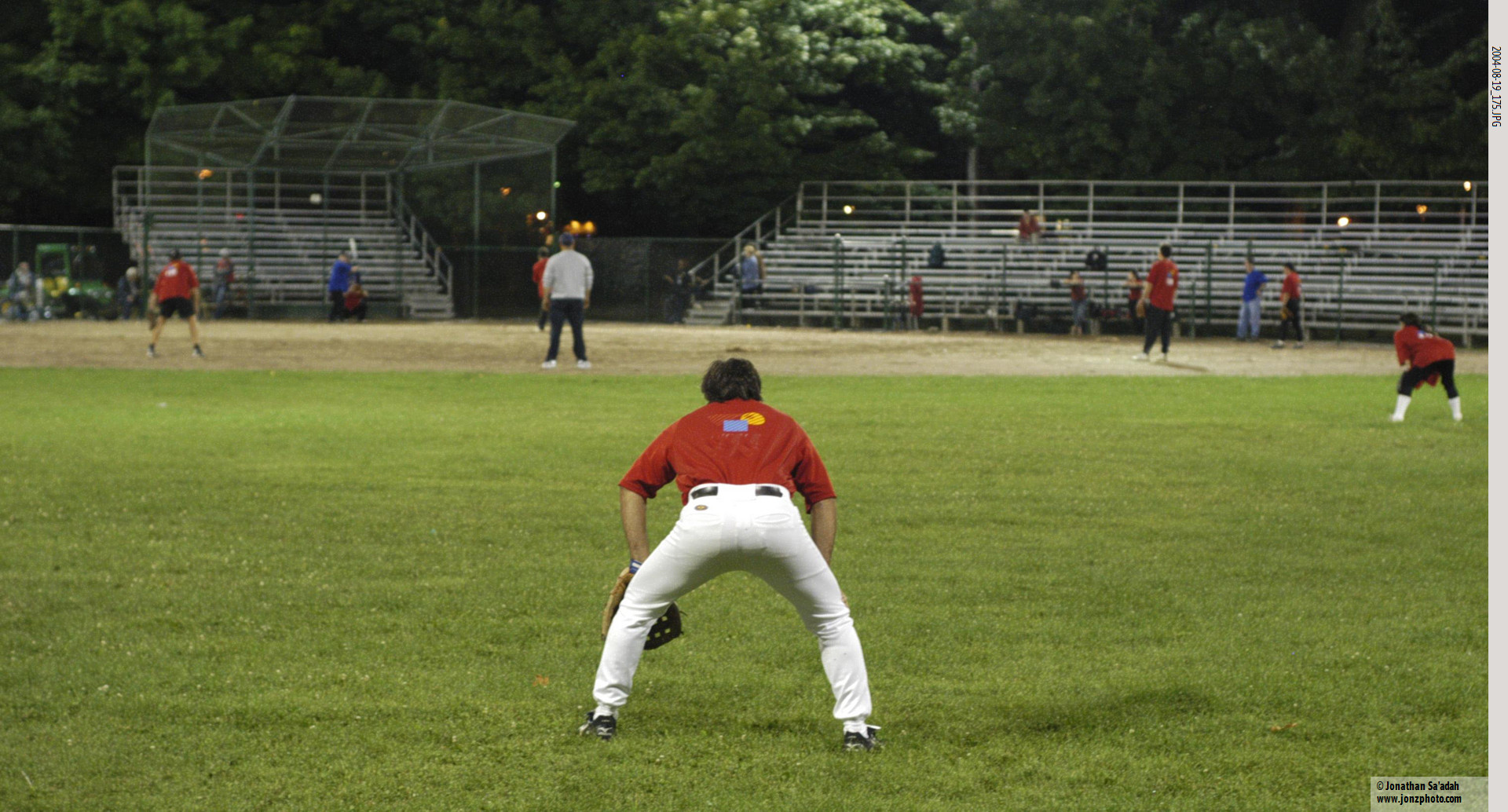
Summer evening softball in Parc Lafontaine

I’ve lived on the edge of two parks in Montreal. The first was an established historic park known for its beauty (Parc Lafontaine), and the second a recently constructed city park (Parc Saidye-Bronfman) where we live now in an “up and coming” neighborhood, the “Triangle” section of Côte-des-neiges. Soon after we moved in we invited a friend from our first neighborhood over and looking out she exhaled “¿That’s a park?!?!!??”.

She’s actually a very kind person, it was just a momentary slip.

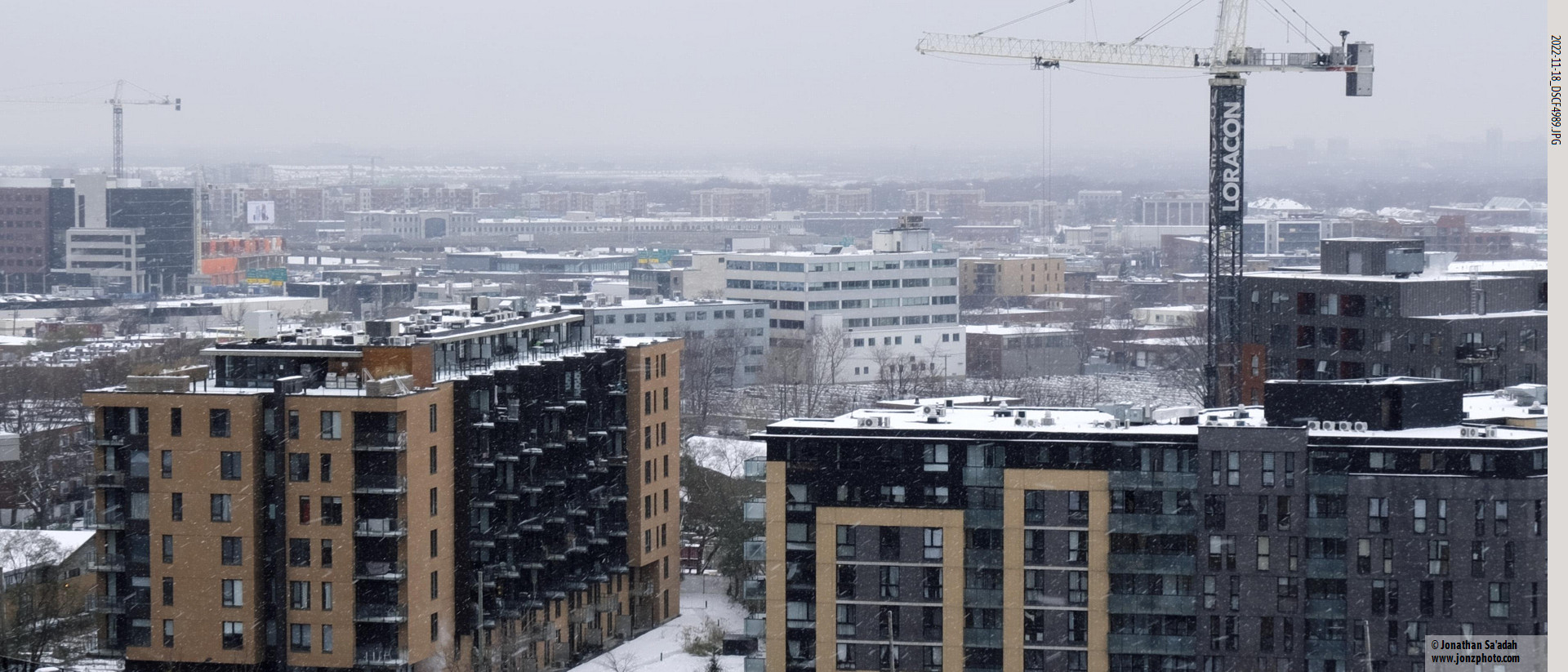
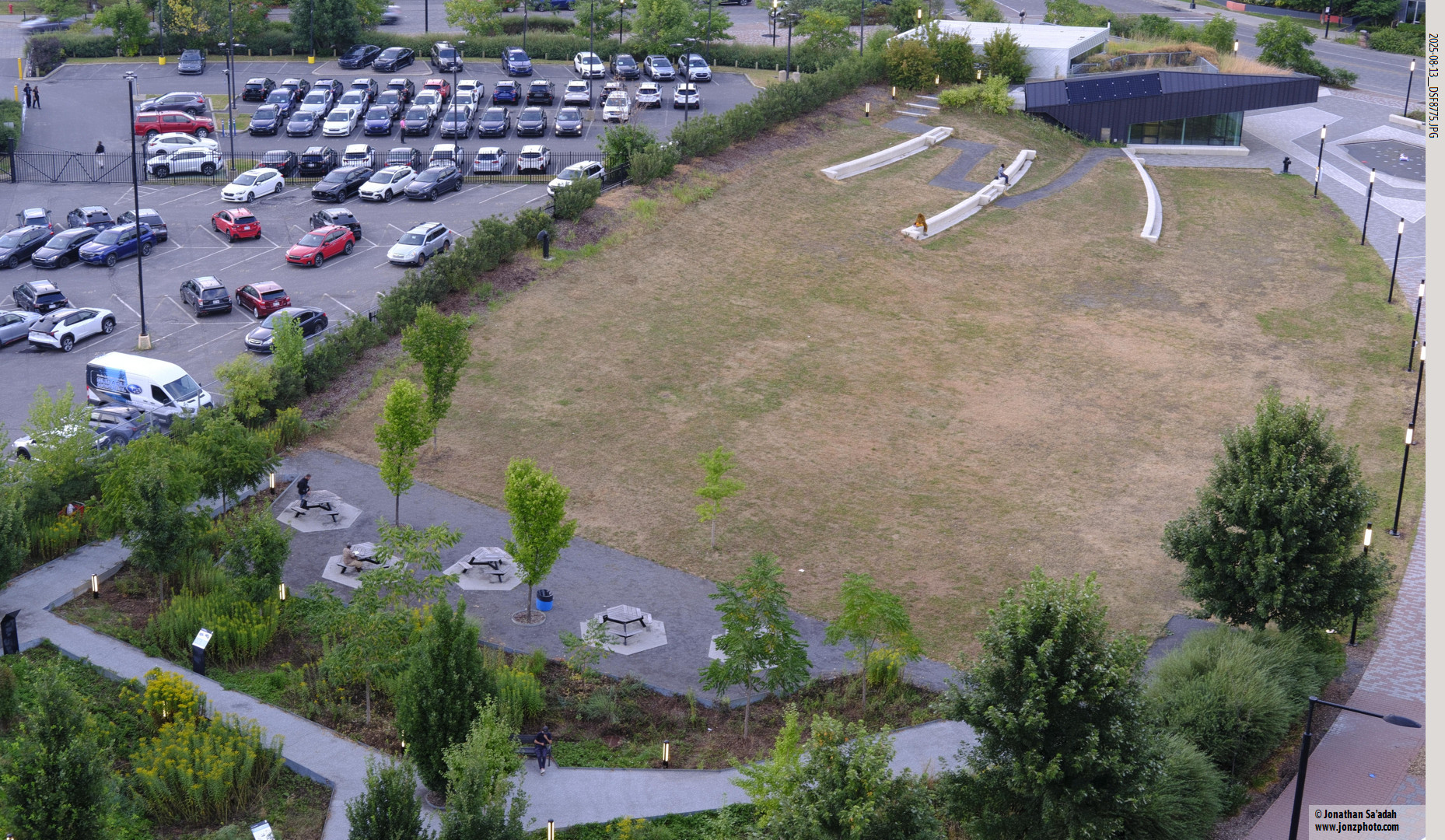
Trucks waiting to be loaded with fill from excavation of a new apartment building. Part of Parc Saidye-Bronfman is visible on the left.

She had a point. It’s not much of a park right now, and it may never be. There’s a difference between a park that inhabits a large parcel of land and evolves over decades, weaving its way into people’s lives, and one that’s a relatively soulless small pocket park, put in because developers are required to tick a box called “green spaces”. The whole thing comes off as if no one really has their heart in it.

Parc Saidye-Bronfman

The history of our present park runs something like this: it was envisioned as being twice its current size (which would still have been small), but somewhere along the way its boundaries got whittled down. It was also planned to showcase the use of indigenous plants, but that too is falling short as the messy natives are uprooted and replaced by fabric cloth and the standard city plantings. It’s a bit like after the check-box we’re moving on.

Beth, who blogs occasionaly about the city with an invariably philosophical and generous eye, goes down when she spots the city gardeners. They hem and haw, in the end sighing and saying they’re just doing what they are ordered to do (and “could she write a letter….”) But I wonder what the real story is, and what it is we will probably never know.

What I do know is that humans need places where they can exhale a little, and it’s in parks where the air tastes a little greener and the asphalt recedes enough that you can hear your own heartbeat. I do miss Parc Lafontaine where I used to go out for an early morning and walk on damp paths, hearing children chattering on their way to school. It’s too bad that in these new neighborhoods the city more often than not bows to developer’s wishes rather than taking a long step back and acting with a vision that’s more than a future of promised bike paths and trolleys and two-lane roads, which won’t work. Parks matter because cities are not built of steel and ambition alone. We need the quiet space true parks give. We need green sanctuaries where the earth remembers itself, and invites us to remember it too, even if it is a bit messy.

Posted in Montreal, Montreal Unfiltered, Parks
Tags:

Untold Stories Behind Joseph Losey’s M Klein: When Art Meets History

This is the lead post for a detailed series exploring the making of Joseph Losey’s M Klein. Each post reveals new layers of this remarkable collaborative achievement – from the personal journeys of its creators to the technical innovations that brought their vision to life, from the political courage required to tell unpopular truths to the artistic strategies that made those truths unforgettable. Jump to Table of Contents

Hoping to catch a glimpse of a star Crowds often gathered hoping to see Alain Delon. Here they were lucky – his driver parked across the street and so he could briefly be seen entering a building.

When Joseph Losey set out to make M Klein in 1975, he wasn’t just directing another film about wartime France – he was orchestrating a deeply personal project that brought together artists and professionals who had lived through the very persecution they were depicting on screen. The behind-the-scenes story of this masterpiece reveals how committed professionals transformed their own trauma into cinematic truth, creating one of cinema’s most powerful explorations of identity and complicity.

When the Persecuted Make Films About Persecution

The most remarkable aspect of M Klein‘s production wasn’t its star power or budget – it was the extraordinary convergence of people whose lives had been shaped by the events they were recreating. Margot Capelier, the Casting Director, was born into a Jewish family in Paris and had lived through the Nazi occupation, losing family members in the Holocaust. Alexandre Trauner, the Art Director, was a Hungarian Jew living in Paris who had fled to southern France to escape the occupation, working clandestinely in the underground resistance. Lucie Lichtig, the Continuity Director, was Jewish and active in the Alliance branch of the Resistance. Finally, Claude Lyon, the head of the film lab (LTC) used by Losey, lost his mother.

▲ Three Vichy fonctionnaires prepared and waiting for a city-wide police planning session for the roundup of Jews. The wall-art often came from personal collections; this mural was only briefly visible in the scene.

Even Joseph Losey himself brought personal understanding of persecution, having been blacklisted from Hollywood during the McCarthy era and forced into European exile. This wasn’t just professional film-making – it was a gathering of survivors using their craft to ensure these stories would never be forgotten.

The Challenges That Created Cinema Magic

M Klein was notorious for its production challenges, but these obstacles also created camaraderie and a feeling of accomplishment. Some of the film’s most memorable moments came out of pure chaos. When rare snow began falling in Paris – the entire crew had to scramble to protect the equipment and the day had to be rescheduled, turning what should have been a routine day into a logistical nightmare. The awful, insect and rodent infested building on 42 rue des Panoyaux, where Klein searches for his Jewish double, was so unstable that the city required engineering work just to make it safe to enter – not that anyone wanted to. Still, getting the work done at that location was another credit to everyone, and contributed to the film.

In Strasbourg, the canal location that had been carefully scouted proved impossible for the planned tracking shots due to rough cobblestone surfaces, forcing the crew to hastily “modify” a Citroën Deux Chevaux with a camera mounted through its sunroof. These weren’t just production problems – they were challenges that the team reacted to – and they elevated the production by requiring creative teamwork to find solutions.

Challenges The camera is mounted on a Citroën Deux Chevaux to compensate for the uneven surface of the cobblestones which have been hastily covered with sand. Losey, back to the camera, has the best angle to see the action, as the cameraman films from his precarious position, wedged in the sunroof of the car.

The Invisible Artisans Who Helped Shape a Masterpiece

Behind every great film are the craftspeople whose contributions often go unrecognized. Reginald Beck, who had edited eighteen of Losey’s films, couldn’t even receive proper screen credit for M Klein due to British union regulations, despite being the actual editor of the film. Gerry Fisher, the cinematographer on his sixth collaboration with Losey, had developed such an intuitive understanding with the director that they barely needed to speak during setups.

Frantz Salieri, the multi-discipline artist who created the film’s pivotal cabaret scene, brought his own radical theatrical background to ensure the anti-Semitic content would be read as critique rather than endorsement – using male actors in female roles to prevent actual racists from finding the performances appealing.

▲ Frantz Salieri in rehearsal. The man in the bowler hat played the awful clown, and members of the “chorus line” are seated on the bench. Salieri worked with members of his own troupe, professional dancers, and actors from the cast to create the cabaret show.

The Art of Turning Constraint into Creativity

The most fascinating aspect of M Klein‘s production was how limitations became opportunities. When star Alain Delon walked off the set in anger on January 20, 1976, threatening the film’s completion, Losey’s professional integrity and honest communication brought him back. When the cramped quarters of La Nouvelle Eve cabaret made filming nearly impossible, the tight spaces actually enhanced the claustrophobic atmosphere the scene required.

The decision to use thirty-two locations throughout Paris, despite production company resistance about costs and complexity, gave the film a level of authenticity that studio work could never achieve. Each challenge became part of the film’s DNA, contributing to its lasting power and relevance. They were intangibles that were created through Losey’s intransigence, and they made a big difference.

▲ First Assistant Director Philippe Monnier coaching French “gendarmes” in an early-morning recreation Vel’ d’Hive Roundup, which happened in the middle of July, 1942. The scene also involved many cars and police wagons from the period. The Roundup was ordered by the German Nazis, but carried out by the French.

Why These Stories Matter

The making of M Klein reveals something profound about the relationship between art and history. This wasn’t just a film about the Holocaust – it was created by people who had lived through persecution, who understood from experience what it meant to be suddenly classified as “other,” to have your identity questioned, to become a stranger in your own country.

Every aspect of the production – from Margot Capelier’s casting choices informed by her own survival, to Alexandre Trauner’s intimate knowledge of wartime Paris, to Losey’s understanding of what it meant to be politically exiled – was shaped by lived experience of the themes the film explored.

The complete story of M Klein‘s creation offers a masterclass in how artists can transform personal trauma into universal truth, how technical challenges can become creative opportunities, and how the most powerful cinema often emerges from the most difficult circumstances.

Links to all the posts in this series

1. Joseph Losey: The Blacklisted American Director Who Found Redemption in European Cinema
2. Alexandre Trauner and Joseph Losey: Crafting the World of M Klein
3. Reginald Beck: Invisible Artisan of Cinema
4. The Artful Eye: Gerry Fisher’s Cinematographic Journey
5. Laughter in the shadows: The chilling cabaret scene of M Klein
6. Homage to Margot Capelier, Casting Director for M Klein
7. Exploring location shooting in Joseph Losey’s M Klein
8. Joseph Losey’s film M Klein: A behind-the-scenes look
▲ Pierre-William Glenn, the strong, athletic camera operator was the person actually behind the camera, directed by Gerry Fisher, the cinematographer.

Some other sources about Joseph Losey

Barthel, Joan. “I’m an American, for God’s Sake!” New York Times  (1923-), March 26, 1967. ProQuest Historical Newspapers: The New York Times.

Caute, David. Joseph Losey: A Revenge on Life. New York: Oxford University Press, 1994.

Film Director Joseph Losey and Playwright Harold Pinter Discuss “Accident”, 1967, 2024. https://www.youtube.com/watch?v=hhQQ-wBSQkI.

Joseph Losey : Je n’irai Pas En Angleterre, 2012. https://www.youtube.com/watch?v=gTLxYCVUfSU.

Joseph Losey Tribute, 2018. https://www.youtube.com/watch?v=IMNxtkGpWtc.

Losey, Joseph. Conversations with Losey. Edited by Michel Ciment. London ; New York: Methuen, 1985.

Posted in Europe, Joseph Losey, Paris
Tags: , ,

I love pizza!

▲ One of my home-made pizzas, ready to eat.

I love pizza. I don’t remember how this romance started, perhaps it was because of a stint I spent when I was young living near New Haven, Connecticut. My mother was reaching the point in her life where she was resenting cooking (though she was a great cook) and I filled in the spaces with pepperoni pizzas from a nearby pizza joint, named (as they always were at the time) “Tony’s Pizza”. I still remember the hot ovens with the smell of tomato and oregano with the rudimentary counter, all the boxes stacked up against the wall. Each pie “Tony” made for me was a perfectly rendered American pepperoni pizza. I don’t remember ever ordering anything else. I think a 12″ round cost $2.70 US. Those were the days.

Frank Pepe’s in the 1980s. Pepe’s is still going strong, though it doesn’t look much like this any more. I like the vents above the ovens (coal fired). The stains on the ceramic bricks indicate that worker health may have been an issue.

My range increases

When I got so I could drive New Haven came into the picture where there were legendary pizza “restaurants”. My favorite was Frank Pepe’s. I usually hated clams but for some reason at Pepe’s my favorite was their white pizza, spread with a generous helping of the slimy little animals. It was probably the garlic, olive oil, and the parmesan (romano?) that attracted me, a sure combination. Pepe didn’t go in for any obvious aesthetic. The pizza was served on a rectangular aluminum serving tray with parchment paper, and there were diner-style booths for sitting. But the crust was to die for. Pepe had a legendary coal oven with a baking chamber the size of a small car, and to add to the drama pizzas were placed in it with ultra-long-handled peels. I’ve never seen another place quite like Pepe’s. The crusts came out a bit charred; not pretending to be a Naples ripoffs but being happy just being themselves, as they should have been.

Moving north from Connecticut

But I didn’t last long in Connecticut, and further north in Greenfield Massachusetts was a non-imposing but favorite stop on my pizza journey called “Village Pizza”. It was run by a welcoming family who in retrospect seem like they were Greek and the pizzas were traditional style, a bit like Tony’s. Either I had graduated to more sophisticated toppings by then or it was just a fancier place. My friend Stephen, who went on to be a food editor, found the place and for years I’d stop every time I was going by Greenfield. There were seats to sit down, but for me it was more a place to drop in on while driving north on I-91 and get back on the road with the warm smell of a fresh pizza filling the car. Nothing could be better.

The wasteland that was Vermont

But “north”, where I was living, was Vermont and there no one had heard of pizza in the early 70s, unless it came as a dry frozen food relic. In those days you were lucky if you could find green vegetables in stores. I mostly ate food out of a food coop called The Do-It store. It was in 1973 when I tried baking my first home-made pizza. The girlfriend I had then fed me mostly a sludge of something called “Tiger’s Milk” and I was desperate for anything that came from the shores of the Mediterranean. My cooking skills were about as limited as the available ingredients. But to augment our diet along with the Tiger’s Milk we had a cookbook by Frances Moore Lappé called “Diet for a Small Planet”. The cookbook was pushing some theory of complementary grain proteins but more importantly, for me, it had a pizza “recipe”. Unfortunately the ingredient list called for a mostly cornmeal crust. I remember laboring over this inedible monstrosity of a recipe for several months before I concluded that it wasn’t for me, as were a lot of the other recipes in that book. We split up before I died of hunger but it was shortly after that time that I started doing wheat-crust pizzas. By the late 70s I had my own pizza peel and was regularly smoking up the kitchen with my then-messy technique.

▲ They invited me over to make pizza, I put their oven on fire. Early (1985) experiments in high temperature crusts.

Putting pizza into context

My patient and loving wife, Beth, has eaten what we calculate to be between 2 and 3 thousand of those pizzas since the late 70s. Wherever we travel we look for good pizza, from non-presumptuous joints to fancy sit-down restos. I love other people’s pizzas too and have friends who make wonderful renditions. Tia, whose family roots extend into Chicago, makes a fantastic deep-dish that we always laugh wildly over. Her husband, who is Italian, loves pizza too (of course) and he and I have pizza-eaten together as far west as Anaheim CA in our shared journey. Closer to home, Ed makes a wonderful Naples ripoff in his super-charged backyard oven. In New York I was friends with a guy who worked at John’s when it was first starting up, and there the waiters (including him, he was one) used to get up on the tables and dance, so there was never any lack of excitement. So I have really good pizza friends, and at the top among them is Beth.

Pizza as a universal food source

I know that pizza is a topic a lot of people have strong opinions about, so I think it would be fun to do an intermittent series of posts about my journey through pizza. Cooking it, searching for the perfect pizza, and sharing our pizza journeys and the love of the warm smell of a freshly baked pie, along with recipes.

▲ Basil, ready for a Margherita pizza.

Posted in Food, Pizza
Tags:

Joseph Losey: The Blacklisted American Director Who Found Redemption in European Cinema

Hollywood exile Joseph Losey transformed from a promising American filmmaker into one of Europe’s most celebrated auteurs after fleeing McCarthyism in the 1950s. His journey from blacklisted director to celebrated European master of psychological cinema reveals both the destructive power of political persecution and the resilience of artistic vision.

Decades after his death, critical studies continue to emerge about Joseph Losey’s work and life. In an industry where few directors achieve lasting recognition, Losey’s enduring influence stems from his unique position as an American artist who found his voice in European exile, creating films that bridged continental sensibilities with Hollywood craftsmanship.

▲ Joseph Losey as guest professor at Dartmouth College, 1970, in his first trip back to the United States after his forced departure due to blacklisting. He was given an honorary doctorate by the college three years later.

From Privilege to Exile: The Making of an Artist

Born into a family with a history of wealth and privilege, Losey’s immediate circumstances were more modest. His grandfather had not bequeathed his fortune to Losey’s father, Joseph Losey II, who worked as a claim agent for the Burlington Railroad after failing to complete college. Despite reduced circumstances, Losey grew up surrounded by culture and arts through his aunt’s connections in La Crosse, Wisconsin. Her home was a large estate where renowned musicians like Sergei Rachmaninoff and Jascha Heifetz would stay (and rehearse) when they visited the city for performances.

This early exposure to high culture shaped Losey’s artistic sensibilities. He pursued undergraduate studies at Dartmouth and graduate work at Harvard, later traveling to Russia to study film. Upon returning to the United States, he was hired by Hallie Flanagan, National Director of the Federal Theater Project, to work on the groundbreaking Living Newspaper project in New York. The work, already controversial with right-wing critics, would later contribute to his political troubles.

Losey’s career trajectory seemed destined for success when Dore Schary, head of production at RKO, offered him his first directorial position in 1948. However, his fortunes changed dramatically when Howard Hughes acquired controlling interest in RKO. Hughes offered Losey a “poison chalice” – directing I Married a Communist – which Losey categorically refused. This decision effectively ended his relationship with RKO. A year later, and after much trouble, he was released from his contract and allowed to work for Paramont, but by then J. Edgar Hoover’s FBI had flagged him as a communist sympathizer.

The European Renaissance

Rather than testify before Joseph McCarthy’s committee and implicate fellow leftists, Losey chose exile. His departure from the United States was hurried and unplanned, arriving in Europe without work and with tenuous legal status. His passport renewals were always uncertain, often valid for only two years, and work permits presented constant challenges.

The early European years were marked by financial hardship and professional humiliation. Losey directed low-budget genre films under pseudonyms to protect his collaborators from blacklisting. Yet these difficult circumstances proved transformative. The European film industry, particularly French critics, proved more receptive to his evolving style as he developed the complex themes of alienation, outsider status, and social critique that would define his mature work.

▲ Losey being interviewed for French TV in 1976. The striped tents in the background were used for dressing and makeup of the over 2,000 extras who were used in the stade scene filmed at the Vélodrome Municipal de Vincennes in the eastern part of Paris.

Despite the constraints, Losey repeatedly found projects that resonated with his moral and political beliefs. He later acknowledged that being blacklisted had been a blessing, removing him from Hollywood’s commercial temptations and allowing him to develop as a serious filmmaker. His European period saw acclaimed collaborations with screenwriter Harold Pinter on The Servant, Accident, and The Go-Between.

▲ Losey at Usine Citroën. The scene filmed here, when Klein is searching for his double’s girlfriend, was one of the few places in the film where Losey allowed a sympathetic view of humanity to show through the female workers in the wartime factory.

The M Klein Production: A Career Pinnacle

By 1975, when Losey began work on M Klein in France, he had established himself as a major auteur in European cinema. The project came to him through actor Alain Delon, who owned the rights to the screenplay. Losey heard that Greek director Costa-Gavras had declined directing the film, and he contacted Delon. Delon was eager to work with a recognized auteur to enhance his serious acting credentials. Having previously collaborated successfully with Losey on The Assassination of Trotsky, the project went forward.

Losey’s personal history of political persecution and exile deeply informed his approach to M Klein, a film exploring themes of identity, persecution, and moral complicity in wartime France. Before production began, he worked with screenwriter Franco Solinas in the Italian coastal town of Fregene, with his wife Patricia serving as translator. Losey significantly revised the script, cutting an hour of material to create greater intensity and developing characters more fully, particularly the female roles.

The production process revealed Losey’s meticulous approach to film-making. His days began at 6:30 AM and extended past 7:00 PM with dailies, followed by planning for upcoming filming, business negotiations, and correspondence. The demanding schedule reflected his total commitment to the craft, a work ethic that impressed cast and crew alike.

The Director’s Burden and Vision

Losey’s approach to directing embodied the complex demands of the role – balancing financing, writing, casting, and countless daily decisions while maintaining artistic vision under commercial pressure. His reputation for integrity and refusal to compromise attracted top professionals who knew he would “stick to his guns.”

The production of M Klein exemplified these qualities. From the first day of shooting at Cachan, where actress Isabelle Sadoyan performed a brutal nude scene under carefully controlled conditions, Losey established a tone of mutual respect and professionalism. The international crew, including professionals from England, France, and Italy, responded to his leadership with enthusiasm and dedication.

▲ Preparing to film at Cachan, south of Paris. Actress Isabelle Sadoyan is on the left in the robe, and far right Patricia Losey is just visible. This was the first day of filming and set the tone for the entire eight-week shooting schedule.

Not every aspect of production went smoothly. On January 20, 1976, Alain Delon left the production in anger, threatening the film’s completion. Yet through Losey’s consistent honesty and professional integrity Delon was brought back in. Losey built sufficient trust among his collaborators to overcome such crises. He neither pulled punches nor compromised the truth, qualities that sustained his reputation throughout his career.

Legacy of an Artist in Exile

Joseph Losey’s career represents a unique trajectory in cinema history – an American artist who found his authentic voice only after being forced from his homeland. His story illustrates both the destructive power of political persecution and the possibility of artistic redemption through exile. The films he created in Europe, particularly his collaborations with Harold Pinter and works like M Klein, demonstrate how personal adversity can fuel artistic achievement.

Losey’s enduring influence lies not just in his films but in his embodiment of the artist as exile – someone who transformed displacement into creative advantage. His work continues to resonate with contemporary audiences because it addresses universal themes of alienation, identity, and moral choice while maintaining the technical excellence and narrative sophistication that mark great cinema.

The blacklisted director who fled McCarthyism ultimately created a body of work that stands as testament to artistic integrity. In losing his American career, Joseph Losey found his authentic voice as a filmmaker, proving that sometimes the greatest creative breakthroughs emerge from the most challenging circumstances.


Joseph Losey’s films

Date of releaseFilmCountry
1948The Boy with Green HairUnited States
1950The LawlessUnited States
1951MUnited States
1951The ProwlerUnited States
1951The Big NightUnited States
1952Stranger on the ProwlItaly
1954The Sleeping TigerUnited Kingdom
1956The Intimate StrangerUnited Kingdom
1957Time Without PityUnited Kingdom
1958The Gypsy and the GentlemanUnited Kingdom
1959Blind DateUnited Kingdom
1960The CriminalUnited Kingdom
1962EvaItaly/France
1963The DamnedUnited Kingdom
1963The ServantUnited Kingdom
1964King & CountryUnited Kingdom
1966Modesty BlaiseUnited Kingdom
1967AccidentUnited Kingdom
1968Boom!United Kingdom
1968Secret CeremonyUnited Kingdom
1970Figures in a LandscapeUnited Kingdom
1971The Go-BetweenUnited Kingdom
1972The Assassination of TrotskyItaly/France/United Kingdom
1973A Doll's HouseUnited Kingdom
1975The Romantic EnglishwomanUnited Kingdom
1975GalileoUnited Kingdom
1976Monsieur KleinFrance
1978Roads to the SouthFrance
1979Don GiovanniItaly/France
1982La TruiteFrance
1985SteamingUnited Kingdom

More about Joseph Losey

Archer, Eugene. “Expatriate Retraces His Steps: Joseph Losey Changes Direction with His British ‘Servant.’” New York Times (1923-), March 15, 1964. 115707295. ProQuest Historical Newspapers: The New York Times.

Barthel, Joan. “I’m an American, for God’s Sake!” New York Times (1923-), March 26, 1967. ProQuest Historical Newspapers: The New York Times.

“BFI Screenonline: Losey, Joseph (1909-1984) Biography.” Accessed January 23, 2024. http://www.screenonline.org.uk/people/id/451136/index.html.

Canby, Vincent. “Cool, Elegant ‘Mr. Klein’ Is a Metaphorical Movie.” New York Times (1923-), 1977, 44.

Caute, David. Joseph Losey: A Revenge on Life. New York: Oxford University Press, 1994.

Ciment, Michel. Michel Ciment Interview Losey in Paris, 1976.

Film Director Joseph Losey and Playwright Harold Pinter Discuss “Accident”, 1967, 2024. https://www.youtube.com/watch?v=hhQQ-wBSQkI.

Galileo Protal. “Life of Galileo with Bertolt Brecht.” Museum, 2010. https://portalegalileo.museogalileo.it/egjr.asp?c=36300.

Gardner, Colin. “Joseph Losey.” In Joseph Losey, 1st ed. Manchester Film Studies. Manchester, UK: Manchester University Press, 2019.

Gavrik Losey, Son of Elizabeth Hawes, Oral History Interview, 2016 September 12, 2016. https://www.youtube.com/watch?v=yZkZTxWgMO8.

Goldberg, Eva. “Politics in American Popular Culture.” American Popular Culture. Accessed July 2, 2025. https://americanpopularculture.com/archive/politics/galileo.htm.

Goodman, Ezra. “Meet Pete-Roleum.” Sight and Sound, London: British Film Institute, Summer 1939. 1305505140. ProQuest One Literature.

Houston, Beverle, and Marsha Kinder. “The Losey-Pinter Collaboration.” Film Quarterly 32, no. 1 (1978): 17–30. https://doi.org/10.2307/1211896.

Houston, Penelope, and John Gillett. “Conversations with Nicholas Ray and Joseph Losey.” Sight and Sound, London: British Film Institute, Fall 1961. 1305505087. ProQuest One Literature.

Joseph Losey : Je n’irai Pas En Angleterre, 2012. https://www.youtube.com/watch?v=gTLxYCVUfSU.

Joseph Losey Tribute, 2018. https://www.youtube.com/watch?v=IMNxtkGpWtc.

Losey, Gavrik. Gavrik Losey Interview. The British Entertainment History Project, 2019. https://historyproject.org.uk/interview/gavrik-losey.

Losey, Joseph. Conversations with Losey. Edited by Michel Ciment. London ; New York: Methuen, 1985.

Palmer, James. The Films of Joseph Losey. Cambridge Film Classics. Cambridge: University Press, 1993.

Prime, Rebecca. “‘The Old Bogey’: The Hollywood Blacklist in Europe.” Film History: An International Journal, Indiana University Press, 2008.

Sarris, Andrew. . . . “. . . And the Man Who Made It: Joseph Losey.” New York Times (1923-), November 17, 1968. 118367559. ProQuest Historical Newspapers: The New York Times.

Weiss, Jason. “Screenwriters, Critics and Ambiguity: An Interview with Joseph Losey.” Cineaste Publishers, Inc., 1983.

Posted in Artists, Europe, Joseph Losey
Tags: , ,


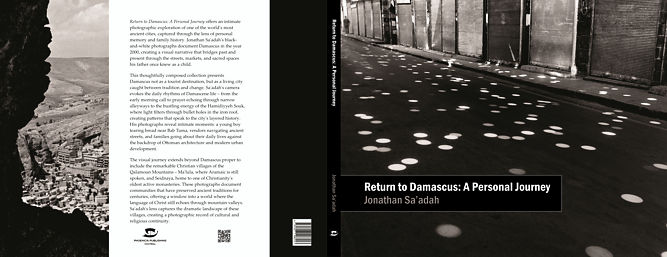
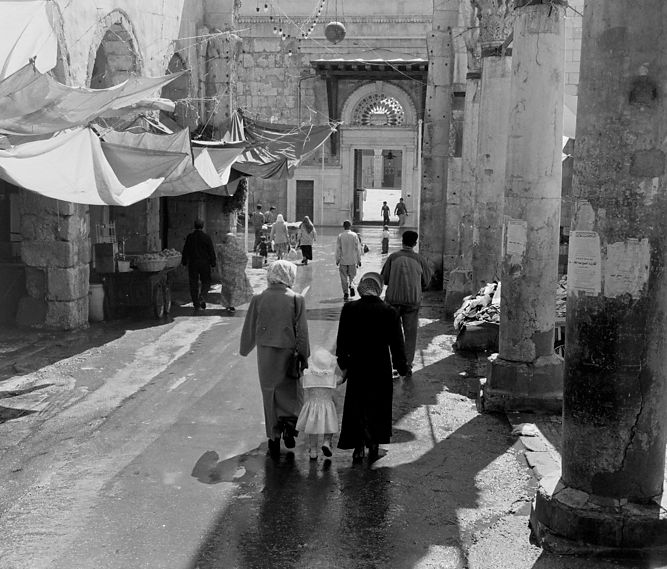
Return to Damascus is my new book of photographs, available for order, that preserves fleeting impressions and the spirit of a place through the lens. Accompanied by brief reflections and memories, the photographs offer a tribute to the place and its people, focusing on enduring character and the subtle interplay of light, architecture, and tradition. Return to Damascus is a quiet celebration of observation and memory, inviting viewers to participate.

custom styled page
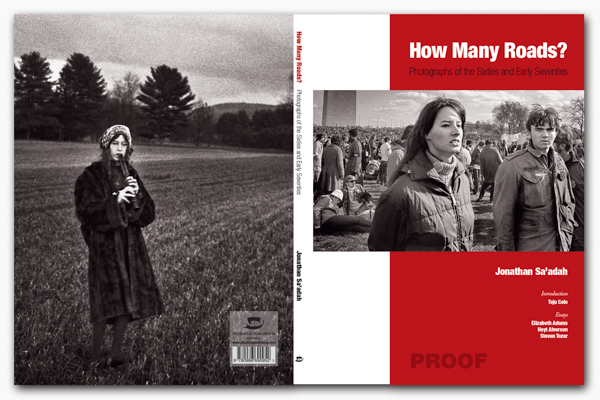
How Many Roads? is a book of photographs by Jonathan Sa'adah, available for order, offering an unglossy but deeply human view of the period from 1968 to 1975 in richly detailed, observant images that have poignant resonance with the present. Ninety-one sepia photographs reproduced with an introduction by Teju Cole, essays by Beth Adams, Hoyt Alverson, and Steven Tozer, and a preface by the photographer.
If you'd like more information, please have a look at this page.
Jonathan's photo blog

Sign up to receive an email
each time I post new content

Please check your email for a confirming link to click on.

No spam! Read my privacy policy for more info.

To see more work
To visit my blog

Contact information

All material © Jonathan Sa'adah no use without written permission