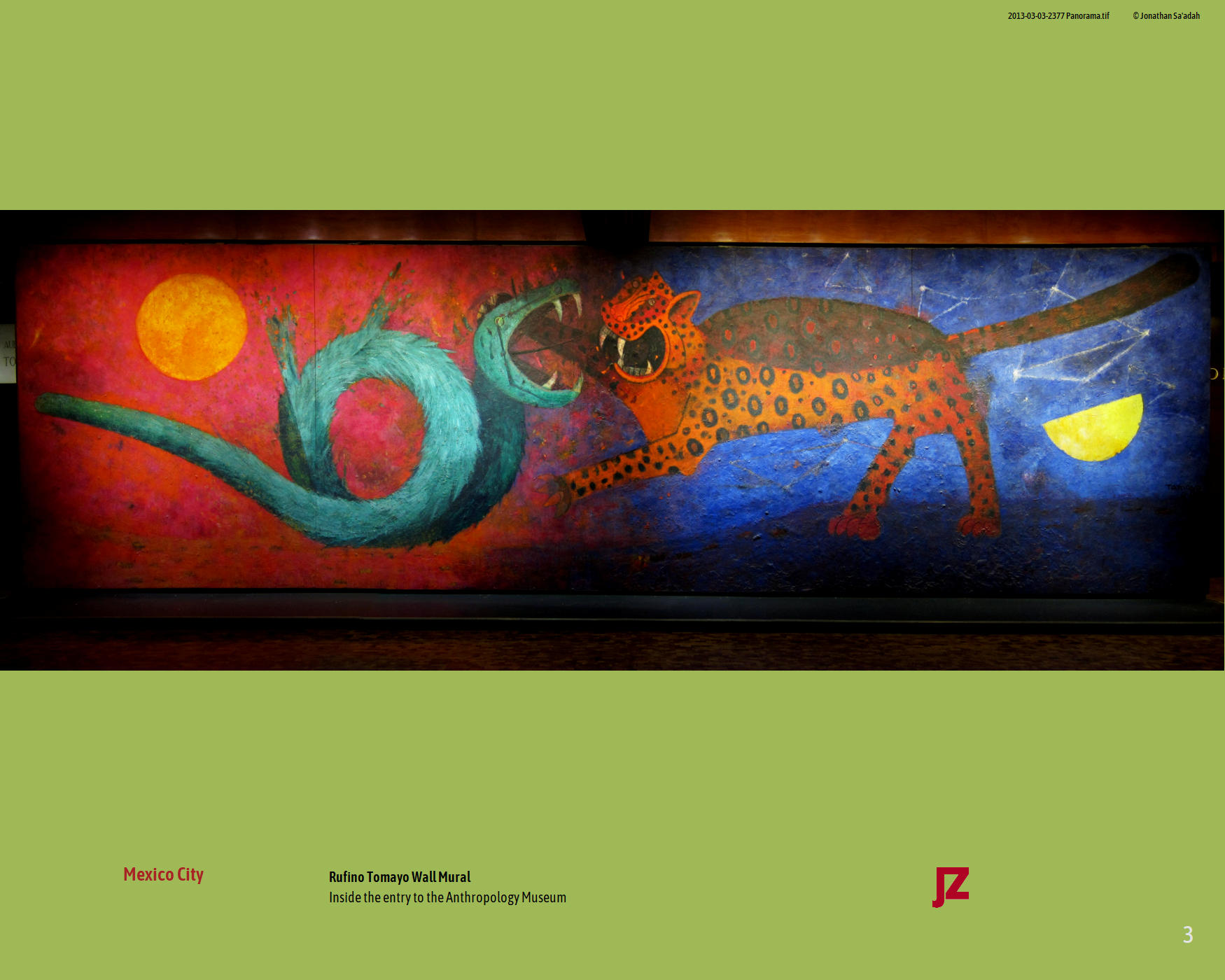
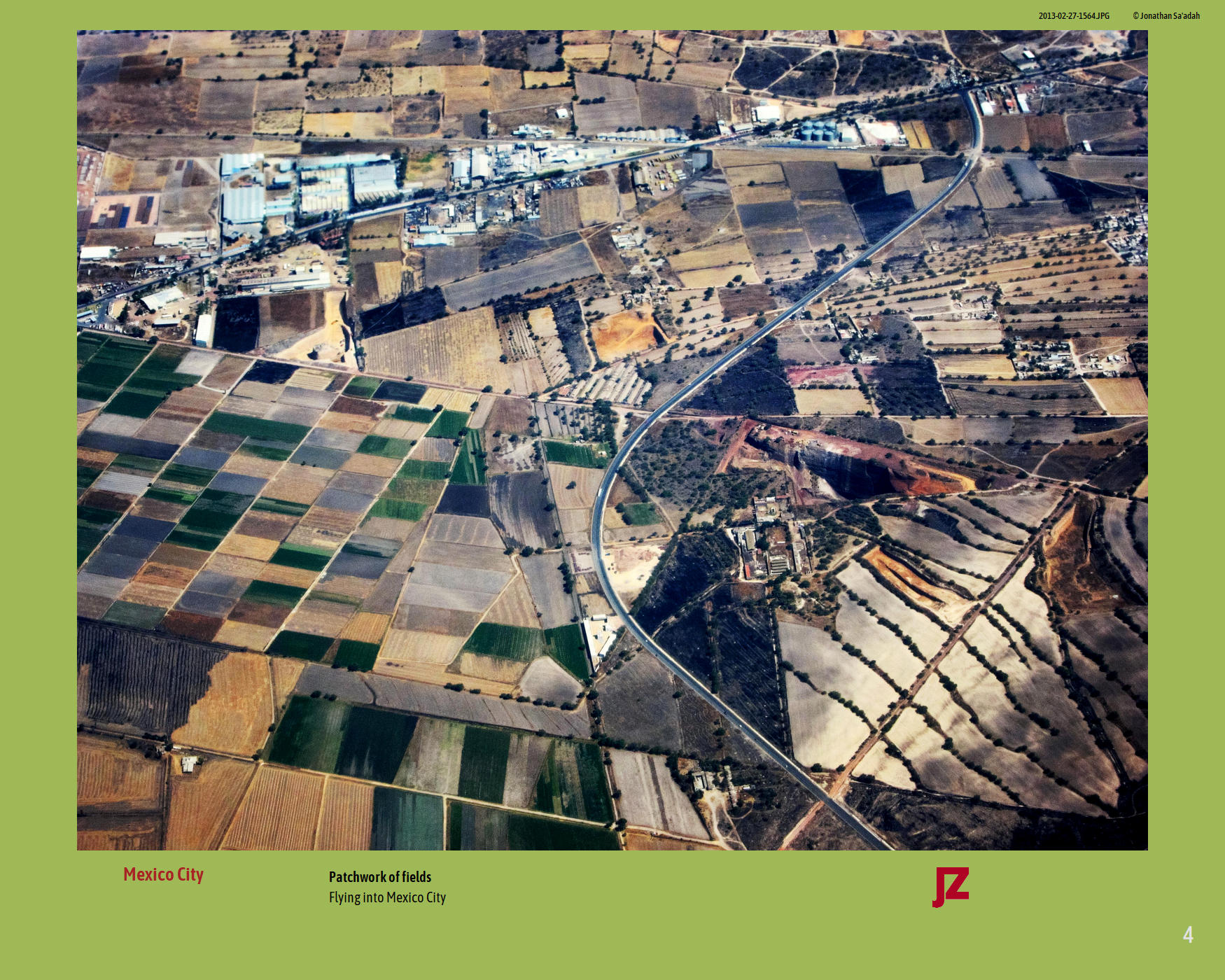
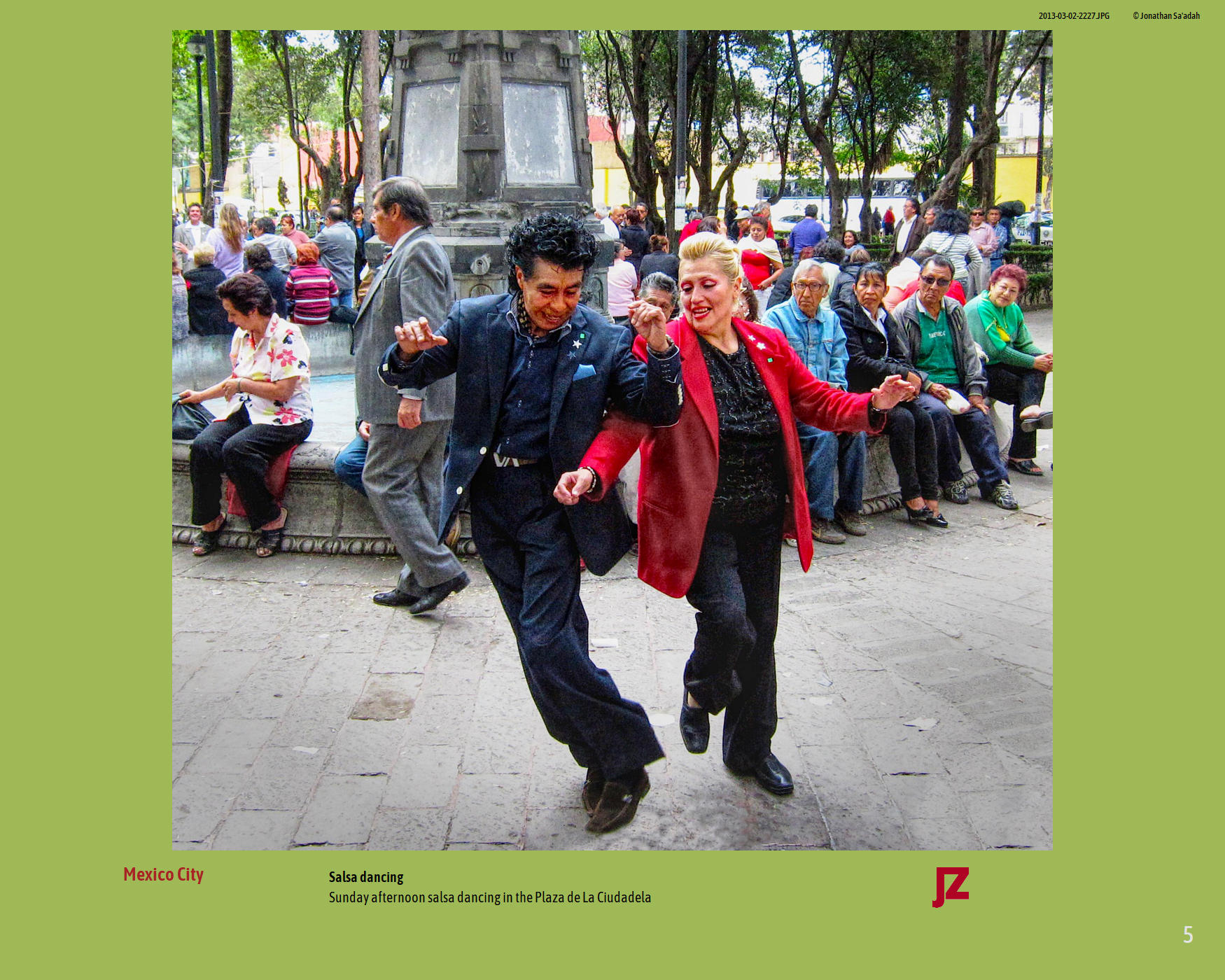
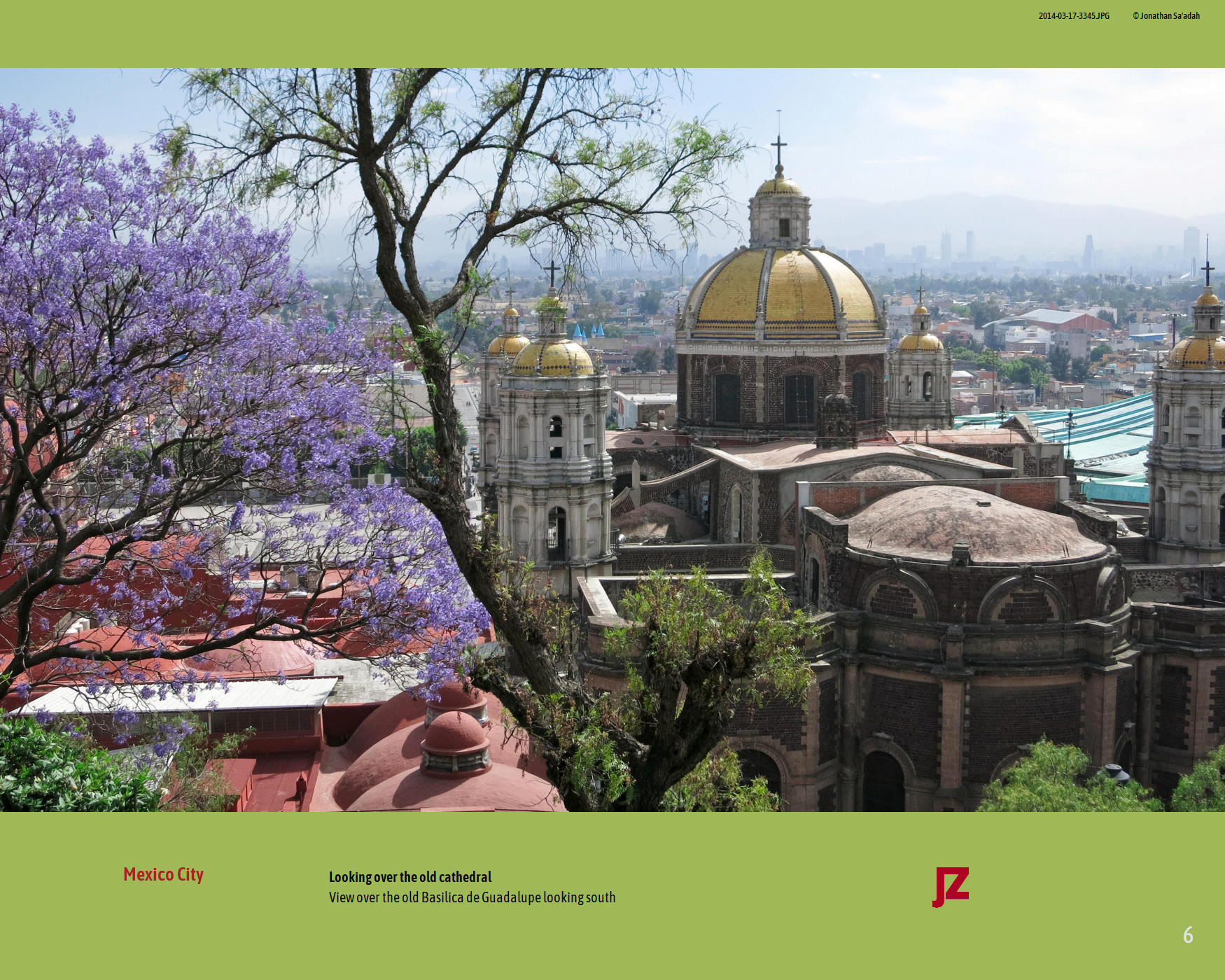
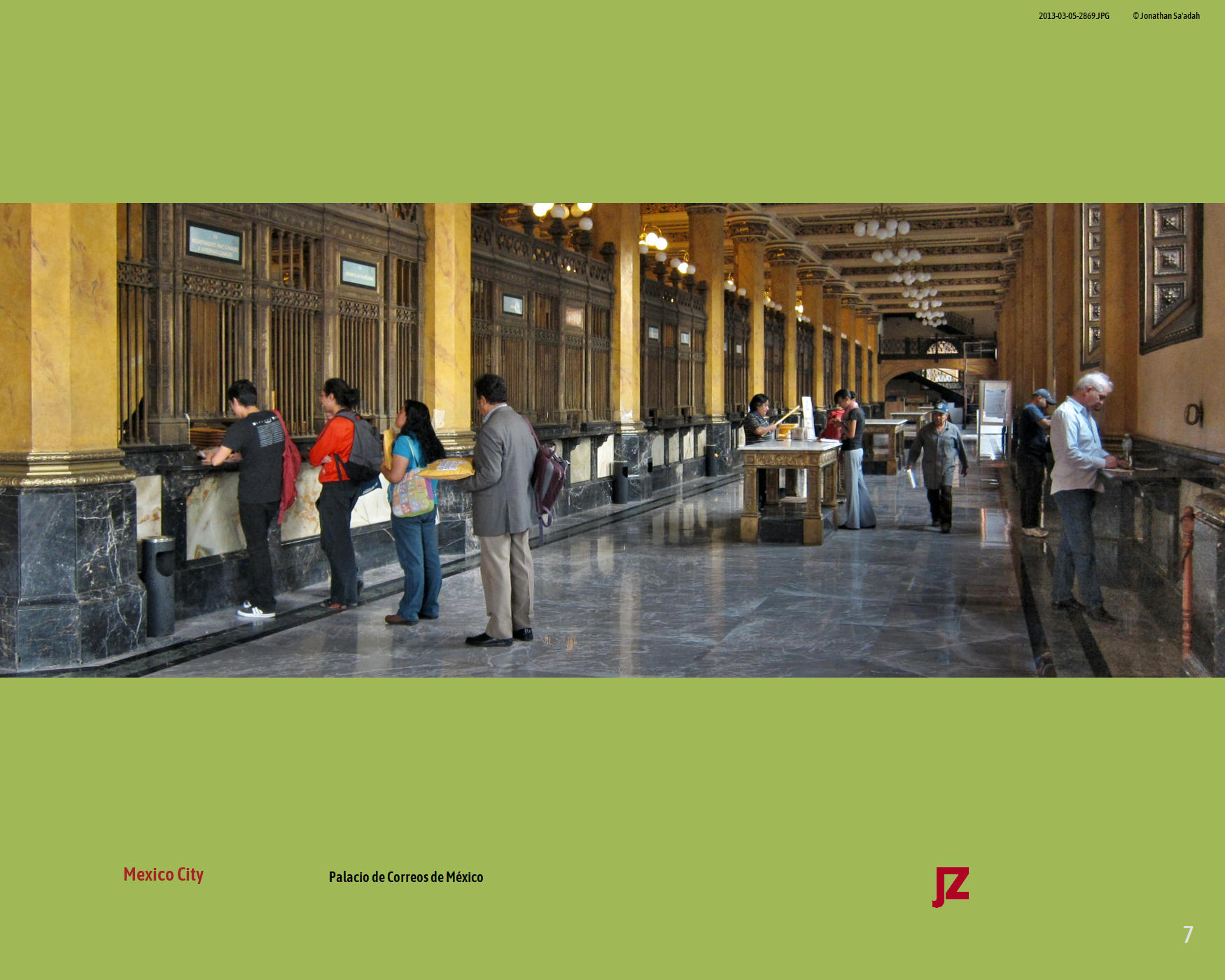
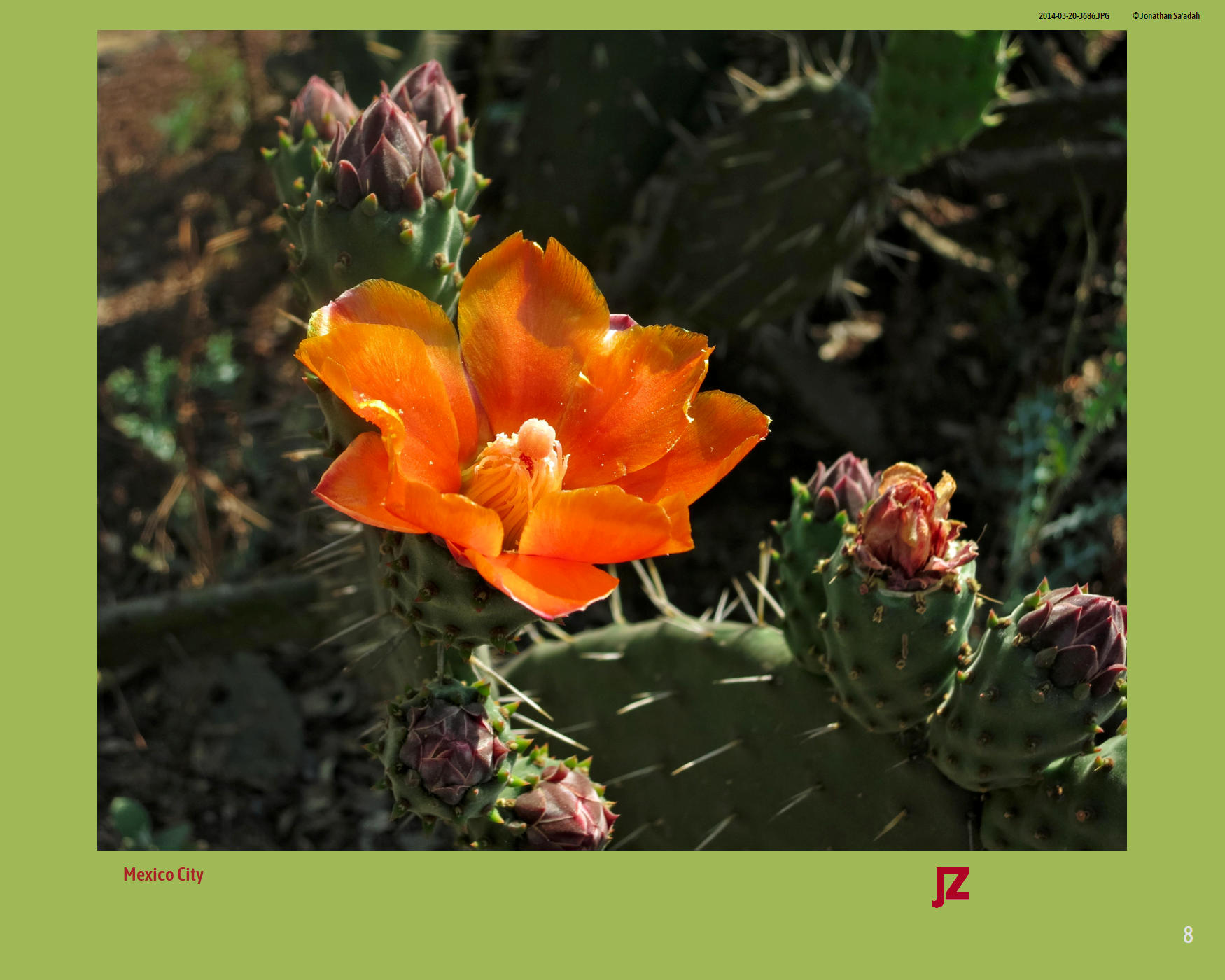
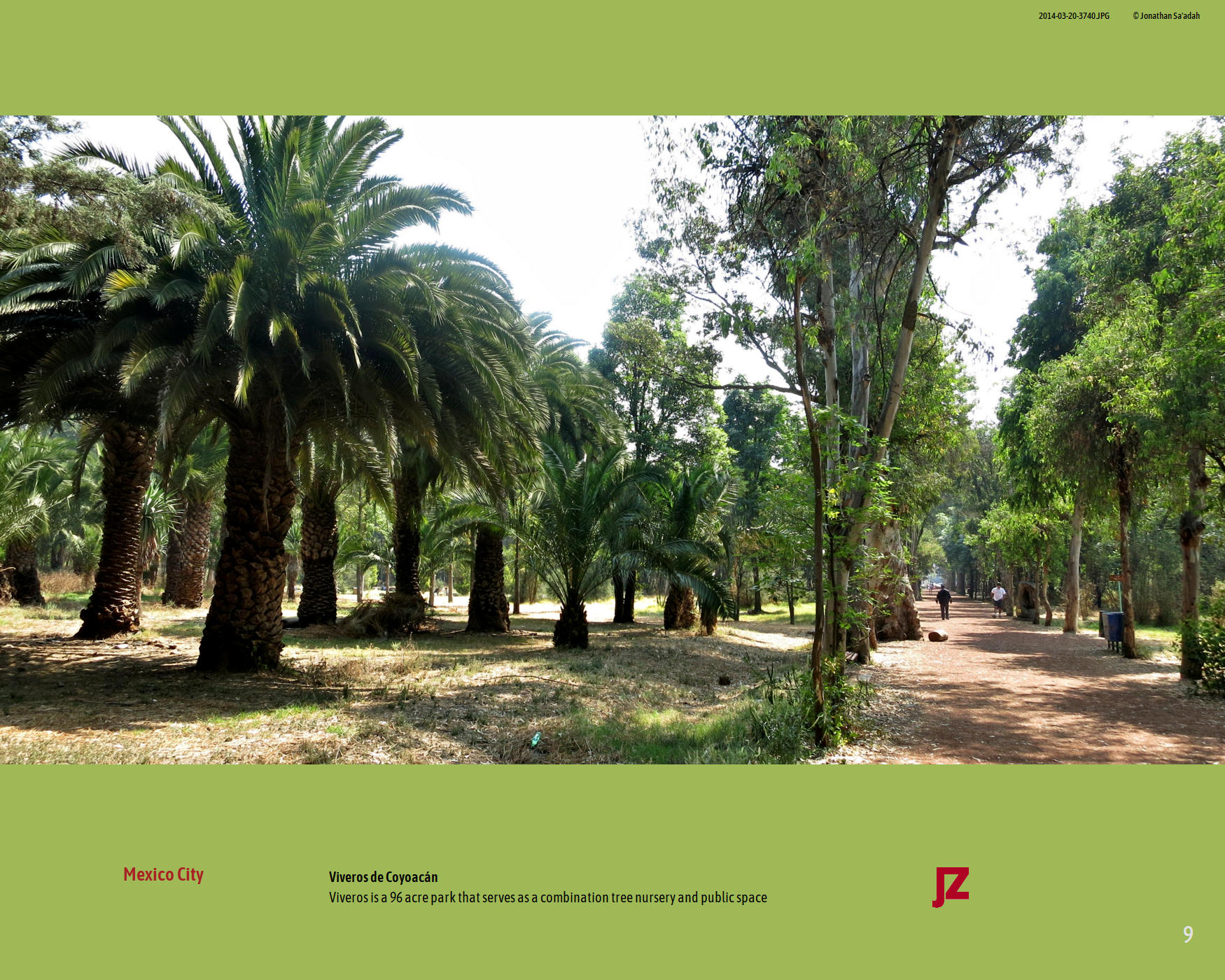
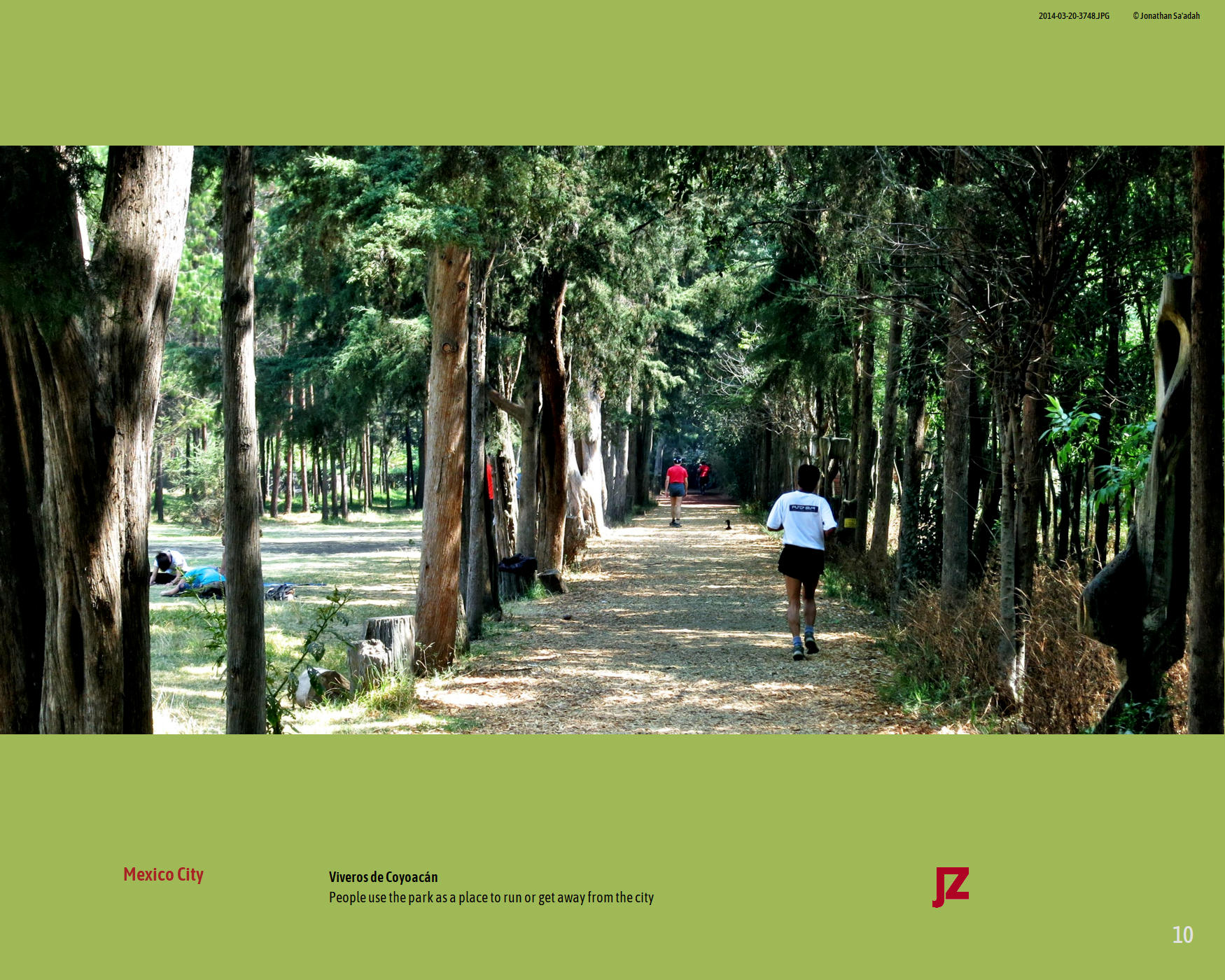
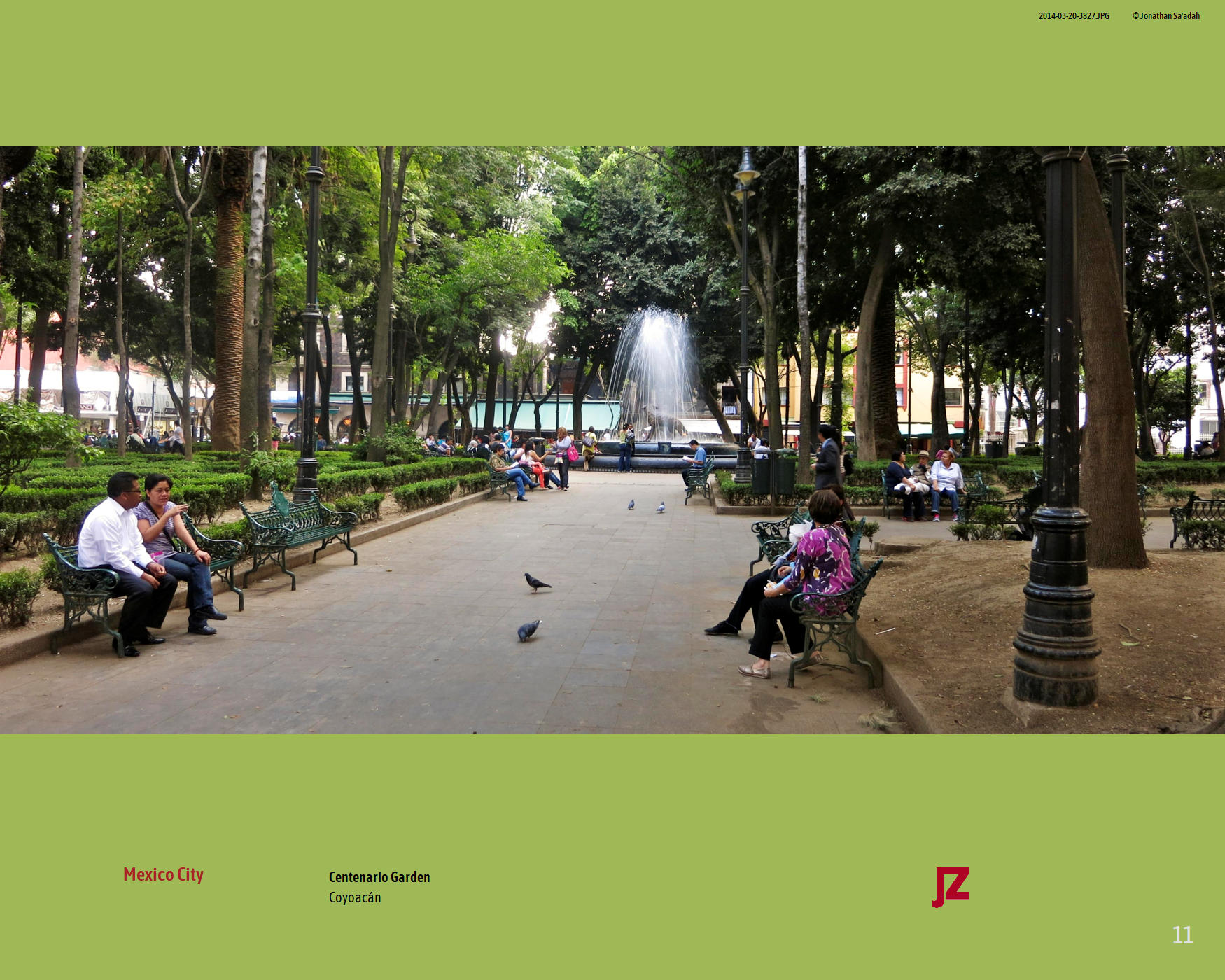
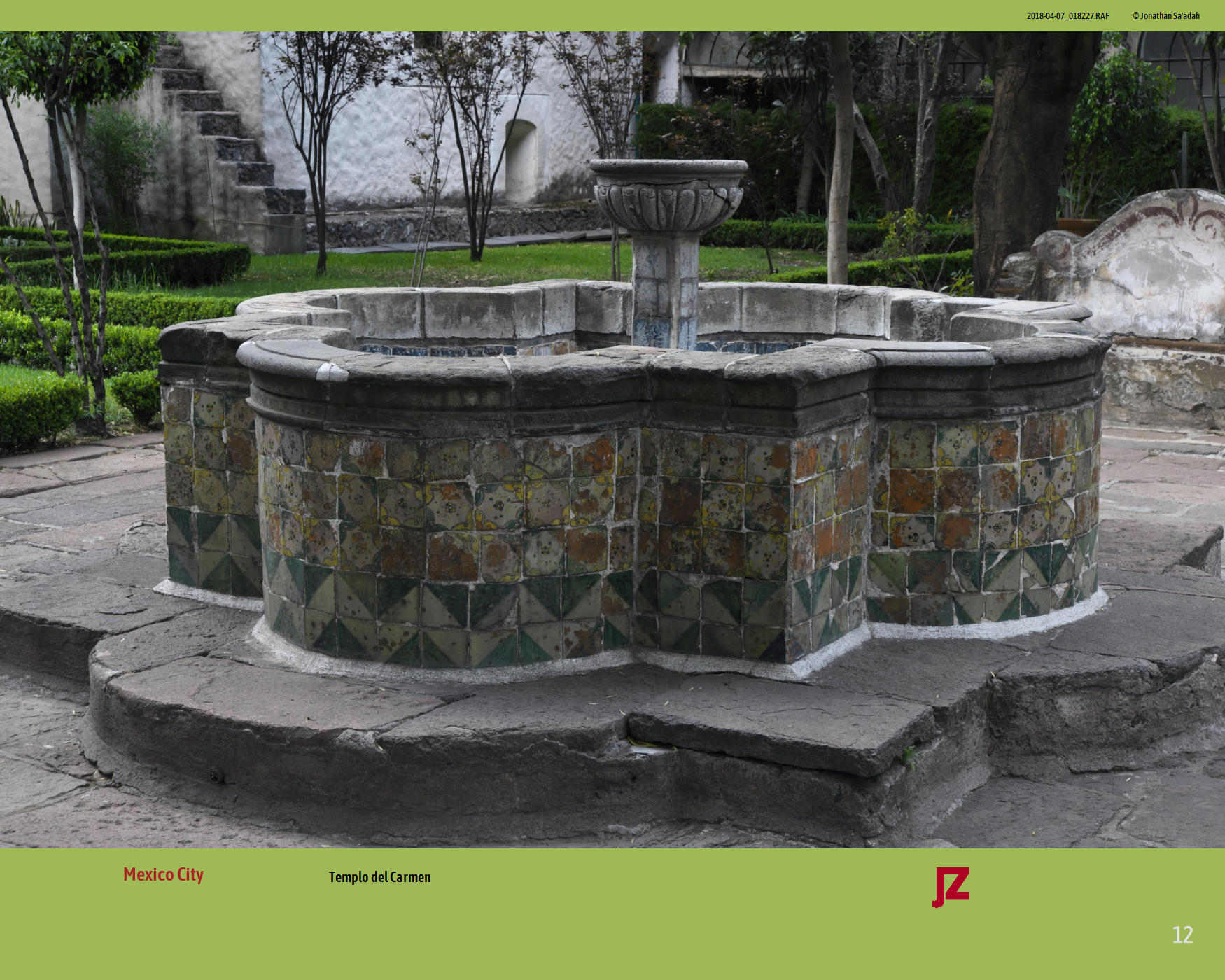
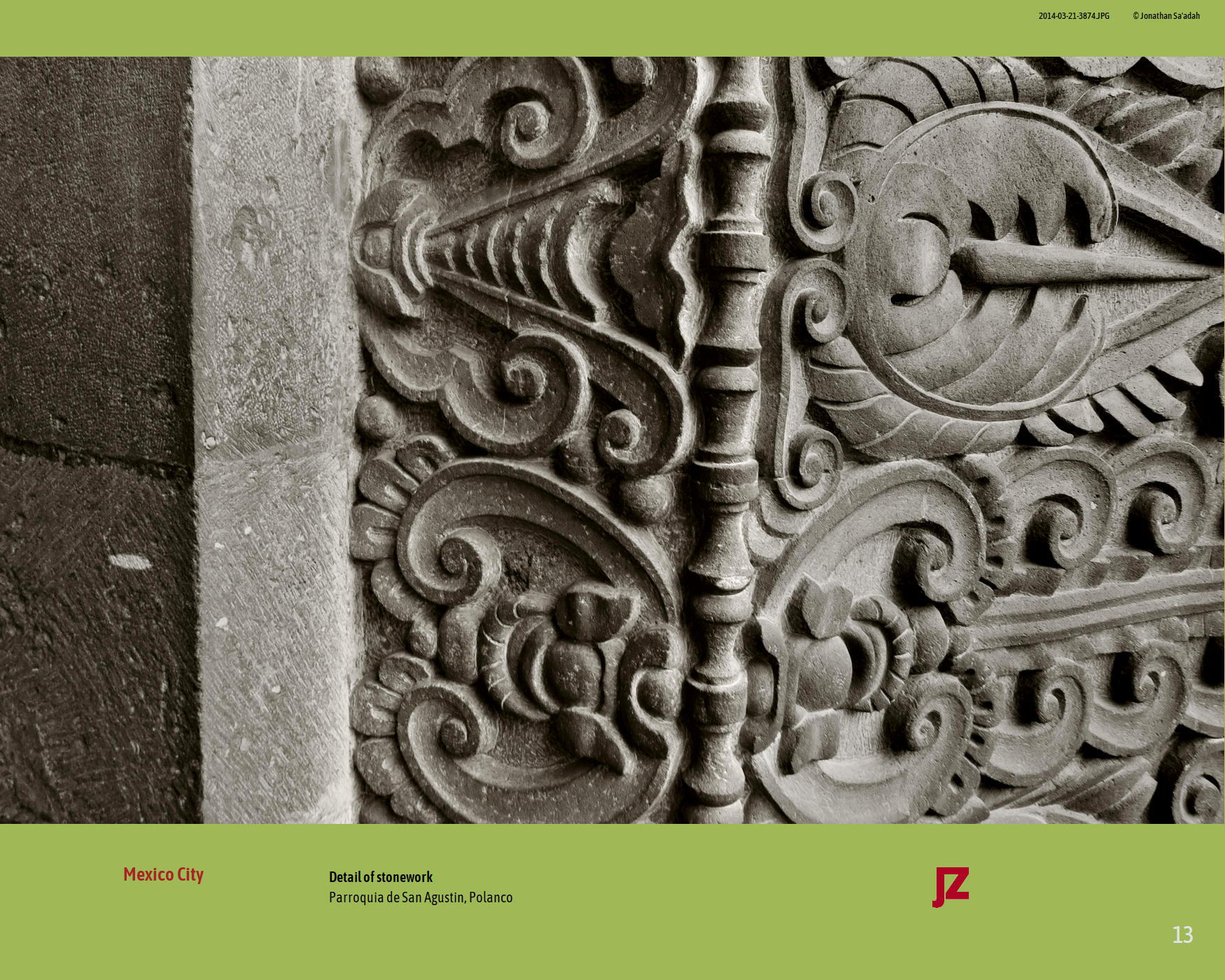
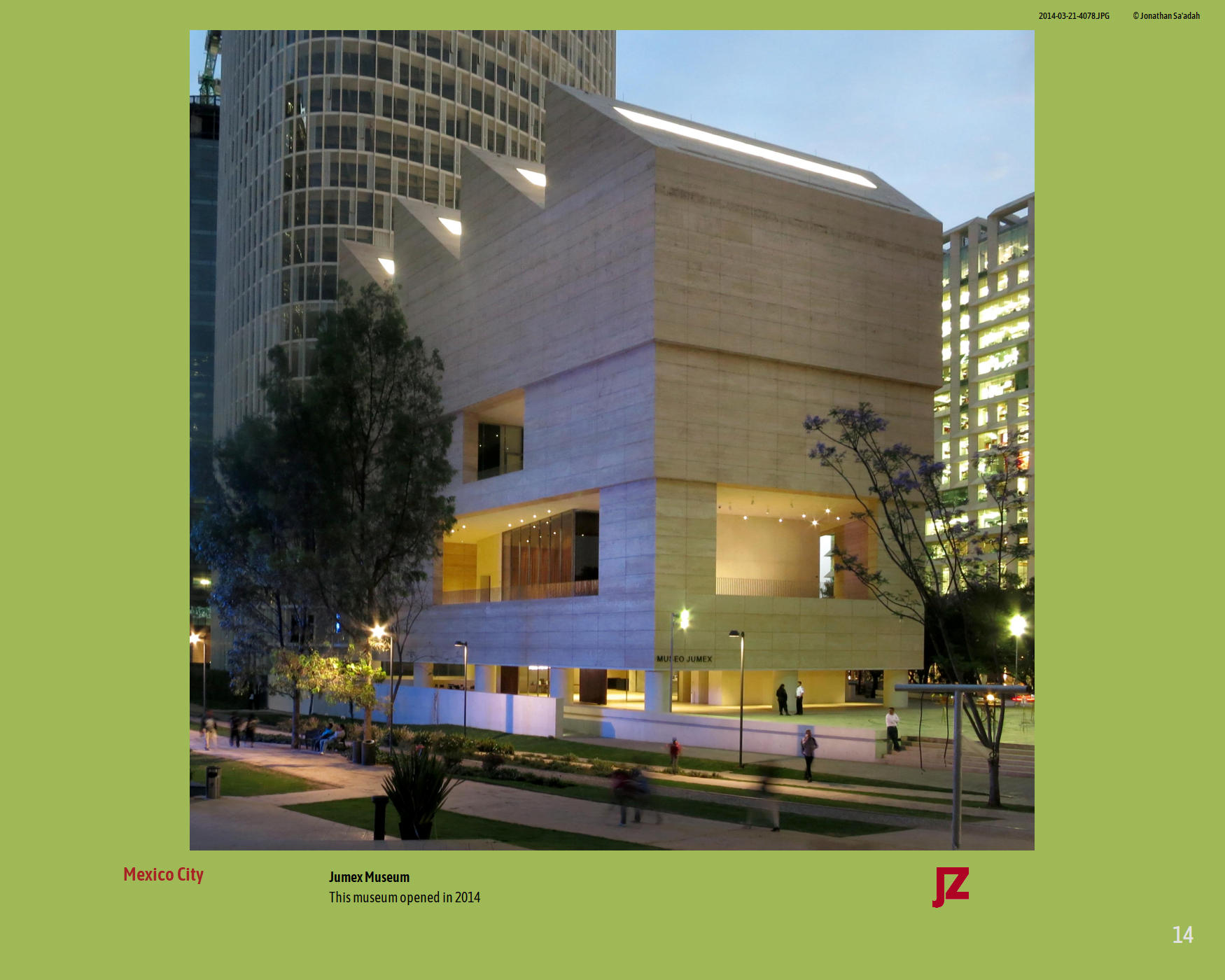
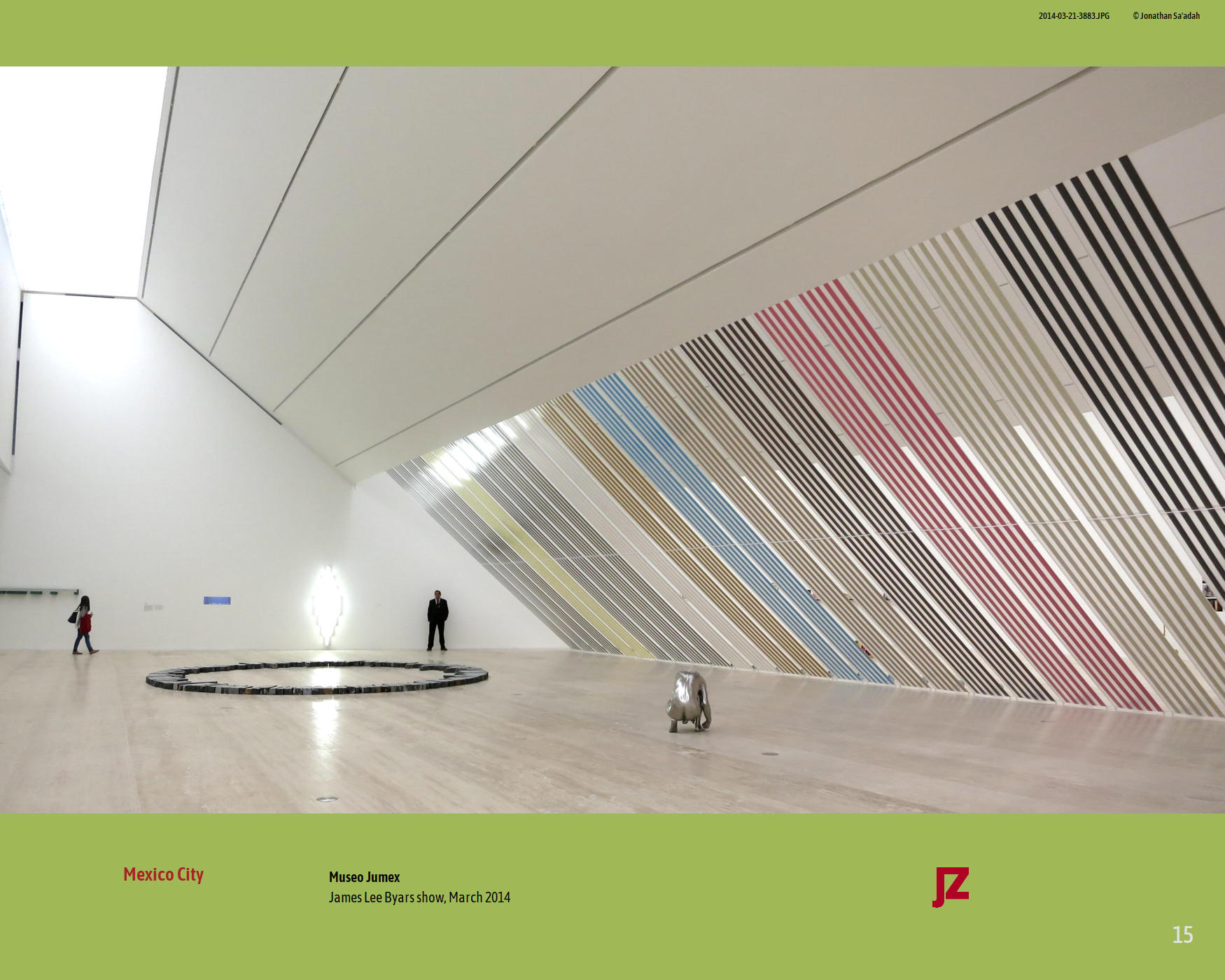
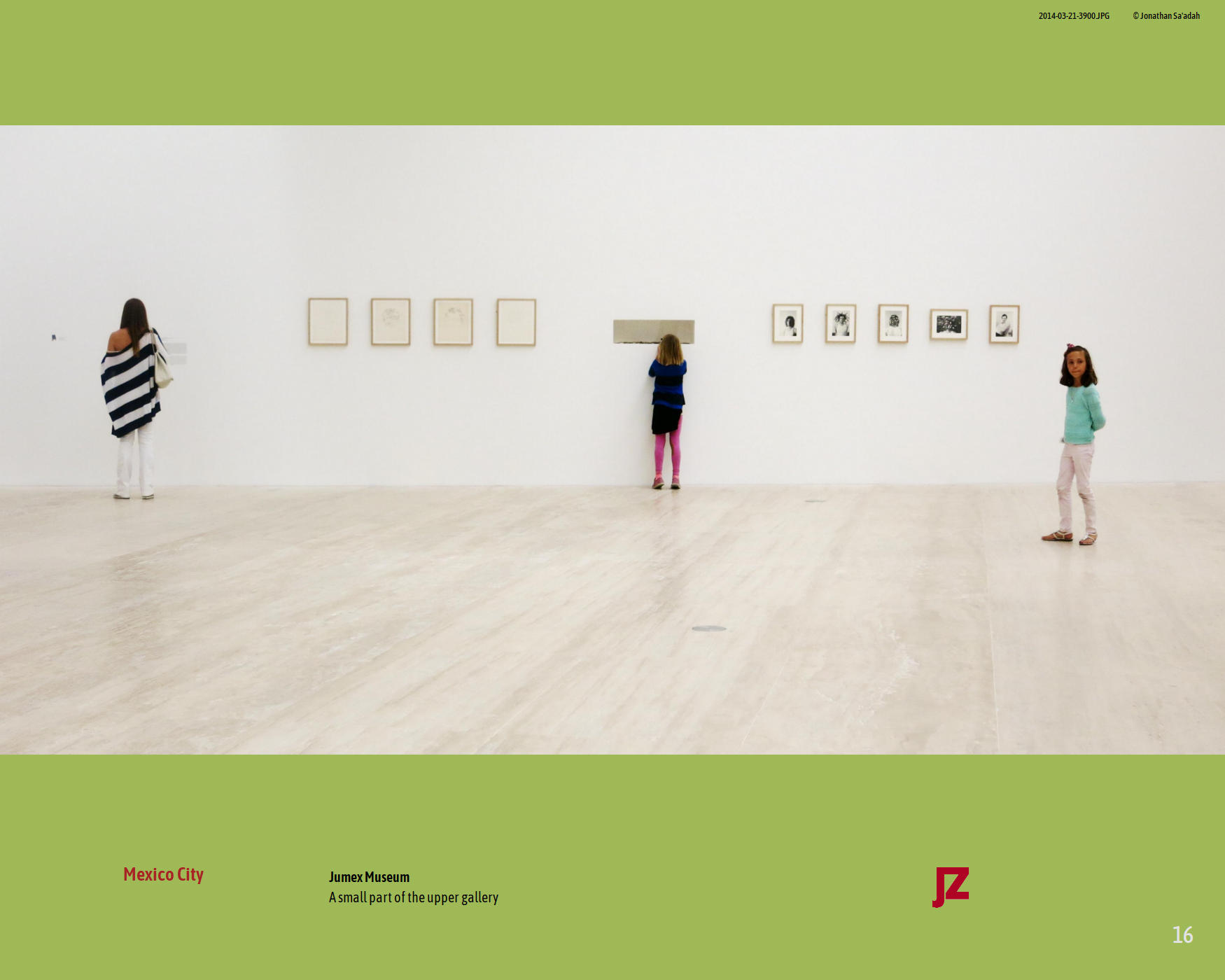
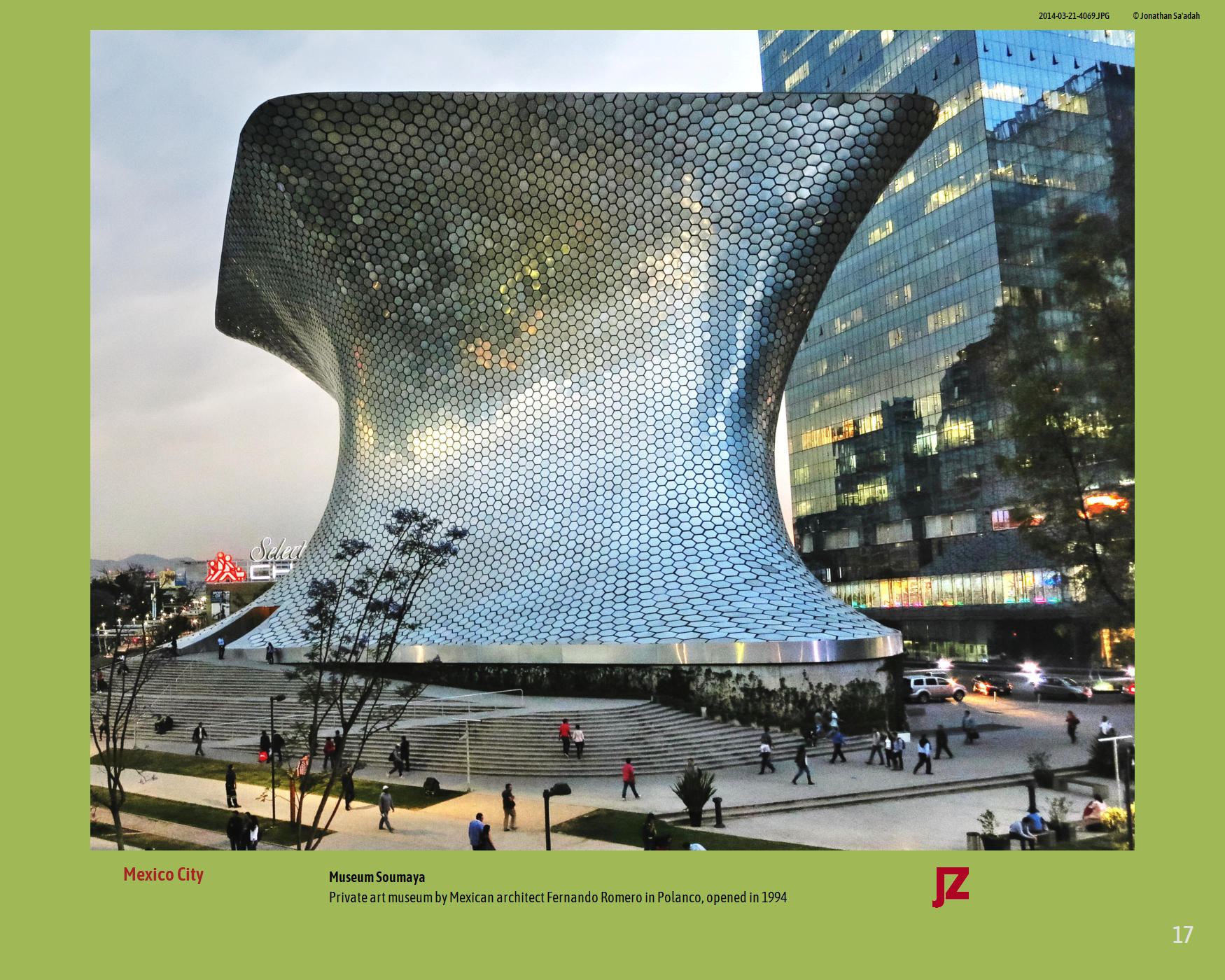
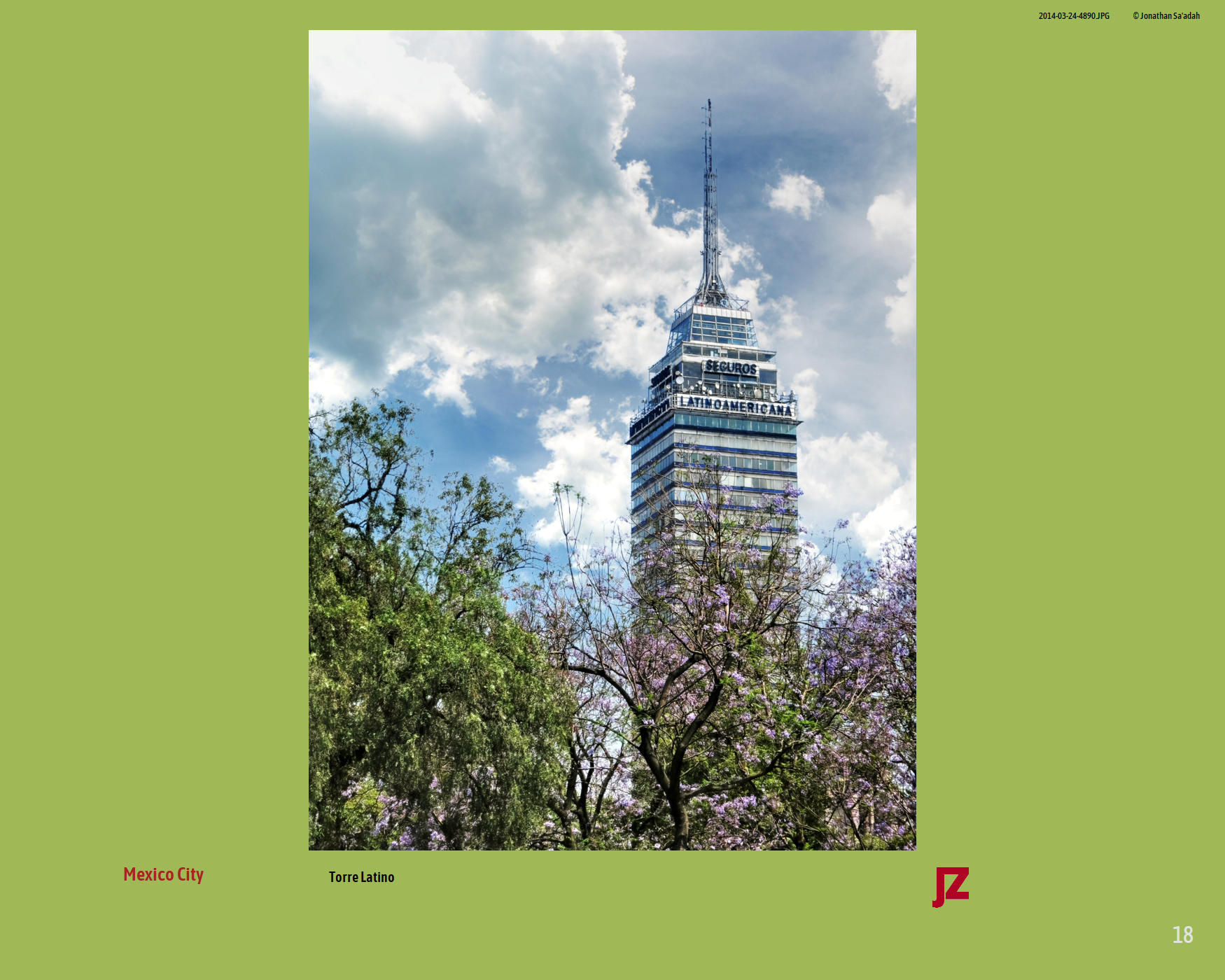
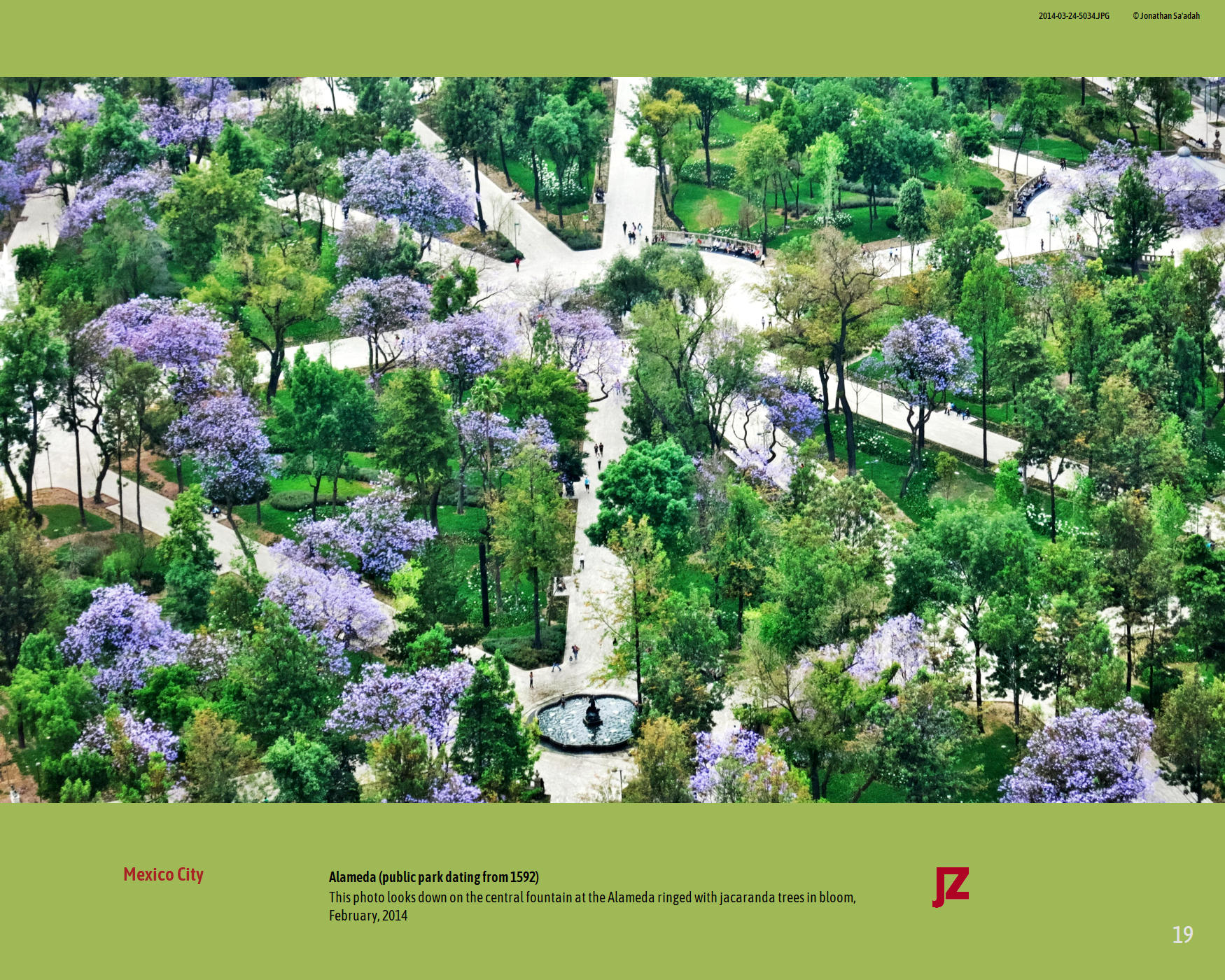
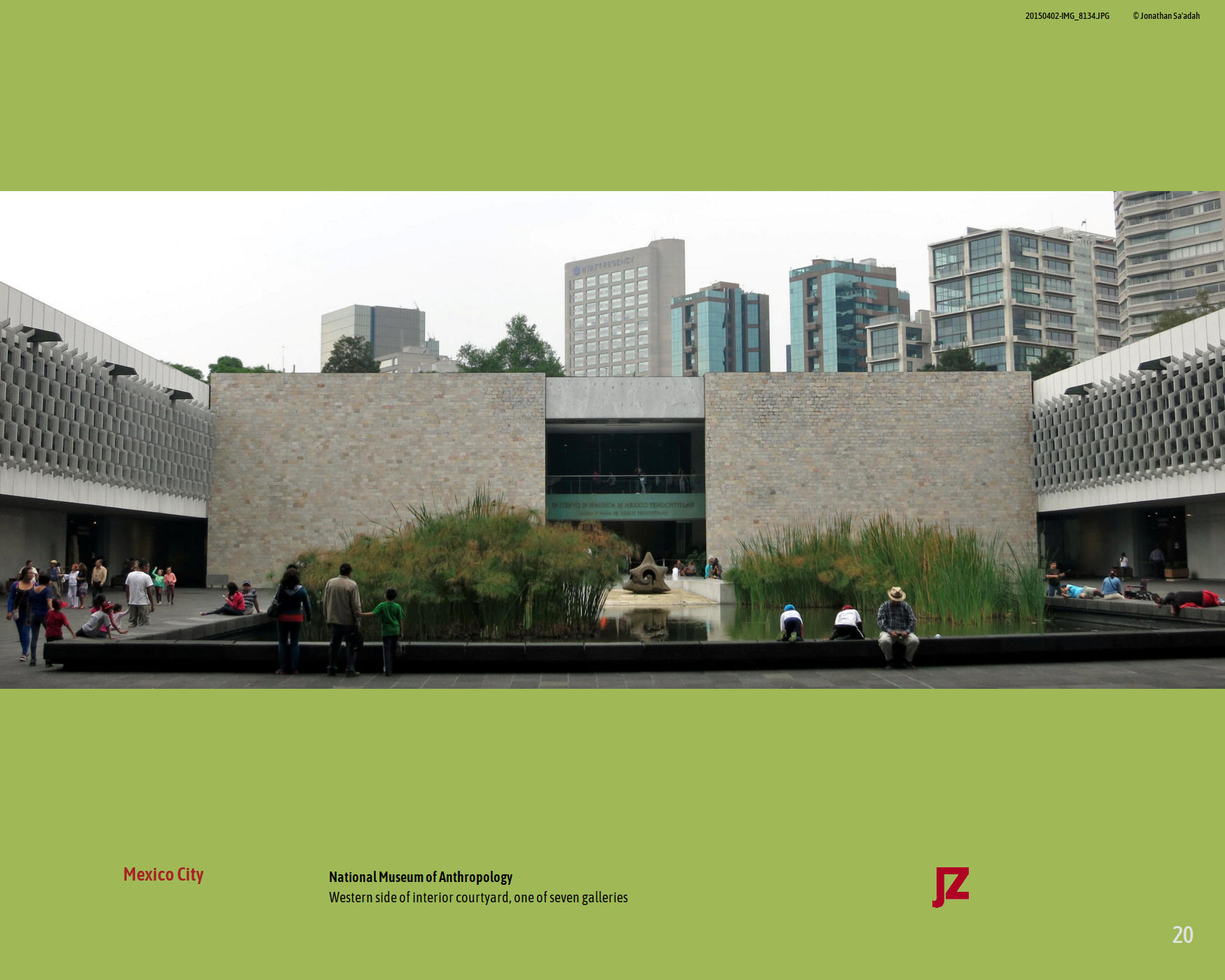
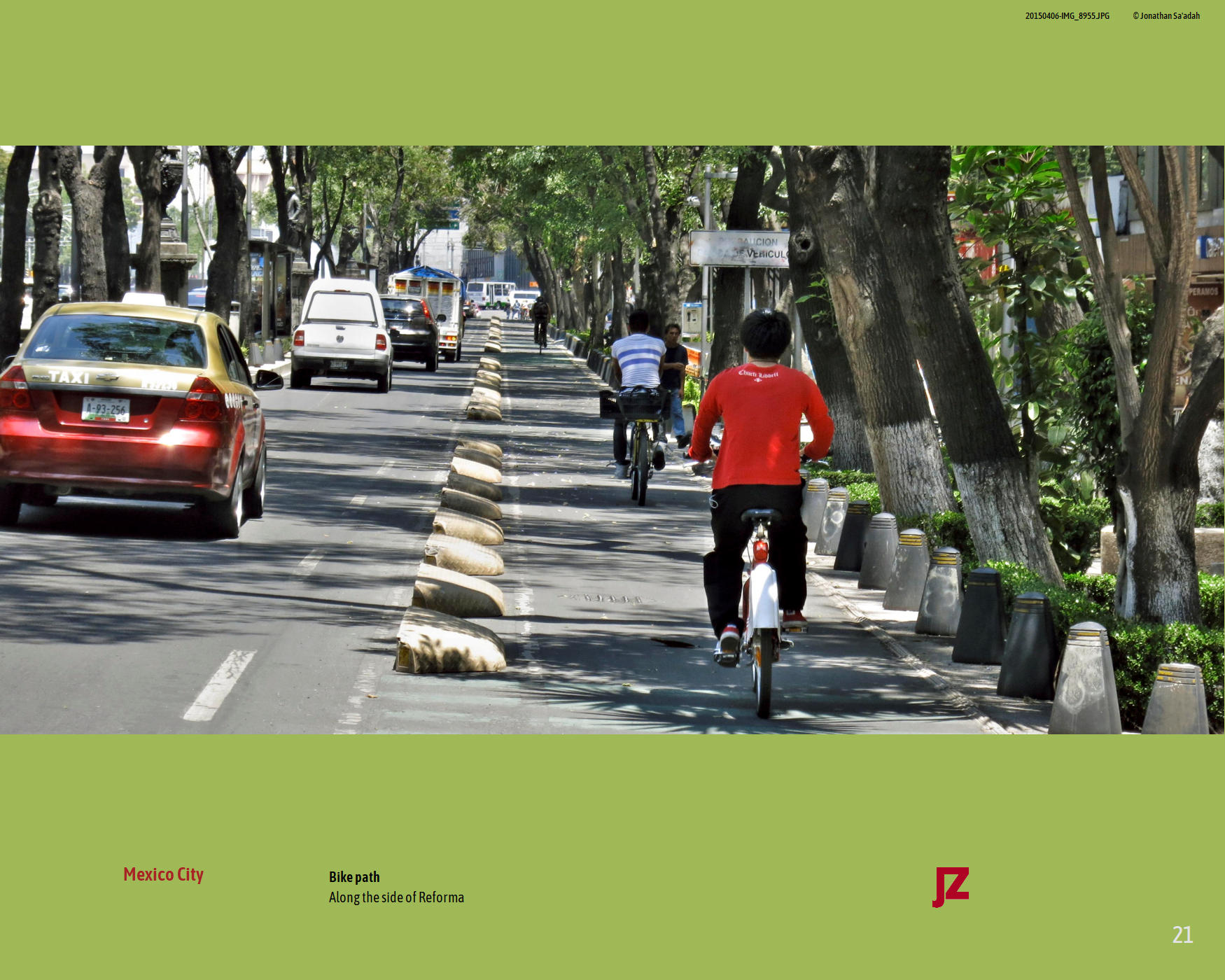
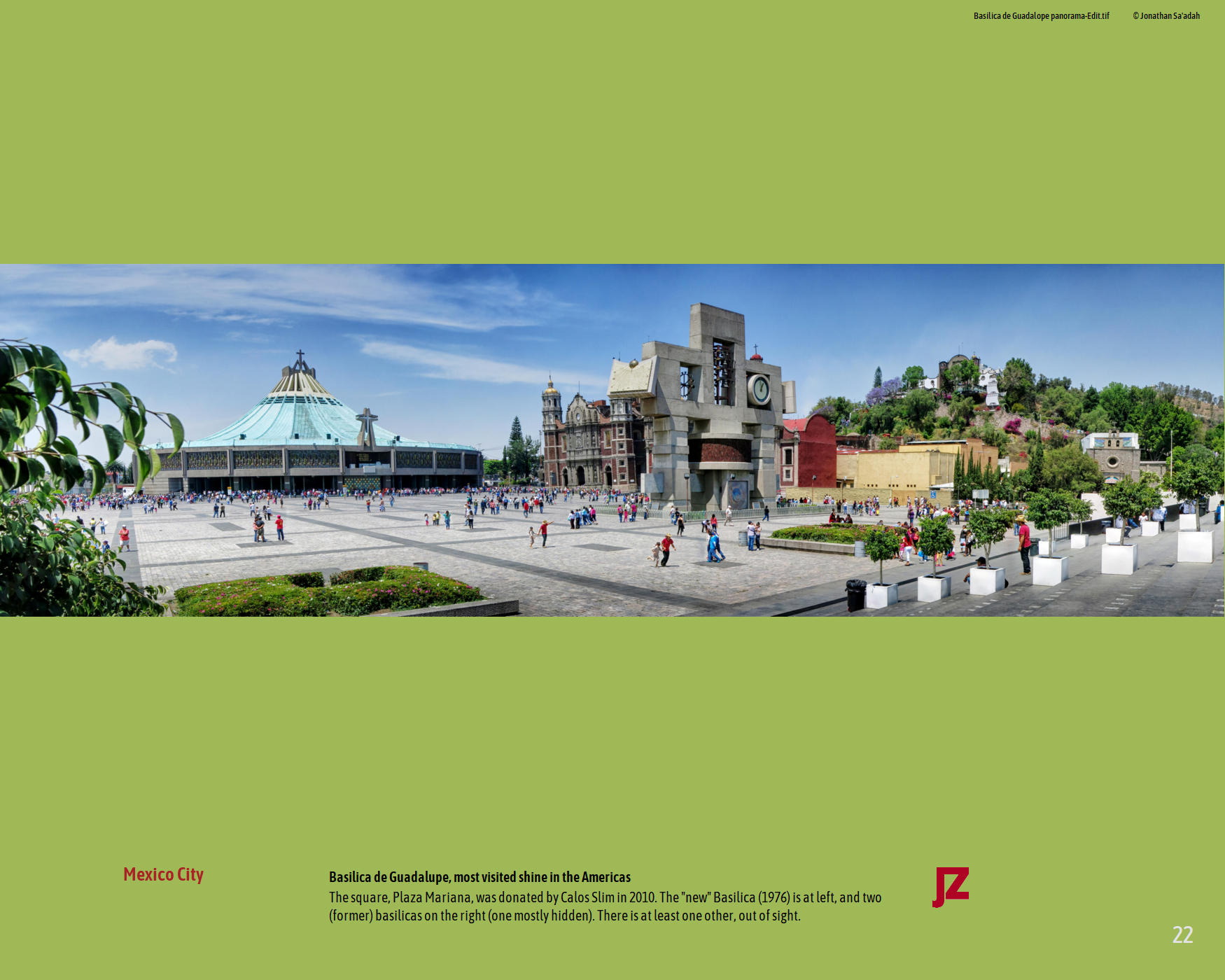
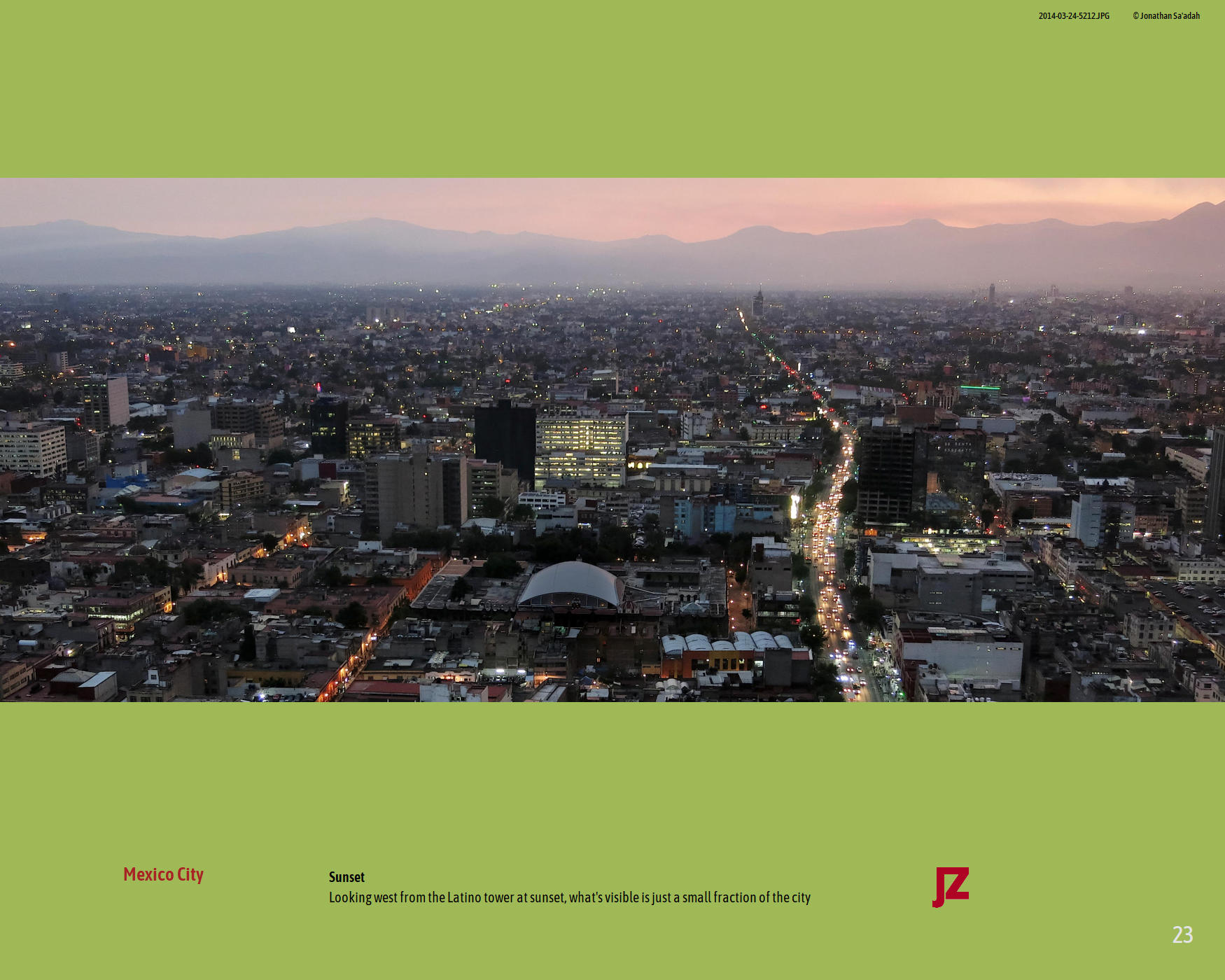
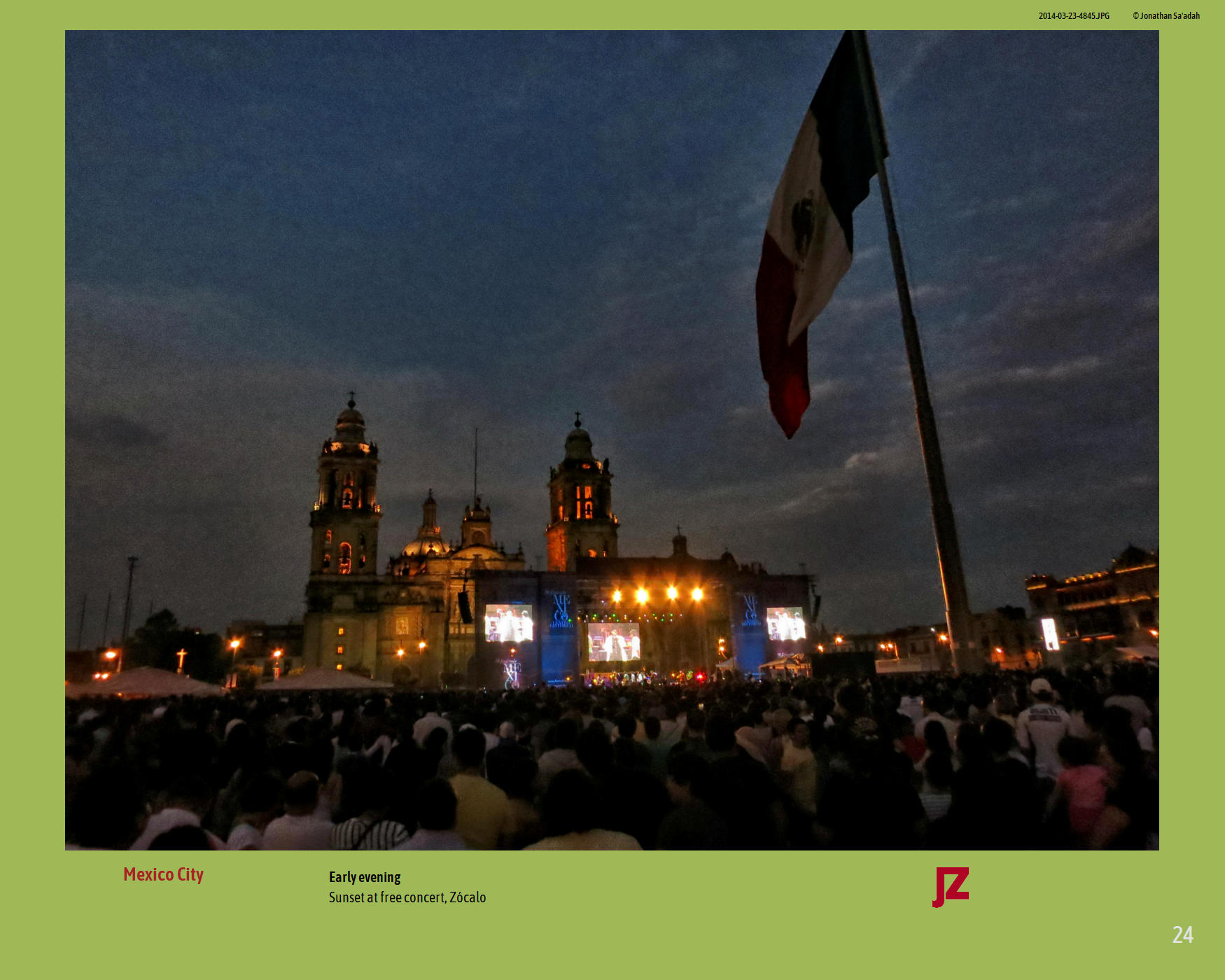
If you wanted to choose a city that’s diametrically opposed to Montreal’s cranky winters, Mexico City would be a good choice. The high altitude brings spring-like weather all year round, with warm days and cool nights. In February the mornings start at 12C warming to 20-25. Only pollution downgrades its perfect ranking.
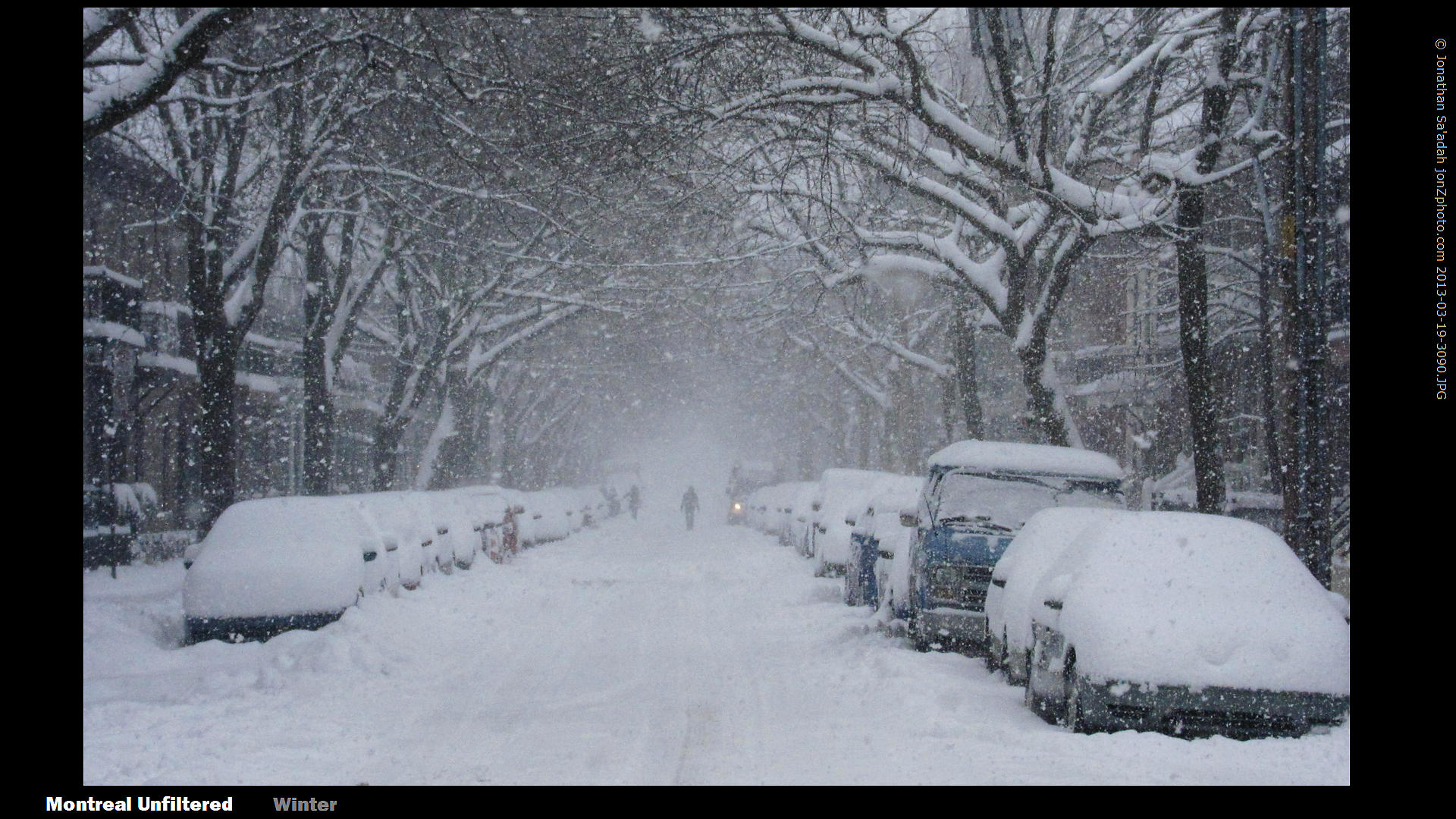
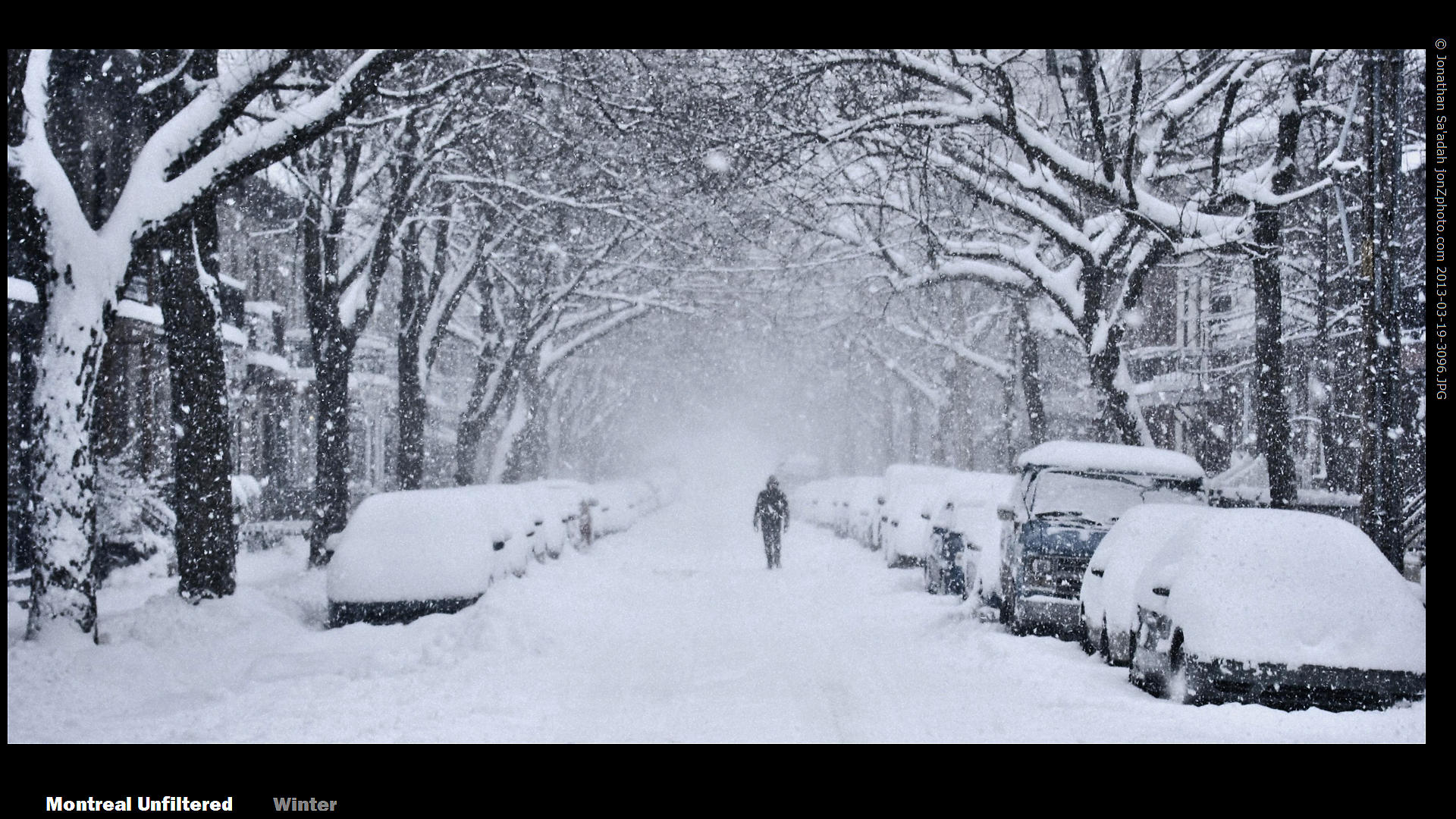
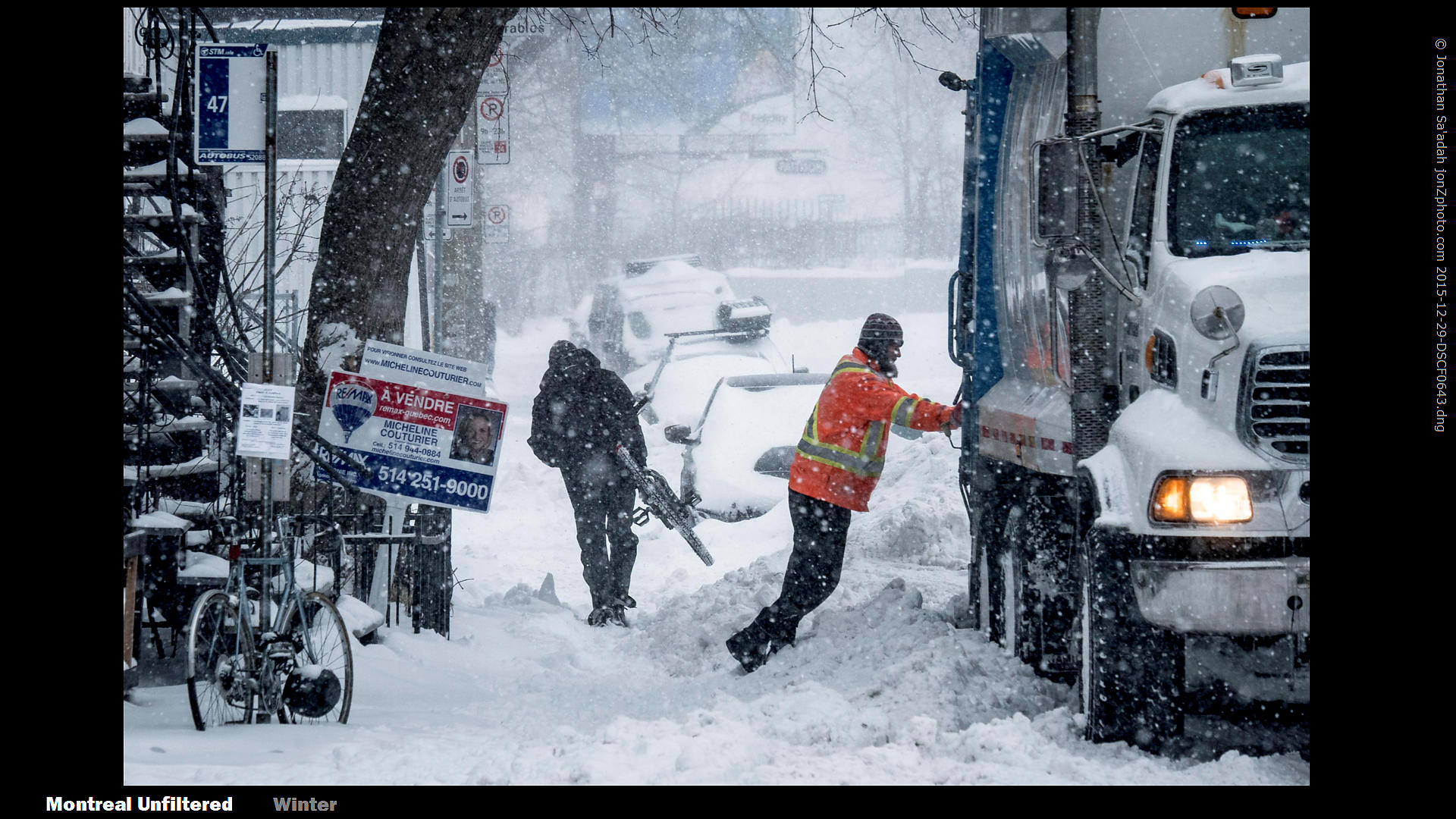
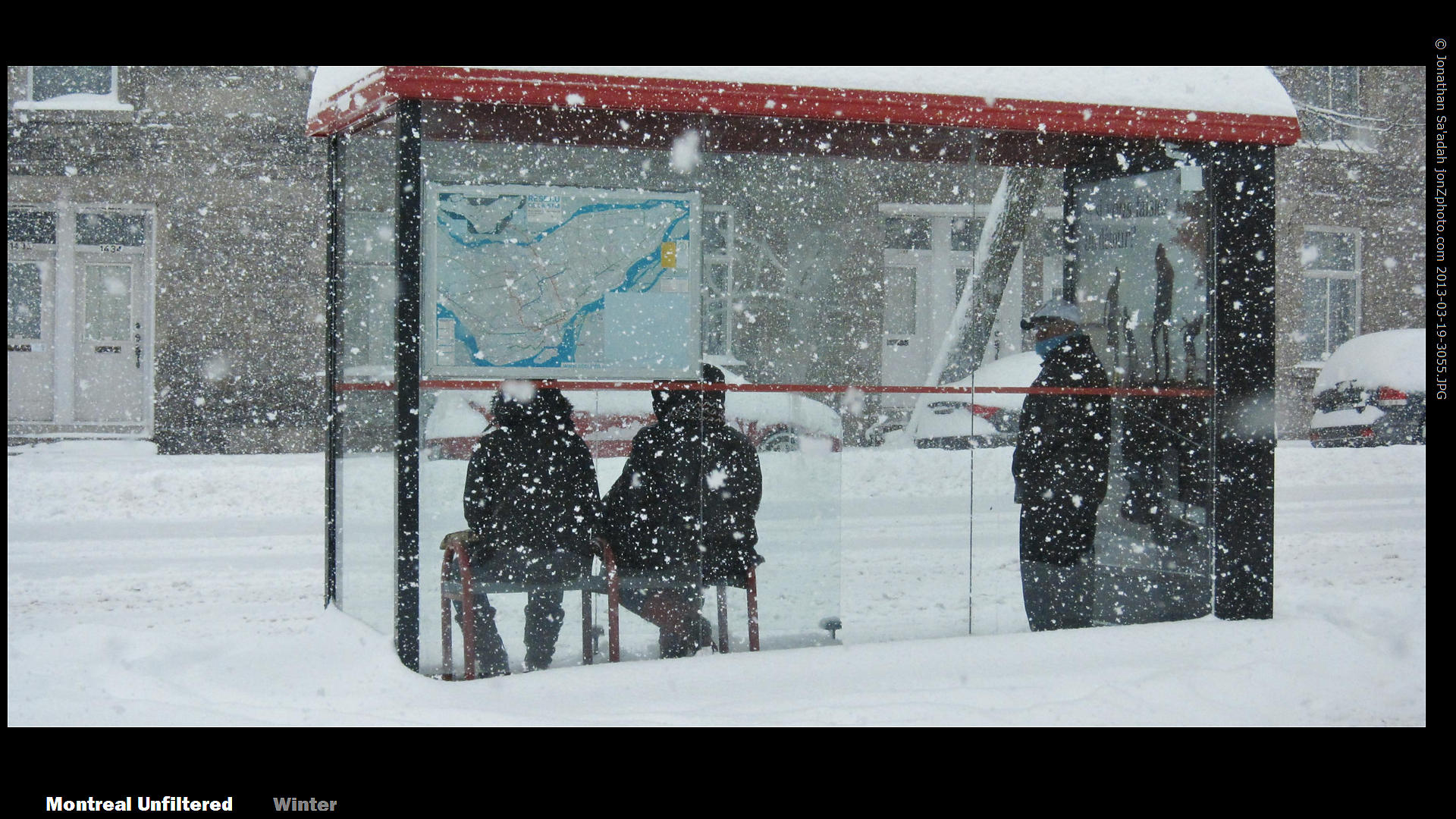
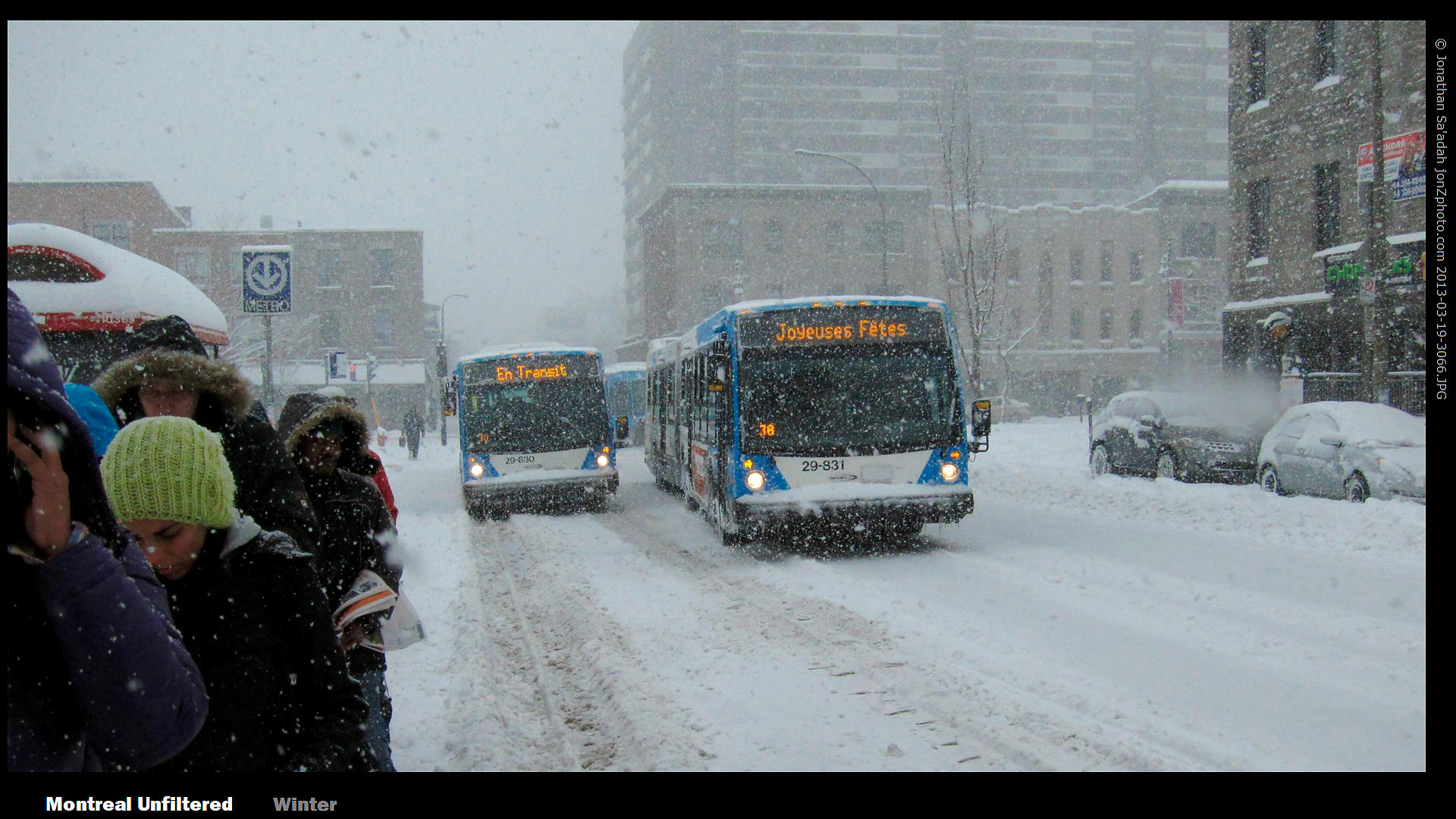
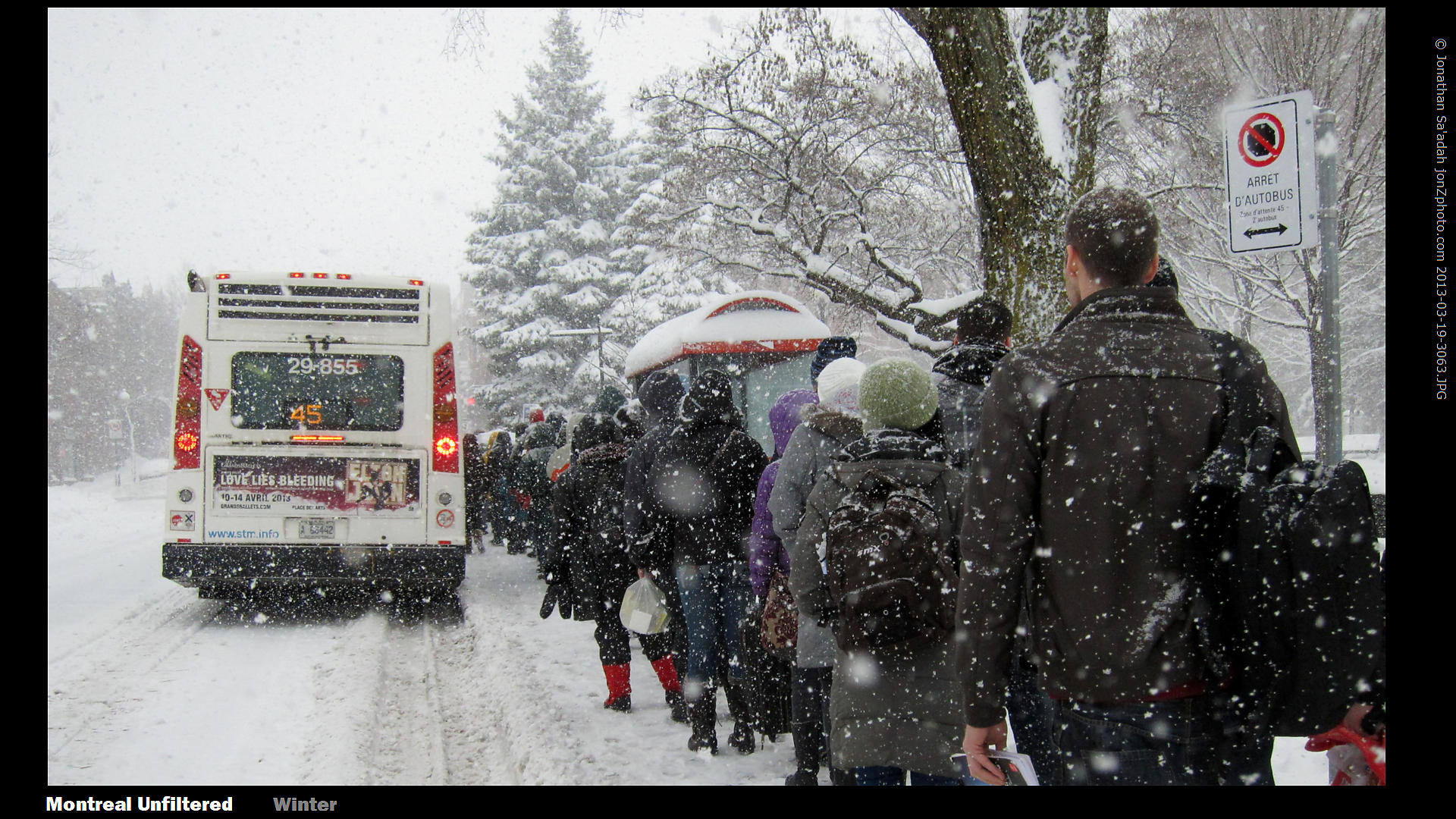
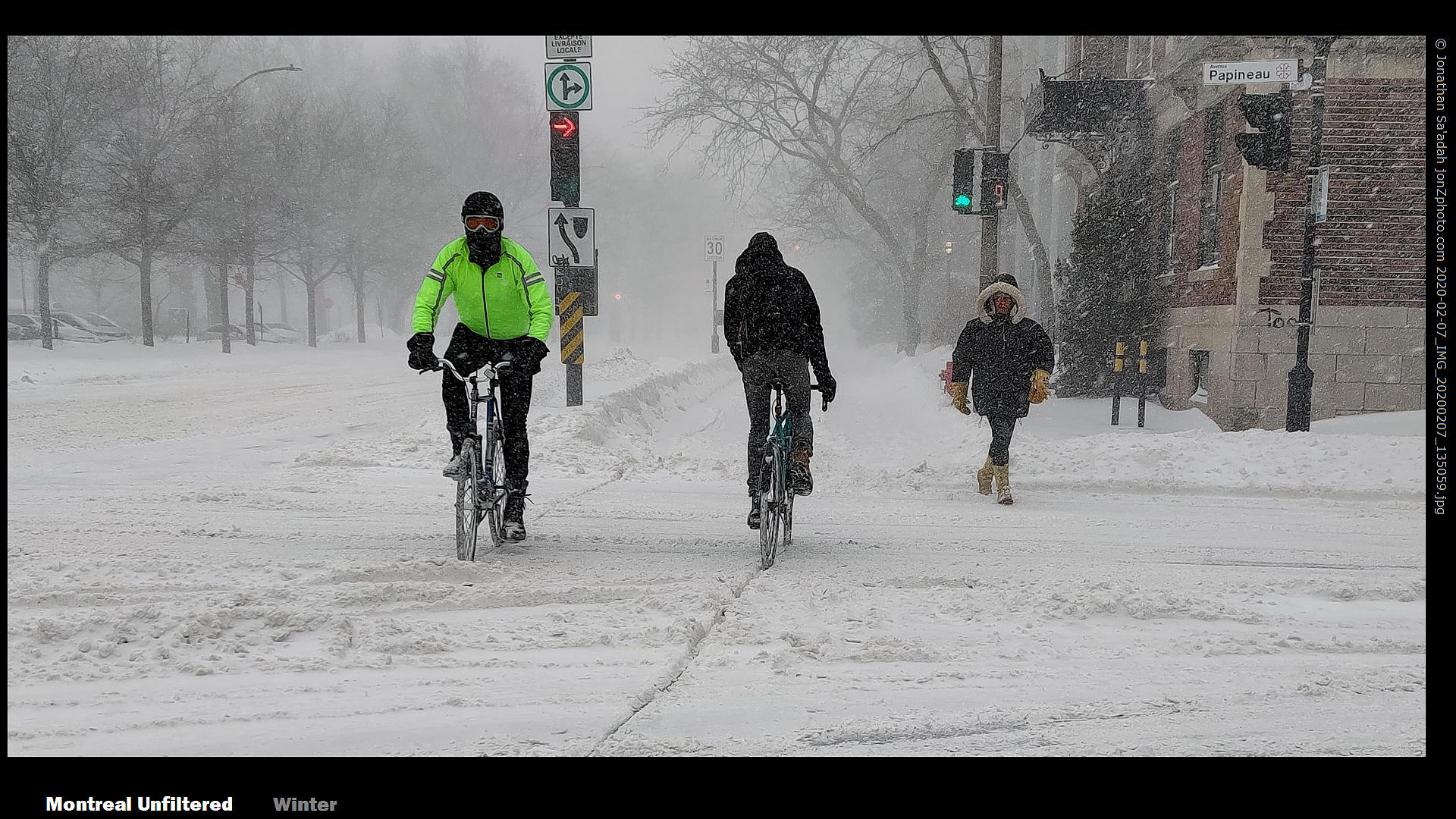
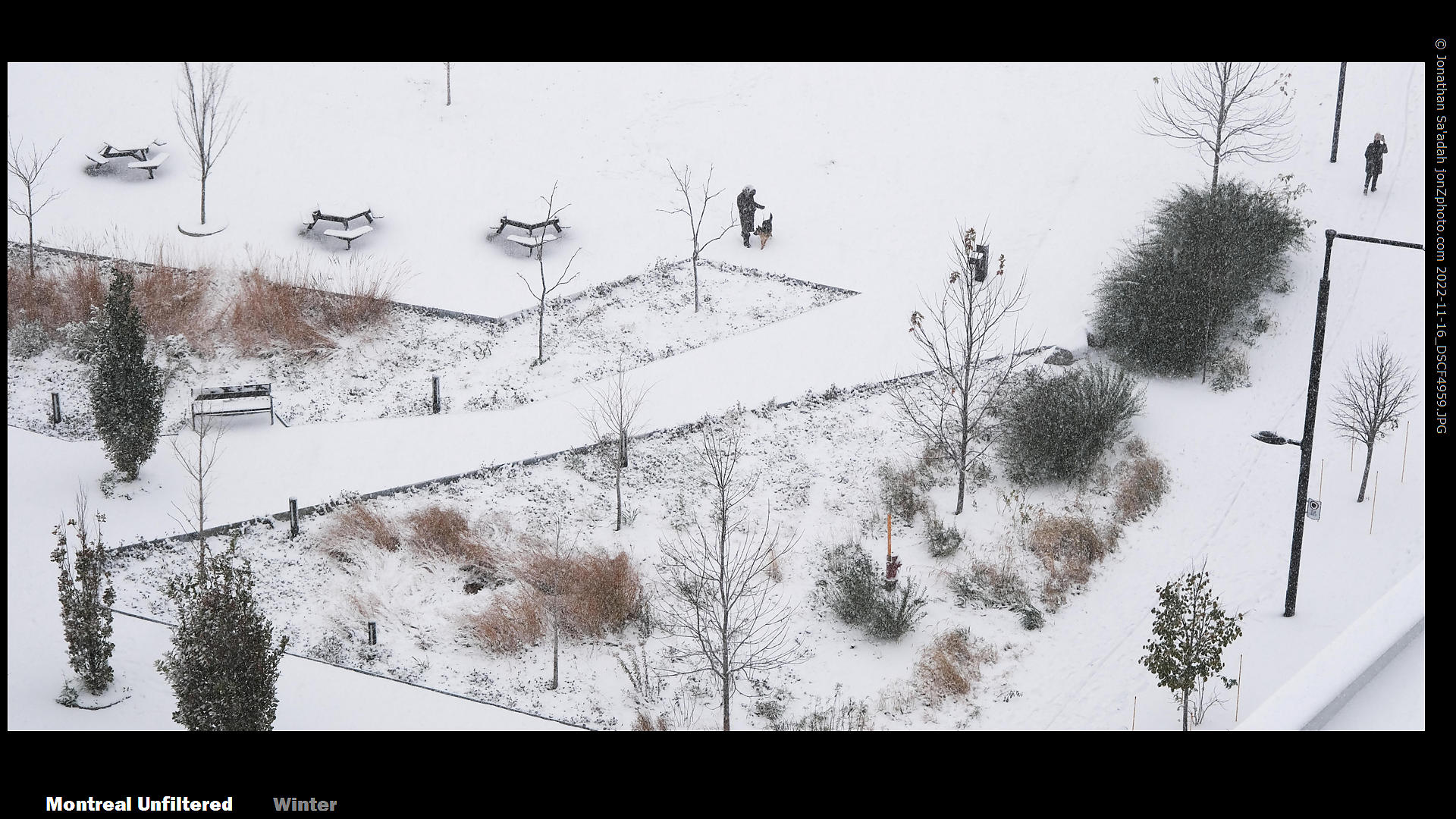
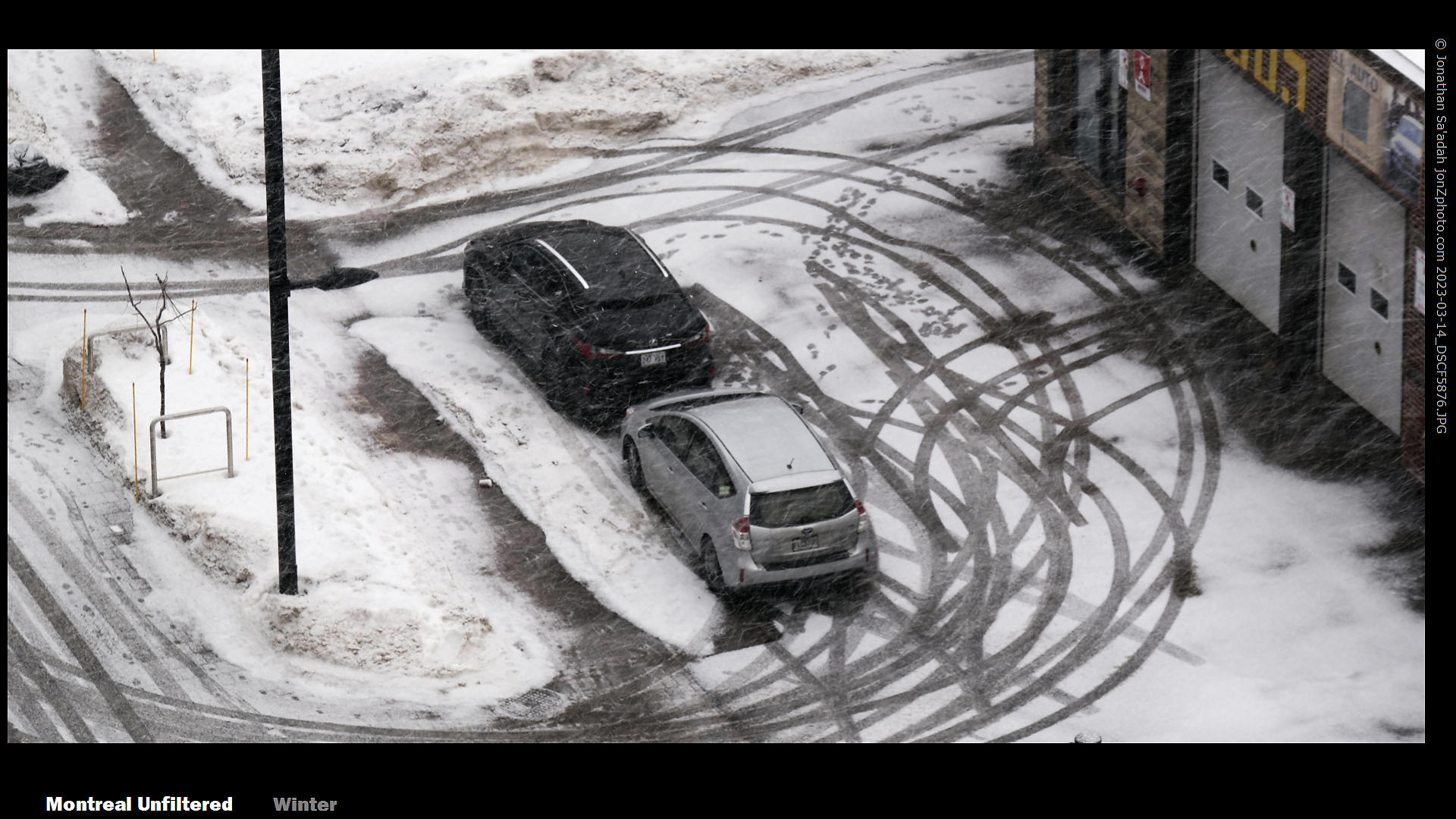
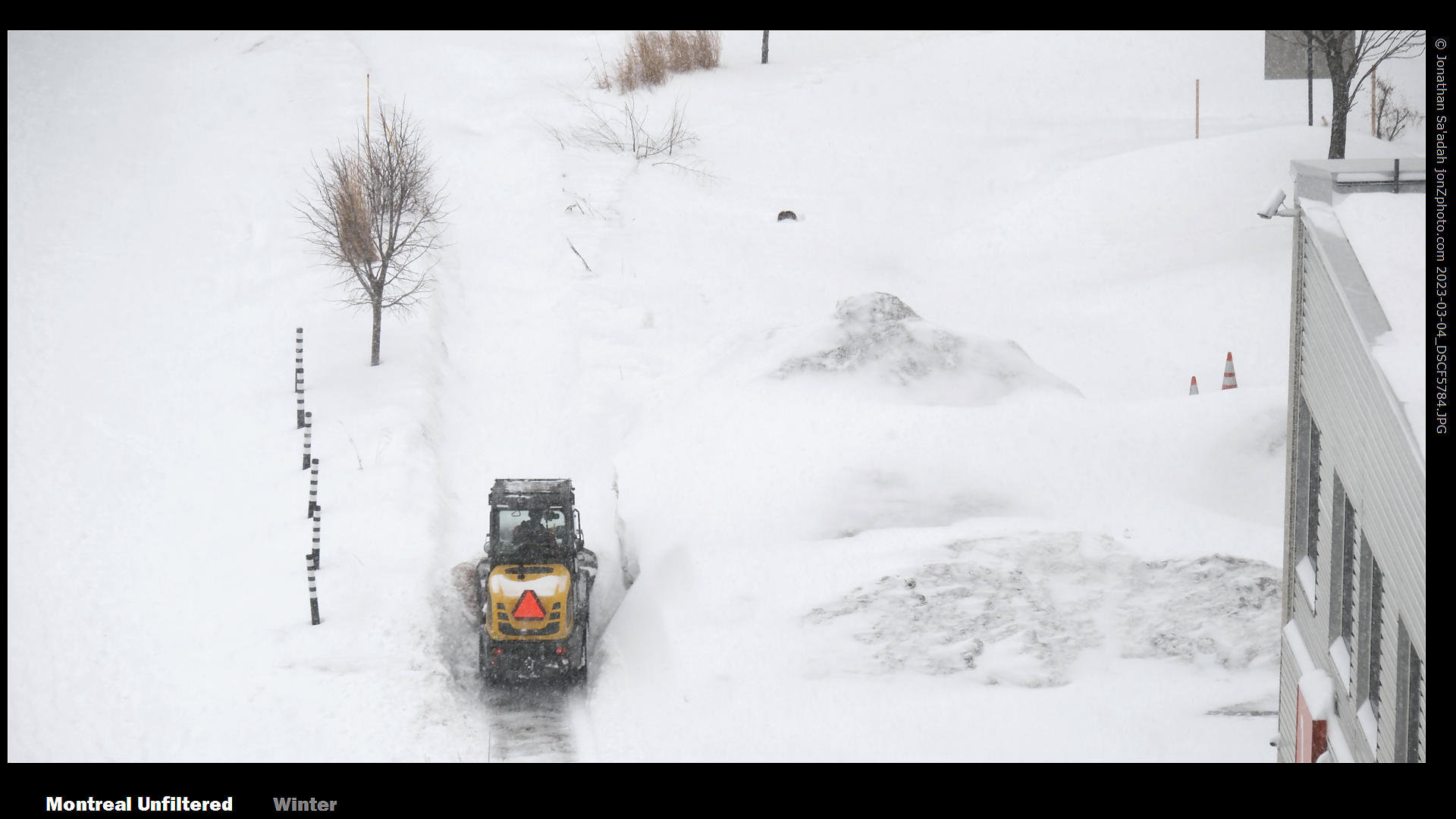
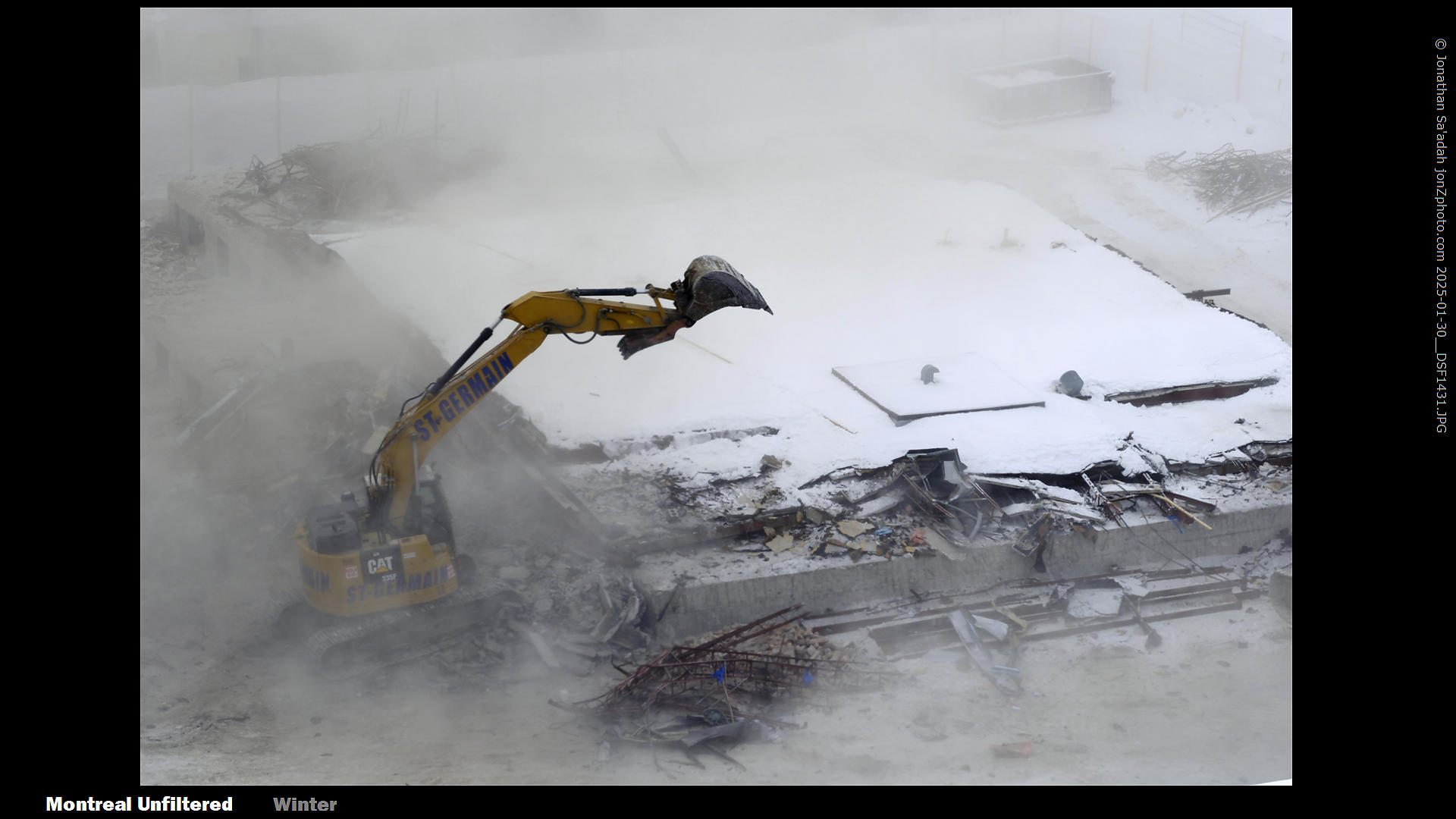
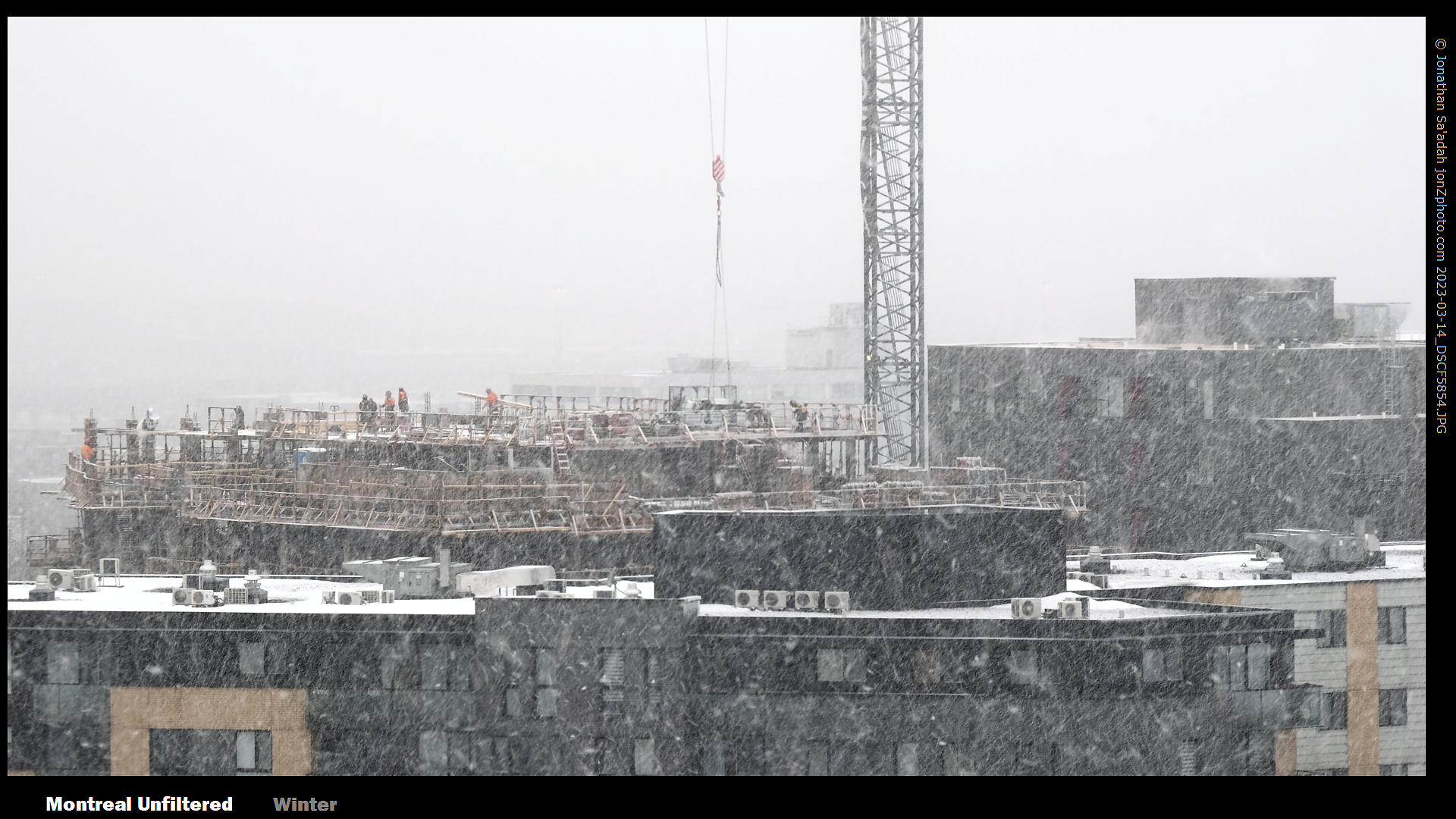
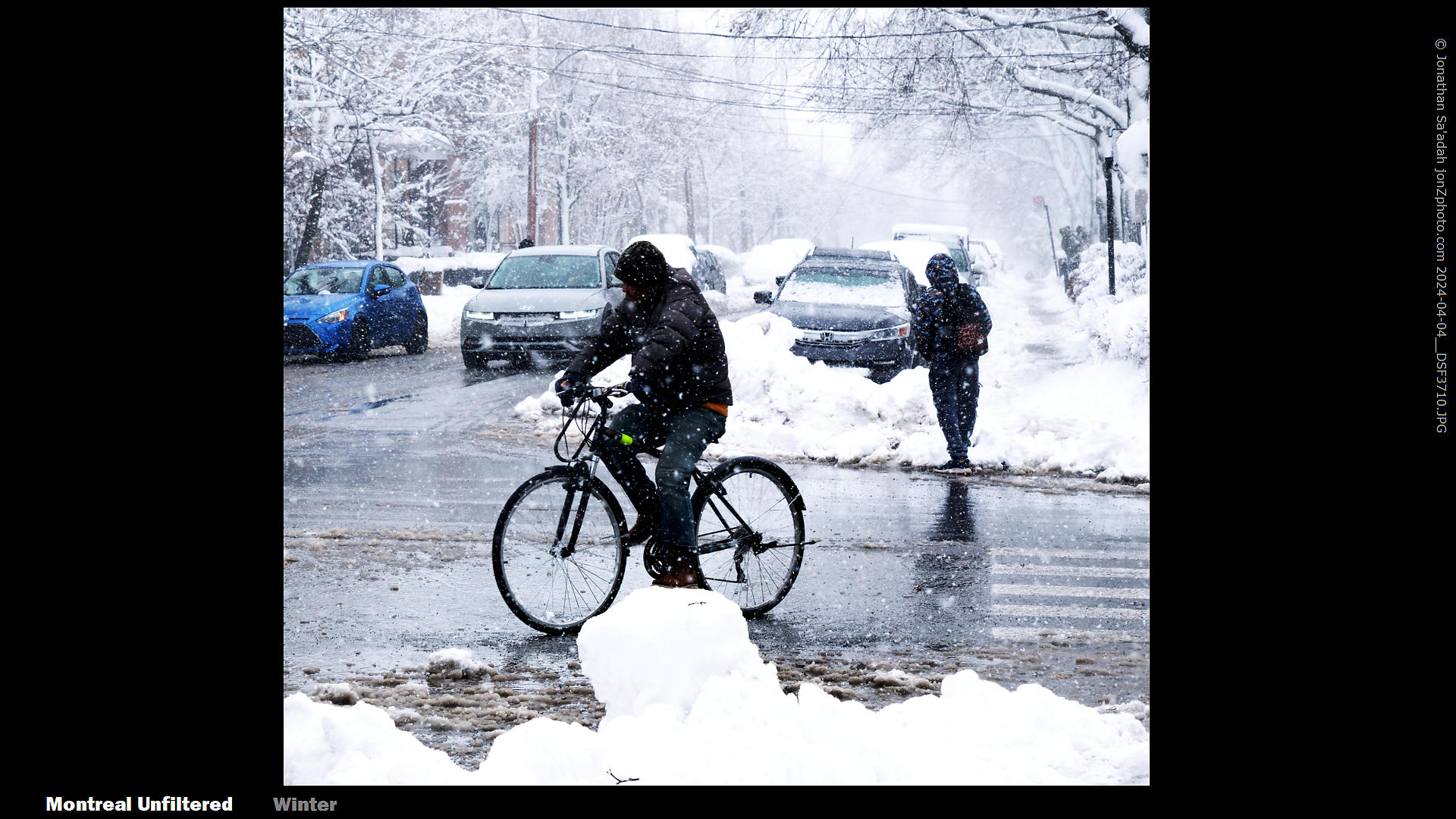
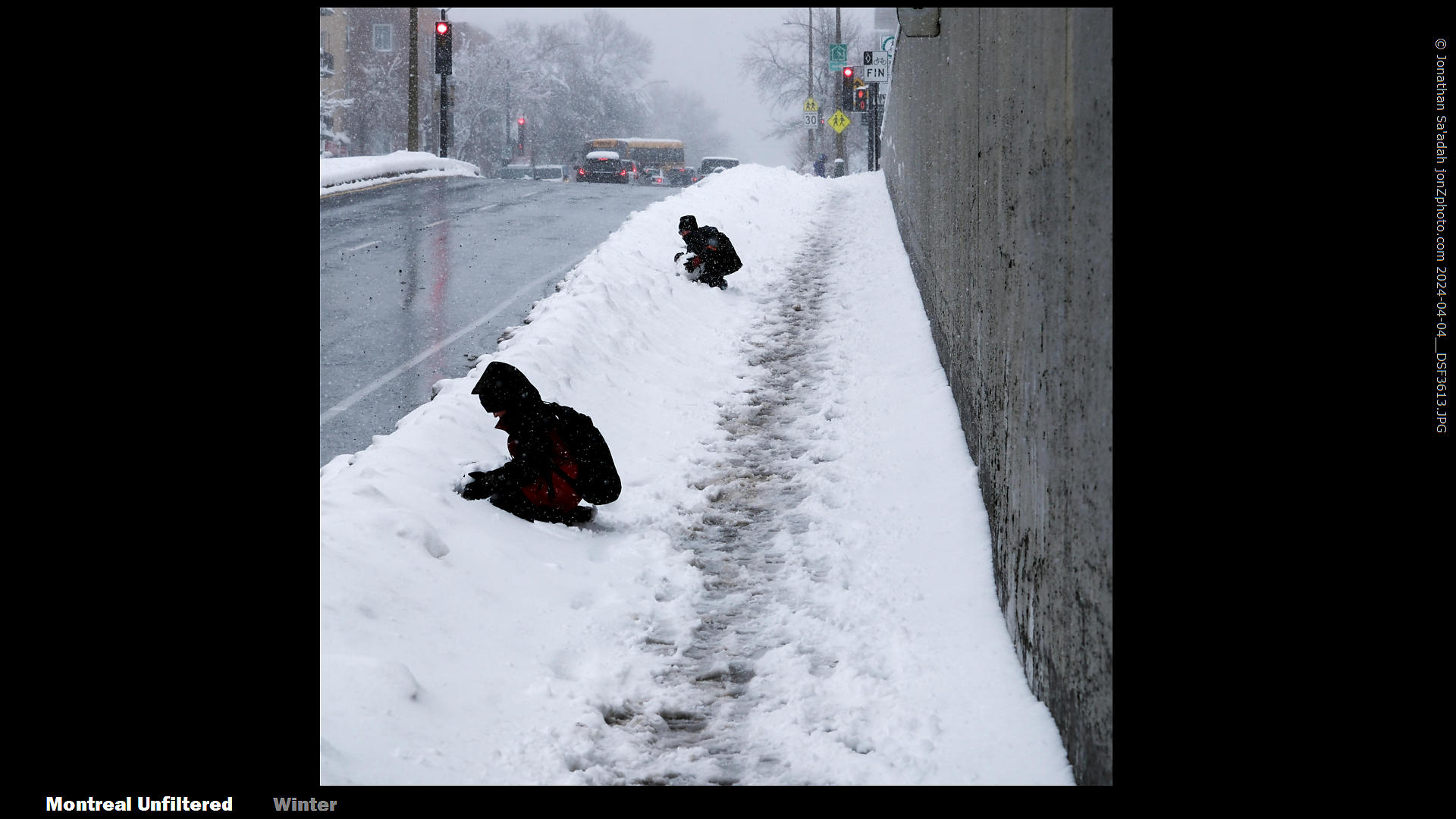
As penance for posting the deep-of-winter photos last week, I offer these to warm you up, or at least make you feel better.
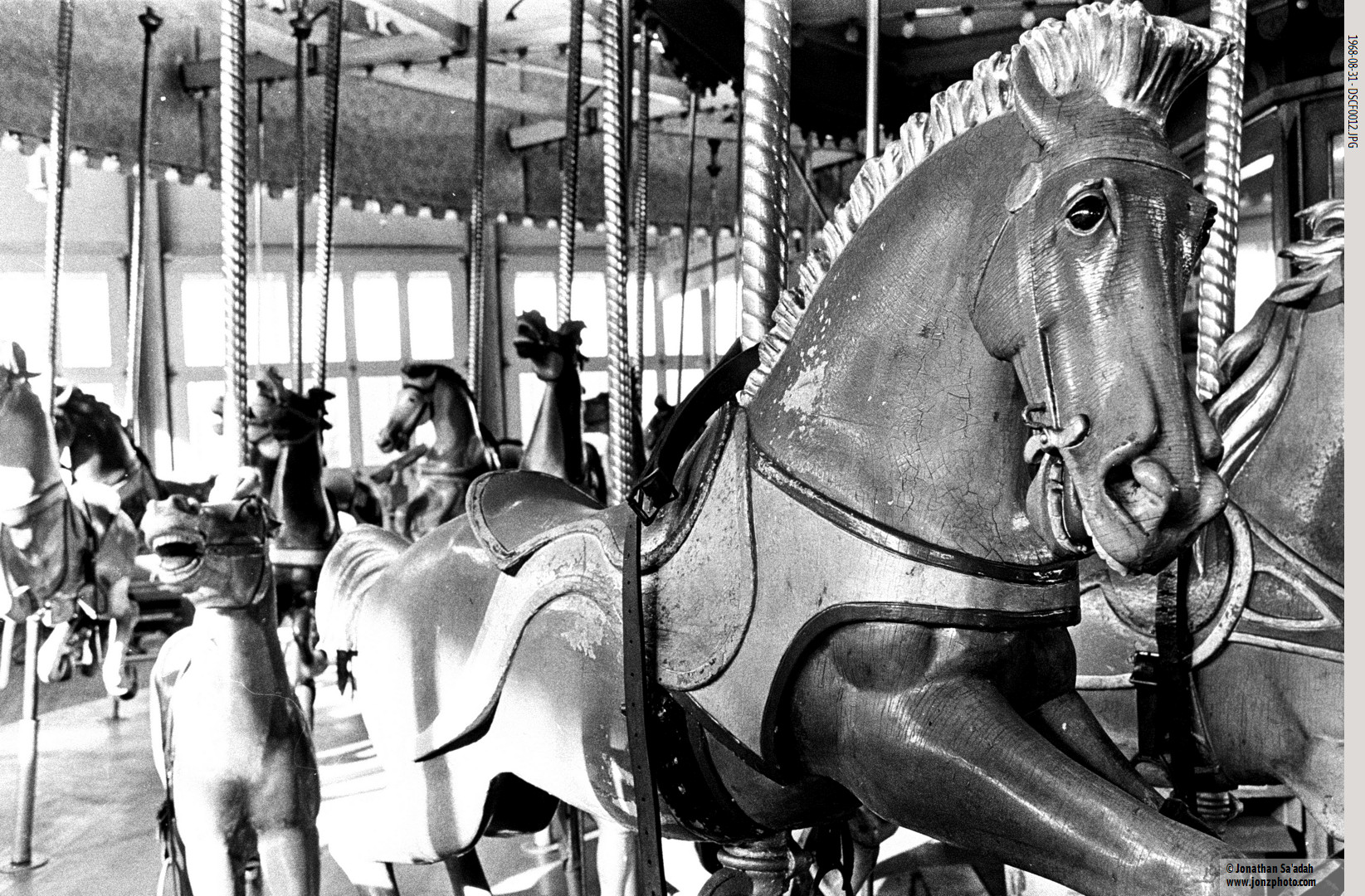
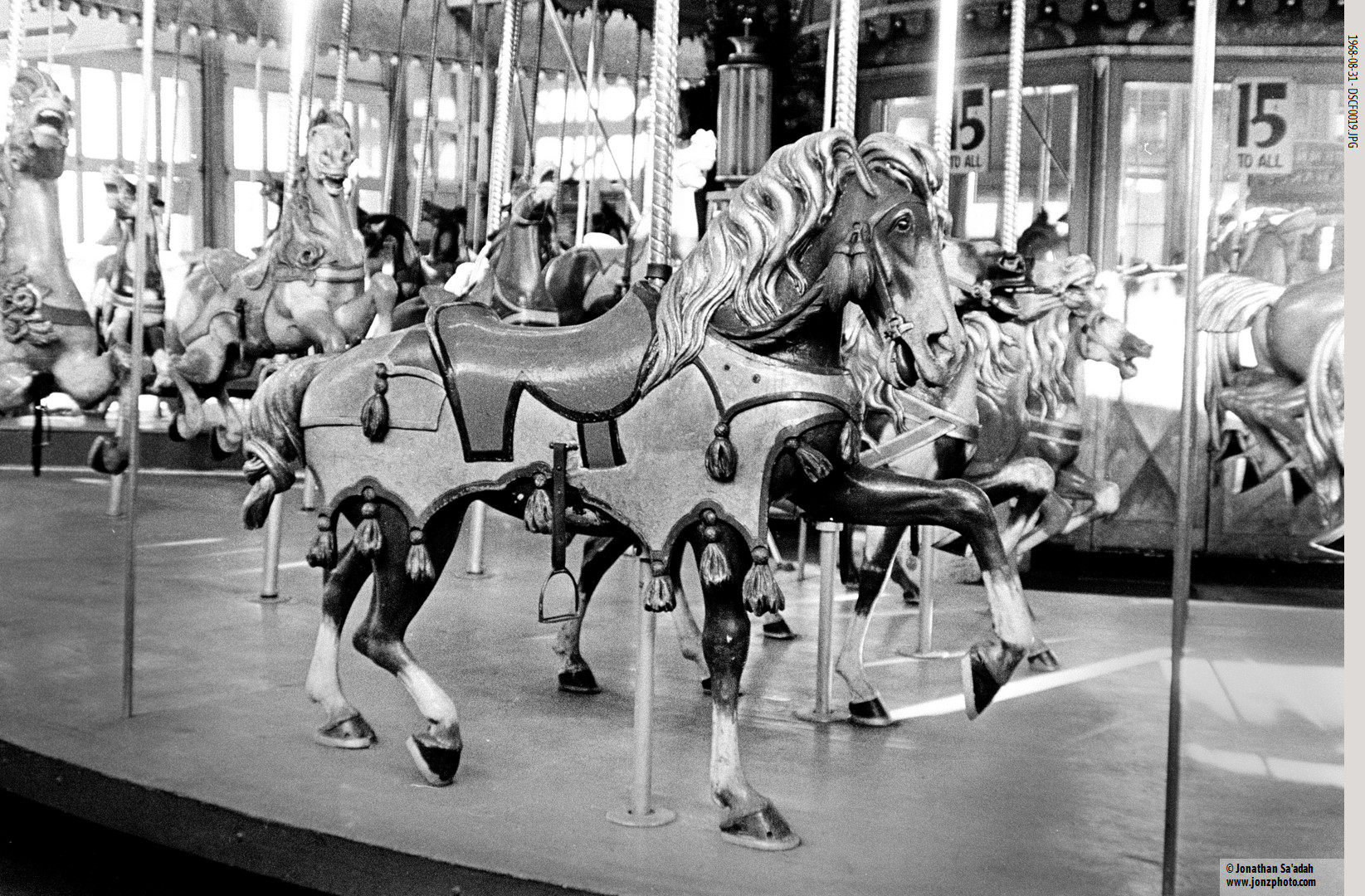
My family moved from Vermont to near New Haven, Connecticut in 1964. I was just starting to consider myself a photographer and I would often explore around the city with camera in hand. It was during one of those expeditions that I found the Savin Rock carousel. The way I was exploring around with my camera wasn’t too different from what I do now except that in those years I was rigidly dedicated to black-and-white photography, which actually was a shame with a subject as colorful as these horses.
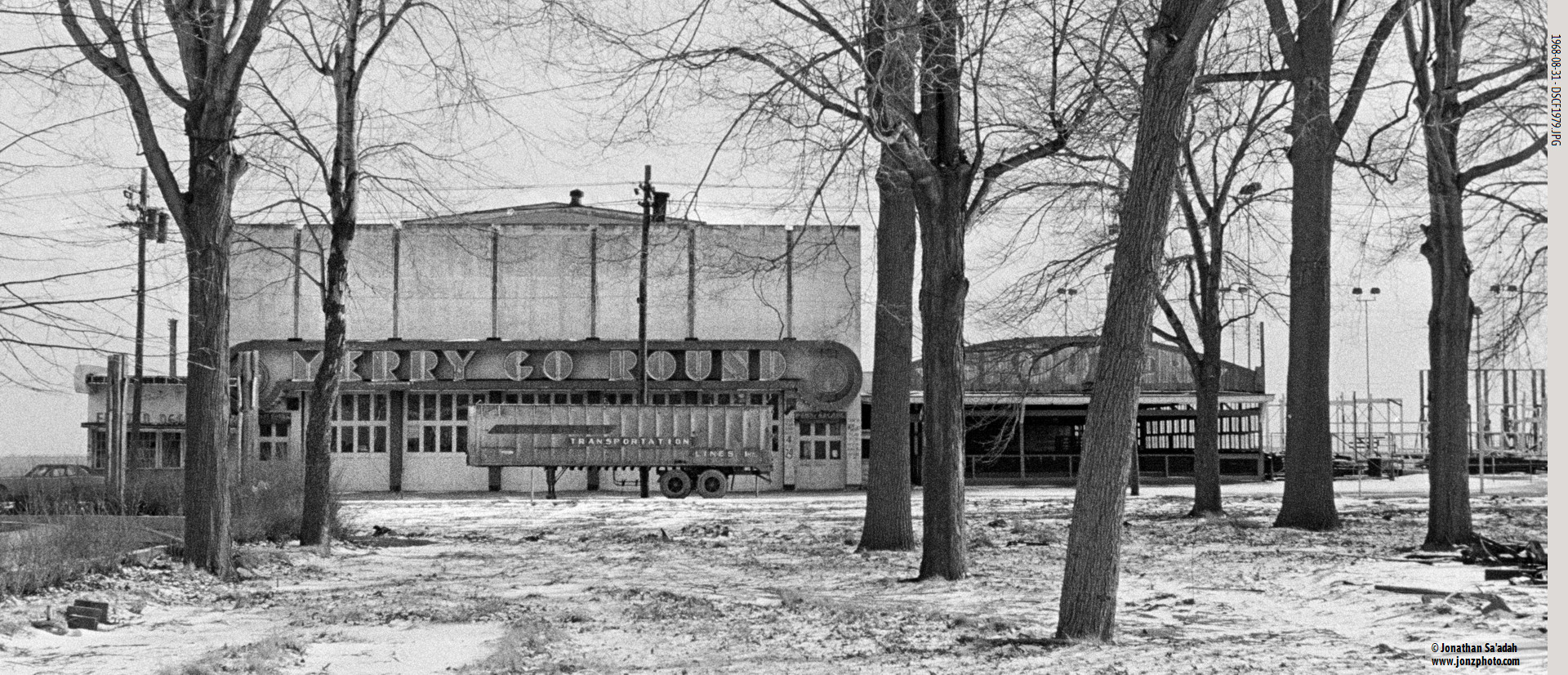
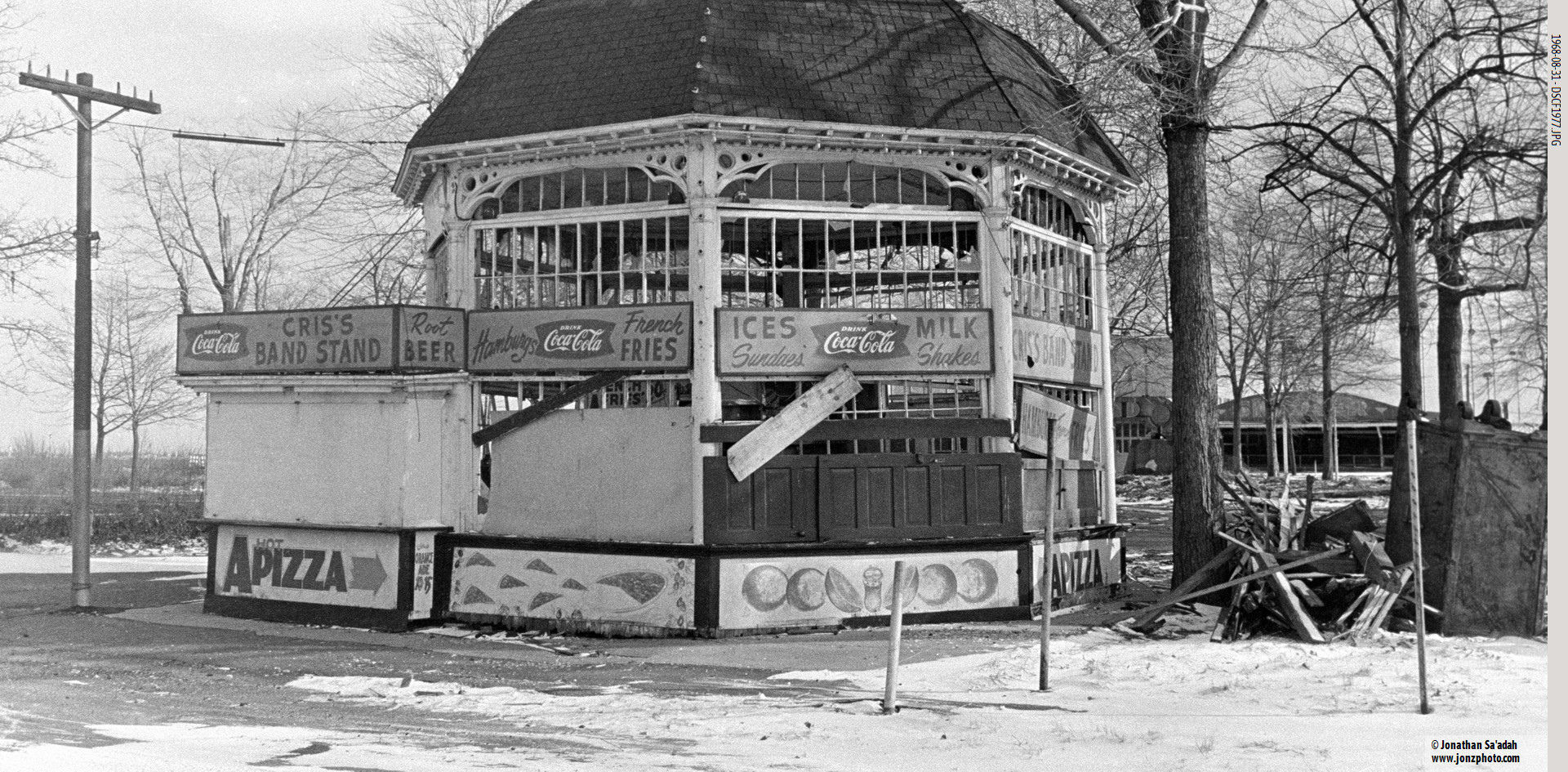
I remember Savin Rock in two guises: a brightly colored hill of red clay that overlooked the city, and a desultory semi-abandoned amusement park that was on the water’s edge down in the dock area. It was there that I found this magnificent merry-go-round, known officially as PTC No. 21, which began its life in 1912.
The Golden Age of Savin Rock
In the early 1900s Savin Rock was a carousel lover’s paradise. Beginning in the 1870s, the resort attracted millions of visitors annually with its mile-long midway packed with roller coasters, fun houses, and an extraordinary collection of carousels. At its peak in 1919, Savin Rock welcomed 1.2 million visitors a year, rivaling even Coney Island.
The park was so rich in carousel history that it housed at least a dozen major carousels throughout its existence. But among all these magnificent machines, PTC No. 21 would become the most famous – affectionately known to generations of riders as the “Flying Horses“.
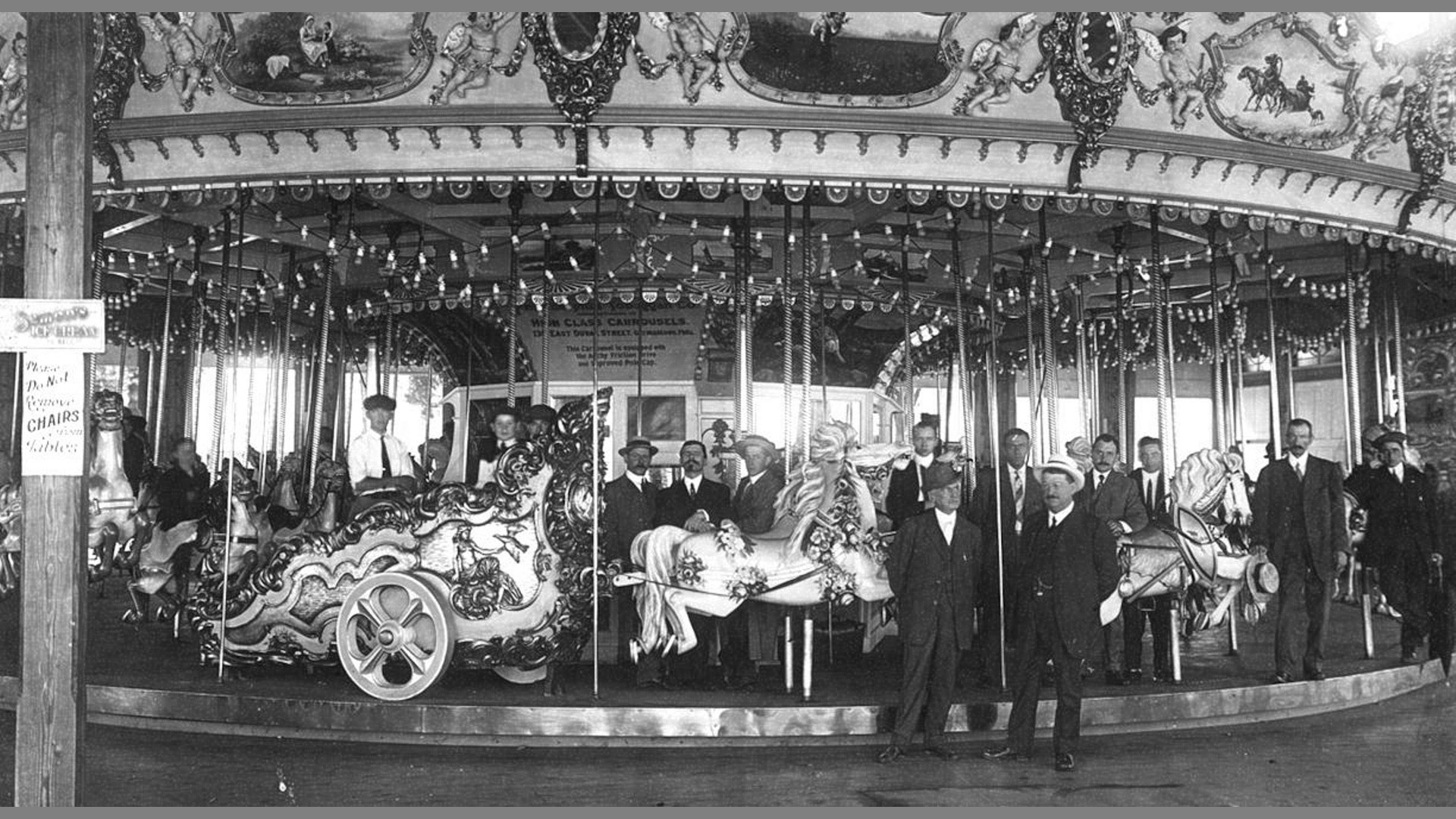
Historical photo: Handwritten note on photograph: “World’s Finest Carrousel with its Mechanics, Taken Labor Day 1912. Built by Phila Toboggan Co Phila Pa” (Photographer unknown)
A Carousel is Born: 1912
The Philadelphia Toboggan Company manufactured PTC No. 21 in 1912, during the golden age of American carousel production. This wasn’t just any carousel – it was a four-row masterpiece that arrived at Savin Rock as part of Fred Wilcox’s Long Pier. The timing was perfect, as carousel innovation was revolutionizing the amusement industry. These were truly different times.
Just five years earlier, in 1907, the famous Murphy brothers had introduced “jumpers” – horses that moved up and down – to Savin Rock carousels. This innovation forced every other carousel owner to upgrade their rides to remain competitive, and Fred Wilcox’s decision to order the spectacular PTC No. 21 was likely a direct response to this carousel arms race.
Surviving Disaster: The 1936 Flood
PTC No. 21’s most dramatic chapter came in 1936 when a major hurricane hit New England, causing significant damage. For many antique rides, such destruction would have meant the end. But the beloved Flying Horses were too important to Savin Rock’s identity to abandon. The carousel underwent extensive restoration and triumphantly resumed operation in 1939, continuing to delight families for nearly three more decades.
The End of an Era
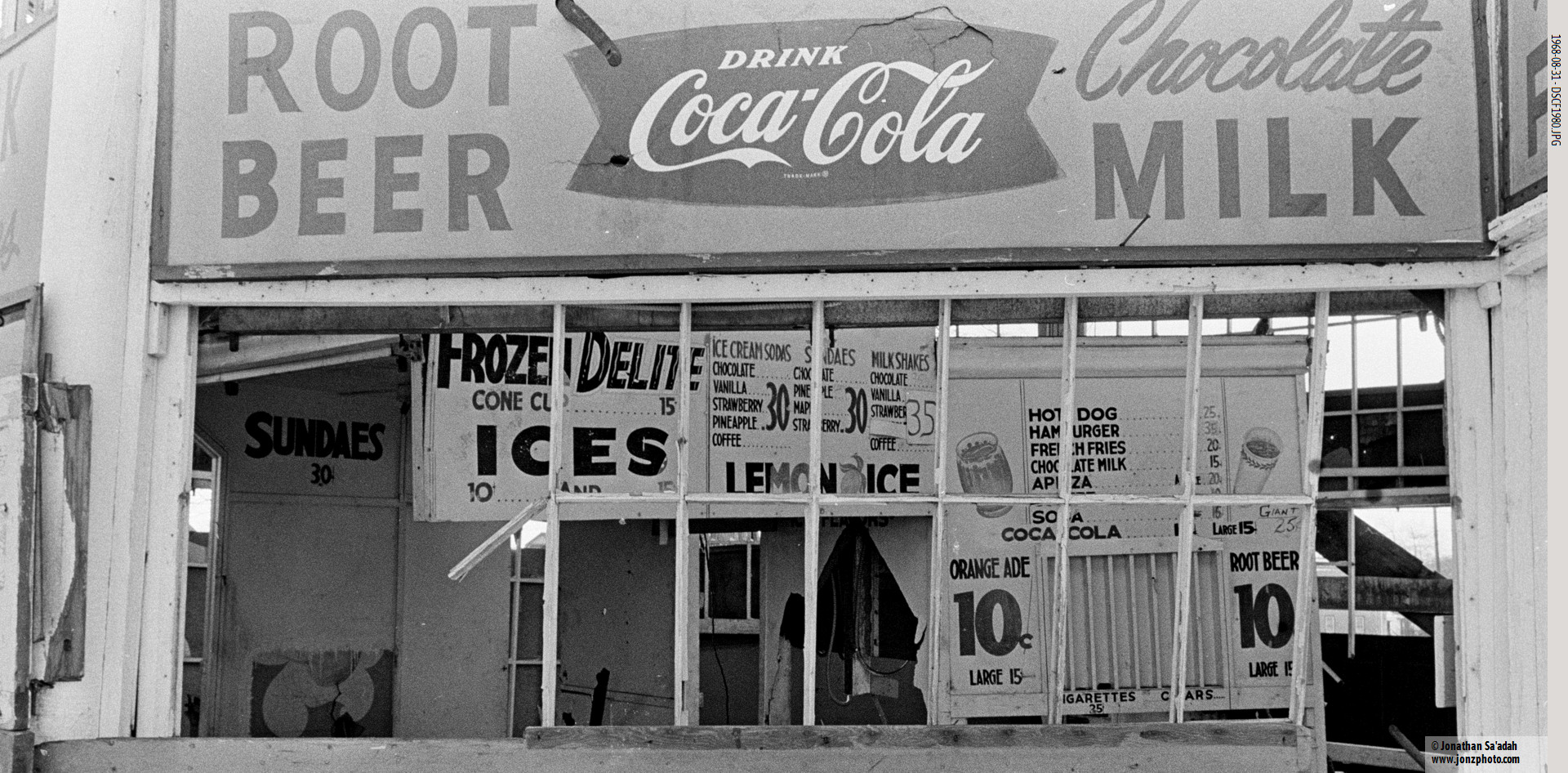
As the 1960s arrived, changing times and waterfront development began to threaten Savin Rock’s future. The grand amusement park that had survived the devastating 1938 hurricane and plans for 1950s expansion could not withstand the pressures of modernization. Savin Rock officially closed in 1966, and PTC No. 21 took its final spins at its original home in 1967, the year I took these pictures.
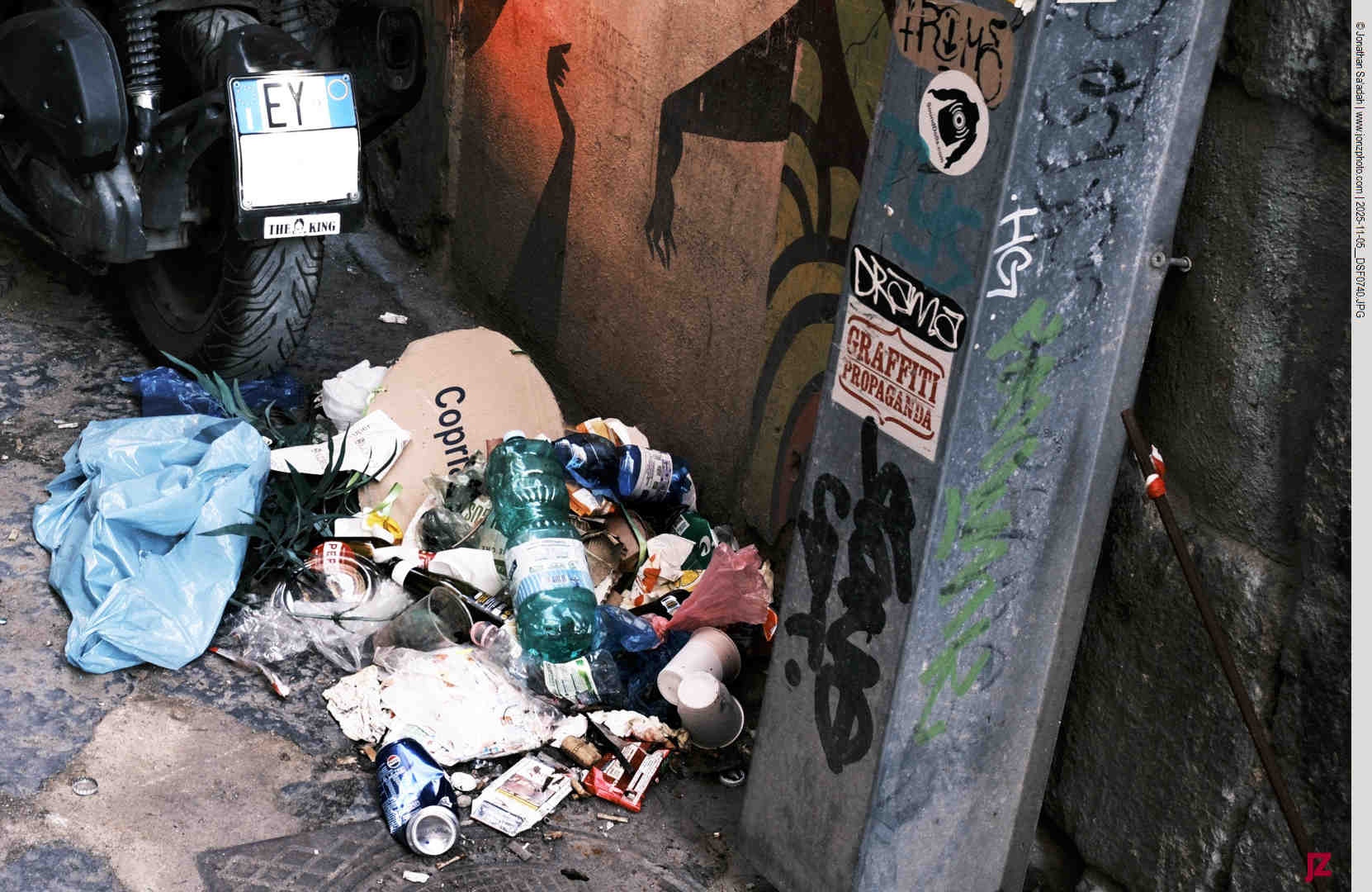
When we arrived in Naples my first impressions were of physical deterioration, vandalism, and filth. When thrown suddenly into the chaos and traffic just outside the airport the contrast with Montreal felt like too much! A visceral body blow.
Looking back now I can see how wrong I was. Yes, Naples is chaotic, smelly and, in ways, a maddening place but its lifeblood and character transcend its drawbacks. I came away feeling lasting affection and respect.
Disclosure: Alas, I have no blood connection to Italy, so what I write is based on a short period – nine days in the city, though I’ve had other visits to the country. Italy, and Naples especially, inspires strong opinions so chime with your experiences.
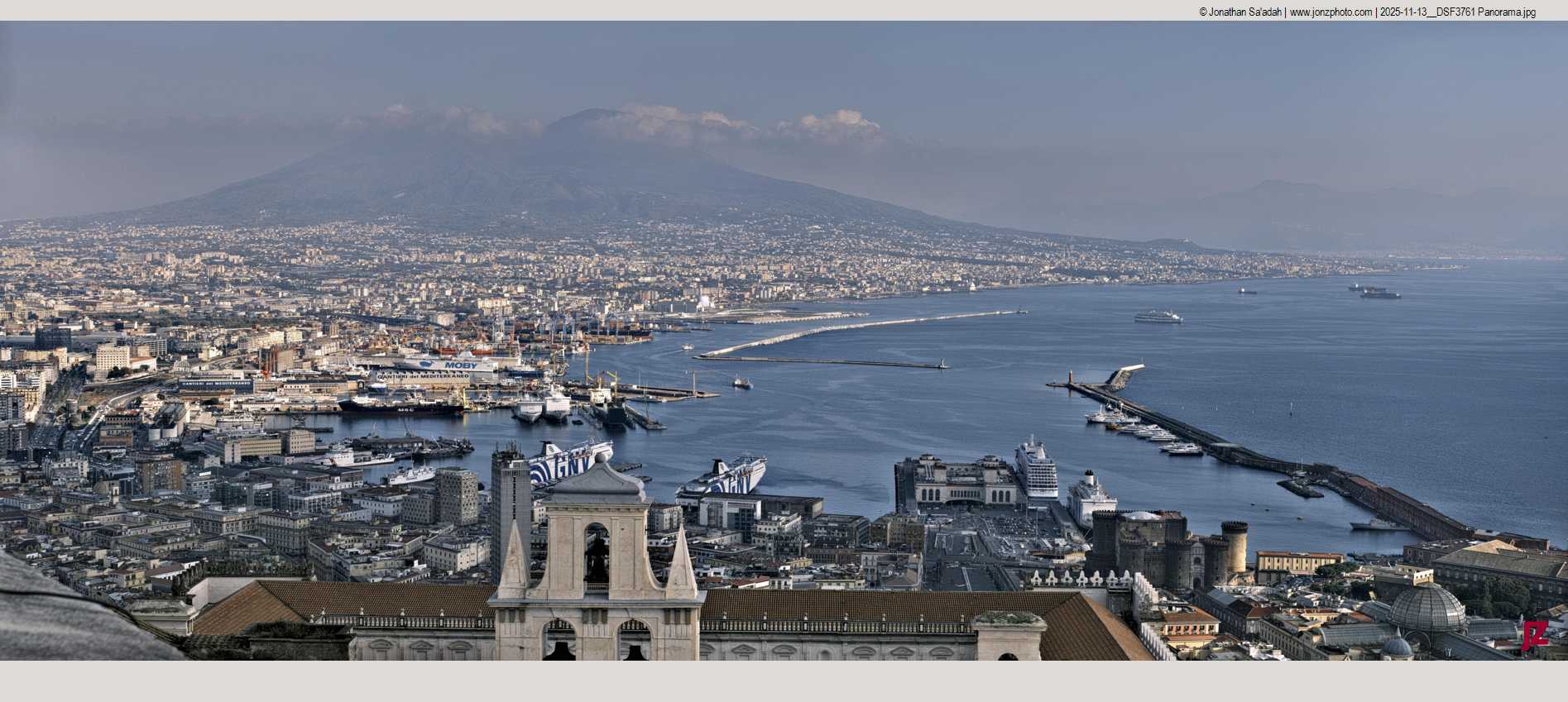
▲ Naples is actually about only a half of Montreal’s population within the metropolitan area, but it clearly wins on location with the Mediterranean and warm climate. Not to be overlooked, there’s always the question of Vesuvius looming above.
What I saw in Naples and what excited me the most was life unfolding in a continuous present. Damascus had a similar feel, but lacking the lively social give-and-take. History is not a frozen backdrop but a living participant in the present. The city’s streets compress centuries of urban life into a narrow, vertical spaces in which architecture, religion, commerce, and society are densely layered and constantly in motion. Everyday life spills outward from apartments and courtyards onto sidewalks, alleys, and piazzas, turning public spaces into hybrid spaces of living rooms, marketplaces, and theatres. It’s a feeling that I’ve fractionally experienced in other cities, but nothing like what washed over us in Naples.
A city built for the street
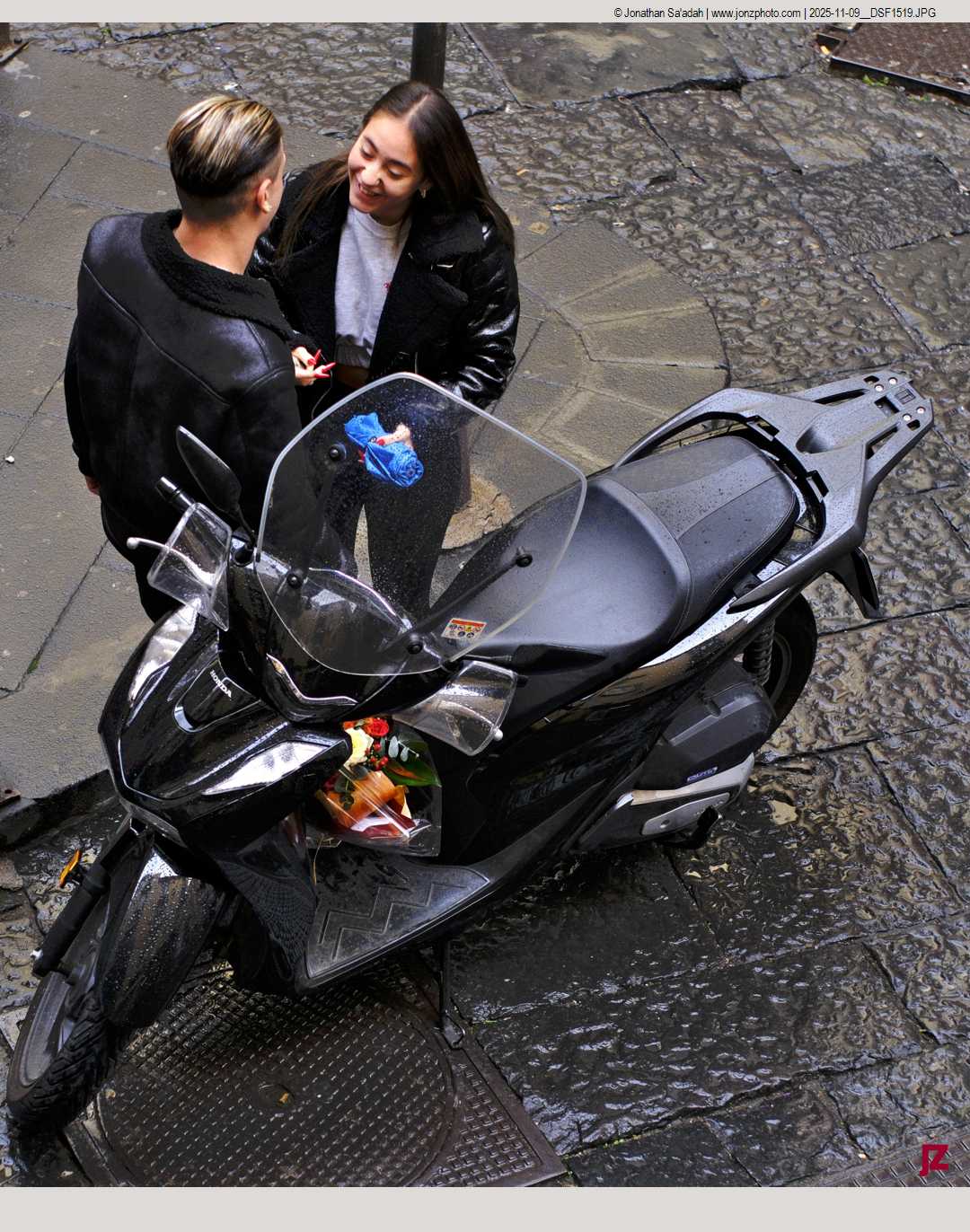
Naples’ street culture is inseparable from its urban fabric, especially in the historic center. Narrow streets and tall palazzi push life outward: balconies overhang the stone alleys, laundry stretches from window to window, and voices carry easily across the void. The result is a public realm where boundaries between inside and outside are porous, and where residents use doorsteps, stoops, and thresholds as extensions of domestic space.
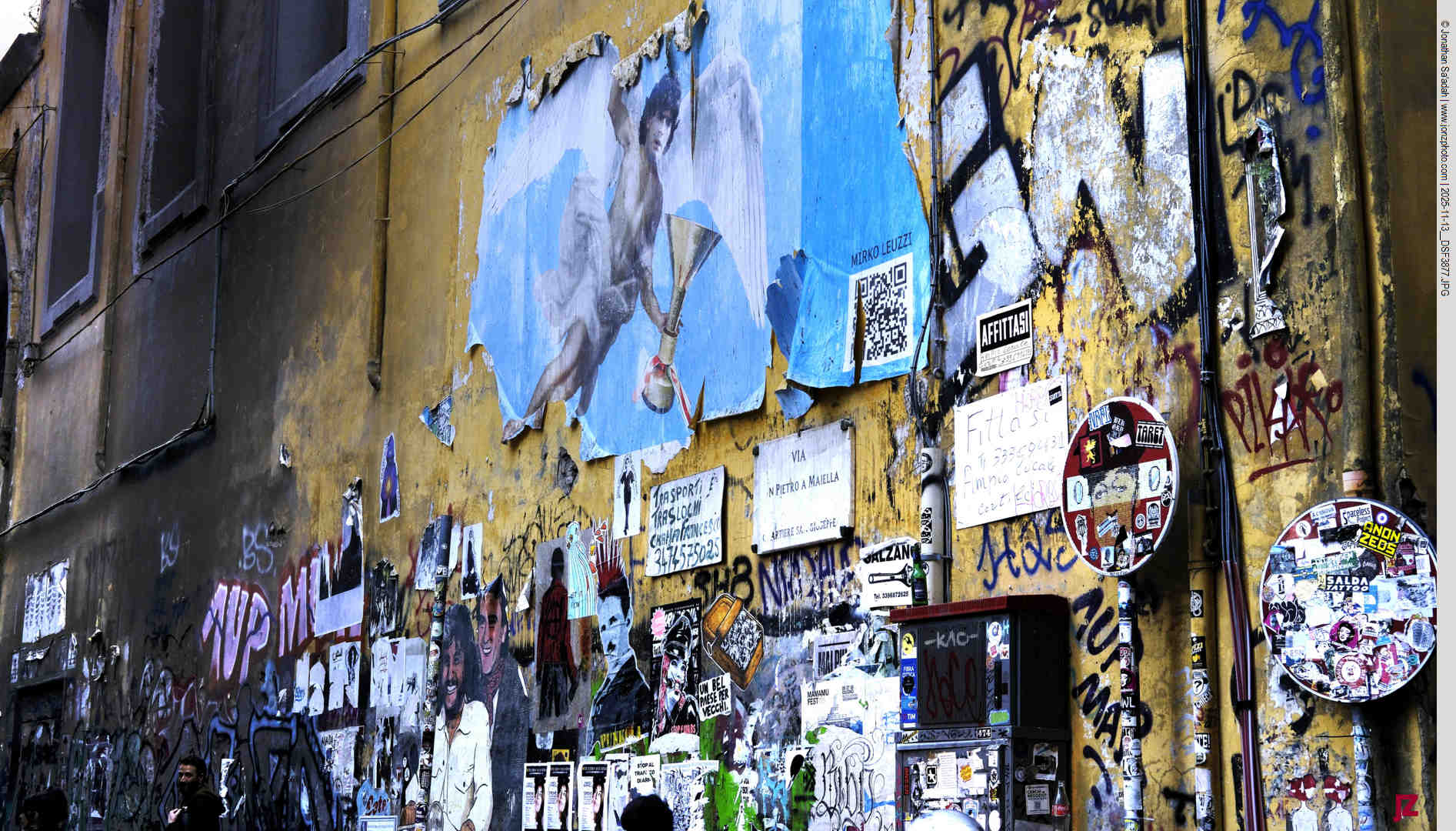
▲ All the Neopolitan elements of street decoration. Diego Maradona hovers above it all.
Rituals, religion, and everyday devotion
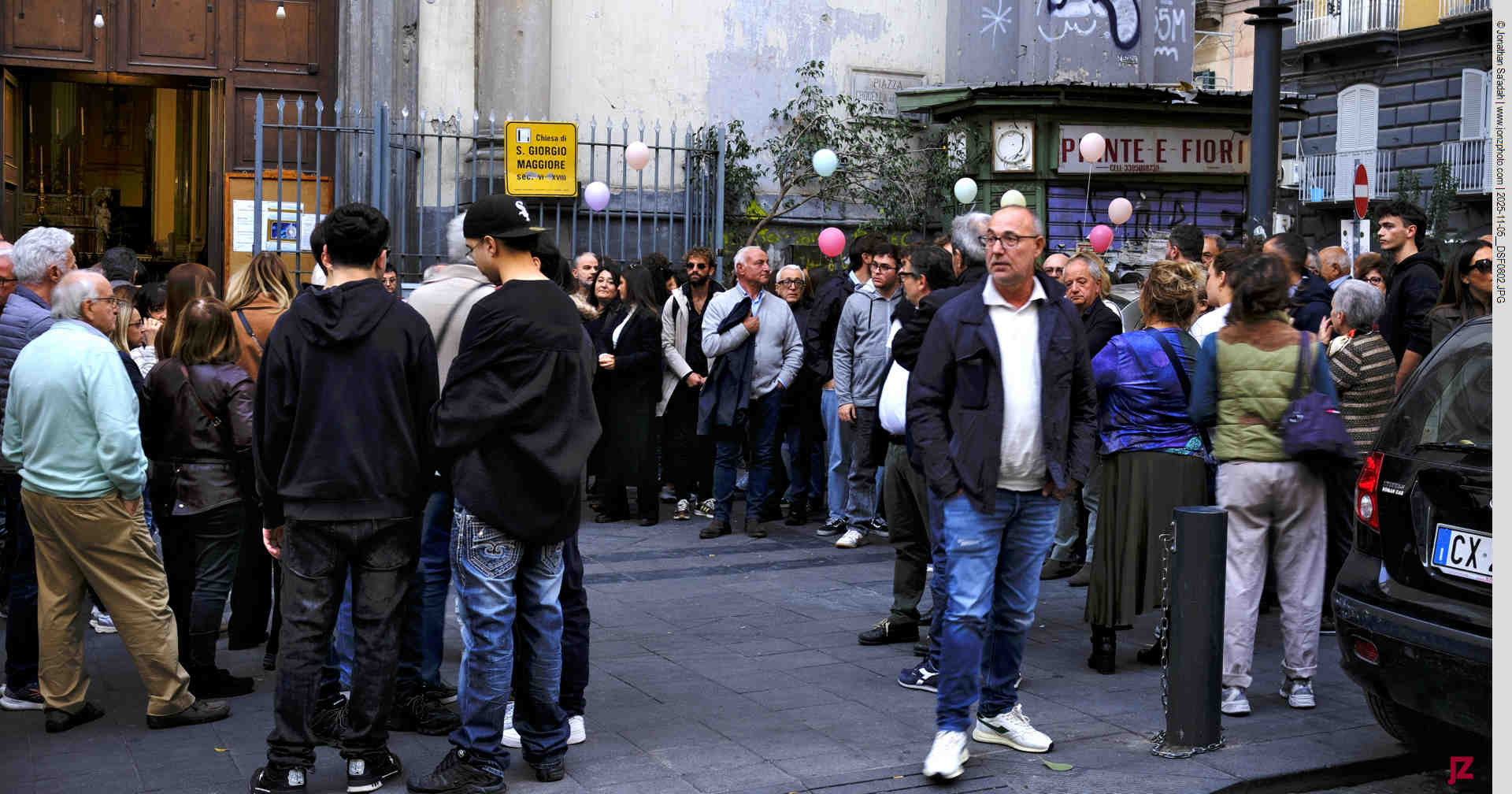
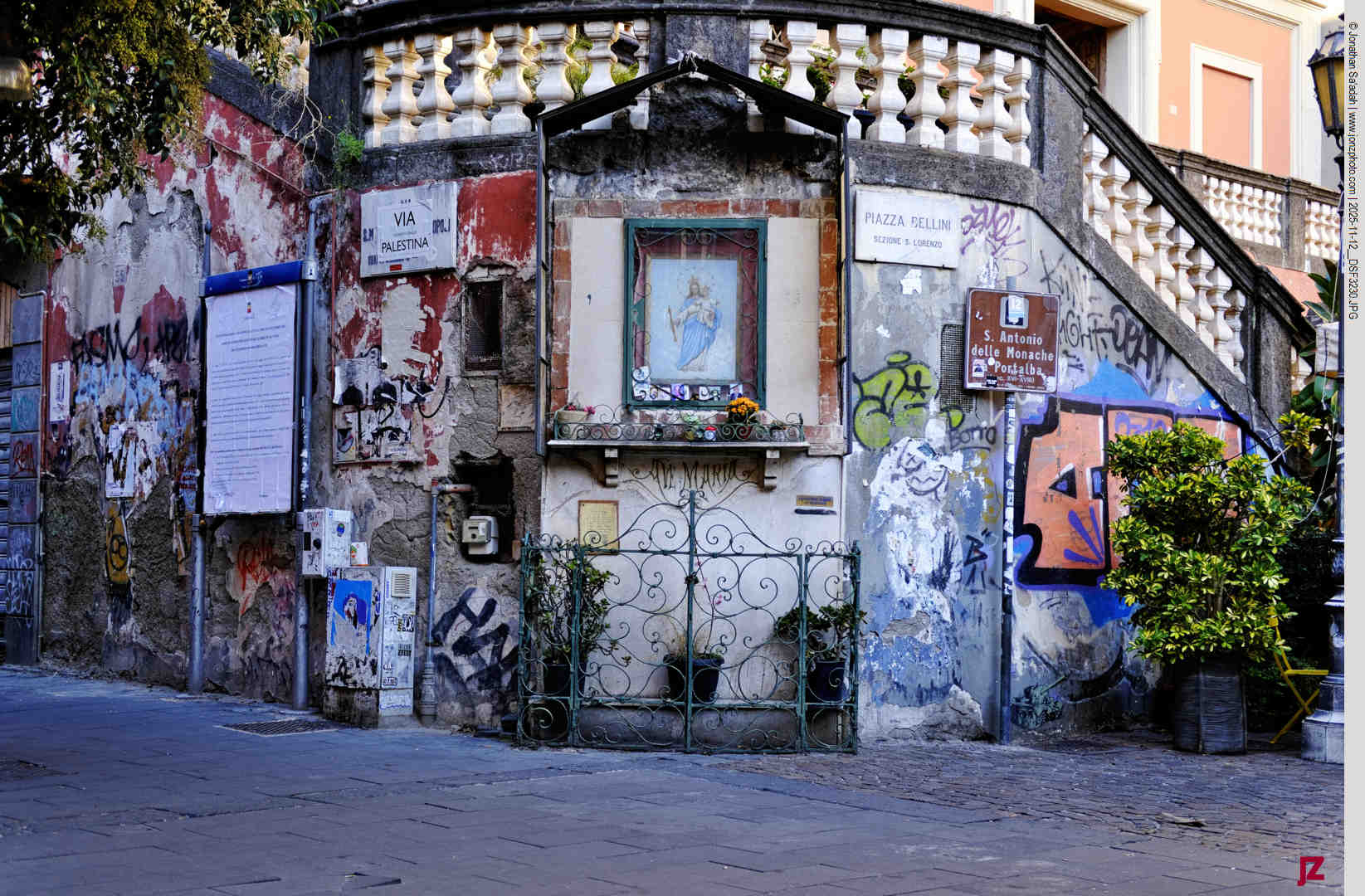
Street shrines – dedicated to the Madonna, local saints, and more recently figures like Diego Maradona – punctuate corners and facades, anchoring a popular religiosity that is both deeply felt and casually integrated into routine. Grief and celebration remain visible rather than privatized. Processions, move through the same streets that serve as commercial arteries, briefly reorganizing traffic and commerce around communal rites.
▲ Mourners on the street outside a church waiting for the hearse.
Commerce, food, and the social economy
Street-level culture in Naples is also a culture of commerce, from formal shops along Via Toledo and other main arteries to informal stalls, barrow vendors, and door-front sellers. Food is central: pizza al portafoglio, fried snacks, and pastries are eaten on the move, reinforcing an urban tempo in which eating, talking, and walking blur into a single activity. Small businesses – tailors, repair shops, artisan workshops – often have doors flung wide open, allowing passersby to watch work in progress and which favors a network of long-standing relationships.
Noise, performance, and conflict
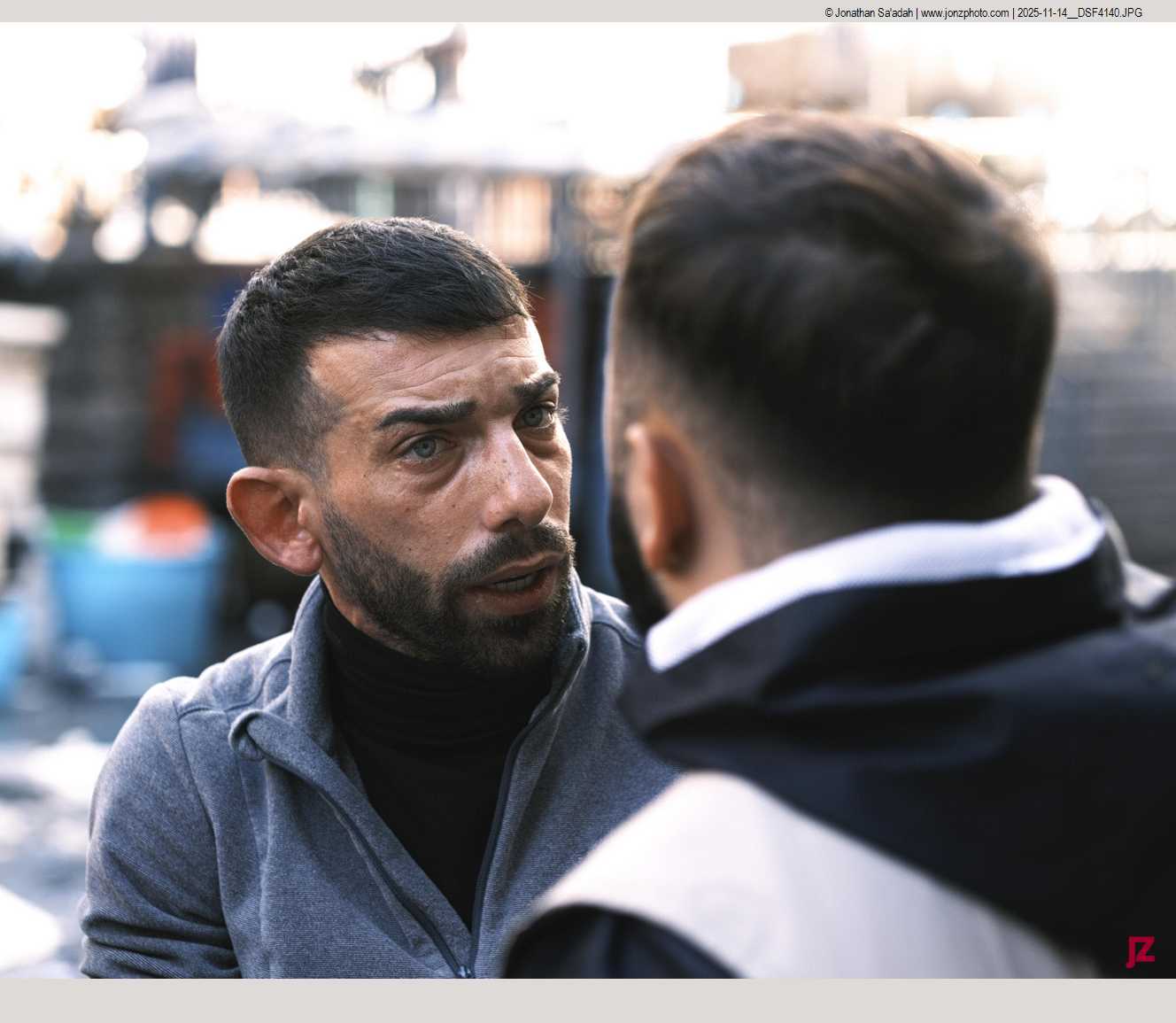
Sound is one of the principal mediums of Neapolitan street life: motor scooters, shouts, arguments, laughter, and music densely fill the acoustic space. Conversation easily becomes performance; the theatricality has roots in a real culture of gestural communication and public argument, where disagreement is aired loudly but does not always imply rupture.
Graffiti, stickers, and visual claims
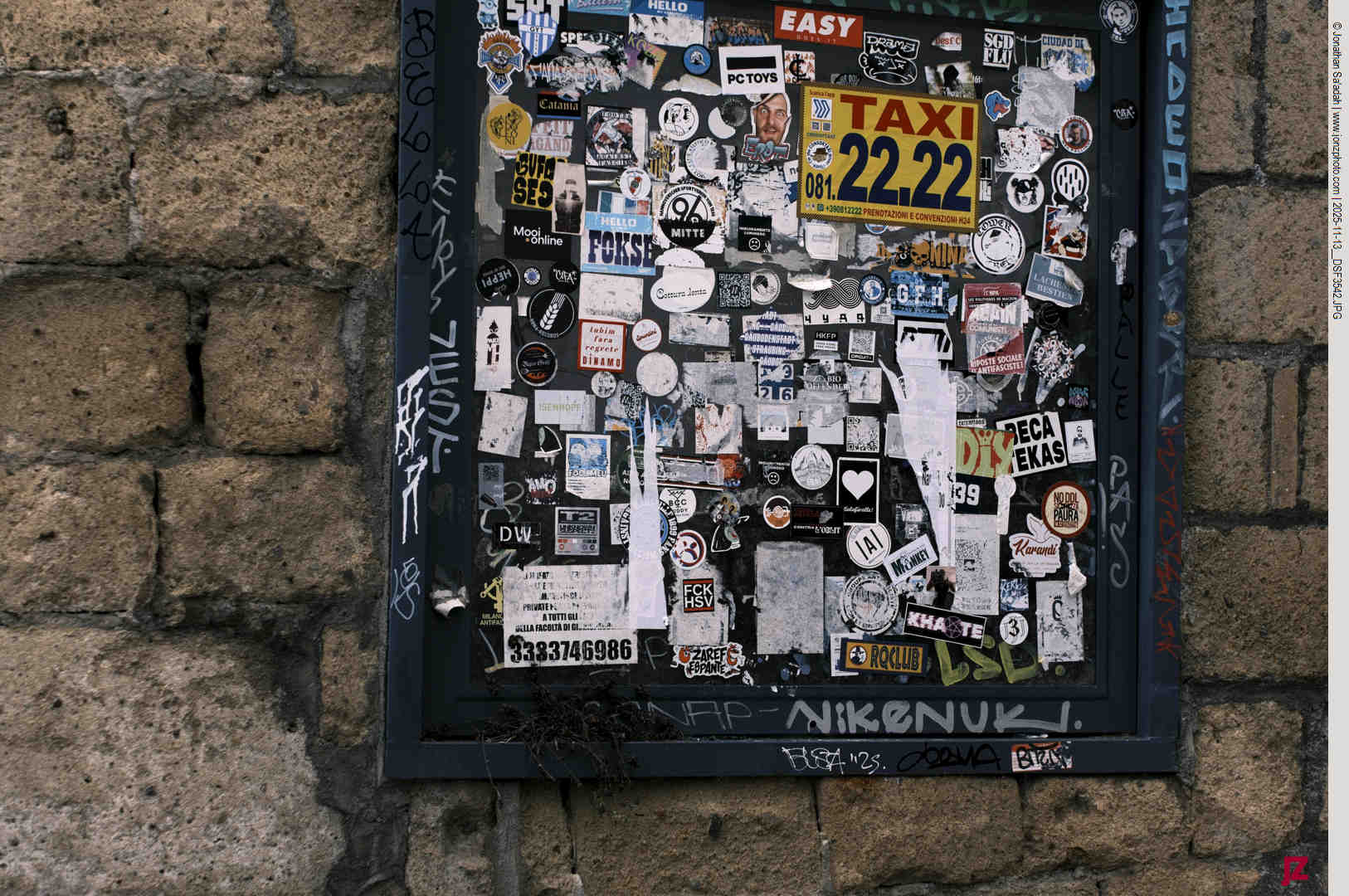
Walls, shutters, and street furniture function as a visual gallery of tags, murals, stickers, posters, and hand-painted signs, through which individuals and groups claim presence and allegiance. Football imagery – especially around Maradona and SSC Napoli – intertwines with political symbolism, memorials, and commercial advertising, producing surfaces that narrate loyalties, losses, and local pride. Municipal regulation and cleanup are uneven, so these layers are rarely erased; instead, they accumulate, reflecting a city in which informal expression is both tolerated and expected as part of the everyday street-level environment.
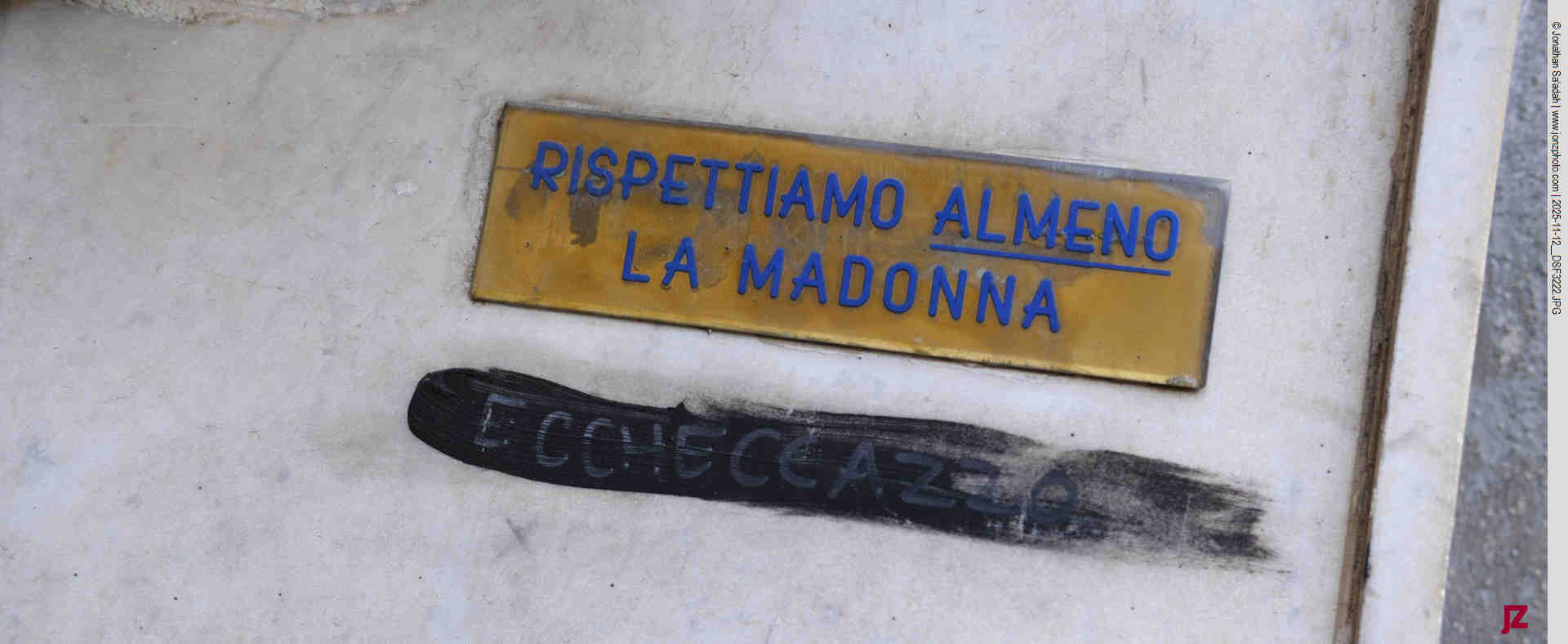
▲ Street Shrine to the Madonna▲ Instructional plaque below the shrine admonishes: “Let’s at least respect the Madonna”. Below it, in answer, but crossed out: “What the Hell?” or “What the fuck?”
Return to North America
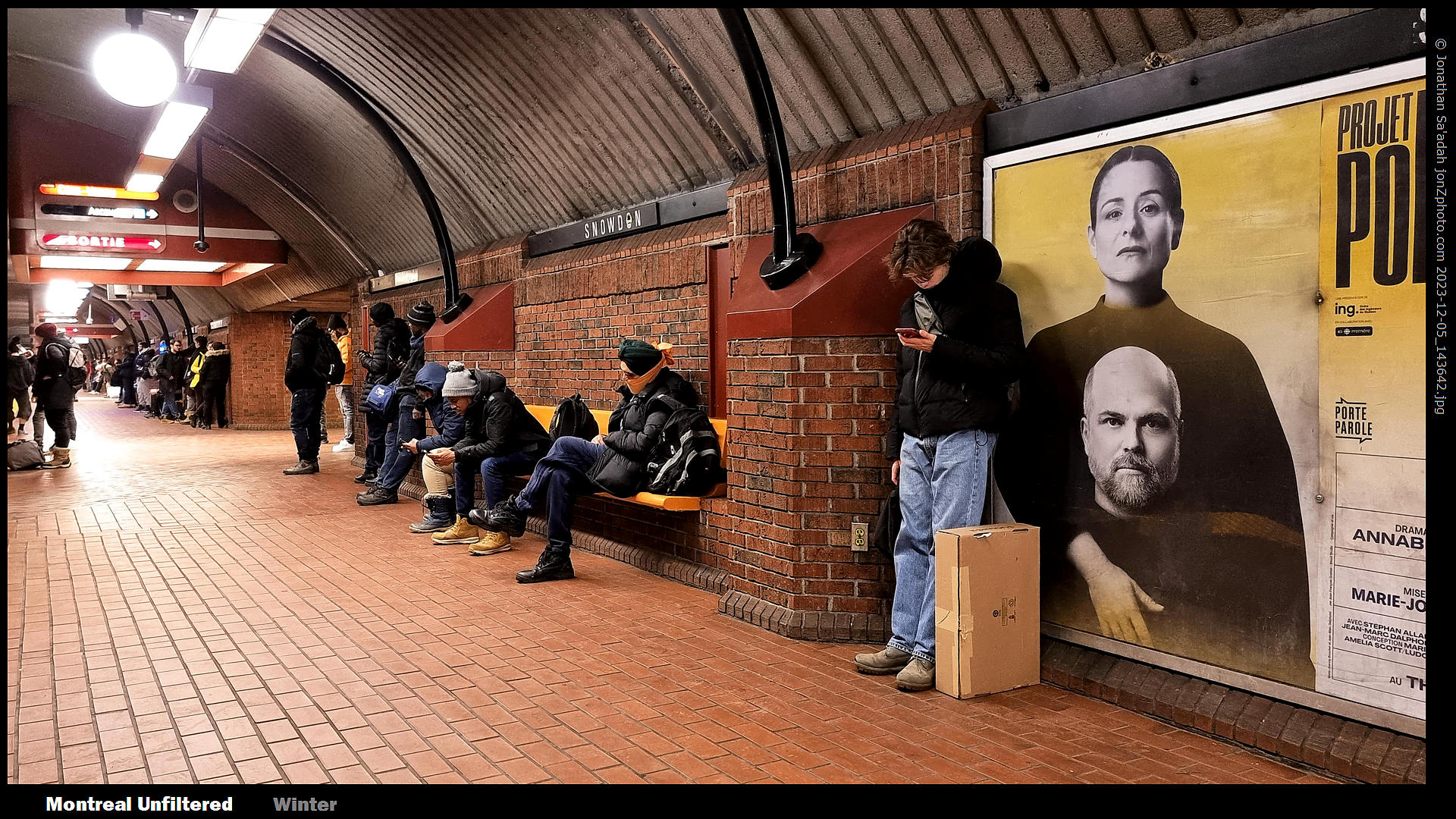
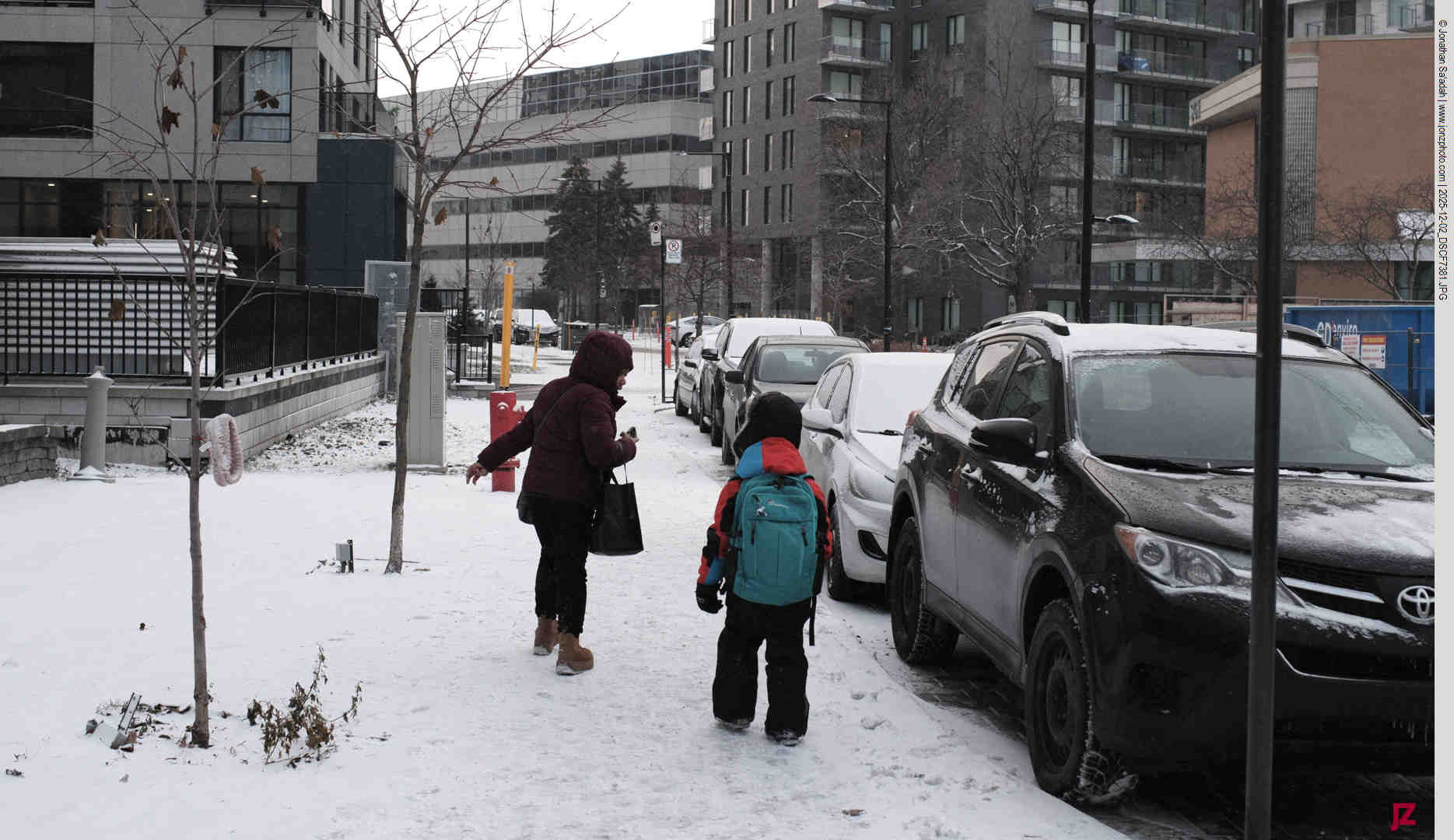
There’s almost no obvious overlap between Naples and Montreal. If I pulled my car out into an intersection and acted like a normal Neopolitan driver, I would so shock my fellow Montrealers that counseling teams would be called in by arriving cops, to say nothing of where I’d end up. But even though we sit like silent glum blobs glued to our phones while we ride our public transport, I still ask if we’re not chronically depressed because we don’t have an easy life dealing with northern-latitude weather. There’s no light a lot of the year and grocery stores ask high prices for food that in Naples would be classified as road kill. If we were en masse moved south and fed the foods of Italy I could see us lighting right up – sparking around with high energy collisions off each other and making noise in the metro. We have the spirit, just not the environment. Watch out, dear residents of Naples!
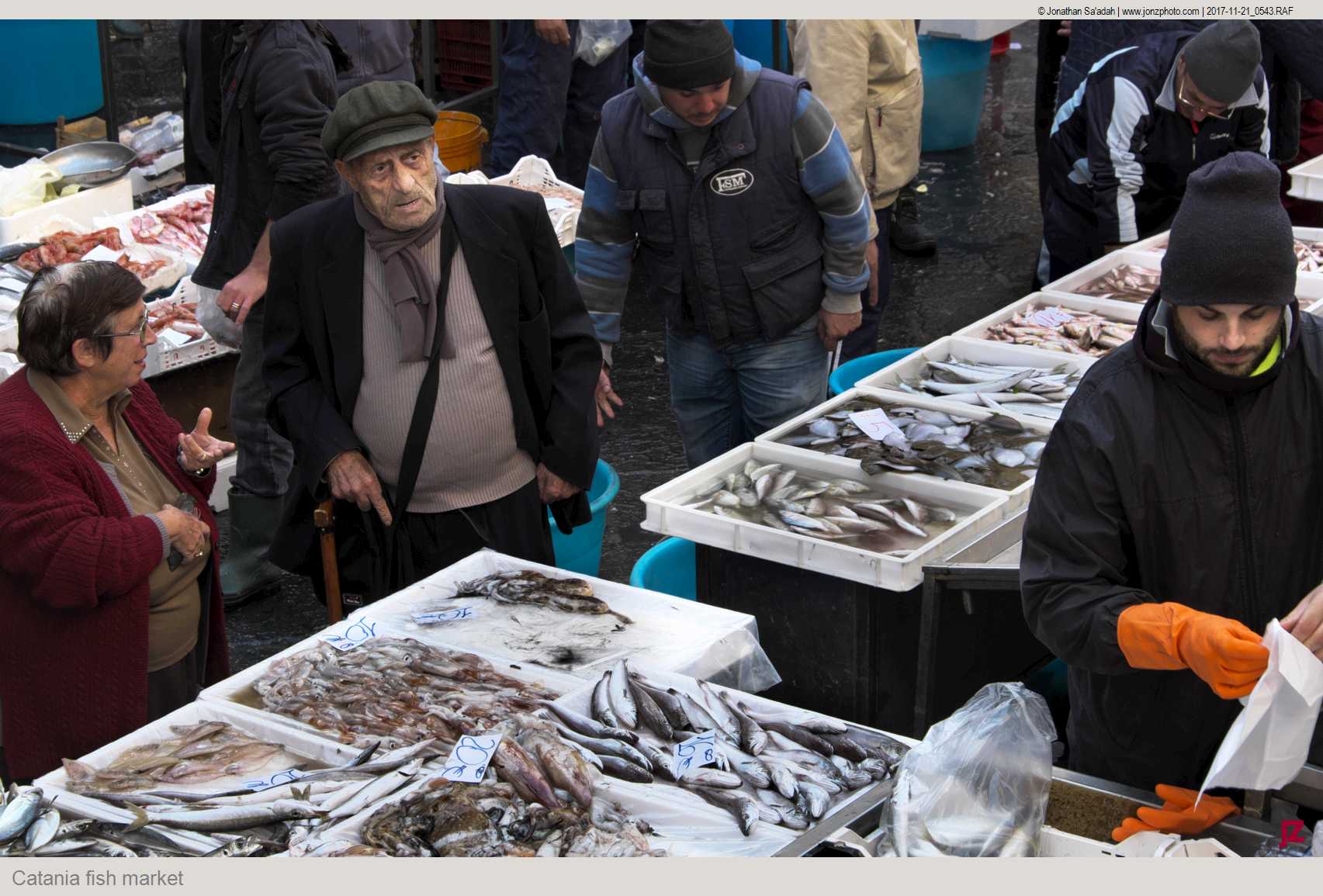
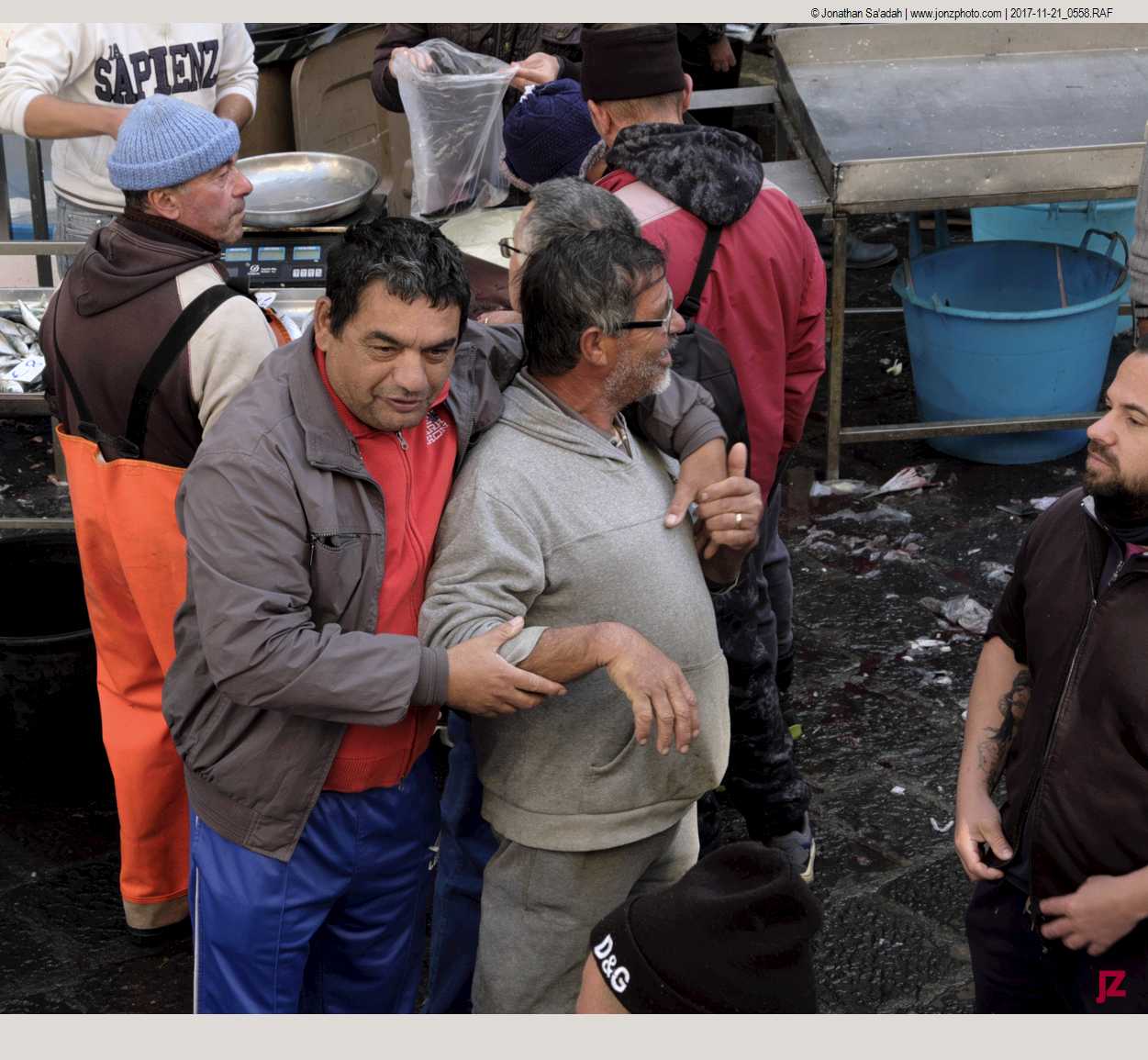
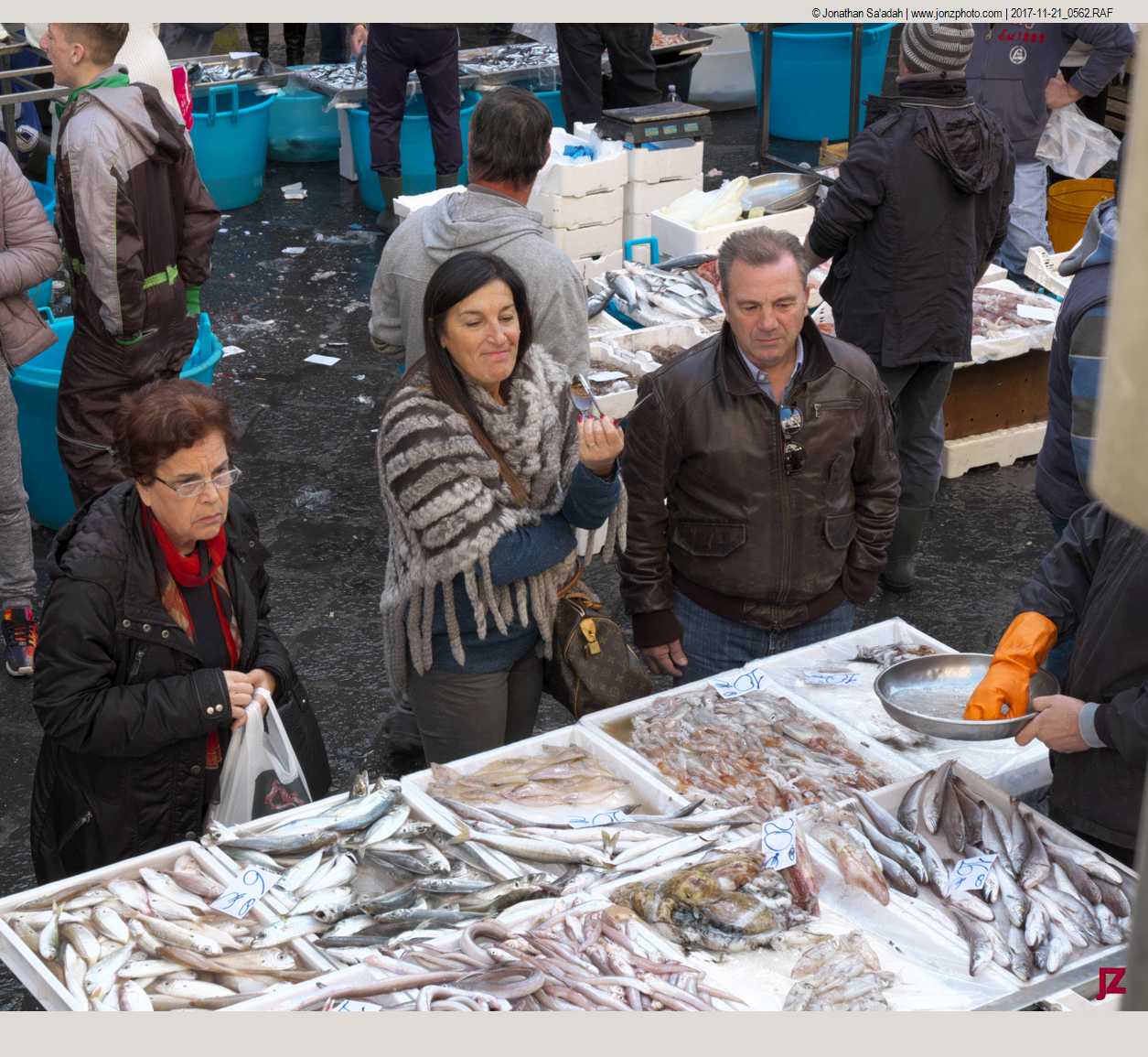
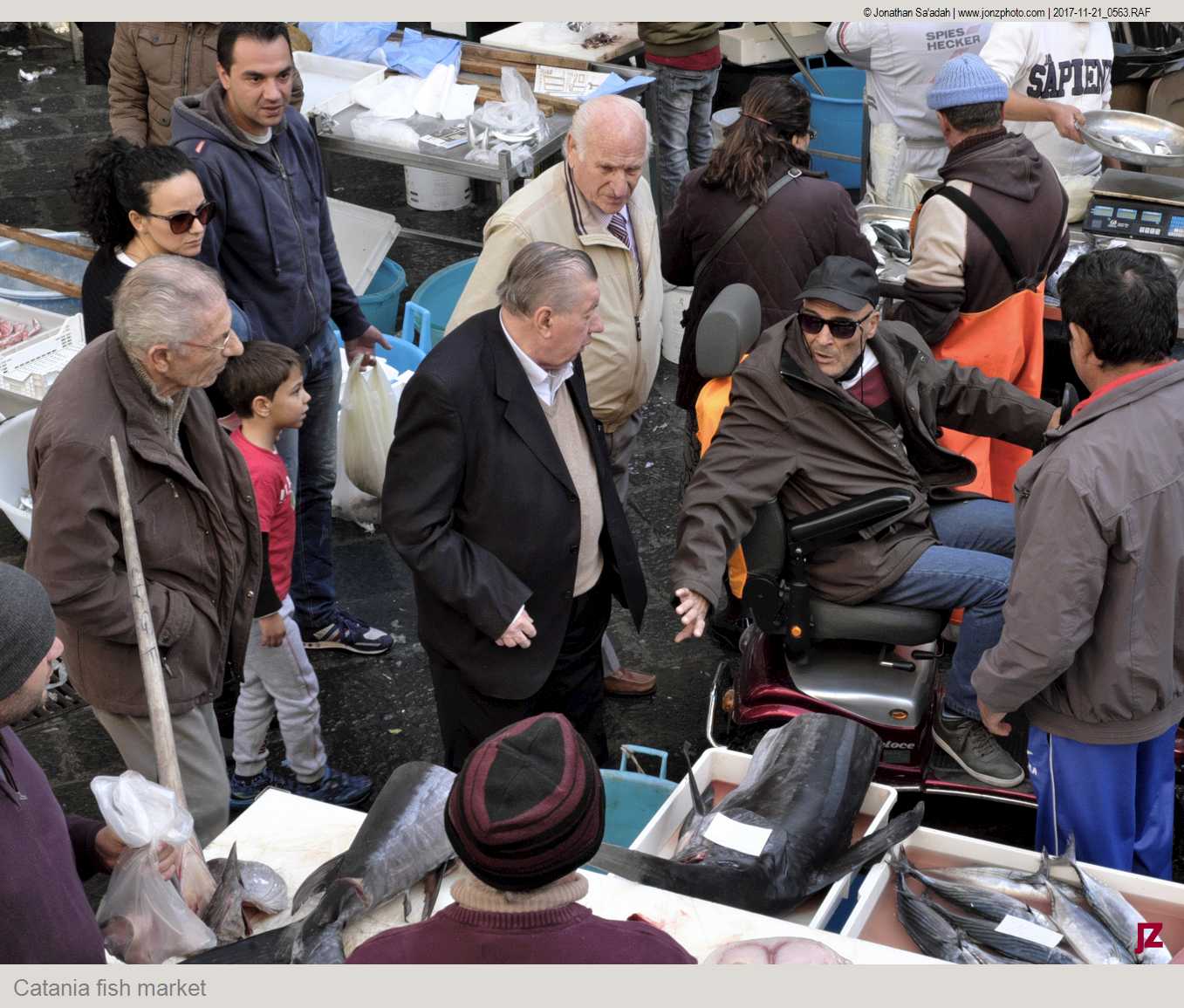
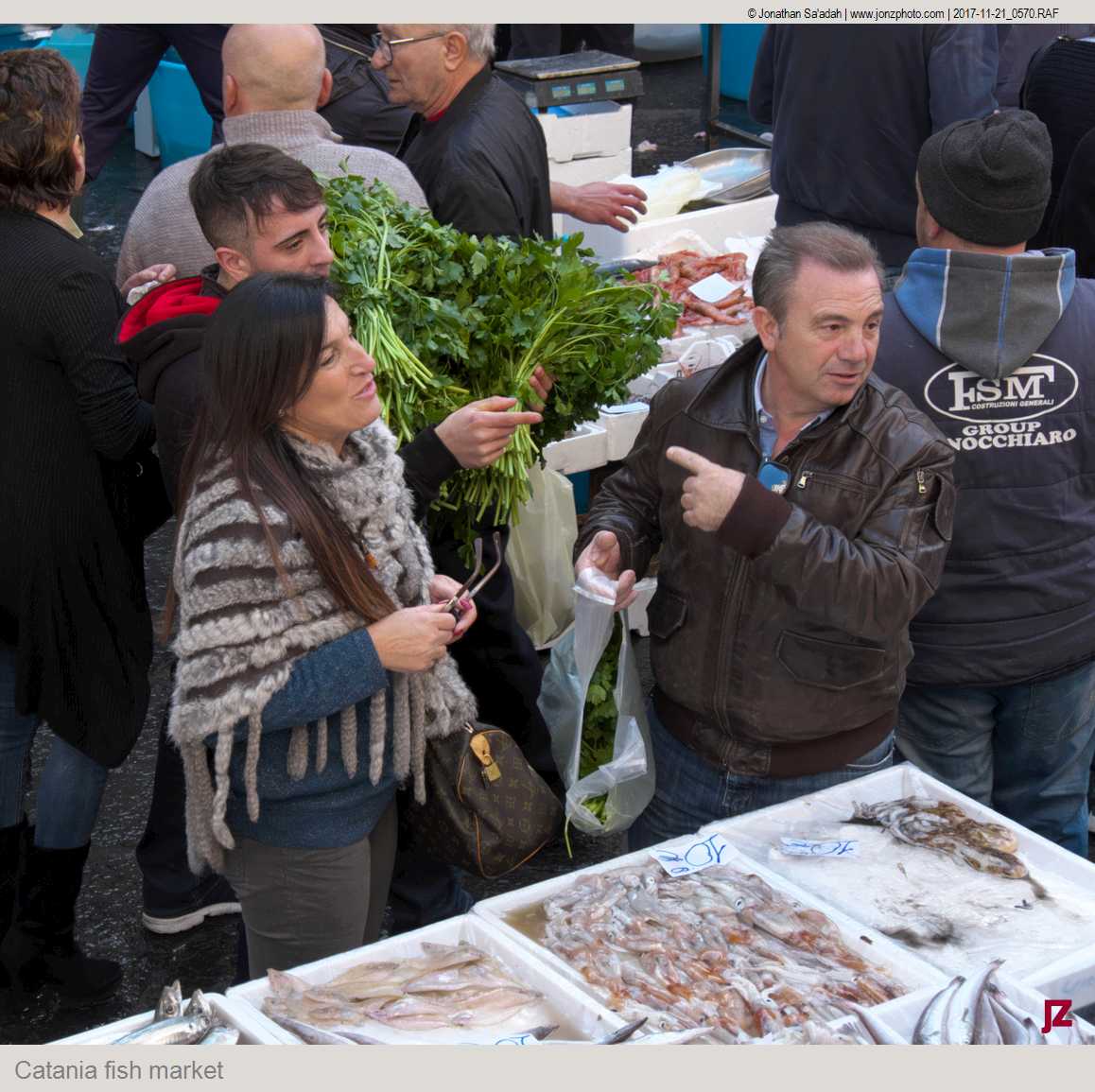
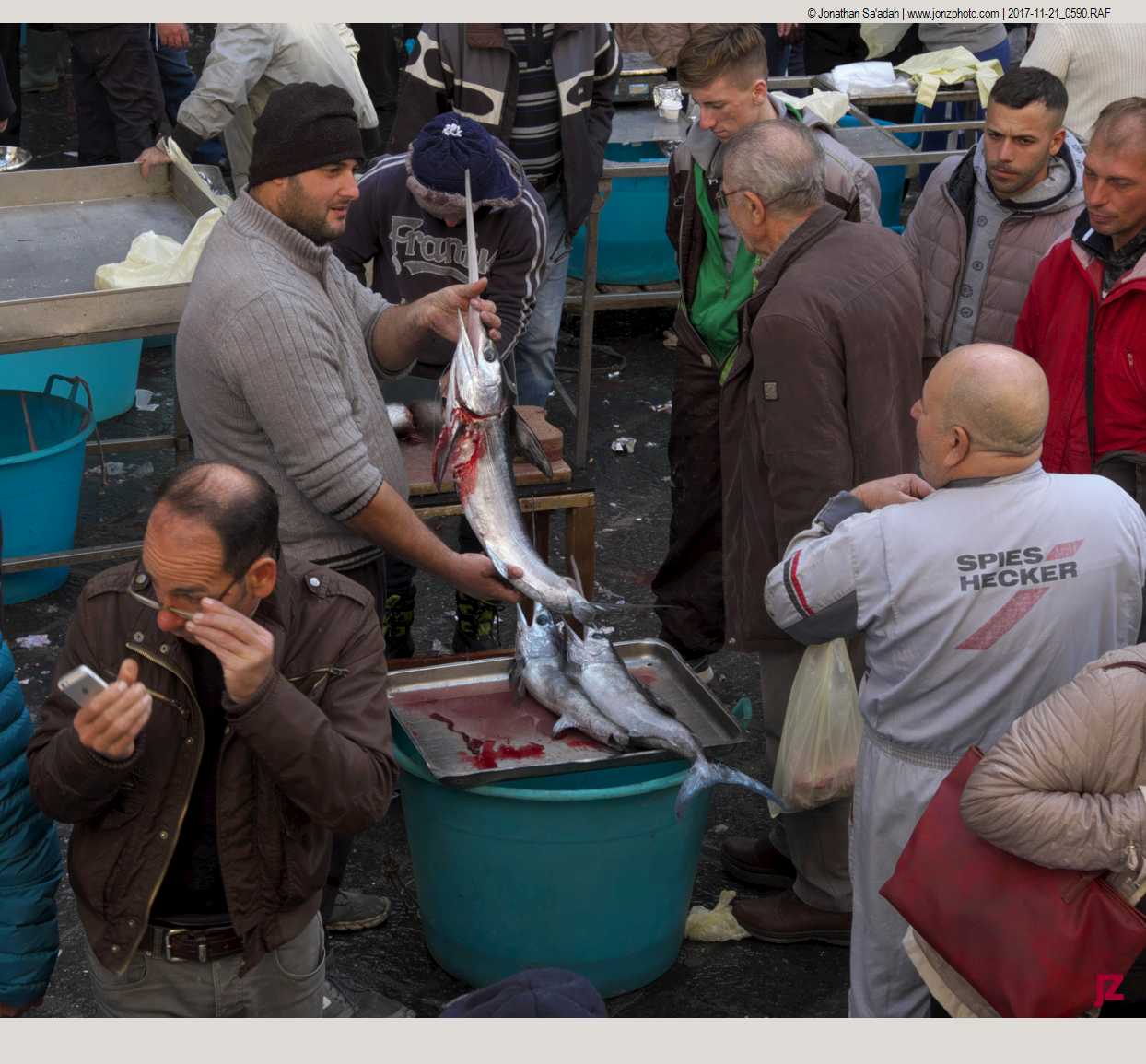
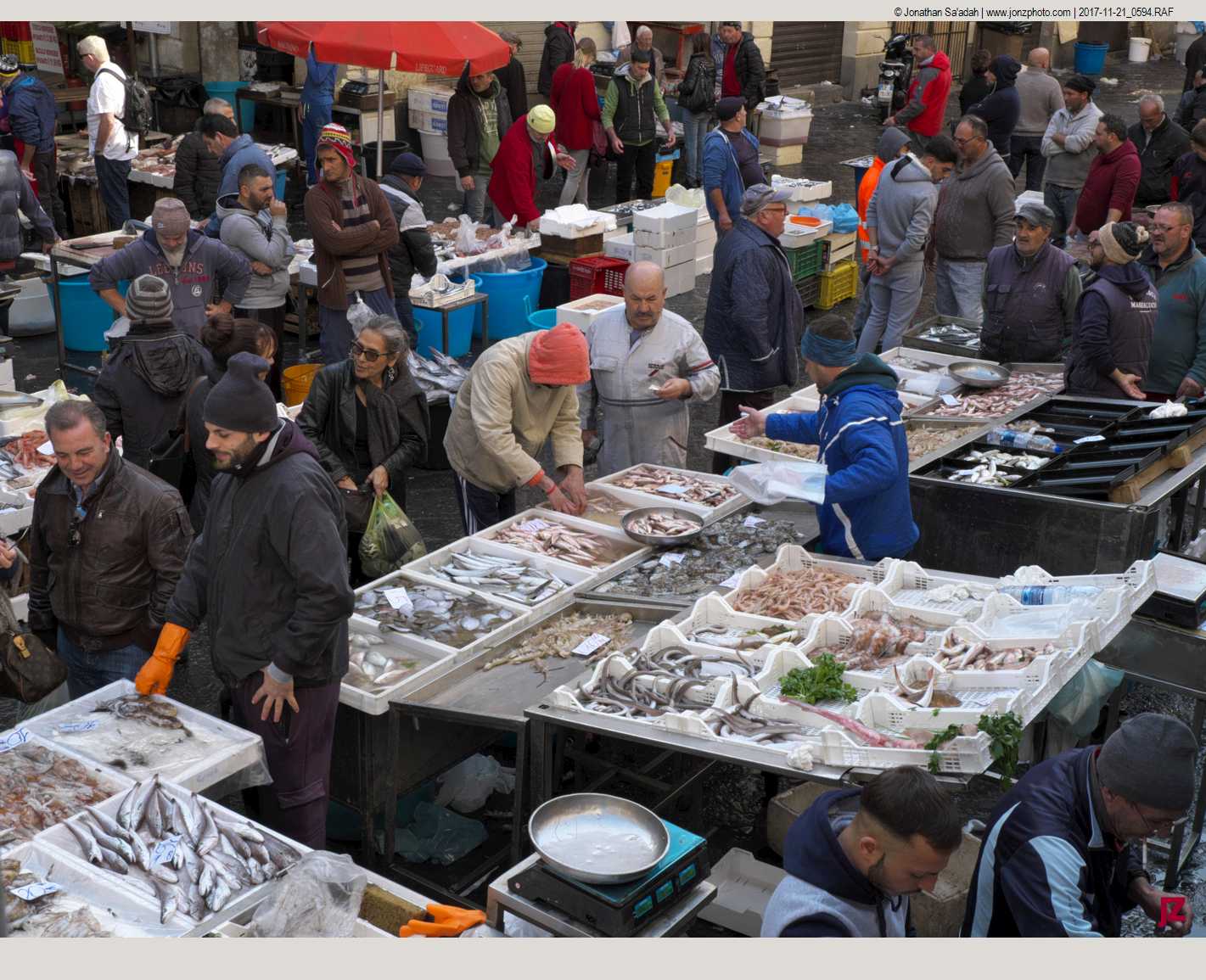
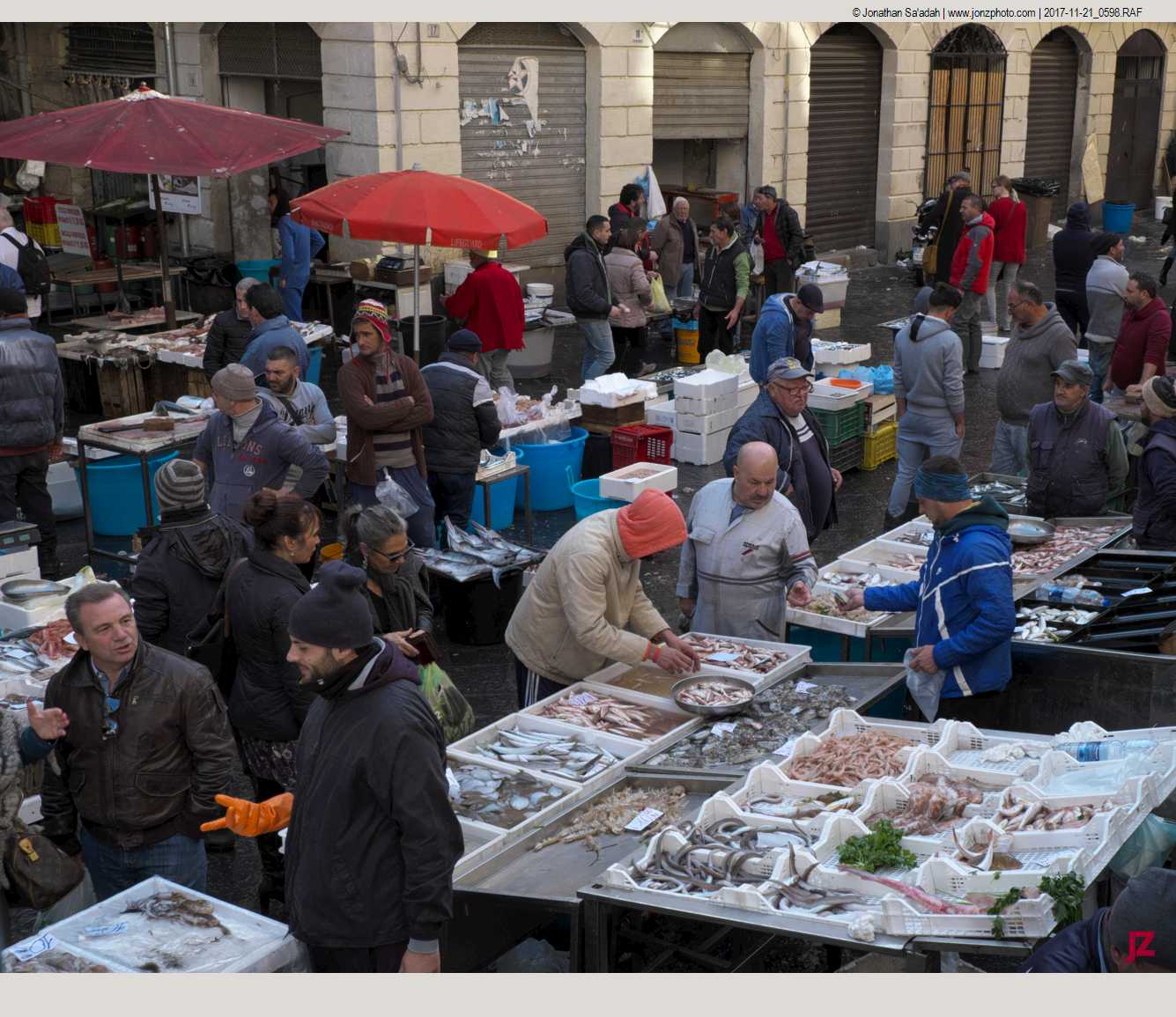
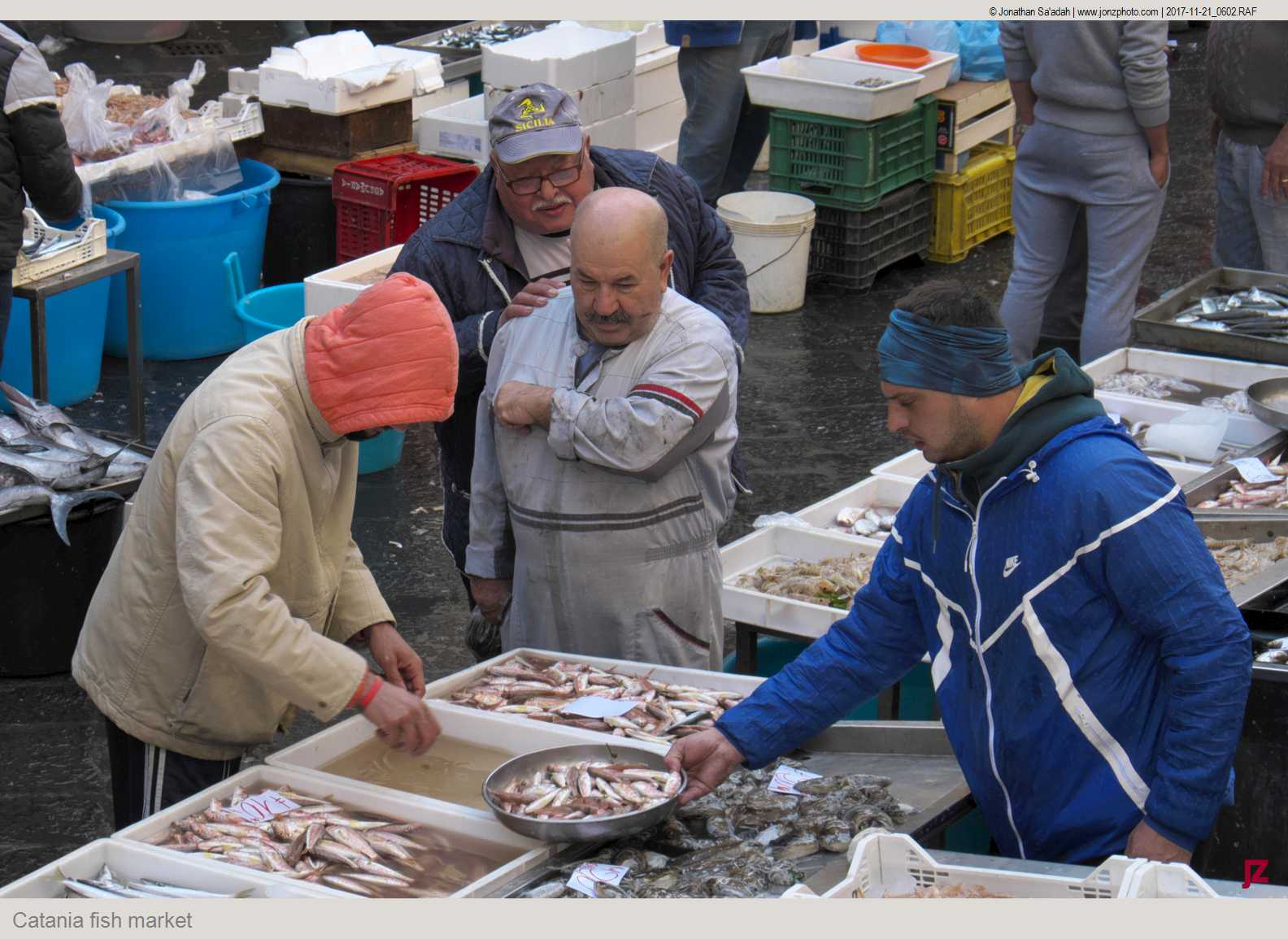
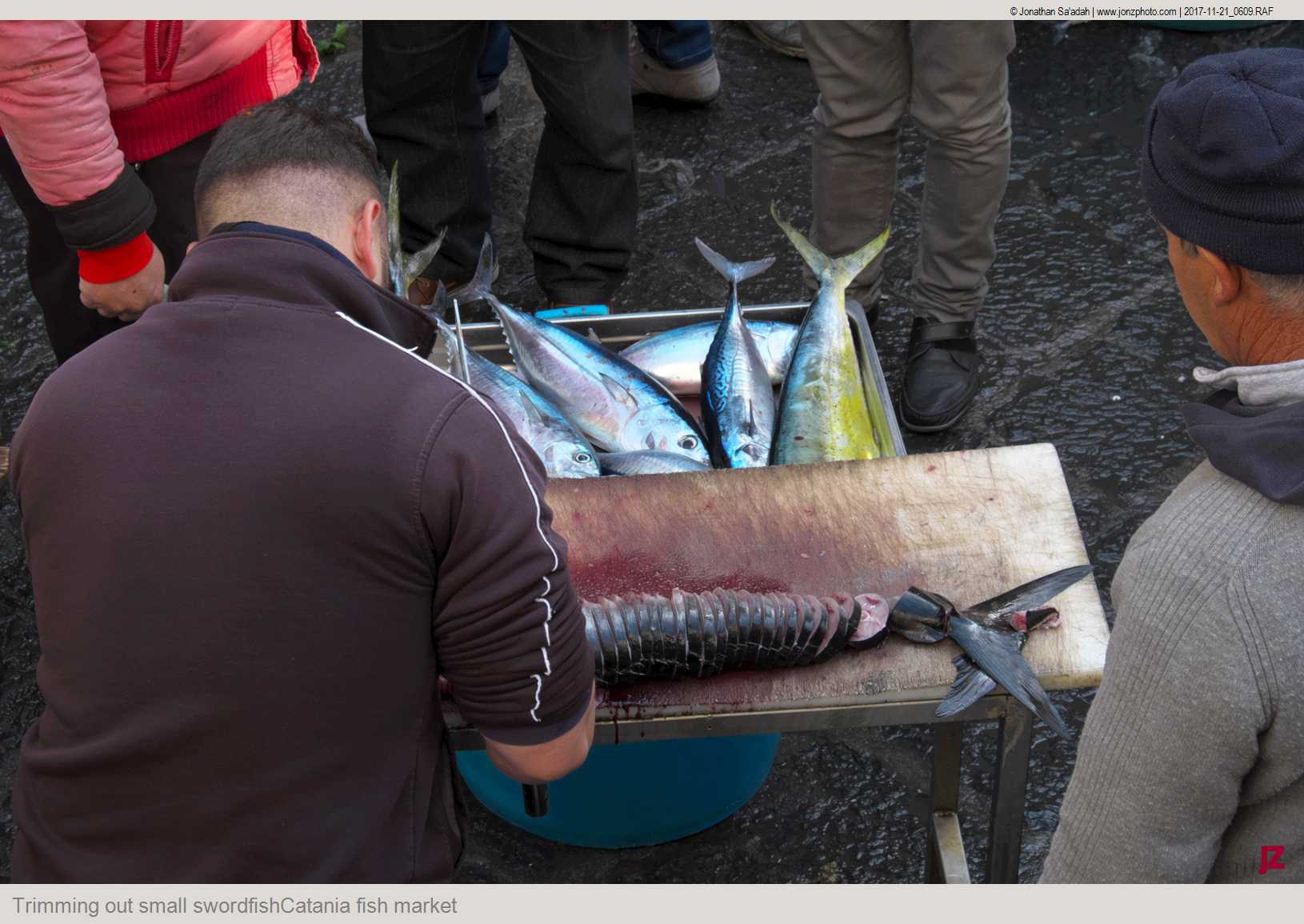
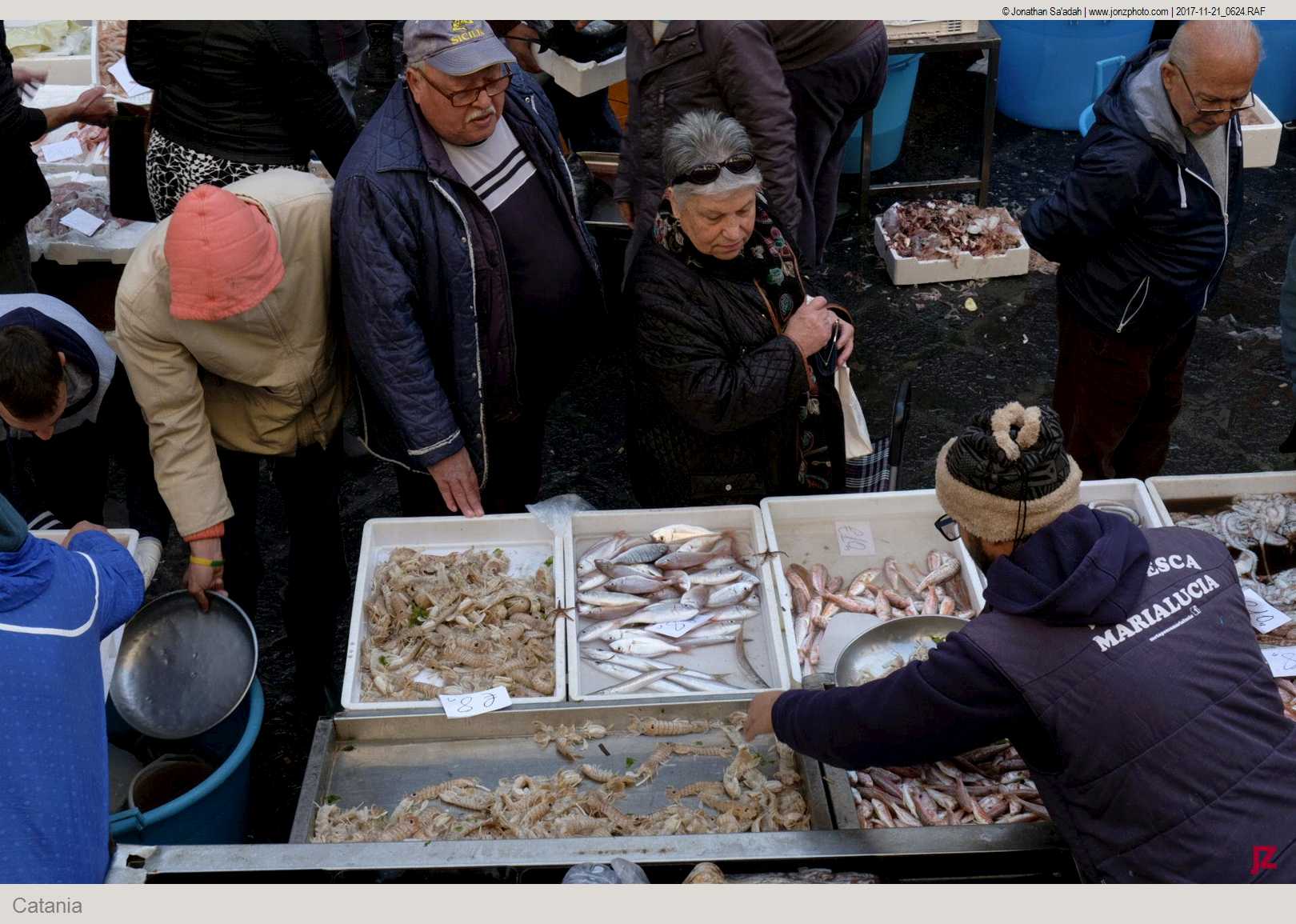
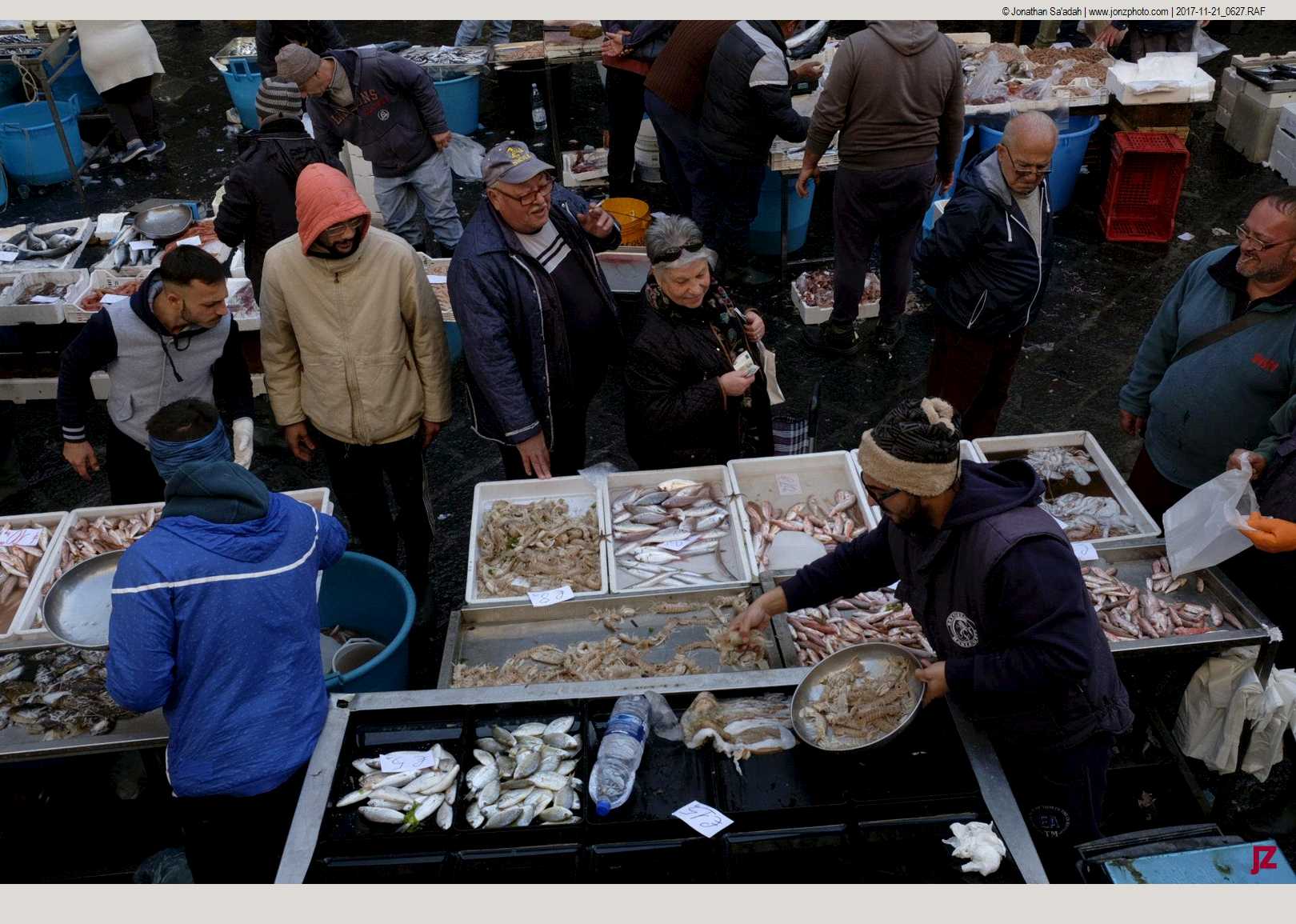
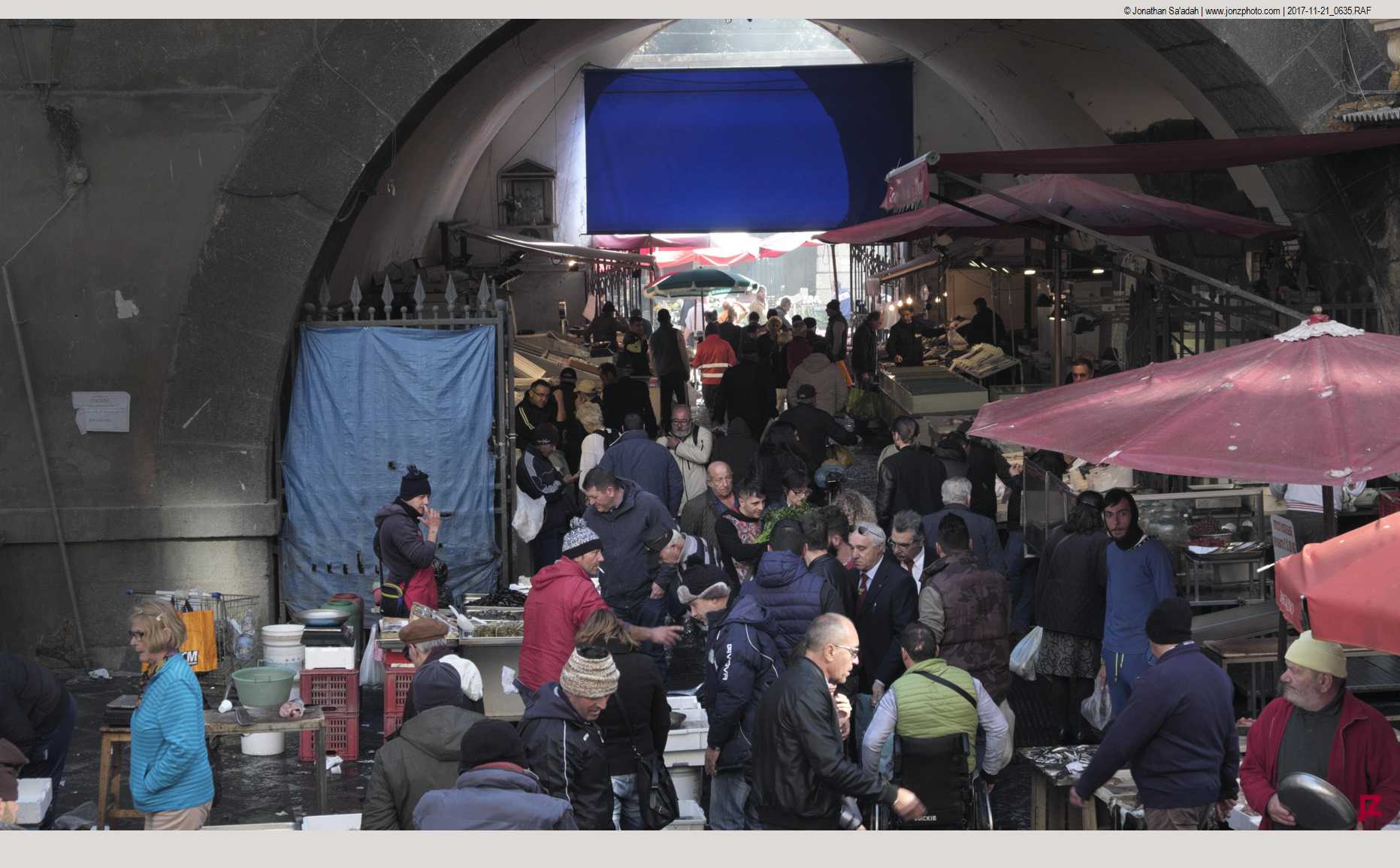
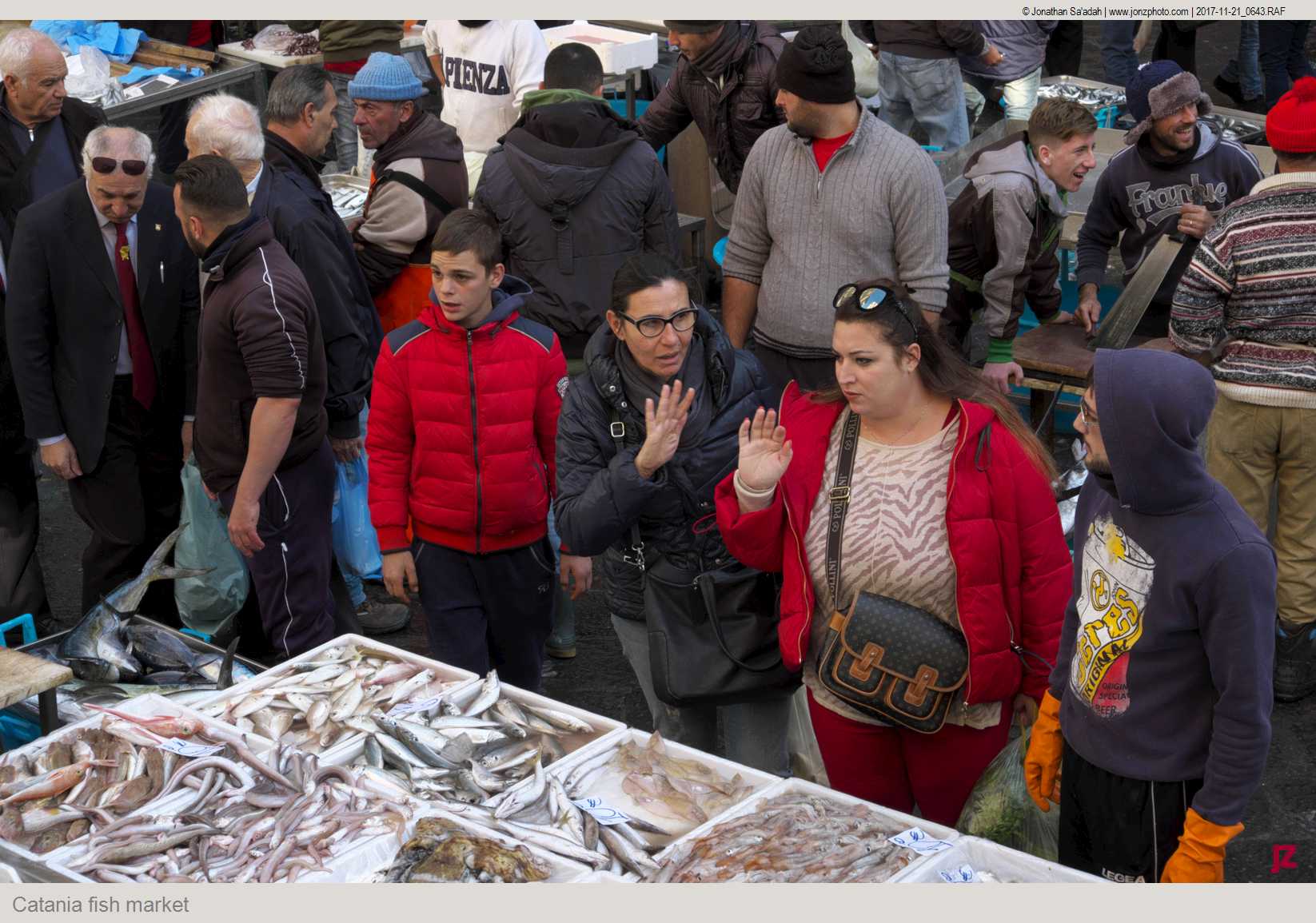
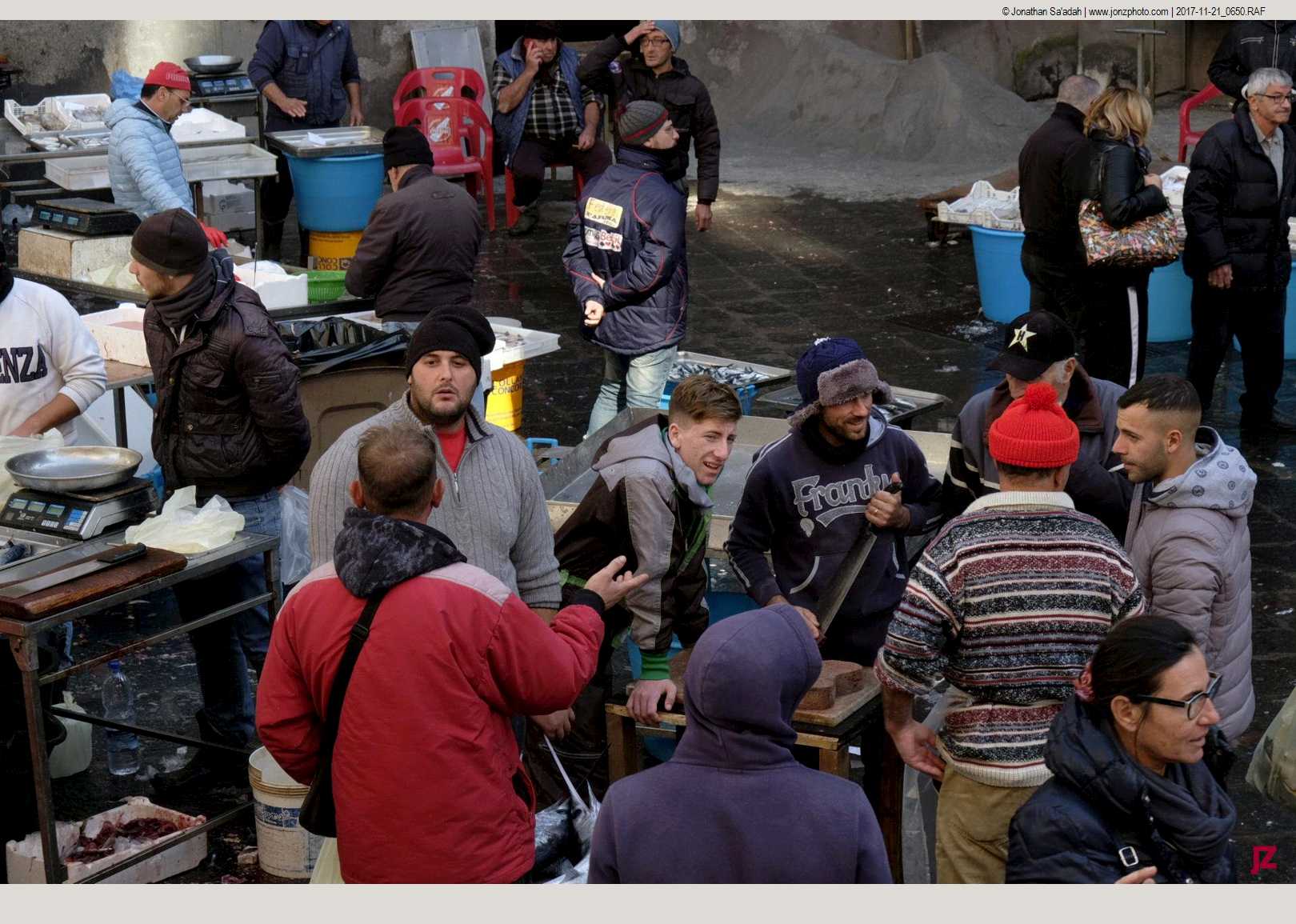
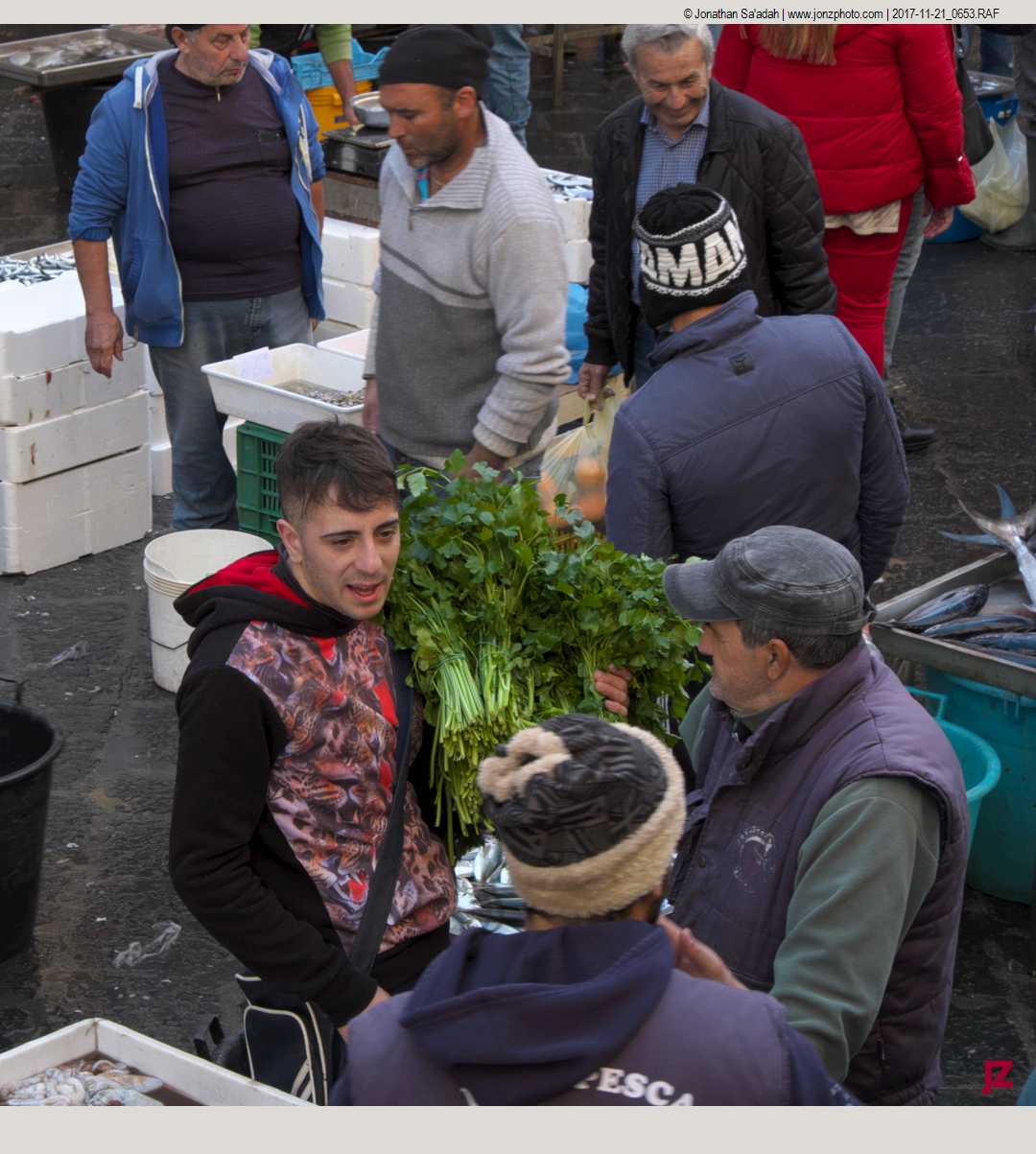
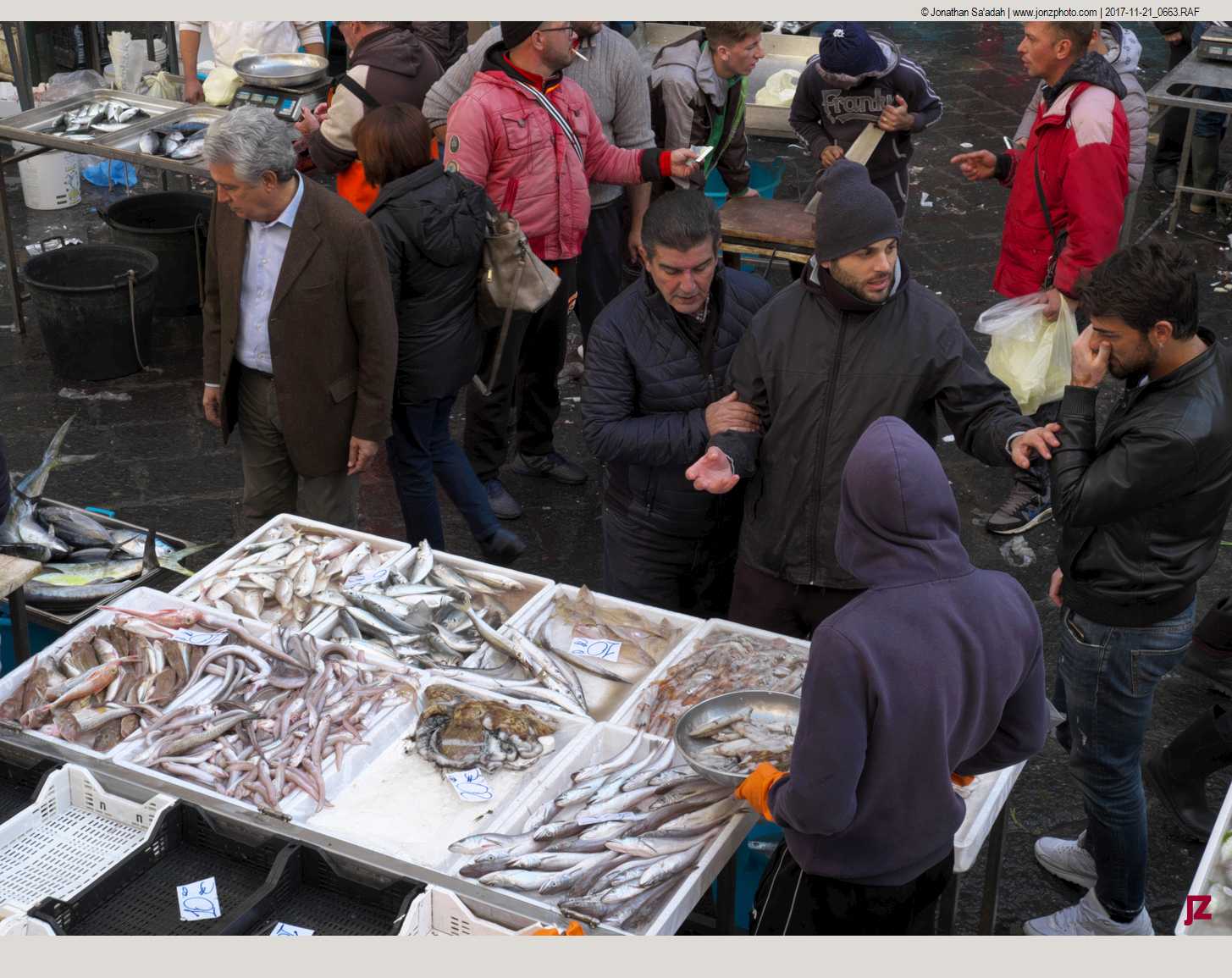
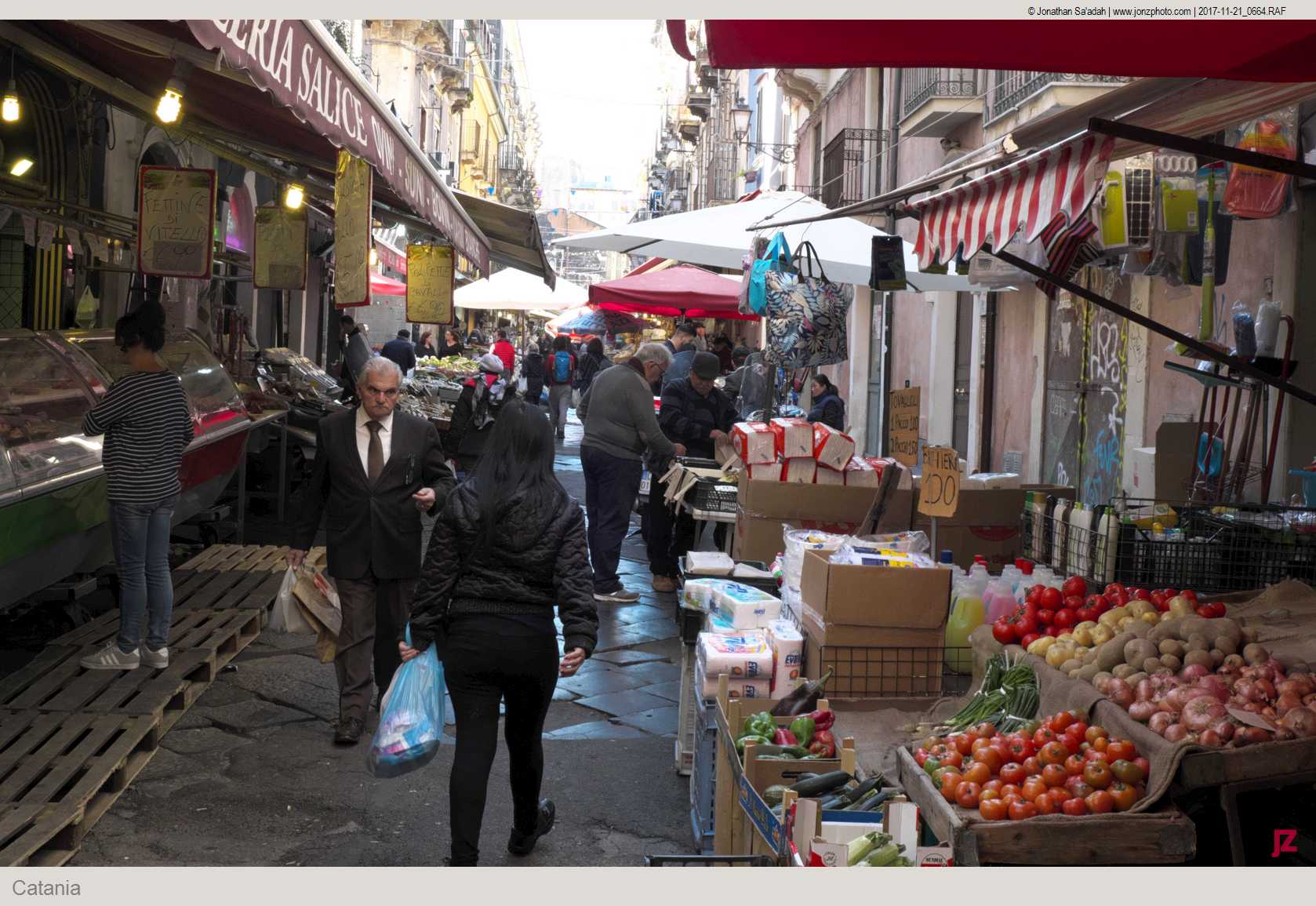
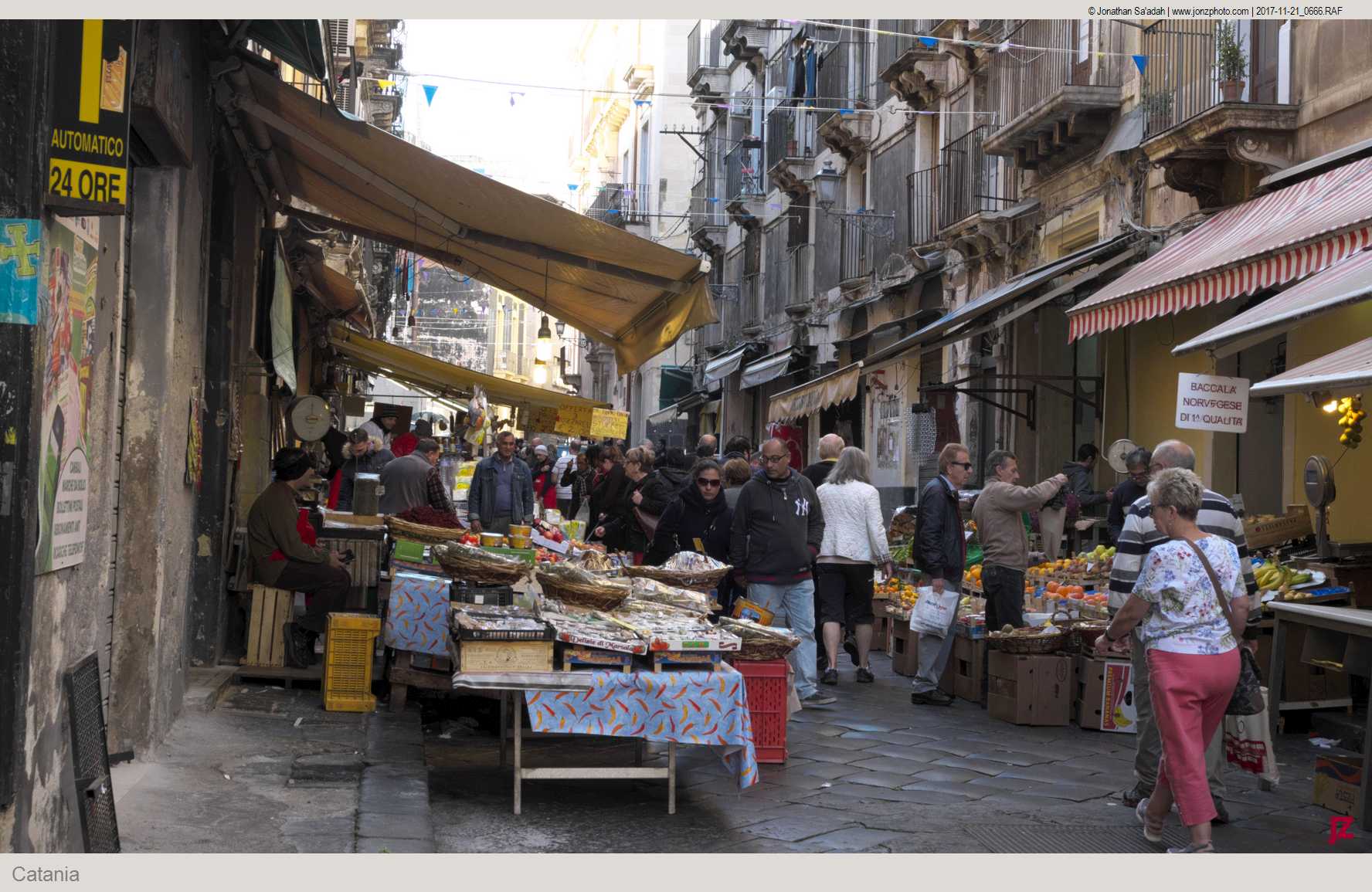
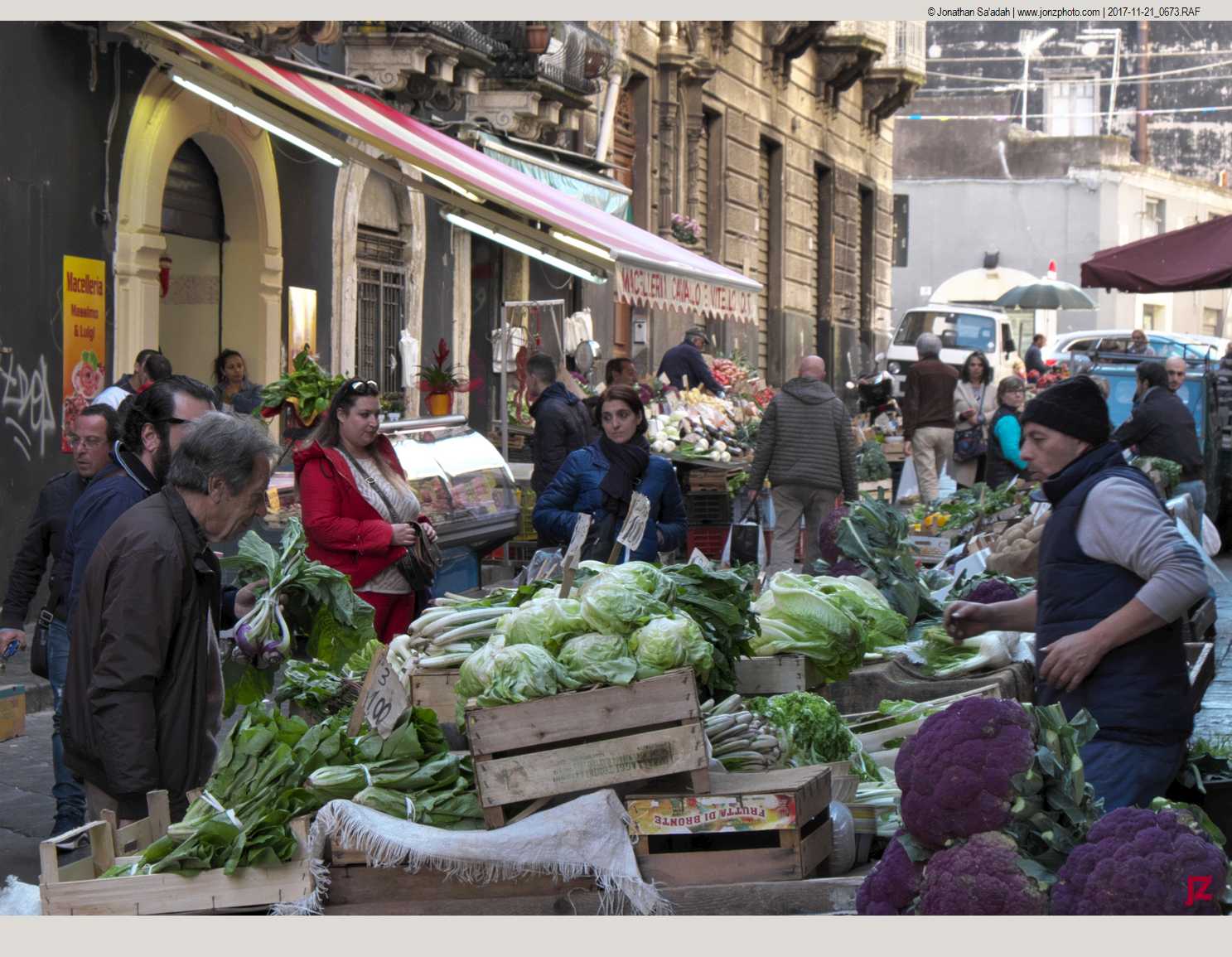
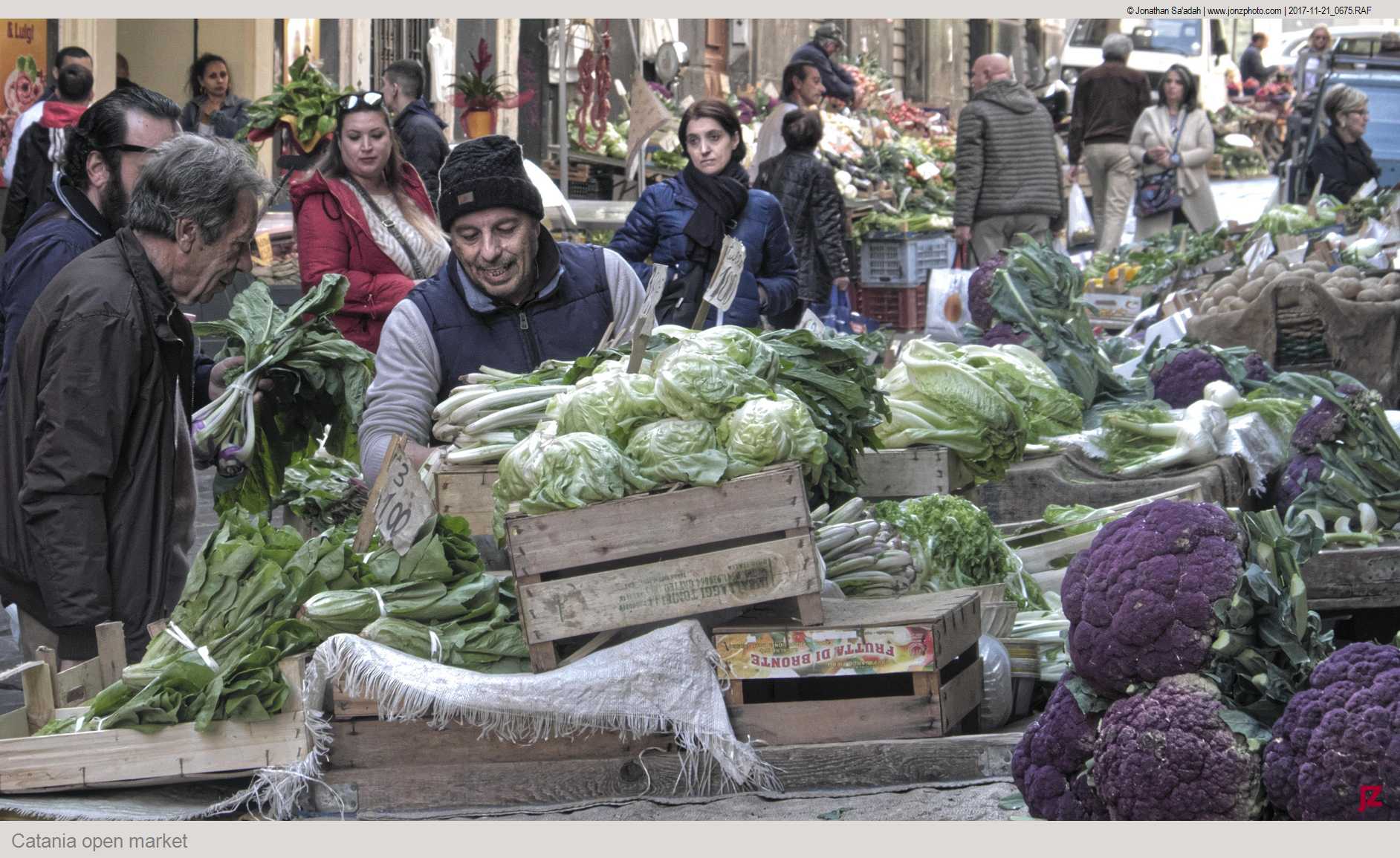
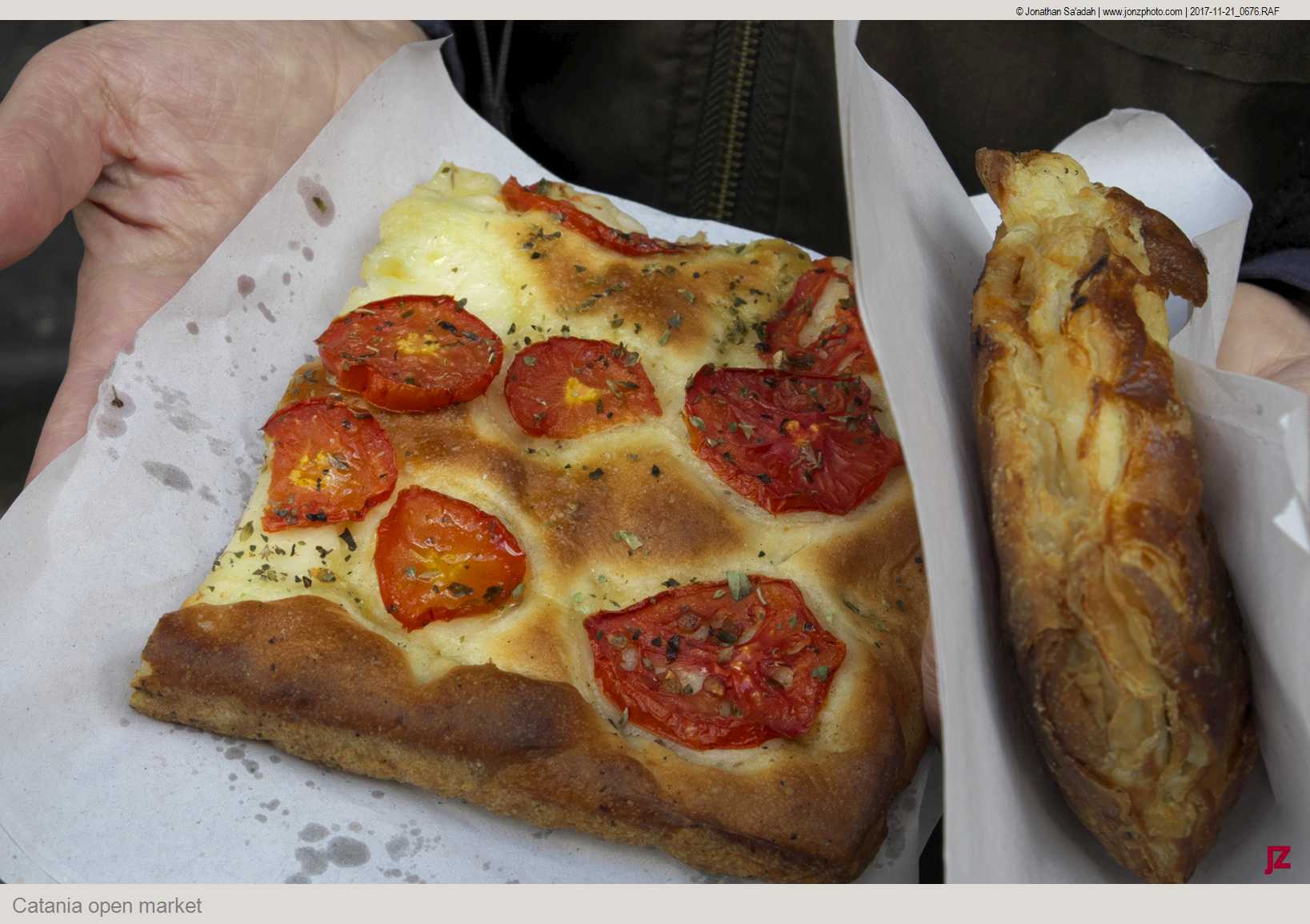
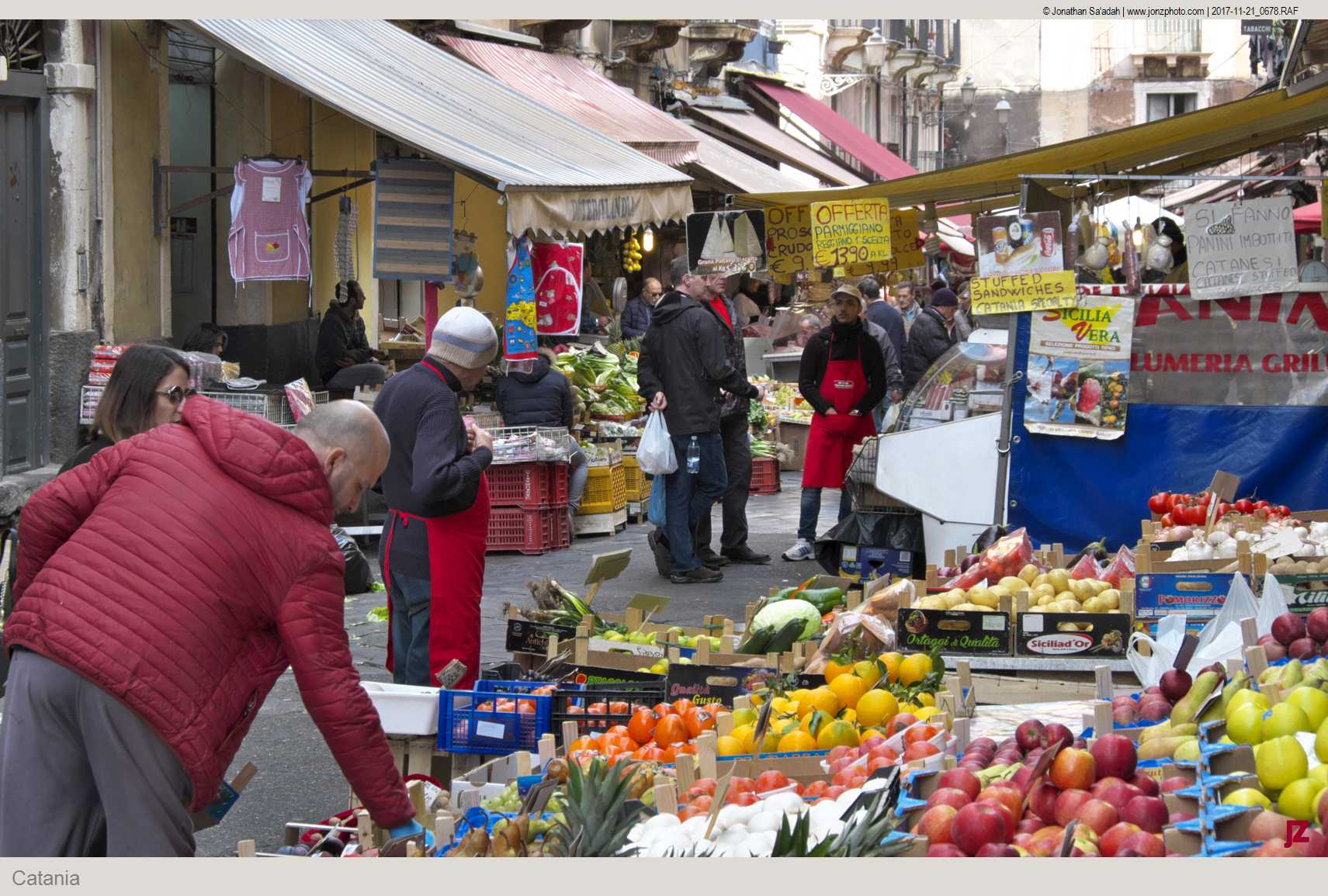
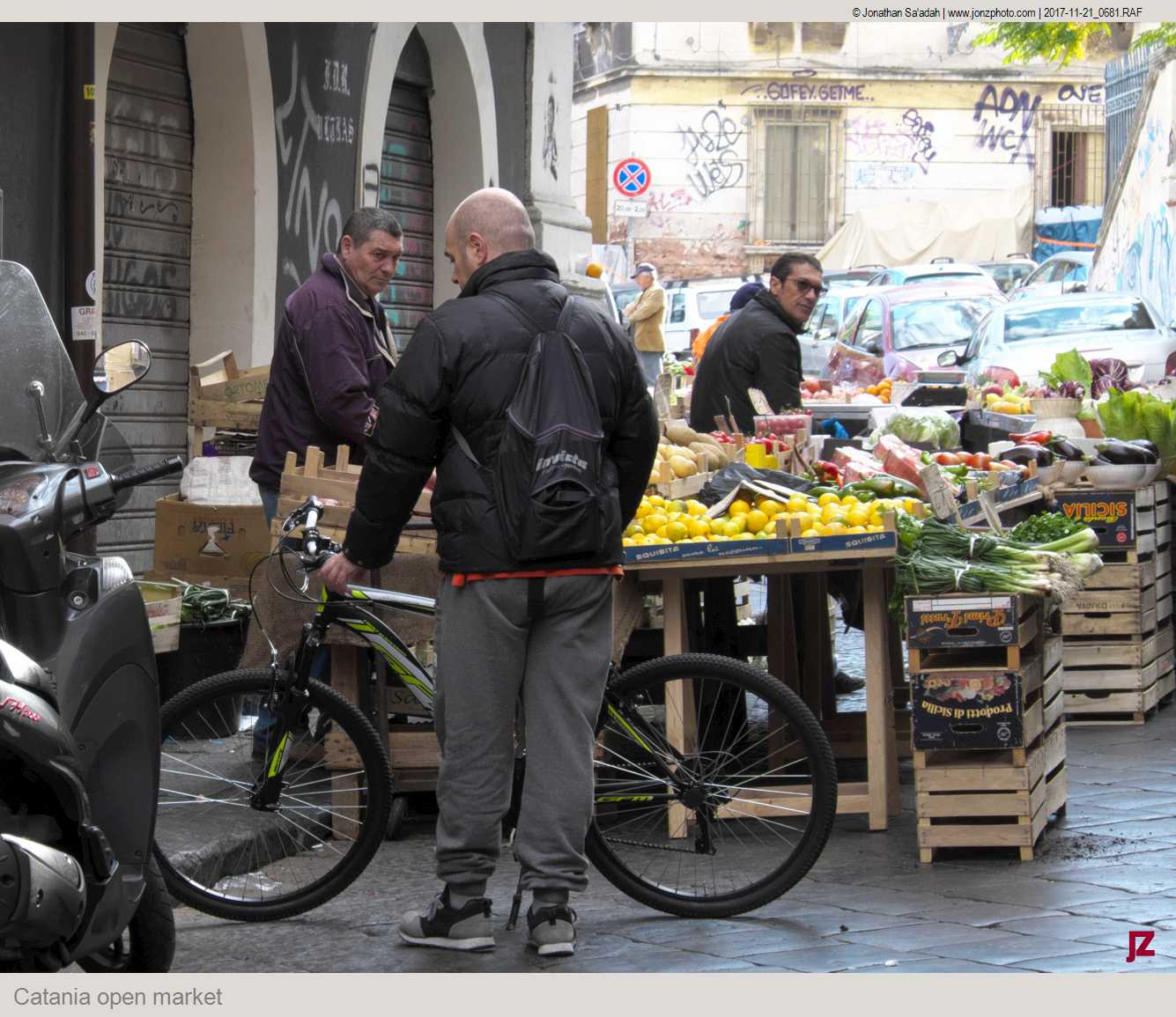
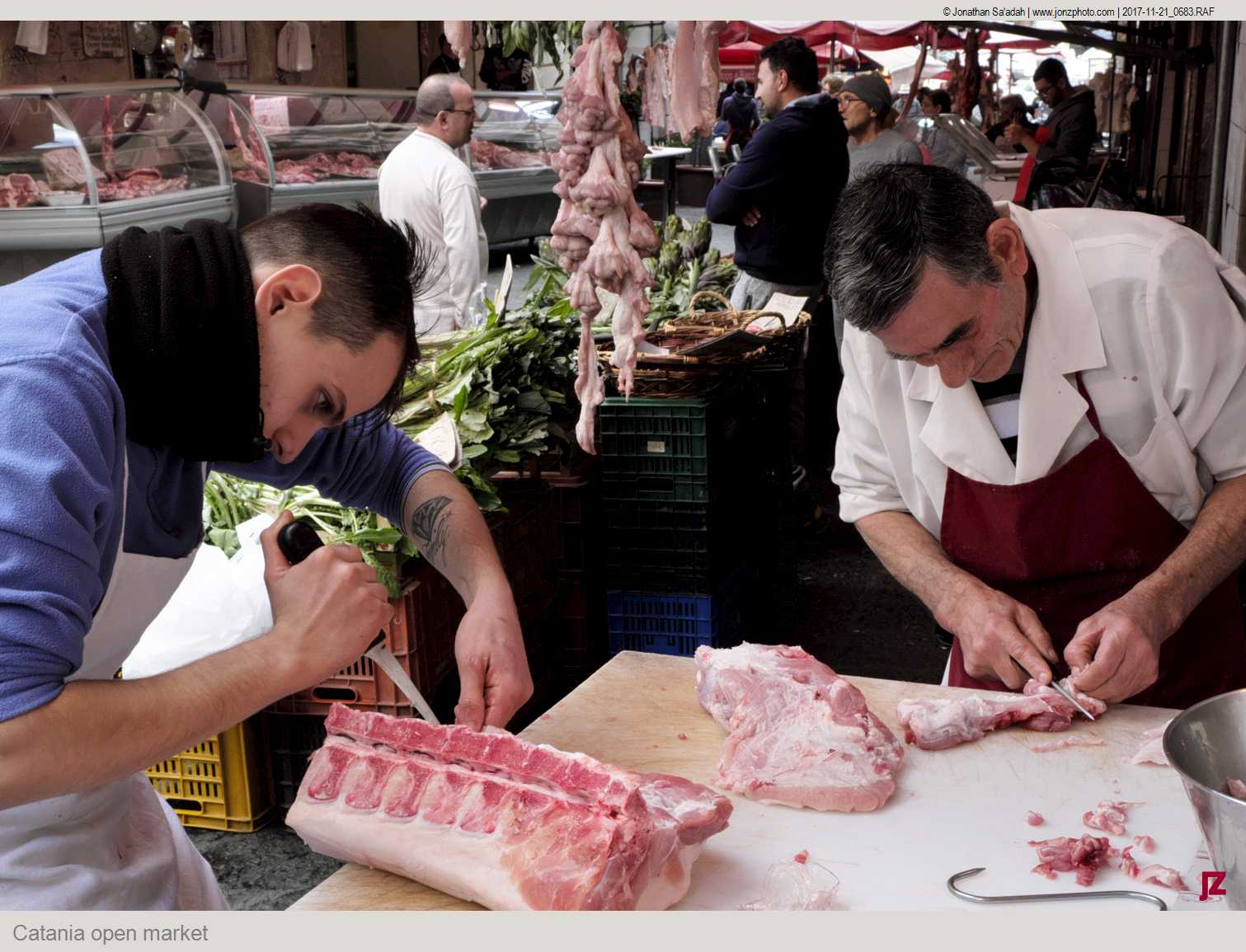
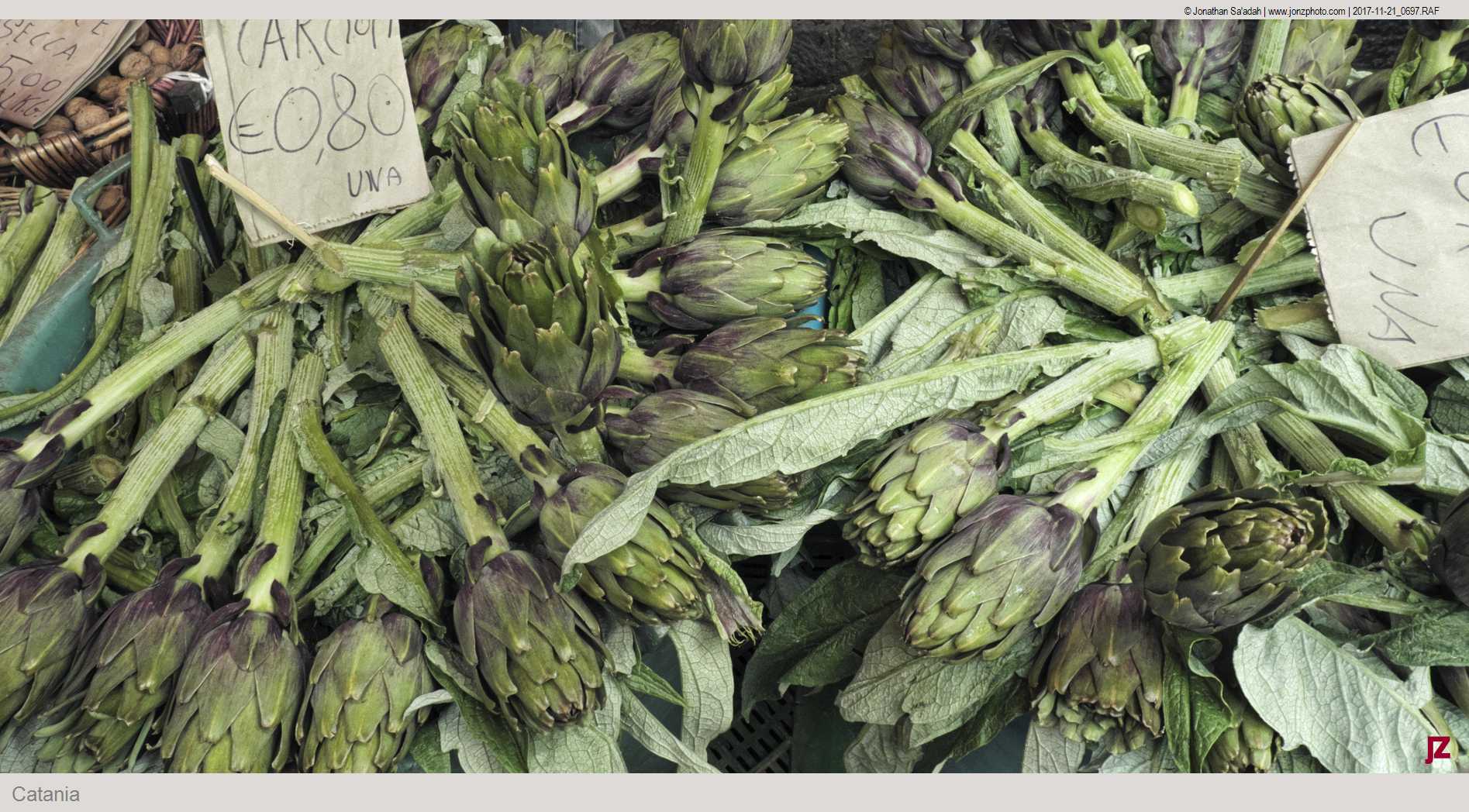
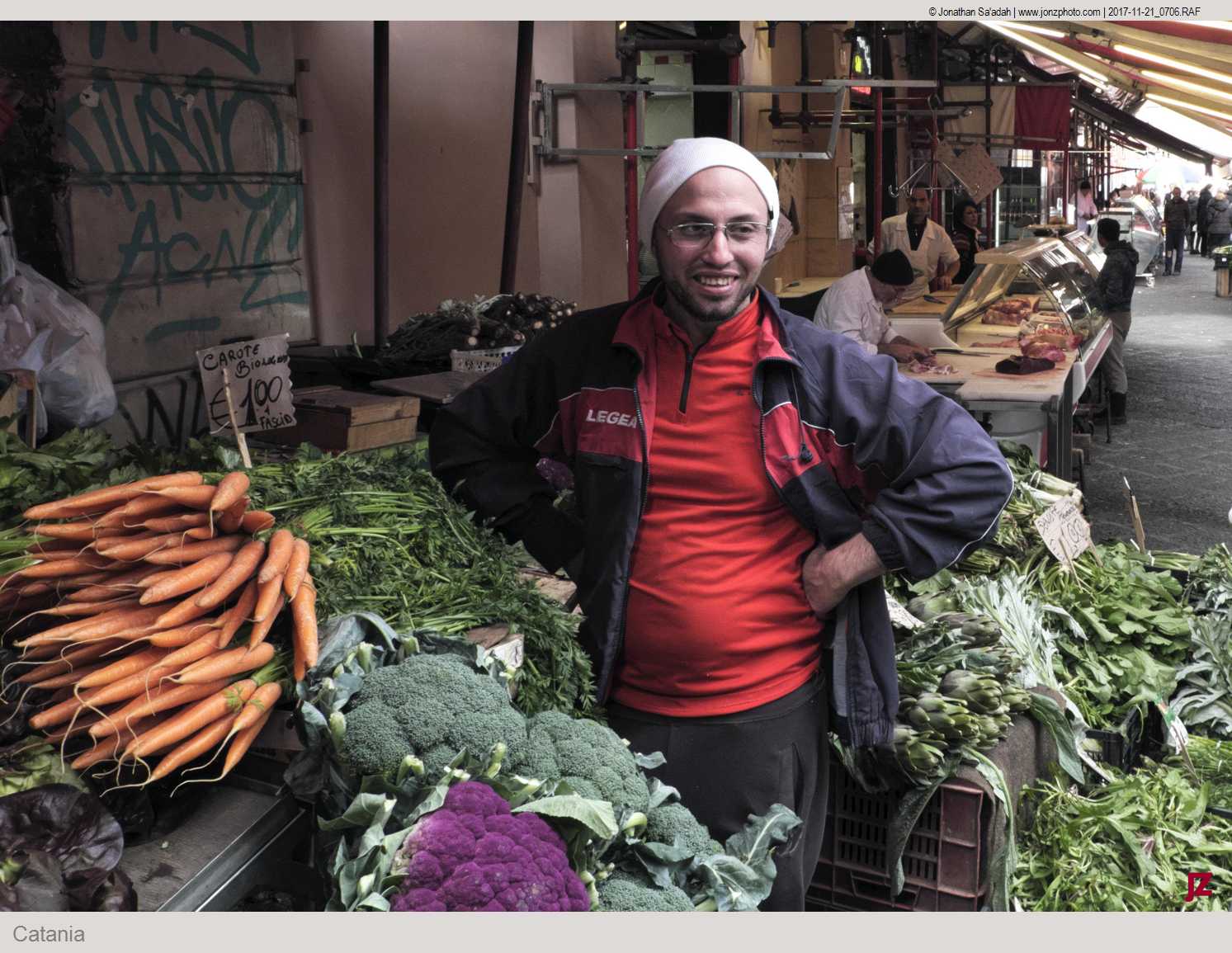
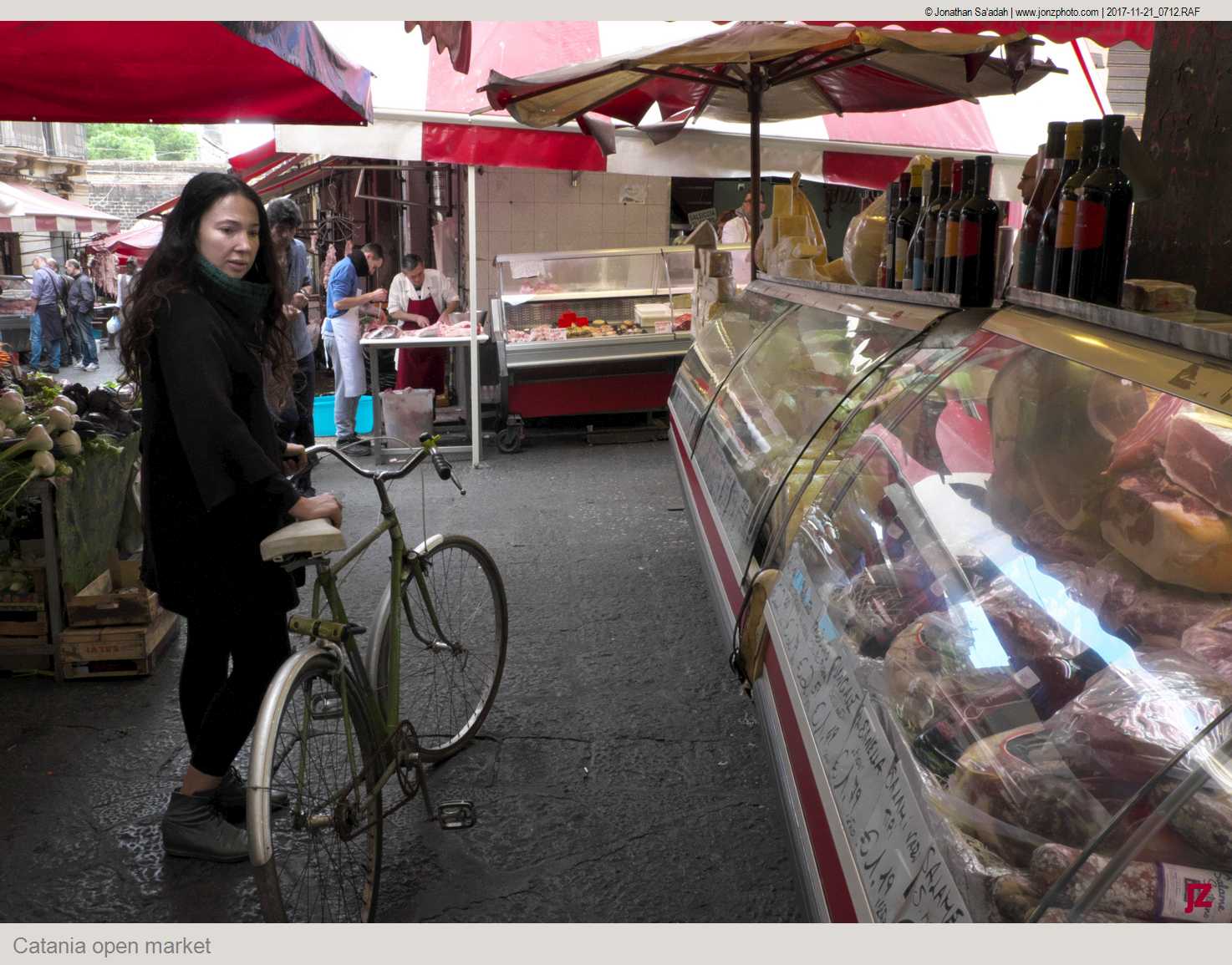
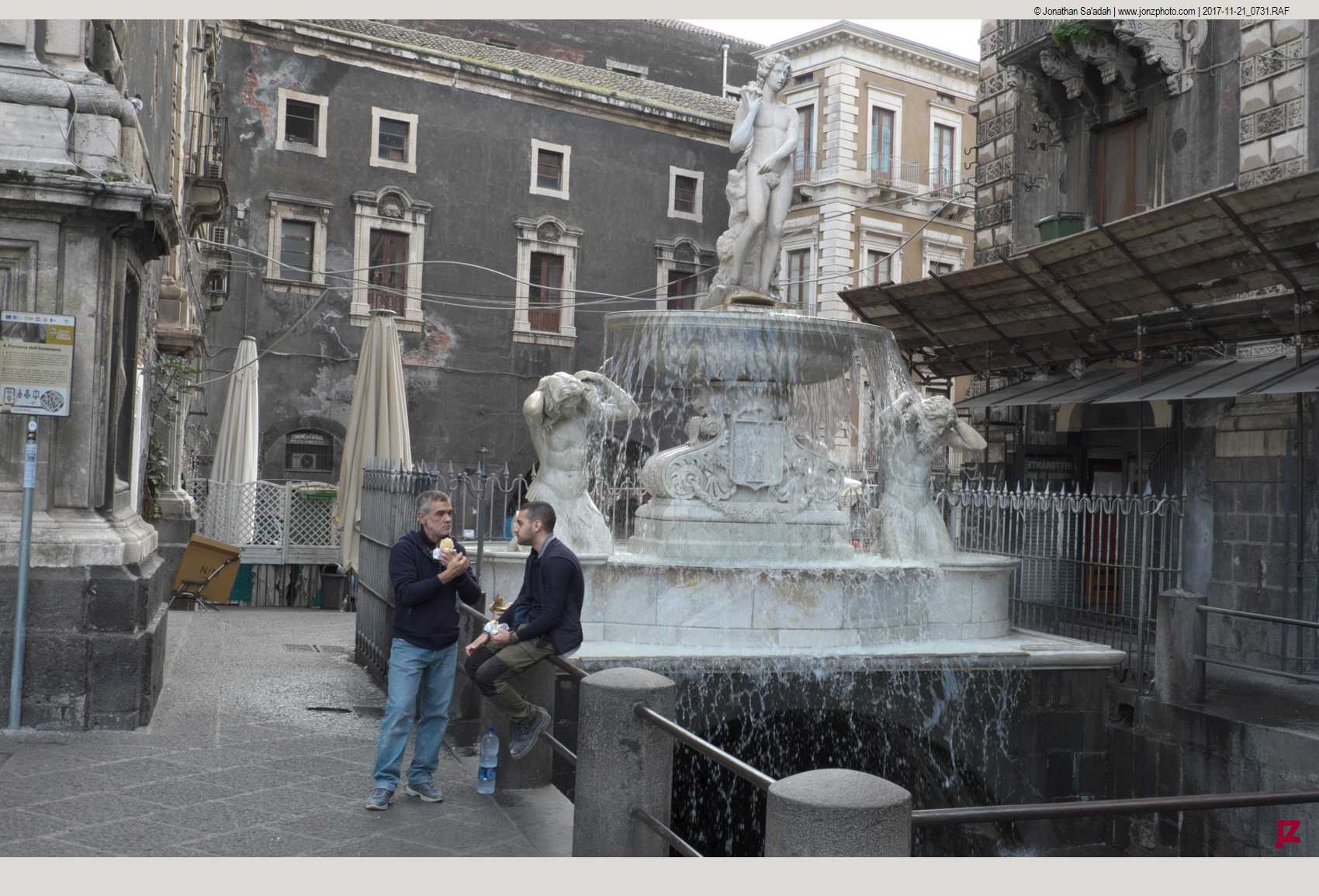
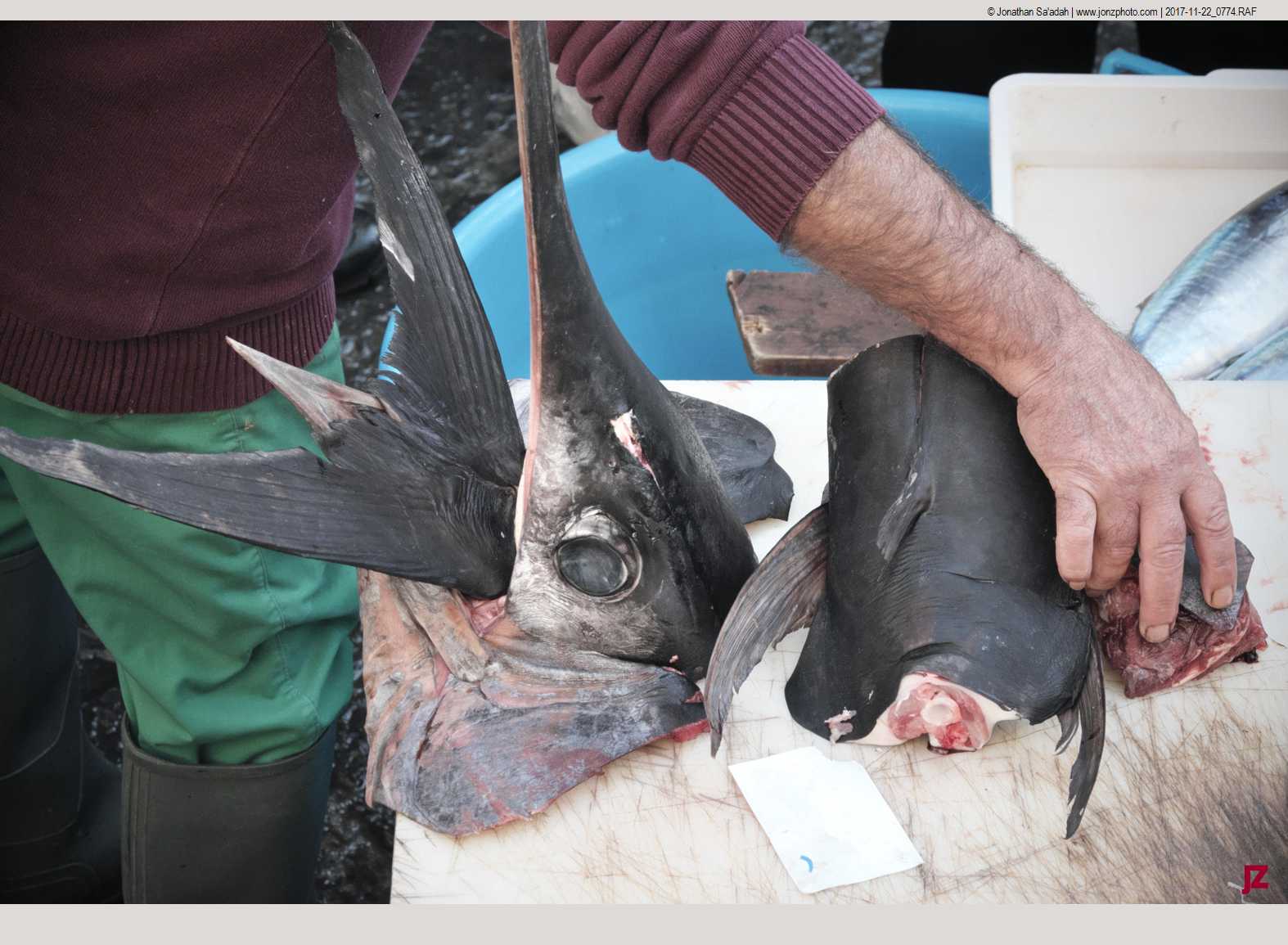
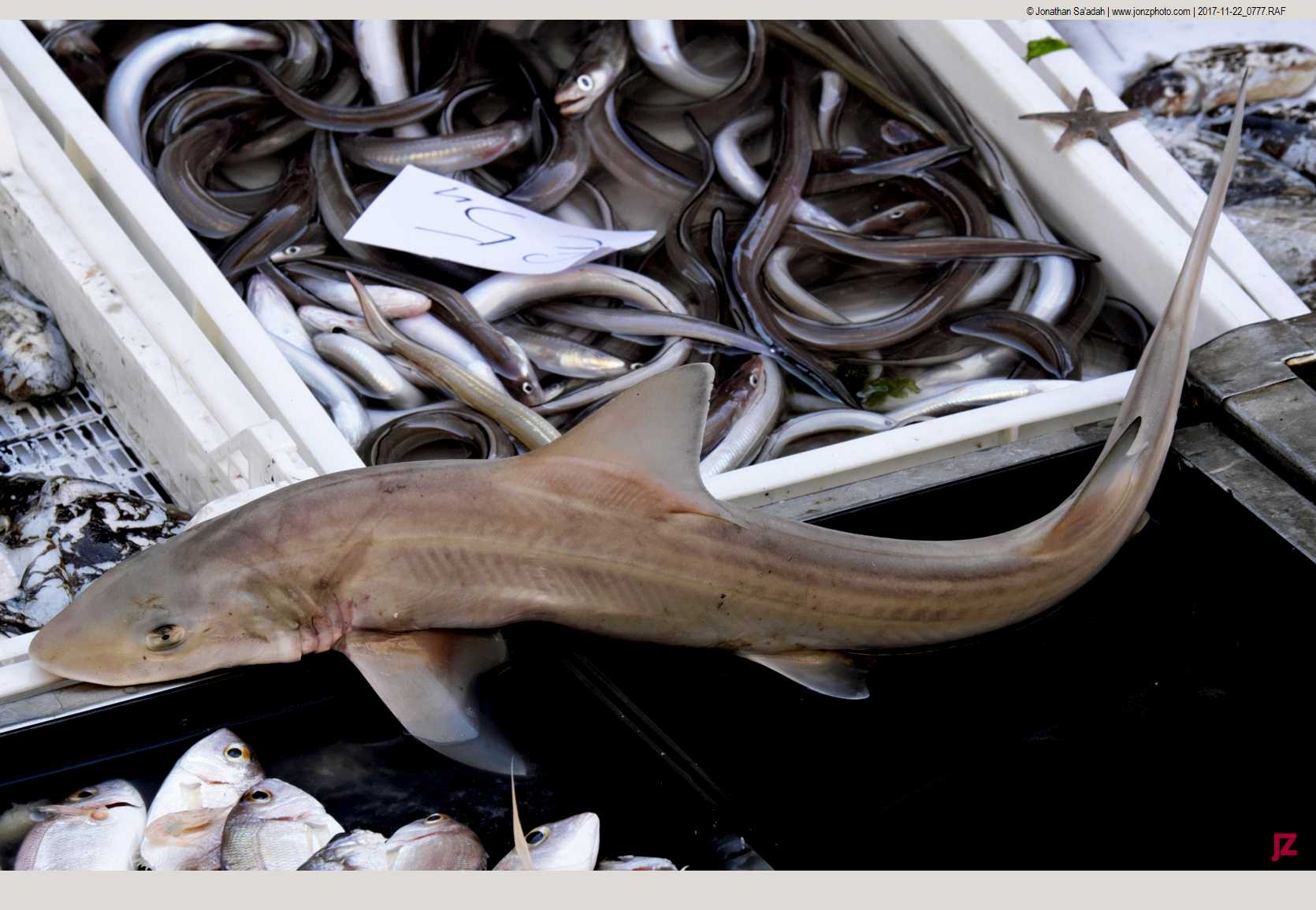
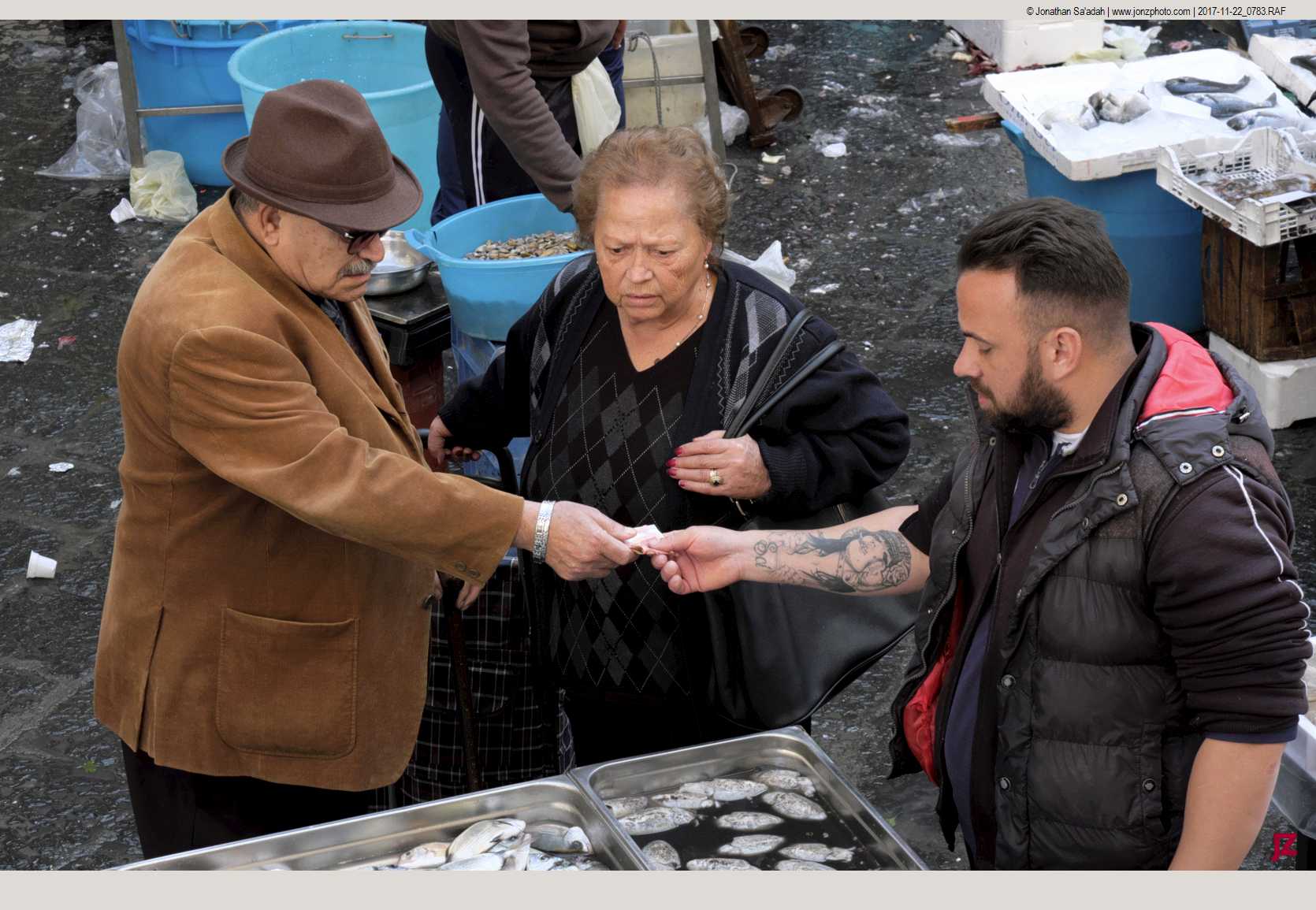
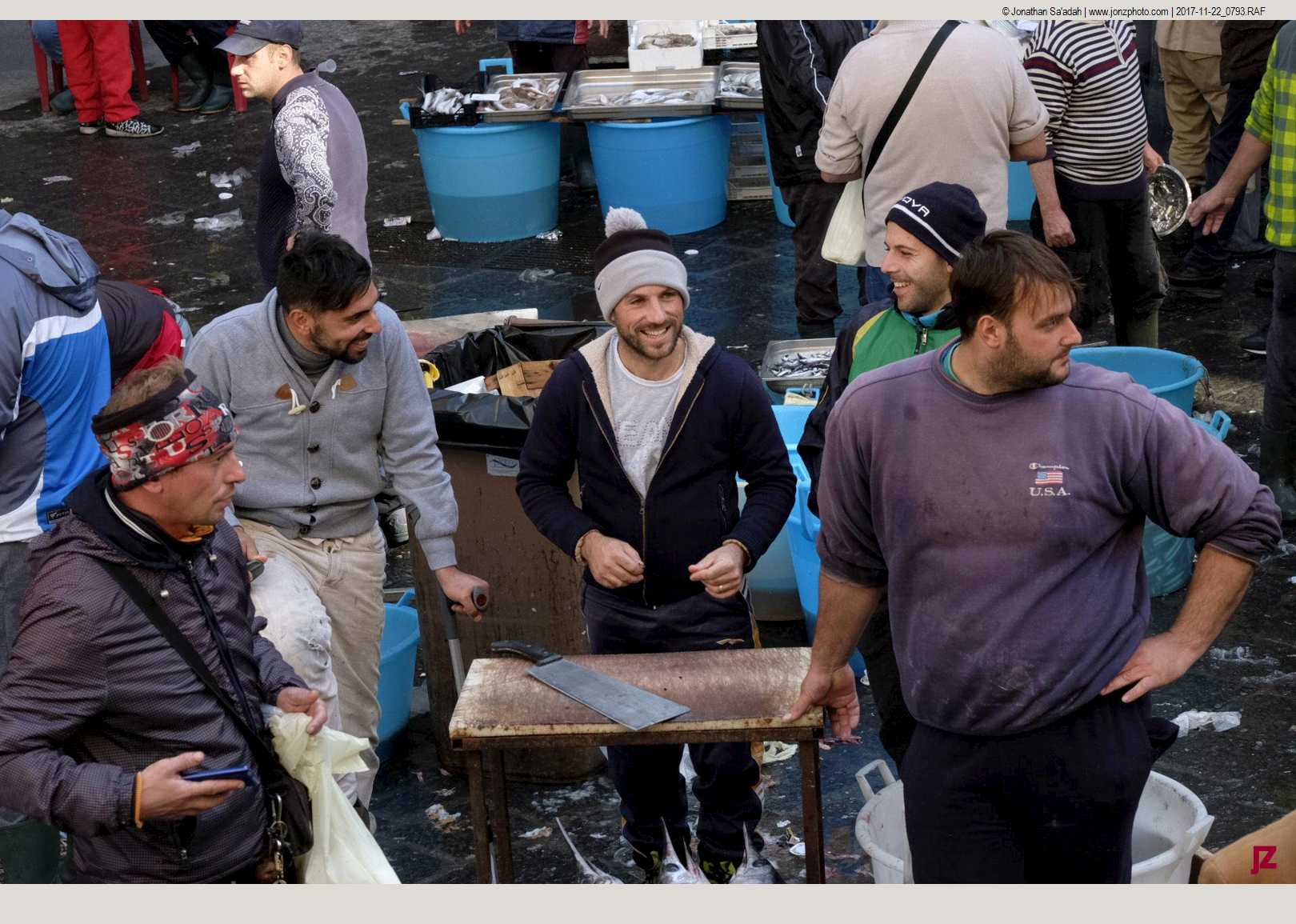
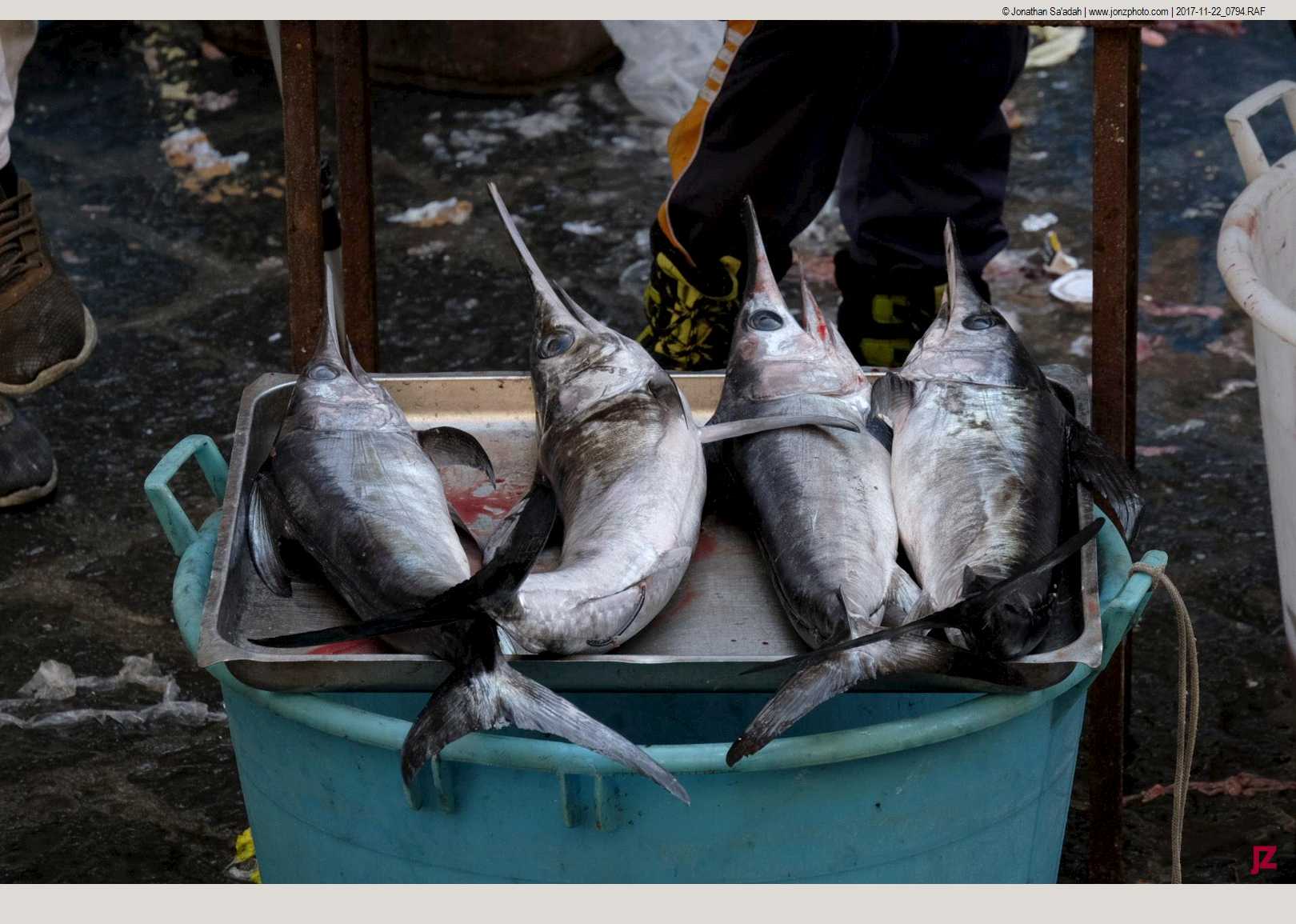
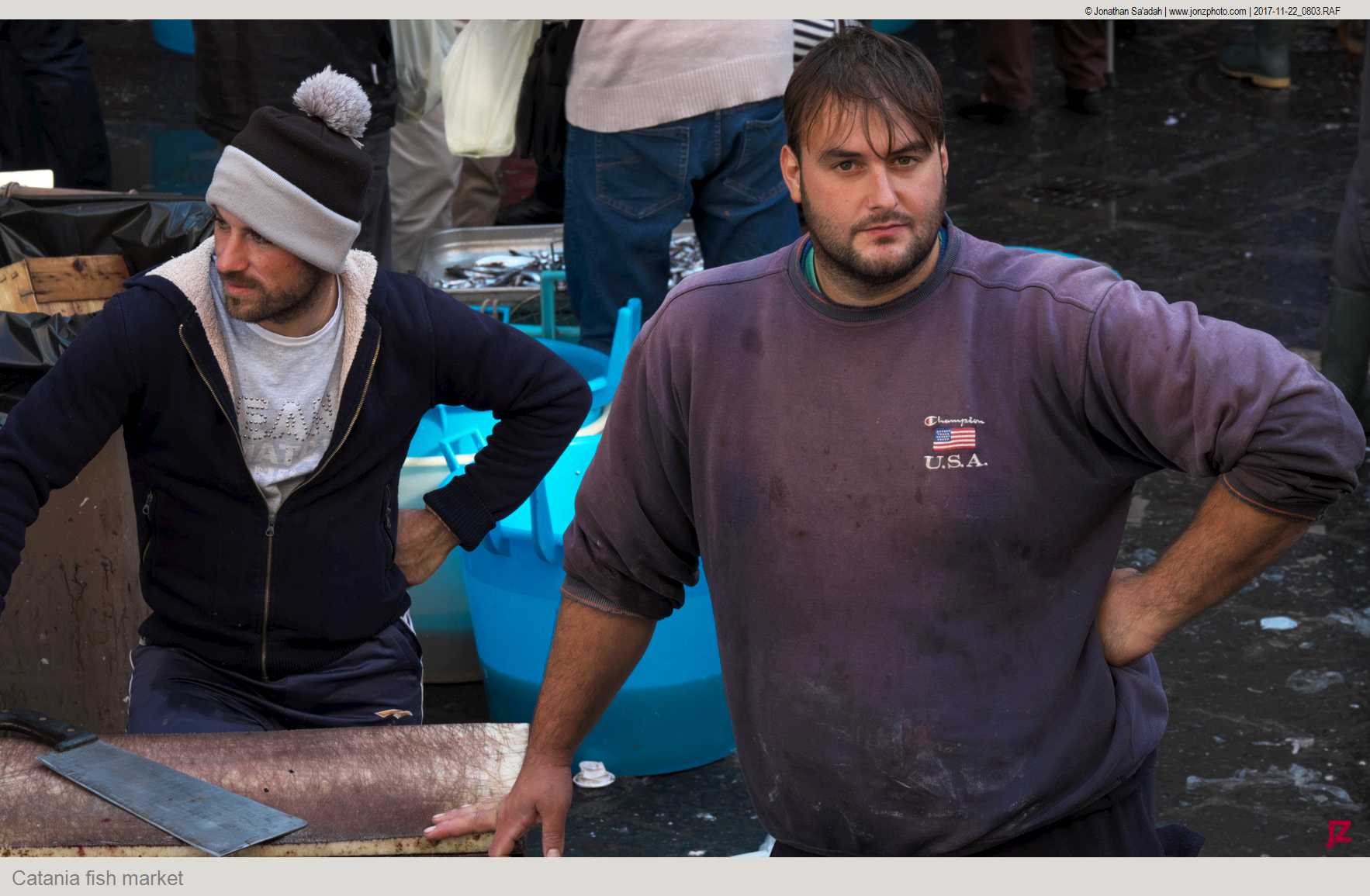
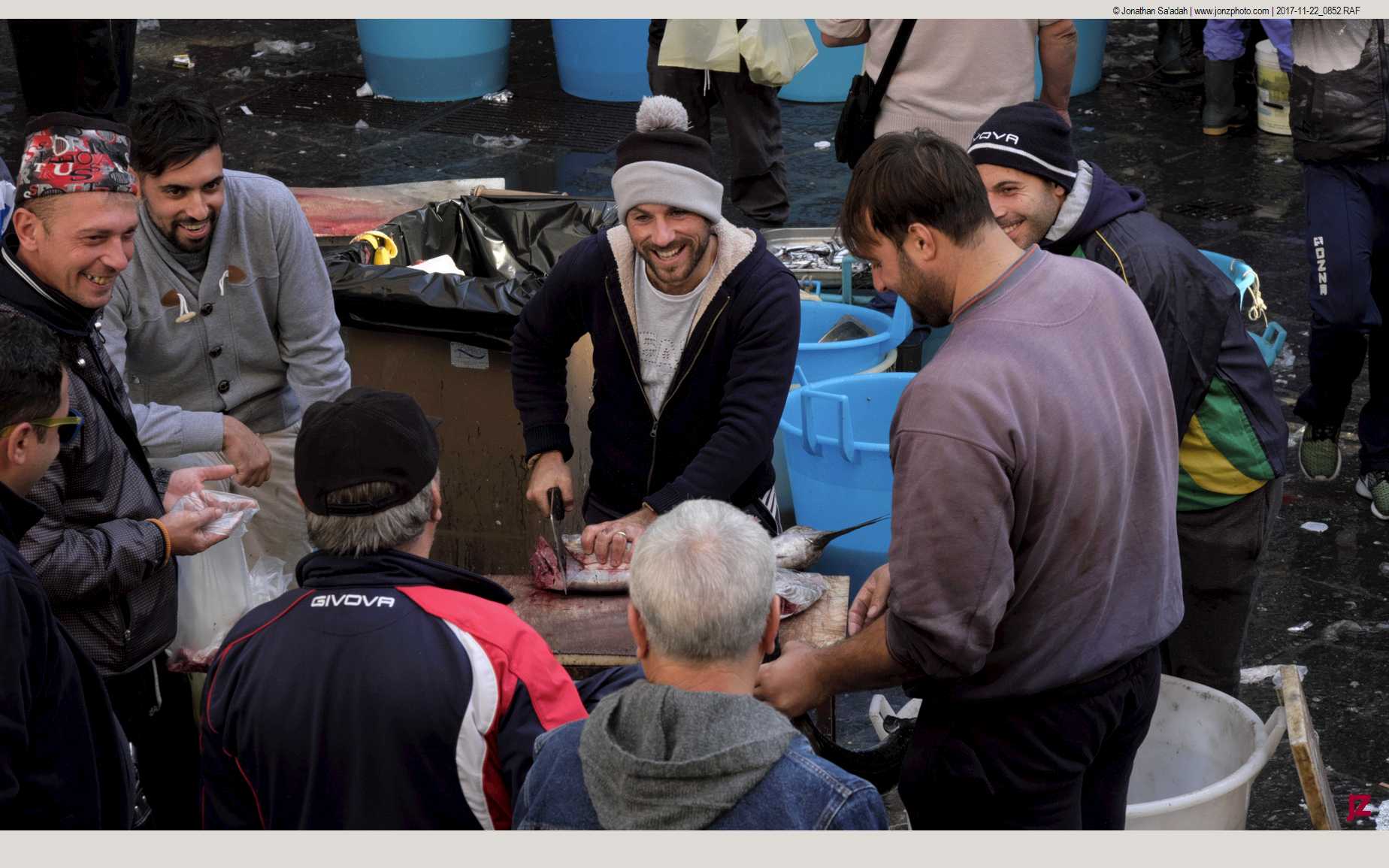
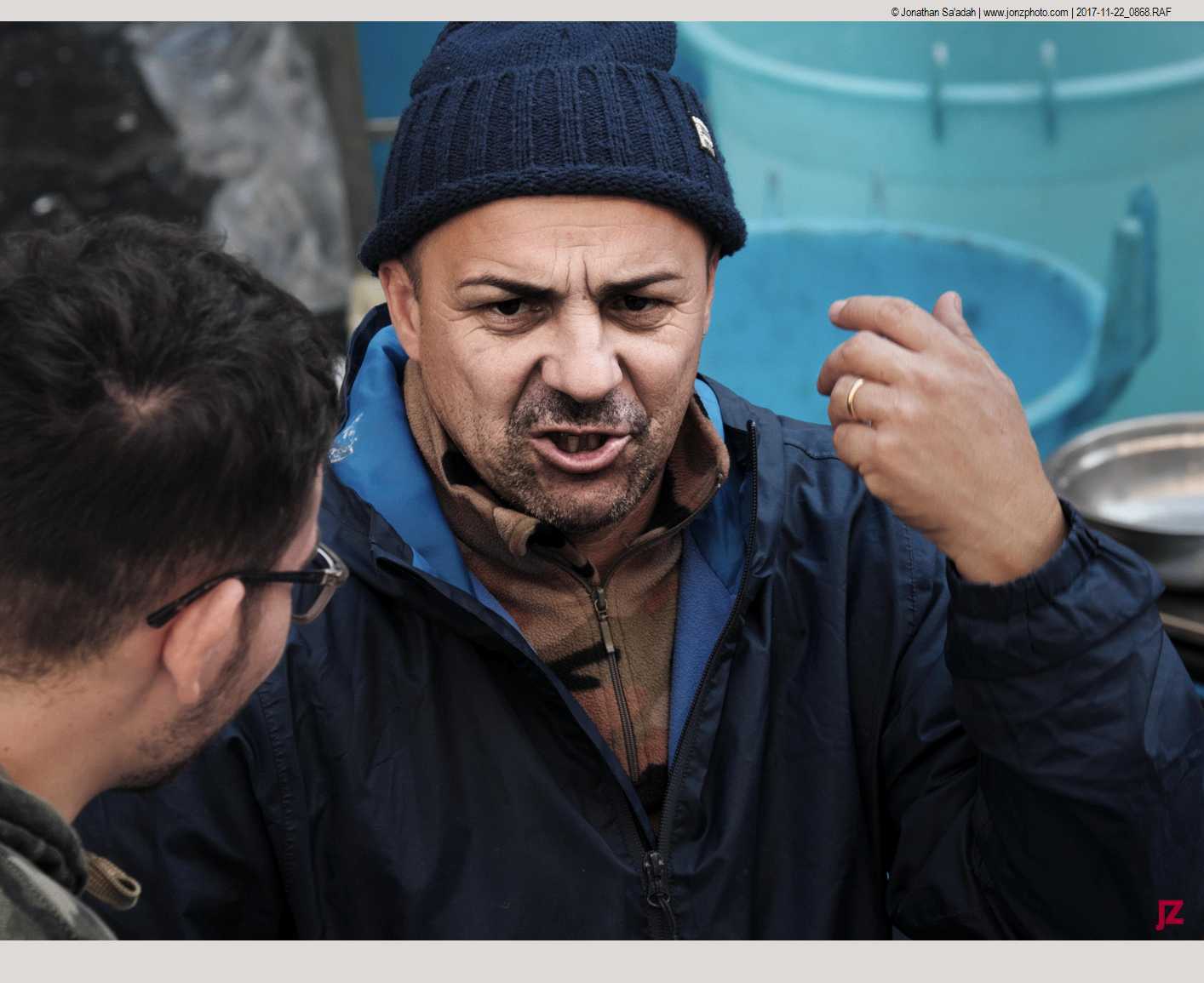
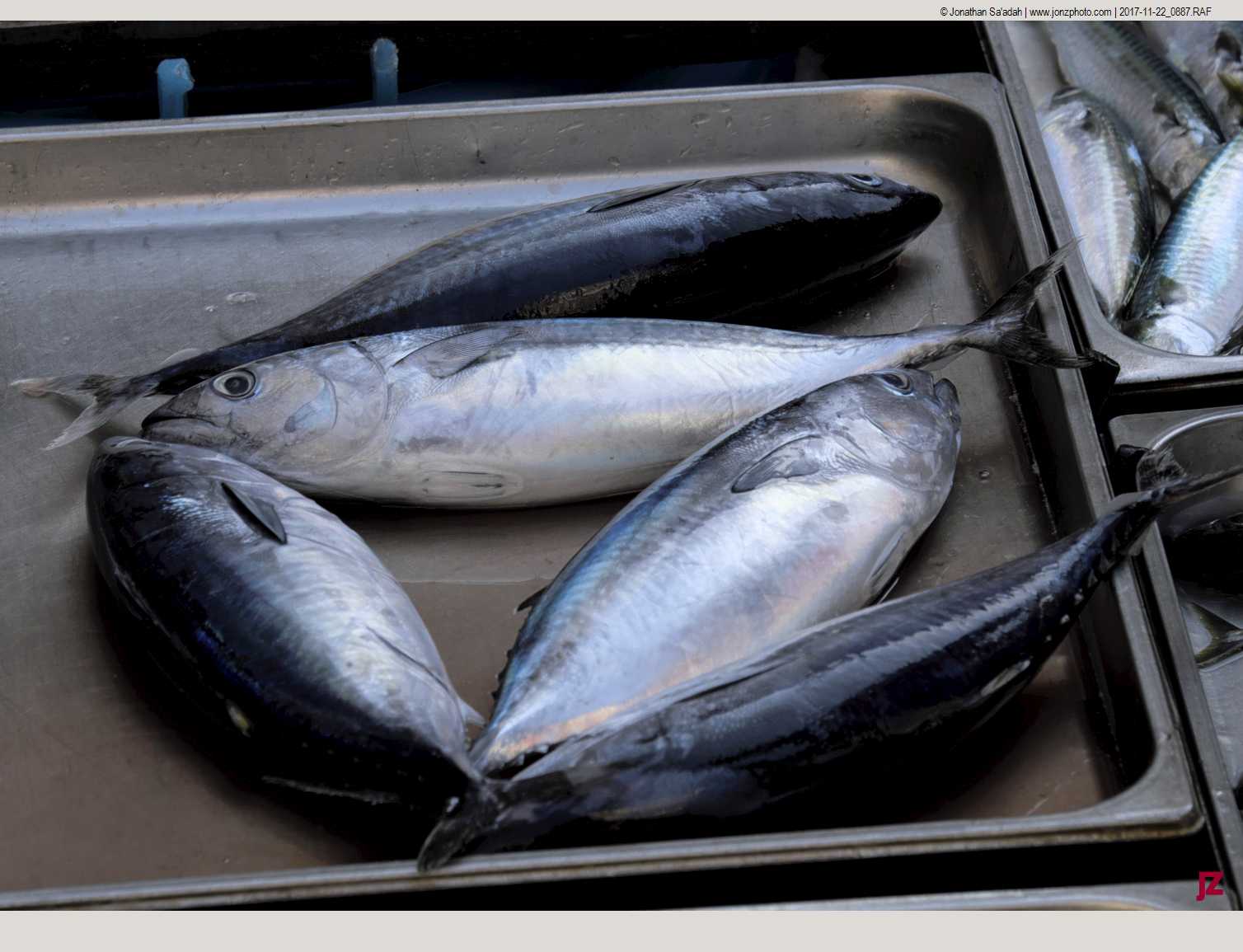
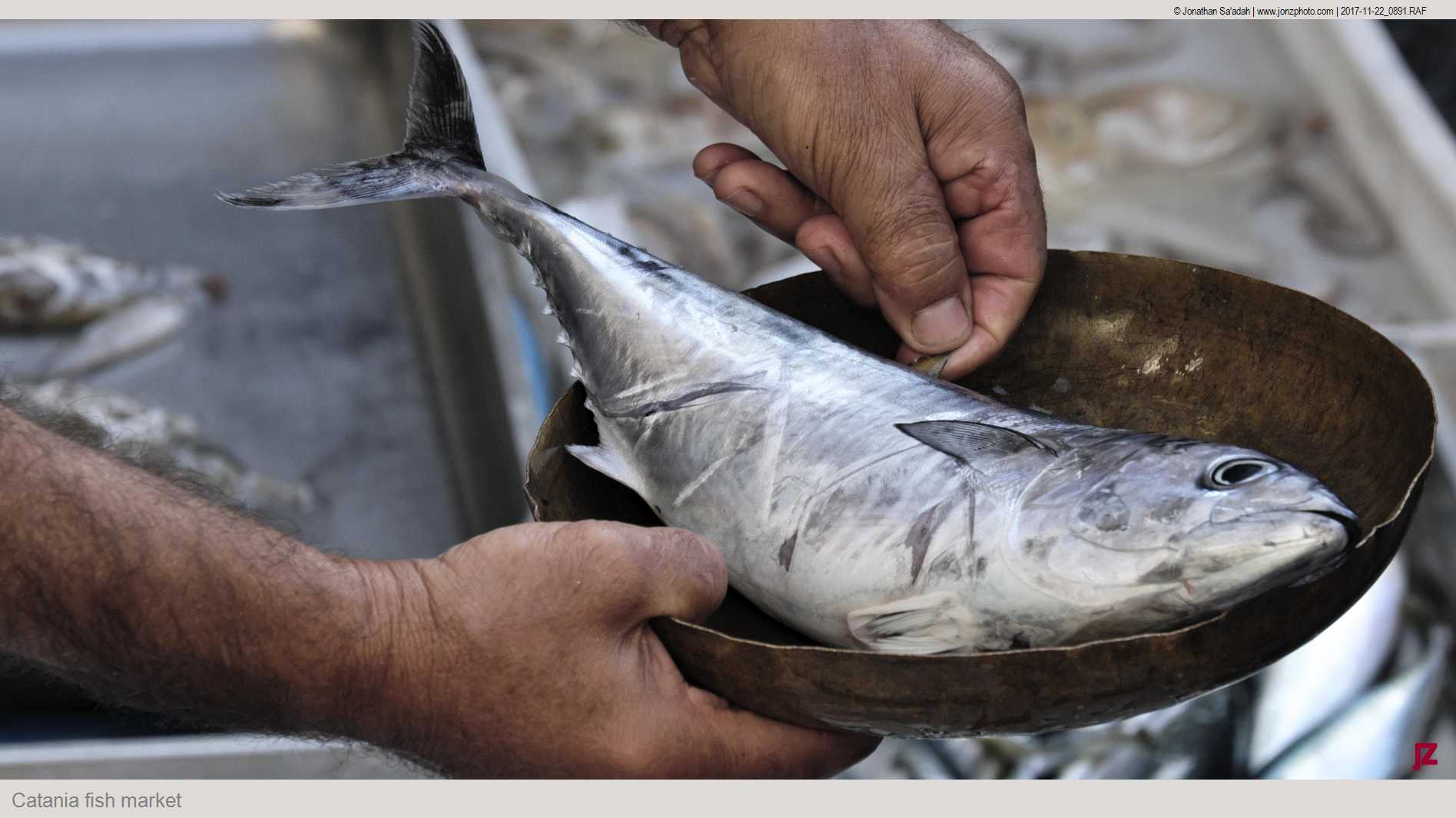
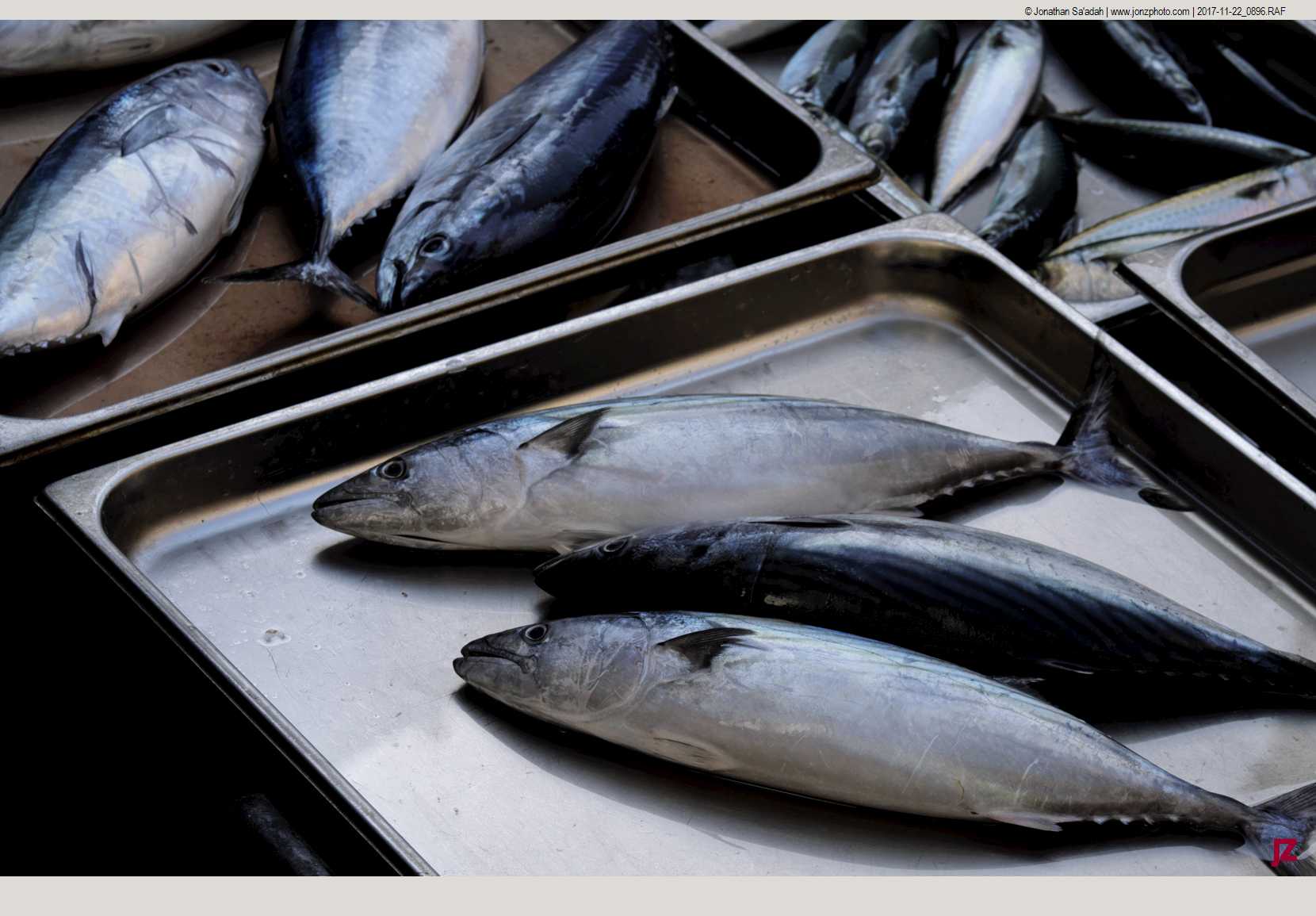
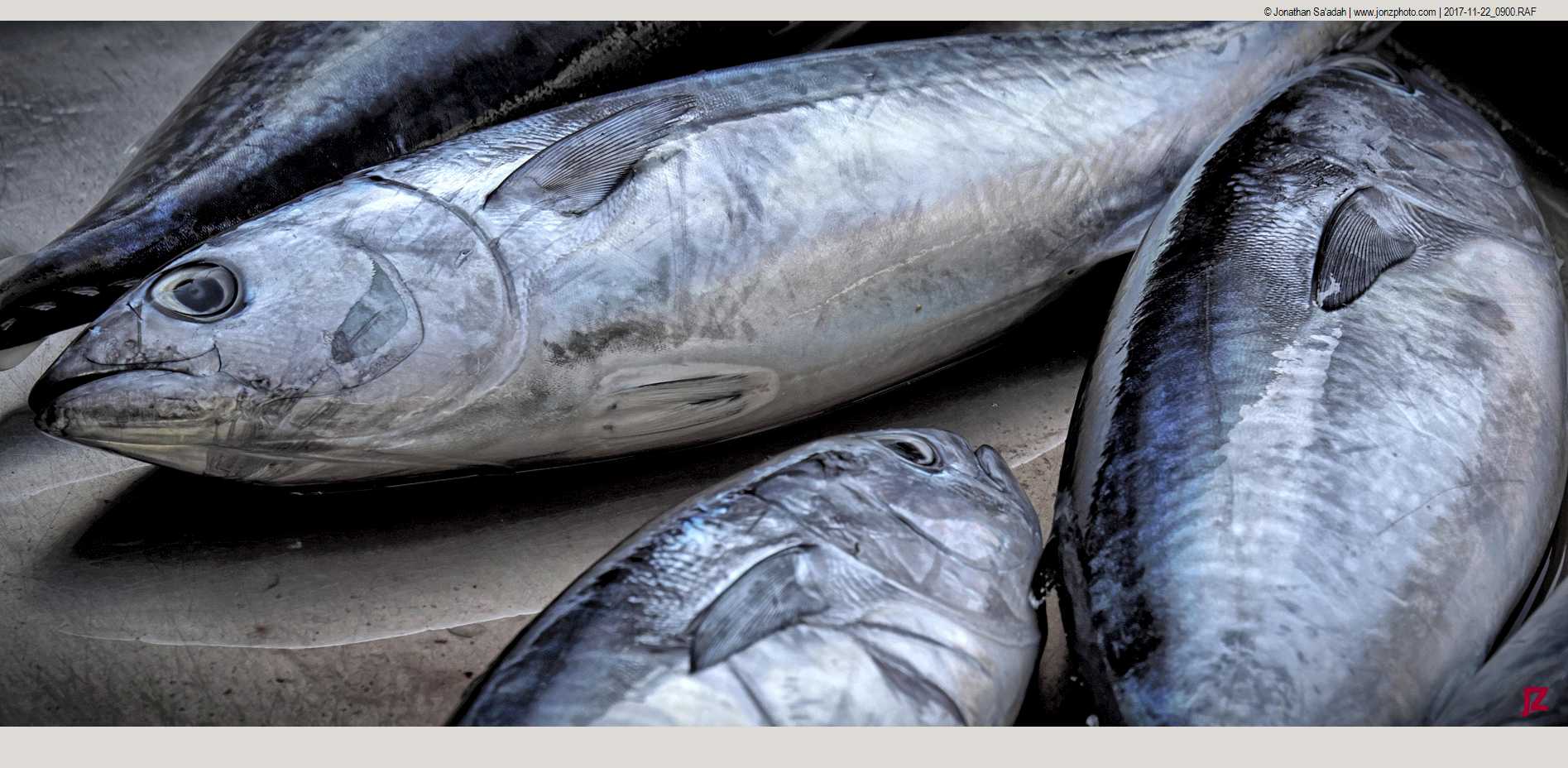
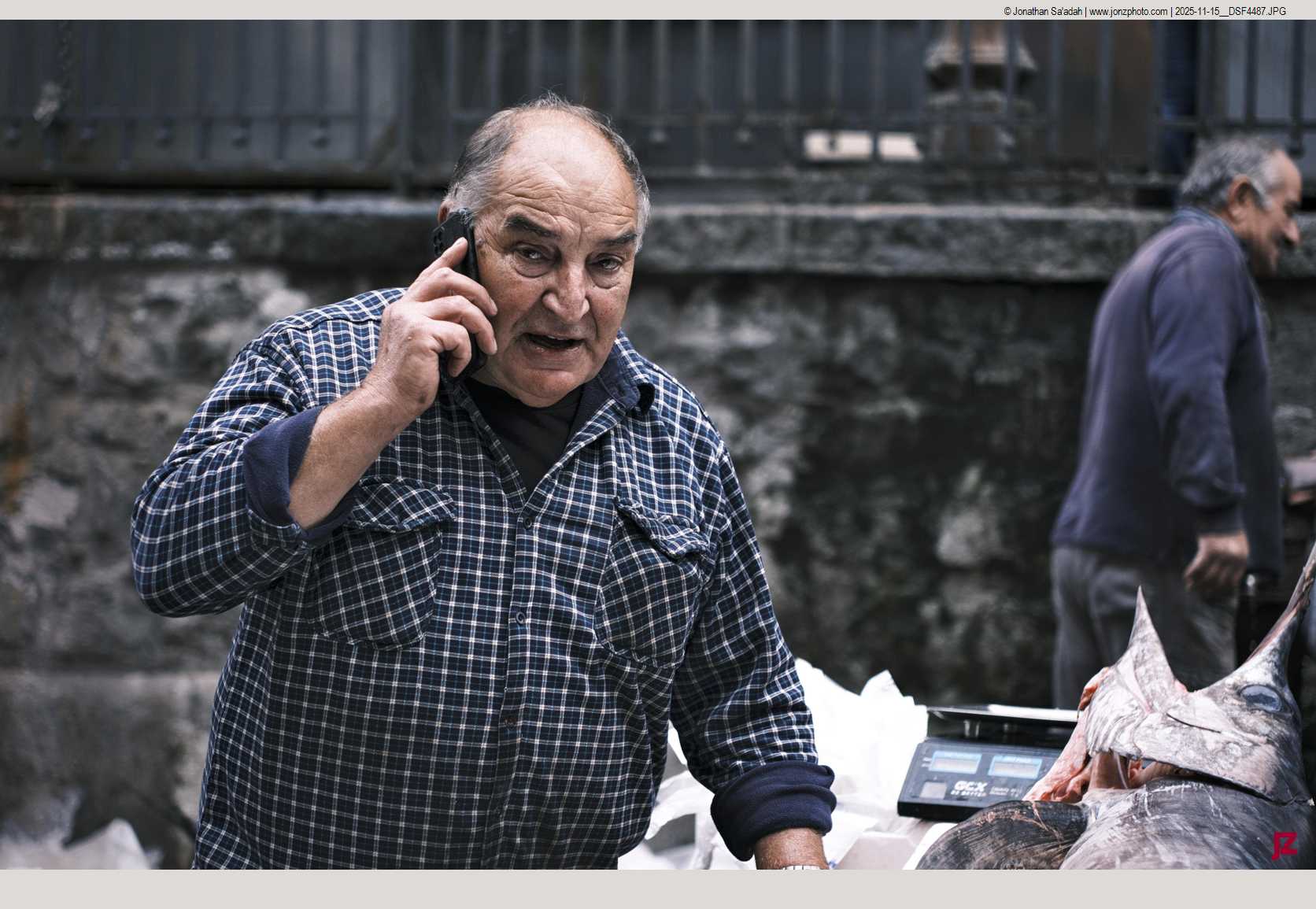
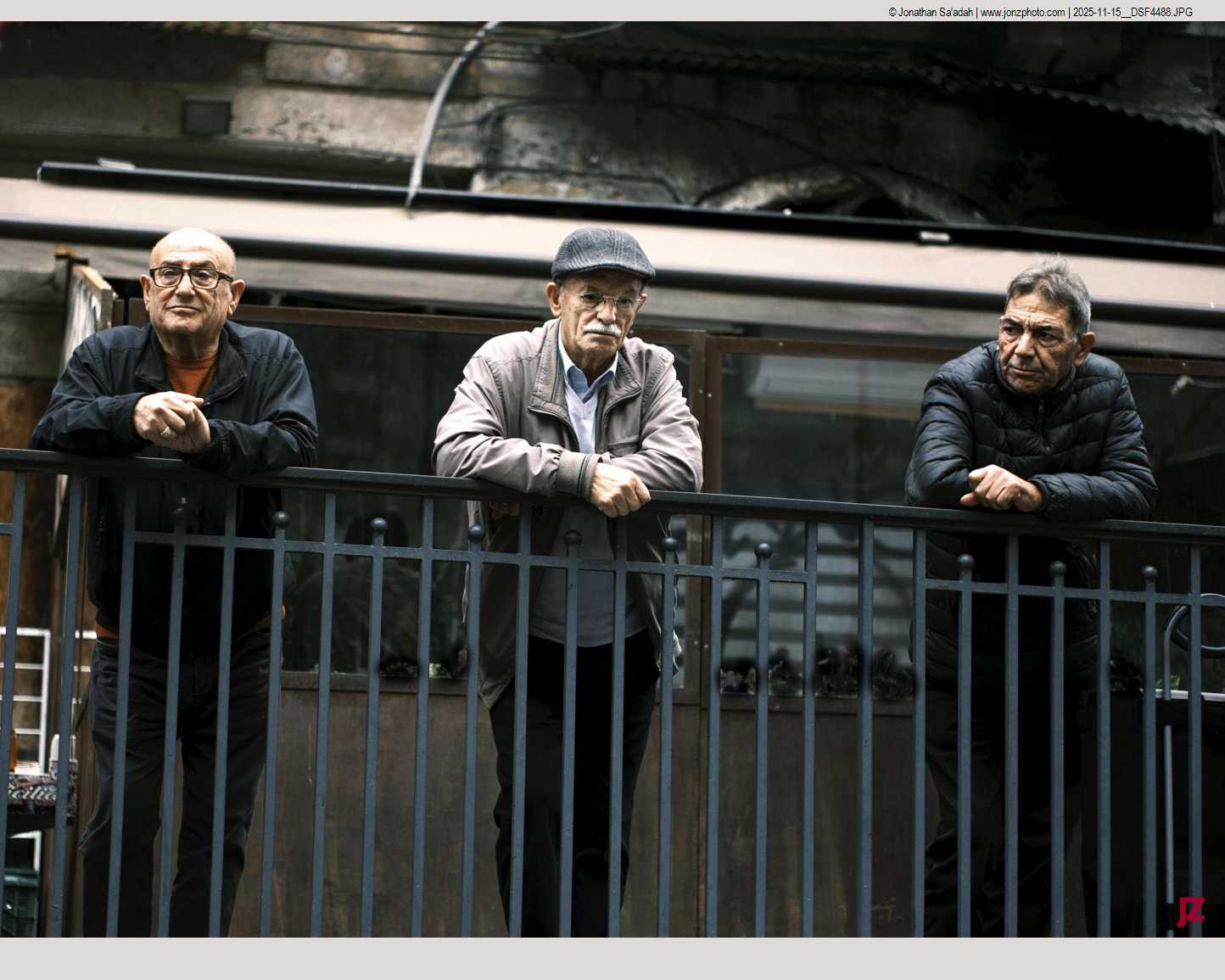
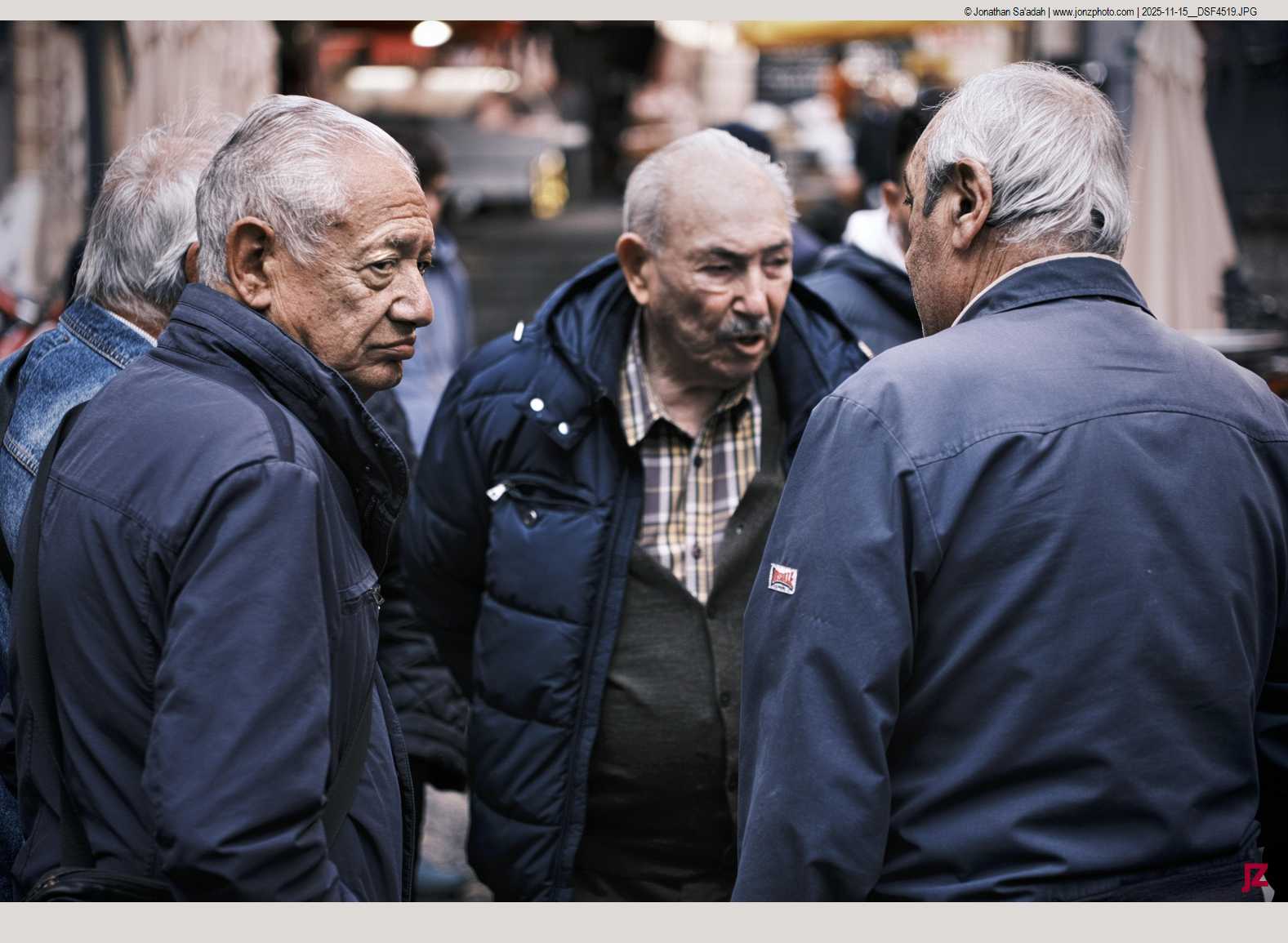
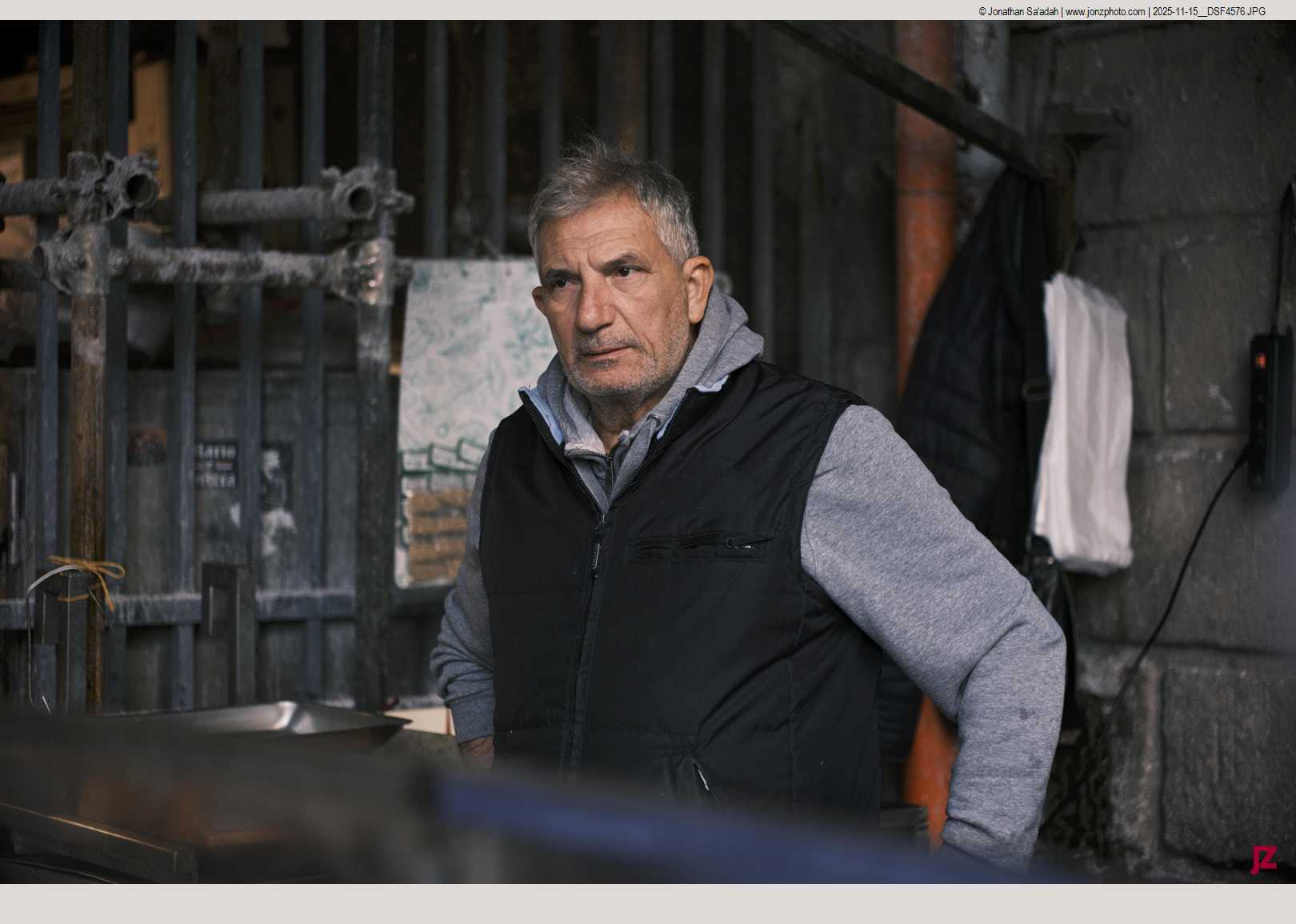
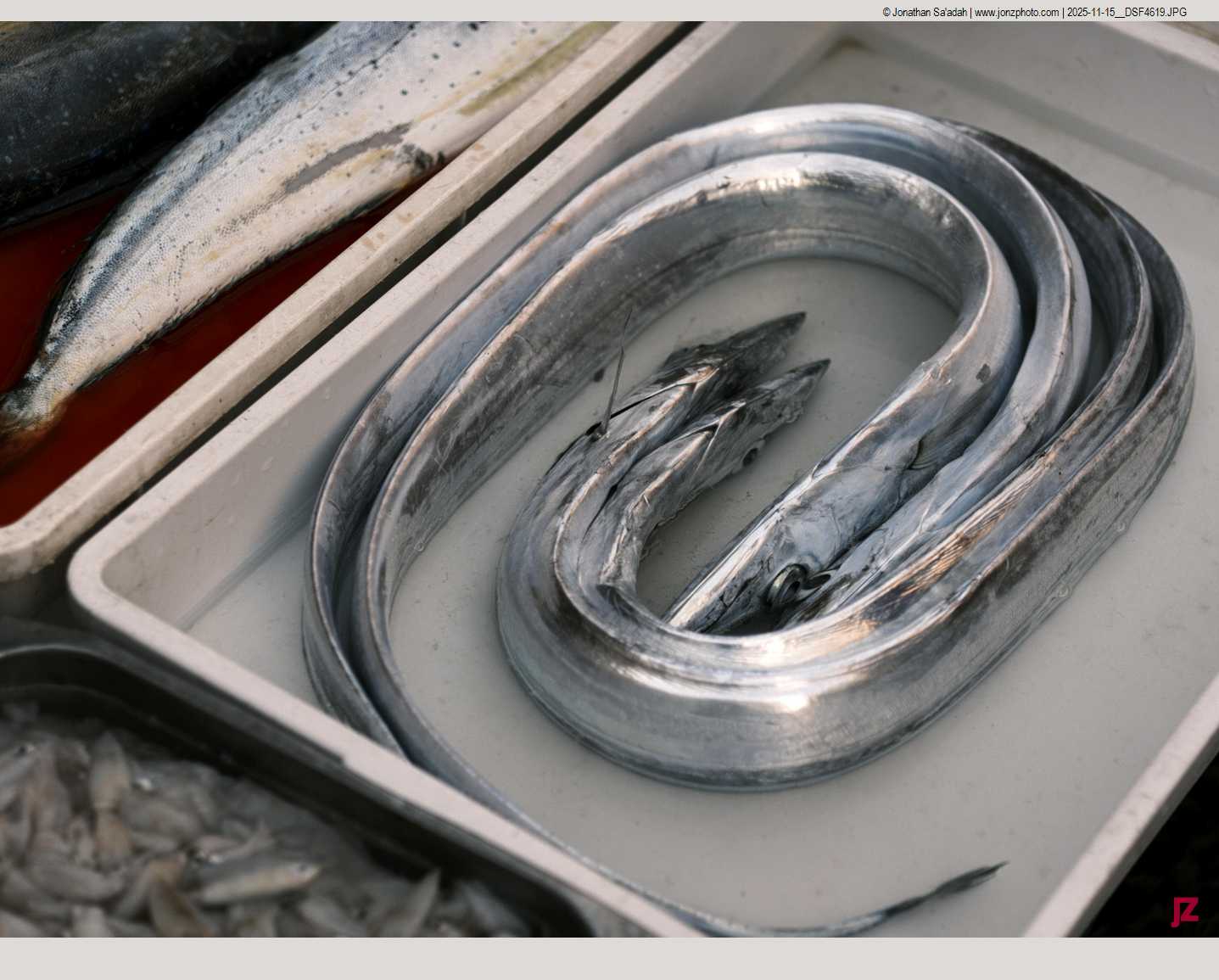
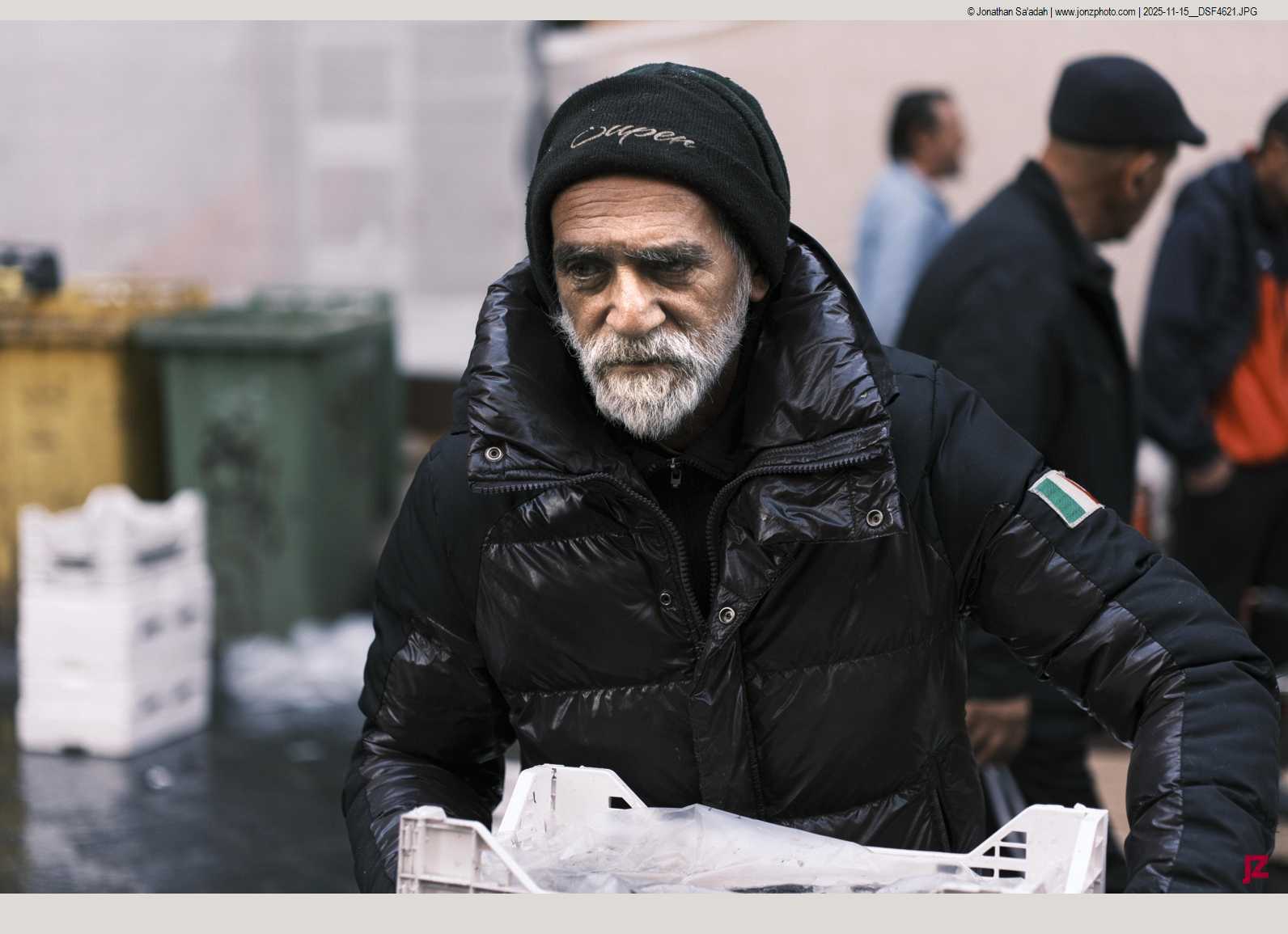
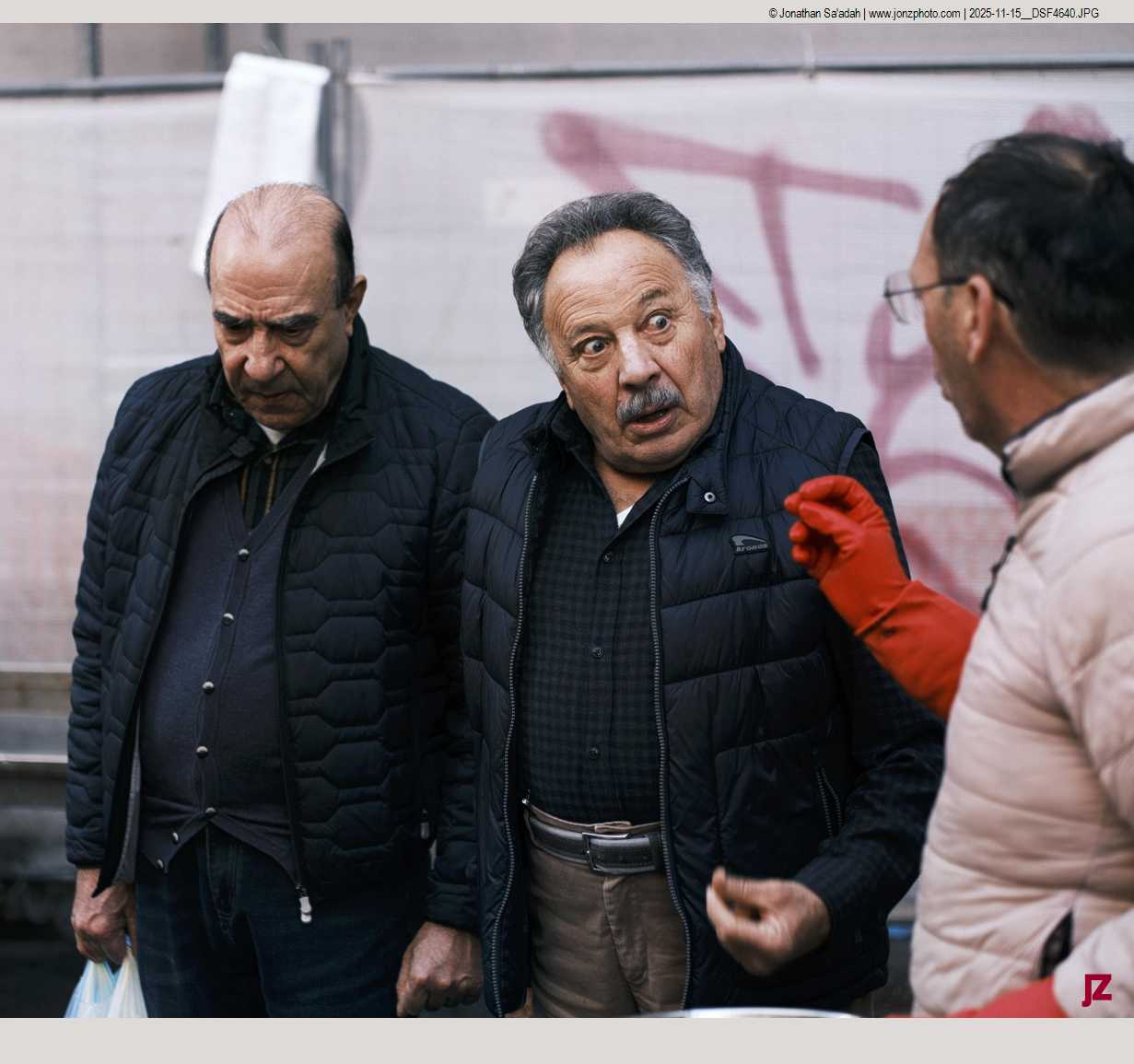
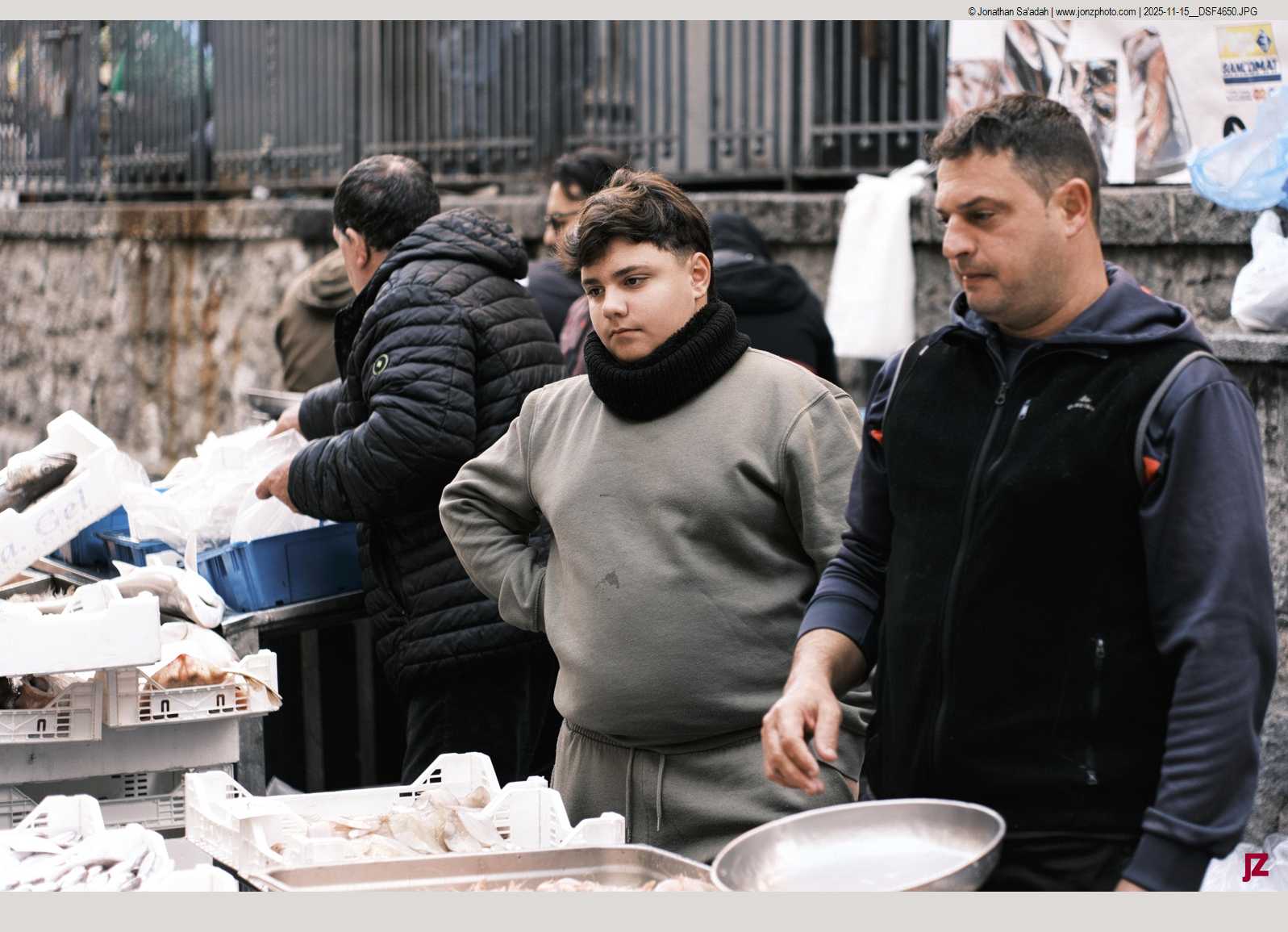
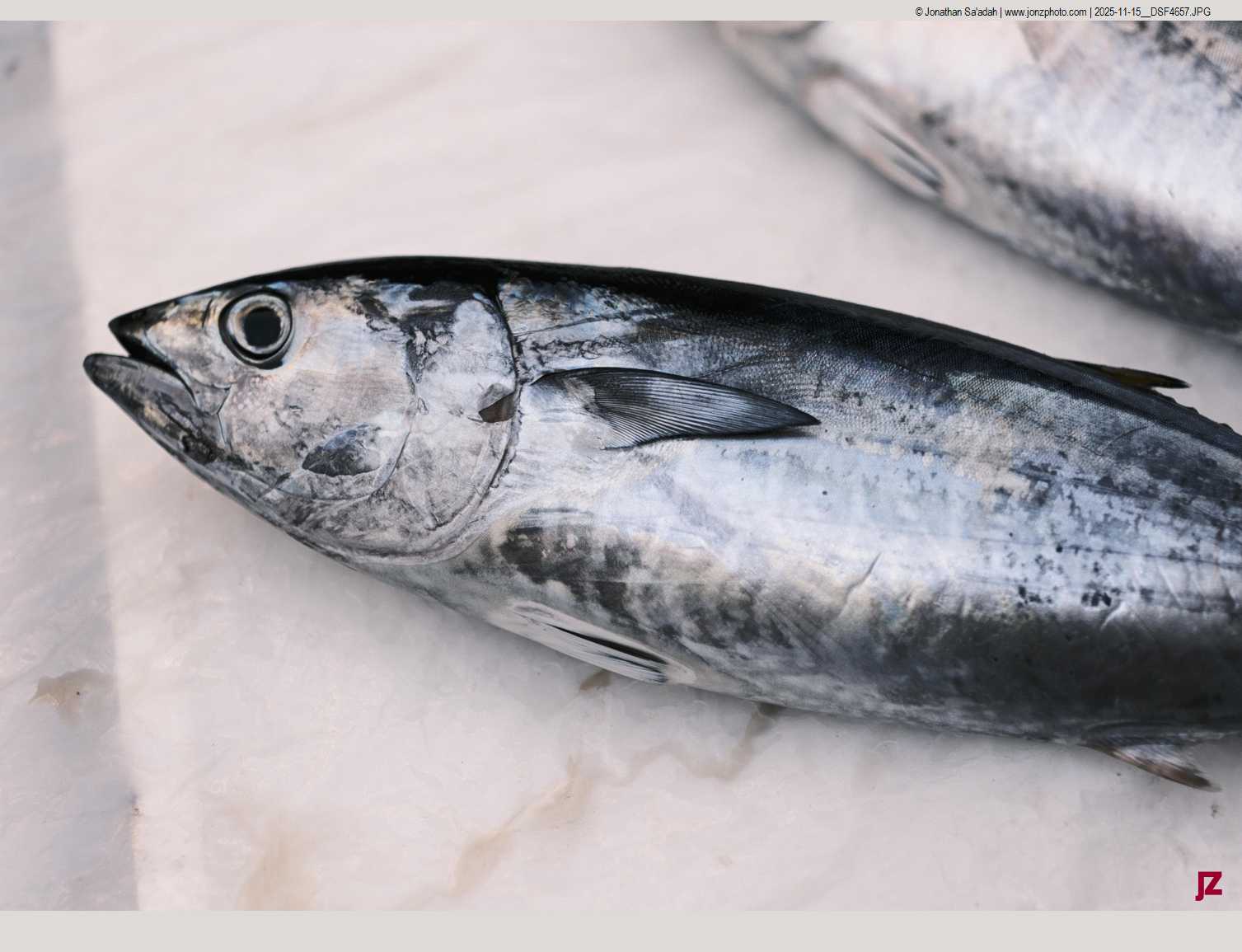
The bustling Catania market in Sicily moves an astonishing volume of fish, produce, and meat, but for me the real spectacle is the people. These markets are unimaginably old; fishmongers have been selling in Catania since at least Roman times, if not earlier. The current location, tucked behind the fountain near the main square, is only about a century and a half old because the market has shifted around the city over its long history. In its present form—with fish being butchered in full view, boisterous vendors calling out, and the activity focused in a sunken pit—it carries forward a tradition woven through Sicilian history, feeling at once utterly contemporary and stubbornly traditional.
At first, I hesitated to descend into the pit, but I am glad I did. Beth ventured down as well and bought swordfish for our dinner. As you can see, women appear here only as customers, though they, too, often command the space with large, forceful personalities.
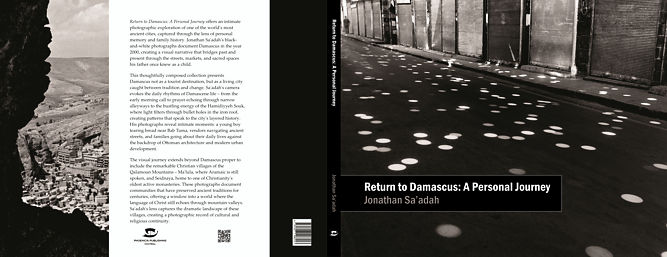
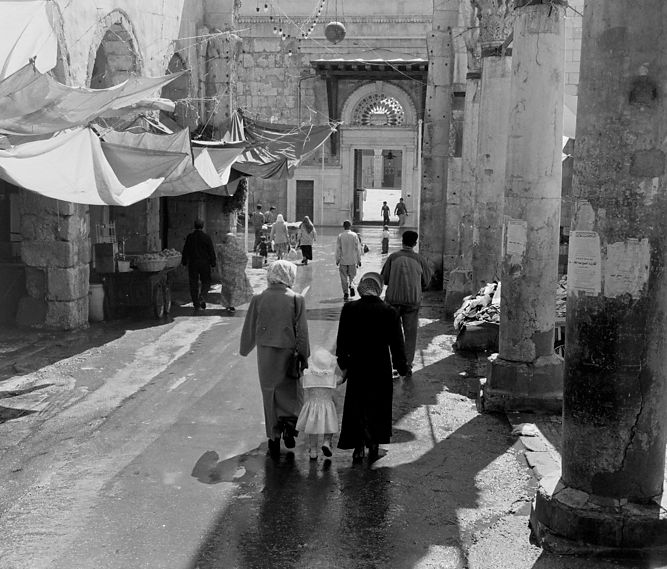
Return to Damascusis my new book of photographs, available for order, that preserves fleeting impressions and the spirit of a place through the lens. Accompanied by brief reflections and memories, the photographs offer a tribute to the place and its people, focusing on enduring character and the subtle interplay of light, architecture, and tradition. Return to Damascus is a quiet celebration of observation and memory, inviting viewers to participate.
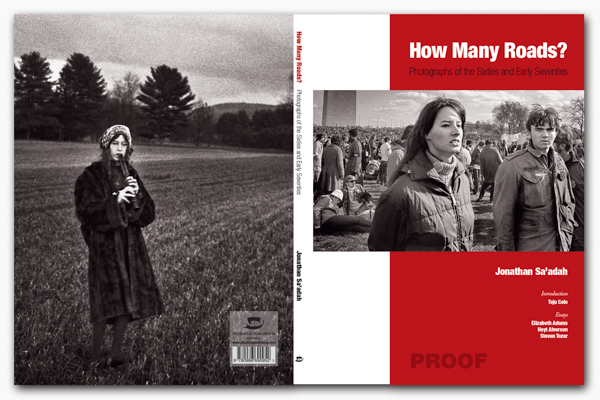
How Many Roads? is a book of photographs by Jonathan Sa'adah, available for order, offering an unglossy but deeply human view of the period from 1968 to 1975 in richly detailed, observant images that have poignant resonance with the present. Ninety-one sepia photographs reproduced with an introduction by Teju Cole, essays by Beth Adams, Hoyt Alverson, and Steven Tozer, and a preface by the photographer.
If you'd like more information, please have a look at this page.







Recent Comments