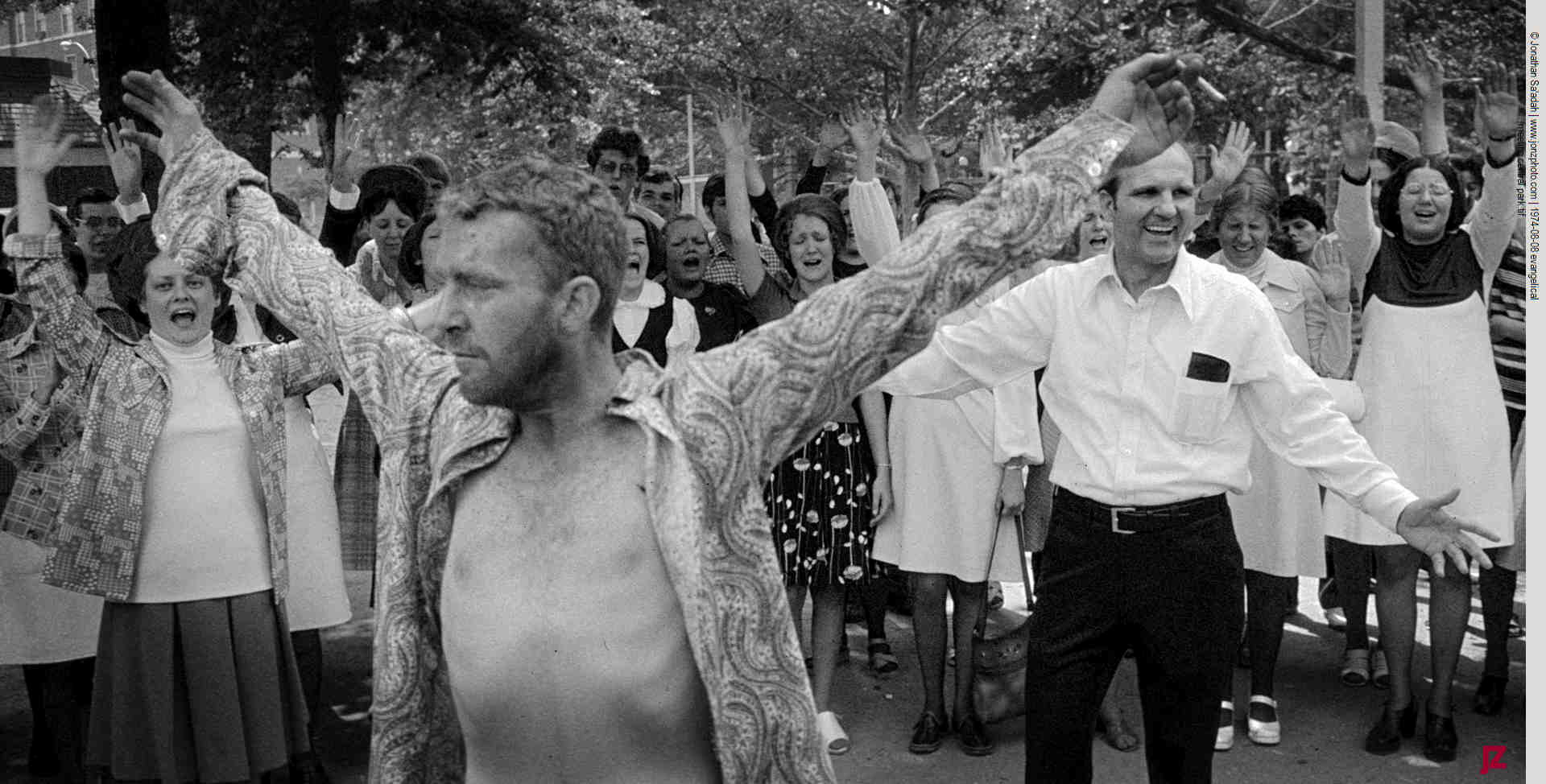
Evangelical Christian gathering in Central Park, 1967
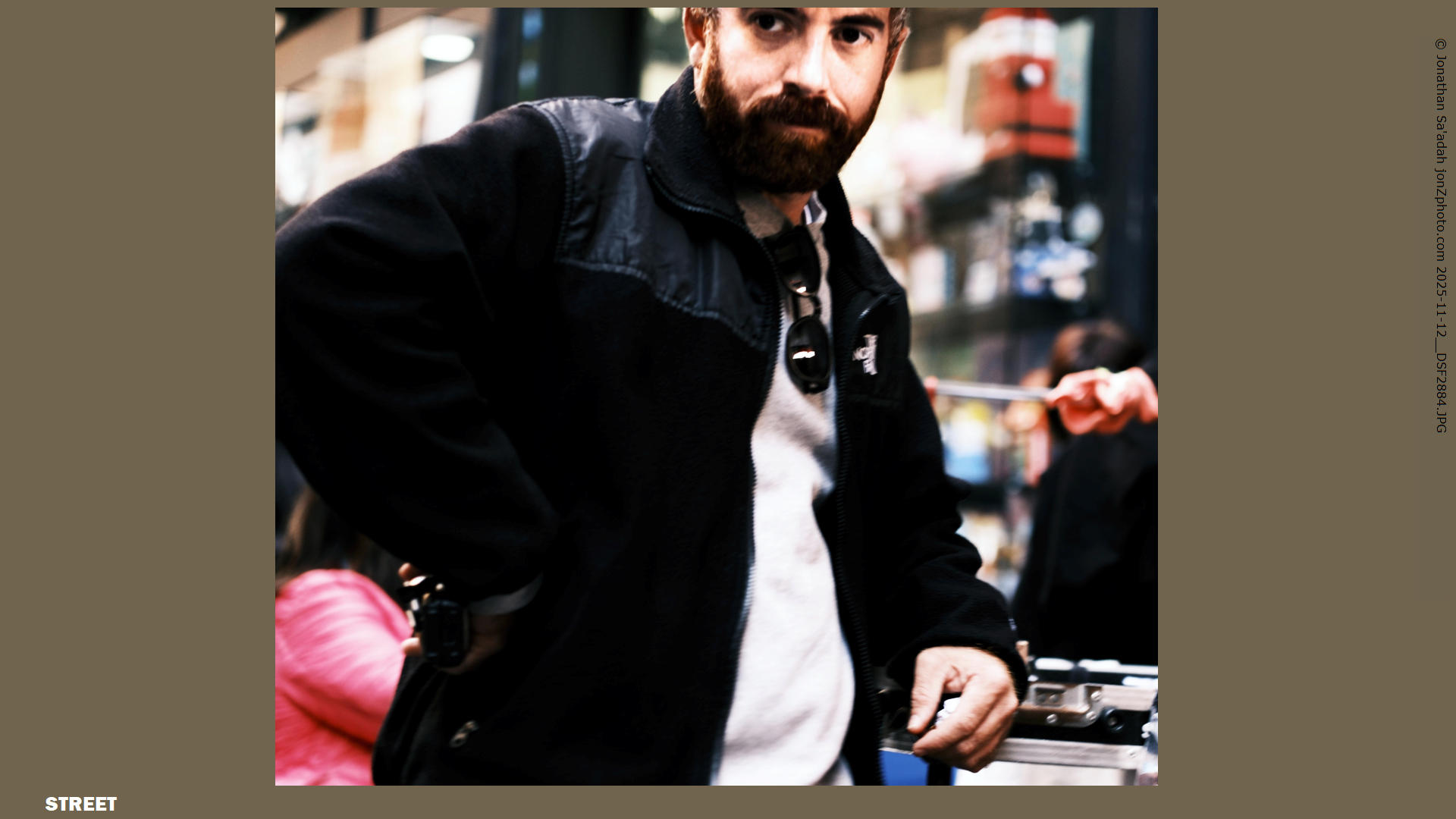
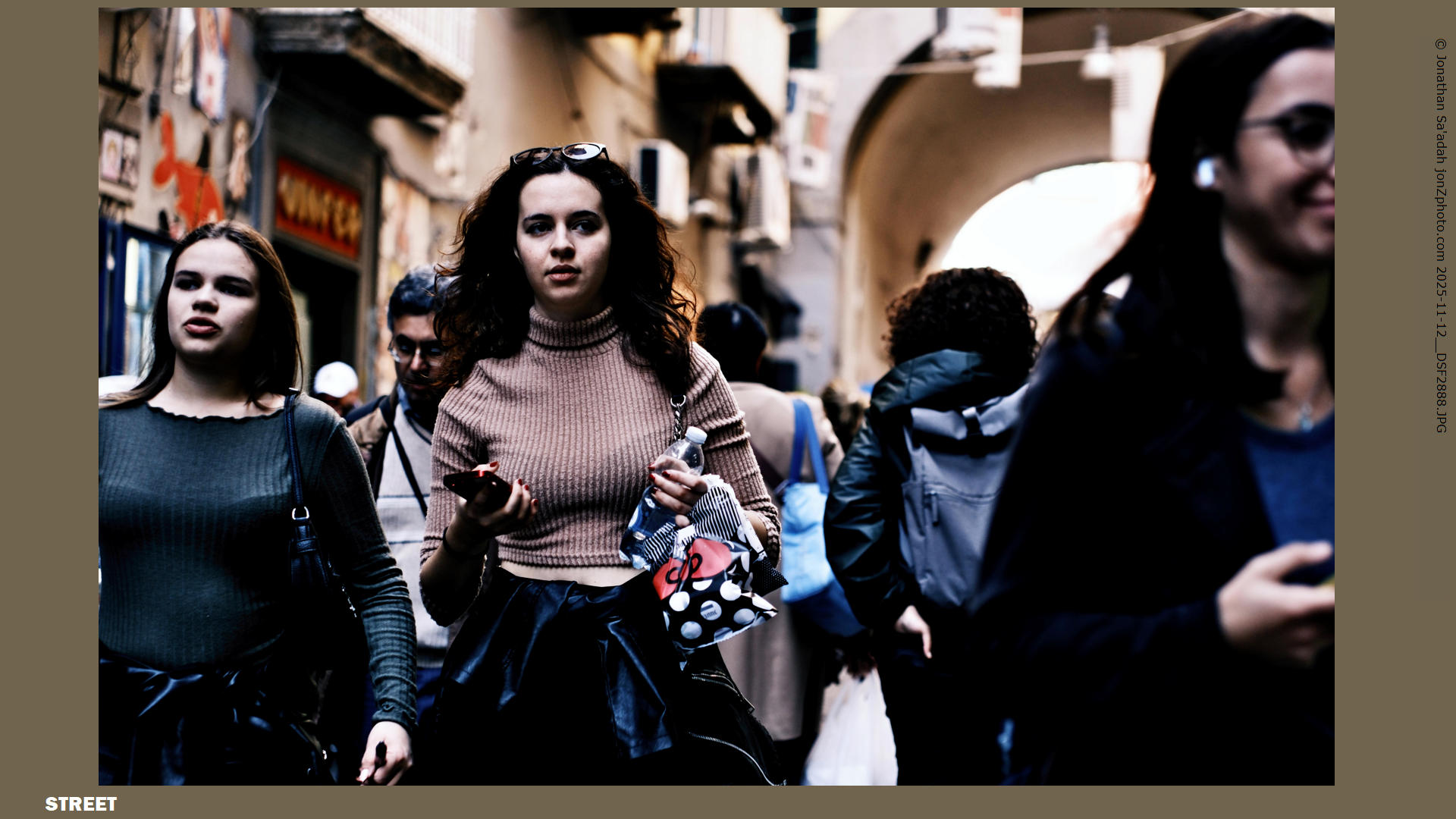
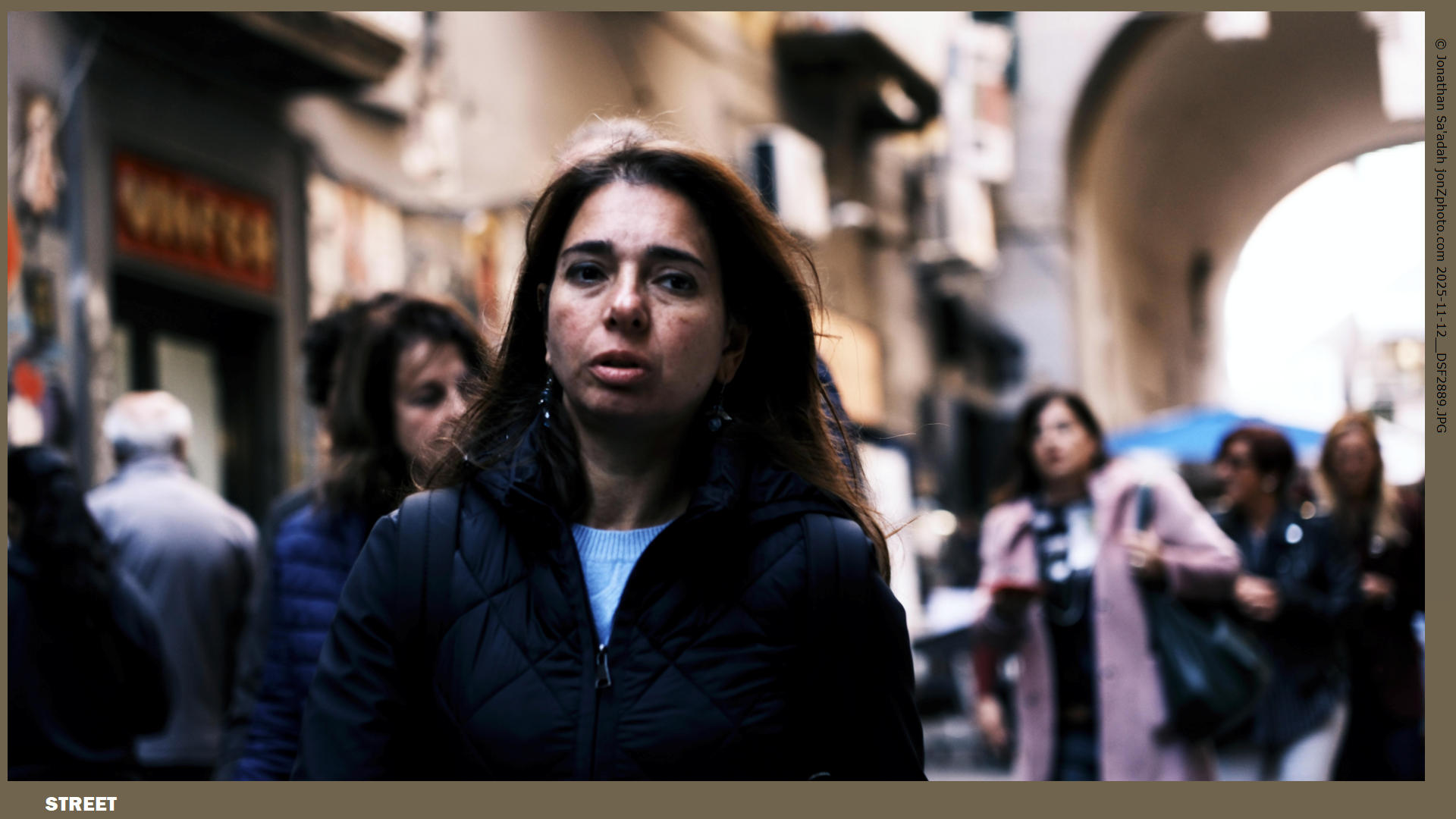
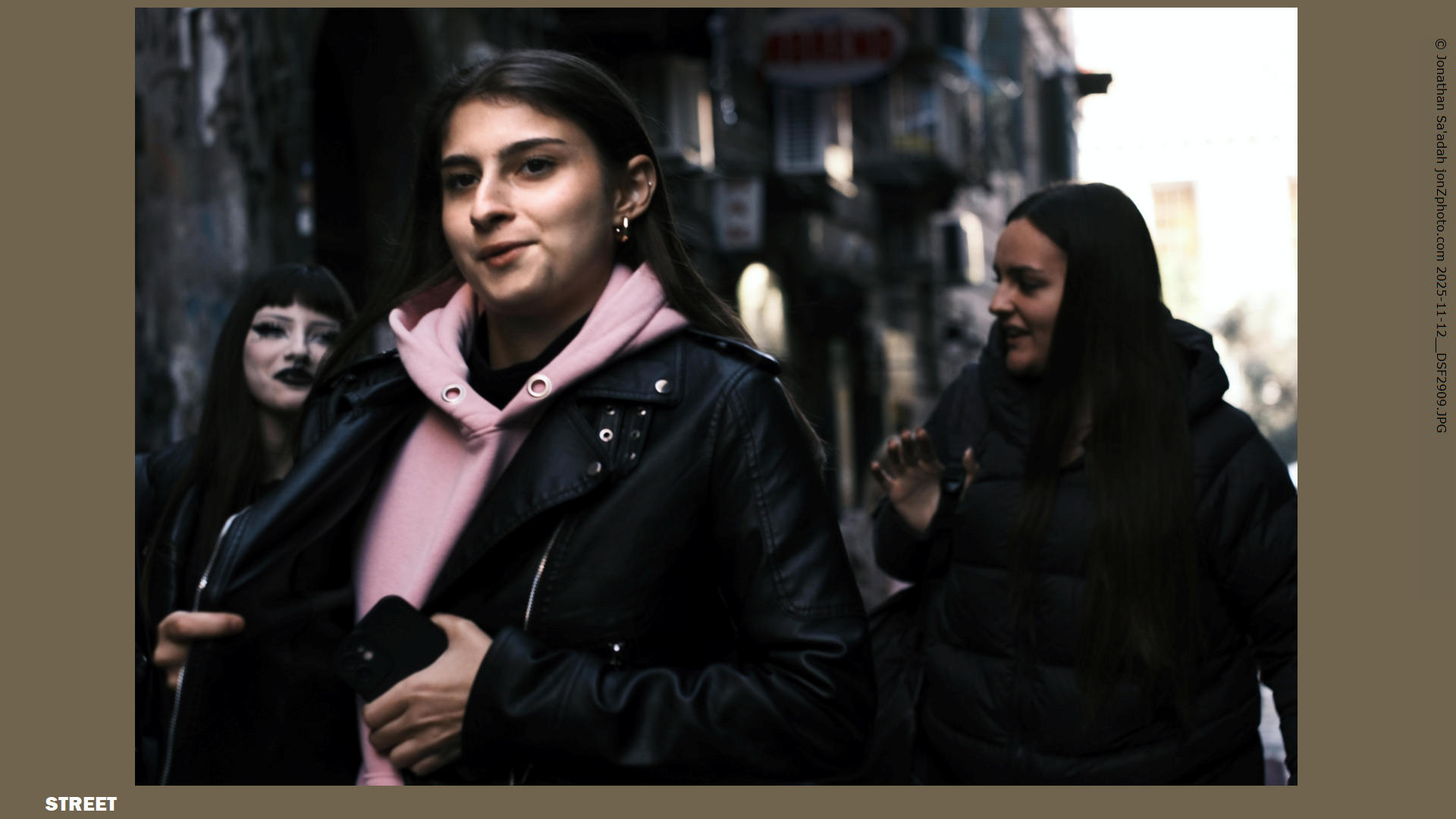
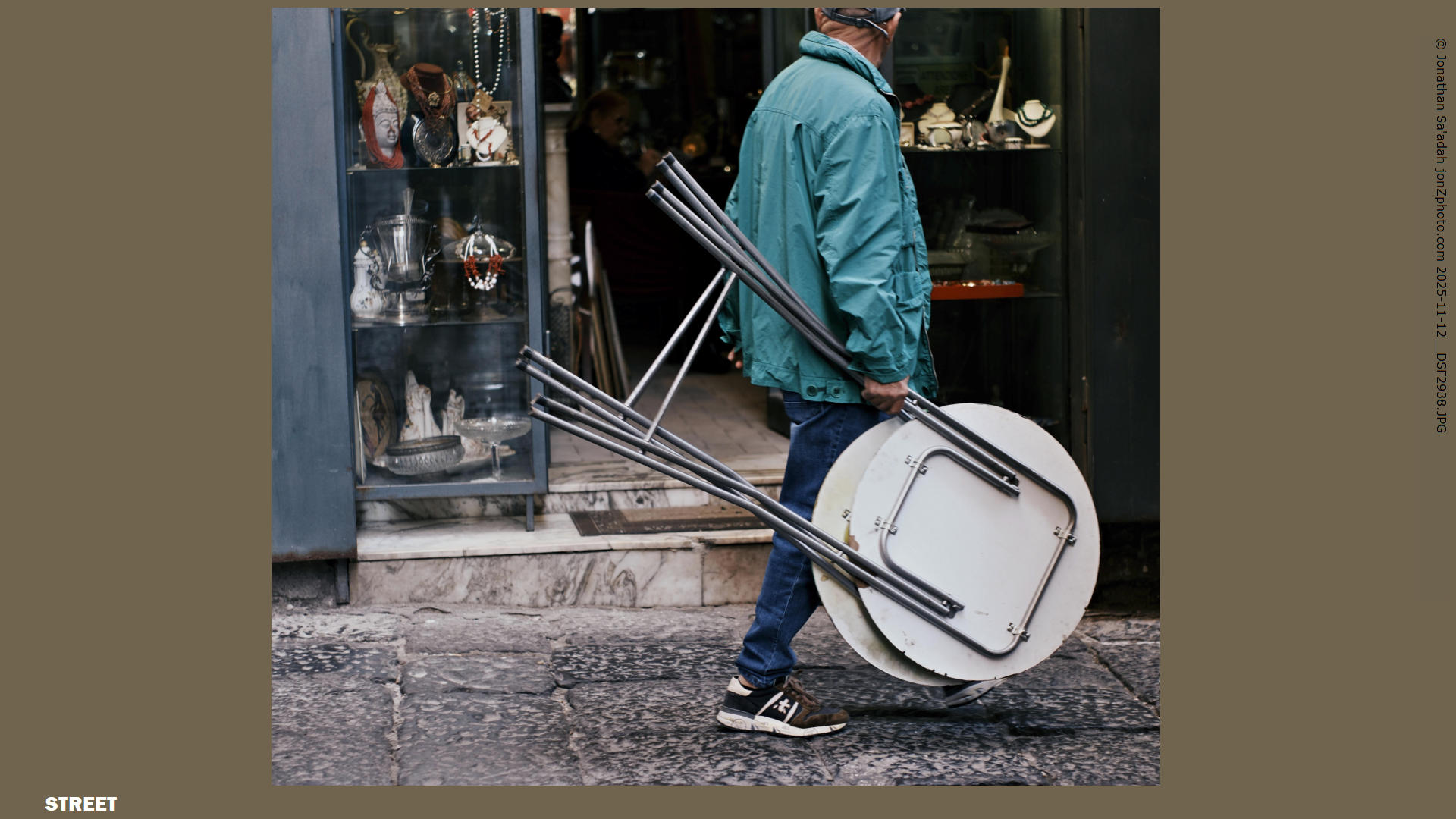
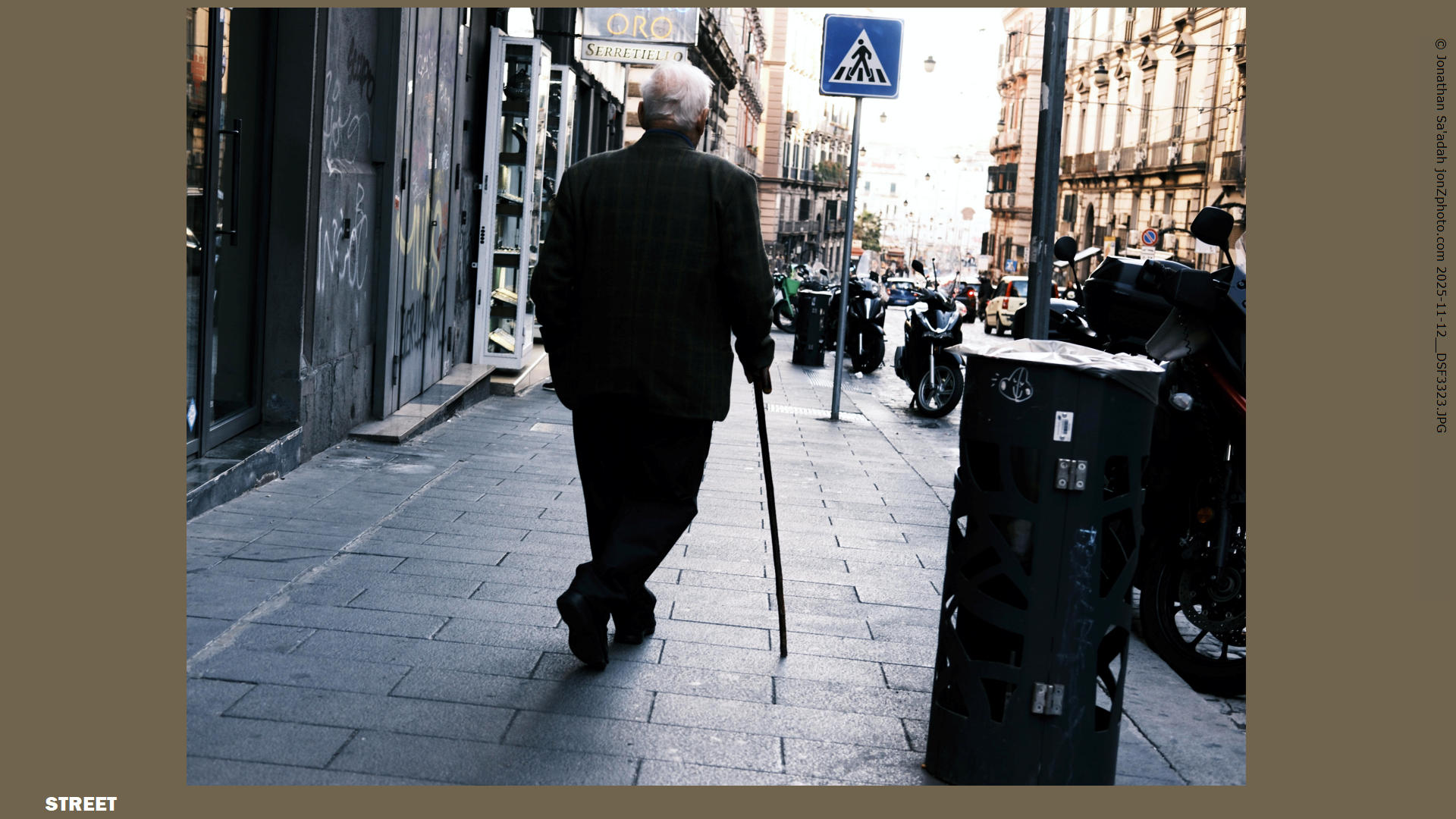
From the time I started using a camera I’ve photographed people. Most of the time I’m completely open about what I’m doing, but I also like swinging the other direction and taking pictures where I’m more surreptitious and people are unaware of the camera. When miniature cameras came into play in the 1930s photographers quickly took advantage of their size to photograph unobtrusively in public spaces. I did too – some of my earliest photographs were street photographs. At the time I didn’t know anything about Walker Evans or Helen Levitt or really any of the history of the medium. To me it was exciting to take un-posed photographs. I liked the serendipity and the interplay with coincidence which lies at the heart of street photography. It shaped both how I shoot and my attraction to the medium’s mystique. Unlike most photographic genres, which often involve contemplation and thought, using my camera on the street unfolds the uncontrolled theatre of everyday life. I photograph in this environment not as a director, but as a responsive observer, being alert to the fleeting alignments that appear without warning and vanish in an instant. For me, serendipity is not just a pleasant surprise; it’s what gives the best photographs lasting meaning.
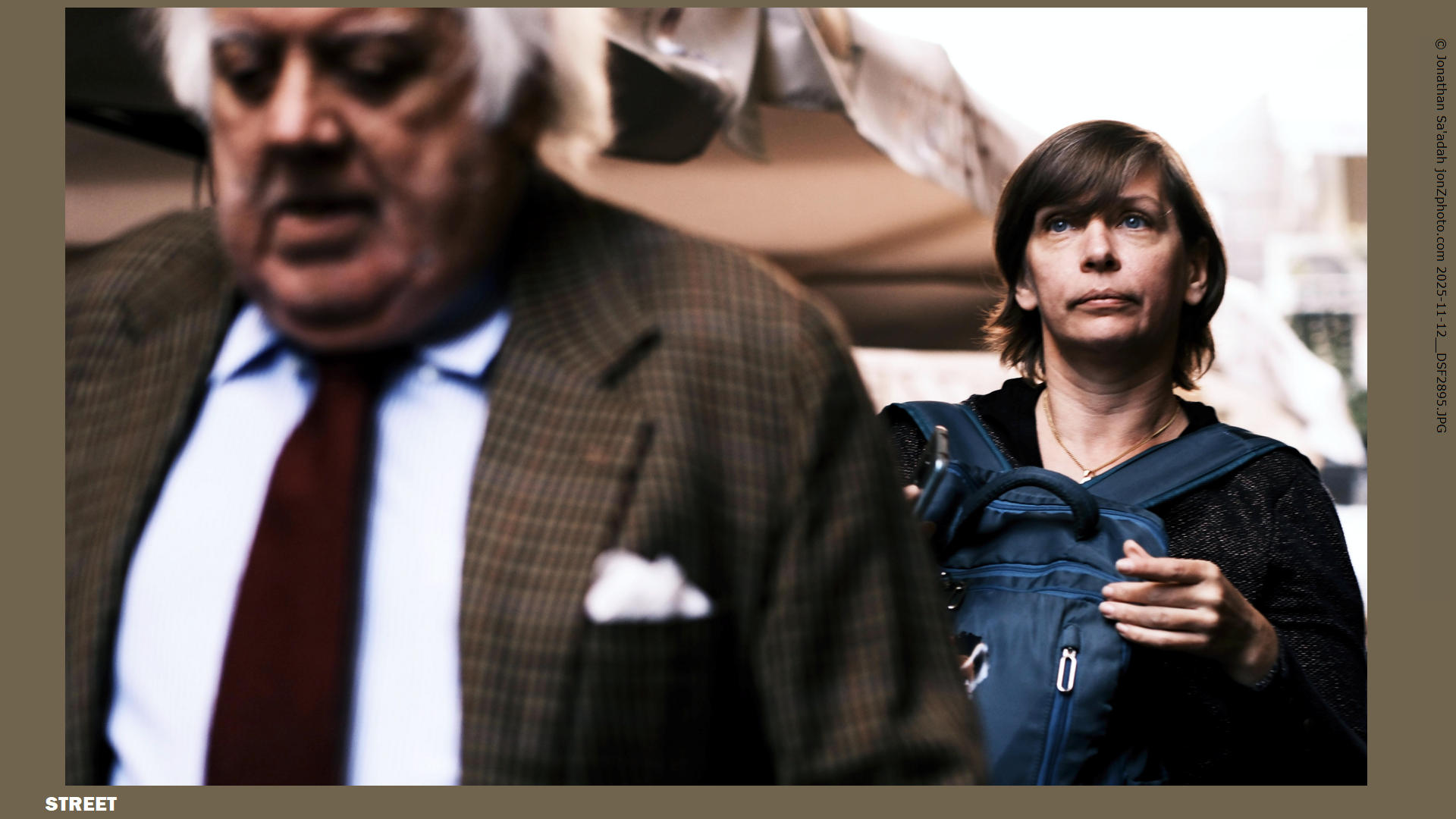
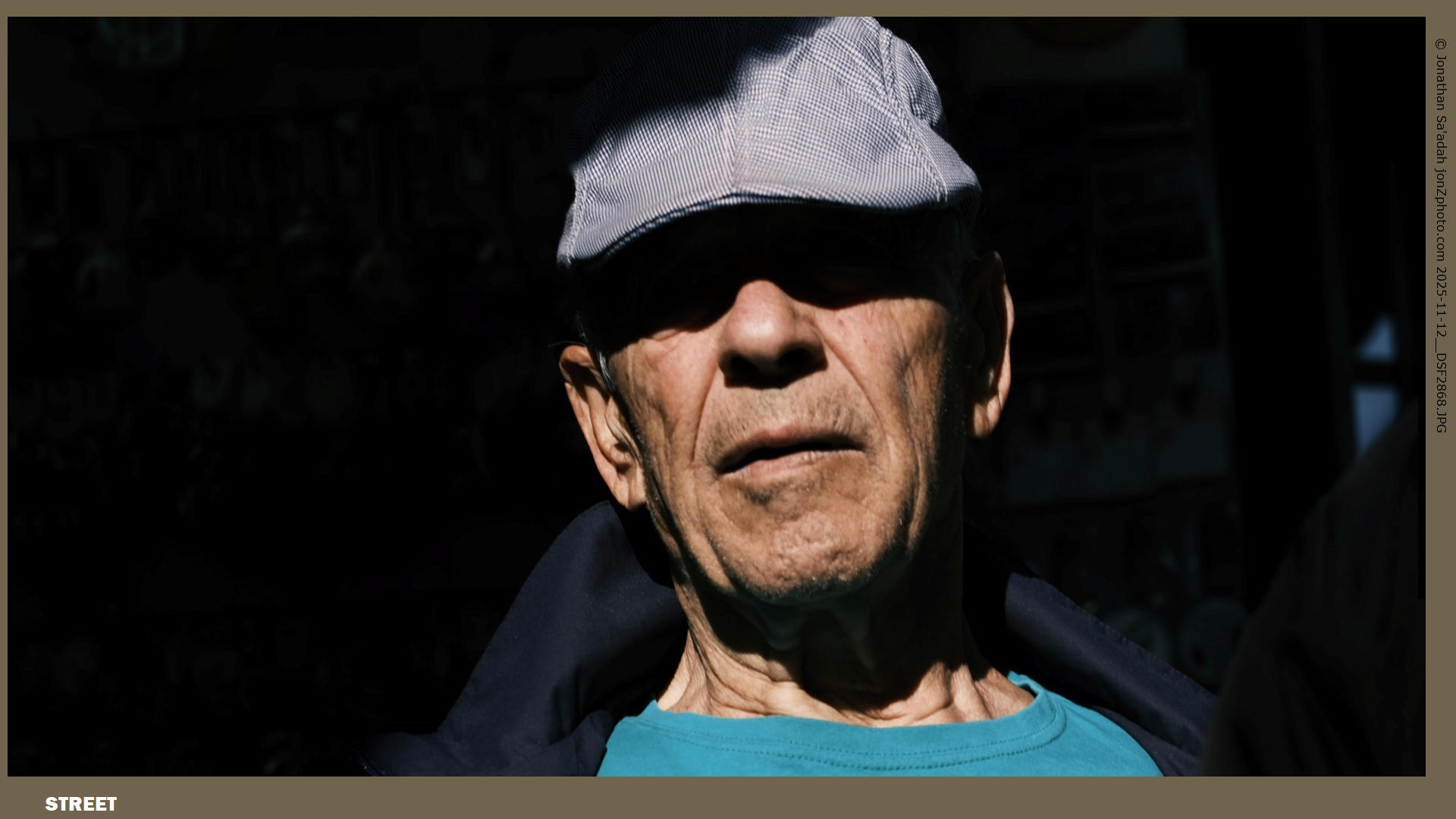
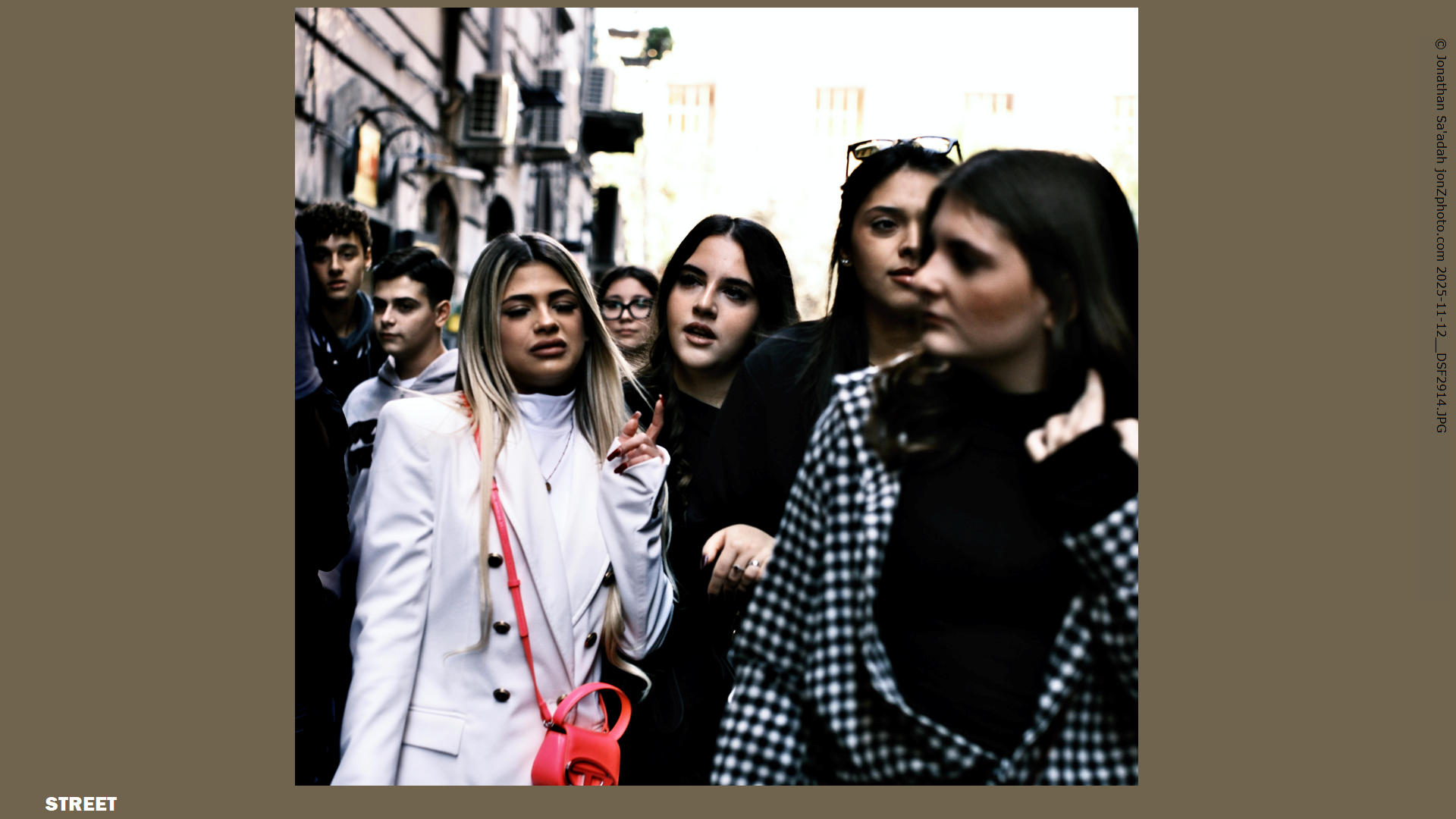
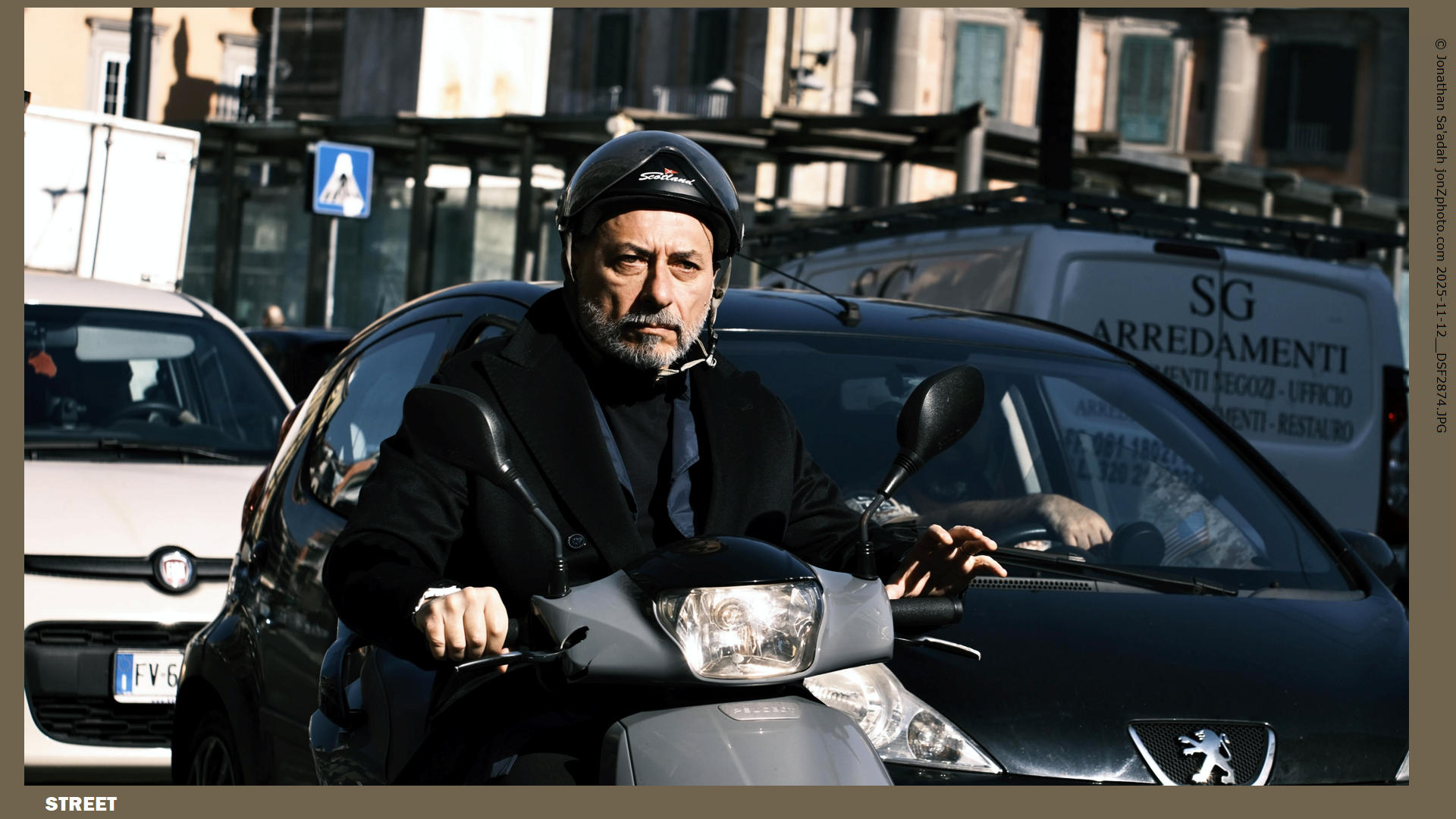
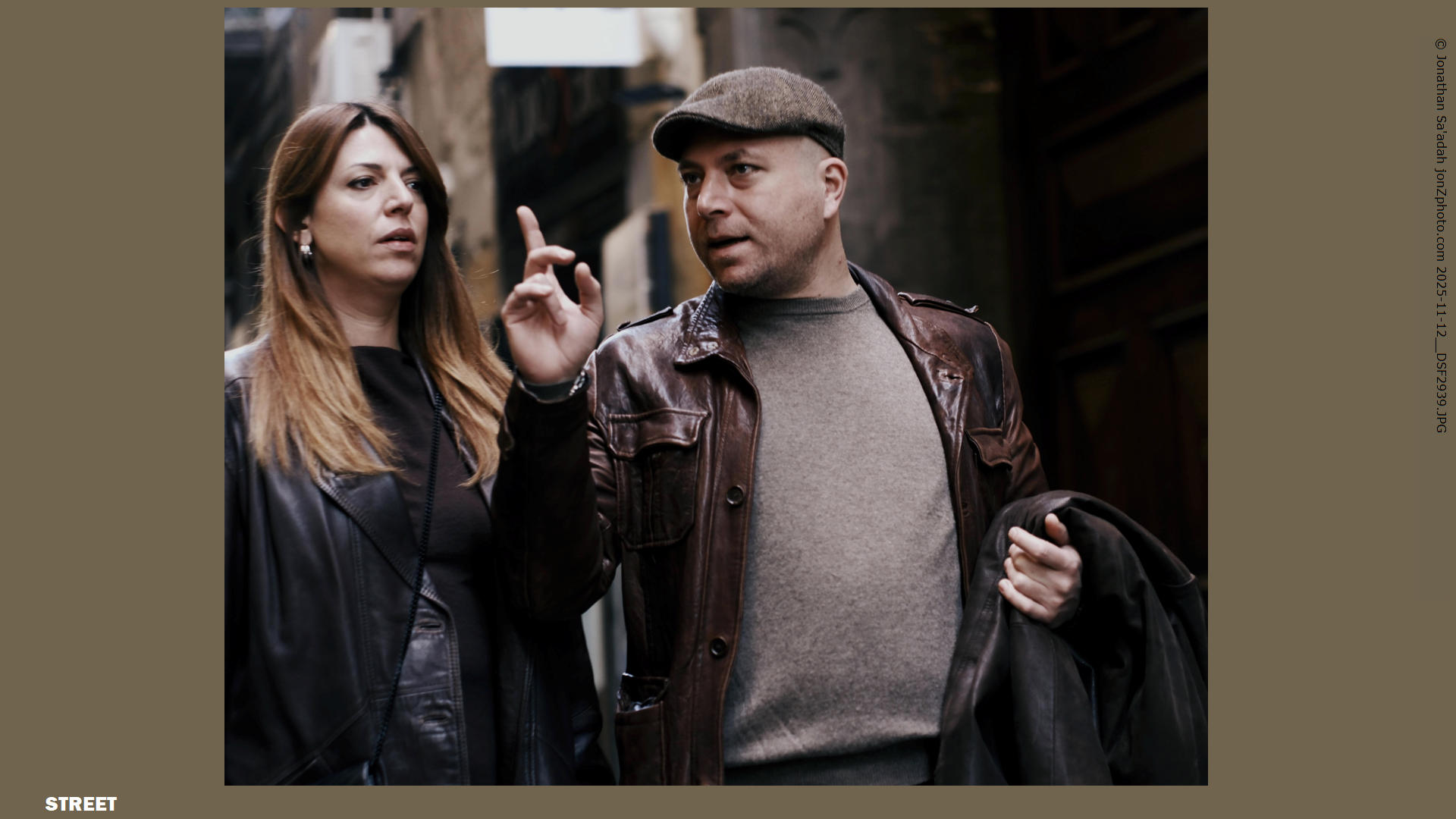
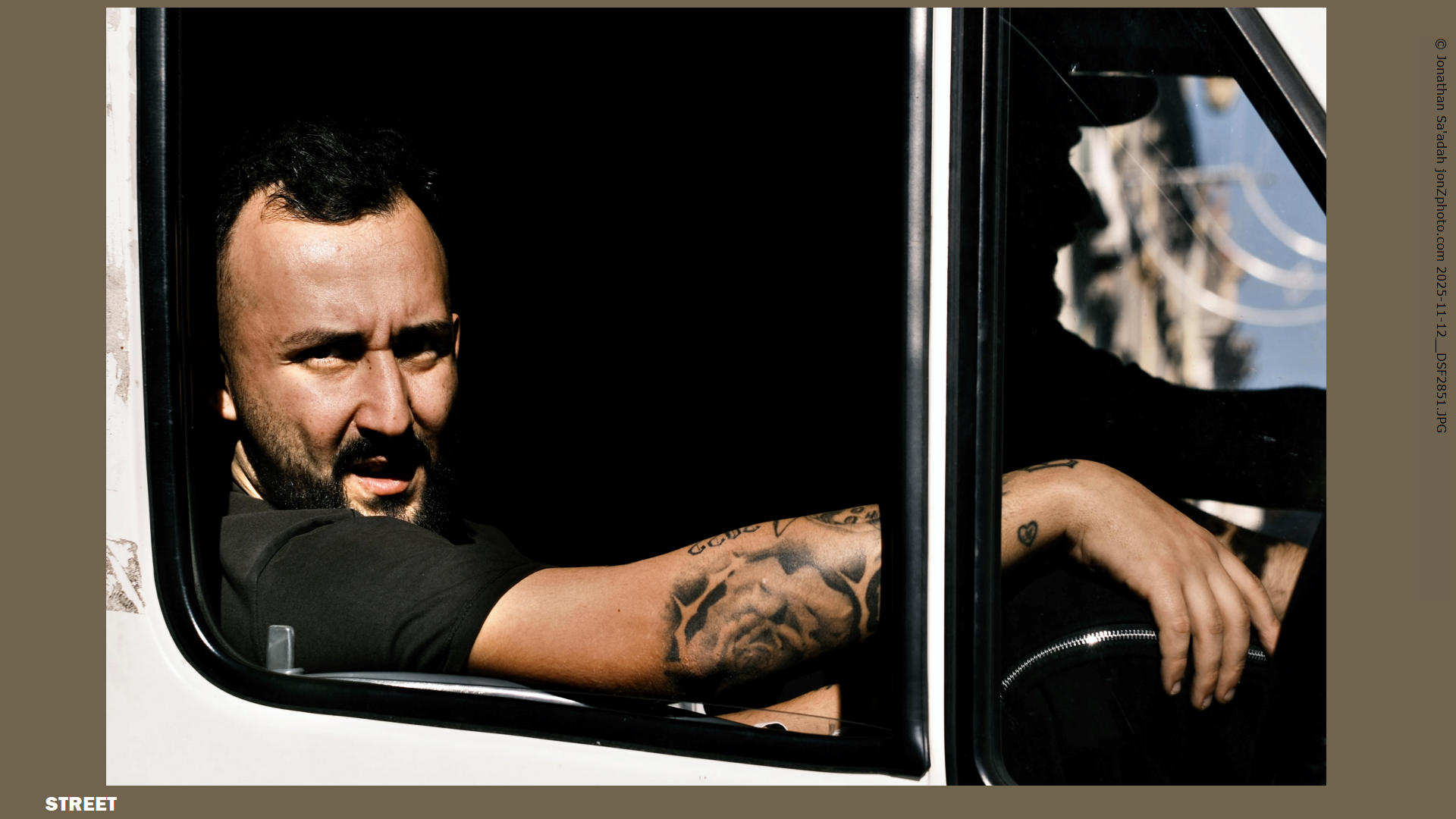
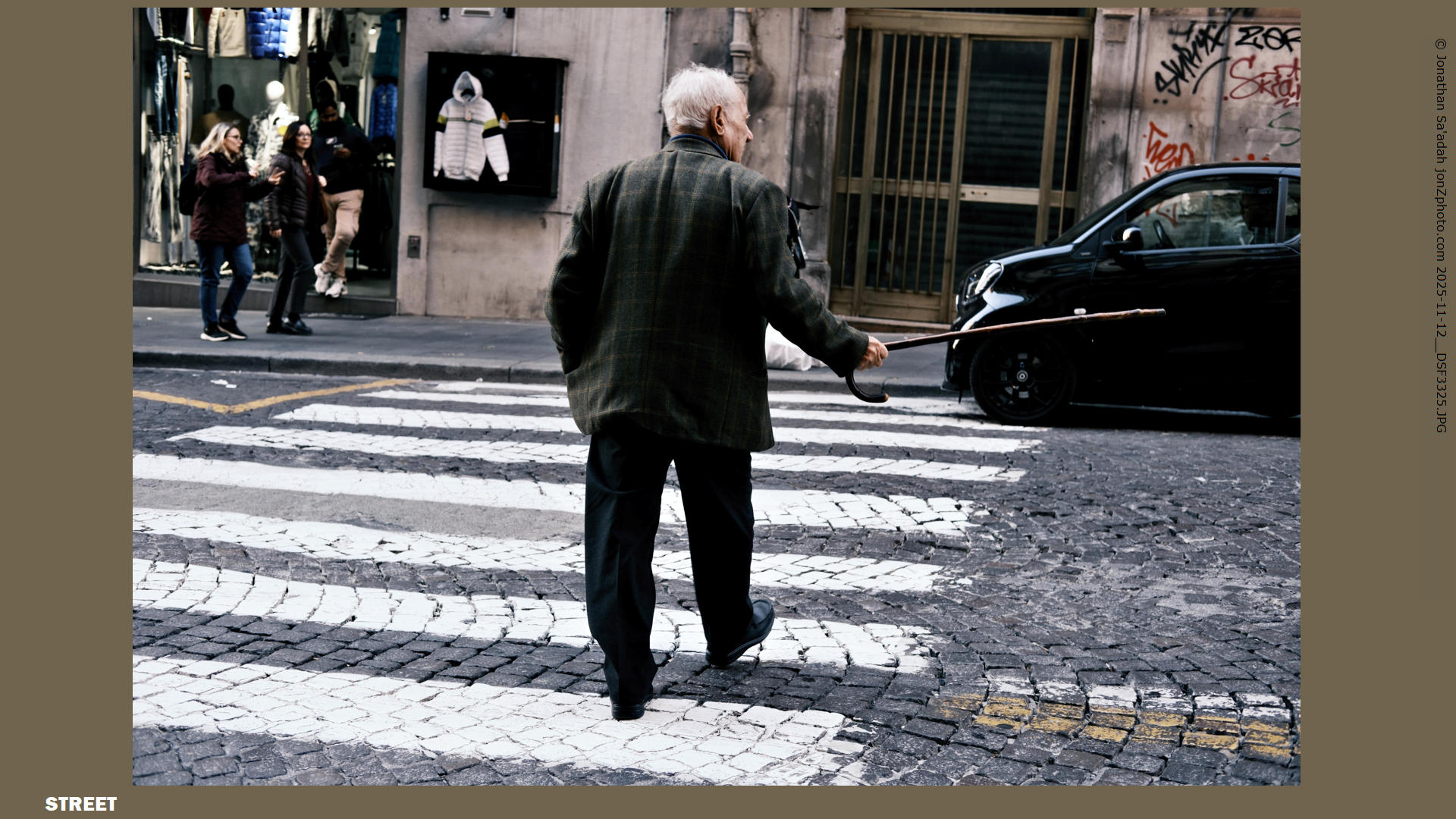
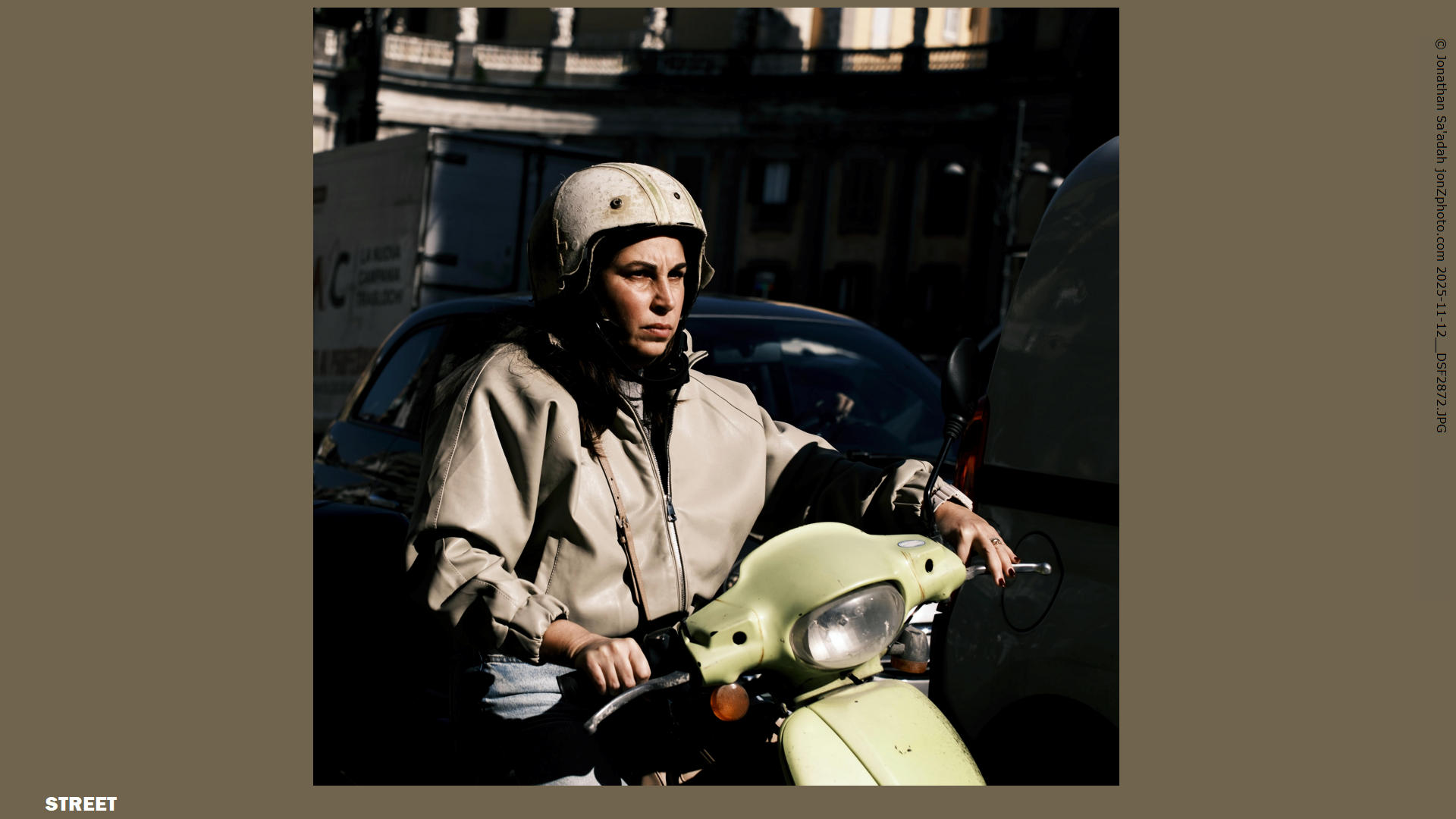
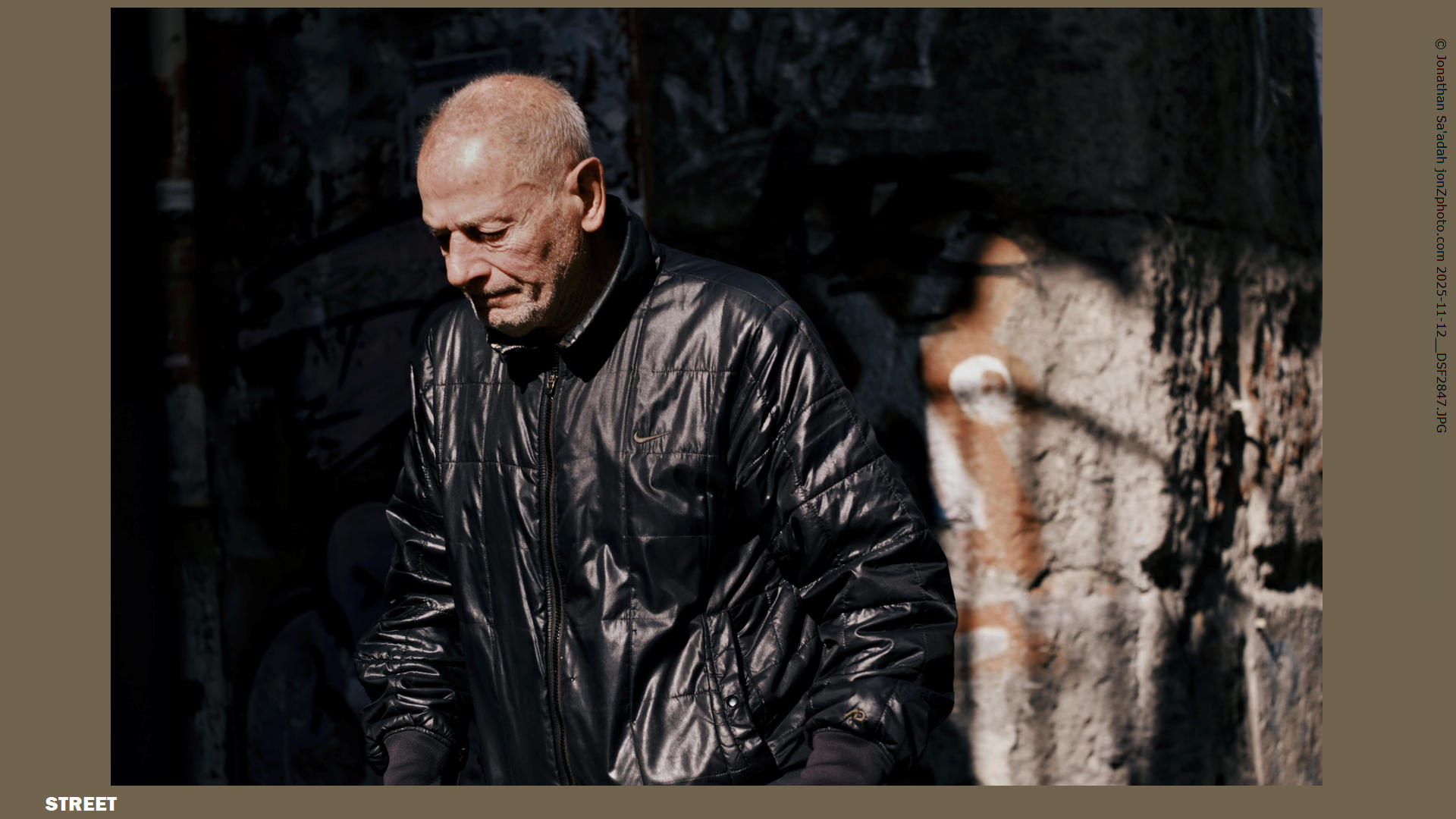
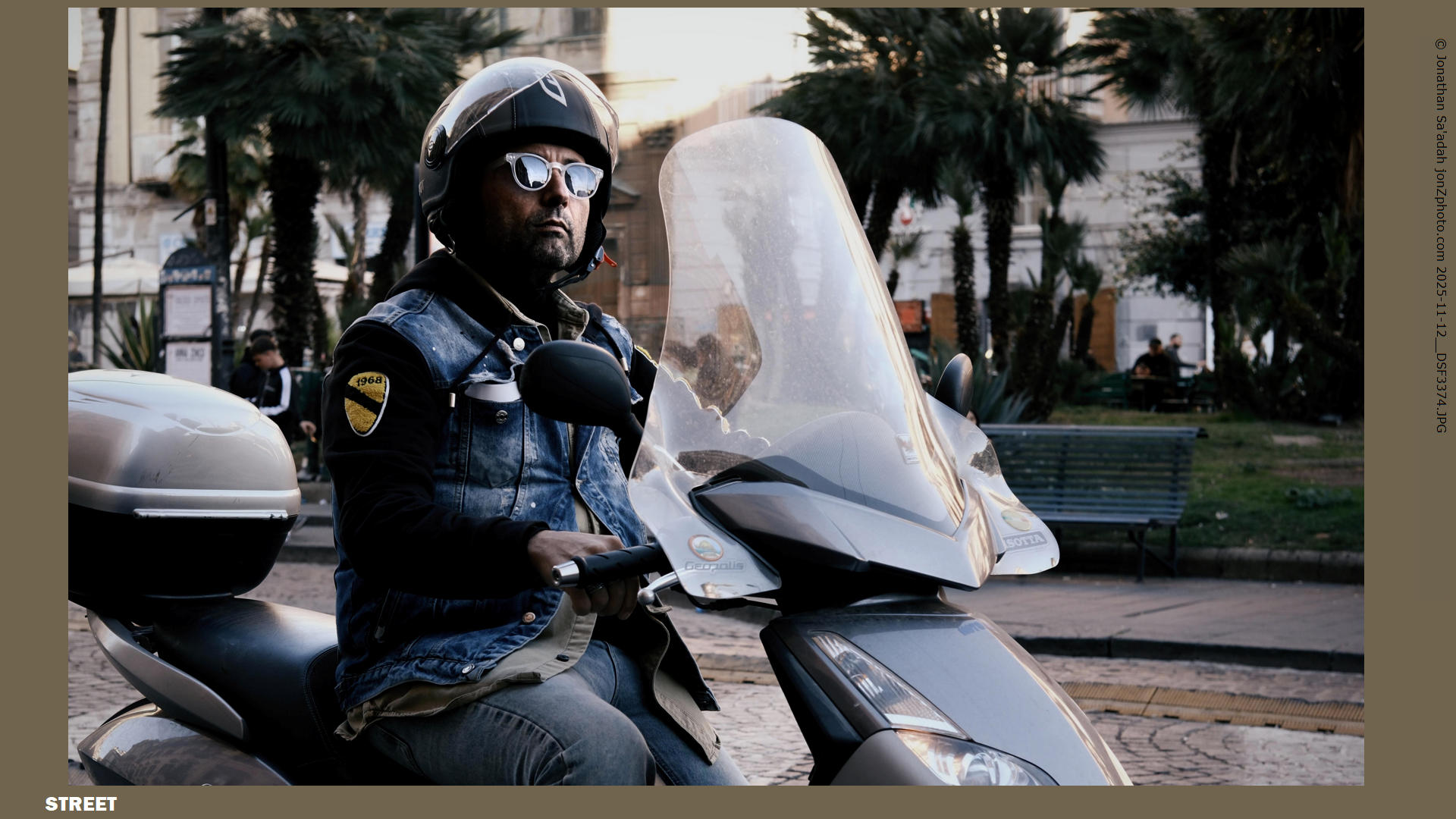
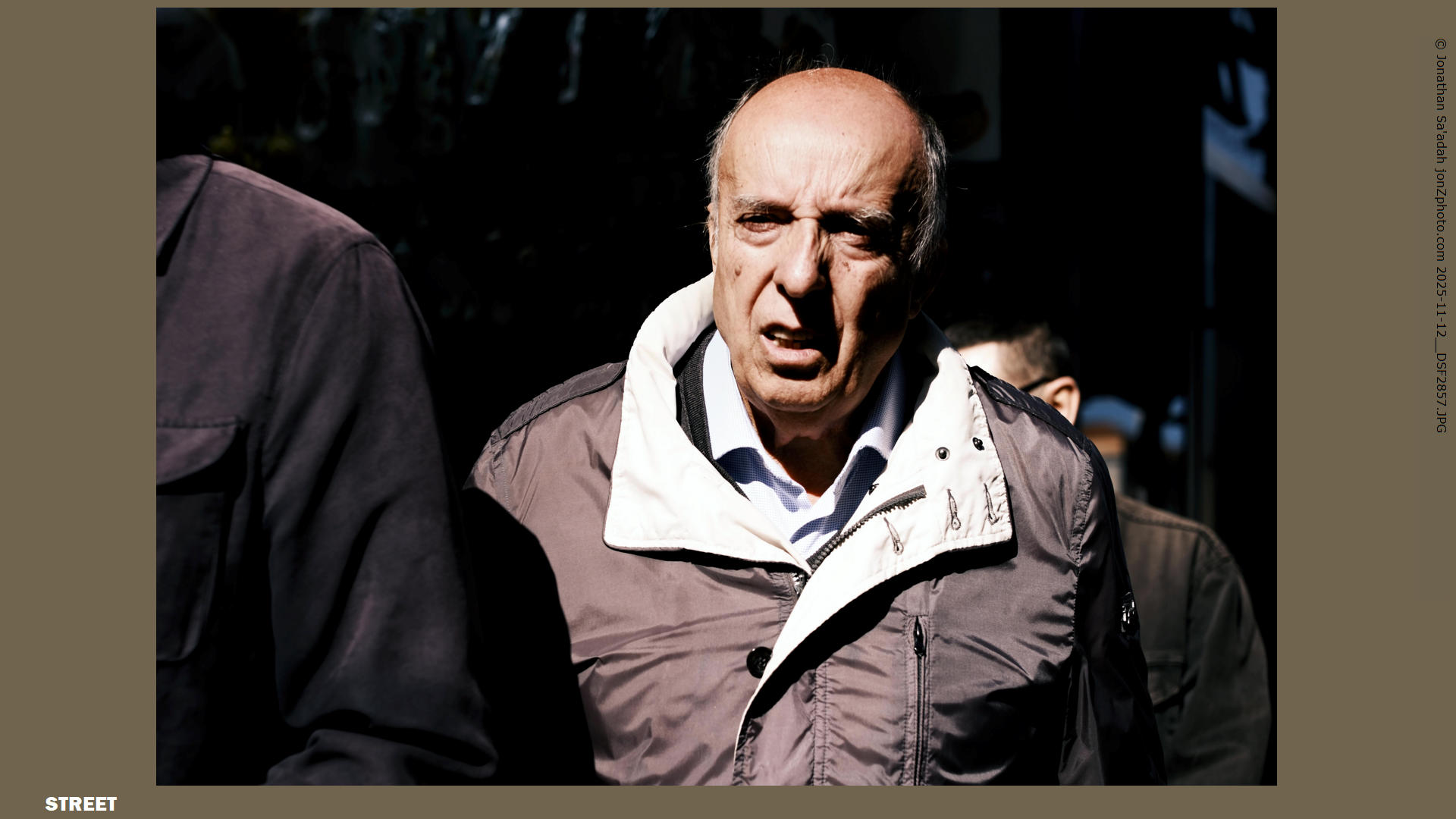
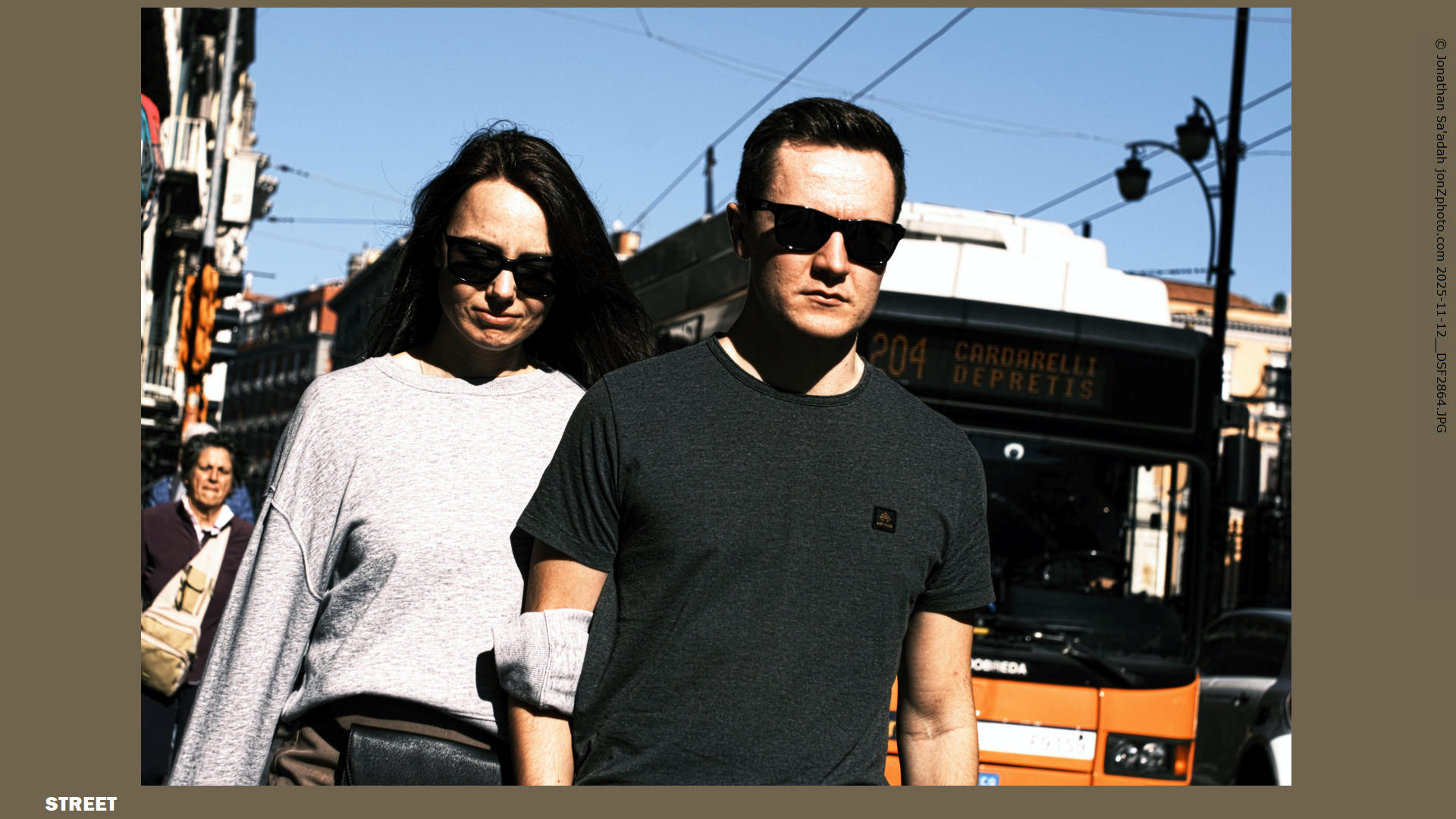
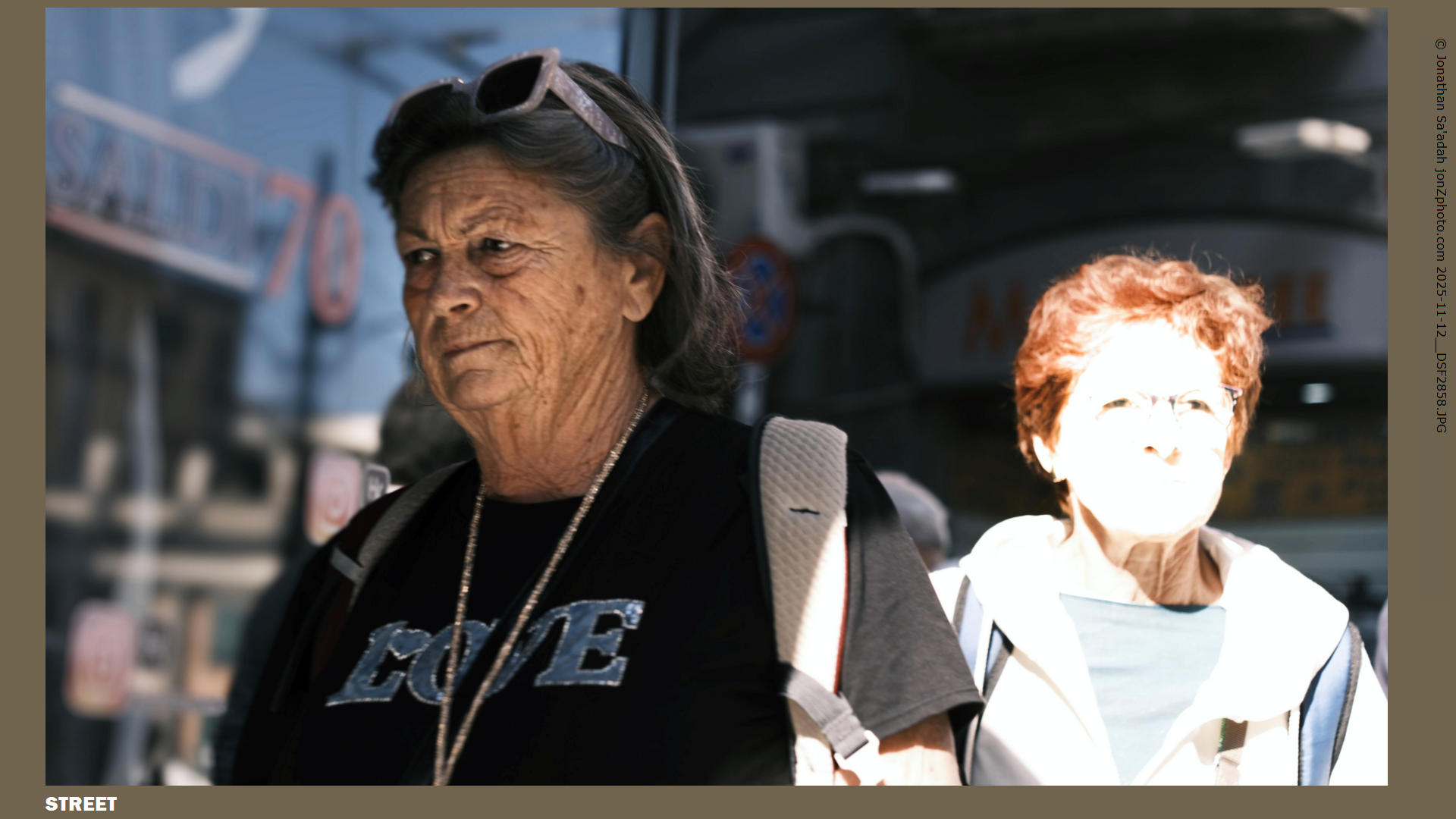
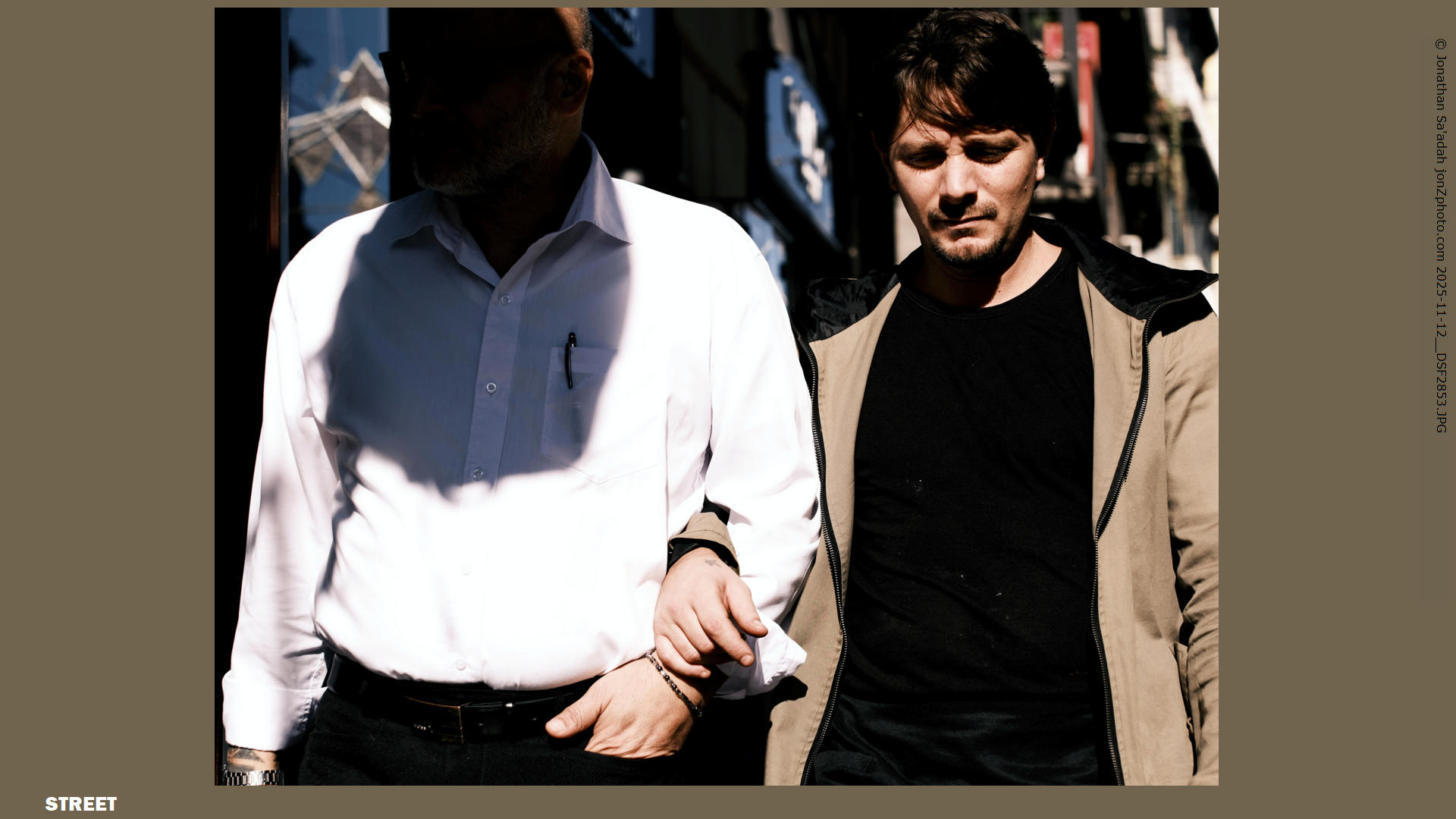
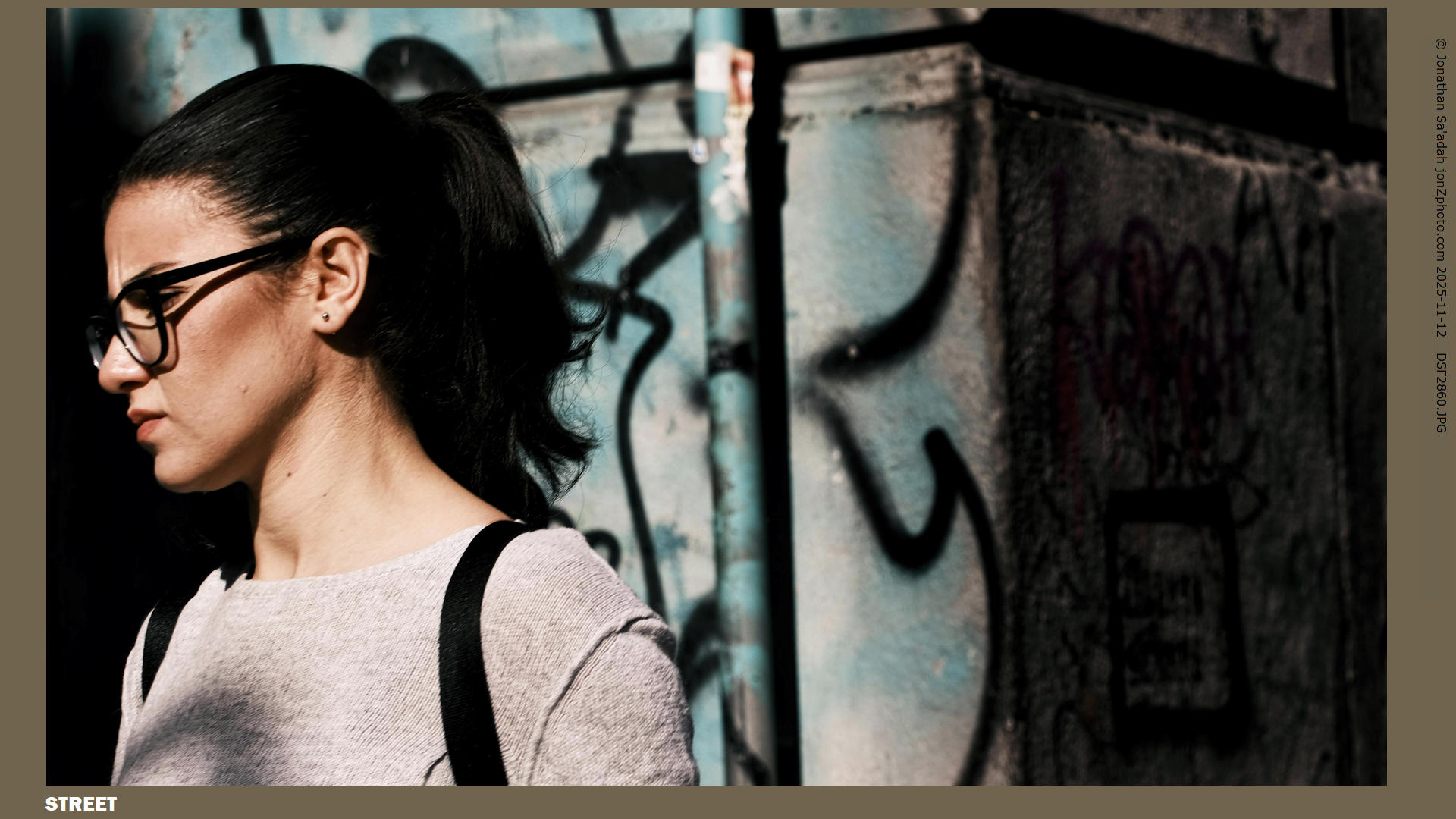
At first glance, it is tempting even for me to describe these moments as “luck.” A person steps into strong light with graffiti in the background that mirrors their fashion, couples march arm in arm lost in the urban landscape, a glance or gesture becomes an unexpected moment. I happen to be present, at precisely the right time. Yet if I stop at luck, I misunderstand my own role. Serendipity is less about random fortune and more about the meeting point between chance and my readiness.
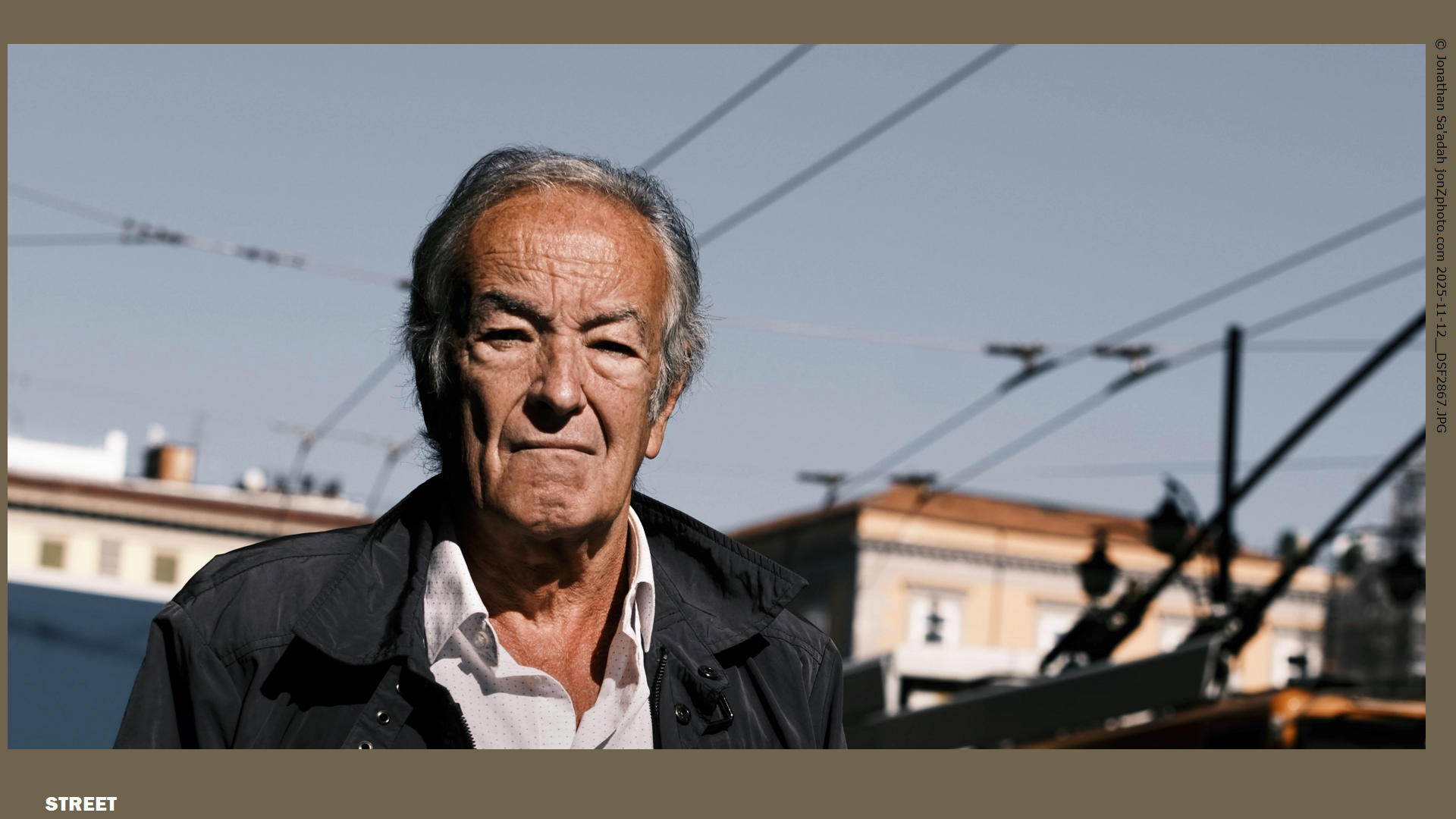
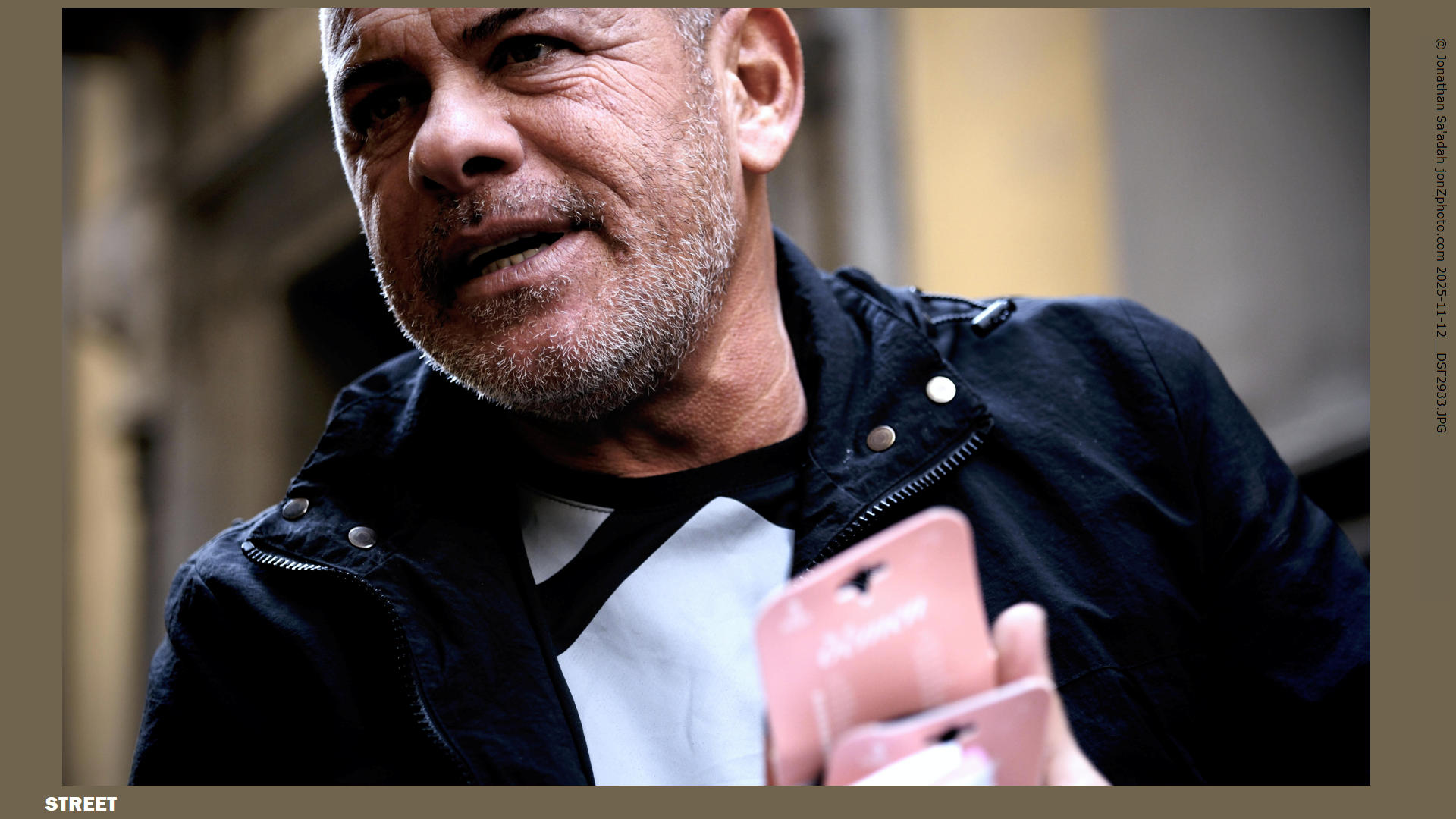
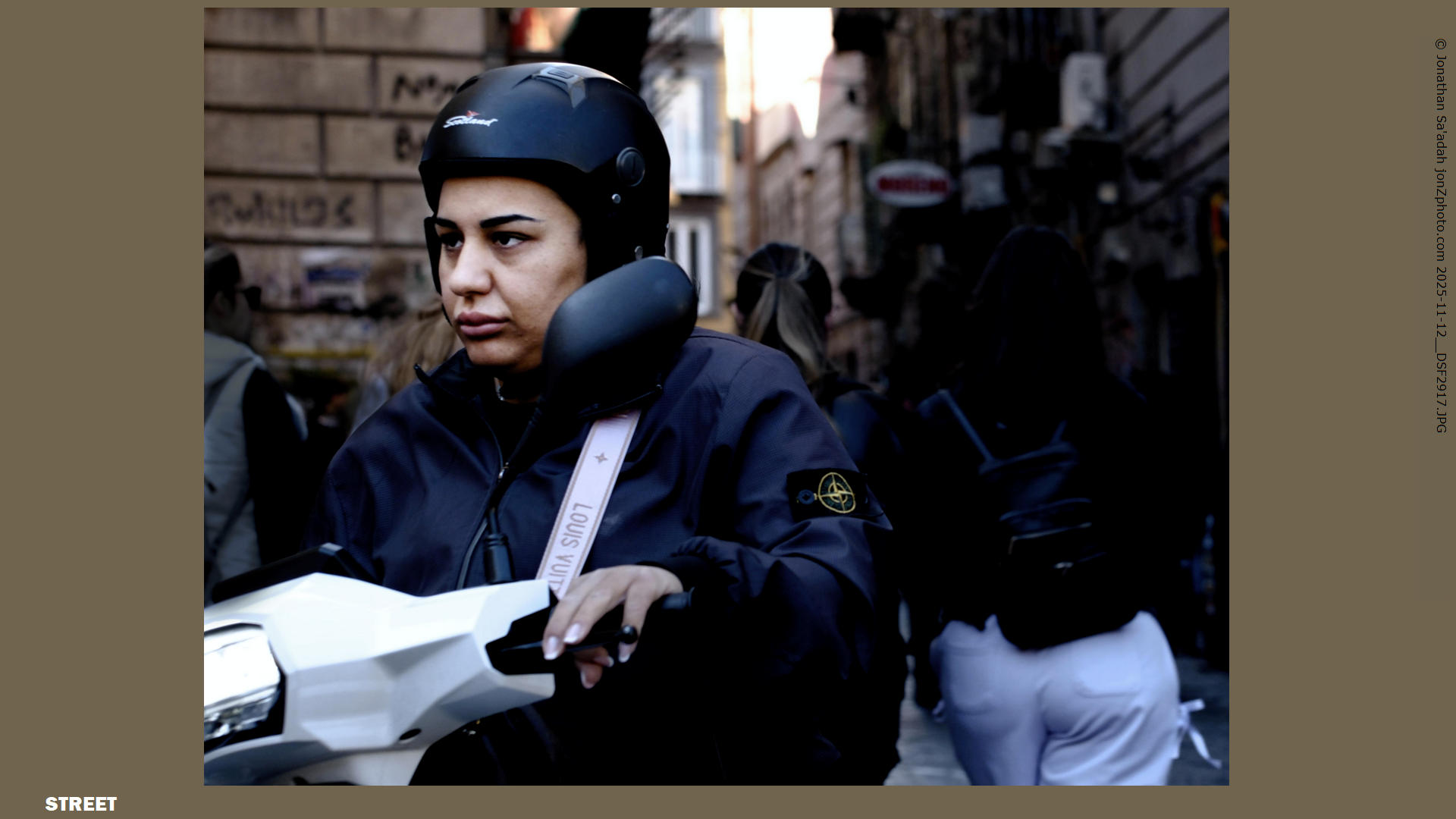
Over time, I’ve cultivated a particular state of attention that invites serendipity. I’ve learned to recognize promising situations—strong light, layered reflections, expressive fast moving crowds, unusual streetscapes—and I linger without knowing exactly what I am waiting for. This patience is not passive; it is a quiet form of anticipation that assumes something might happen. When a convergence does occur, I have to react instinctively, framing and exposing in fractions of a second. Normally I use the traditional wide angle lens of street photography which is forgiving of fast action, but in these photos I chose to use the more difficult short telephoto to concentrate on figures, and to isolate them within the urban environment. The resulting photos may look like pure accident, but actually they rest on familiarity with my camera, a sense of composition, and countless hours spent wandering without any guaranteed payoff.
Serendipity also shapes the way street photographs are interpreted. Viewers often project narrative onto coincidental details: a shadow aligning with a face becomes a metaphor for inner turmoil, a repeated color across strangers suggests hidden connection, a sign’s content appears to comment on the person beneath it. These readings often exceed anything I consciously intended at the moment of exposure. My street photography, then, feels like a collaboration between the chaos of the world, my own alertness, and the imagination of the viewer. Serendipity is the thread running through all three, binding them together.
In a culture saturated with images that are posed, retouched, and optimized, serendipitous street photograph holds a special honesty for me. It acknowledges that the world is richer and stranger than my plans, and that meaning can emerge from chance encounters as powerfully as from deliberate design. When I practice street photography with openness to serendipity, I accept that I am not fully in control—and I discover, again and again, that this lack of control is precisely where some of my most resonant images often arise.
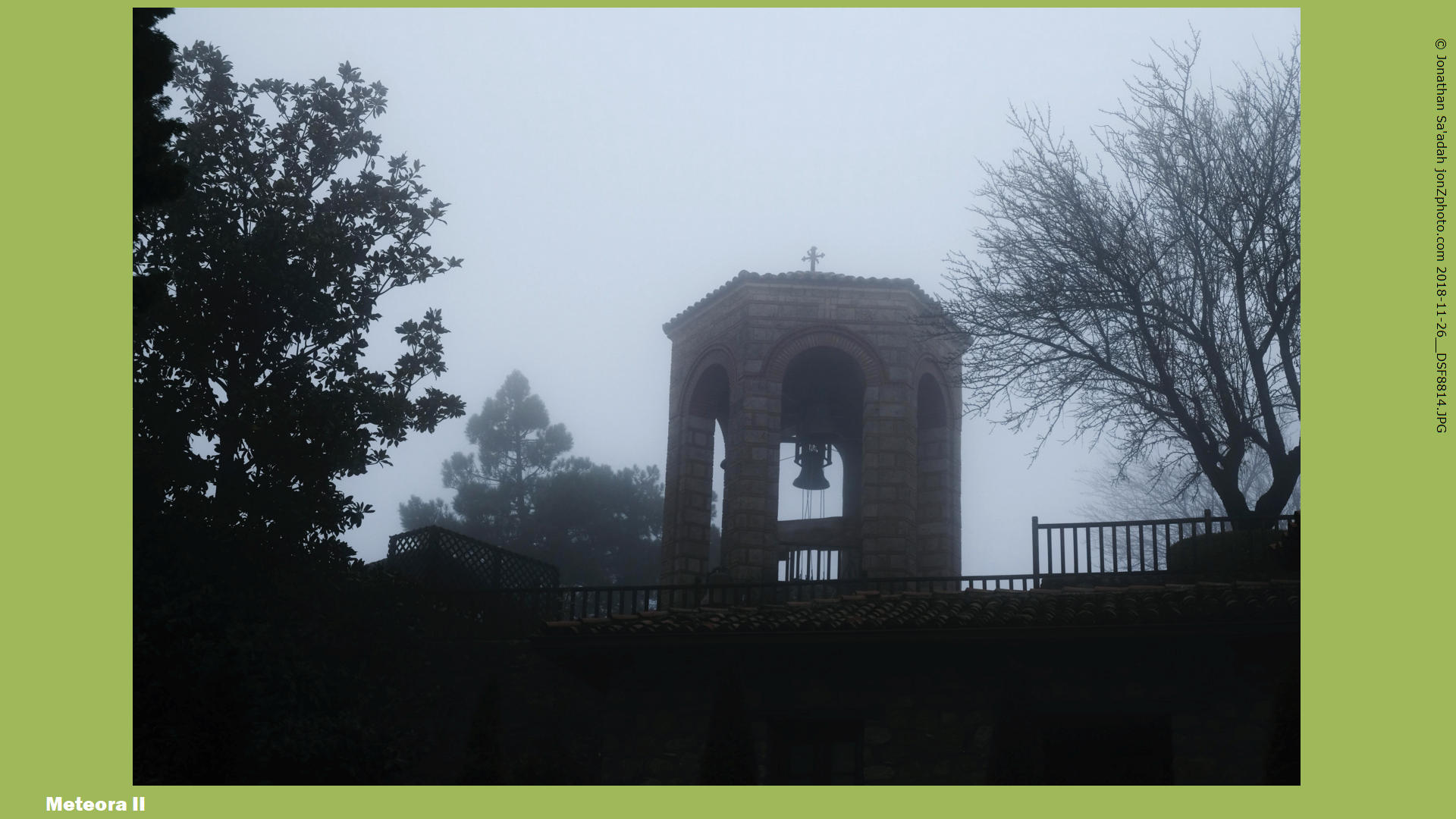
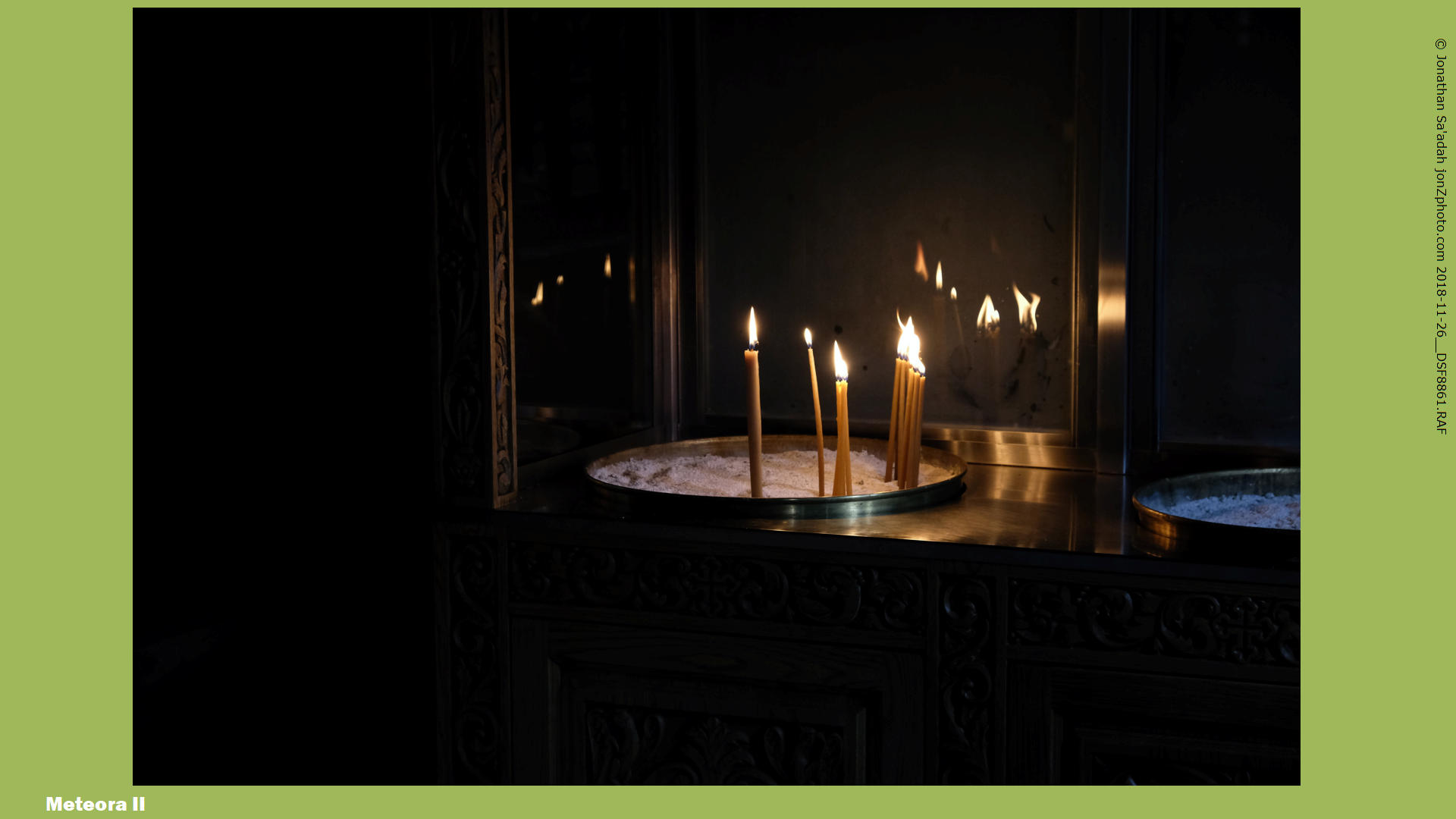
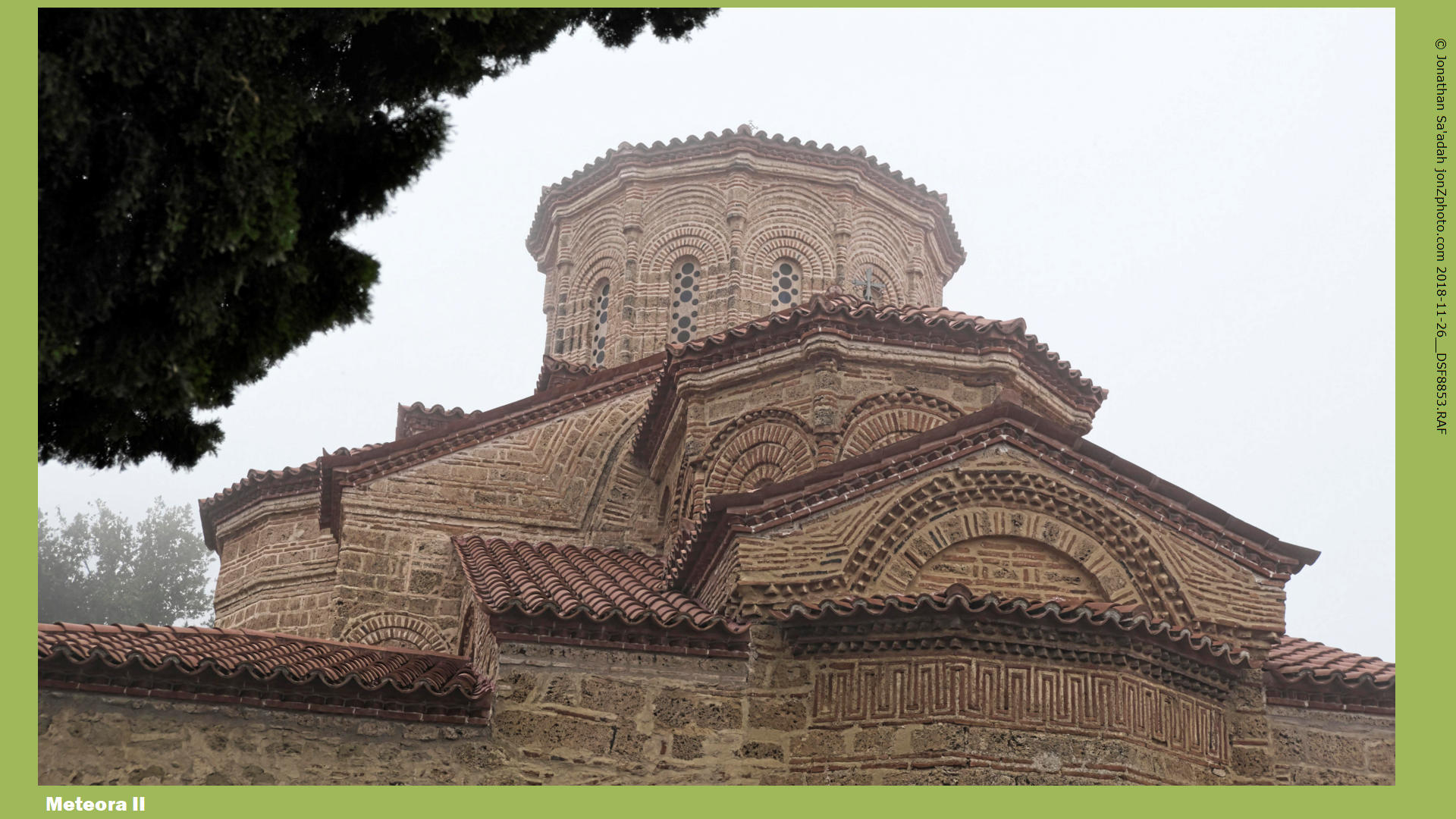
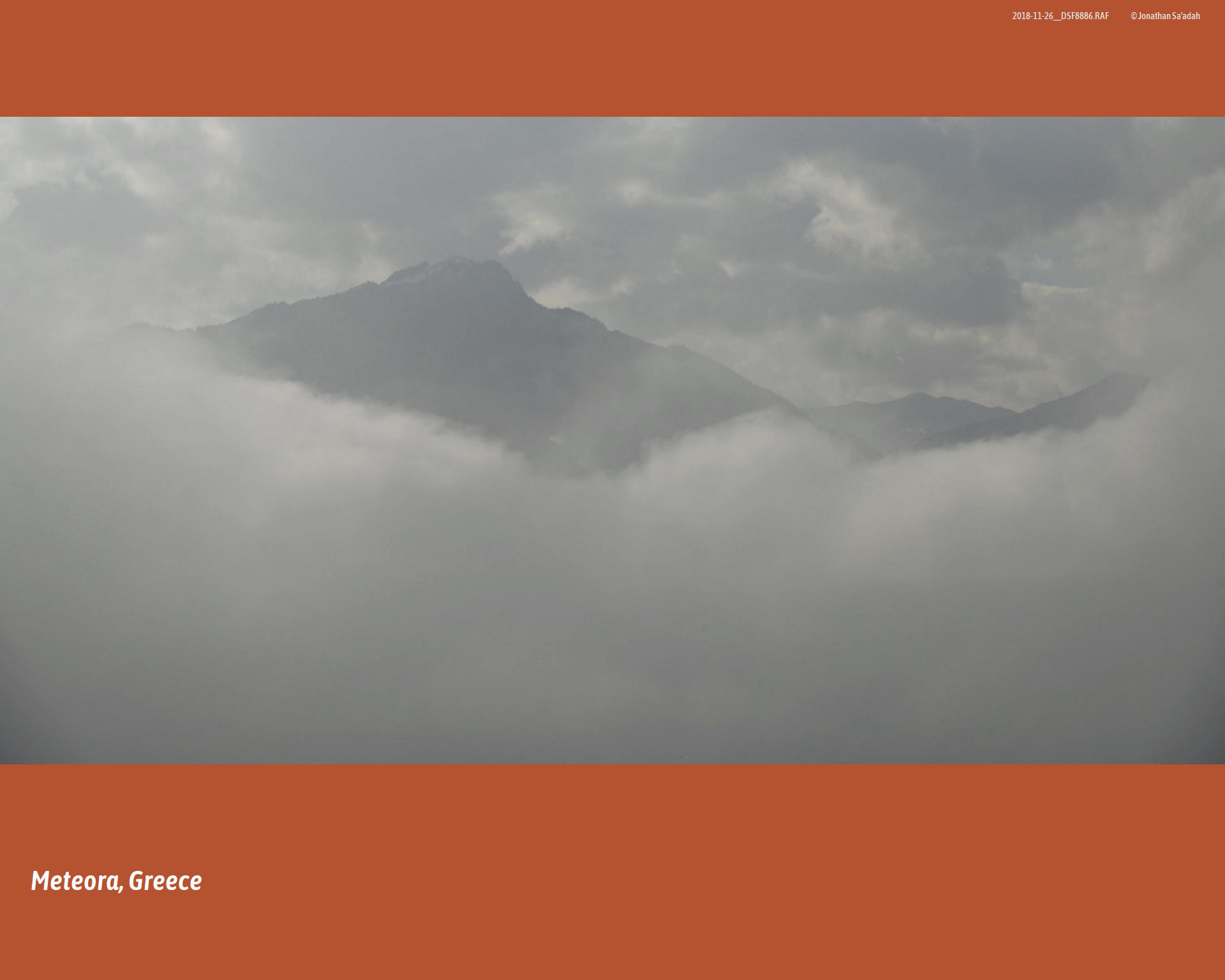
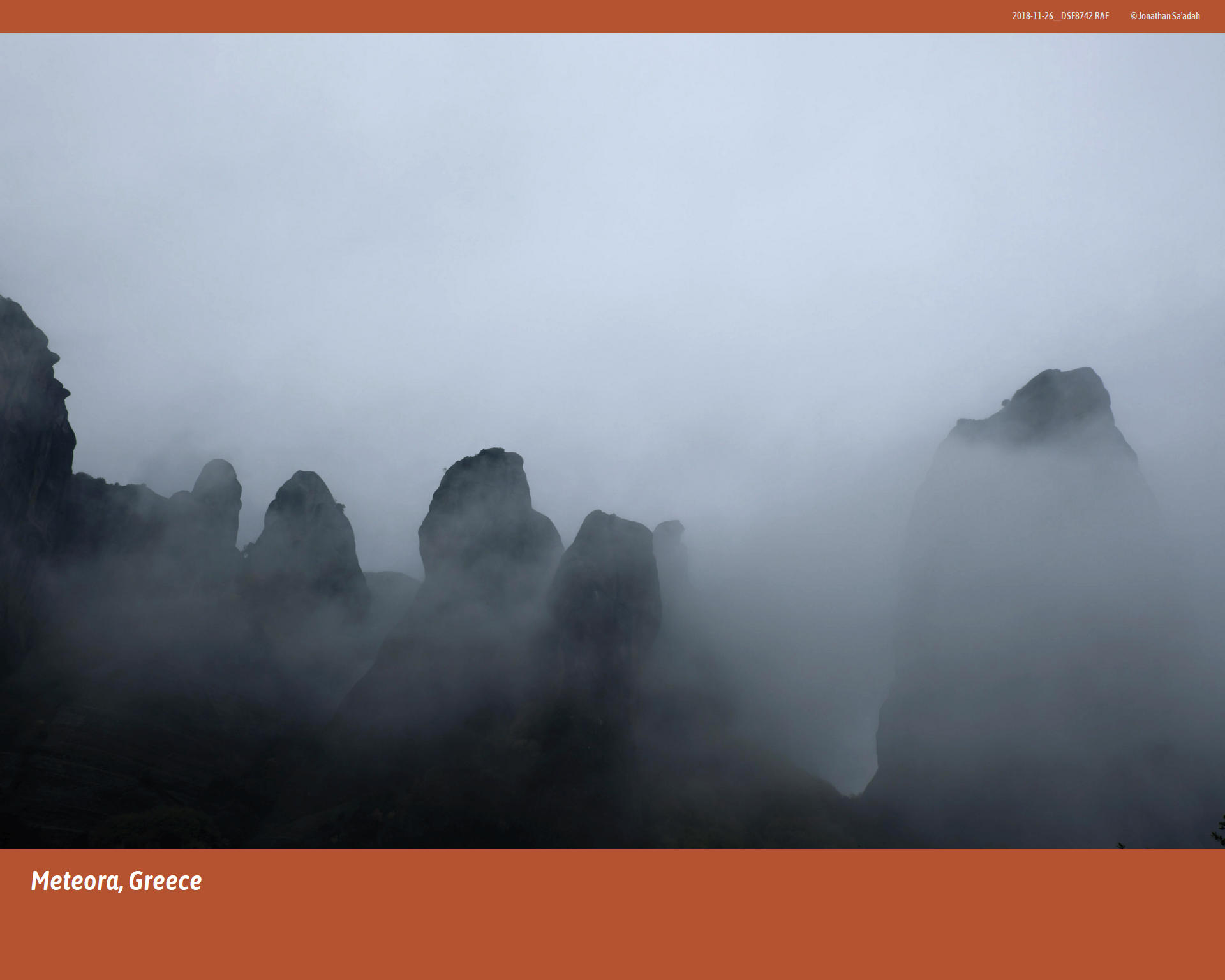
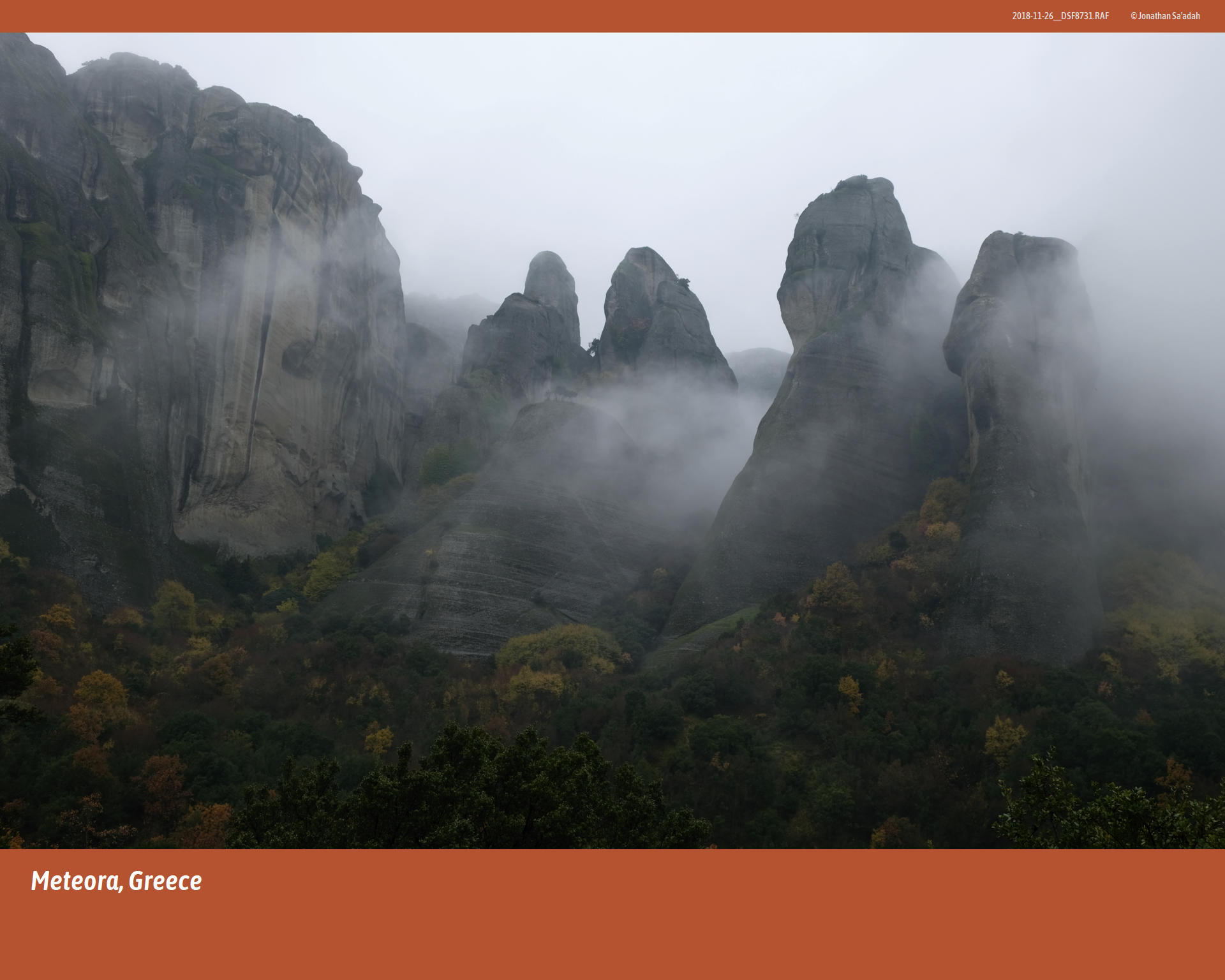
The fog rolls in before dawn, thick as wool and heavy with moisture. It slides down the stone towers of Meteora, wrapping itself around ledges, dripping from the pine needles, muting the world into a hush. The monastery bells sound closer in this weather, their slow toll absorbed by the air before it can echo off the cliffs.
The sandstone smells damp and raw, its ancient layers darkened almost to bronze. Steps cut into the rock are slick; your hand finds the cold iron of the rail, wet to the touch. Even your breath feels visible here, joining the drifting mist that curls across the paths. From below, the valley disappears entirely—there is no distance, only the whiteness that erases edges and scale.
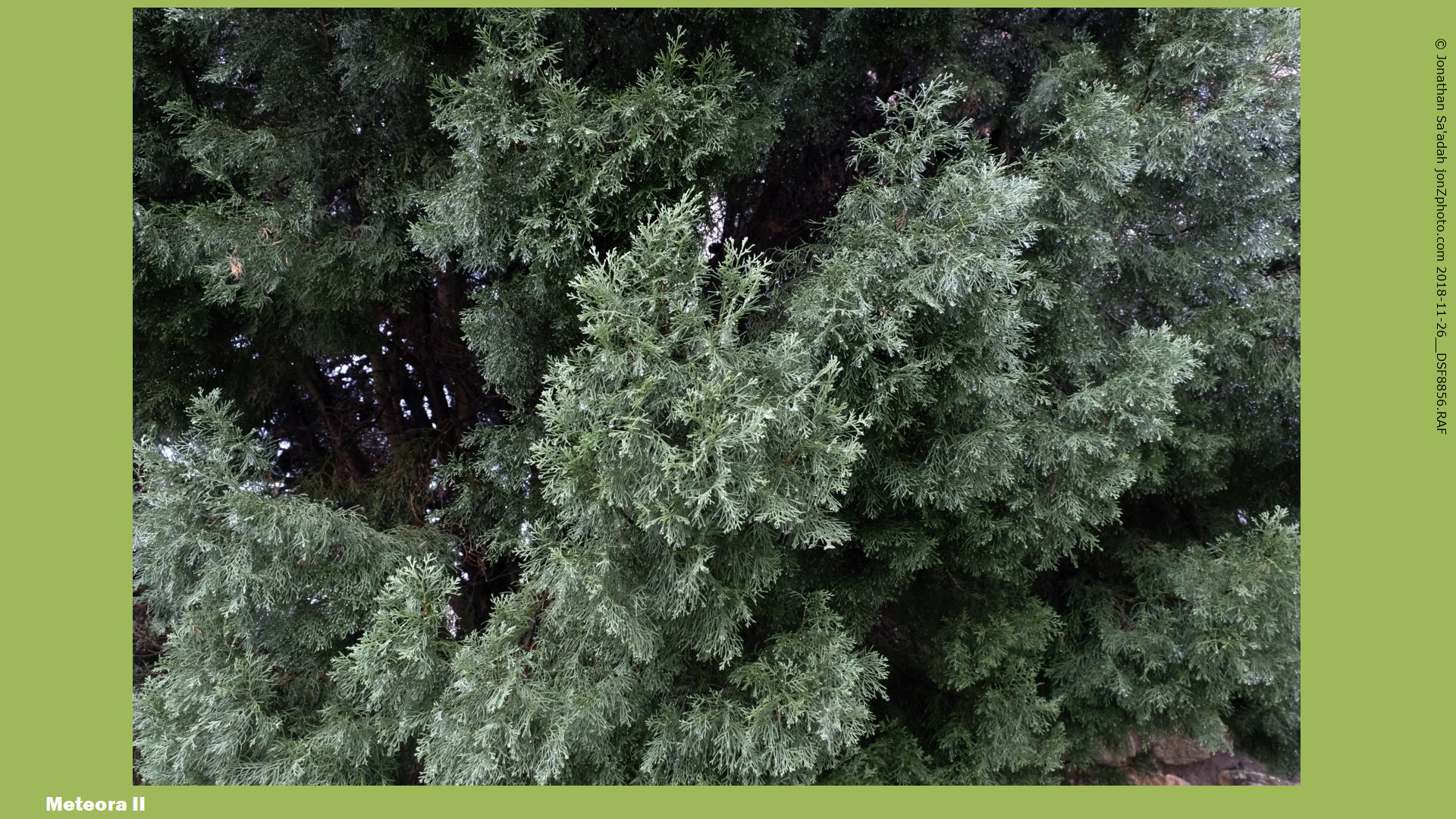
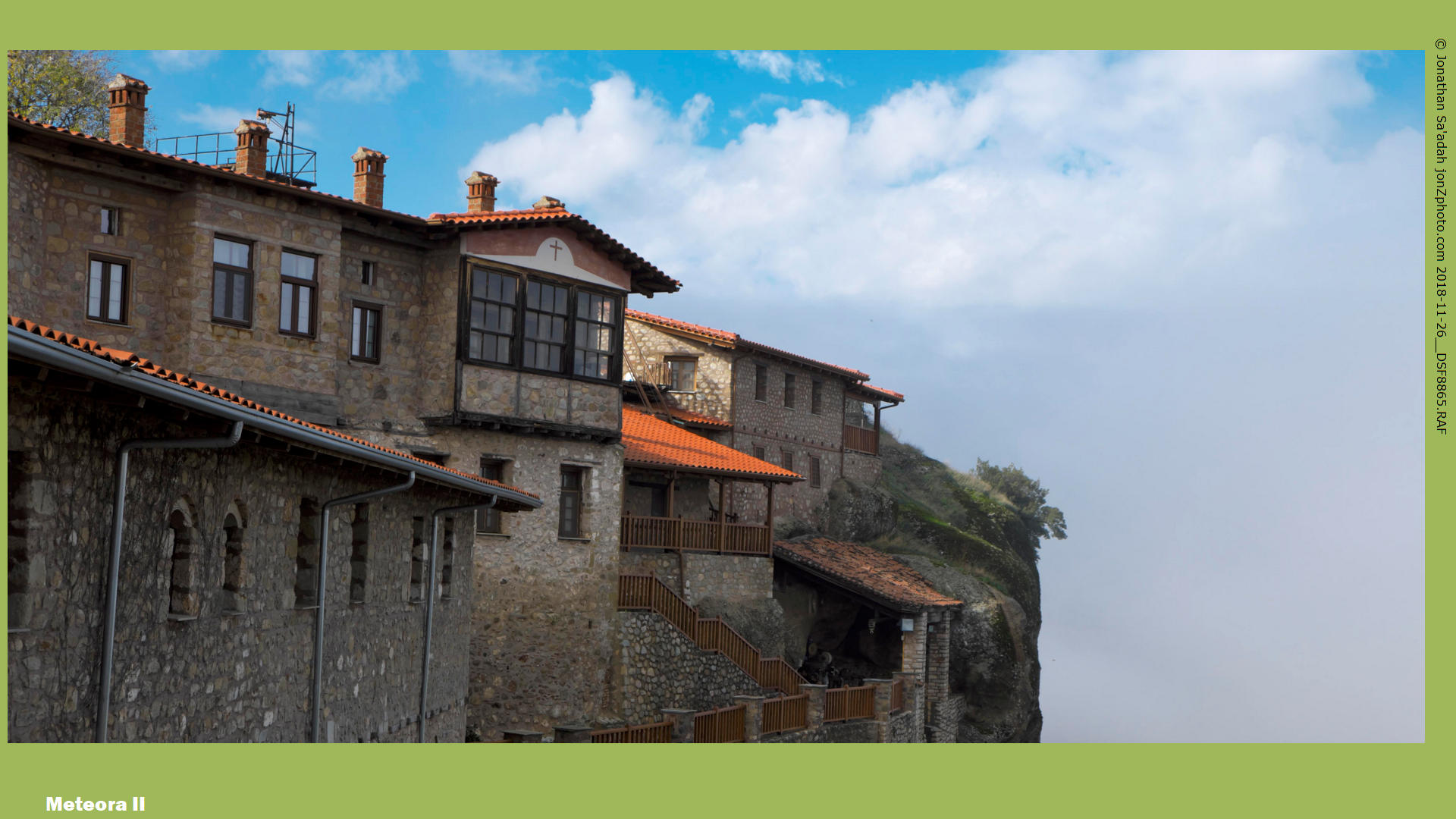
When the fog begins to thin, it leaves beads of water on every surface: railings, ferns, camera lenses. A patch of blue cracks open above one monastery roof, sudden and startling. For a few seconds, the whole landscape gleams—stone, sky, and lingering veil of fog turning silver together, as if the world were exhaling after holding its breath all morning.
The history of American federal spending is littered with contradictions — moments when even unlikely leaders championed programs that would have lasting cultural impact. Such was the case with the Comprehensive Employment and Training Act (CETA), signed into law by President Richard Nixon in December 1973, not out of any particular regard for artists, but as part of a broader effort to combat unemployment during an economic downturn.
Even in 1978 it was obvious that Ron Hadley was going to have a career as a jazz keyboard player. Almost 50 years later, he has, but the CETA job helped him at the early part of his career with some stability and a time to focus on his own compositions.
Yet between 1974 and 1981, CETA would prove to be a transformative lifeline for the American arts community. More than 20,000 artists received full-time employment through the program — the largest federal support initiative for creative workers since the Depression-era Works Progress Administration. What distinguished CETA from its 1930s predecessor was its fundamentally decentralized structure: rather than operating as a centralized federal program, CETA distributed funds through more than 500 local entities, allowing individual communities to shape arts employment according to local needs and priorities.
In Vermont, the state’s Arts Council became one such recipient, directing CETA funds towards organizations across the state for arts-related projects. At its peak, the program supported about 70 (exact number unknown) Vermont artists, paying them $10 per hour as teachers, radio stations producers, arts administrators/programmers embedded in community organizations, and ensemble performers — meaningful work that sustained a generation of creative workers in a state not known for deep pockets in the arts, and helped the organizations they were employed by. It also contributed to a rural ethos where Vermont drew radical artistic organizations and artists, such as the Bread and Puppet Theater, which moved to Glover and became a fixture in the state.
How I Became an Arts Administrator
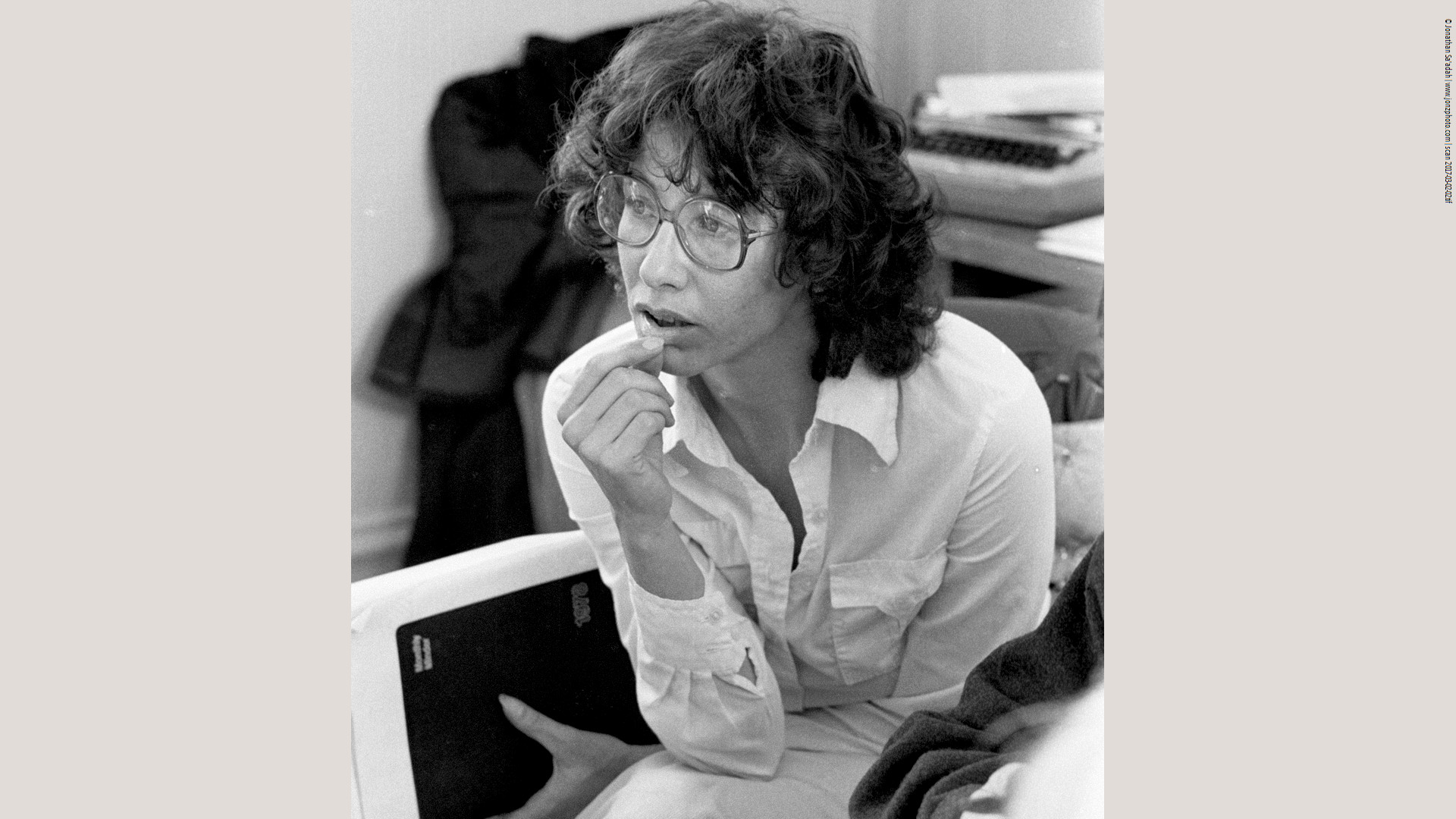
In February 1977, I was hired to administer a program unique in Vermont and most likely in federal CETA history. The position came my way almost by accident. When Fonda Joy Segal, the renegade CETA administrator who had conceived and pushed through the program, began interviewing candidates, I lived nearby and was the first to walk through the door. Segal, a Brooklyn-born iconoclast who had met her husband while modeling at the School of Visual Arts in Manhattan and later moved to Vermont to open a health food store in Woodstock, saw something in me — or perhaps simply recognized that I was willing to take on the work.
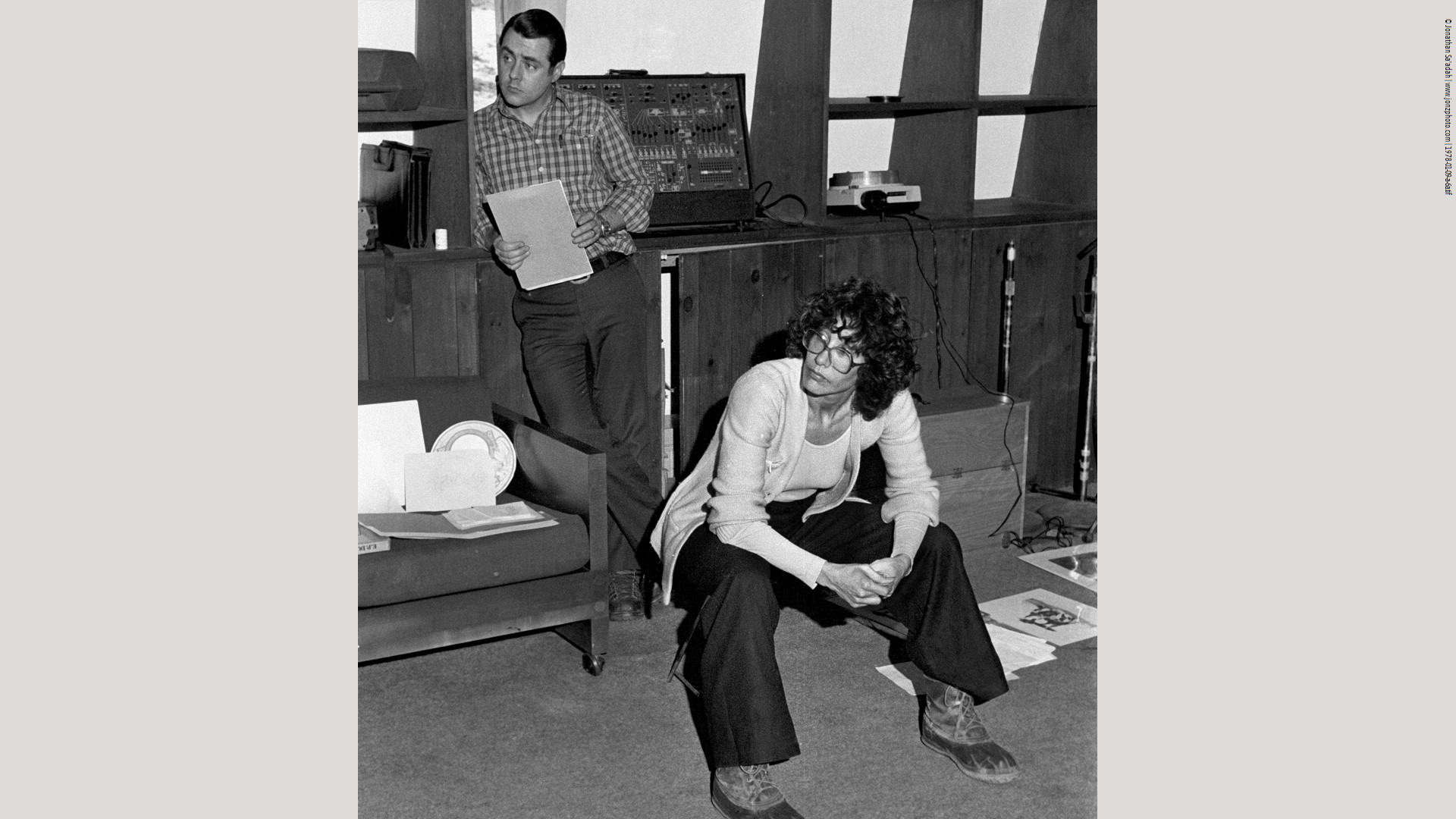
Fonda Segal and Bill Schubert (owner of Philo Records) reviewing portfolios during the artist selection process. Ferrisburg, Vermont, January 1978.Fonda in the program’s “administrative office”, shared with Pentangle Arts in Woodstock, Vermont.
She offered me the job on the spot. I accepted, grateful for the steady income and intrigued with the prospect of traveling across Vermont to meet working artists. I had no way of knowing, in that moment, that this program would be one of the most experimental and short-lived arts programs launched by the arts “establishment” of the state.
“Vermont Images” was Segal’s brainchild, and it represented a radical departure from how CETA funds were typically deployed. While other CETA programs paid artists to teach in schools or participate in cultural organizations, Vermont Images took a different approach entirely: it provided direct financial support to seven selected artists to pursue their own creative work, without any obligation to teach, exhibit, or serve institutional needs. It was unconditional support — a rarity in the bureaucratic world of government arts funding.
My job was to make it work. As administrator, I was responsible for periodically meeting with each of the seven artists, monitoring the program’s progress, and coordinating the logistics of what was, in many ways, an act of faith in artistic practice itself.
A Year Traversing the State
Over the course of the program’s single year of operation, I traveled the length and breadth of the small state of Vermont. I crossed the Green Mountains. I drove through villages and rural hamlets. I found myself in the private creative spaces of serious working artists — people who had committed themselves to their practice despite the economic precarity that typically defines artistic life.
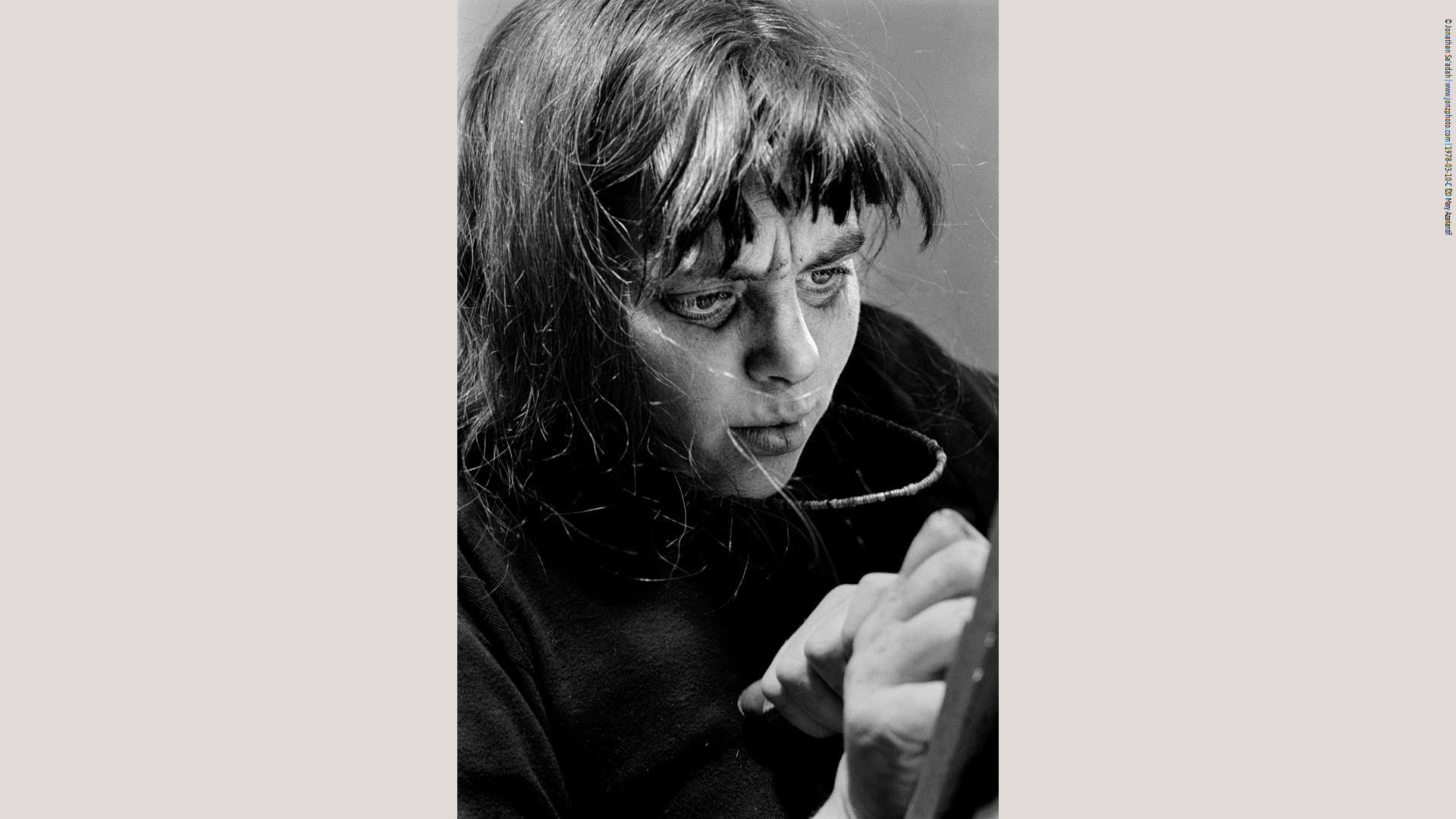
Mary Azarian lived (and lives) on a family hilltop farm in Vermont. Her woodcuts are widely published and have won many awards. She also publishes books through the Farmhouse Press.
What I witnessed, from studio to studio, was the tangible impact of unconditional support. These seven artists — selected by Segal with an advising committee — represented the kind of working creatives who sustained Vermont’s cultural life but rarely received institutional recognition or steady income. For them, Vermont Images was not a stepping stone or a credential-building opportunity. It was a lifeline. The support I helped administer allowed them to continue their work, to deepen their practice, and to remain in Vermont rather than perhaps migrating to larger cultural centers where opportunities for artists were more abundant.
I learned something during that year that bureaucrats and institutional administrators often miss: the direct correlation between financial security and artistic flourishing. I saw how steady income removed the constant anxiety that forces artists to abandon their studios for survival jobs. I understood, from conversations and studio visits, how meaningful the program’s support had been in these artists’ lives.
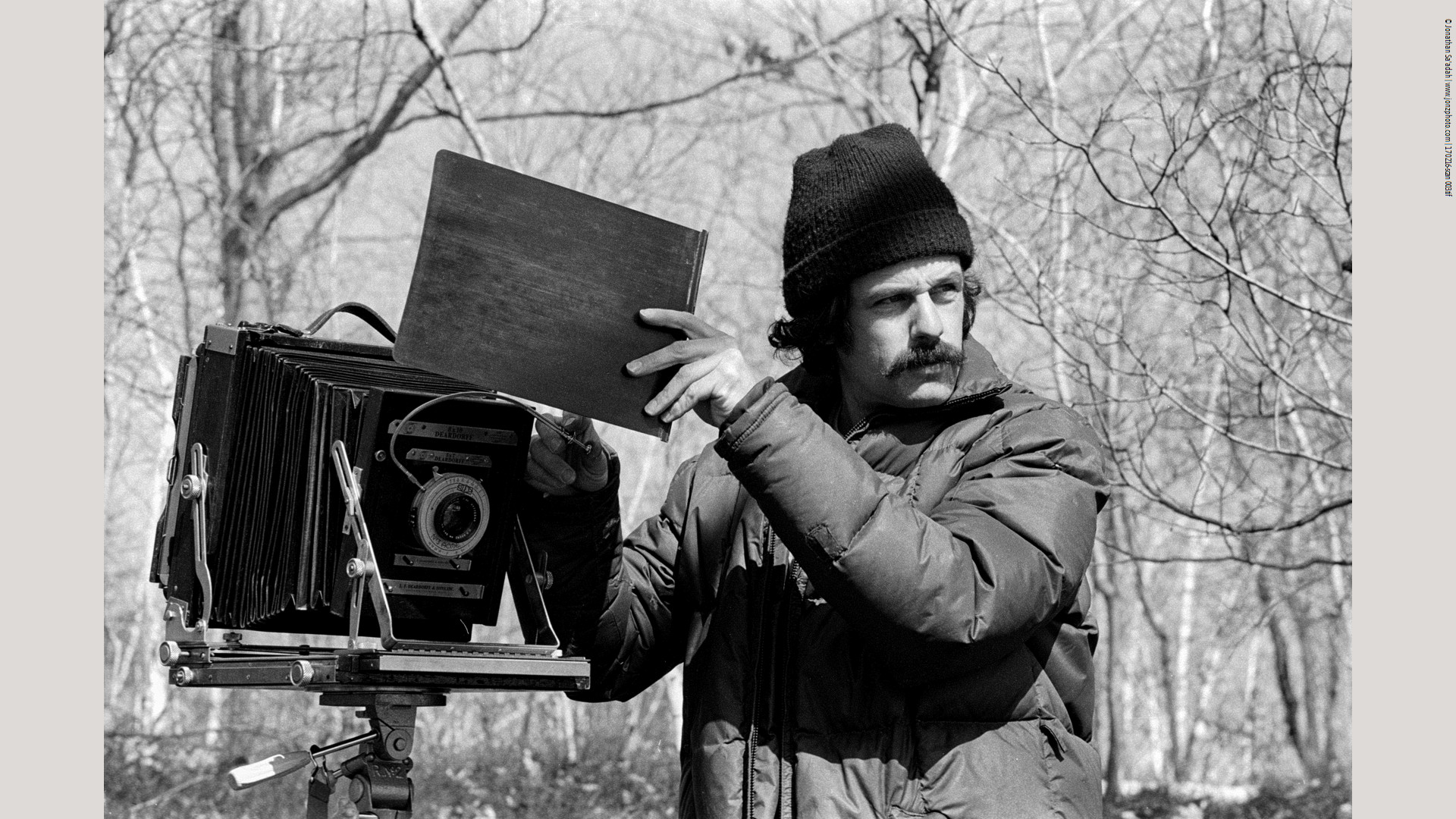
Carlos Richardson used negatives taken with an 8×10 view camera in making platinum prints. He had a career as a teacher and a photographer.
The Clash Between Vision and Institution
But Vermont Images existed in tension with the institution that housed it. The Vermont Arts Council itself was run by Ellen McCulloch-Lovell, an establishment-oriented administrator more at home navigating institutional relations and political support than thorny artist questions. McCulloch-Lovell deserves credit for building up Vermont’s arts infrastructure and contributing substantially to the state’s cultural development. But her orientation was fundamentally different from Segal’s — and mine, by extension.
Where McCulloch-Lovell thought in terms of institutions, infrastructure, and sustainability, Segal thought in terms of artists and creative need. Vermont Images represented that artist-centered philosophy taken to its logical conclusion: direct support, no strings attached, no institutional mediation.
It was too free-form for the Vermont Arts Council. The program was not renewed.
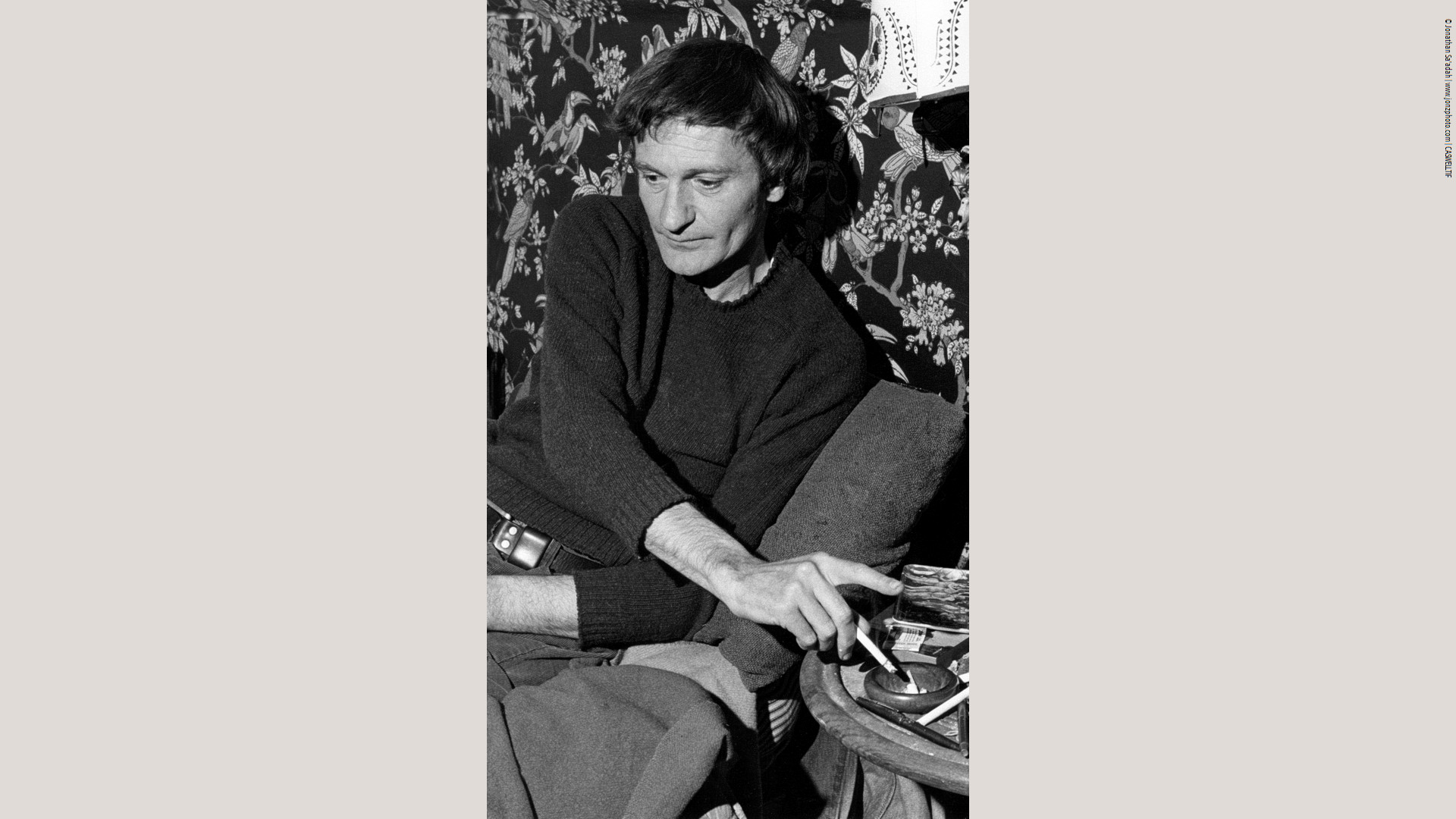
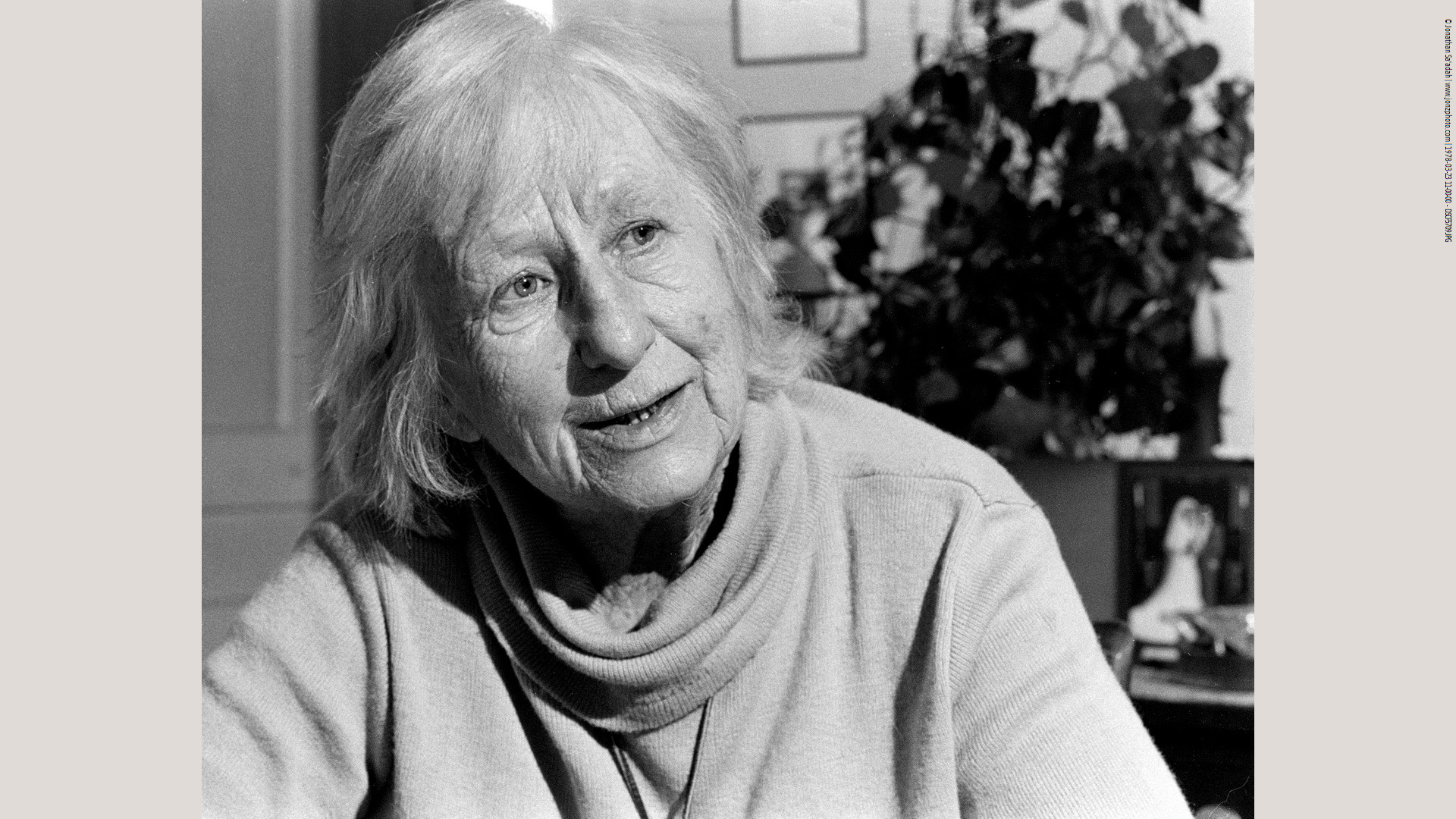
Robert Caswell was a poet and professor in Burlington Vermont. He taught at the University of Vermont in the English department and is remembered for his book Exiled from North Street. He died in 2014.
In any case, nationally the CETA program was winding down. When Ronald Reagan took office in 1981, he moved quickly to terminate CETA altogether, abruptly ending a decade of federal arts employment support. The remaining CETA programs in Vermont, which had continued to support artists working with cultural institutions, were shuttered. The experiment was over.
A Glimpse of What Was Possible
My year as administrator of Vermont Images offered a rare window into what federal arts support could look like when bureaucracy stepped back and trust stepped in. It had a modest budget and seven artists to support — not enough to transform the state’s cultural landscape, but enough to change the lives of those seven people, and myself. I had traversed Vermont’s back roads and witnessed creative practice in its most authentic form, unmediated by institutional necessity.
The program lasted only a year. It never grew. It was deemed too unconventional to continue. But for those seven artists, and for me, it represented something exceedingly rare in American life: a government program designed not to serve the state’s interests, not to build institutions, not to create measurable outcomes — but simply to support artists in doing their work.
That simplicity, that directness, that trust in creative practice itself — these things made Vermont Images worth remembering, even fifty years later.
Ernestine Pannes was a cross-dispciplinary researcher and writer, and was always exceedingly hard to pigeonhole. The committee decided that her research as a sociologist met the test for artistic work and supported her project studying the Vermont town of Weston. Her work was published under the title Waters of the Lonely Way.
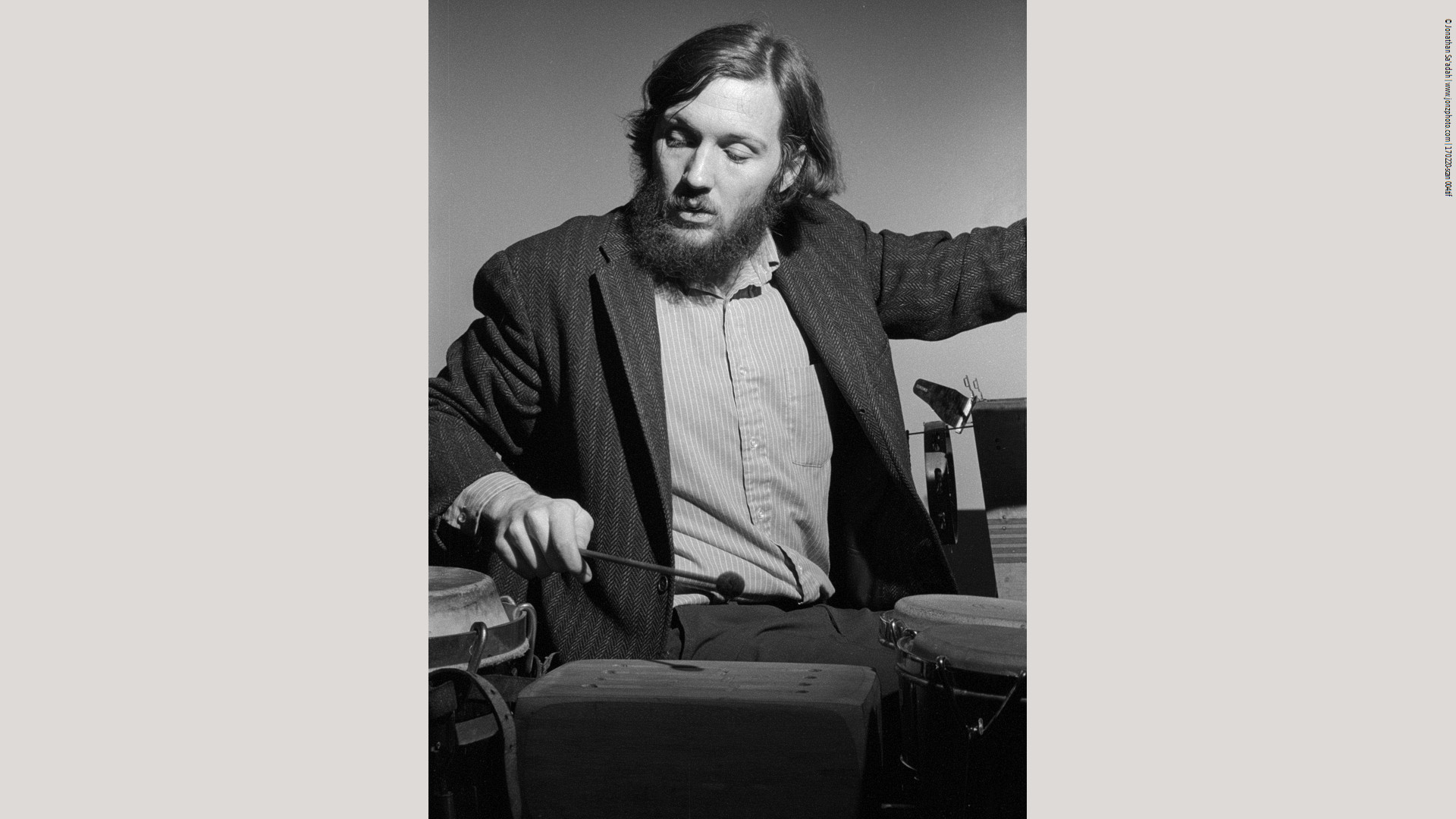
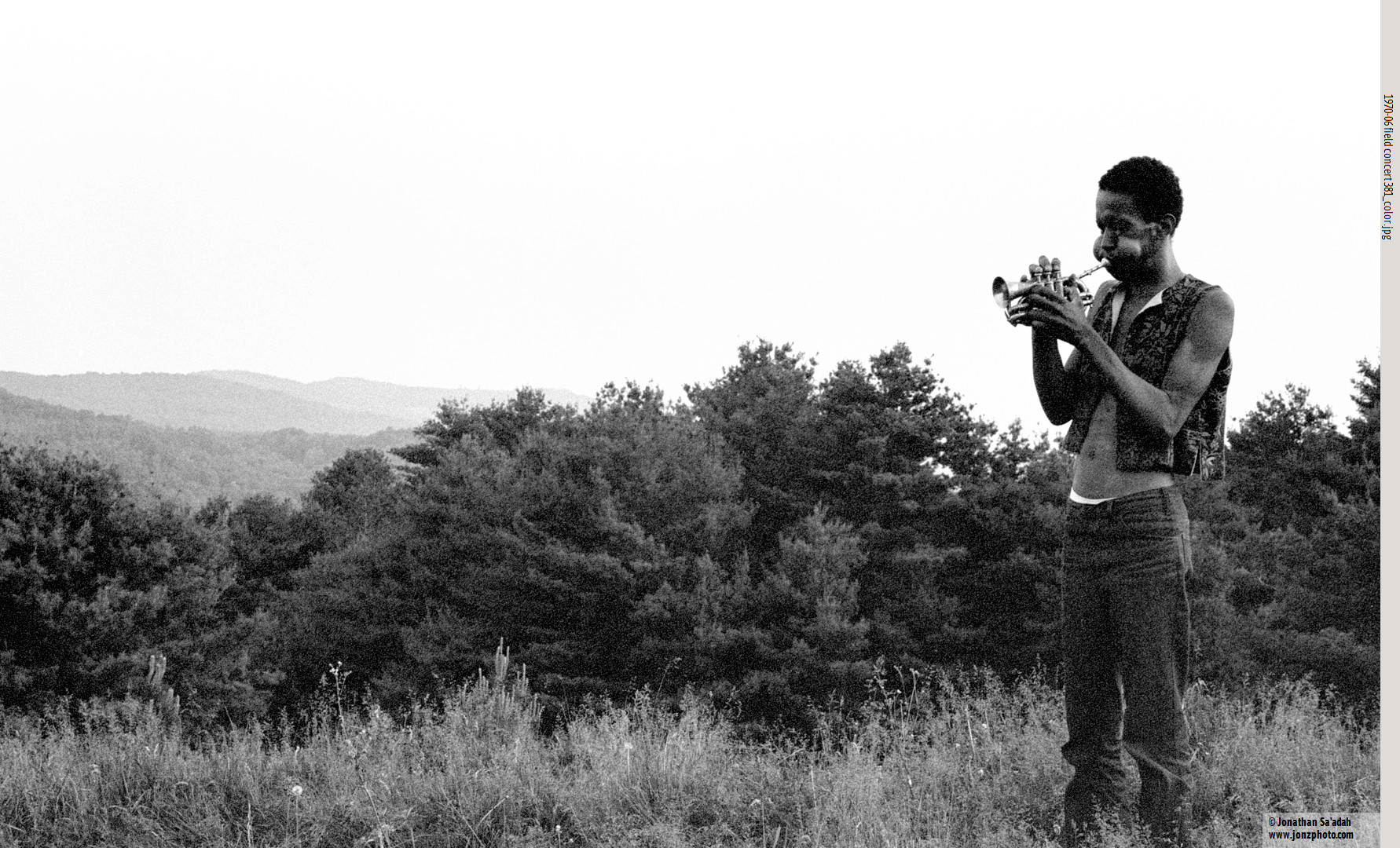
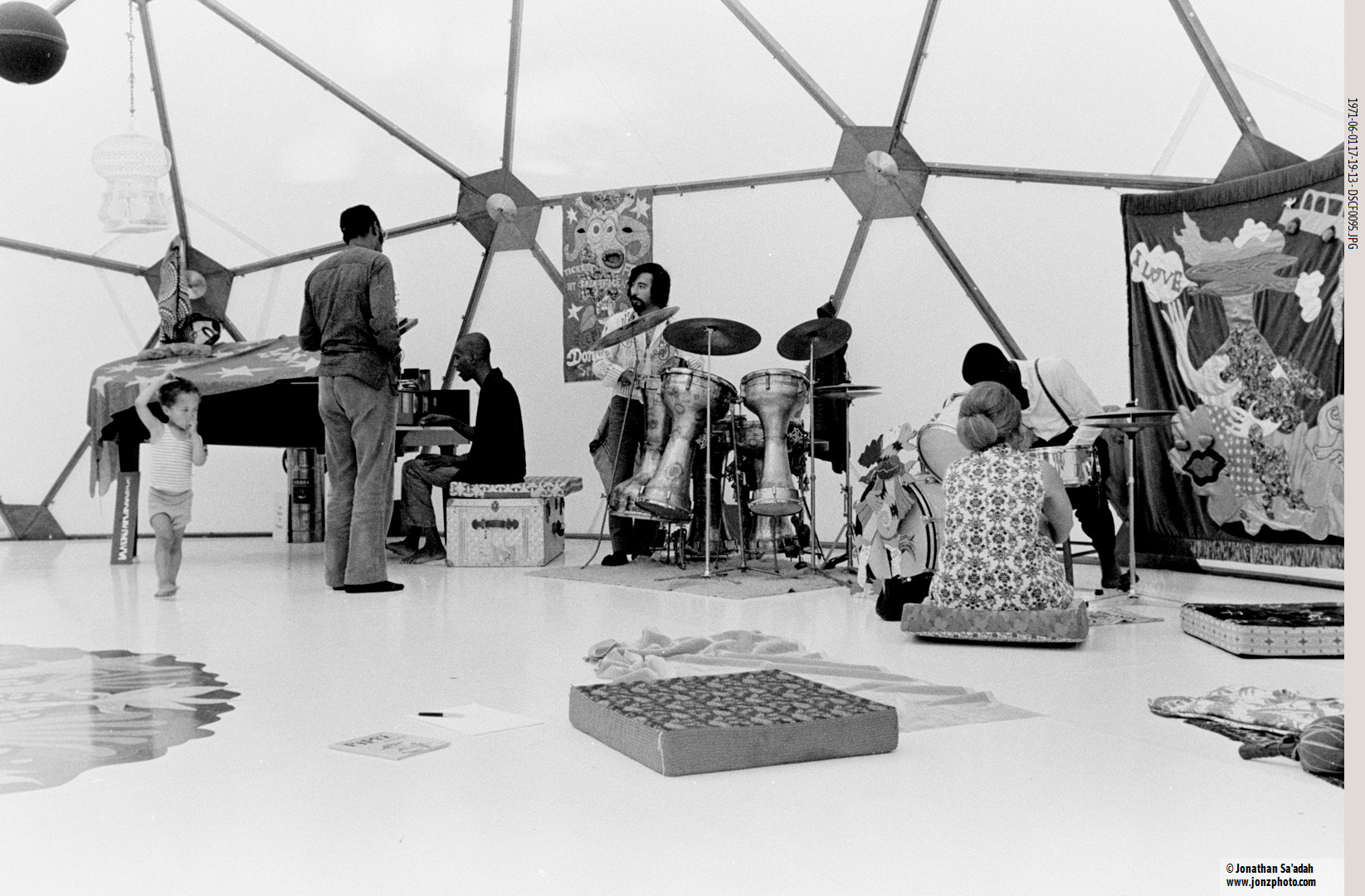
Don Cherry was always evolving, both a teacher and a student, moving on a musical and personal journey through many related but different landscapes. In the six years (1970 to 1976) when I knew him well, he was exploring a holistic fusion of life, art, and sound developed with his wife, Moki Cherry. For much of that time they worked out of their base in an old schoolhouse in southern Sweden.
Barnett, Vermont, 1975.
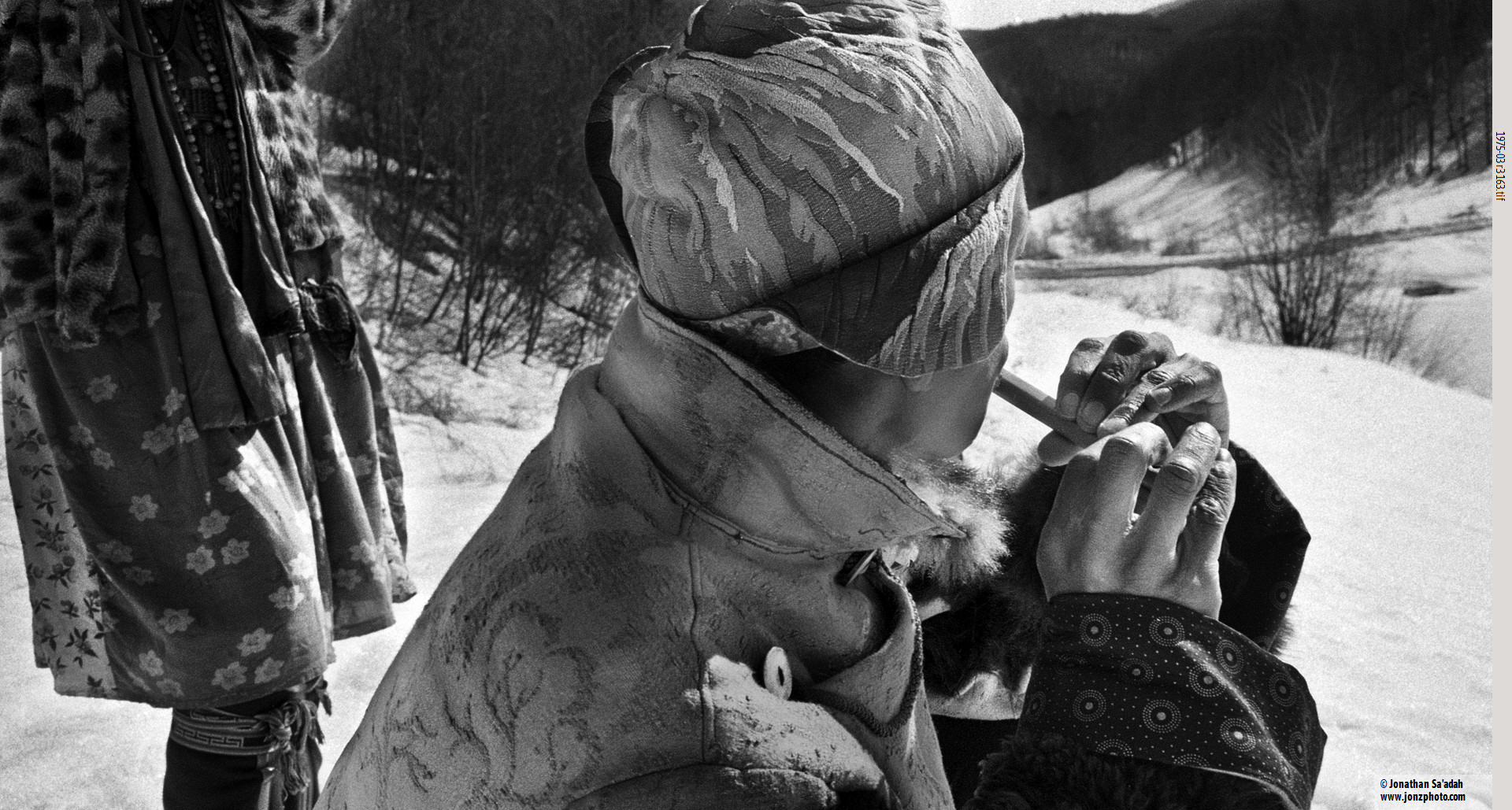
As part of his evolution as a musician Don was always collecting and studying instruments from across the globe: the doussn’gouni (Malian hunter’s harp), bamboo flutes, and various percussive instruments. He learned through the exchange of tapes and travel/sharing with other musicians. His 1975 album Brown Rice exemplified this synthesis, incorporating Indian scales, Middle Eastern modalities, and African rhythmic structures well before the tag “world music” even existed. Collaborations with Turkish drummer Okay Temiz further cemented Cherry’s commitment to what he viewed as a universal musical language, unencumbered by geographic or genre boundaries.
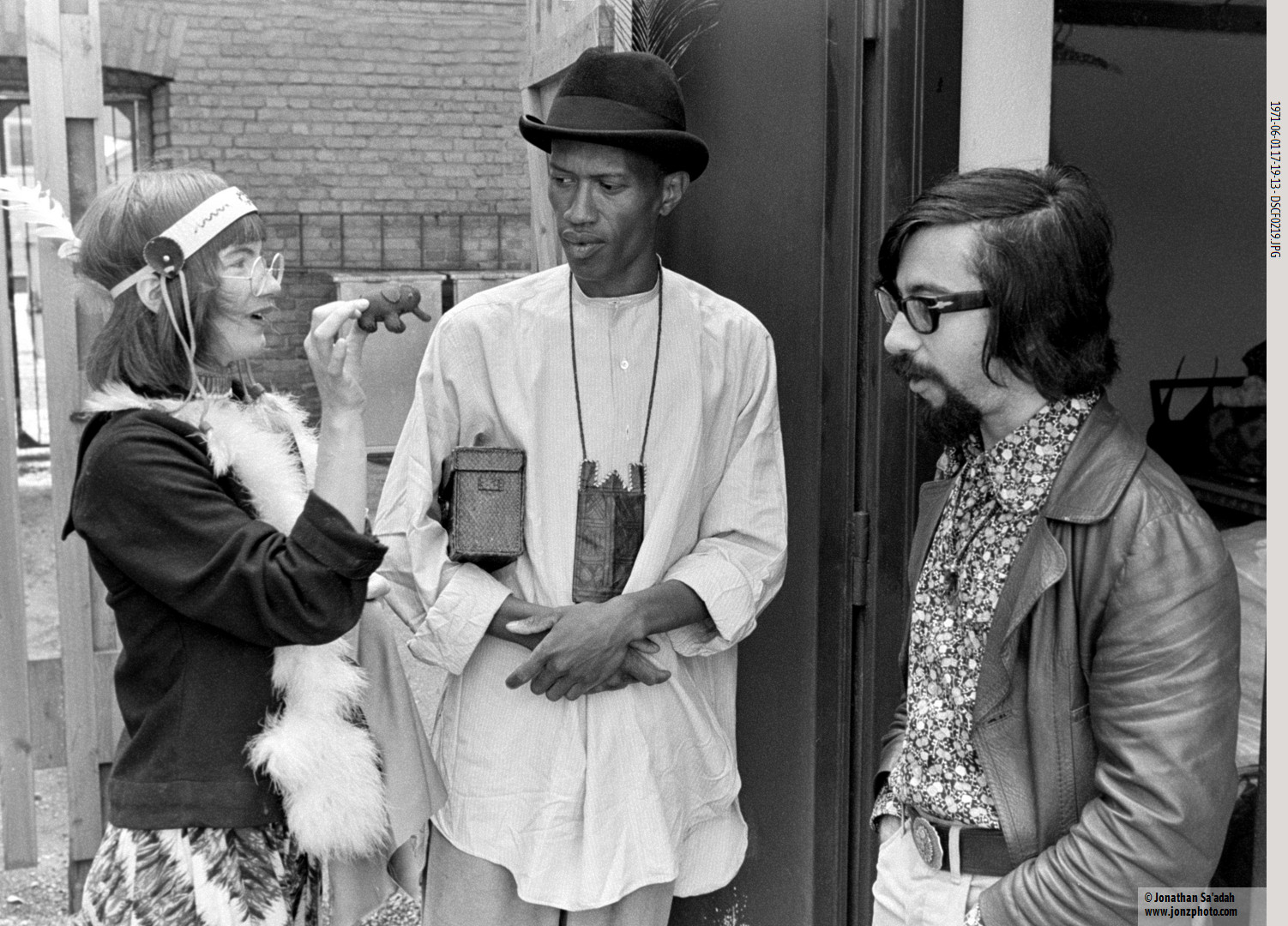
Don and Okay Temiz seem a little skeptical of Moki’s elephant. (Stockholm, 1971)Moki and Don’s collaboration at the Moderna Museet. Okay Temiz in the centre. (Stockholm 1971)
Don’s weakness was his on-and-off heroin addiction, which Moki fought against through her love and attempting to keep him physically separated from the people and places that encouraged him to backslide. It was not an easy life, but he was a man who gave a lot to the people he cared for, and I was grateful to be in his and Moki’s creative family for the years that I was.
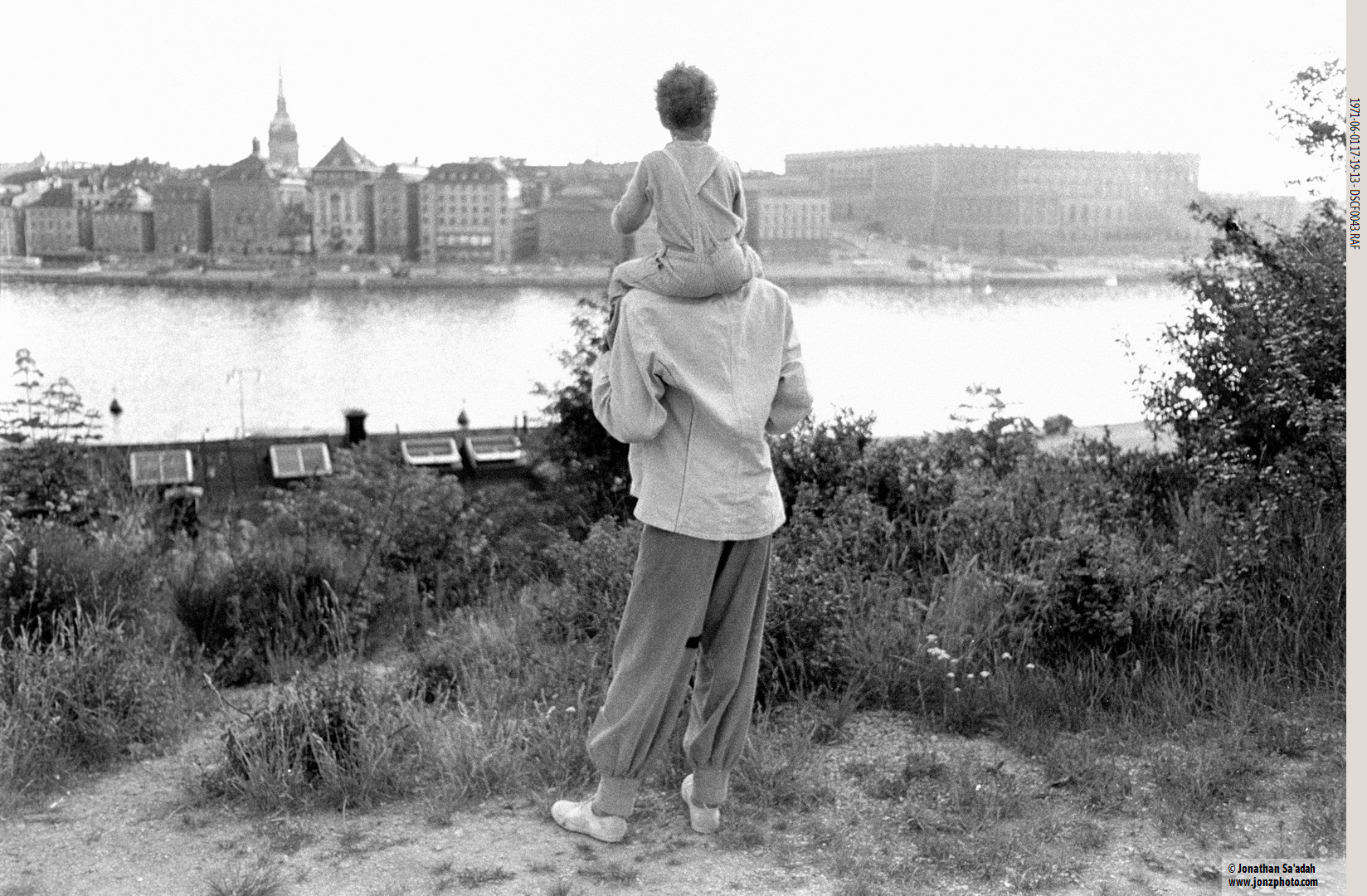
Don Cherry with his son, Eagle-Eye, looking out at Gamla Stan. (Stockholm, 1971)
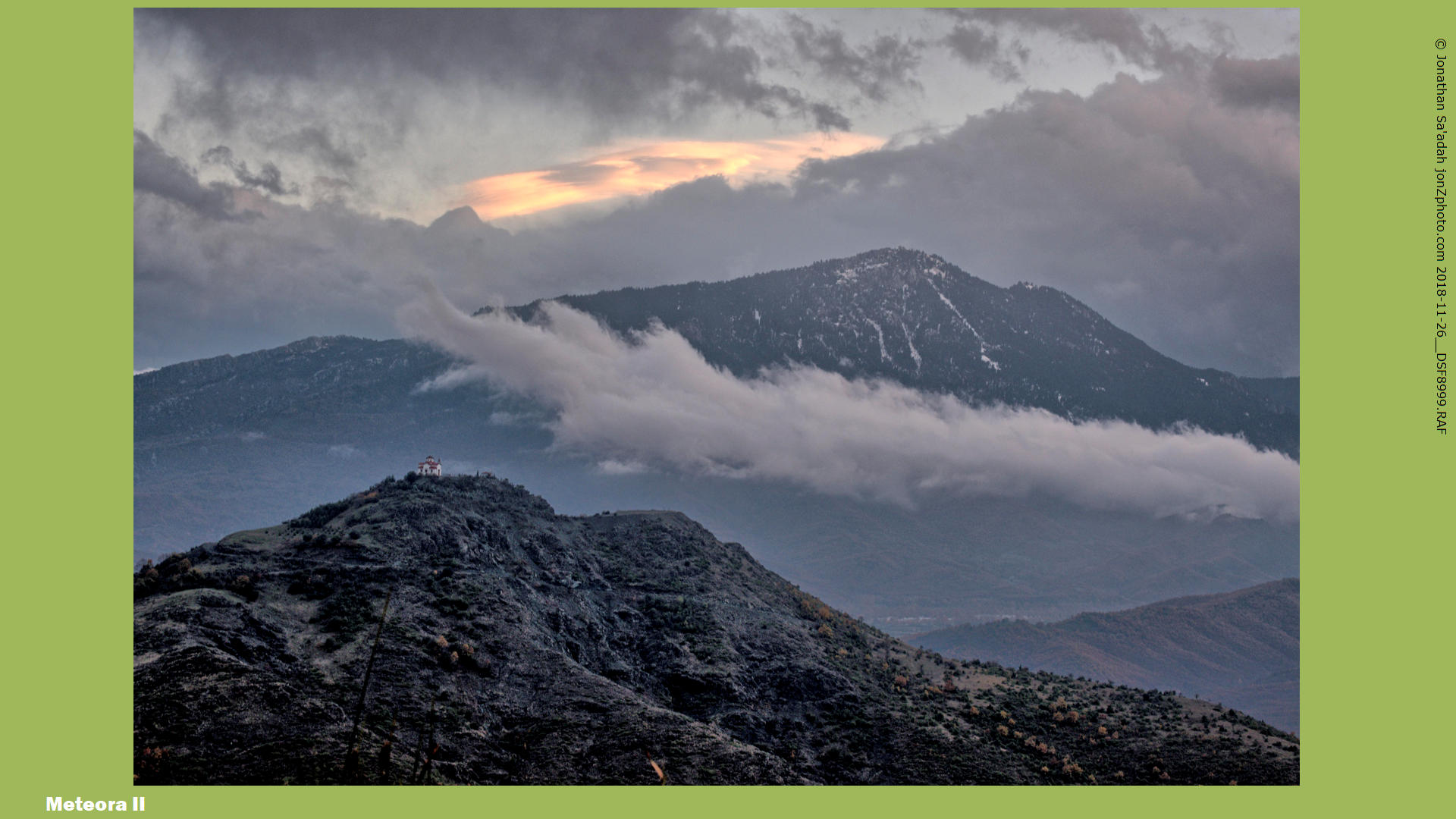
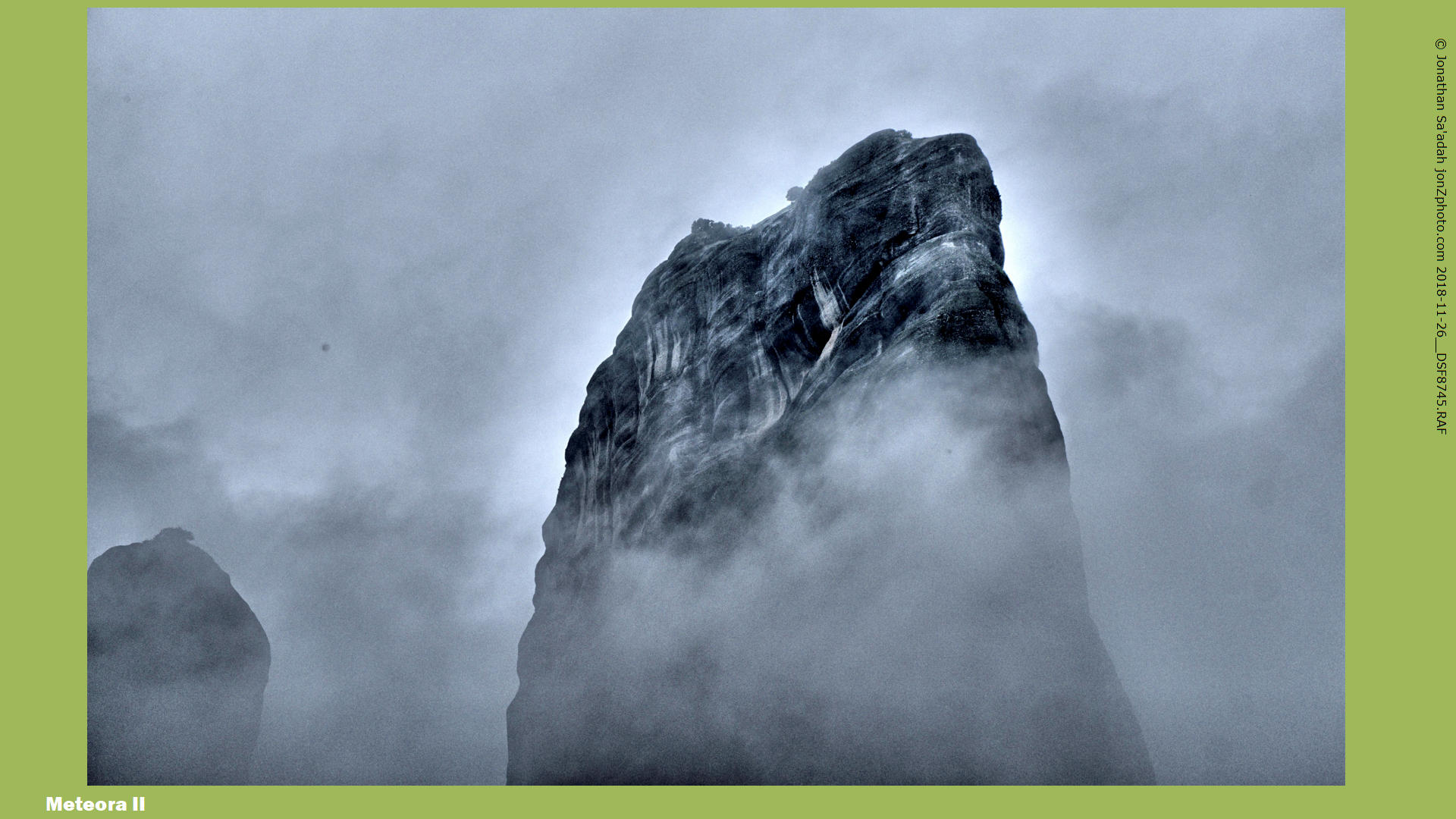
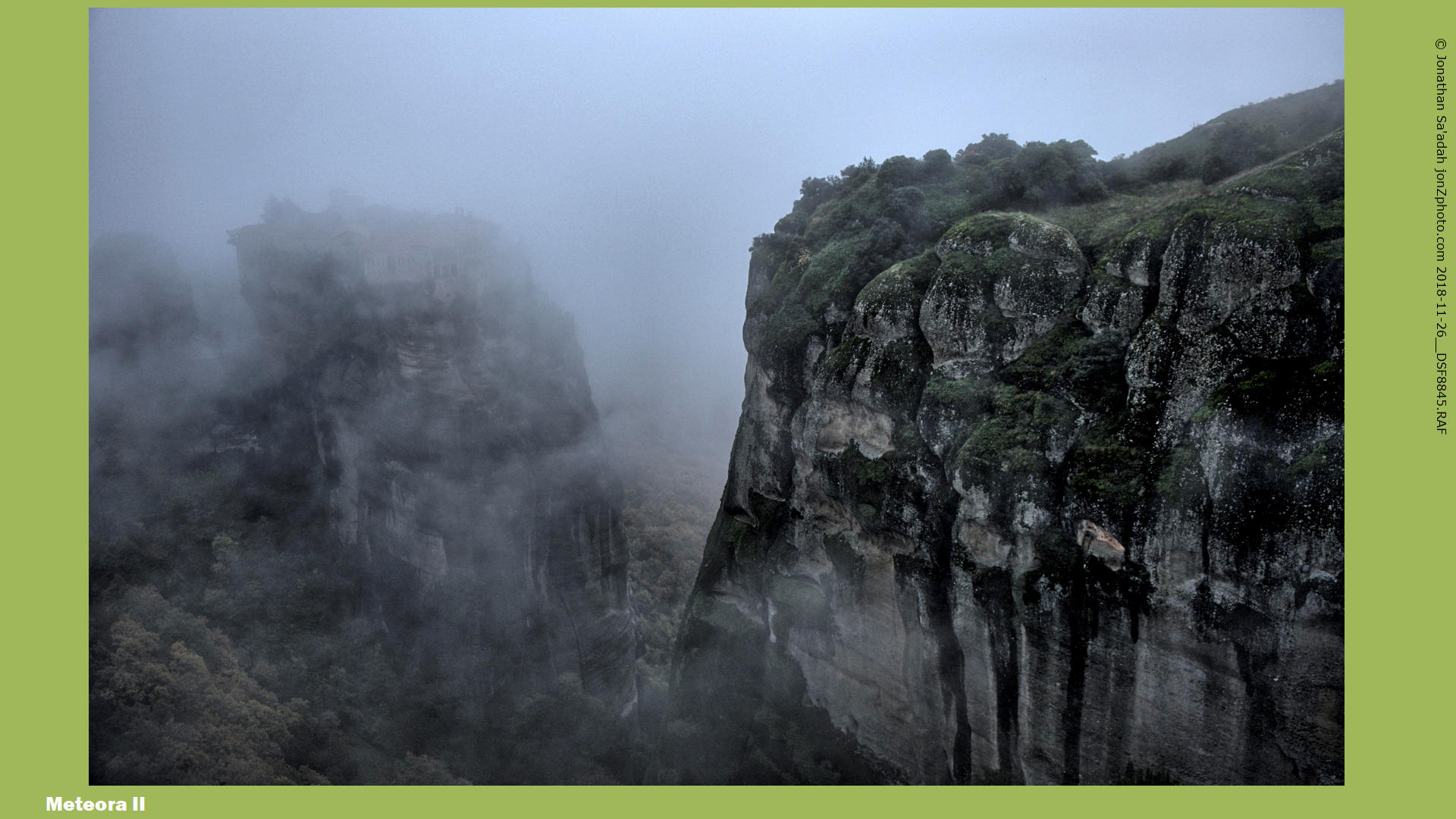
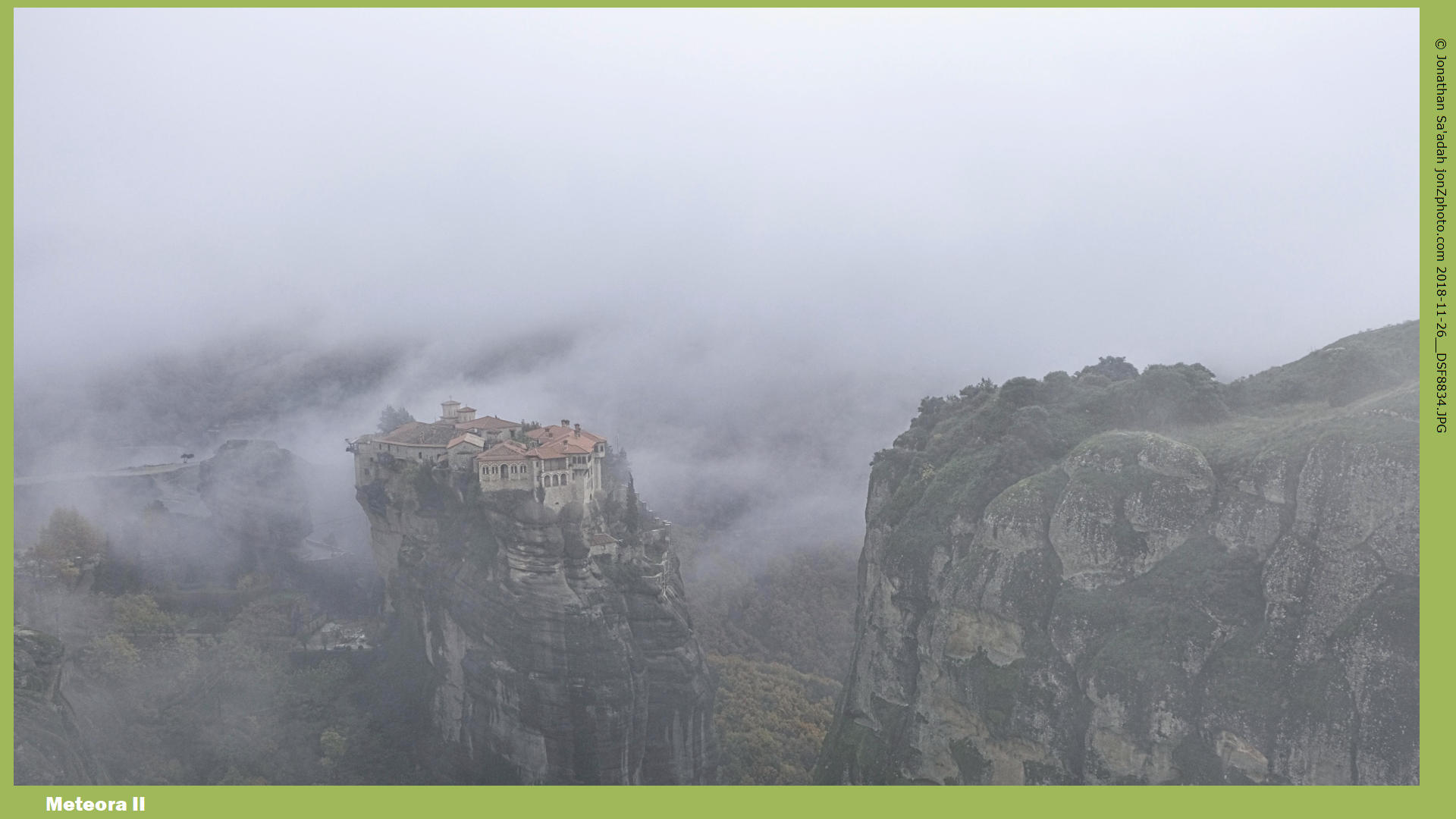
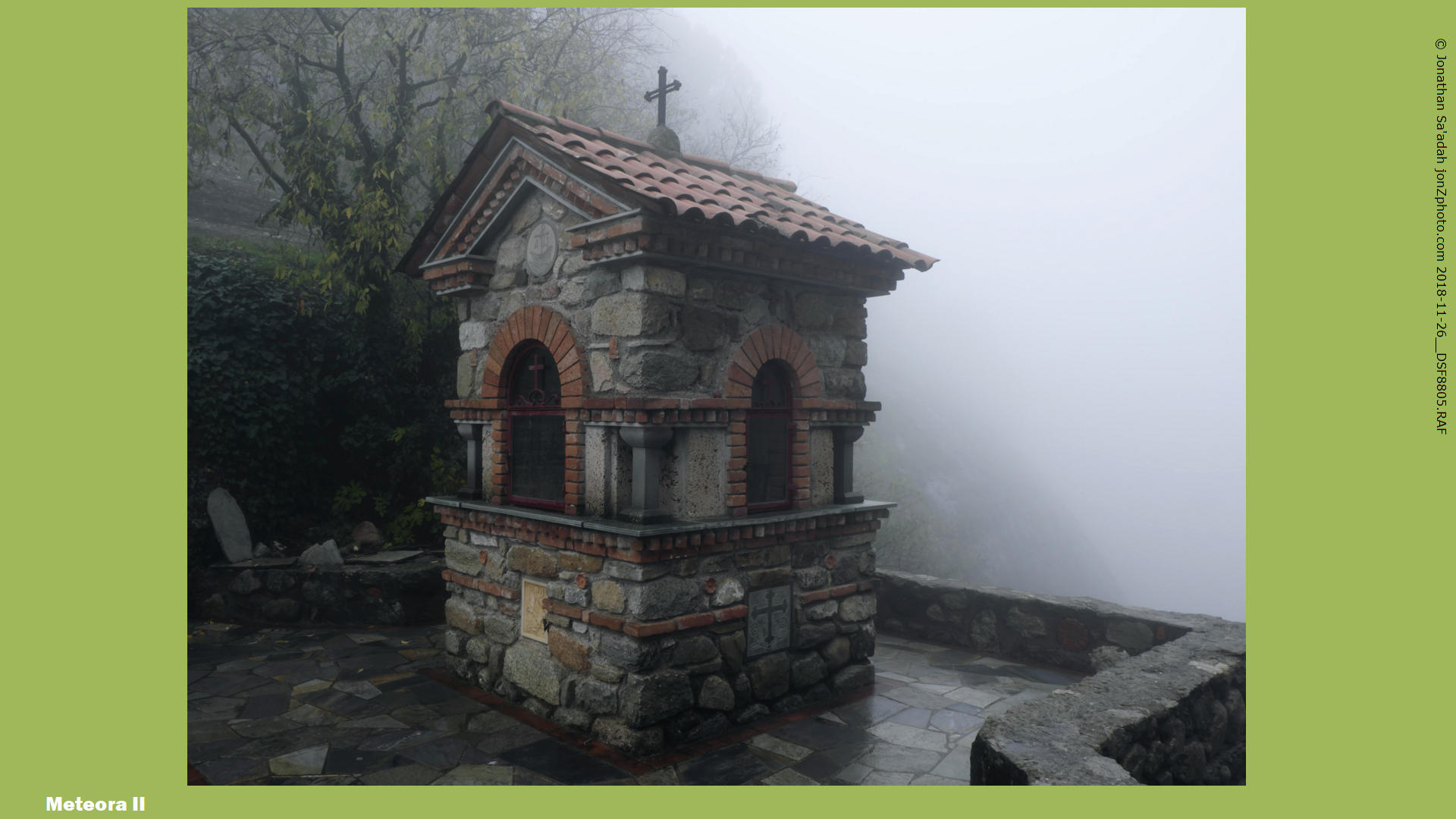
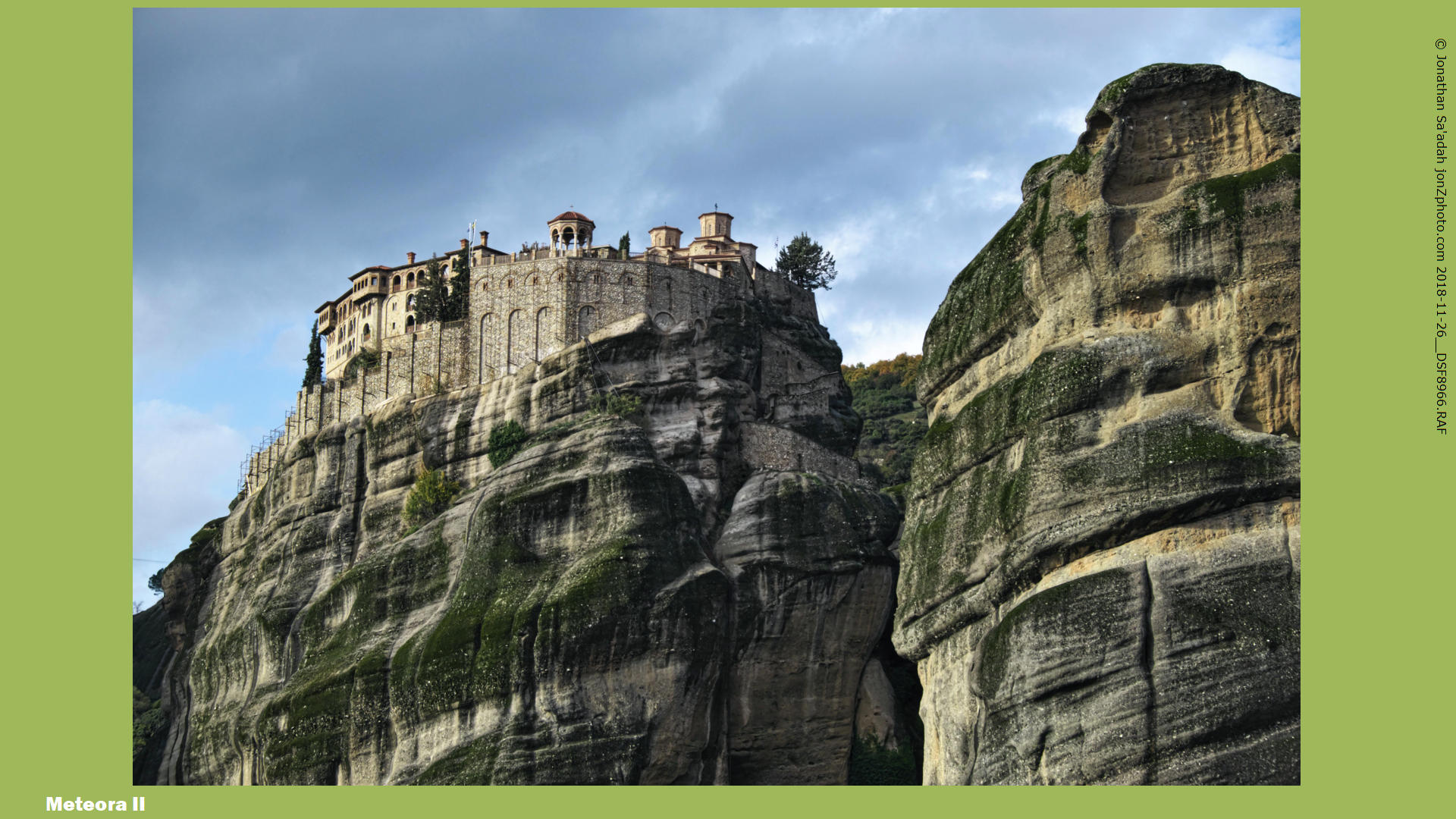
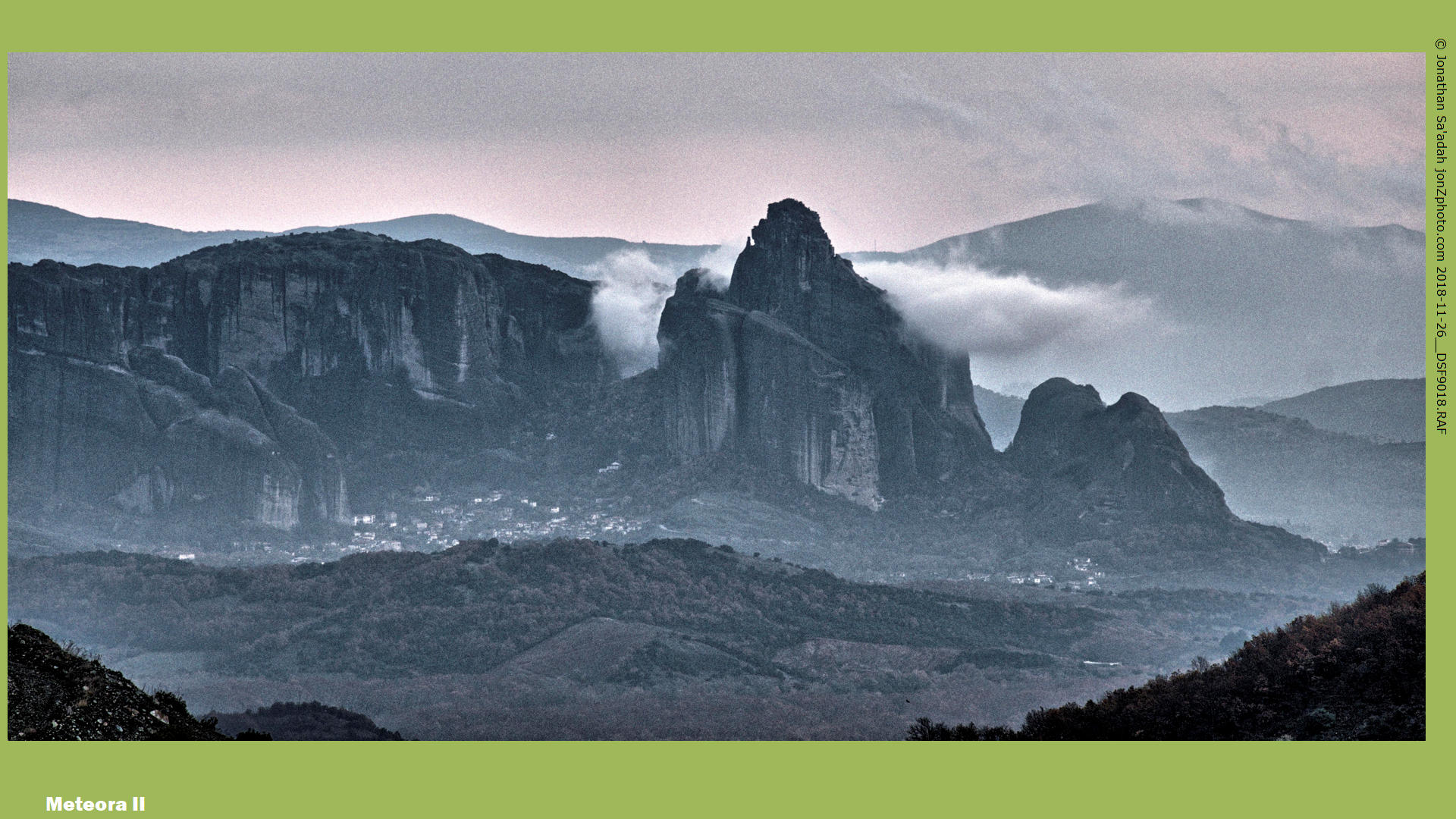
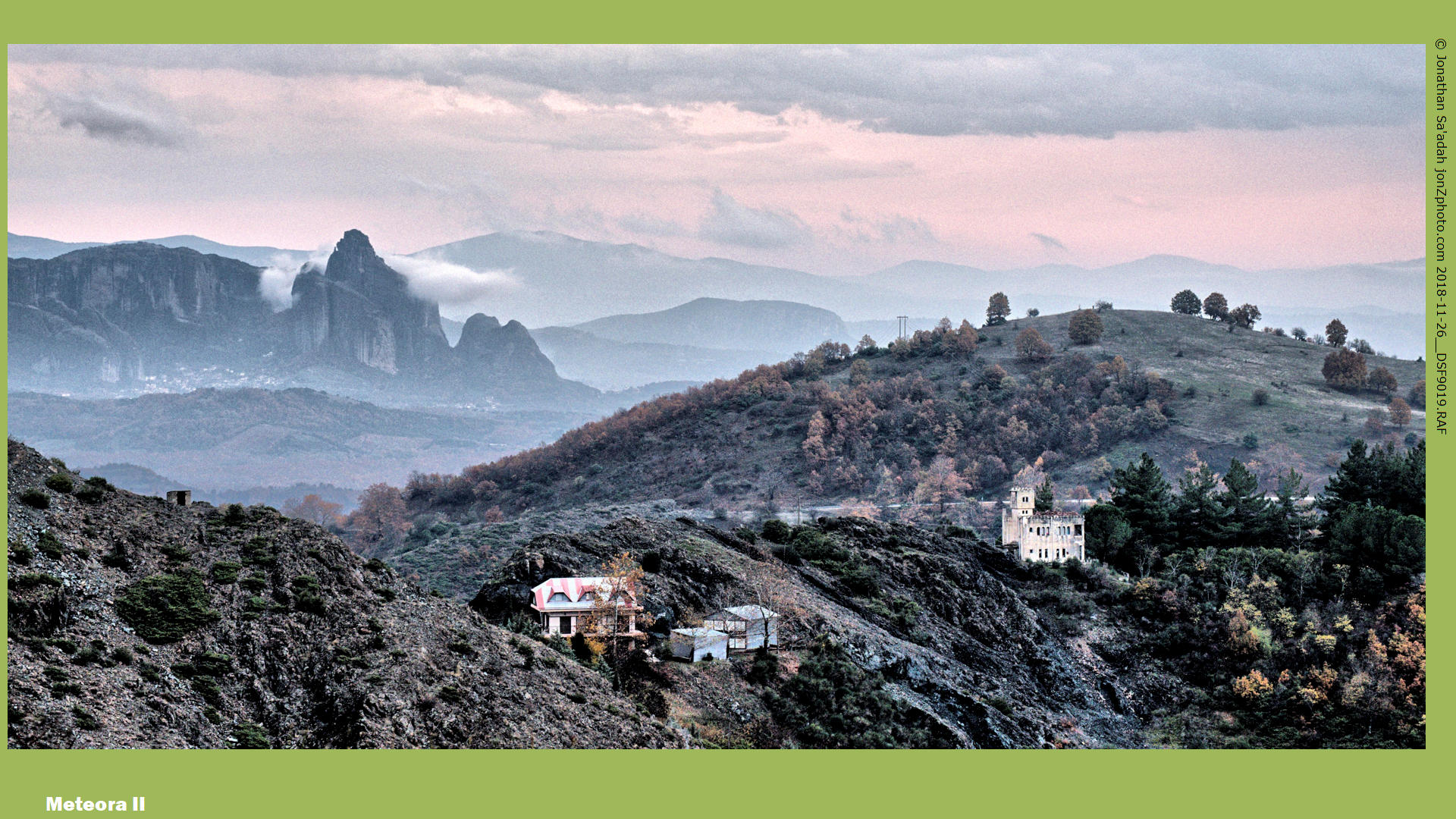
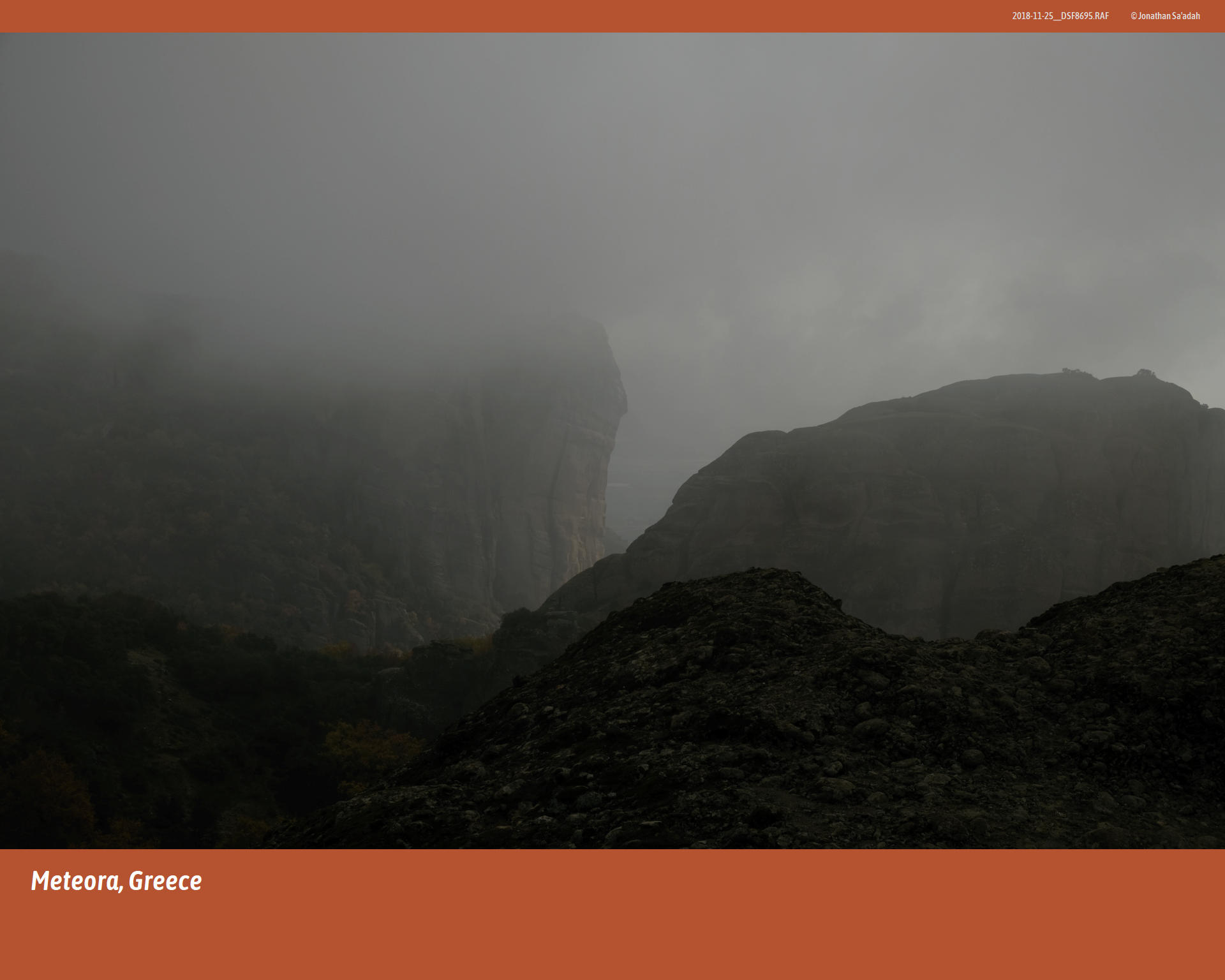
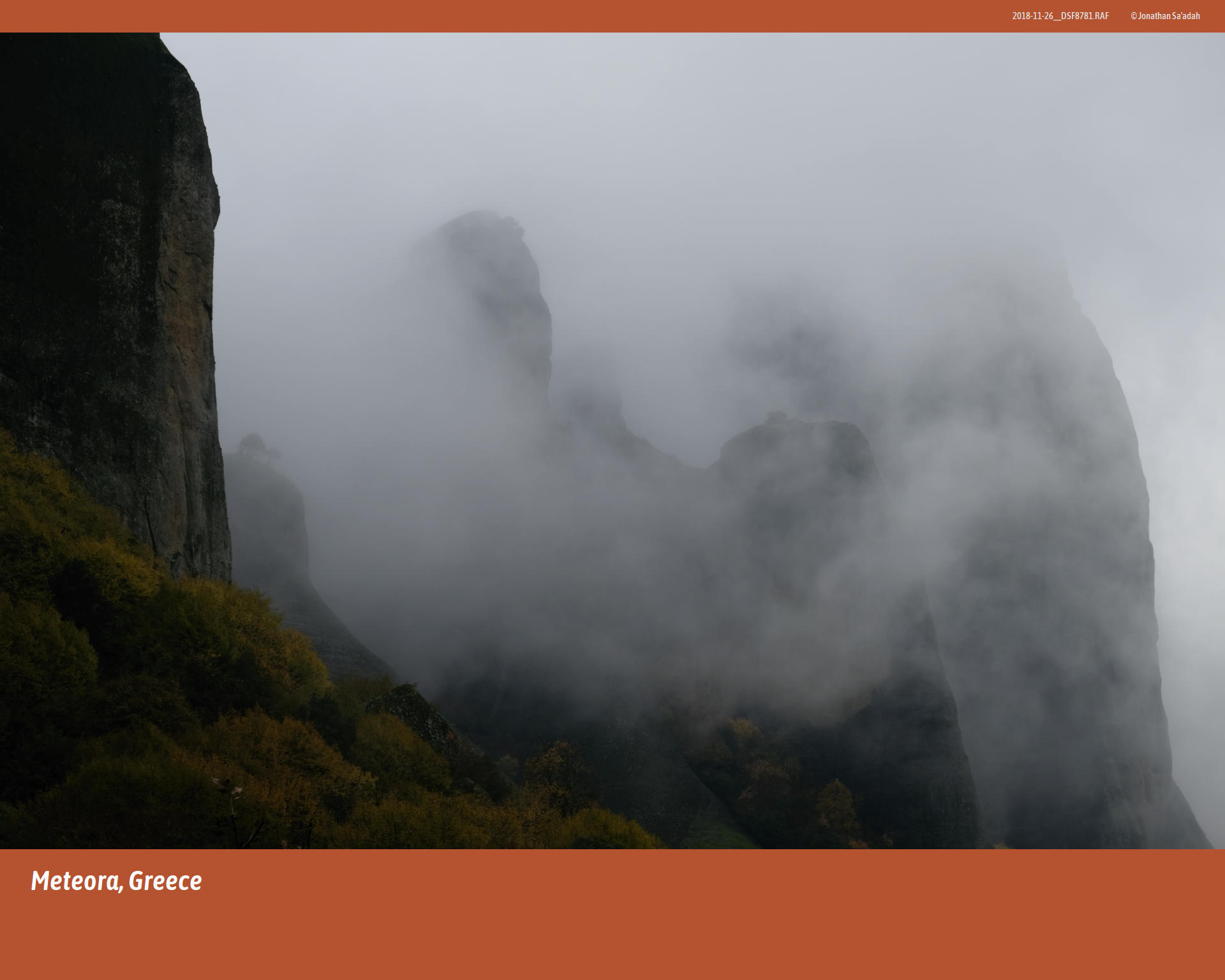
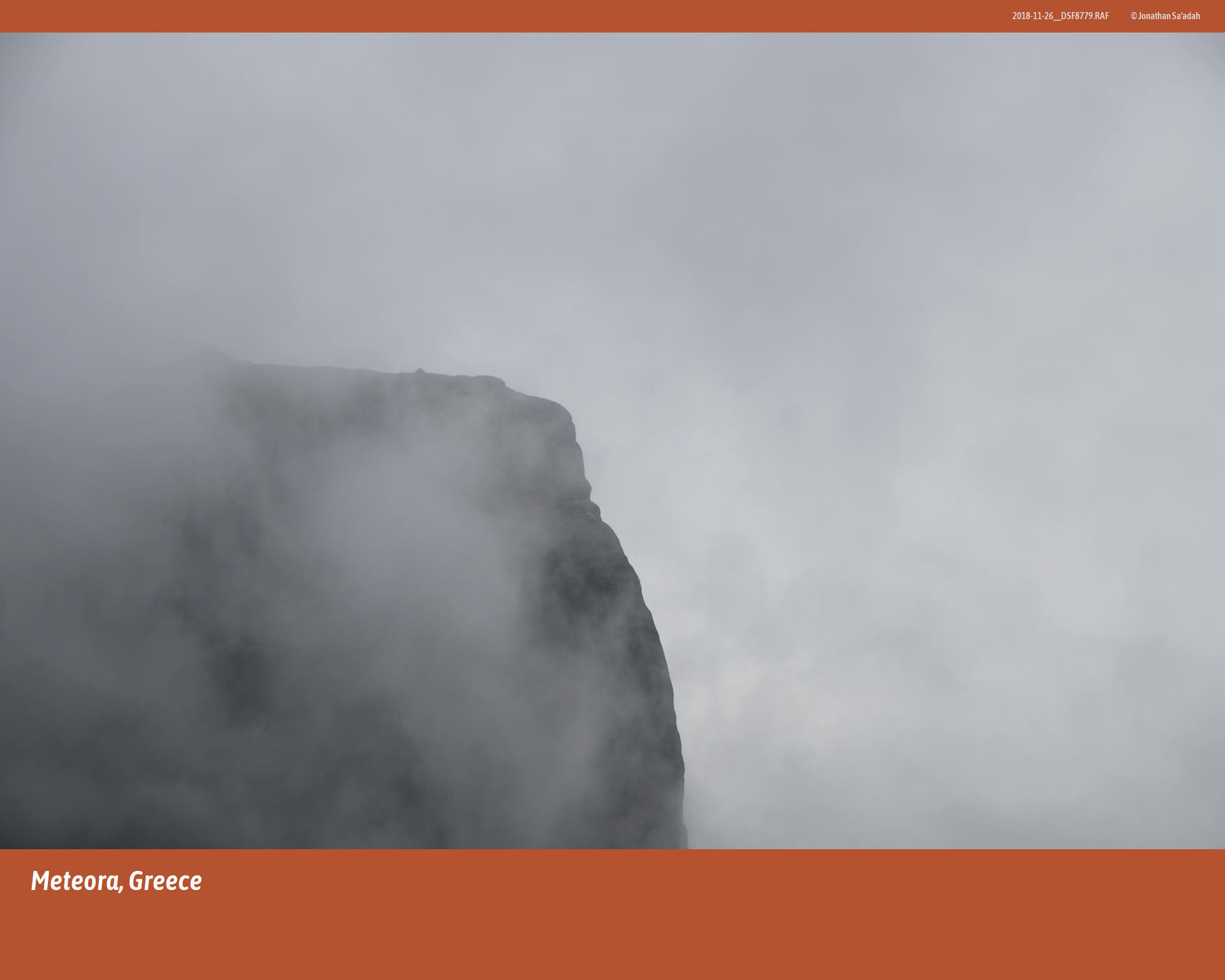
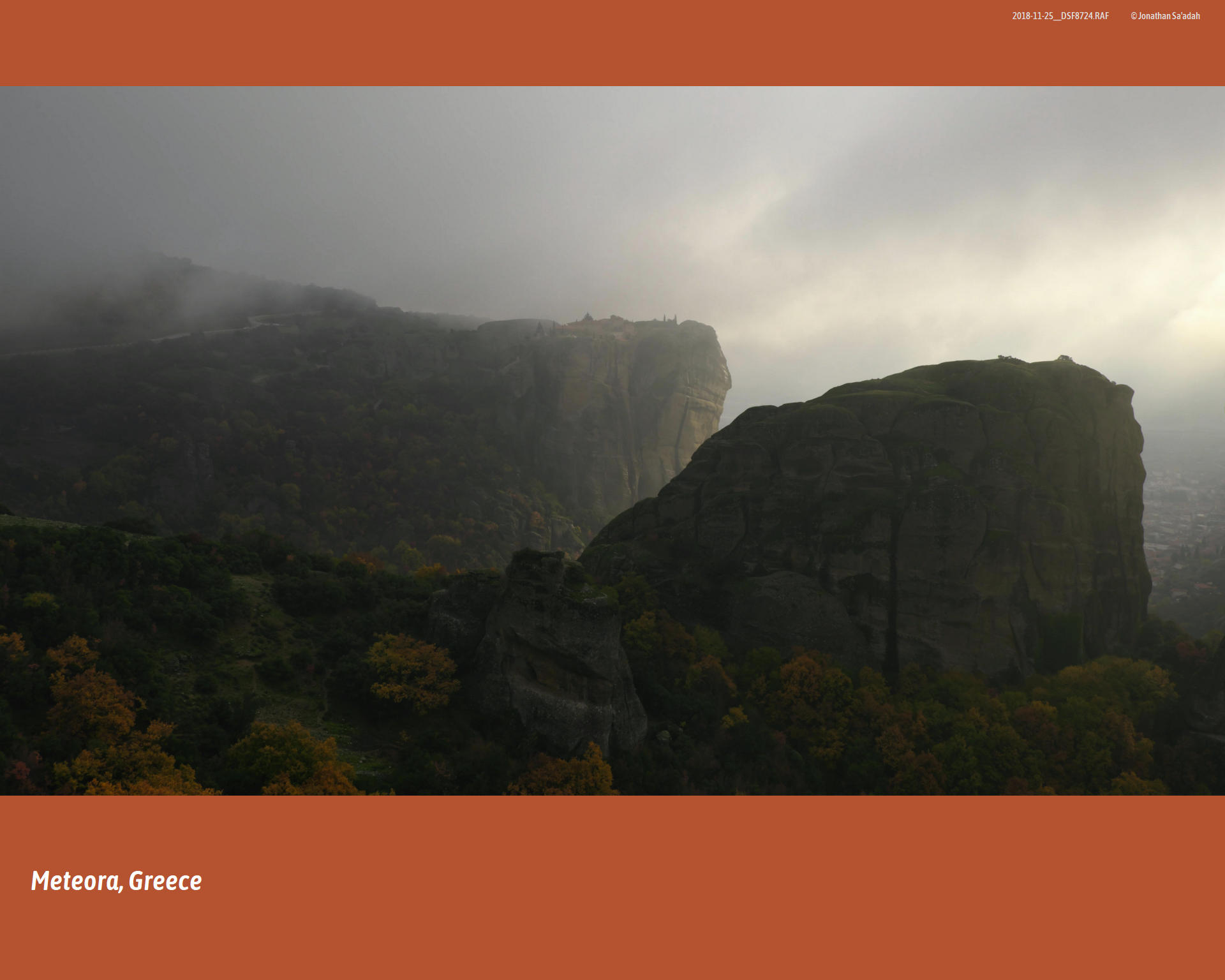
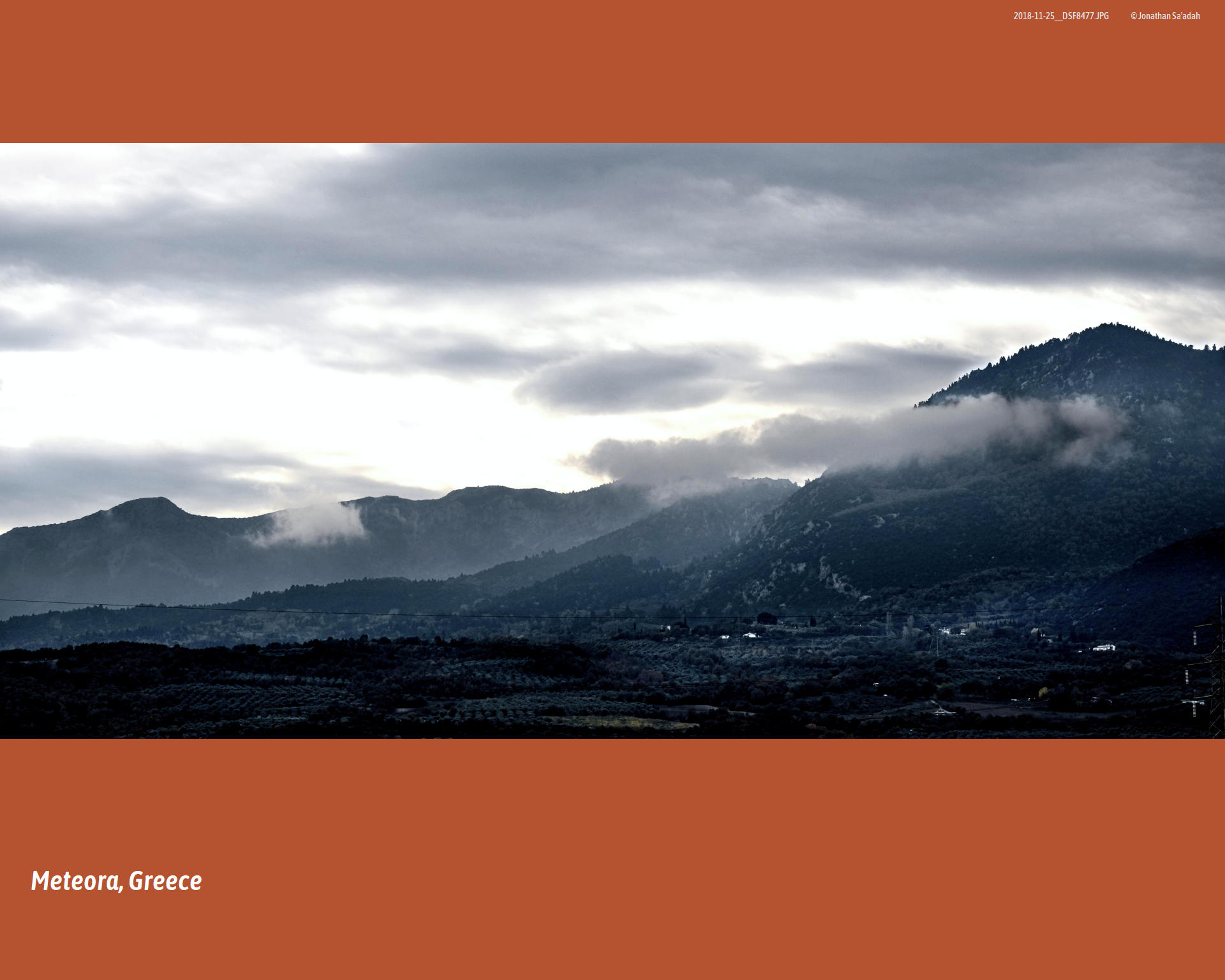
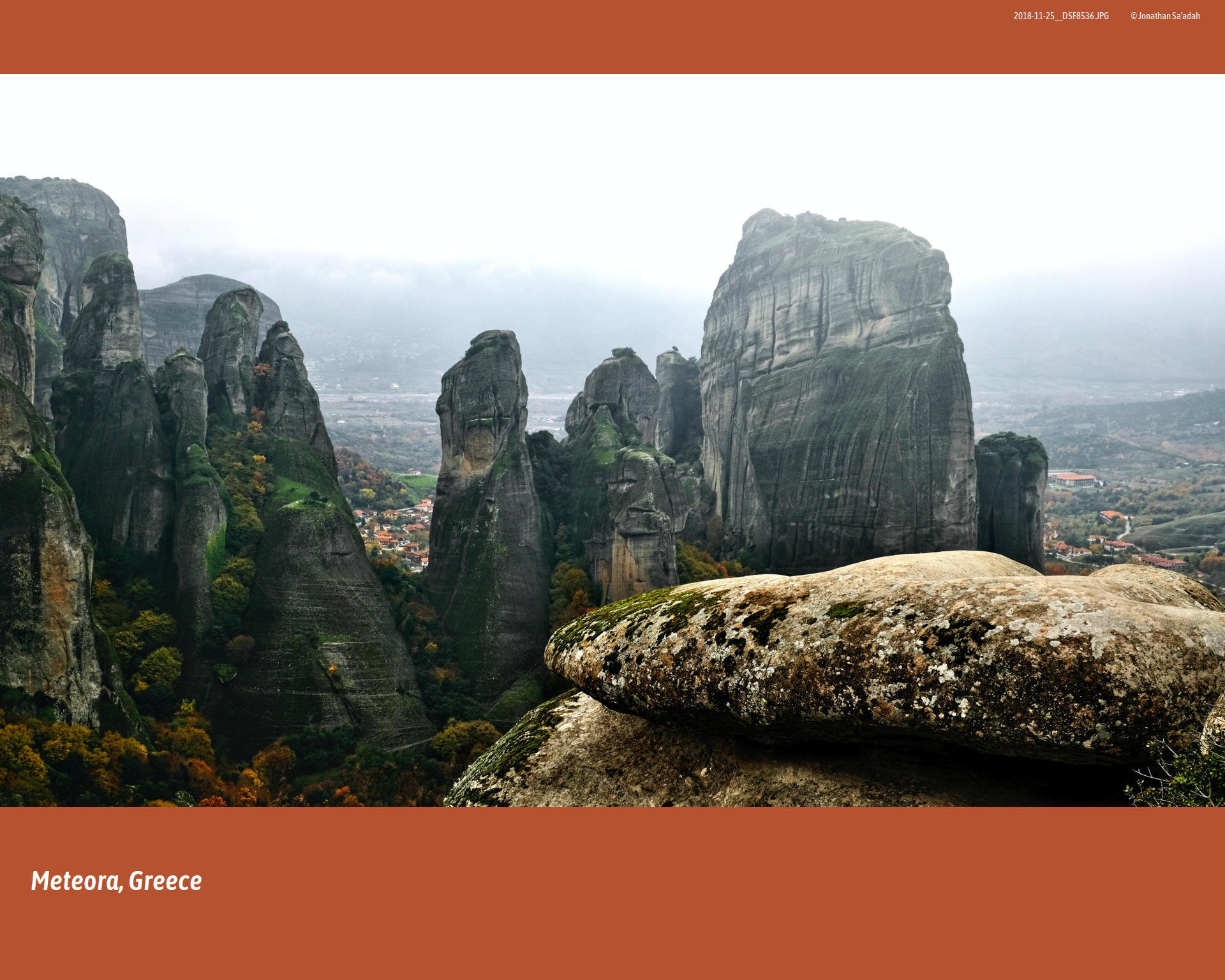
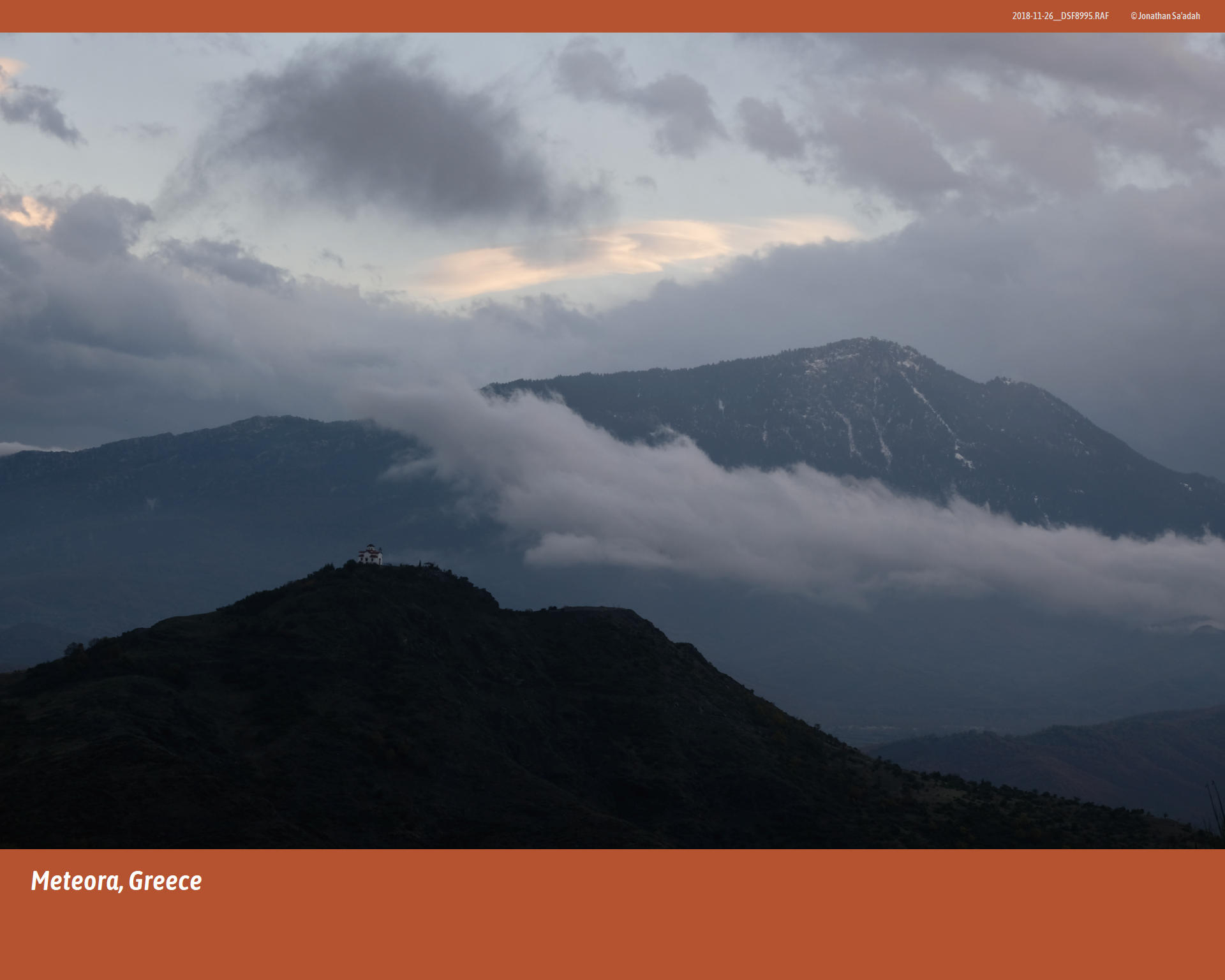
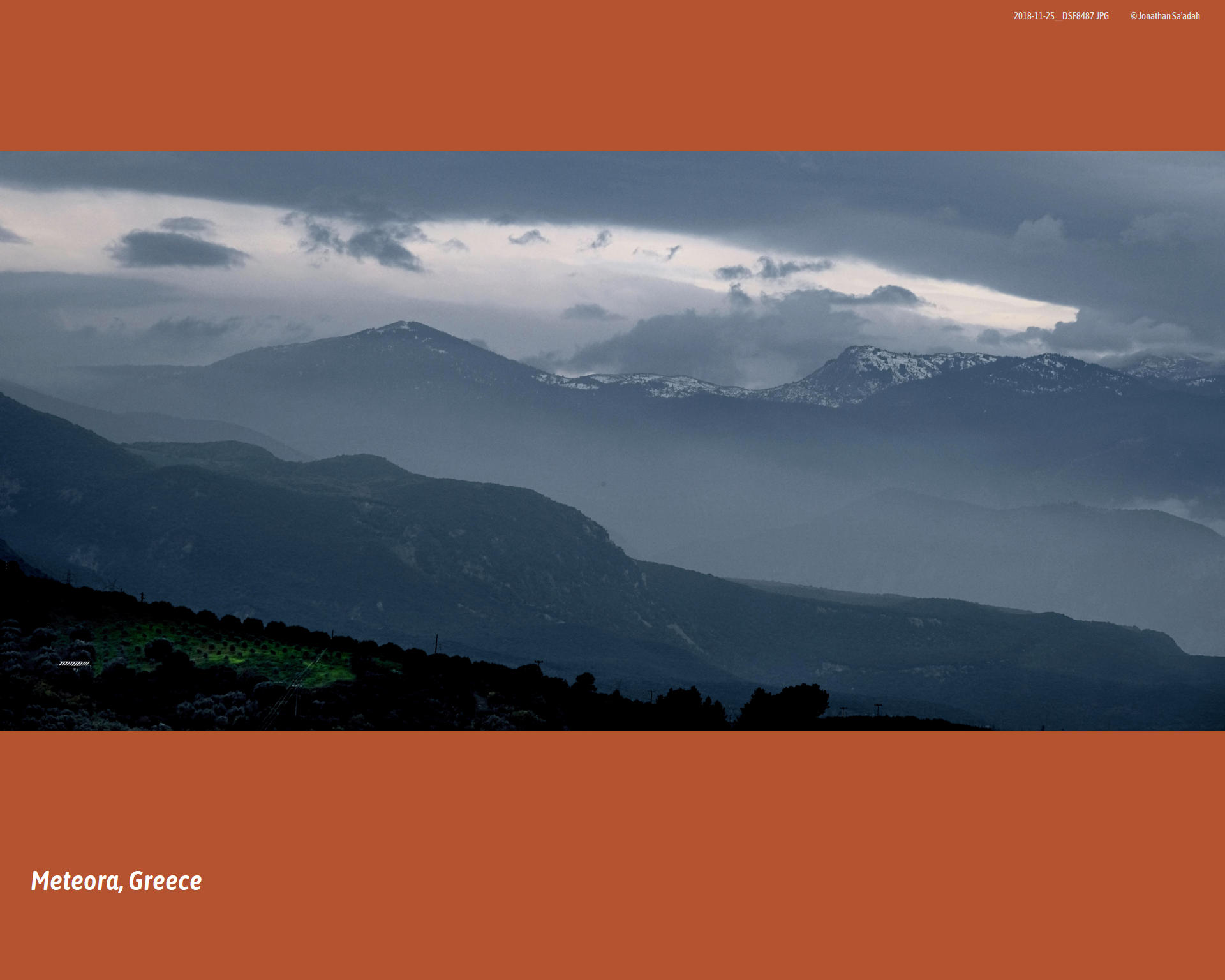
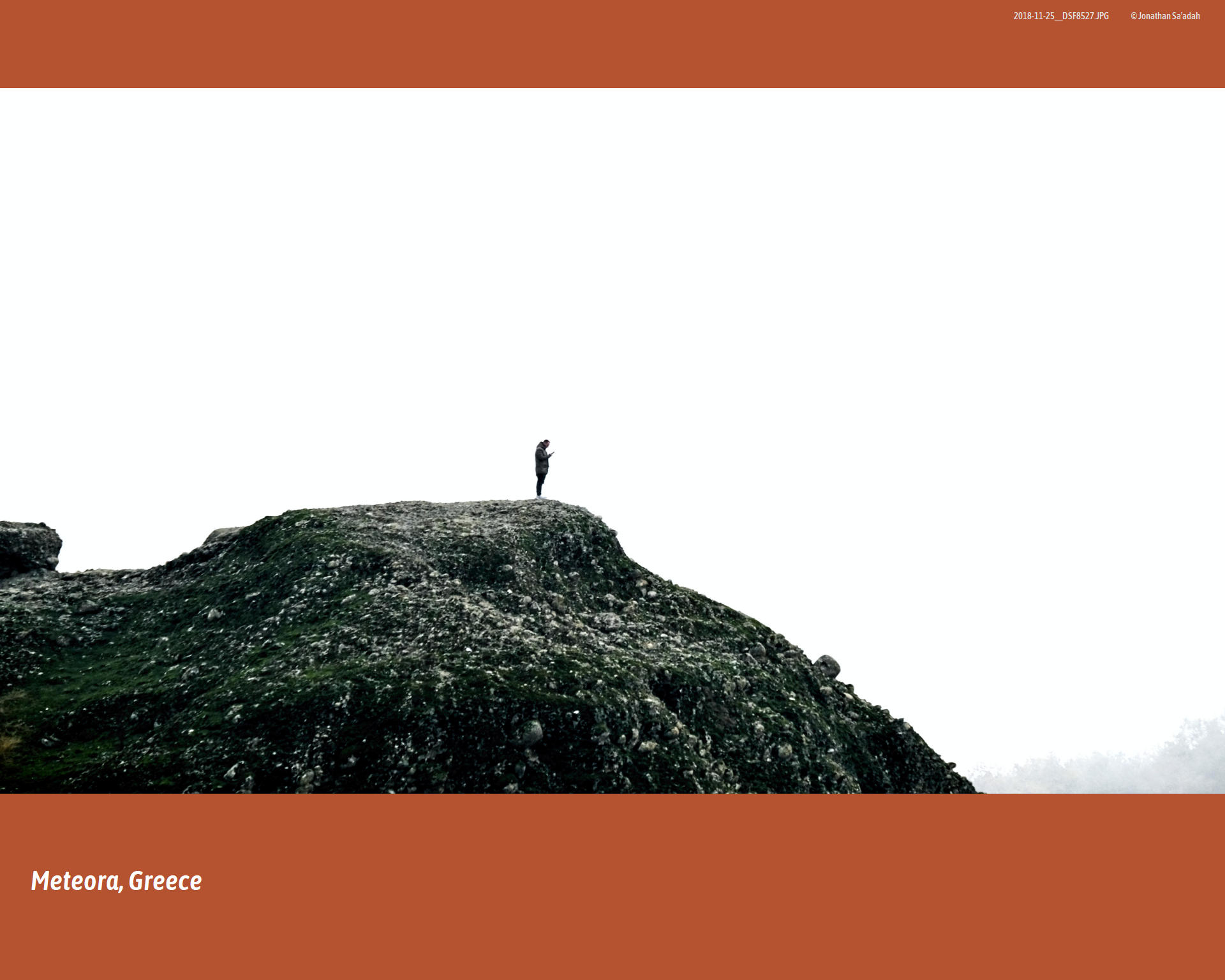
We had come to see Meteora on a misty morning in November, 2018. The ground-hugging fog drifted like a low cloud across the Thessalian plain, swallowing the road ahead and the hulking silhouettes of rock that we knew were there but could not yet see. Somewhere above, the monasteries of Meteora – “suspended in the air,” as their name has been translated for centuries – waited in the whiteout, as they have since the first hermits began climbing into caves up there in the 11th century.
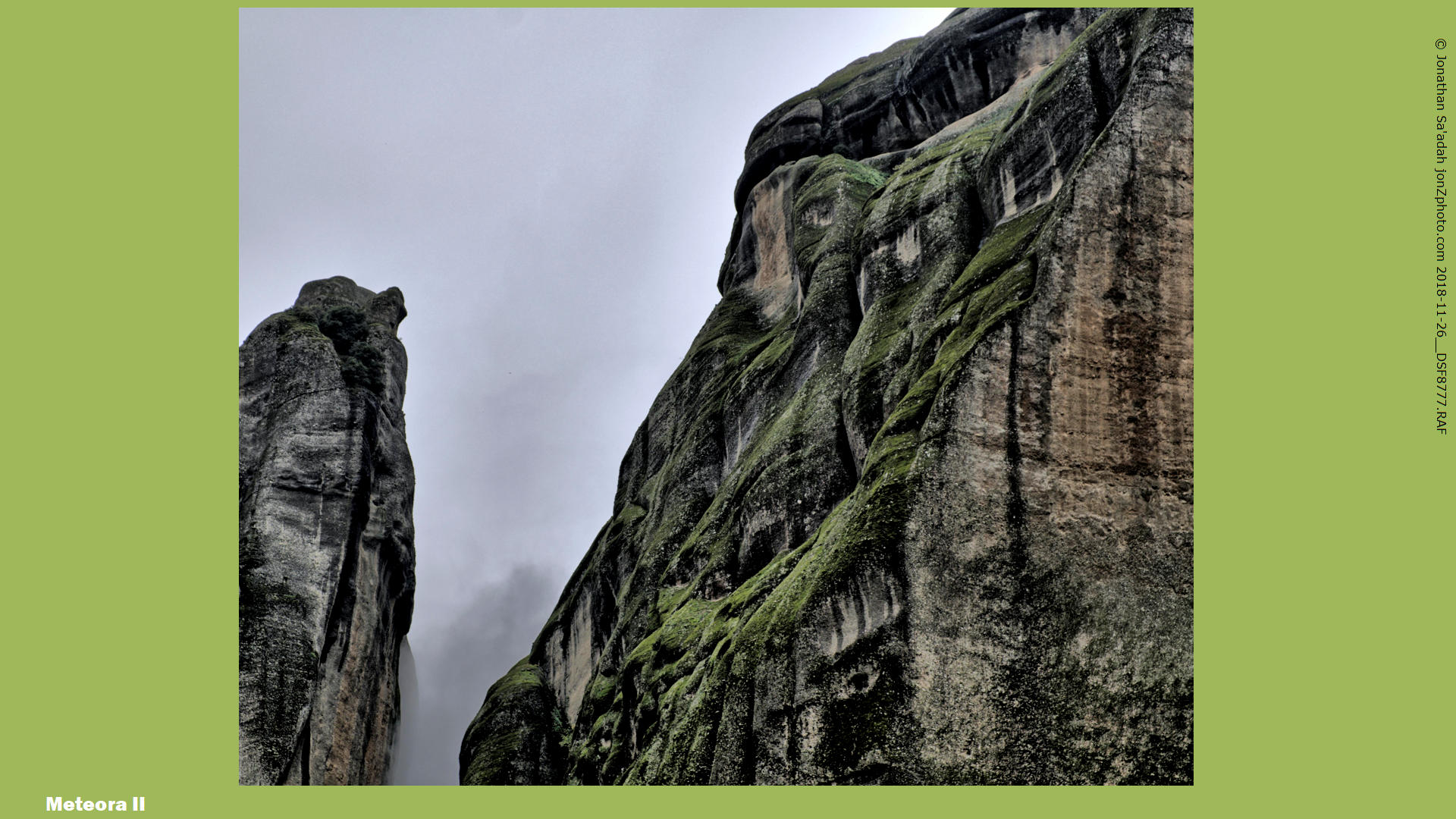
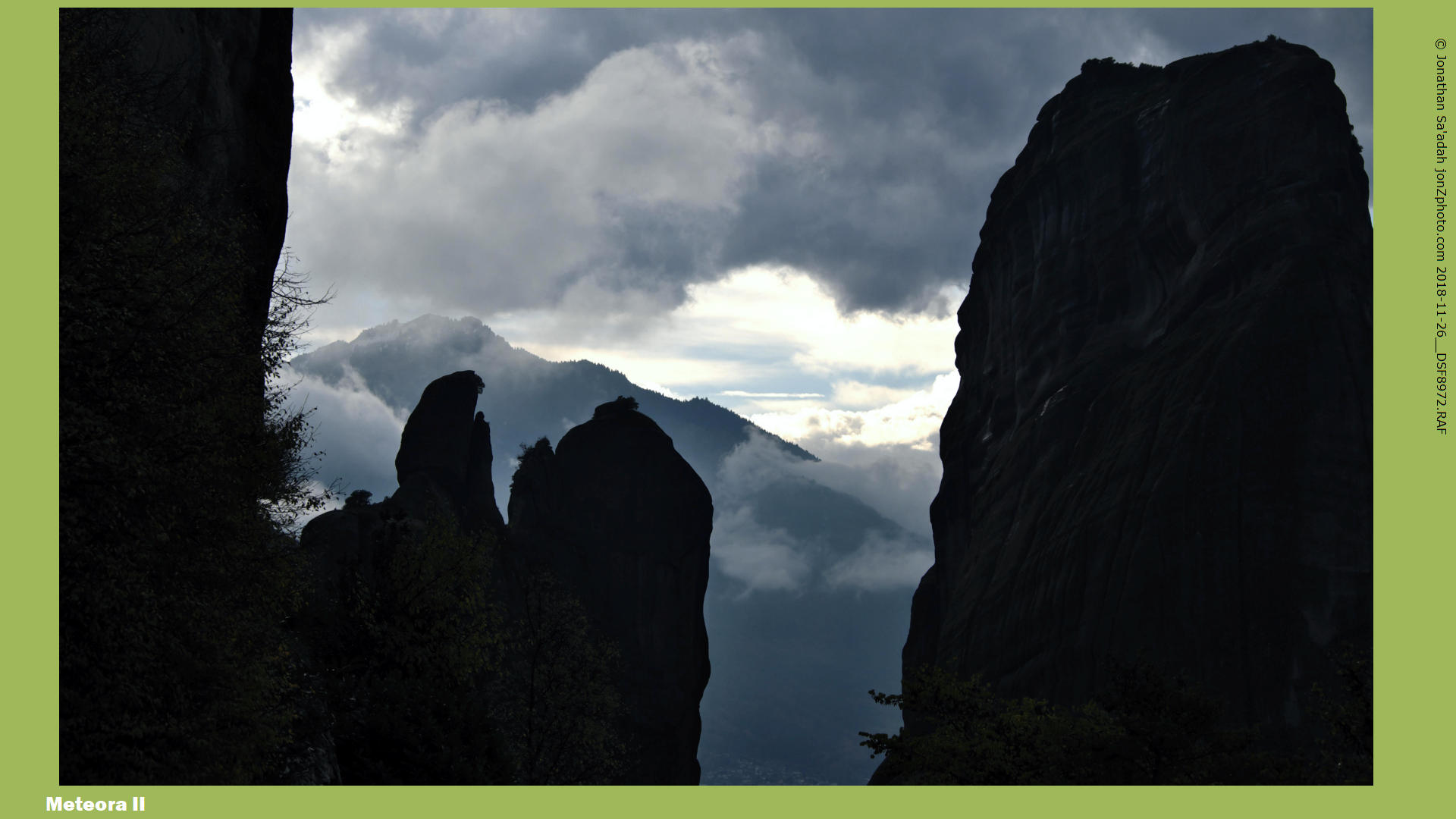
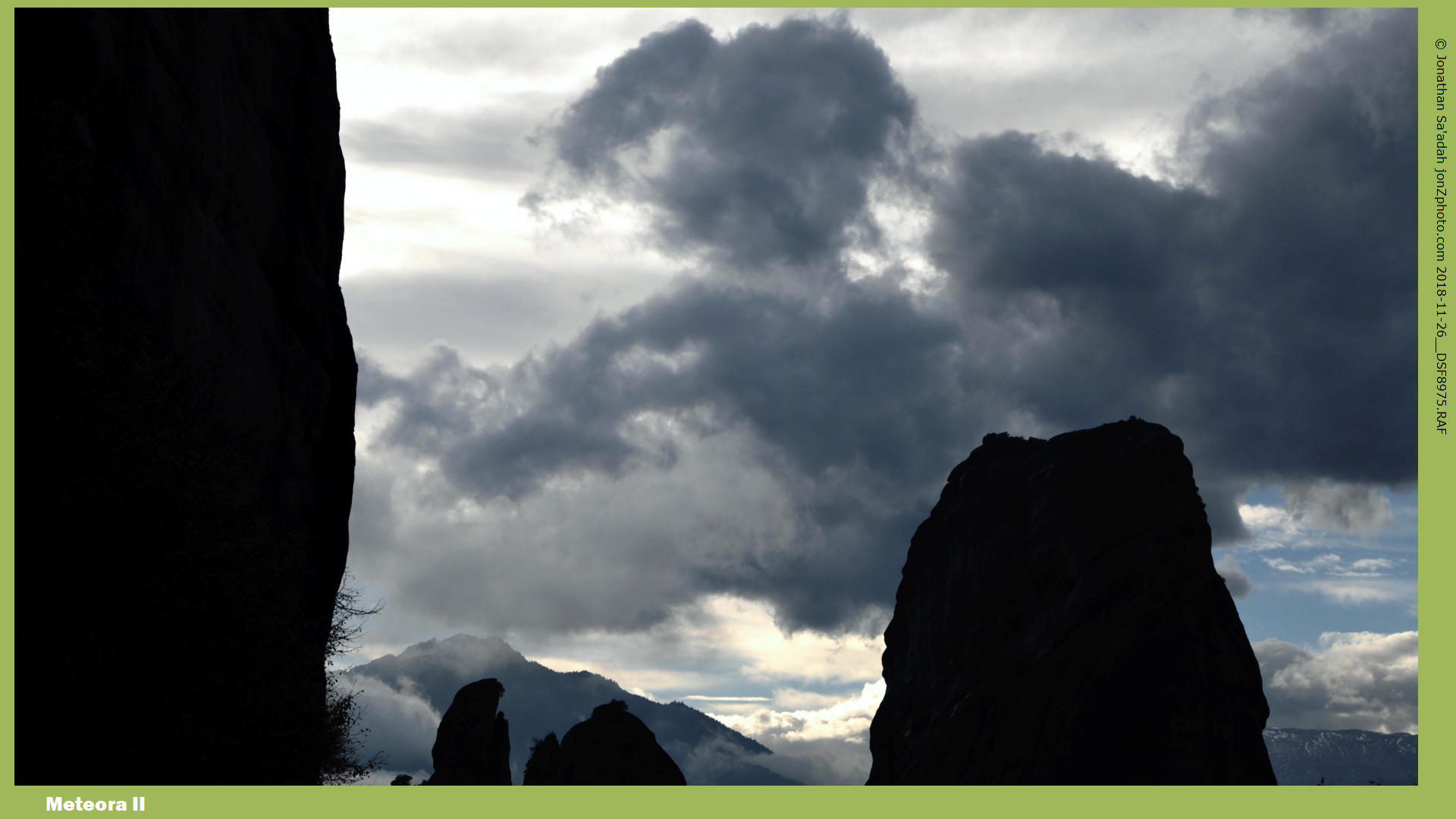
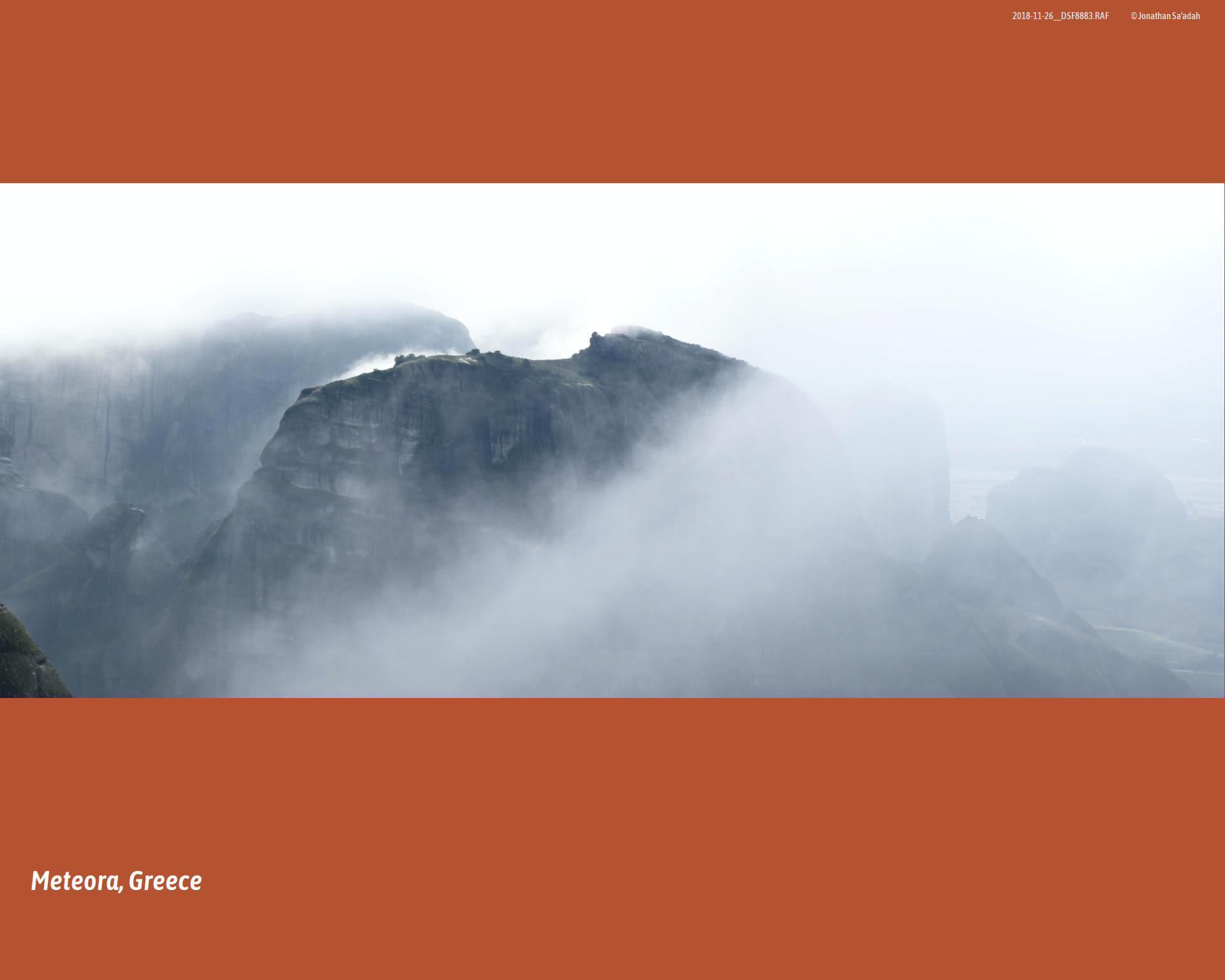
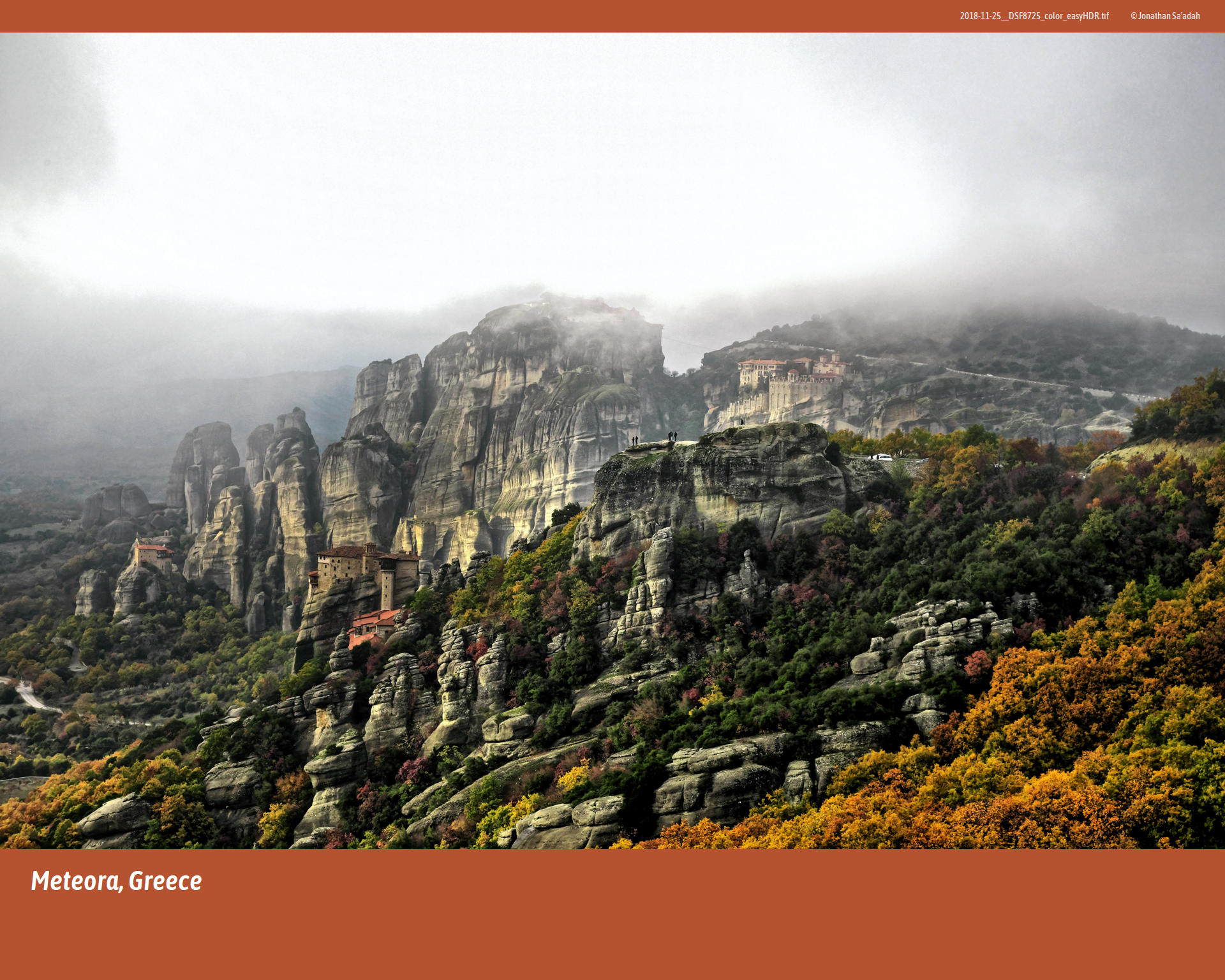
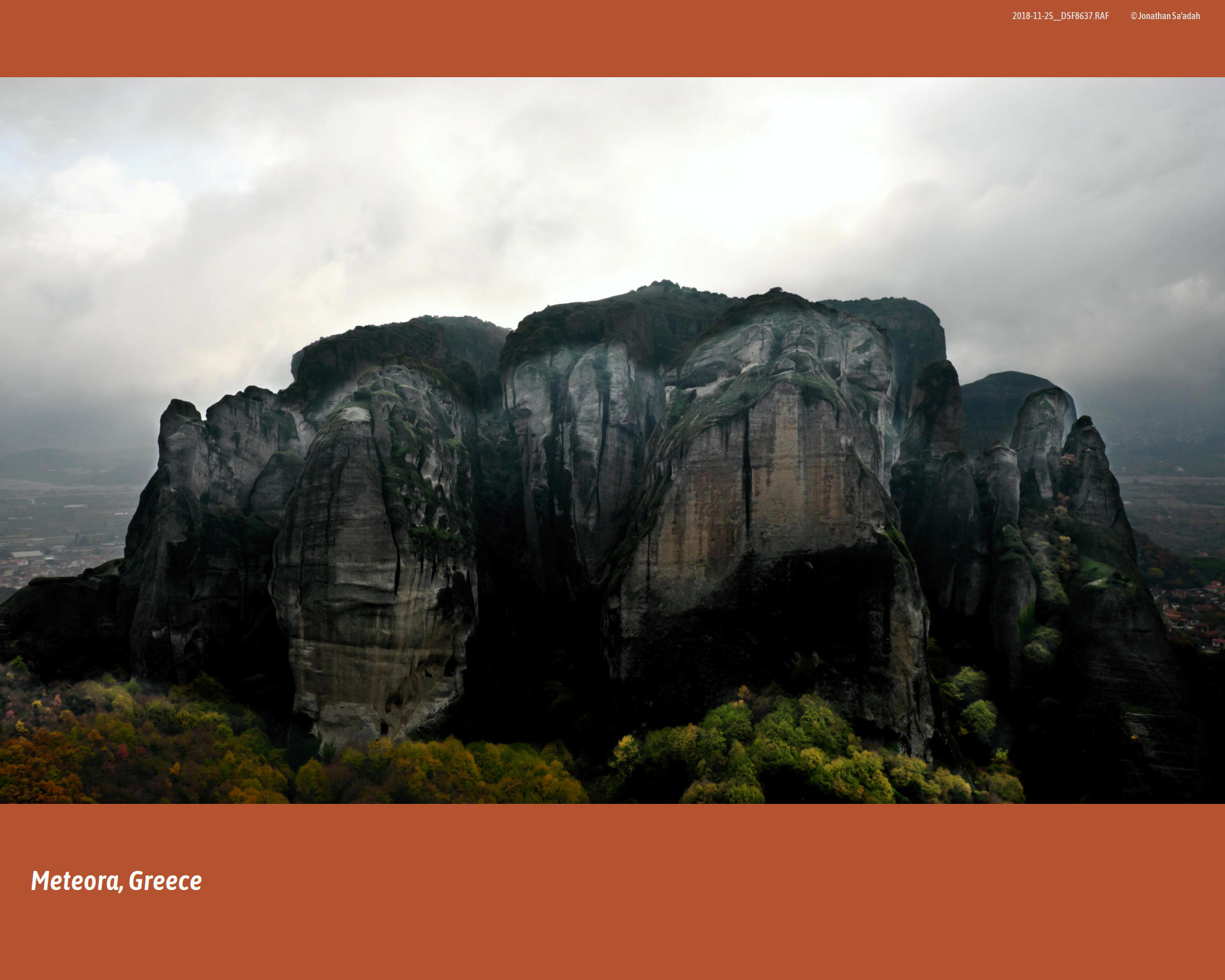
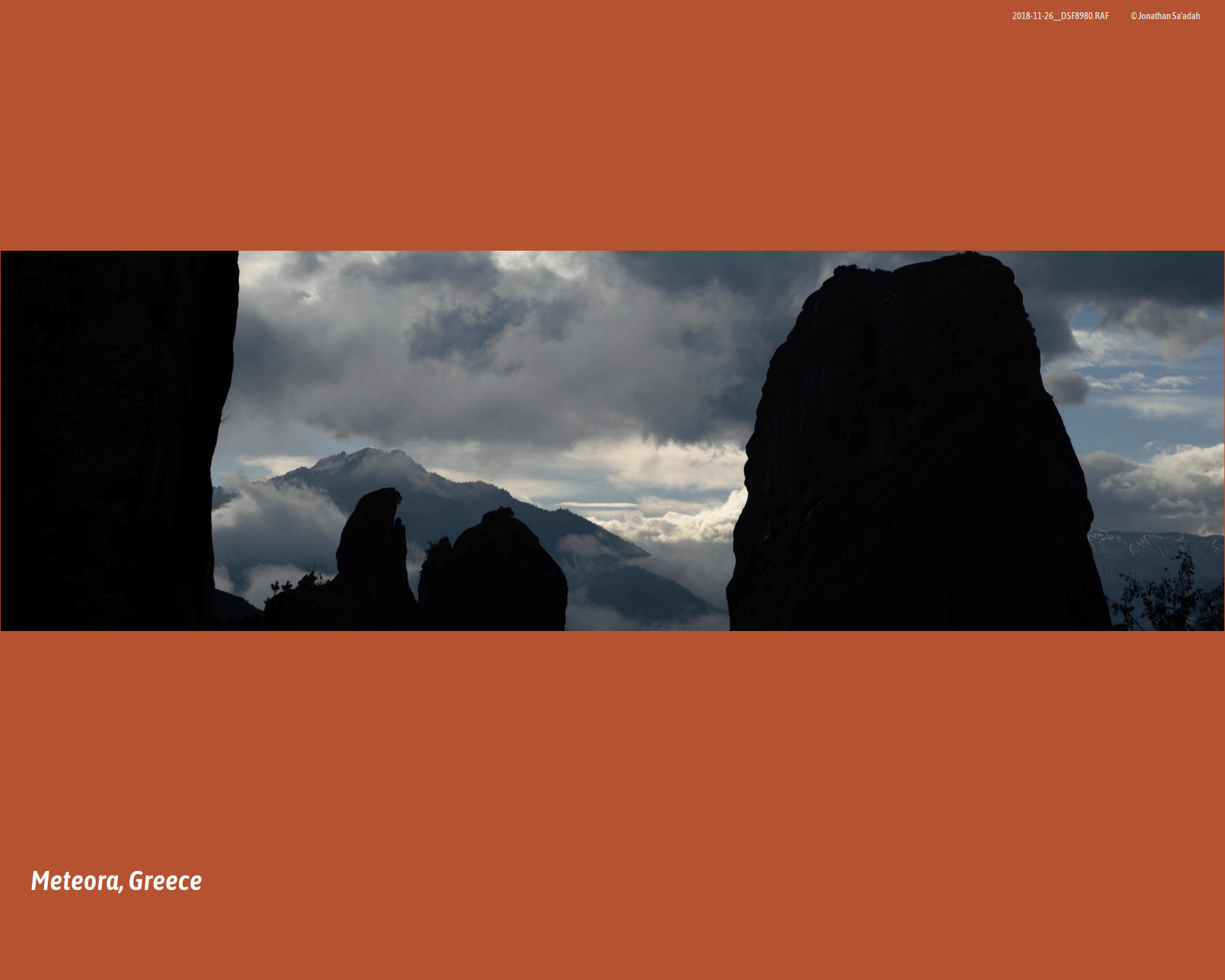
As the sun rose higher, the fog began to thin, tearing open in slow, luminous veils that revealed vertical sandstone columns, their flanks slick and dark from the night’s moisture.
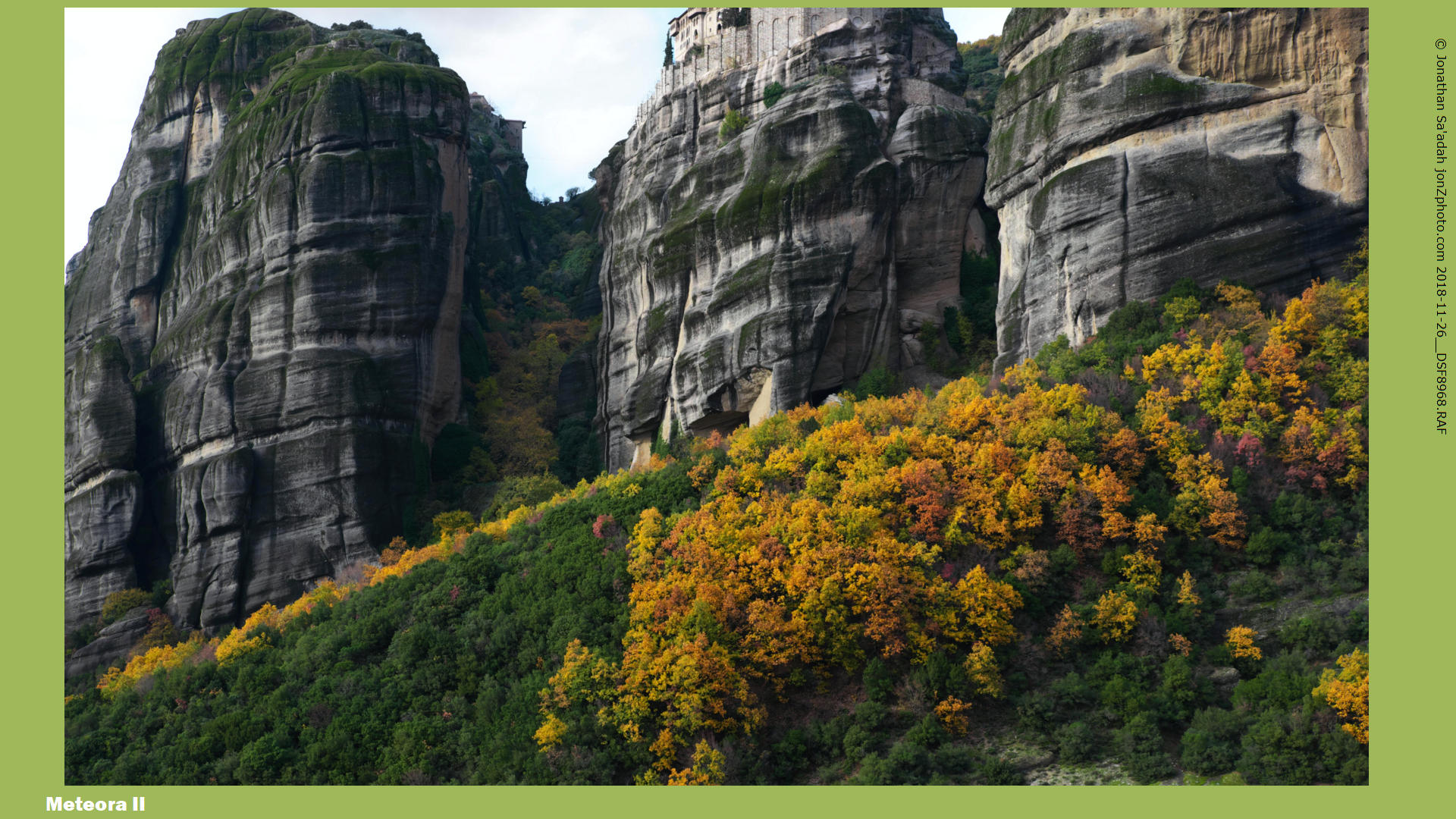
These towers were born some 60 million years ago, when a vast river emptied into an inland sea and left behind a thick delta of sand and stone that erosion later carved into cliffs and pinnacles. In that shifting light, each rock appeared to detach from the earth itself, justifying the medieval monks’ sense that this was not simply landscape, but a kind of natural ladder between ground and sky.
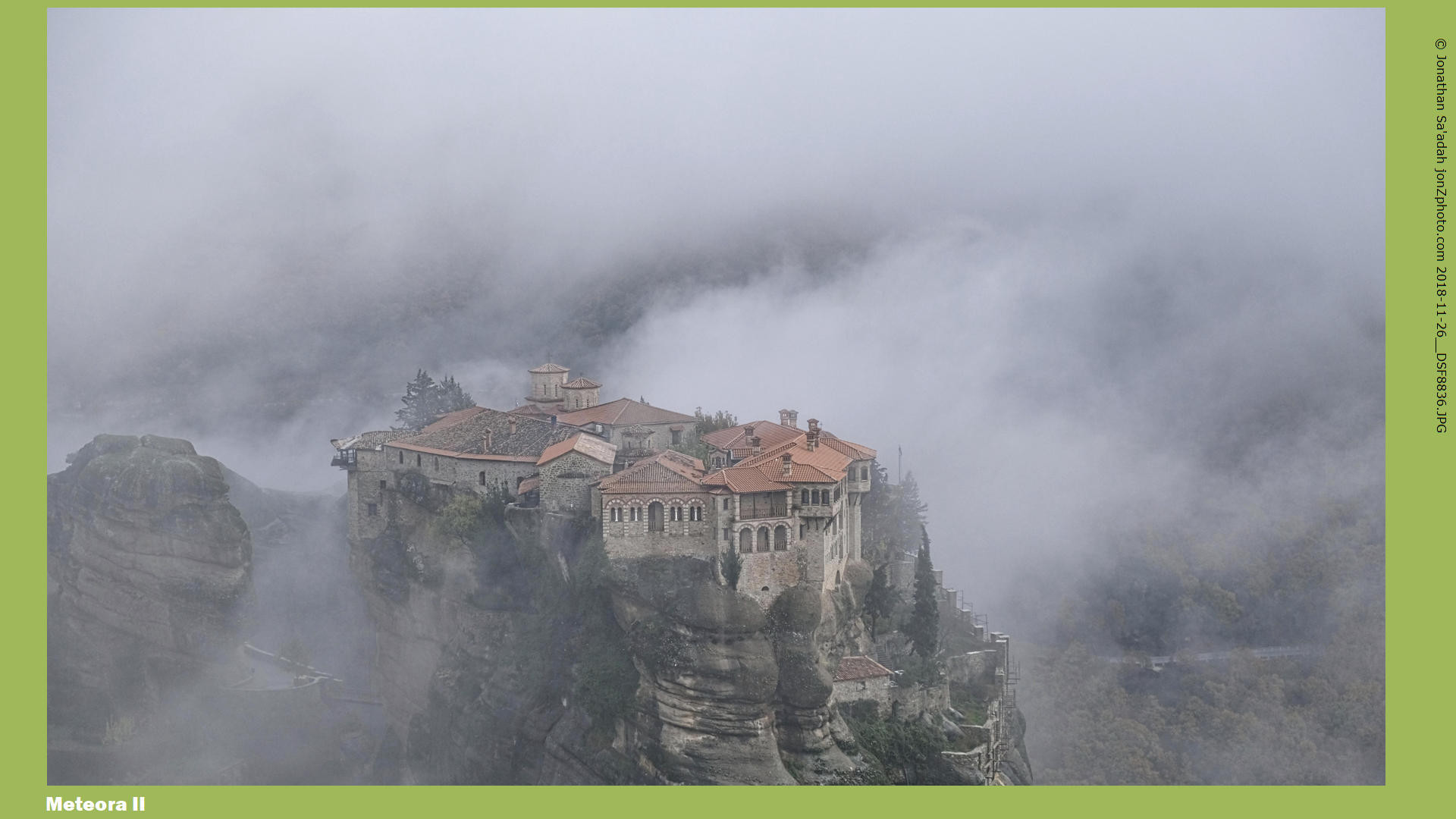
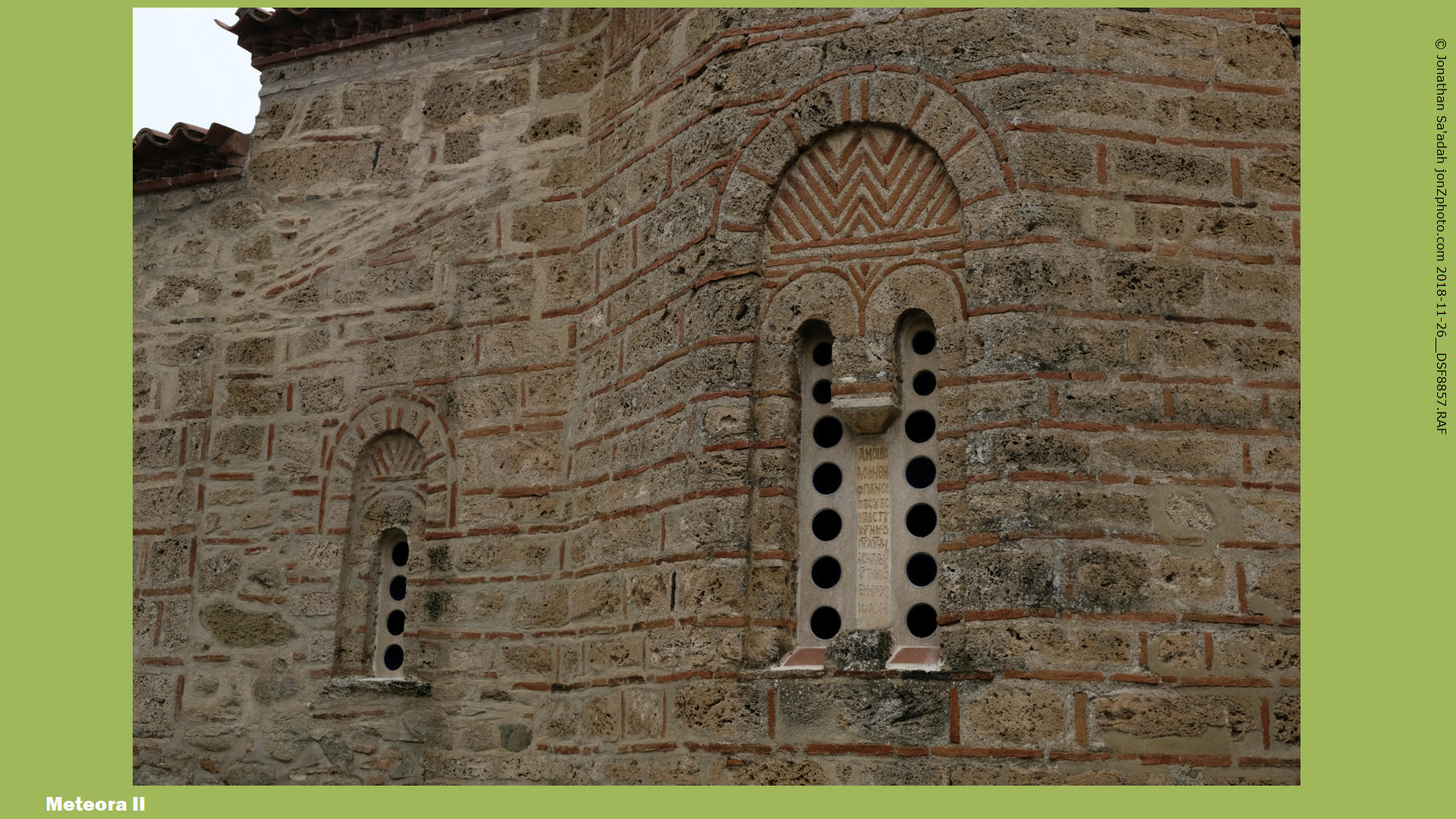
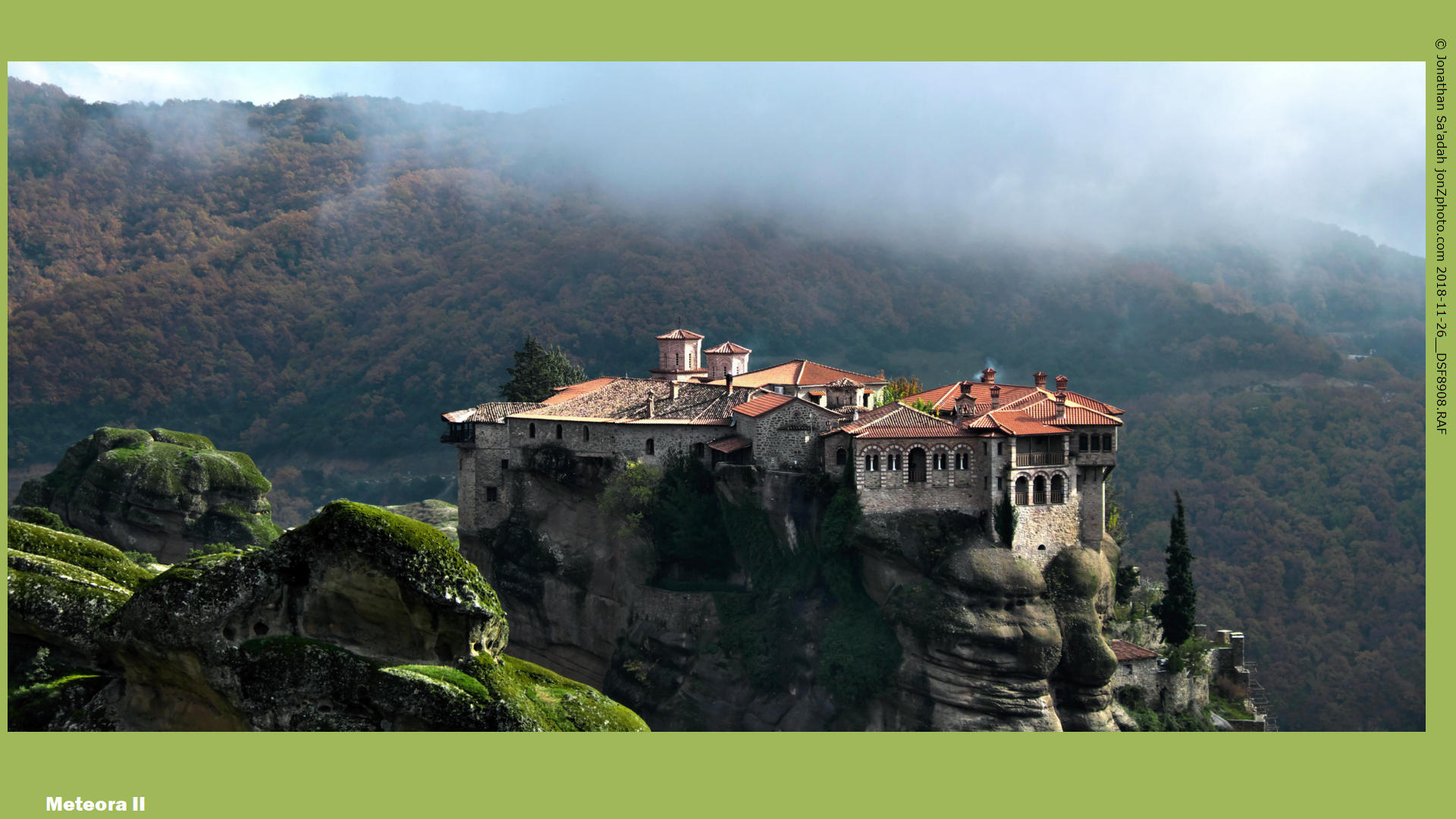
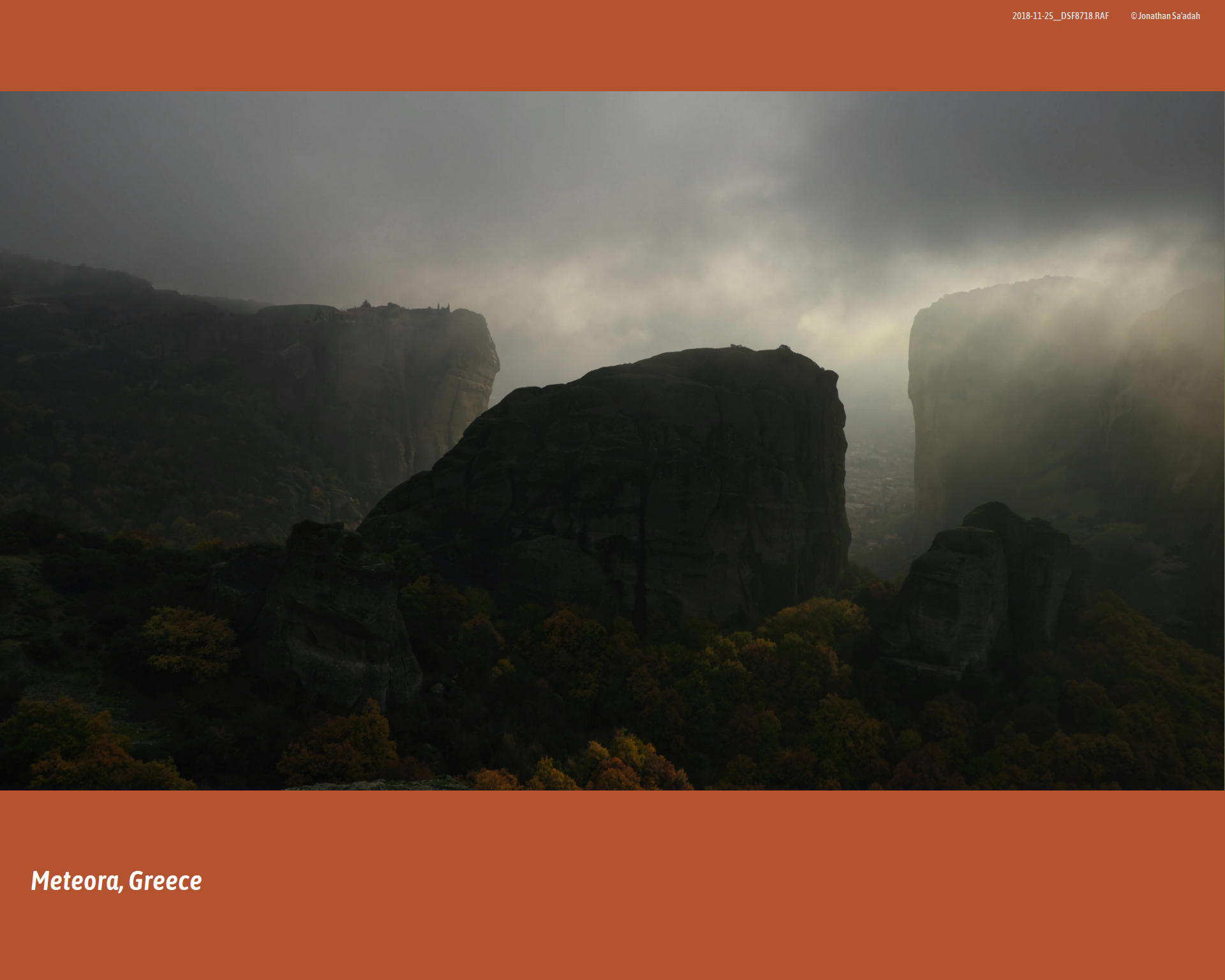
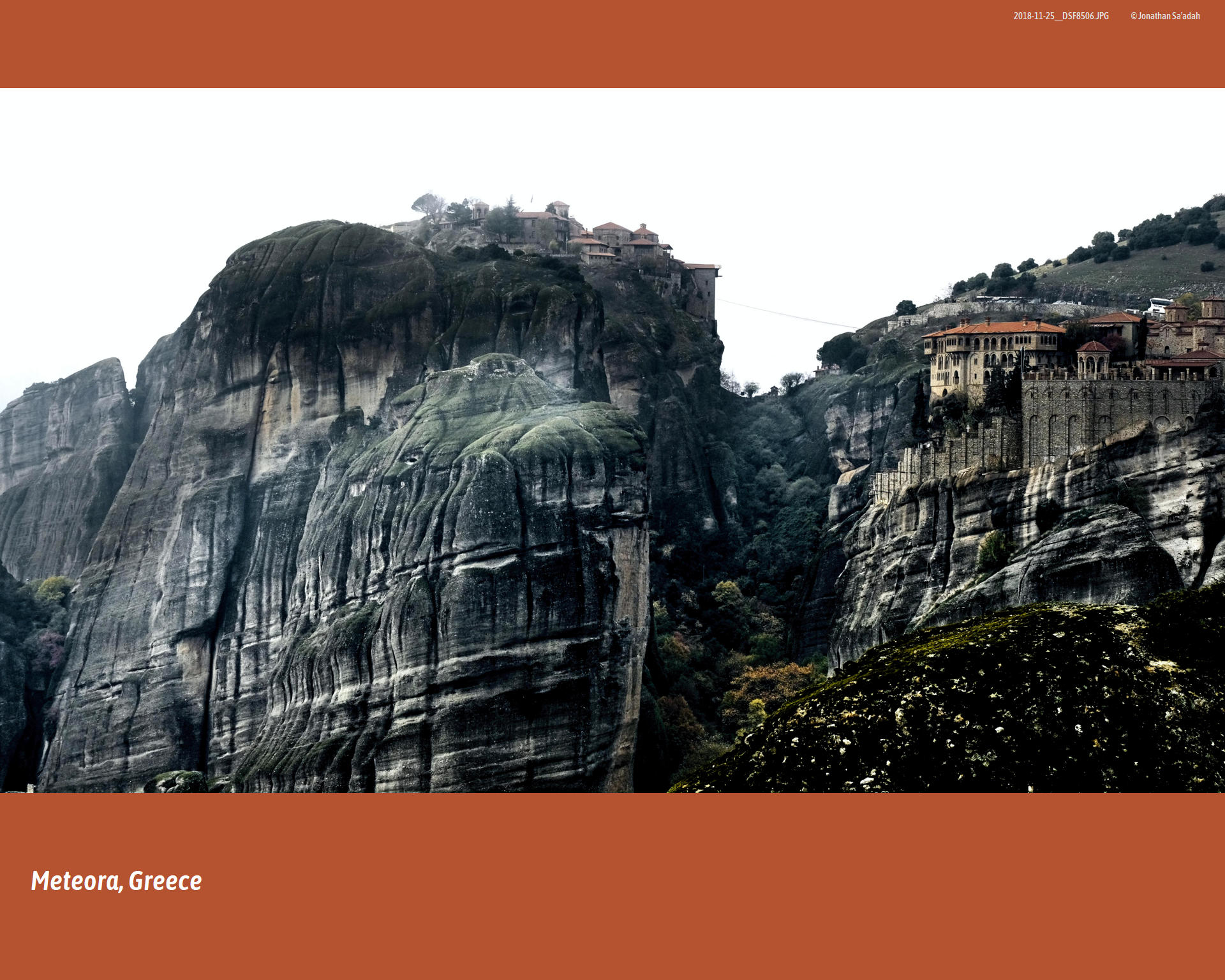
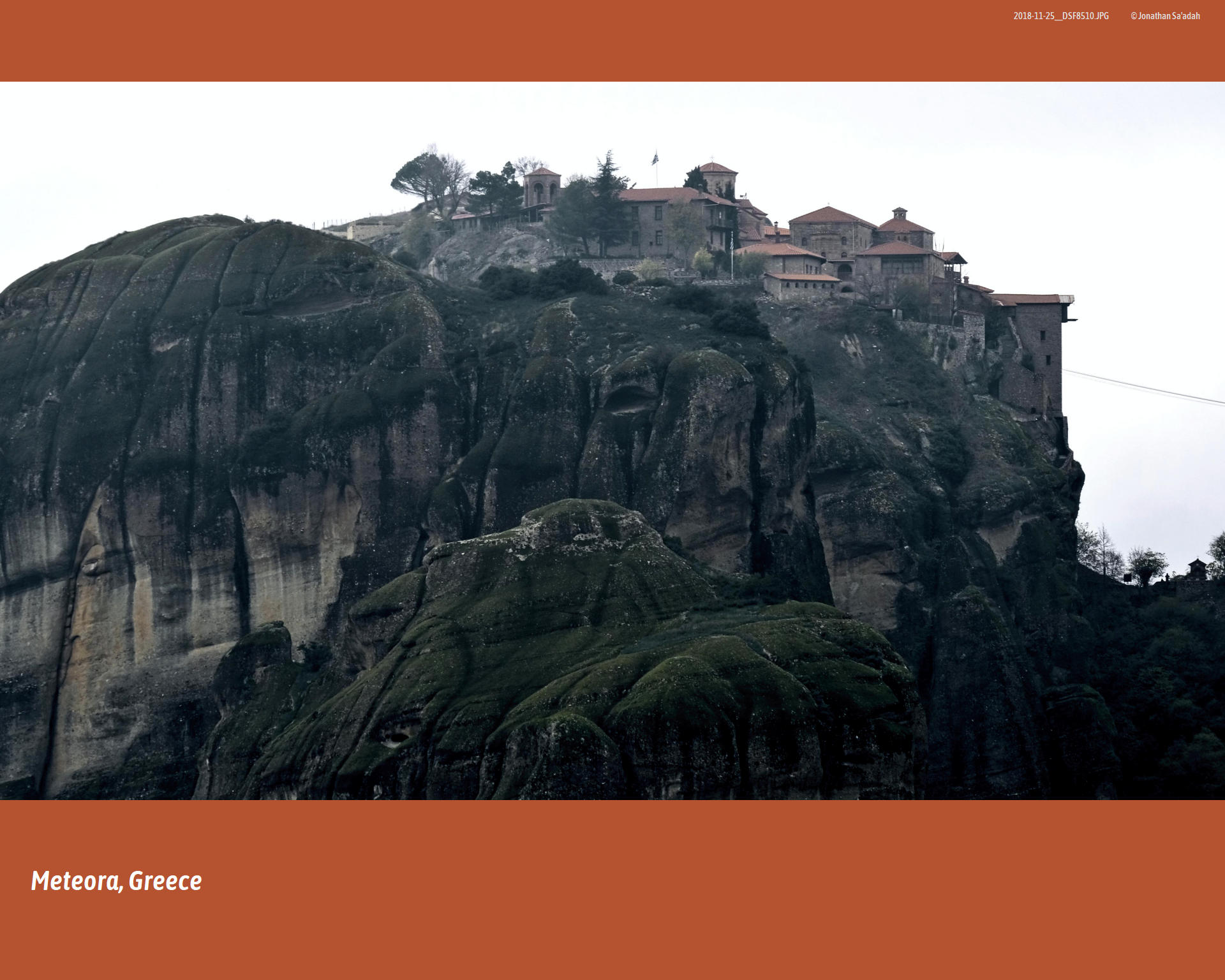
High on the cliffs, a monastery emerged from the mist: a cluster of ochre walls and red-tile roofs clinging to the summit as if it had grown from the stone. In the 14th century, Athanasios Koinovitis, later known as Athanasios the Meteorite, chose one of these broad rock platforms to found the Great Meteoron, hauling every beam and stone up the sheer face by rope and ladder. The isolation offered protection in that age of raids and political upheaval; access once depended on nets and retractable stairways, a deliberate barrier between the cloistered world above and the dangerous valley below.
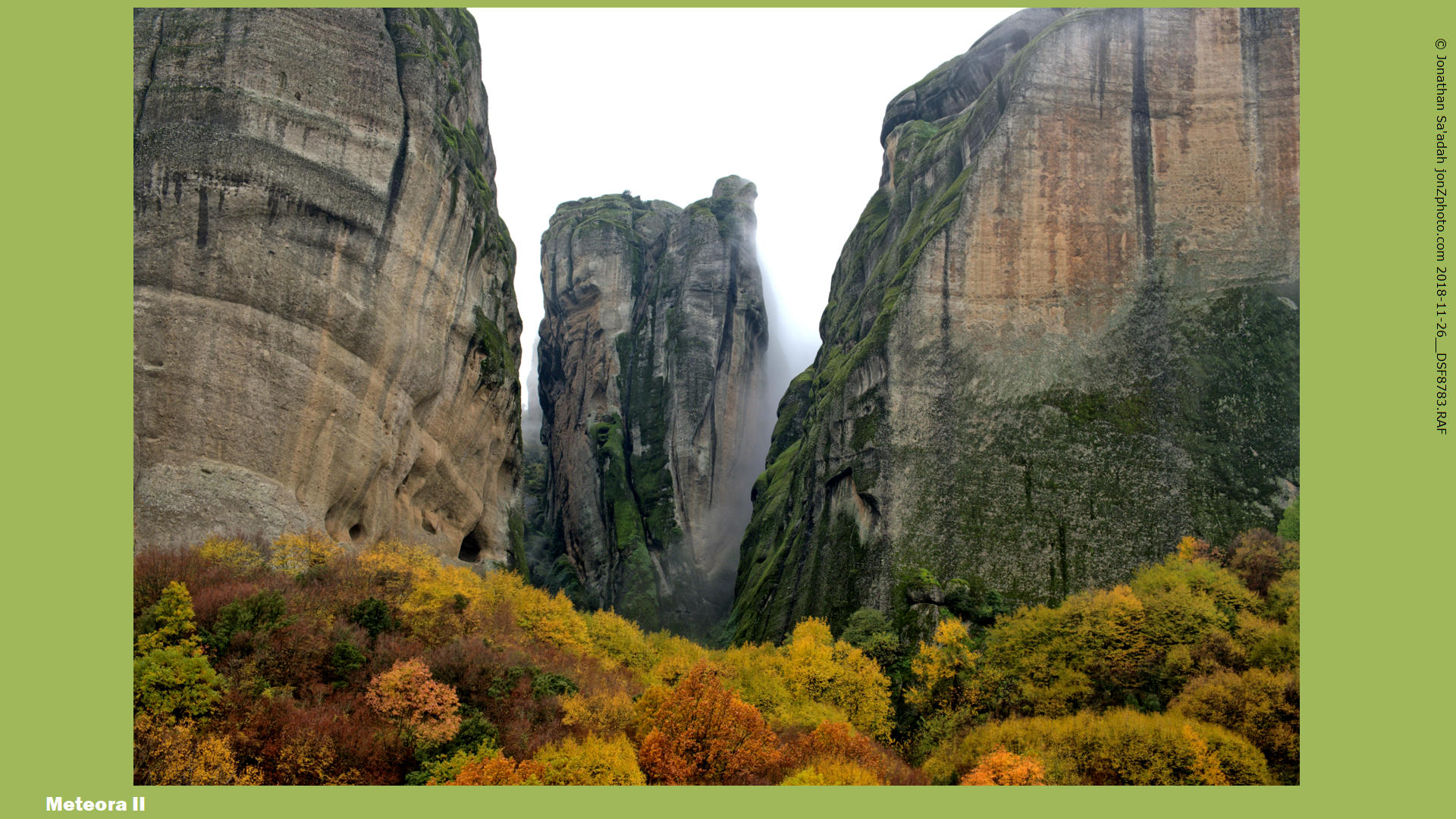
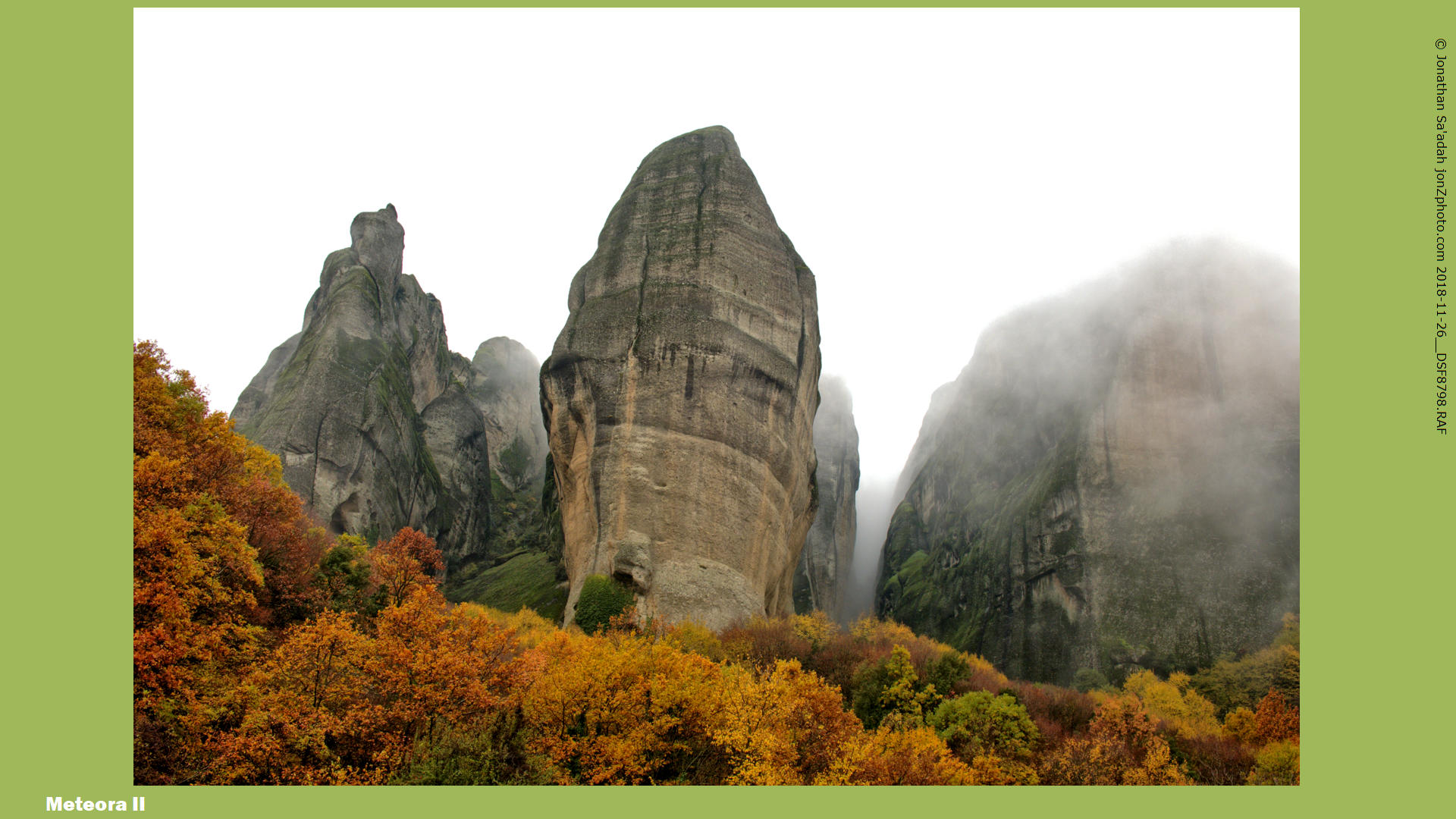
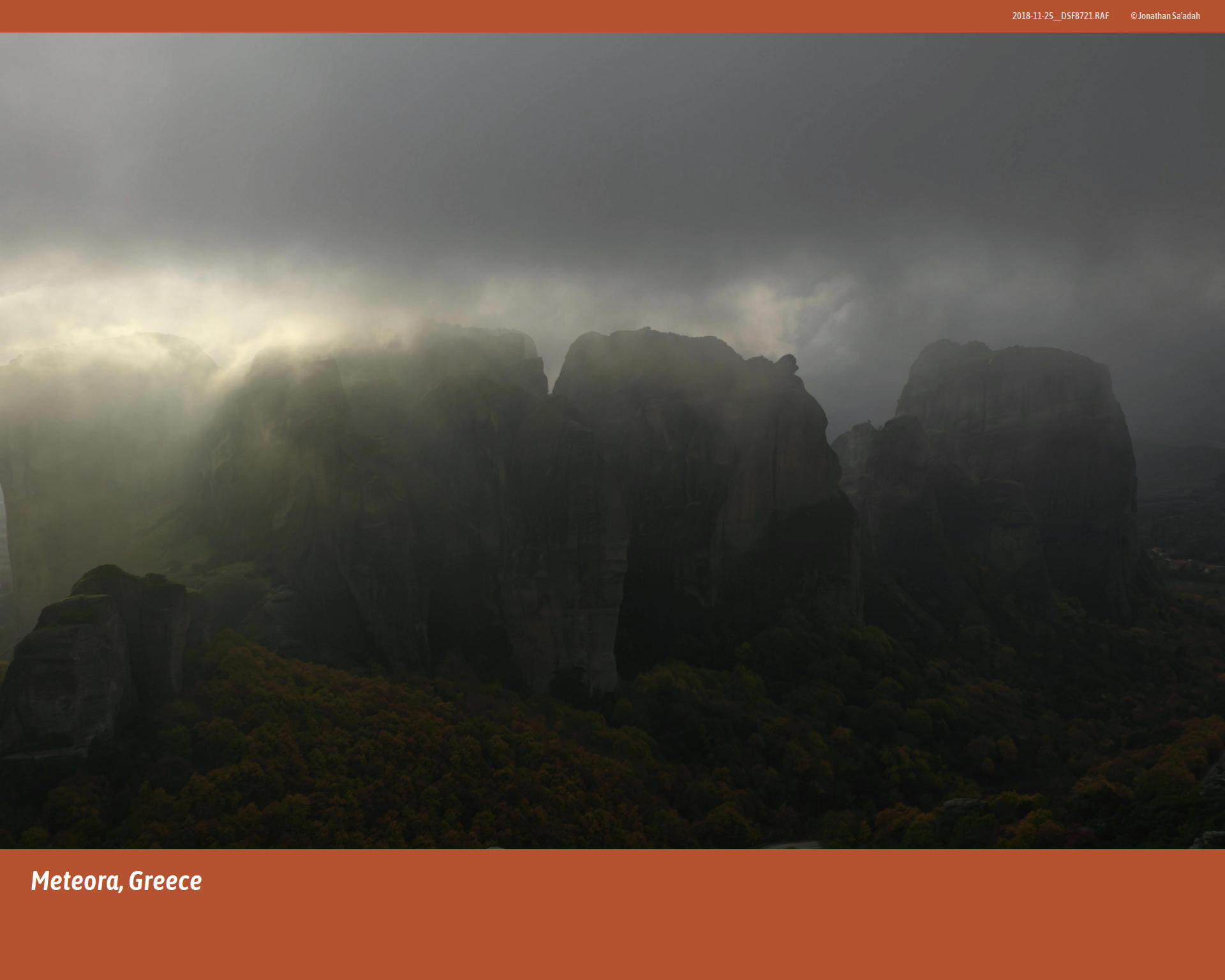
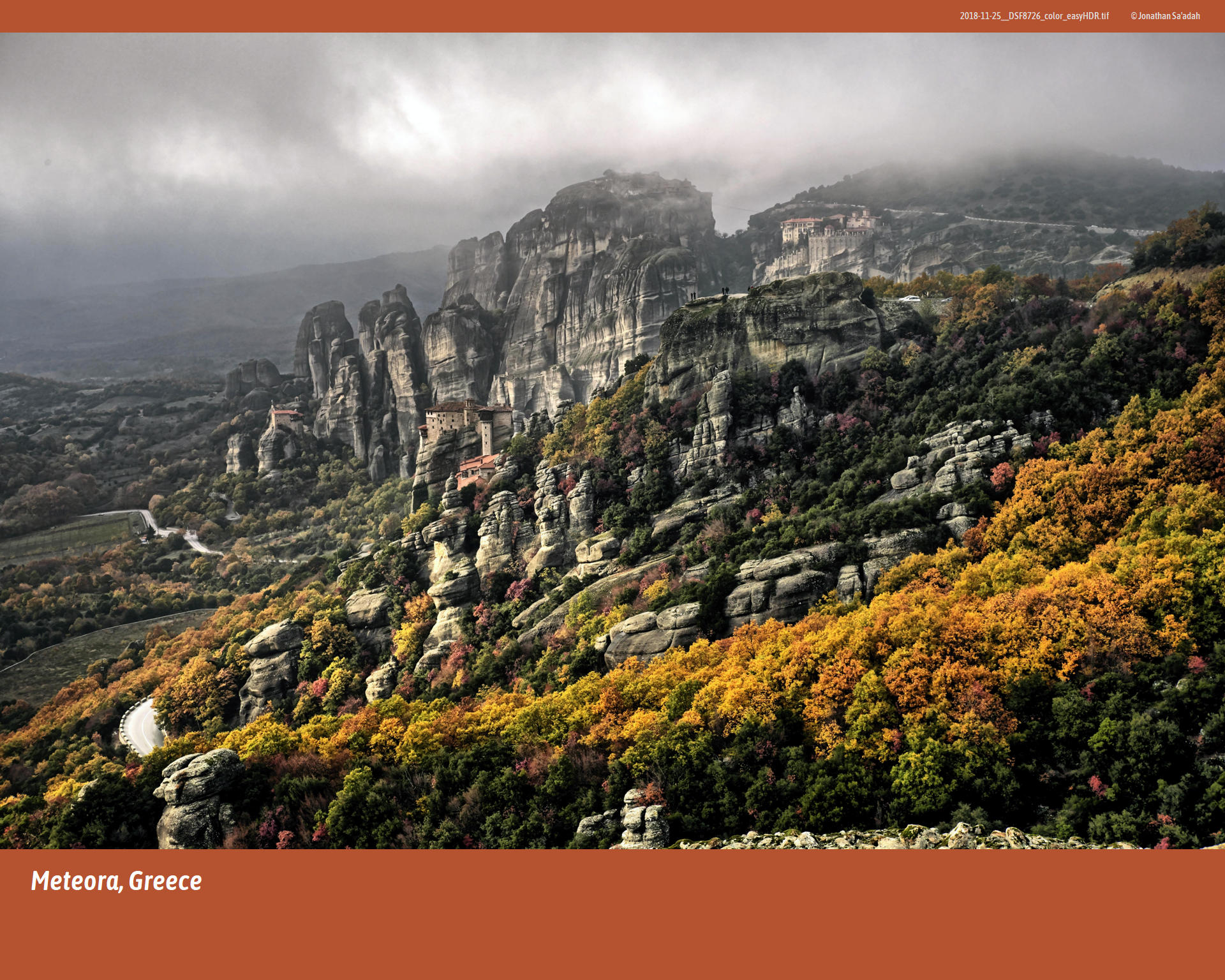
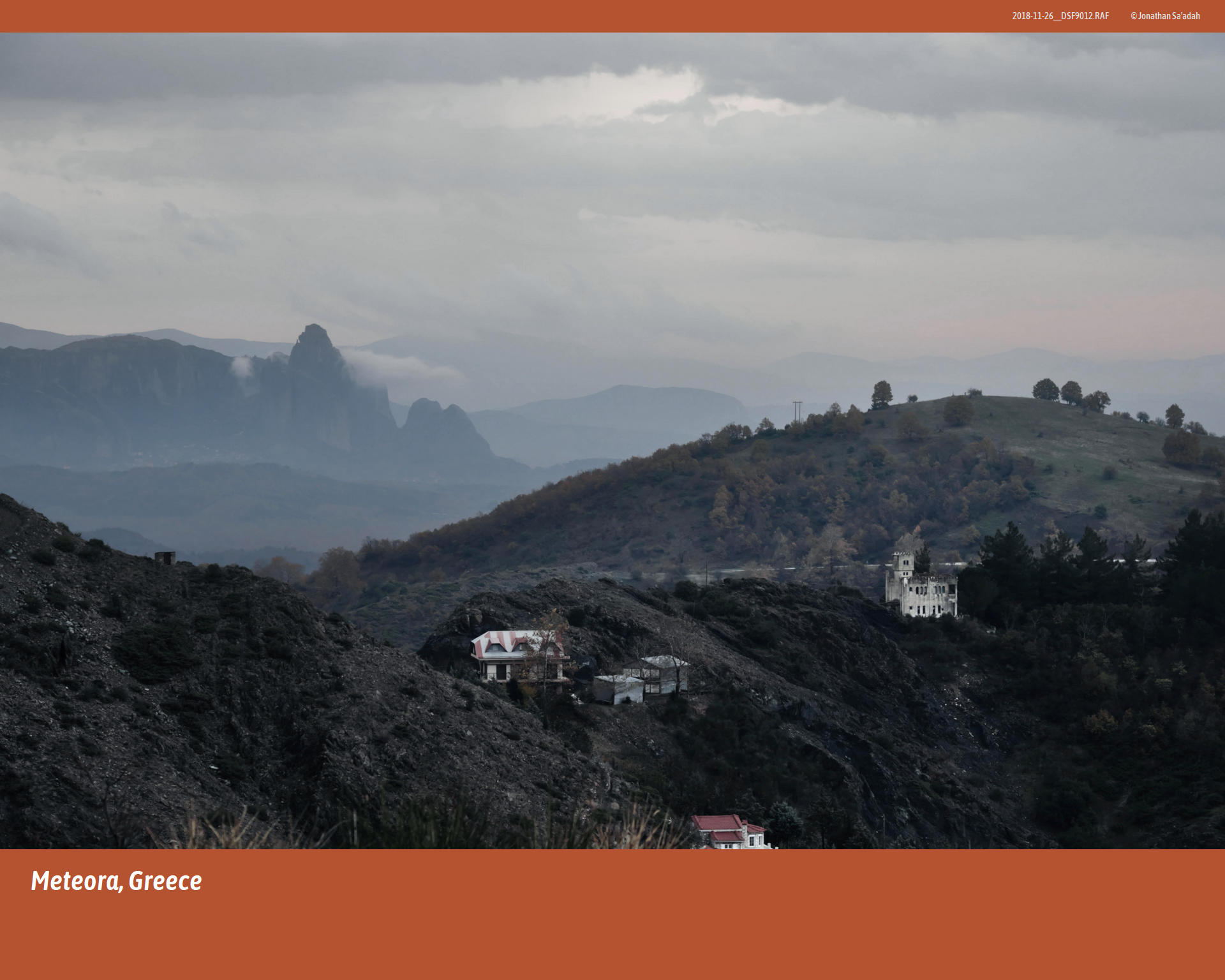
By the time the sun finally broke through, the valley below had turned into a tapestry of autumn color: rust-red oaks, yellowing plane trees, and dark green pines pooling at the bases of the rocks. In the era of Ottoman rule, when these monasteries flourished under sultans who left Orthodox institutions largely intact, the same slopes hid rebels and sheltered refugees; in the 19th and 20th centuries, walls that once enclosed prayer were scarred by shells and mortars.
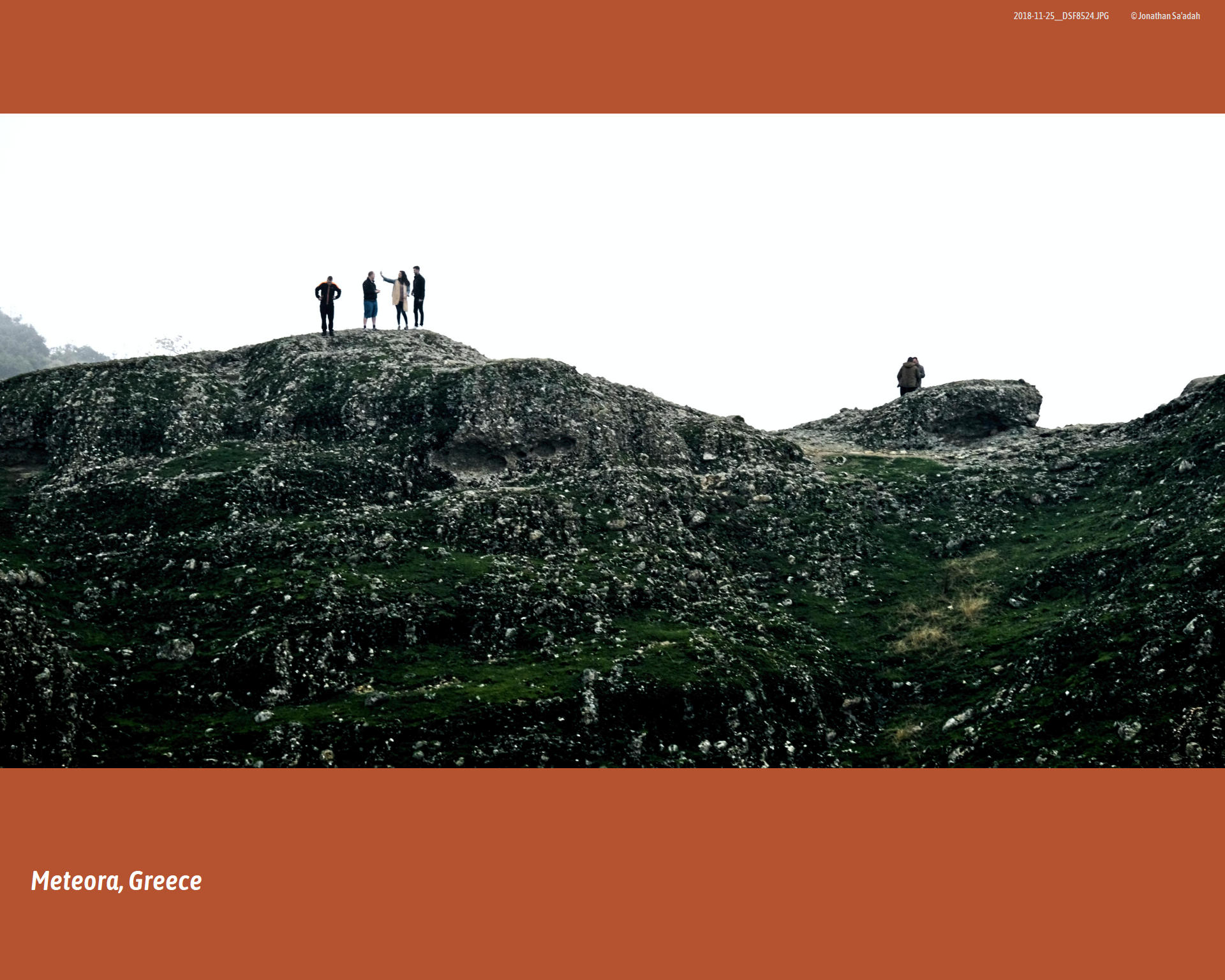
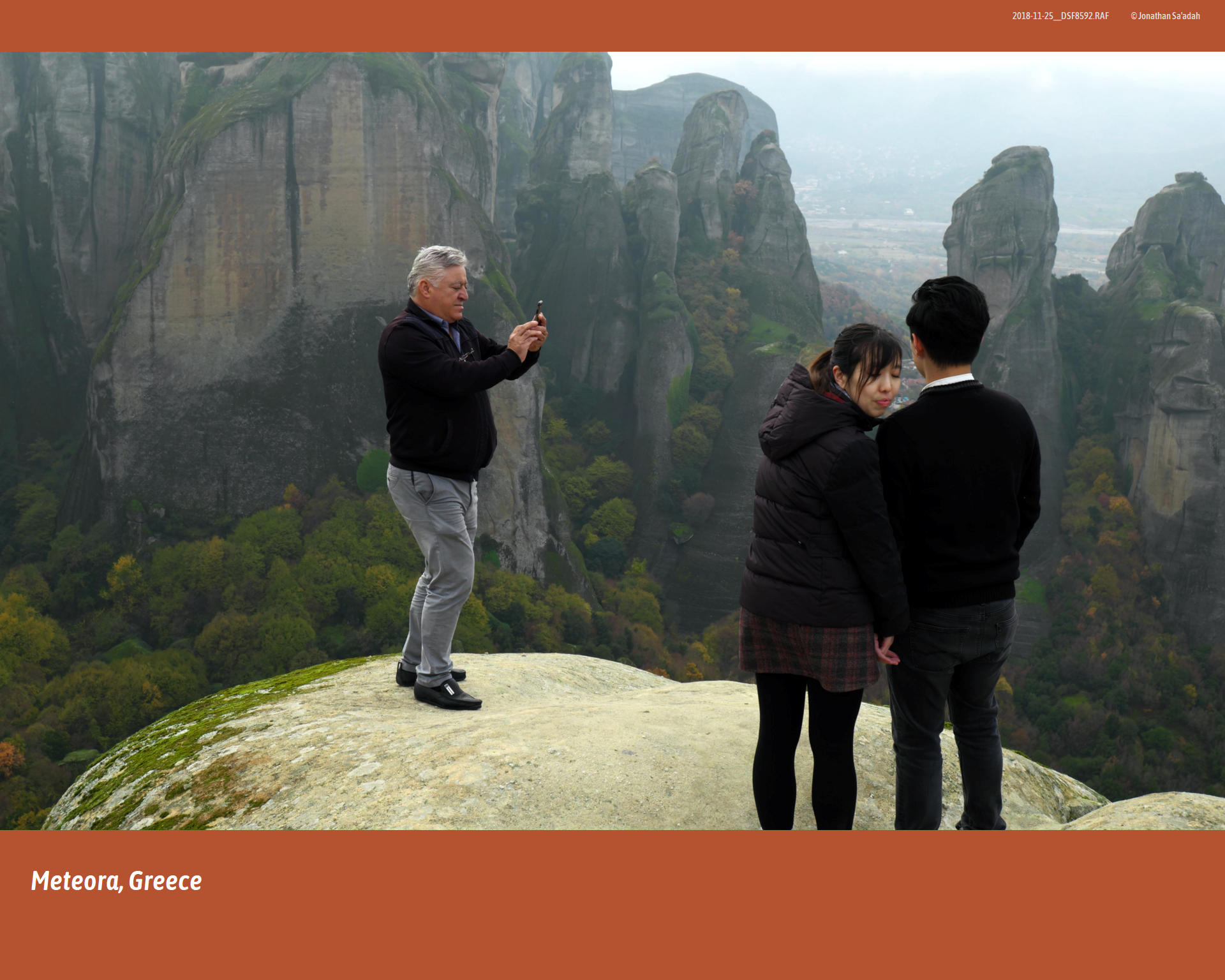
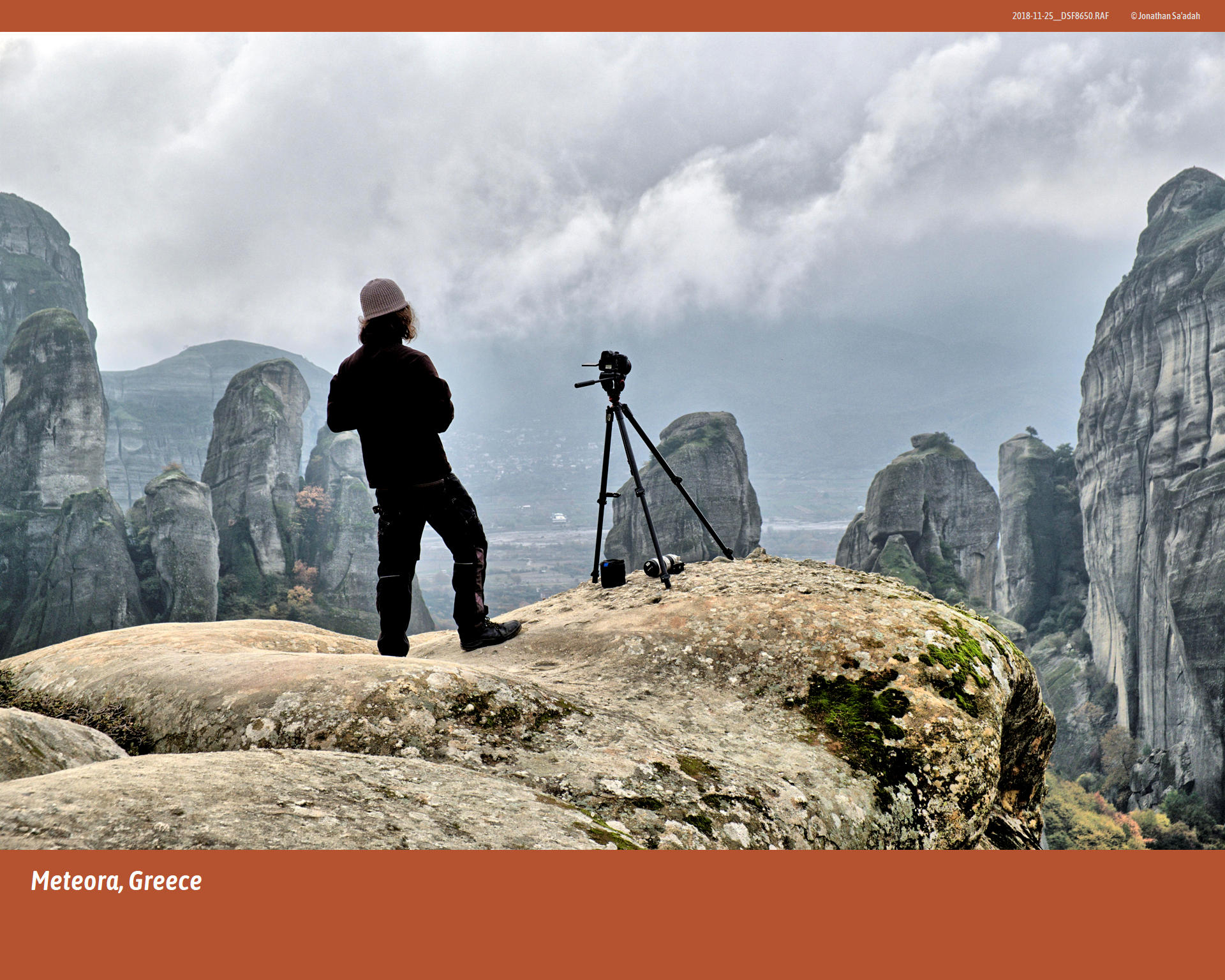
As we moved along the viewpoints that early morning, each gap in the fog offered a new alignment of rock, monastery, and forest, a sequence of tableaux that seemed staged by the weather itself. Looking out across the chasm to another monastery perched on its own pillar, it was possible to imagine the first hermits edging out of their caves at dawn, watching mist lift from this same plain and reading it as a sign – of judgment, of mercy, of simple passing time – in a landscape that felt charged with meaning. Today, buses replace mules and carved stairways replace rope ladders, but the choreography of fog and light still resists domestication; for a few minutes on that November day, the cliffs and their glowing trees belonged less to the age of mass tourism than to the long, solitary devotion that first drew human beings to live in the air.
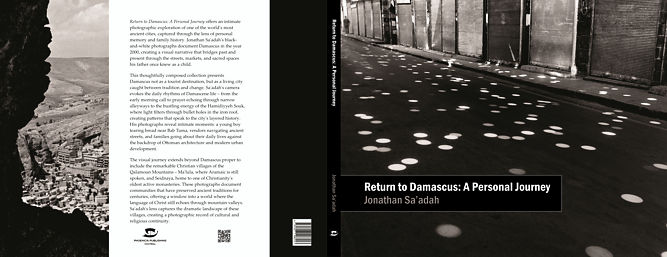
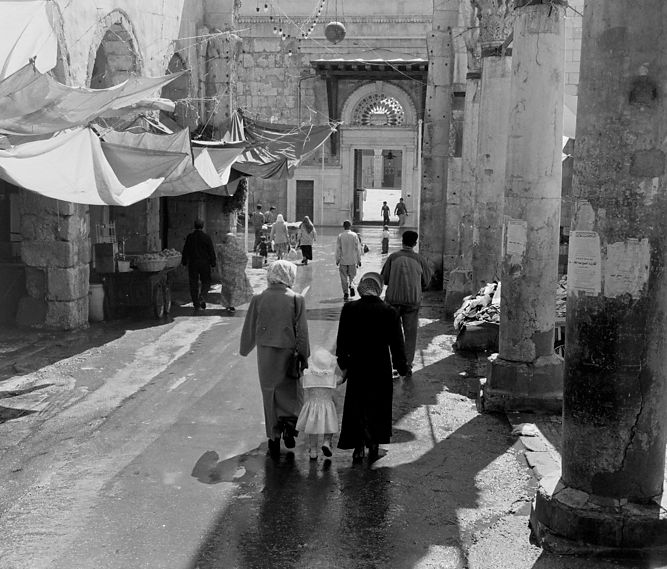
Return to Damascusis my new book of photographs, available for order, that preserves fleeting impressions and the spirit of a place through the lens. Accompanied by brief reflections and memories, the photographs offer a tribute to the place and its people, focusing on enduring character and the subtle interplay of light, architecture, and tradition. Return to Damascus is a quiet celebration of observation and memory, inviting viewers to participate.
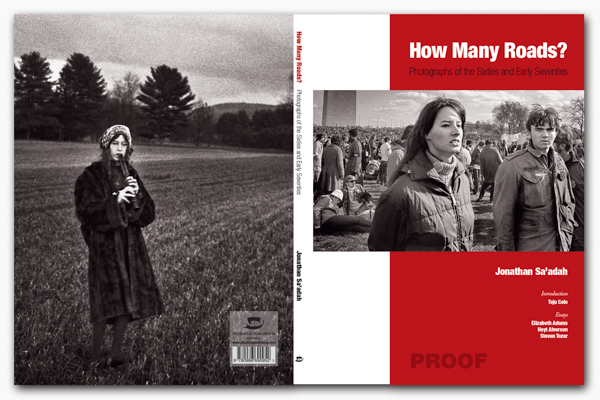
How Many Roads? is a book of photographs by Jonathan Sa'adah, available for order, offering an unglossy but deeply human view of the period from 1968 to 1975 in richly detailed, observant images that have poignant resonance with the present. Ninety-one sepia photographs reproduced with an introduction by Teju Cole, essays by Beth Adams, Hoyt Alverson, and Steven Tozer, and a preface by the photographer.
If you'd like more information, please have a look at this page.






Recent Comments