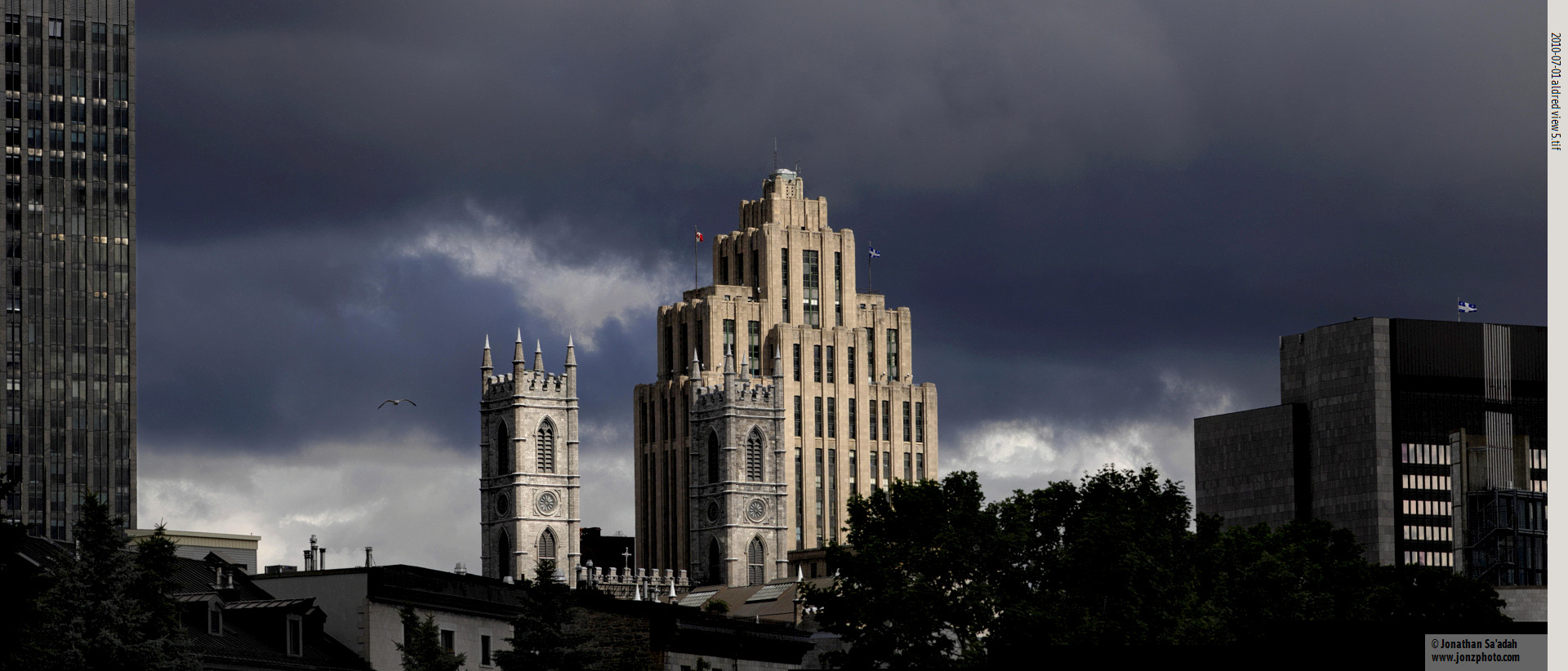
The Art Deco Aldred building is a 94 year-old office tower on Place d’Armes’. It’s Montreal’s own “little Empire State”, completed in the same year as the New York building (1931) but of considerably smaller stature. Ironically, though, it’s the one that hasn’t been dwarfed by surrounding buildings and still stands proudly. That’s not to say that it doesn’t have problems. It’s suffering from the same disease many downtown office towers have contracted since the pandemic – a lot of empty space and the listing by brokers who represent owners eager to get out of the market.
A Living Landmark
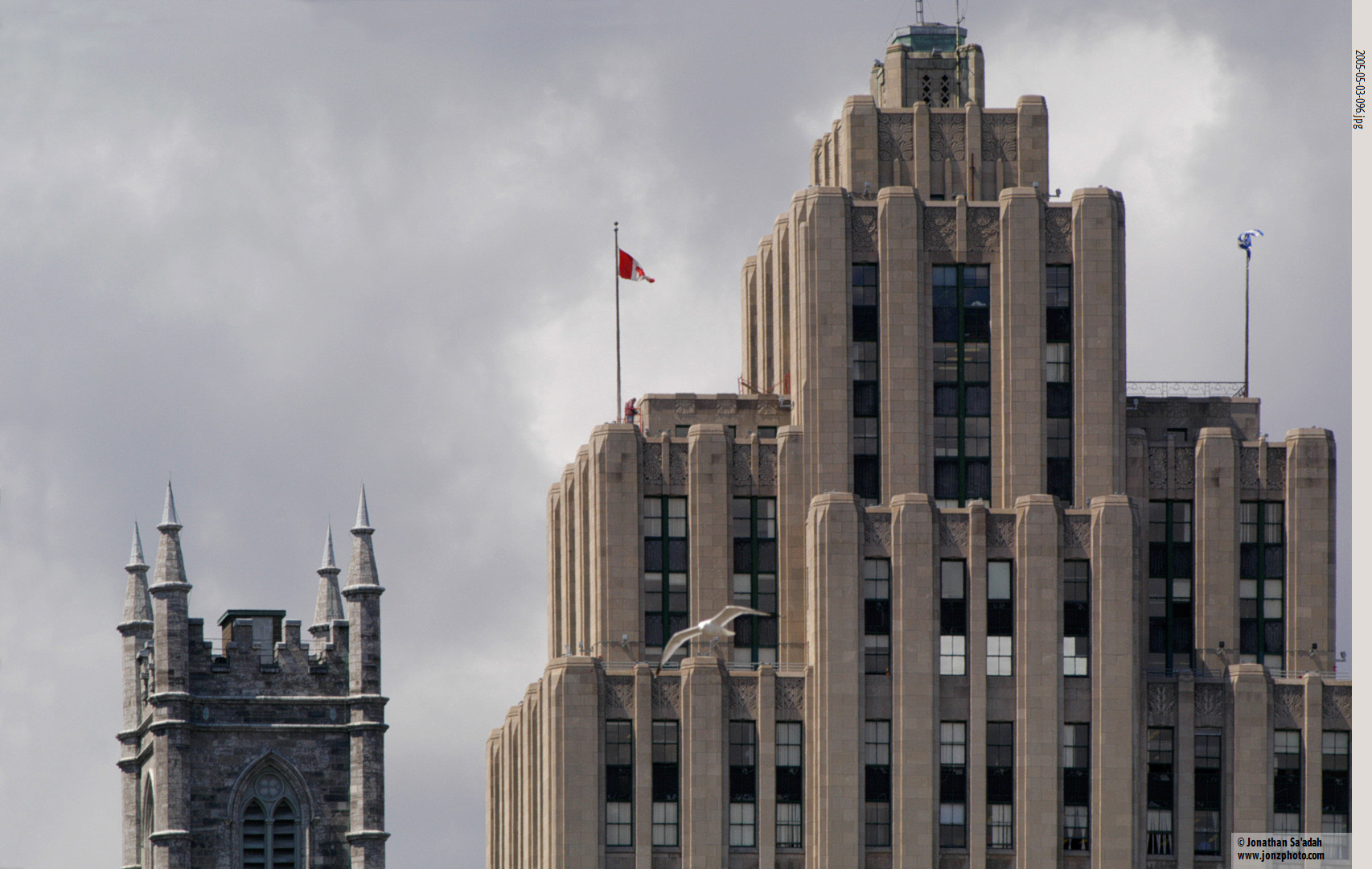
It wasn’t always that way. When it was built it was a proud, if misplaced, statement of financial-district confidence. Architect Ernest Isbell Barott masterminded the setbacks that characterize its stepped shape in order to take advantage of an 1929 Montreal by-law allowing extra height if sunlight reached the square. The move allowed the building enough height to express its modern ambition. From street level you see limestone that mirrors older façades. The building’s massing feels almost ecclesiastical, yet it projects a kind confidence that was probably in short supply during the Depression.
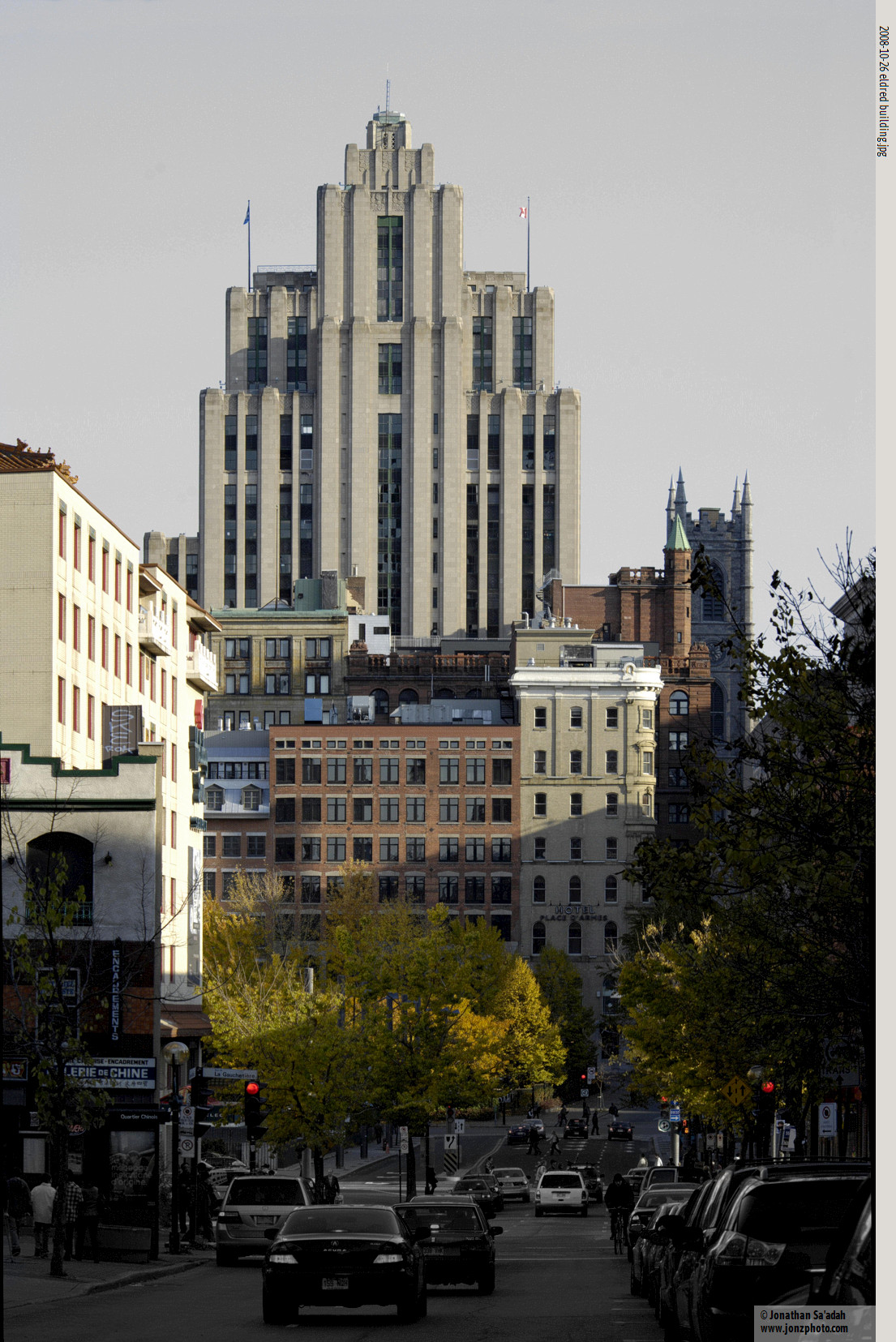
▲ The view looking south on St-Urbain.
Stitching Into Montreal’s Economic Fabric
When the tower opened in the teeth of the Great Depression, its $2.85-million price tag signaled bullish faith in Montreal as Canada’s financial hub. Aldred & Company, a New York finance firm, anchored the top floors; local banks soon clustered nearby. Even today, in its diminished state, real-estate brokers list the address as commanding premium leases. Yet vacancy hovers near 30 percent and it’s touted as an opportunity for residential or boutique-hotel conversion.
That tension mirrors Montreal’s broader economy as the city navigates a post-pandemic recovery. Tourist visits were up 7 percent in 2024 and projected higher for 2025 – but older offices struggle to meet post-pandemic hybrid demands. The Aldred thus sits at the crossroads of heritage preservation and economic reinvention, with no clear plan of where it will go.
▲ Notre-Dame Basilica doesn’t quite match its height. The architect was able to take advantage of a by-law allowing stepped buildings extra height.
Past and Future in the Same Gaze
There’s never a lack of discussion about what to do. Preservationists argue for light-touch retrofits, citing UNESCO principles that balance cultural value with economic use. Urbanists argue for adaptive reuse to keep the historic city core alive. But in any case, the building seems perfectly at ease with being photographed and appreciated.
An Unmistakable Part of Montreal
For me, I’m lucky – I don’t have to worry about its elevator systems or quirky partitions, or any of the many other worries that haunt building owners. For me The Aldred is a 96-metre miniature gem we can honor in its Art Deco glory while still debating office-to-housing policy. I appreciate its confident limestone ribs and see it as being an unmistakable part of Montreal.
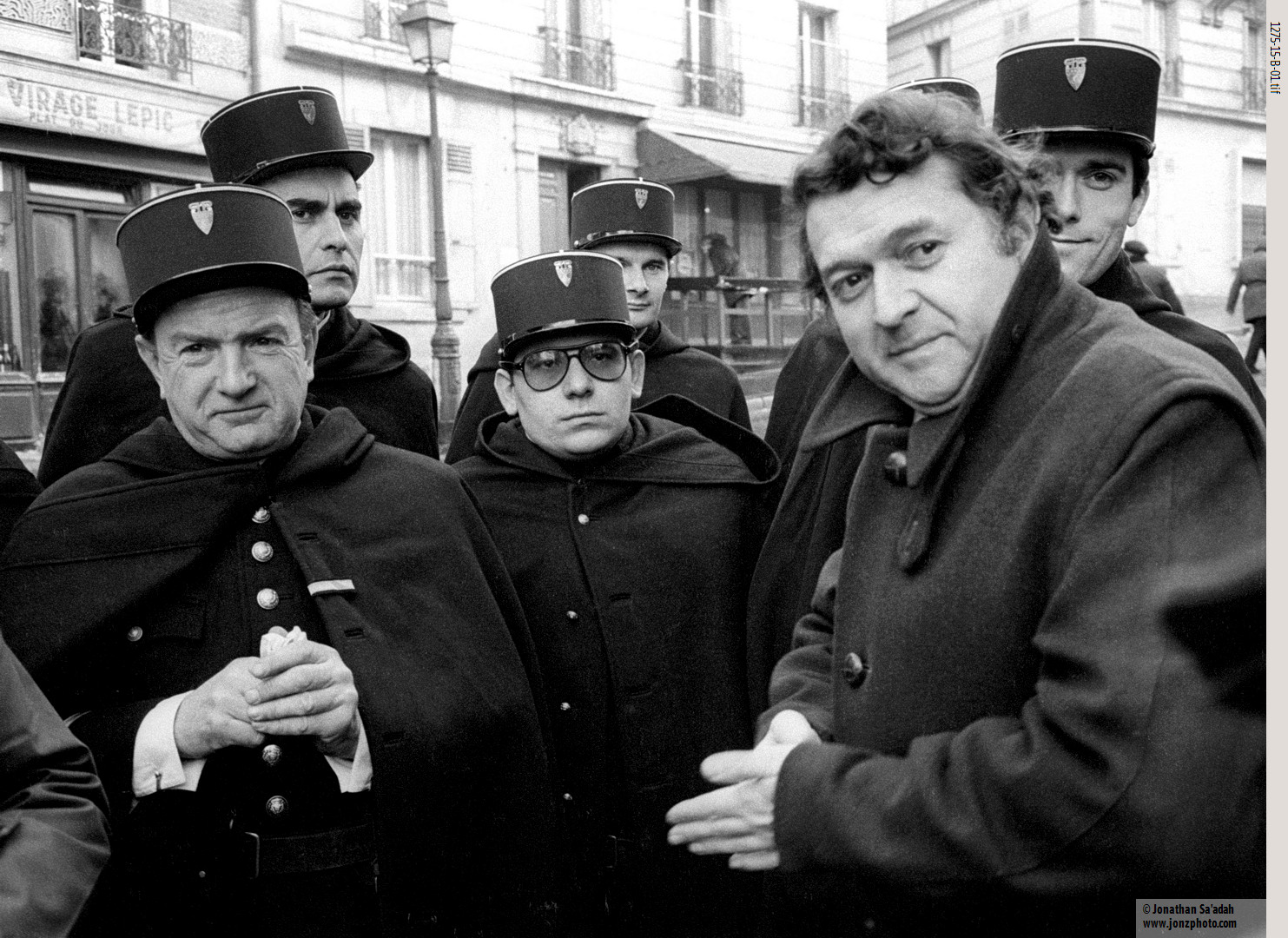
When Joseph Losey set out to make M Klein in 1976, he turned to one of Europe’s most celebrated art directors, Alexandre Trauner, to help bring wartime Paris to life. Their collaboration on this film was not just a meeting of two accomplished professionals, but a convergence of personal histories and artistic philosophies that shaped the film’s haunting atmosphere and visual authenticity.
The Art Director’s Legacy
Alexandre Trauner was already a legend in the world of film design by the time he joined M Klein. Trained as a painter in Hungary, Trauner had built a career in France, working with some of the greatest directors of his era. His credits included an Oscar for Billy Wilder’s The Apartment and a reputation as the “dean of European art directors.” But for Trauner, M Klein was more than another prestigious project – it was deeply personal. Born Sándor Trau, he was a Hungarian Jew who had fled anti-Semitism in Hungary, only to face it again in Nazi-occupied France, where he went underground to survive.
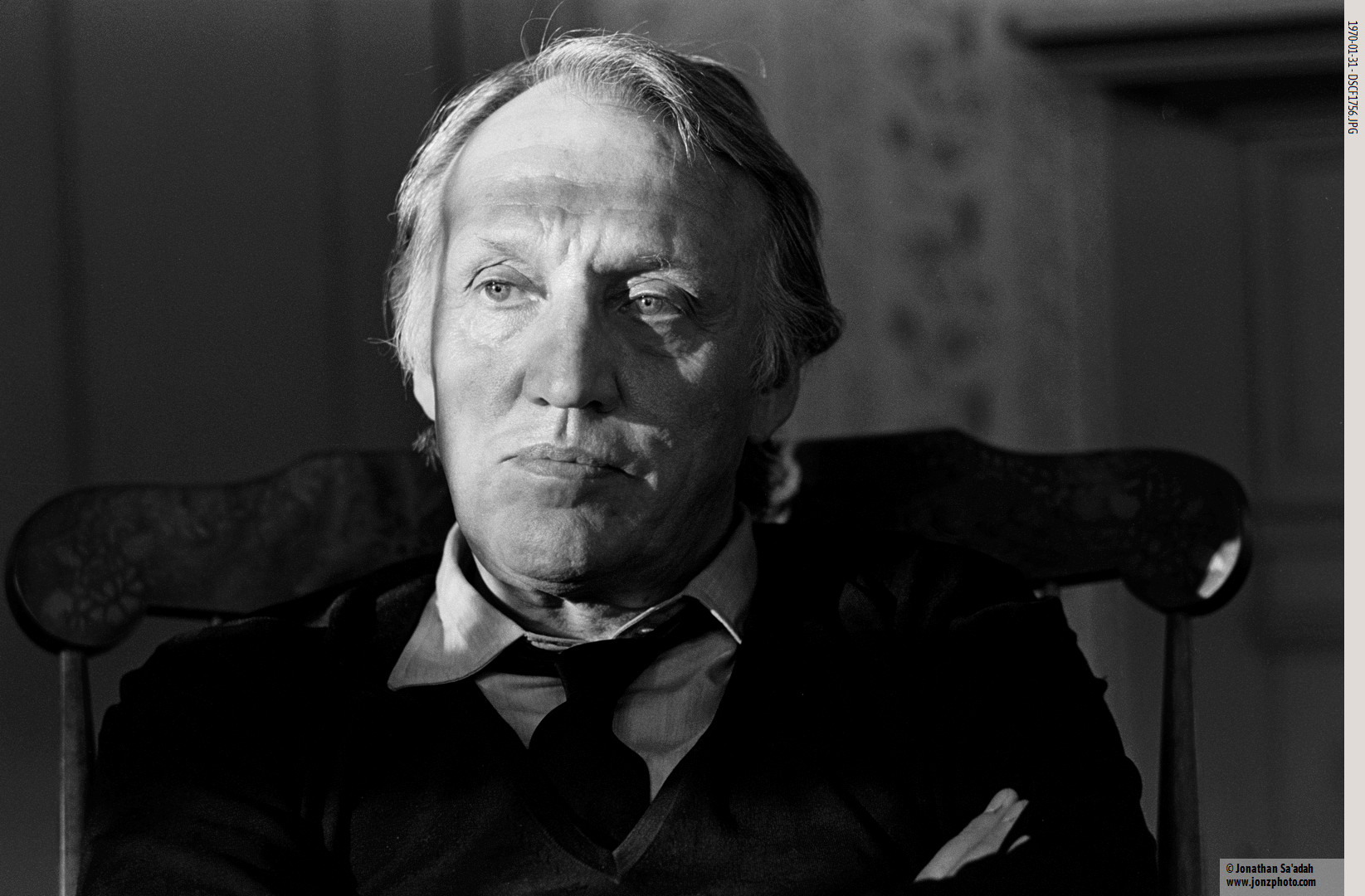
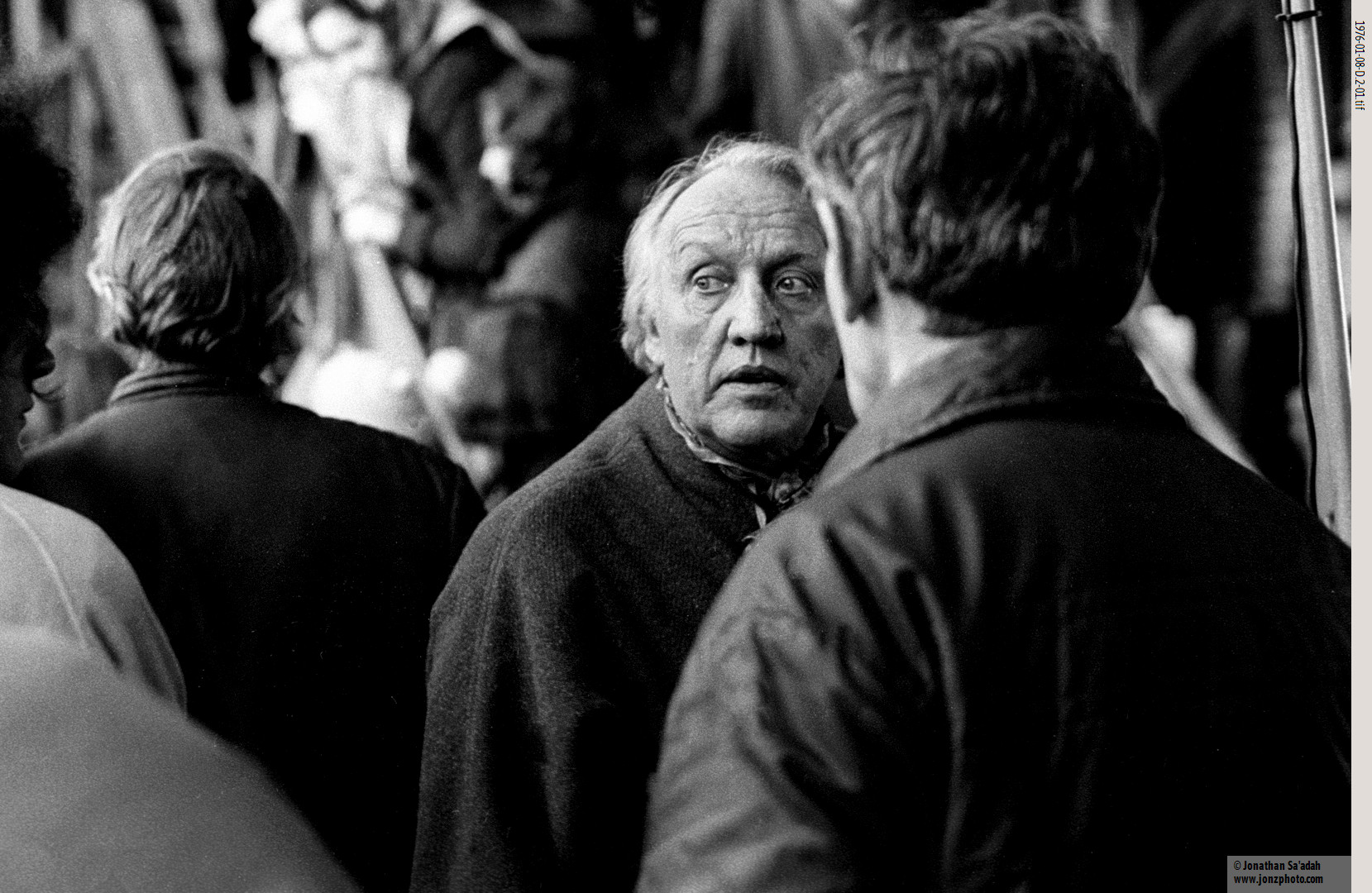
▲ Trademark Trauner Alexandre Trauner had nothing to prove at this point in his career. As a Jewish young man in Hungary he fled the right-wing authoritarian regime of Miklós Horthy, only to face the same situation in Paris when the Nazis captured the city.
Building the World of M Klein
Losey’s vision for M Klein demanded a level of realism and atmosphere that only a master like Trauner could deliver. The film was shot both in the controlled environment of Studios de Boulogne and on locations throughout Paris. While Losey preferred the unpredictability and grit of real locations, he grudgingly acknowledged the advantages of studio work: flexibility, control over lighting, and the ability to reconfigure sets as needed. Trauner’s skill lay in making these studio sets feel as authentic and lived-in as the city streets outside.
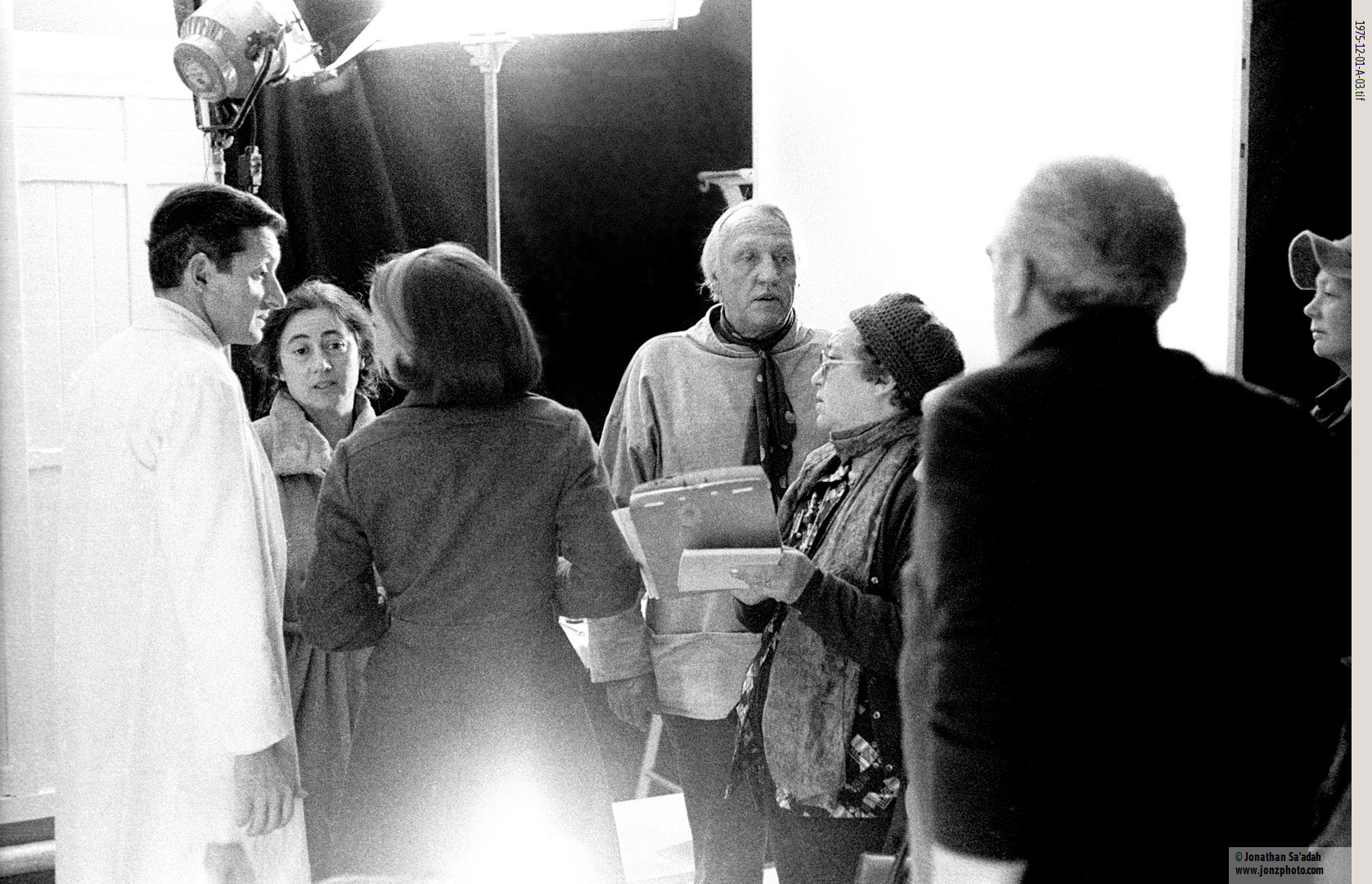
▲ Trauner with assistants surveying part of Stage A at Studios de Boulogne. In 1976 this was the leading French film studio, hosting many French and American productions.
Studio Mastery: Trauner and his team transformed the cavernous Stage A at Boulogne into convincing interiors, using movable walls and ceilings to create dynamic spaces for the camera and actors.
Location Expertise: Trauner’s intimate knowledge of Paris allowed him to identify and secure locations that captured the city’s wartime character, from rundown tenements to grand public buildings.
Visual Storytelling: Trauner’s approach was less about literal storyboarding and more about mood, color, and the “dressing” of the set. With Losey’s input he translated the screenplay’s emotional cues into physical spaces that reflected the film’s themes of identity, suspicion, and moral ambiguity.
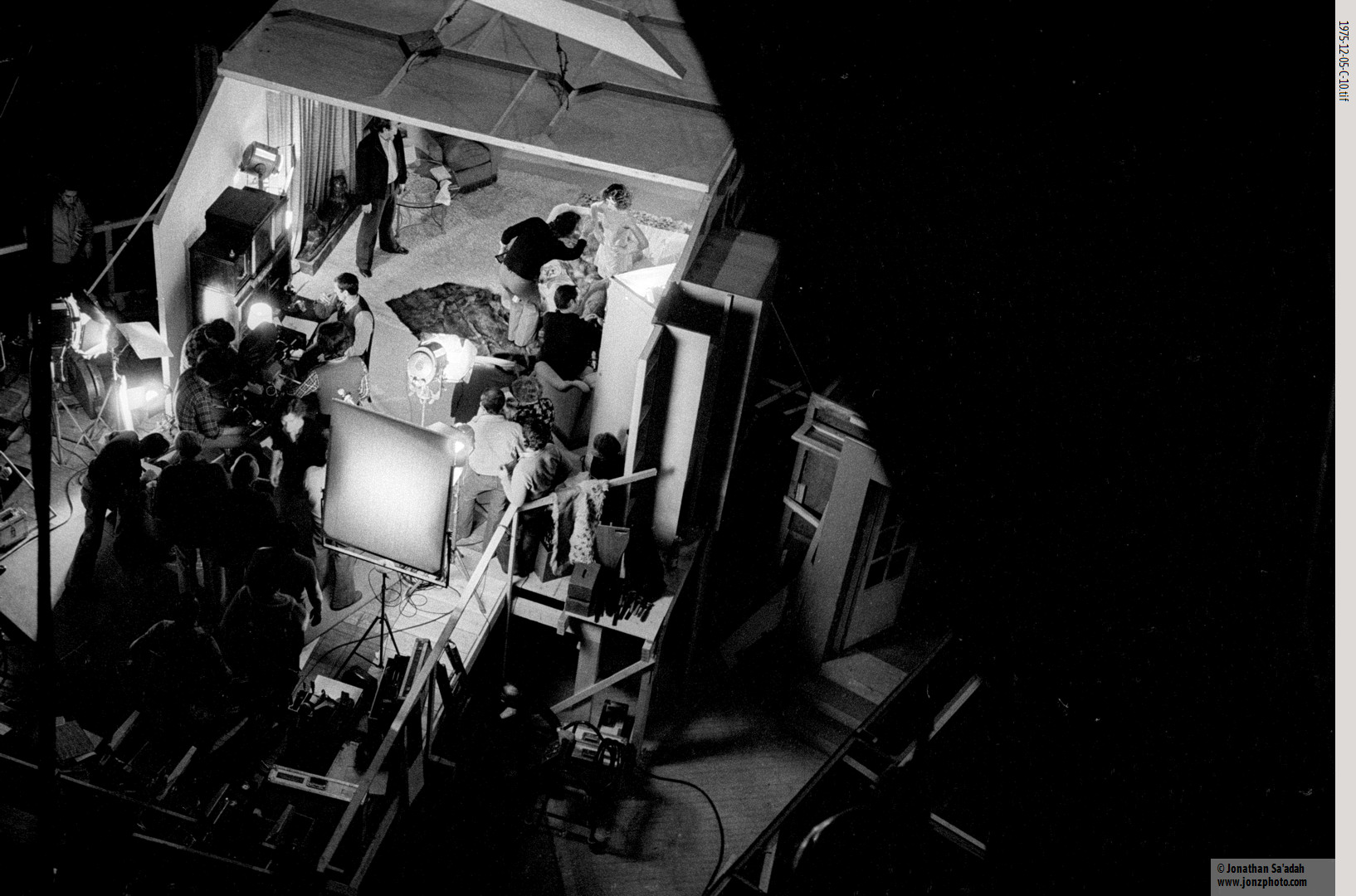
▲ With the walls and part of the ceiling removed, Klein’s bedroom has been transformed into a set for the scene where Jeanine reads from Moby Dick. Klein (Delon) sits at the desk, with the camera positioned right beside him. This photo, taken from a catwalk above, demonstrates the benefits of filming in a studio rather than on location: the space functions as a small stage set, offering flexibility and easy access for the crew.
A Partnership of Trust and Professionalism
Losey’s previous long-term collaboration with art director Richard Macdonald had ended before M Klein, making his partnership with Trauner especially significant. Trauner brought a different energy: more structured, less chaotic, but equally committed to artistic excellence. Losey praised Trauner’s professionalism and his ability to immediately grasp and adapt to the director’s needs, saying, “There’s a kind of professionalism about Trauner and a kind of immediate recognition of what I want. Also, if I say to Trauner that something that he’s doing is wrong for me, whatever it may be…he understands and can change this immediately”.
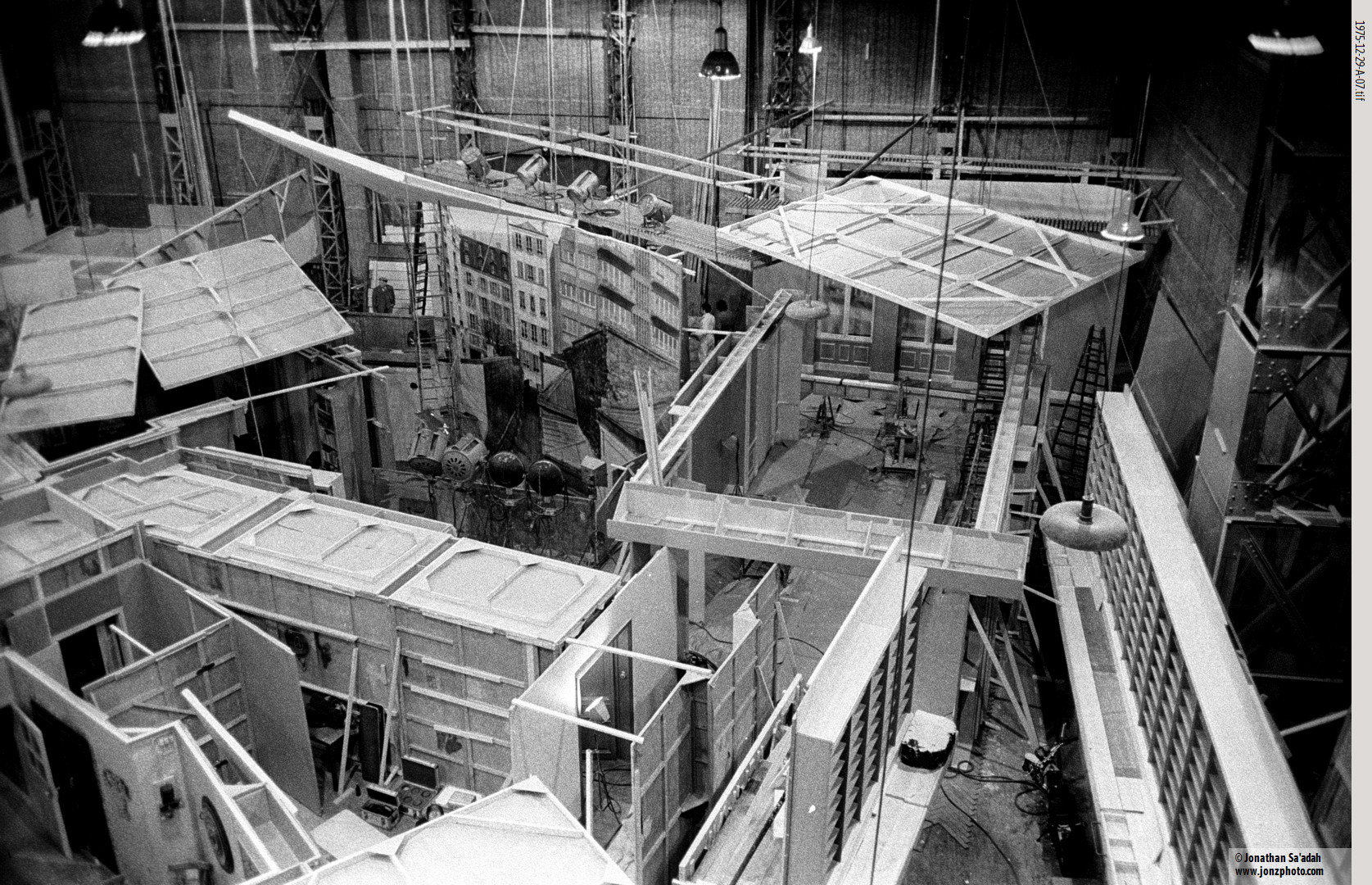
▲ A wider shot of Klein’s “apartment” from above. Note the large painted flats that formed “views” out windows. The small figure in the top left is Trauner.
Personal History Meets Artistic Vision
What made Trauner’s contribution to M Klein so powerful was the way his personal history resonated with the film’s subject. Like Margot Capelier, the casting director, Trauner had lived through the Nazi occupation and the persecution of Jews in France. This experience gave him a unique sensitivity to the film’s themes and a determination to render them truthfully on screen. His bond with Capelier – her husband, Auguste Capelier, often collaborated with Trauner after the war – further deepened the sense of shared purpose among the creative team.
The Lasting Impact
The world that Trauner built for M Klein is more than a backdrop; it is a character in its own right, shaping the film’s mood and immersing viewers in the paranoia and uncertainty of occupied Paris. His work stands as a testament to the power of art direction in cinema and to the importance of personal history in shaping artistic achievement.
Through his collaboration with Joseph Losey, Alexandre Trauner helped make M Klein not just a film about history, but a living, breathing evocation of a world on the edge – crafted by someone who had survived its darkest days.
McCann, Ben. “What Trauner Did next: The Continuation of a French Design Aesthetic in an American Context.” French Cultural Studies 20, no. 1 (February 1, 2009): 65–81. https://doi.org/10.1177/0957155808099344.
McCann, Benjamin Edward. “Set Design, Spatial Configurations and the Architectonics of 1930s French Poetic Realist Cinema,” n.d.
I met Moki Cherry in 1969 when she and Don were living in Vermont. Jon Appleton, a professor in the Music Department of Dartmouth College, had invited Don and Moki to come to the United States and teach a course for the spring term. Later, I went to Sweden where I spent part a summer living with the family in Stockholm during the Utopias & Visions 1871-1981 exhibit at the Moderna Museet and traveling to Tågarp just after they had purchased the schoolhouse. These pictures are from that period.
▲ A delicate balance Moki Karlsson surrounded by her work and family in her Post Mills, Vermont home. Every detail of this photograph represents Moki – her son Eagle-Eye, Don’s performance costumes hanging on the wall, the plants…Moki created worlds where she lived, centered around her family and her projects. (Vermont, 1970)
Early Life and Education
Monika Marianne Karlsson was born on February 8, 1943, in Koler, a small town in Norrbotten, Sweden’s far northern region. Her parents, Verner Karlsson and Marianne Karlsson, were from opposite ends of Sweden – her father was from Skåne in the south and her mother from Norrland in the north. Verner worked as a station master for the railway company, while Marianne ran the local post office. The family moved frequently throughout Sweden as Verner was posted to different stations.
From an early age, Moki displayed an independent spirit and a deep connection to nature. She was absorbed by the world of animals and the natural environment, preferring to spend time in the forest rather than with other children.
After leaving school in 1959, Moki apprenticed at the Haute Couture Atelier Anna-Greta Blom before working as a design assistant with Vera Öhrn at Distingo, a women’s coat and suit manufacturer in Kristianstad. In 1962, she moved to Stockholm to study fashion design, illustration, and pattern-cutting at Beckman’s School of Design (now Beckmans College of Design).
Meeting Don Cherry and Early Artistic Collaboration
In 1963, while still a student, Moki met American jazz trumpeter Don Cherry at Gyllene Cirkeln (The Golden Circle) in Stockholm, where he was performing with saxophonist Sonny Rollins. Don was already recognized as one of the leading figures in American avant-garde jazz, having been a key member an innovative quartet that shook up American jazz in 1959 (The Ornette Coleman Quartet).
▲ Often multi-tasking Eagle-Eye has a clear idea of where he wants to pocket the shot (with Neneh’s encouragement). Don is practicing drums while waiting for Ornette Coleman to show up in Coleman’s Prince Street loft. (New York, 1970)
Artistic Practice and Philosophy
Moki’s artistic practice was inherently interdisciplinary, encompassing textiles, painting, sculpture, ceramics, collage, set design, and costume creation. Her work was characterized by bold colors, organic forms, hybrid creatures, and spiritual symbolism drawn from various cultural traditions including Indian art, Tibetan Buddhism, African aesthetics, and Scandinavian folk art.
Textiles and Tapestries
Moki’s textile work became her signature medium, born out of practical necessity. Living a nomadic lifestyle with Don and her family, she found that fabric was lightweight, transportable, and versatile. She could “roll it up, put it in a couple of duffel bags” and carry her studio anywhere. Her large-scale textile appliqué tapestries served multiple functions: as stage backdrops for Don’s performances, album covers, as educational tools for children’s workshops, and as independent artworks displayed in galleries.
Major Exhibitions and Recognition
Moderna Museet Stockholm (1971)
One of Moki’s most significant early exhibitions was at Moderna Museet Stockholm in 1971, as part of the Utopias & Visions 1871-1981 exhibition. Pontus Hultén, the museum’s director, commissioned Don and Moki to create an installation which was housed in a Buckminster Fuller geodesic dome. Moki created artwork which defined the performance space, which was used to gather artists and musicians from Europe and beyond.
From 1977 onward, Moki split her time between Tågarp (the family home near Malmö) and Long Island City, New York, maintaining her connection to both her Swedish roots and the international art community. She continued to exhibit regularly, with solo shows in galleries across Sweden, the United States, and Europe.
▲ Collaborators in Stockholm Don Cherry is holding the leather case, home to his pocket trumpet, while the Turkish percussionist Okay Temiz talks to Eagle-Eye. They are standing immediately outside the naval brig on the Stockholm island of Skeppsholmen that was used as housing for the family during the 1970 summer exposition. (Stockholm, 1971)
Personal Life and Family
Moki’s personal life was inextricably linked to her artistic practice. Moki successfully balanced motherhood, artistic practice, and professional collaboration. She said about the challenges: “I was my husband’s muse, companion and collaborator. At the same time, I did all the practical maintenance. I was never trained to be a female, so I survived by taking a creative attitude to daily life and chores.”
Legacy and Rediscovery
Moki Cherry died on August 29, 2009, in her Tågarp home. For much of her lifetime, her contributions were overshadowed by Don’s fame and the gendered biases of the art world toward textile work. However, the period following her death has seen a resurgence of interest in her work.
Major retrospectives include Moki Cherry: A Journey Eternal at Moderna Museet Malmö (2023), the most comprehensive presentation of her work to date, and Moki Cherry: Here and Now at the Institute of Contemporary Arts, London (2023), her first solo exhibition in a UK institution.
These exhibitions have been curated in collaboration with her granddaughter Naima Karlsson, who has become a key advocate for her grandmother’s legacy.
▲ Moki helping Neneh with color Neneh was a voracious daughter to Moki’s sensibilities which she combined with her step-father’s musical world. Both have served her well. (Vermont, 1970)
Writing and other media about Moki’s work and life
Moki’s work abounded in color. These articles and web pages have reproductions which often do justice to her chromatic sensibilities.
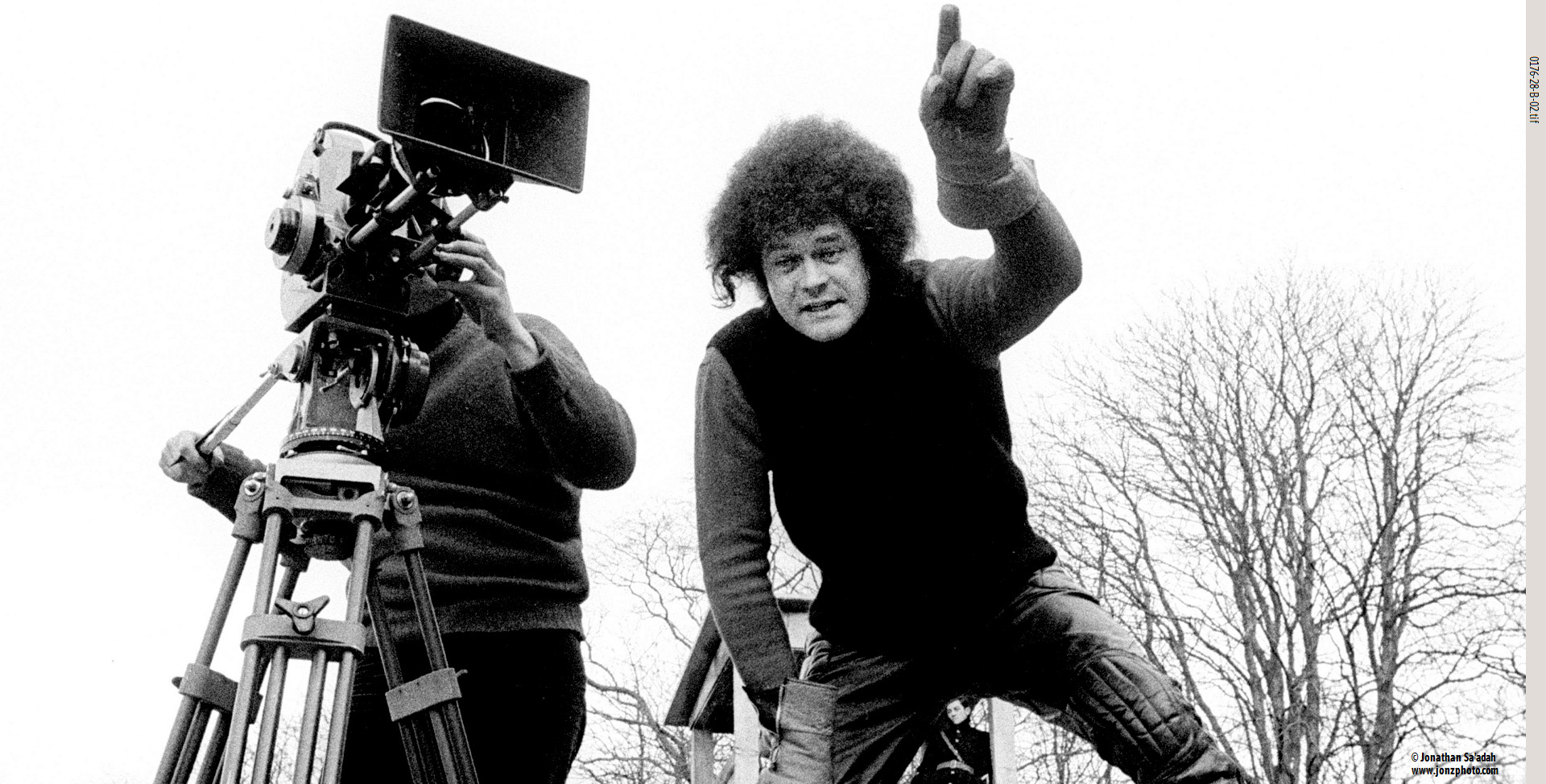
Reginald Beck (1902-1992) edited eighteen films of Losey’s, beginning in 1958 and stretching to Losey’s last, in 1985. It was a multi-decade professional partnership based on mutual respect. Beck was a small man, of modest manner and somewhat taciturn yet insightful in his opinions and generous in training younger editors. He and cinematographer Gerry Fisher formed the core team that supported Losey’s second career as an European director. Beck’s demeanor deceitfully feigned that of a small bland Englishman, but inside burned a brightly shining personality with an unusual background. His career, spanning from the early days of British cinema through the European auteur movement, illustrates a complex mix of artistic vision, political conviction, and professional self-determination.
▲ Beck using a Moviola machine in the cutting room. The Moviola defined film editing from the 1920’s through the mid-Seventies, neatly overlaying Beck’s career. Beck’s familiarity and skill in using it made the complex task of cutting the film seem relaxed and easy – something it was anything but.
The M Klein Credit Controversy: Union Rules and Artistic Recognition
The case of M Klein exemplifies the bureaucratic obstacles that could overshadow artistic collaboration in the film industry. Despite Beck’s editing M Klein, he was unable to receive proper screen credit due to British film union regulations. The film’s credits instead list Henri Lanoë, Marie Castro-Vasquez, and Michèle Neny as editors. Beck gets credit but as a “Adviser to Joseph Losey”. Indeed!
British film union rules, particularly those enforced by the Association of Cinematograph, Television and Allied Technicians (ACTT), strictly governed credit allocation during the 1970s. These regulations often prevented editors from receiving recognition for work performed outside their home territories or under specific contractual arrangements. The ACTT, founded in 1933 and representing over 20,000 members by 1982, maintained rigid protocols about screen credits that sometimes conflicted with the realities of international film-making. The solution in the case of this film was to employ a French editor who was credited for Beck’s work. This arrangement, though unfair to Beck, preserved the artistic continuity of the Losey-Beck collaboration while accommodating the logistical requirements of filming in France. It was the only time Beck didn’t receive credit for his work through his entire collaboration with Losey.
▲ In truth there was always pressure to get things done. Marie Castro-Vasquez was the first assistant to Beck in M Klein. Following her work with him she had a career as an editor of feature films and tv series in the French market.
Artistic Freedom: The Freelance Editor’s Independence
Beck’s career was unusual because he was able to make (and stick to) a deliberate choice to work as a freelance editor rather than being tied to any particular studio. This independence, which he was proud of, allowed him artistic freedom but also created difficulties in an industry that was increasingly dominated by corporate structures. His freelance status enabled him to work with diverse directors across different production systems, from the quota quickies of the 1930s to the art films of the 1970s.
Working outside the studio system affected Beck’s approach to editing. Unlike editors employed by major studios who were often constrained by house styles and executive interference, Beck could develop distinctive collaborative relationships with individual directors. This freedom was particularly evident in his work with Losey. Beck pursued skillful editing techniques that supported Losey’s complex thematic concerns without outside pressure to conform to commercial formulas.
▲ A clear hierarchy is visible through the screening room seating arrangement as people wait to watch film rushes. Losey is center with Beck on his left and cinematographer Gerry Fisher on his right. The assistant directors sit in front of Losey. Margo Capelier, casting director, is in the front row. Marie Castro-Vasquez is far right, and Henri Lanoë’s head is just visible in the back.
Beck’s independent status also meant he could select projects based on artistic merit rather than contractual obligations. His filmography reflects this selective approach, spanning from Laurence Olivier’s Henry V (1944) to works by international auteurs, illustrating his commitment to cinematic excellence over financial security. Importantly, the freelance model allowed Beck to maintain creative autonomy while building long-term partnerships with directors who valued his unique skills. Like Fisher’s camerawork, Beck’s editing was central in supporting Losey’s complex themes and visual identity.
Political Beliefs: Russian Origins and Radical Sympathies
Beck’s political world-view was fundamentally shaped by his early experiences as a Russian-born émigré. Born in St. Petersburg in 1902 to a British father and Finnish mother, Beck’s family emigrated to Britain when he was thirteen (1915). Beck’s childhood exposure to revolutionary Russia and his family’s subsequent displacement instilled in him an understanding of political persecution and the arbitrary nature of state power. These experiences resonated with the themes explored in many of his later collaborations, particularly Losey’s films that examined outsiders, persecution, and the abuse of authority.
The intersection of Beck’s political beliefs with Losey’s anti-establishment stance created a powerful creative partnership. Beck’s Russian origins and immigrant experience gave him a unique perspective on British class society that proved invaluable in interpreting Losey’s critiques of social hierarchies. His editing choices consistently supported narratives that exposed the violence and corruption underlying respectable facades, reflecting a political sensibility forged in revolutionary upheaval. What Losey found in Beck was an editor who intuitively understood the psychology of displacement and persecution. Their collaboration on films like Accident (1967) and The Go-Between (1971) explored themes of class oppression and social hypocrisy that reflected both men’s critical views of established power structures.
▲ Losey speaking with Beck as Henri Lanoë, the credited editor, listens.
Style as an Editor: Invisible Craft and Sustained Tension
Beck’s editing style was rooted in the theories of Vsevolod Pudovkin which held that the assembly of shots served as bricks in creating narrative. His approach emphasized psychological complexity over flashy technique (contrasting with the theories of Sergei Eisenstein).
In M Klein, Beck’s editing supported the film’s Kafkaesque atmosphere of paranoia and identity confusion. The film’s exploration of a French Catholic being mistaken for a Jewish namesake required editing that could sustain psychological tension while maintaining narrative clarity. Beck’s work created a labyrinthine with life-or-death consequences through careful pacing and strategic withholding of information. A mark of his work with Losey was lengthy shots that built tension through duration rather than cutting. This technique demonstrated Beck’s understanding that editing’s power often lay in restraint rather than flashiness, and in M Klein this approach supported the film’s meditation on identity and persecution by allowing scenes to develop psychological complexity through sustained observation.
Relationship with Losey: Mutual Respect and Creative Partnership
The professional relationship between Beck and Losey represented one of cinema’s most productive editor-director partnerships, spanning eighteen films from The Gypsy and the Gentleman (1958) through Steaming (1985). Losey considered Beck one of the two best editors he ever worked with, the other being his first editor, Reginald Mills. Beck’s collaboration with Losey began after the director’s public falling-out with Mills over The Servant (1963). Beck then edited all of Losey’s subsequent films, establishing a working relationship characterized by shared political sensibilities and complementary artistic approaches. Their partnership proved particularly fruitful in films that explored themes of persecution, identity, and social hypocrisy.
What is ironic about the contribution that Reginald Beck made to M Klein, and Joseph Losey’s films in general, was that they were two people who worked on the margins of established systems, both dealing with issues of political exile and artistic displacement, and together they transformed these restraints of blacklisting and emigration into innovative film-making that challenged social norms as well as cinematic conventions. In some ways this wasn’t a surprising outcome for two such talented people, but it certainly represented a struggle and an opposition to forces and obstacles quite similar to those that many artists face today.
There’s something beautifully absurd about dreaming of Formula One glory while religiously using the metro and my bike in the city. It’s like being a vegetarian who fantasizes about winning hot dog eating contests – technically possible, but requiring some serious mental gymnastics to reconcile the contradiction.
The Making of a 36-Horsepower Speed Demon
My personal journey to Formula One dreams began in the most modest way possible: behind the wheel of my parent’s 1958 Volkswagen Beetle. While other kids were playing touch football or watching TV, I was sitting in our family’s parked Beetle, gripping the steering wheel with white knuckles, shifting through imaginary gears with the precision of someone who was still more than ten years away from having a driver’s license.
It was an ironic situation even then. Here I was, fantasizing about joining the ranks of Stirling Moss – while my automotive reality consisted of a parked car that even when running took roughly the same time to reach highway speed as it takes to get from Lionel-Groux to Snowdon (stops on our metro).
Those BBC radio reports crackling through our family’s shortwave radio painted vivid pictures of Monaco’s glamour, but they somehow missed mentioning the modern issues of environmental rape and pillage tied to petro use. They certainly didn’t prepare me for the cognitive dissonance I’d experience many decades later as a Montreal resident torn between childhood racing fantasies and an adult commitment to sustainable transportation.
Montreal’s Great Transportation Transformation
Moving to Montreal in 2003 was like stepping into a city caught between two realities. The Montreal public transit system was already one of North America’s most heavily used systems. Yet Montreal remained (and remains) a city where cars dominate the landscape. There’s a dream of urban sustainability but even in me there’s a conflict with secret Formula One fantasies.
The Annual Montreal Contradiction
Every June, when Formula One descends upon Circuit Gilles Villeneuve, Montreal experiences a total ethical meltdown. The small island in the Saint Lawrence that hosts our Grand Prix was originally created for Expo 67, then re-purposed into a racing circuit that celebrates everything Montreal’s current transportation policies are trying to discourage.
The race circuit itself embodies this paradox perfectly. The city lavishly hosts a sport that burns fossil fuels at obscene rates while promoting electric vehicles and public transit.
The Netflix Effect and Modern Racing Culture
The popularity of Netflix’s “Drive to Survive” has created a new generation of Formula One fans who, like me, experience the sport primarily through screens rather than exhaust fumes. It’s not exactly socially acceptable to be interested in a sport that represents everything we’re supposed to be moving away from, but secretly I am.
When my wife mentioned to a very close friend that we’d watched all seven seasons, the look of bewilderment that crossed her face was eloquent. Even if it was brief before she masked it. It was the expression of someone trying to reconcile how two people who take public transit everywhere and enthusiastically support biking could simultaneously be enthralled by the world’s most environmentally questionable sport.
Living with the Paradox
Montreal’s approach to transportation politics reflects a city that deals in nuance. We promote walkability through indices that measure access to employment and amenities while simultaneously maintaining one of Formula One’s most visible venues. Somehow, both realities coexist in the same metropolitan area without the universe completely collapsing from the contradiction.
Embracing the Contradiction
Perhaps the real wisdom lies in accepting that humans are complicated creatures capable of holding multiple truths simultaneously. I can genuinely believe that Montreal’s future depends on reducing car dependency while still hoping Lewis Hamilton will win as I hear the obnoxious bellowing of Formula One engines echoing across the St. Lawrence River.
There’s no doubt though that Montreal’s approach to transportation doesn’t adhere to ideological purity. The city that gives us extensive bike networks also gives us a yearly walk on the dark side. It’s an approach that acknowledges that progress is perhaps served by not abandoning everything from our past in our quest for purity.
After all, even as a committed environmentalist I can still appreciate the engineering marvel of a Formula One car, just as I hope the most dedicated tourist racing fan can get on our fancy new metro trains and wish they had them in their city. Montreal has figured out how to celebrate both, and maybe that’s the a sophisticated approach for where we are now.
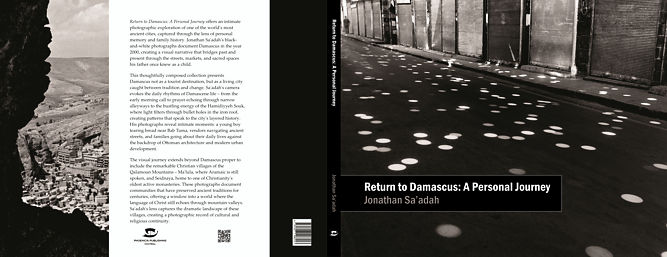
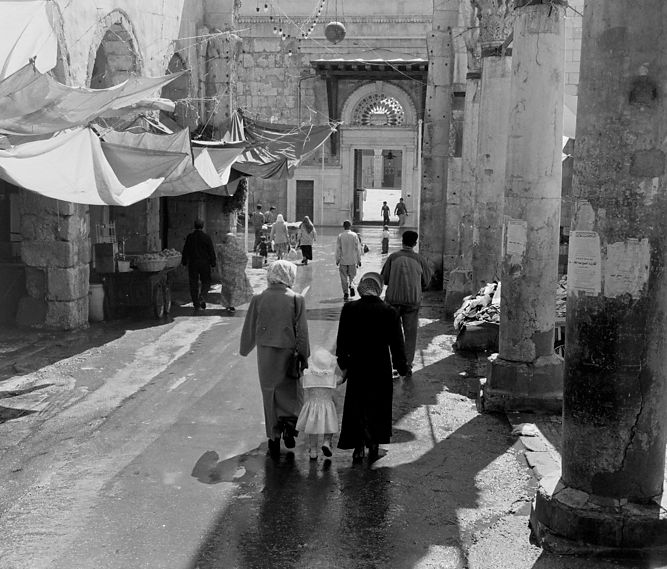
Return to Damascusis my new book of photographs, available for order, that preserves fleeting impressions and the spirit of a place through the lens. Accompanied by brief reflections and memories, the photographs offer a tribute to the place and its people, focusing on enduring character and the subtle interplay of light, architecture, and tradition. Return to Damascus is a quiet celebration of observation and memory, inviting viewers to participate.
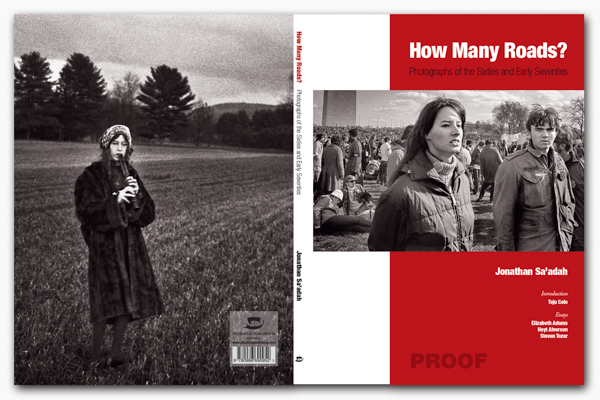
How Many Roads? is a book of photographs by Jonathan Sa'adah, available for order, offering an unglossy but deeply human view of the period from 1968 to 1975 in richly detailed, observant images that have poignant resonance with the present. Ninety-one sepia photographs reproduced with an introduction by Teju Cole, essays by Beth Adams, Hoyt Alverson, and Steven Tozer, and a preface by the photographer.
If you'd like more information, please have a look at this page.
Recent Comments