The Artful Eye: Gerry Fisher’s Cinematographic Journey

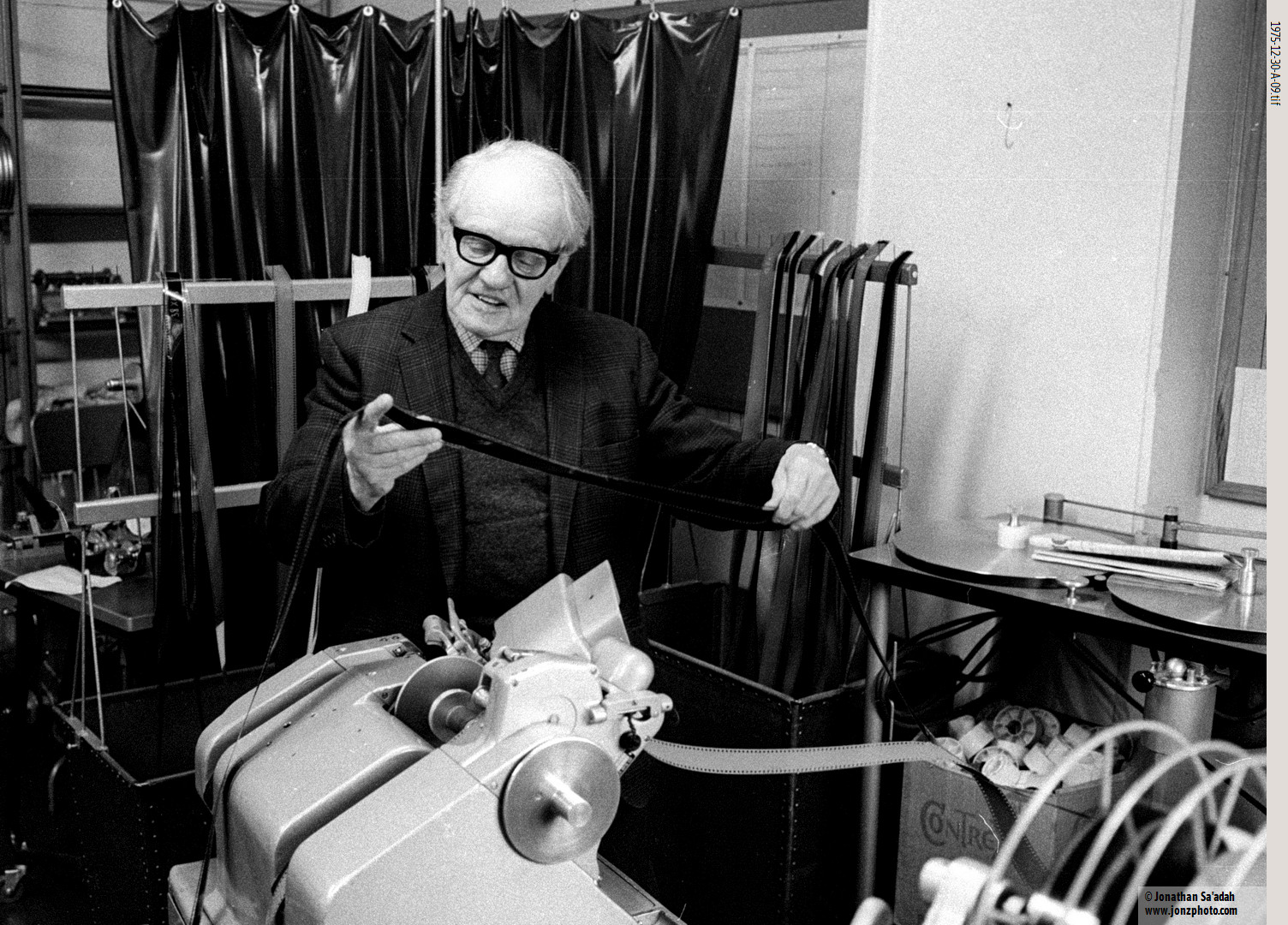
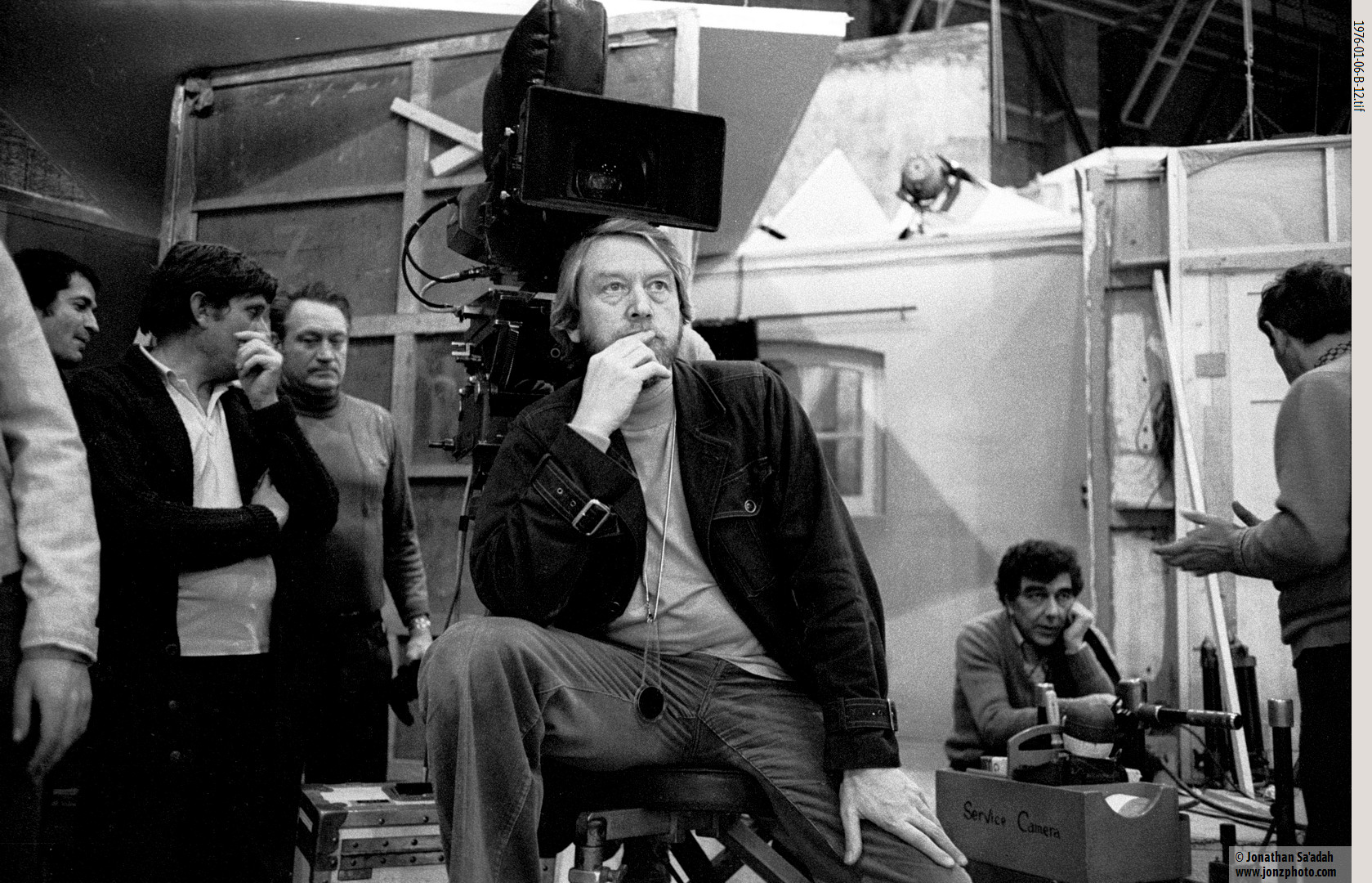
▲ Though a creature of the studio system, Fisher still chafed at waiting for his union crew to catch up. Losey liked that about him. Here he is quietly eyeing a studio setup while two electricians stand behind him. The man squatting on the right is Victor Rodrigue, the stills photographer for the film.
The Established Collaborator

By 1976, when Gerry Fisher began work on M Klein, he had already accumulated twenty seven film credits as Director of Photography, with this project marking his sixth collaboration with director Joseph Losey. Their professional relationship had evolved into a well-oiled machine, characterized by mutual understanding and respect that transcended the need for excessive verbal communication.

Fisher approached cinematography as storytelling through visuals, preferring his work to enhance rather than overshadow the narrative. His unassuming personality and steady temperament, combined with meticulous precision and clear vision, made him particularly well-suited for the high-pressure environment of film-making. For M Klein, Fisher chose a visual style that balanced documentary-like authenticity with Losey’s signature visual richness, creating tension through sparsely lit scenes that subtly highlighted the film’s moral complexities.

Morning Meetings and Declined Spirits

Fisher’s workdays (when shooting on location) typically began with an early morning planning session in Losey’s trailer, where the director would with good-natured persistence (born of friendship) offer Fisher some Stoli with pomplemousse. While not abstaining from alcohol entirely, Fisher wisely maintained his professional composure on set—a prudent choice given the demands of his role.

Despite feeling free to disagree with Losey in private, Fisher maintained the line that “the director always had the final say” in public – the correct stance to take since Losey never reacted well when challenged in public. Their relationship, however, was founded on mutual respect and friendship, with Fisher feeling particular loyalty to Losey for giving him his first opportunity as Director of Photography in 1967 – a significant milestone in his career and the most difficult step for a cameraman to take.

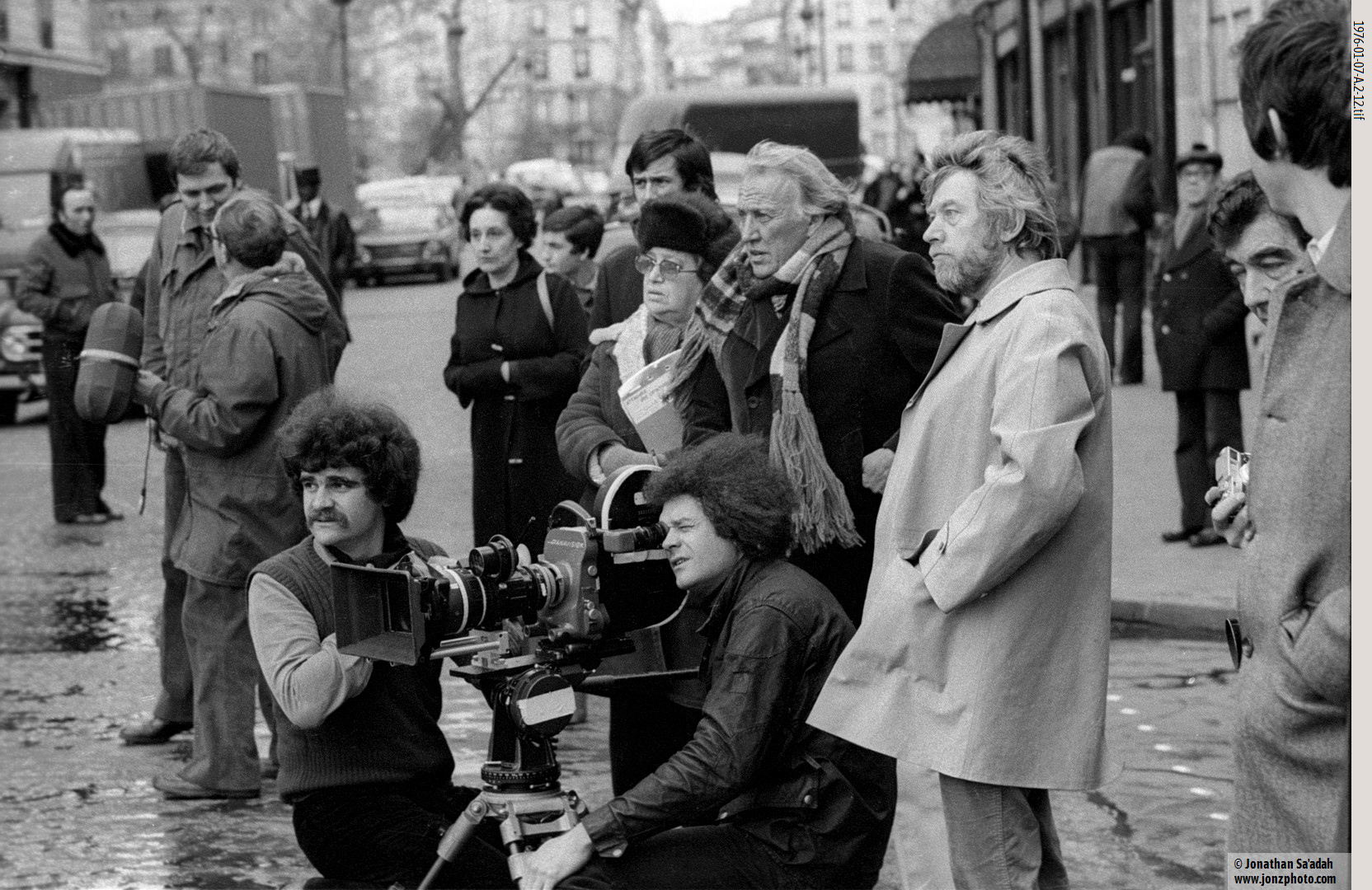
▲ Losey sights over the camera at a boulevard scene near Pont St-Louis. Fisher, in the light coat, flanks him and on the other side is Lucie Lichtig, the accomplished Continuity Director who started her 50 year career in 1933 working for Max Ophuls. Sighting through the camera is Pierre-William Glenn, first Camera Operator.

The Silent Partnership of Filmmaking

Perhaps the most remarkable aspect of the Losey-Fisher partnership was how little they needed to speak to each other. During setups, Fisher would quietly survey the set from various angles, giving concise instructions to electricians about lighting adjustments and discussing camera positioning with his crew. His efficiency stemmed from clarity of vision—knowing precisely what he wanted and how to achieve it without unnecessary elaboration.

Fisher’s innovative approach to actor movement involved creating “zones” rather than specific marks, allowing performers greater freedom and naturalism in their movements. This method facilitated more spontaneous performances while maintaining visual coherence. Losey, confident in Fisher’s abilities, could focus his attention on directing actors, knowing the visual elements were in capable hands.

From Darkroom to Director of Photography

Born into a working-class London family, Fisher showed an early passion for photography, purchasing a film camera and constructing a darkroom in his parents’ home as a young boy. During the early years of World War II, too young to enlist, he contributed to the war effort by helping manufacture large-format reconnaissance cameras for the Royal Air Force. Later, when old enough to serve, he joined the Royal Navy as an electrician repairing landing craft.

Fisher’s career followed the traditional studio system path in England, beginning with entry-level positions loading film magazines and working as a clapper boy before gradually advancing to camera operator and beyond. Each step of his professional journey reinforced the discipline and technical precision that would later distinguish his work as a cinematographer.

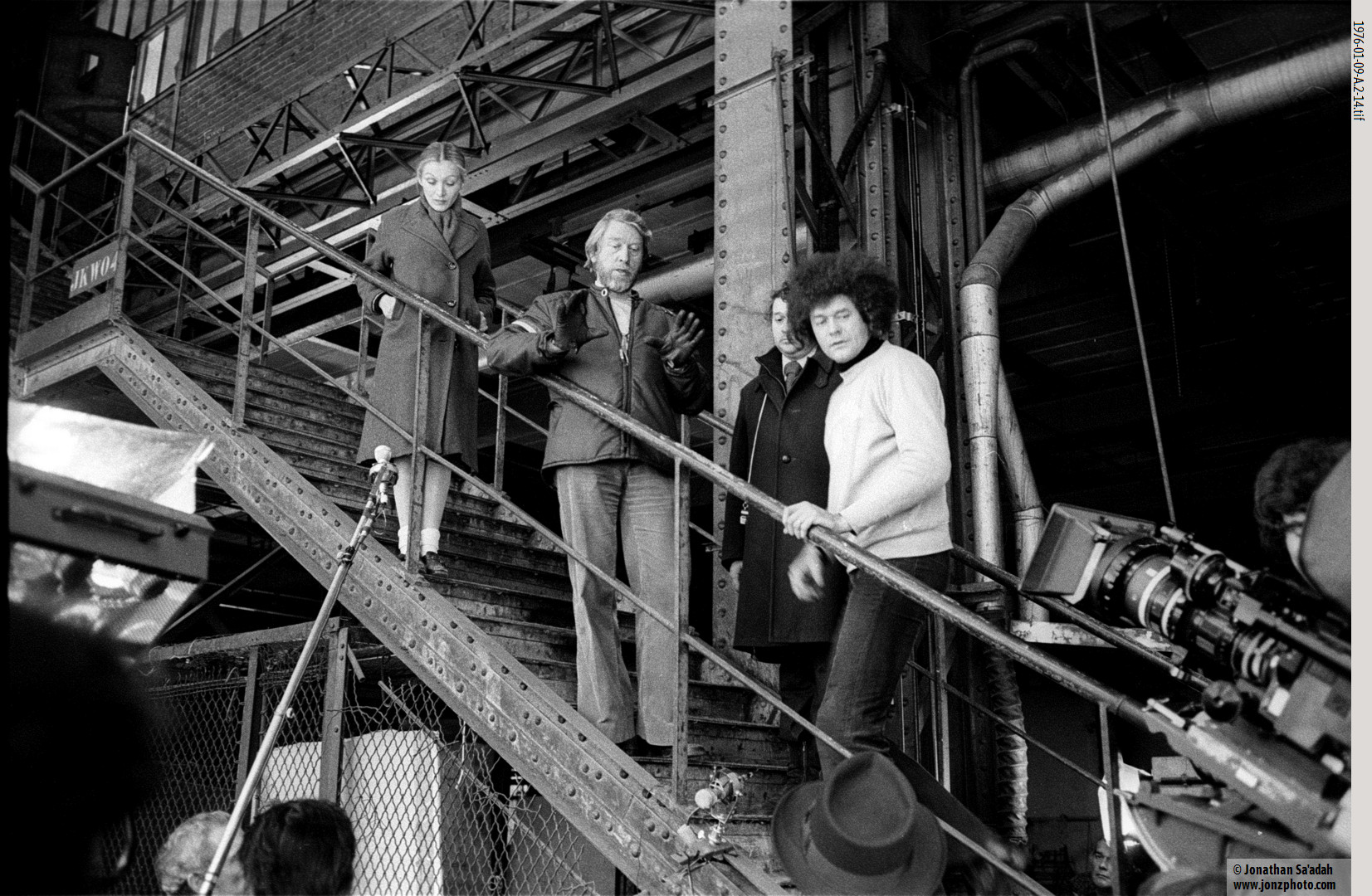
▲ The film used the Citroën factory (recently closed) at Quai de Javel in Paris for one of the scenes in which Klein is searching for “Kathy”, his double’s girlfriend. Fisher had an easy time here – there was a lot of space and beautiful natural light coming through huge panels of windows. He is explaining the framing to his camera operator.

Bridging Cultural Divides

M Klein presented Fisher with the challenge of working in a French cultural and linguistic context while maintaining the sophisticated visual style associated with Losey’s films. His collaboration with bilingual cameraman Pierre-William Glenn proved invaluable, providing a crucial communication link with the predominantly French-speaking crew. Despite not speaking French himself, Fisher’s work in France eventually earned him the prestigious title of Chevalier de l’Ordre des Arts et des Lettres in 1997, recognizing his significant contributions to French cinema.

The Orchestrator of Light and Movement

As Director of Photography, Fisher coordinated three distinct groups: the camera crew handling complex equipment, electricians managing lighting, and grips responsible for camera support and movement. His lighting philosophy for M Klein favored strategic placement over abundance, creating textured illumination rather than flat, even lighting.

The pressures of film-making—described as “a bit like fighting a war, with less drastic results”—required quick, confident decision-making in view of avoiding significant financial costs. This was particularly challenging when shooting on location, where equipment had to be adapted to confined spaces. Through it all, Fisher maintained his resolute attitude: “we are not giving up”.

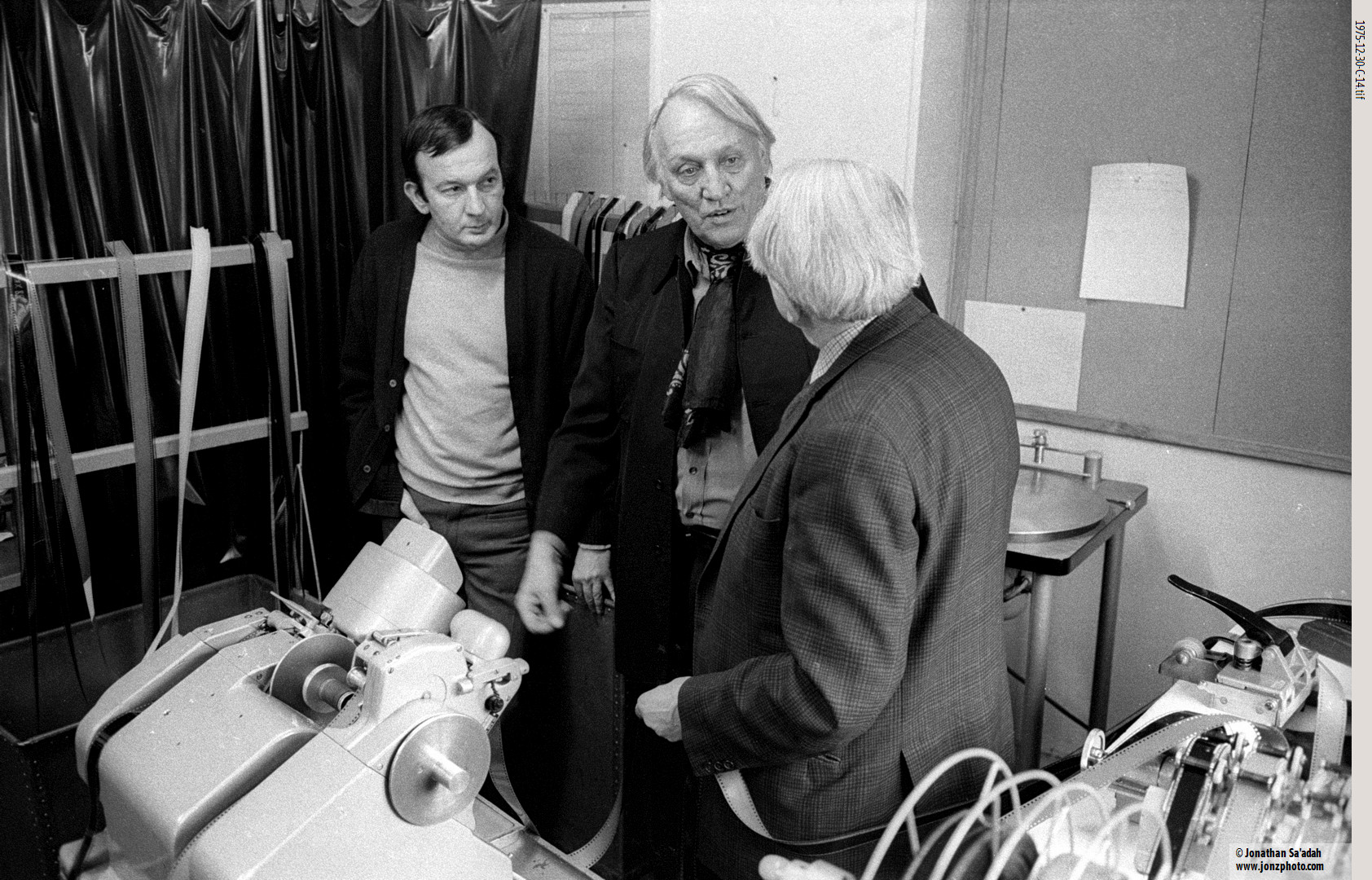
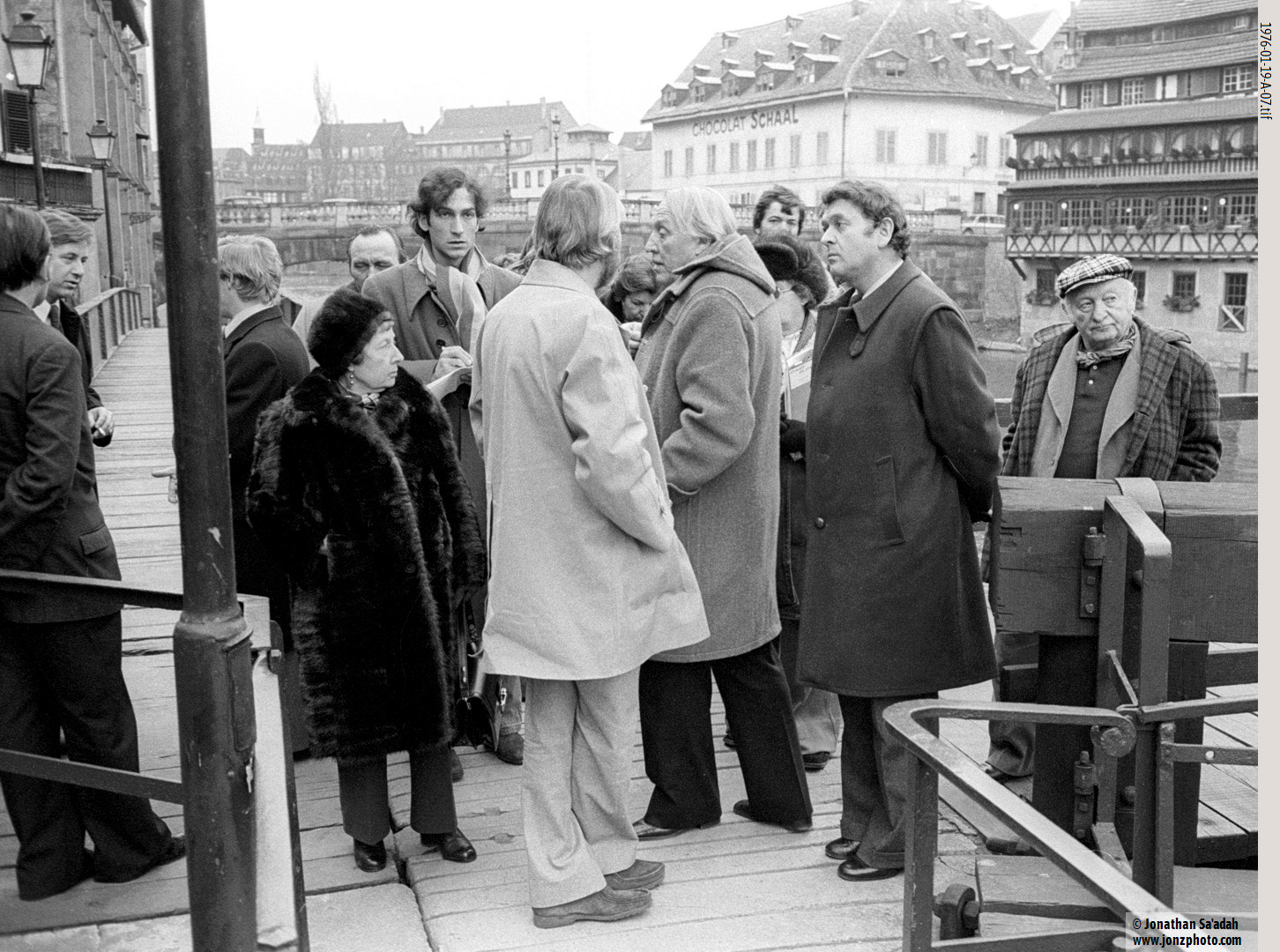
▲ Losey is livid, Fisher steps in as the peacemaker. The entire production has been transported to Strasbough and Losey has just been told the location won’t work the way it is. The person with responsibility, Alexandre Trauner, is on the right considering his options. Fisher, in his signature raincoat, has his back to the camera and on the left is Ludmilla Goulian, the production manager. Also listening in are Phillippe Monnier and Rémy Duchemin, 1st and 2nd assistant directors, and partially hidden (with Russian hat) is Lucie Lichtig.

Innovation and Recognition

Throughout his career, Fisher demonstrated technical innovation and willingness to experiment with new approaches. For M Klein, he selected a special film stock better suited to capture the predominant greens and browns of the film’s color palette. His commitment to pushing technical boundaries while serving the emotional and psychological themes of the screenplay earned him both a César nomination for M Klein and his later appointment as Chevalier de l’Ordre des Arts et des Lettres. These honors placed him among the most respected cinematographers of his generation, recognized for both technical excellence and artistic achievement.

A List of Fisher’s Films as Cinematographer (adapted from Wikipedia):

YearFilmDirector
1967AccidentJoseph Losey
The MikadoStuart Burge
1968SebastianDavid Greene
InterludeKevin Billington
Amsterdam AffairGerry O'Hara
Secret CeremonyJoseph Losey
The Sea GullSidney Lumet
1969HamletTony Richardson
1970Ned KellyTony Richardson
Macho CallahanBernard L. Kowalski
All the Right NoisesGerry O'Hara
1971The Go-BetweenJoseph Losey
See No EvilRichard Fleischer
Man in the WildernessRichard C. Sarafian
MalpertuisHarry Kumel
1972The Amazing Mr. BlundenLionel Jeffries
1973The OffenceSidney Lumet
Bequest to the NationJames Cellan Jones
A Doll's HouseJoseph Losey
1974ButleyHarold Pinter
S*p*Y*SIrvin Kershner
JuggernautRichard Lester
1975BranniganDouglas Hickox
Dogpound ShuffleJeffrey Bloom
The Romantic EnglishwomanJoseph Losey
The Adventure of Sherlock Holmes' Smarter BrotherGene Wilder
1976Aces HighJack Gold
Monsieur KleinJoseph Losey
1977The Island of Dr. MoreauDon Taylor
The Last Remake of Beau GesteMarty Feldman
1978Roads to the SouthJoseph Losey
FedoraBilly Wilder
1979Wise BloodJohn Huston
Don GiovanniJoseph Losey
1980The Ninth ConfigurationWilliam Peter Blatty
1981Rends-moi la delGerard Pires
Escape to VictoryJohn Huston
WolfenMichael Wadleigh
1982Un matin rougeJean-Jacques Aublanc
LovesickMarshall Brickman
1983YellowbeardMel Damski
Les mots pour le direJose Pinheiro
1985The Holcroft CovenantJohn Frankenheimer
1986HighlanderRussell Mulcahy
1987Man on FireElie Chouraqui
OrnFred de Fooko
1988Running on EmptySidney Lumet
1989Dead BangJohn Frankenheimer
Black RainbowMike Hodges
1990The Fourth WarJohn Frankenheimer
The Exorcist IIIWilliam Peter Blatty
1991Company BusinessNicholas Meyer
1992DiggstownMichael Ritchie
1994Cops and RobbersonsMichael Ritchie
1996When Saturday ComesMaria Giese
1997KAlexandre Arcady
1999FuriaAlexandre Aja
Posted in Joseph Losey
Tags: , ,

Montreal living: Triangle vs the Plateau

Living in Montreal is a moving target and this is even more apparent when one compares life in the Plateau with with what it’s like to live in the new “Le Triangle” district. We lived in the Plateau for 16 years and now we’re in the 3rd year of calling the Triangle home. The two experiences are quite different, so comparing them is a bit like vintage vinyl vs a Bluetooth speaker, but I’m going to try anyway. Both play music but the similarities end there. I hope to be even-handed since I’ve enjoyed living in both places.

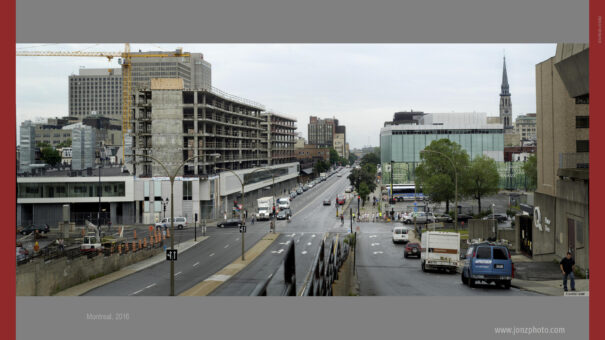
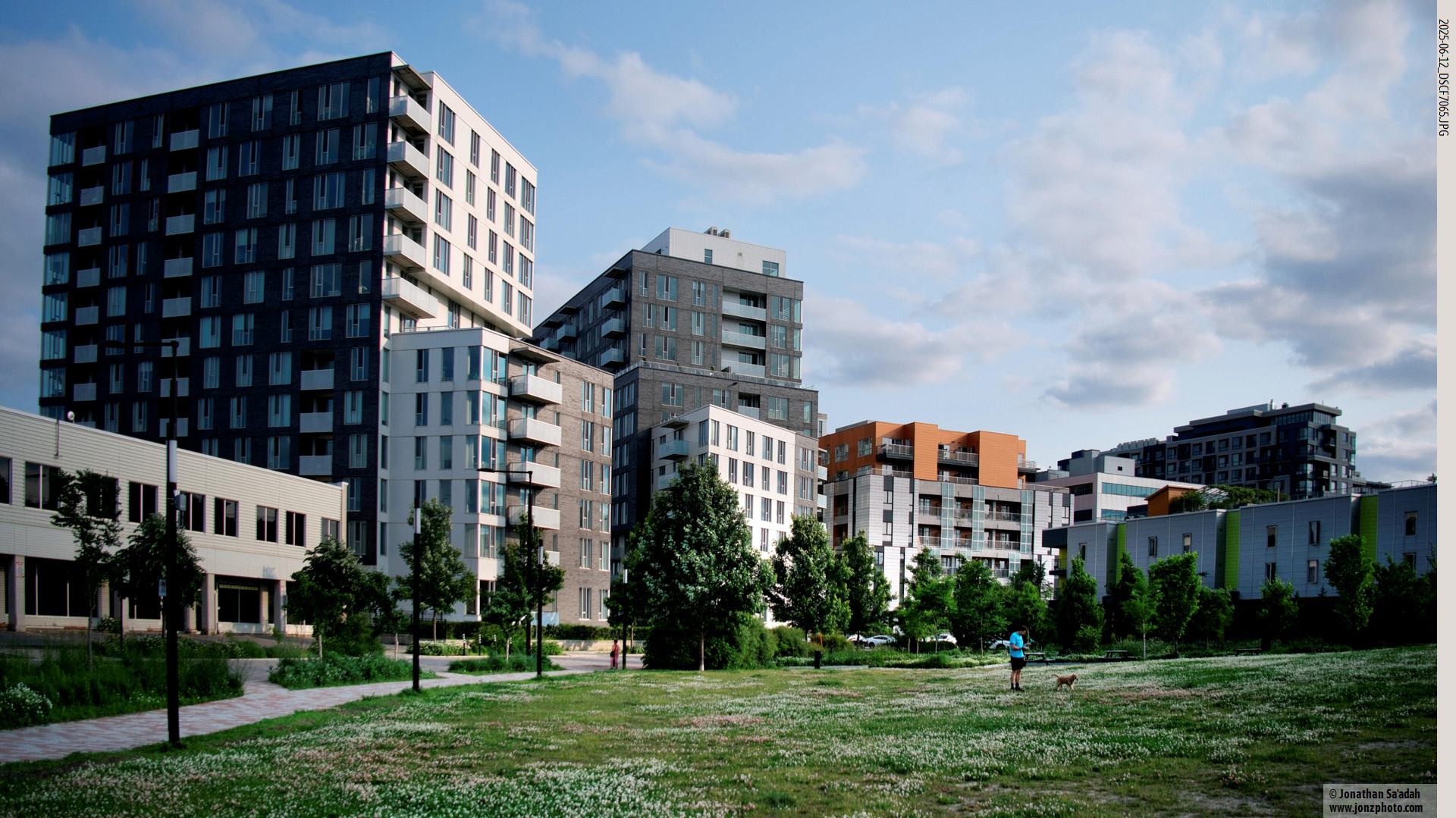
▲ The current south-east corner of the Triangle. The newer buildings are the taller ones. The city has set a goal of 3,200 new units in this area. Currently about 2,500 have been built.

Le Triangle: Shiny new kid on the block

Le Triangle represents Montreal’s latest attempt at creating a “smart neighborhood” – which is Montreal real estate speak for “we bulldozed some old car dealerships and built a lot of new condos”. In a neighborhood historically known for low income housing, shady enterprises, and car dealers, having multiple developers show up with their “sustainable development” mandates obviously causes a lot of tension. And that’s definitely been the case here.
On the other hand, most of the social housing in the Triangle remains intact, located on Mountain Sights Avenue. I don’t see that there are any plans to replace it, and all people benefit from the improvements being made to the area. Those improvements have been to develop two parks, build two handsome community buildings, create a protected pedestrian walkway, a bike-path, and improved sidewalks to soften up the area, as well as creatively dampening street traffic through pavers and bump-outs. However, there’s still no school nearby, difficult on-street parking, and limited small businesses.

▲ Bordering the park this innovative building (which has a sod roof and solar panels) was designed to be a community centre. It’s sparsely used since program money is a problem.

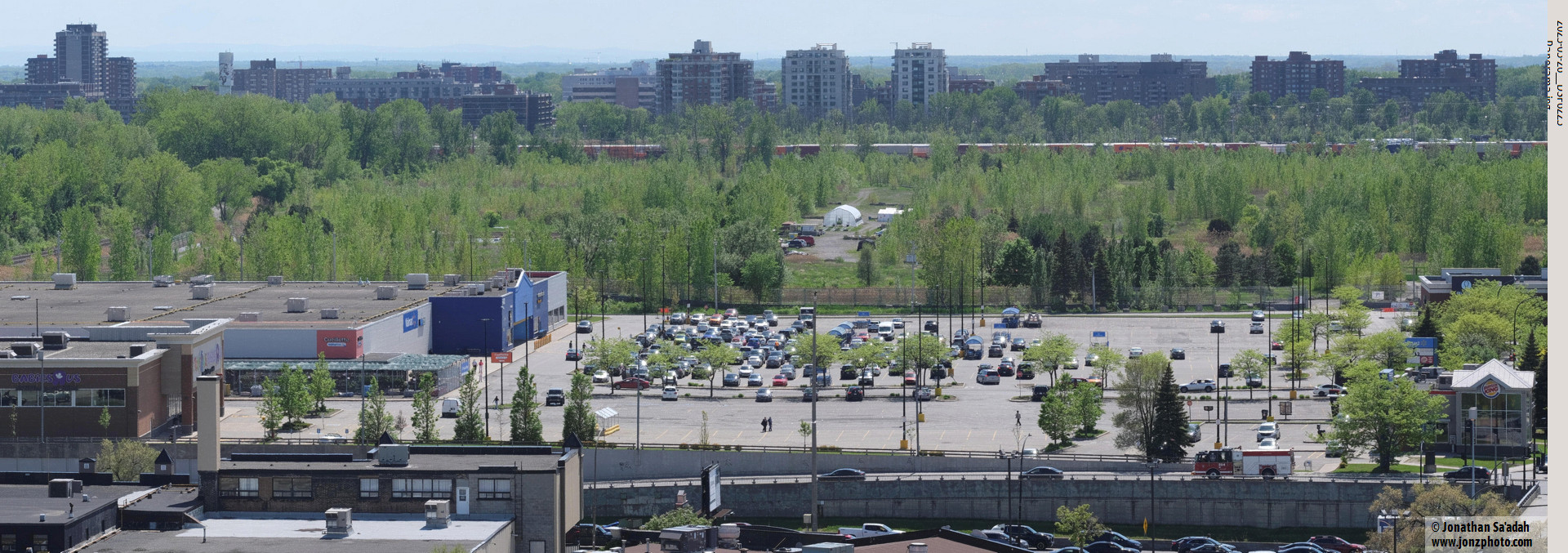
The fight over housing policy seems to have moved over now to the large plot of land nearby, where the city claims to have future plans for balanced development but where, for many reasons, nothing ever really happens. The 43 hectre (103 acre) “Hippodrome” (an old race track) was purchased by the province in 1995 for an undisclosed price and in 2017, after much drama, ownership was transferred to the city. Just to the west a fight over a connector road has been raging for close to eight decades, so it’s probably not healthy to hold your breath concerning any plans for the Hippodrome. Comparatively the work in the Triangle looks like a high-speed sprint.

▲ Without a doubt the most exciting thing that’s happened in the old Hippodrome site since horse racing closed in 2009 was a 2011 U2 concert. Otherwise its only use appears to be as a city gardening space. This is a partial view of the site, there’s a bit more to the right. The back boundary abuts a railroad, the horizontal line in the back being railroad cars.

From the point of view of a city resident, Le Triangle is a good example of what happens when city planners get excited about Transit-Oriented-Development (TOD) and decide to create a neighborhood. It’s now fifteen years after the project was announced, and the area is still being talked about as the poster child for modern urban living. It’s filling up with 10-story condo buildings, all promising variations on “life at another level”, which from a practical point of view, means a small swimming pool, a fitness center, indoor parking (extra), and shared working spaces. The pretty drawings fade away and reality cuts in as the condo developers expand their buildings out to the edges of their lots and the green spaces that were supposed to surround them either disappear or are created without conviction. The mandate to include a lot of open space too often seems to be interpreted by the developers as “we’ll plant a few trees and then flatten them a bit later with front loaders.”

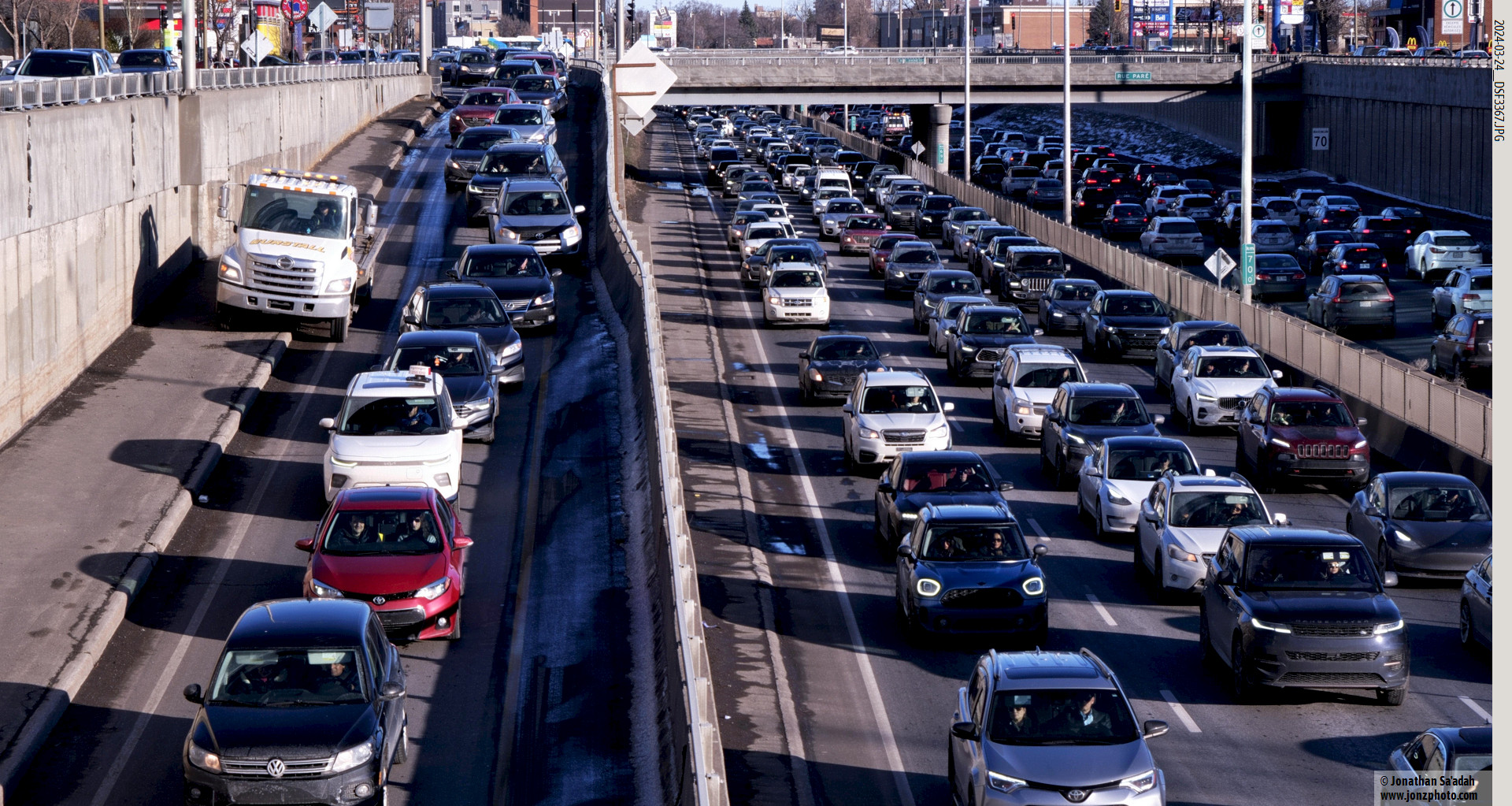
▲ The Décarie is often overburdened with traffic. In theory it is an asset, but in practice it’s a problem. The nearby Metro stations are the best option.

Le Triangle as a daily experience

In Le Triangle the day starts with indoor parking – which is a concept so foreign to the Plateau that it might be mistaken for a new art installation. You then get into your car and head out into the thicket of traffic-blocked streets, driving past construction sites that promise to become “vibrant urban living environments”. You head on to the Décarie, where emergency vehicles claw their way down side shoulders past cars inhabited with trance-eyed motorists.
As an alternate approach you can try the Namur metro, where the STM (the agency that runs the Montreal metro) seems set on preventing a complete set of the escalators functioning at any one time as you drop down 24.1 meters to the platform.
What you gain from living in the Triangle is primarily the quality of your personal residence and the resources provided by communal living. Large, professionally-managed buildings can have problems but no sane person would argue that they approach the nightmares guaranteed when living in century-old duplexes or triplexes in the Plateau.
As the city likes to point out, proximity to the metro system is a big advantage too. There’s nothing like having a blizzard raging outdoors and being able to drop down into the metro for a safe ride to your destination. Especially if you don’t need to even consider digging your car out.
Socially the newness of everything means that no one has a corner on being “born in the neighborhood” and there are a lot of people, often with interesting backgrounds, who are looking to make friends. Multiculturalism is in full bloom in this part of the city, and it’s usually fun to meet the people and navigate the different behaviors and traditions. As a fall-back position, anonymity is possible too in this style of living.

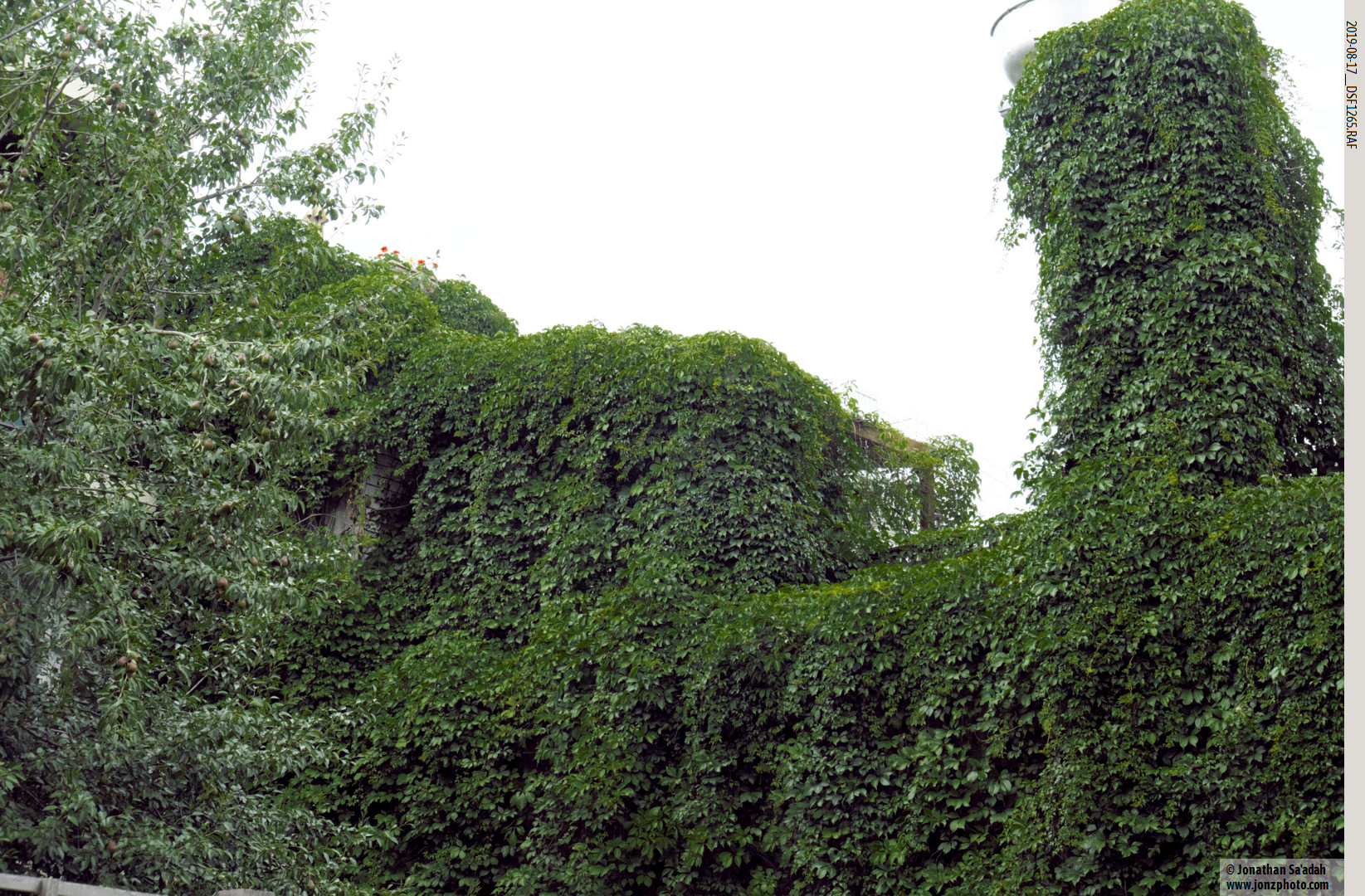
▲ An old Plateau triplex overrun with vines. Pretty but a problem. You would hardly know that the Triangle and its environs existed in the same city. While this is a funny picture, the vines do no favors to their host.

The Plateau as a daily experience

In the Plateau a day starts with the spiral staircase, where during wintertime you can clip on with technical ropes to rappel down through the ice. Following that, and for all four seasons, you get to dodge the cyclists who come at you from all directions, while trying at the same time to calculate in your head the most likely construction-free path to the metro. The city is repeatedly digging up the streets to fine tune its vision of multi-modal transport while strong-arming property owners to replace private parking spaces with groves of trees. There’s lots of traffic and lots of congestion. It’s a mature neighborhood and that means that human behavior is highly developed and stylized. Unlike the condo living of the Triangle, anonymity is not an option in the Plateau. You have neighbors and they are part of your life (especially if you are in a shared-ownership building).
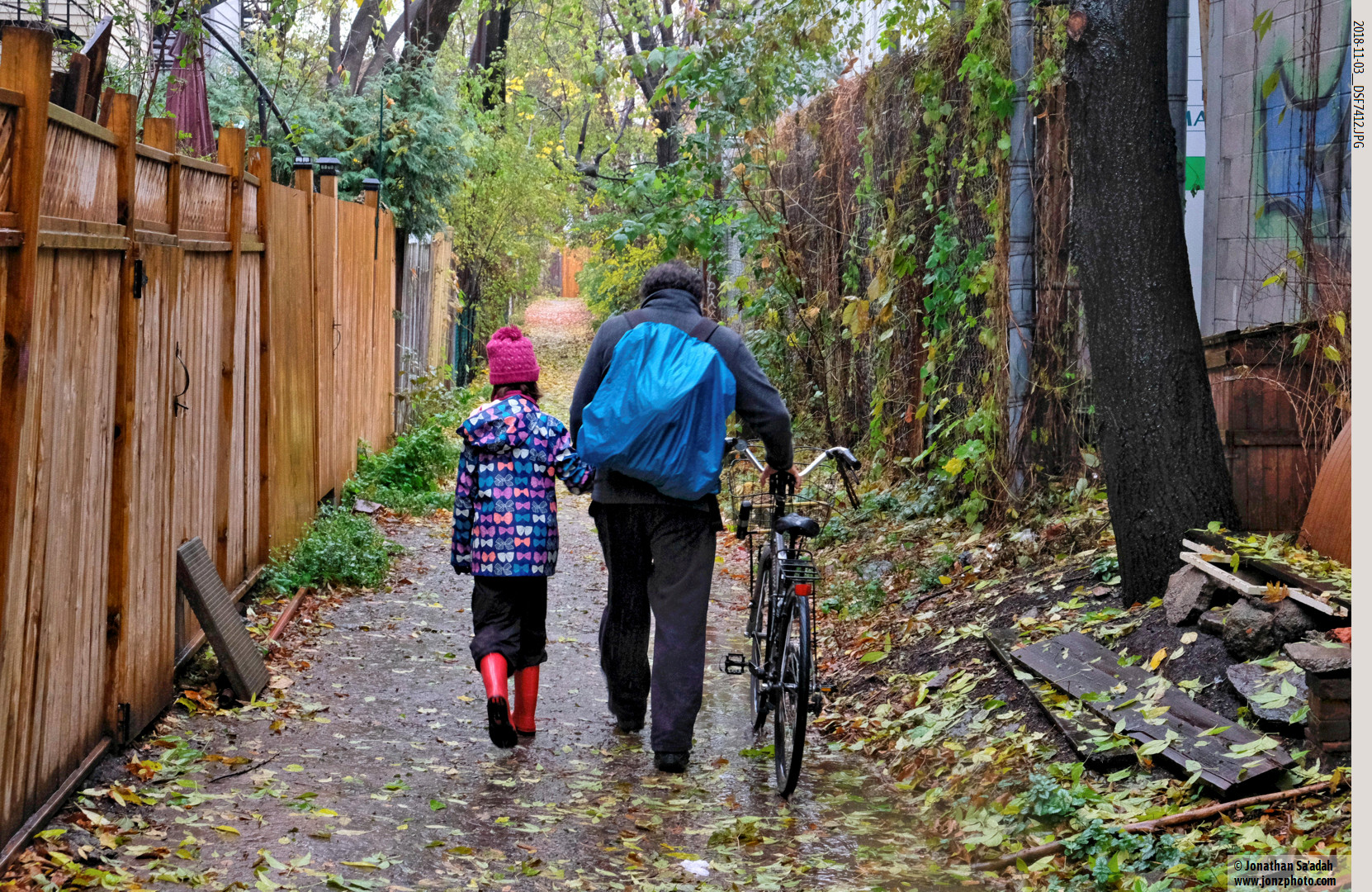
What you gain in the Plateau goes under quality-of-life. You don’t fake the patina of life that’s gained from old neighborhoods. Everything is small. You can walk a block and purchase your food from someone who recognizes you. Your neighbors have outside street gardens and you can sit on the front steps and talk with them about life and its problems.

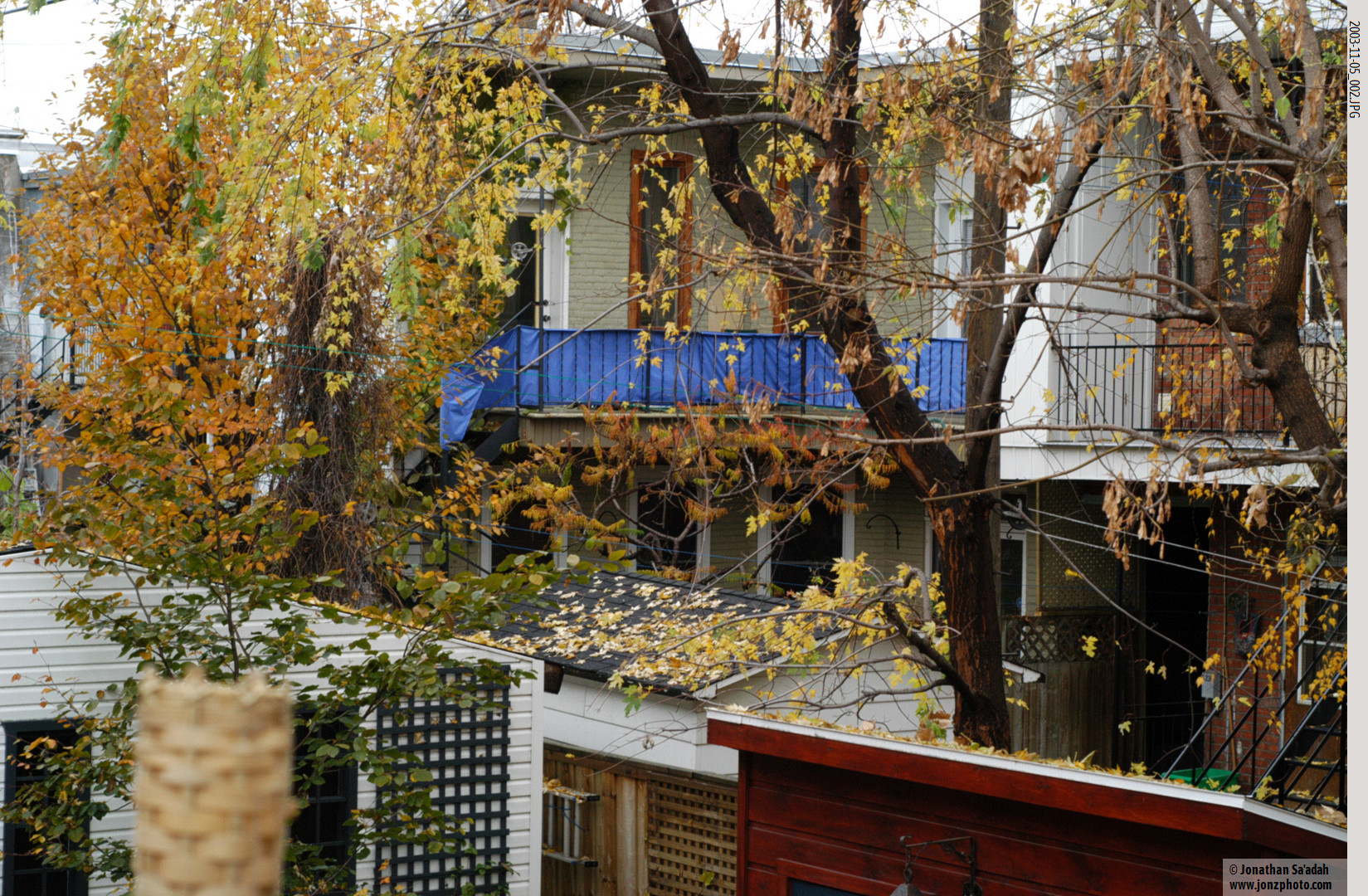
▲ Back yards in one of the older sections of the Plateau. A few months after this picture was taken in 2013 these same buildings were purchased and, for a large sum, converted into a private compound.

There’s shade, and quiet ruelles, and people who often are considerate of each other. It’s a good feeling. Truthfully, we would have stayed in the Plateau but we didn’t have the option. Living spaces are small and expensive, and upkeep often involves major expenditures. We had reached a point where we had to close a separate artist studio space where we had worked for years and which had added to our living space, and we needed a home with enough space to continue our work. It would have taken too much money to have what we needed in the Plateau, and the Triangle was a workable option. We’ve missed our old neighborhood there and our friends, but having a place to continue our work and at the same time having a reasonable lifestyle was the responsible decision. It’s what made sense for us.

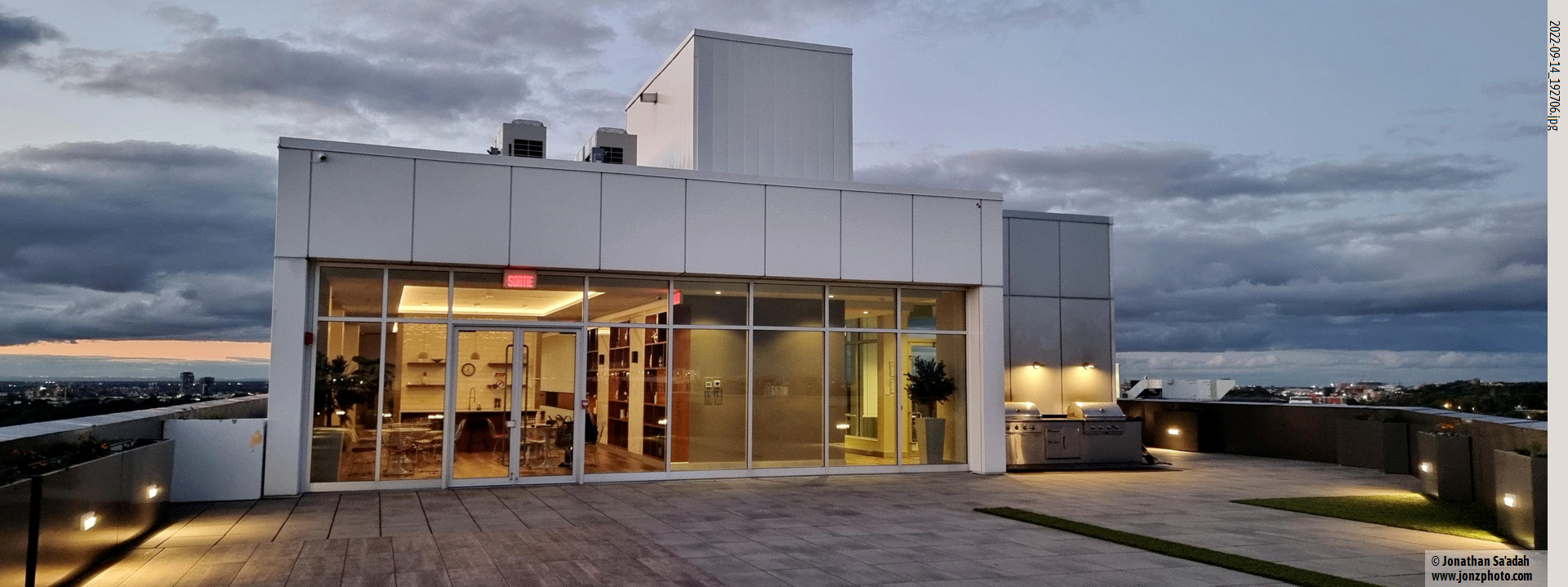
▲ Rooftop common space meant to be used as a back yard in a condo project. In a practical sense it’s used by family and friend groups and not as a community space.

On the other hand, I look at families and younger people (of which there are many) who are living and bringing up their children in this new and modern environment, and I wonder about it. I recognize it’s not possible to make a new neighborhood mature and multi-textured instantly, and I don’t at all dismiss that the Triangle represents a valid approach to living in a different and more outwardly-looking way. But one environment hands it to you on a plate, and the other leaves it to individual responsibility and initiative.
If you’ve had experiences living or working in these environments please leave a comment. I don’t pretend to have all or even most of the answers and I’m curious what others think.

I do personally feel that as a society it’s in our interests to creatively address what these newly-built environments represent. It’s not just the Triangle, but other similar neighborhoods in this city and others too. Embedded schools should not be built as an afterthought, but as a priority. Cultural and educational events/programs should be integrated into the planning of new neighborhoods from the start – it’s not enough to build attractive community buildings and then not fund them, leaving them locked and dark most of the time. Urban planning should be open and transparent. And it’s not giving the right message to disregard upkeep in neighborhoods through differing levels of public services. I know there are many people who have been working to improve things in these areas, but we have to do better.

So in the end choosing between the Plateau and Le Triangle is like choosing between a vintage leather jacket and a new technical ski parka. One has character and the other has more pockets. Both neighborhoods offer their own unique version of Montreal. Either way you’re still in Montreal, so you get to spend 50% of your time complaining about the construction while still actually loving being here. Living in the Plateau vs. The Triangle? It’s a big contrast – but for me there isn’t a simple answer…

Posted in Montreal
Tags: ,

Laughter in the shadows: The chilling cabaret scene of M Klein

▲ In the final shot of the cabaret scene, a chorus line of dancing girls in hoop skirts kick their way out onto the stage. These women were practicing dancing with the hoops, which was an acquired skill.

The cabaret scene in Joseph Losey’s M Klein, which occupies a full five minutes in the film, is the pivotal scene in the movie – when Klein first wakes up (with some prodding from his girlfriend) and realizes that the racist skit that he and others are mindlessly applauding in a WWII Paris cabaret is actually insulting, repulsive and sinister. The scene was drawn out as a sketch in the original screenplay but was developed in detail as Losey worked with the cabaret artist Frantz Salieri to bring into focus the violent hatred that underpins the action in this scene and the film overall. Losey created an audience of predatory scavengers to applaud and dine while watching the anti-Semitic stage show.

Joseph Losey directing actors

Losey Salieri collaboration
Frantz Salieri was given the role by Joseph Losey of creating the stage show component in the film’s cabaret scene. Salieri, a multi-discipline artist working under a variety of names (Francis Savel as a painter, Dietrich de Velsa as film director), later collaborated with Losey on the film Don Giovanni. As a painter (Francis Savel) he had been the subject of an 18 minute documentary portrait (“Le Journal d’un Combat, Guy Gilles, 1964) which captured his painting process and, interestingly enough, was narrated by Alain Delon. A later work under the Dietrich de Velsa identity was his 1980 film, Équation à un inconnu (Equation to an Unknown), which was an erotic rendering of queer culture in France in the period preceding AIDS and was distinguished by his directorial vision.

Several years prior to the filming of M Klein Salieri created a Parisian transvestite cabaret show called “La Grande Eugène”, which performed on rue de Marignan in the 8th arrondissement in Paris and was known for its flamboyance and innovative theatrical staging. Salieri created a show that represented a radical departure from what was offered in the traditional Parisian entertainment venues, featuring transformiste performances with elaborate drag shows and sophisticated theatrical presentations. The show was the subject of a David Bailey photo essay published in London Sunday Times in 1973. The cast of “La Grande Eugène” was used as the mainstay for the cabaret show in M Klein. It’s likely that Losey had learned of Salieri’s work from the 1973 run of “La Grande Eugène” in London, and that’s what led to the connection and his collaboration in this film.[1] Losey, throughout his life, was always on the lookout for talented artists whose work he perhaps could incorporate in his film projects. Examples I knew of personally were Salieri, who he used, and also Pilobolus,[2] and jazz musician Don Cherry, both of whom he never collaborated with but followed closely.

Losey’s concerns and background in theatrical production
In approaching the scene Losey concern was in creating content that might be attractive to racists. This concern arose because of a previous incident at La Cinémathèque française in Paris where a film festival screening wartime films had to be closed down because the anti-Semitic content attracted an audience looking for and cheering along what was shown. His goal was to find a way to stage the cabaret show in a manner that wouldn’t appeal to racists, and by using male actors to play the female roles, he was brilliantly successful in turning off racist interest.[3]

In the script Klein tries to track down the other Klein, and in the course of this search goes looking for “Isabelle”, who he thinks is the second Klein’s girlfriend. This leads him first to the cabaret show being staged in the Parisian cabaret “La Nouvelle Eve”, and then to the stage entrance where he bribes the concierge to let him question one of the dancers. After questioning the dancer (Lola) she says that “Isabelle” is really “Cathy” and and that she doesn’t work at the Cabaret any more, but rather in a munitions factory near Metro Ballard.

Losey was adept at actual theatrical stage managing, with many credits during his American career. He was, for example, the stage managing the 1946 Academy Awards, so he knew how to create dynamic flow and excitement. He was good at timing pieces to come together and create energy, and he worked with Salieri to that end.

But there were challenges to the shooting at La Nouvelle Eve.

Issues in working on location
It was technically difficult to work in the cramped, narrow corridors of the location. As a result cinematographer used the 35 mm camera both shoulder-held and on a crab dolly, both of which were difficult and took a lot of skill and strength under these conditions. Klein is first seen questioning the concierge. The camera is on a hydraulic stand (shown in the photographs) for that shot, but then is shoulder-held in the stairwell, and all the shots flowed together seamlessly. Gerry Fisher, the Cinematographer, had set up the lighting to work with almost no space.

The two sequences that make up the cabaret scene were shot first for the stage show in the cabaret La Nouvelle Eve on December 9th and 10th, and then the stage entrance scene was filmed at the same location on December 11th.

The results of the Salieri-Losey collaboration show camera and actor movement tied together skillfully. The result was the creation of the two memorable central scenes in the movie.

It’s also my only ever appearance in a feature movie. I was actually at my perch taking the photo above and got through editing unnoticed. It’s the third shot of the cabaret performance sequence (2:03:27).

Frame © Lira Films – Nova Films

Other related posts:
Joseph Losey’s film M Klein: A behind-the-scenes look
Exploring location shooting in Joseph Losey’s M Klein
Homage to Margot Capelier, Casting Director
Sign up to get future posts on M Klein and other subjects …

[1] Le Monde. 1986. Frantz Salieri, May 3, 1986.

[2] Salieri’s conceptions and imaginative costume design were more radically stylized but recalled for me the costumes Pilobolus used (for instance, the “Tall Ladies” in the dance “Untitled”) in the same period.

[3] Losey, Joseph, and Michel Ciment. 1985. Conversations with Losey. London ; New York: Methuen. Pages 347-348.

Posted in Artists, Europe, Joseph Losey, Paris
Tags: , , , , ,

Unfiltered Montreal

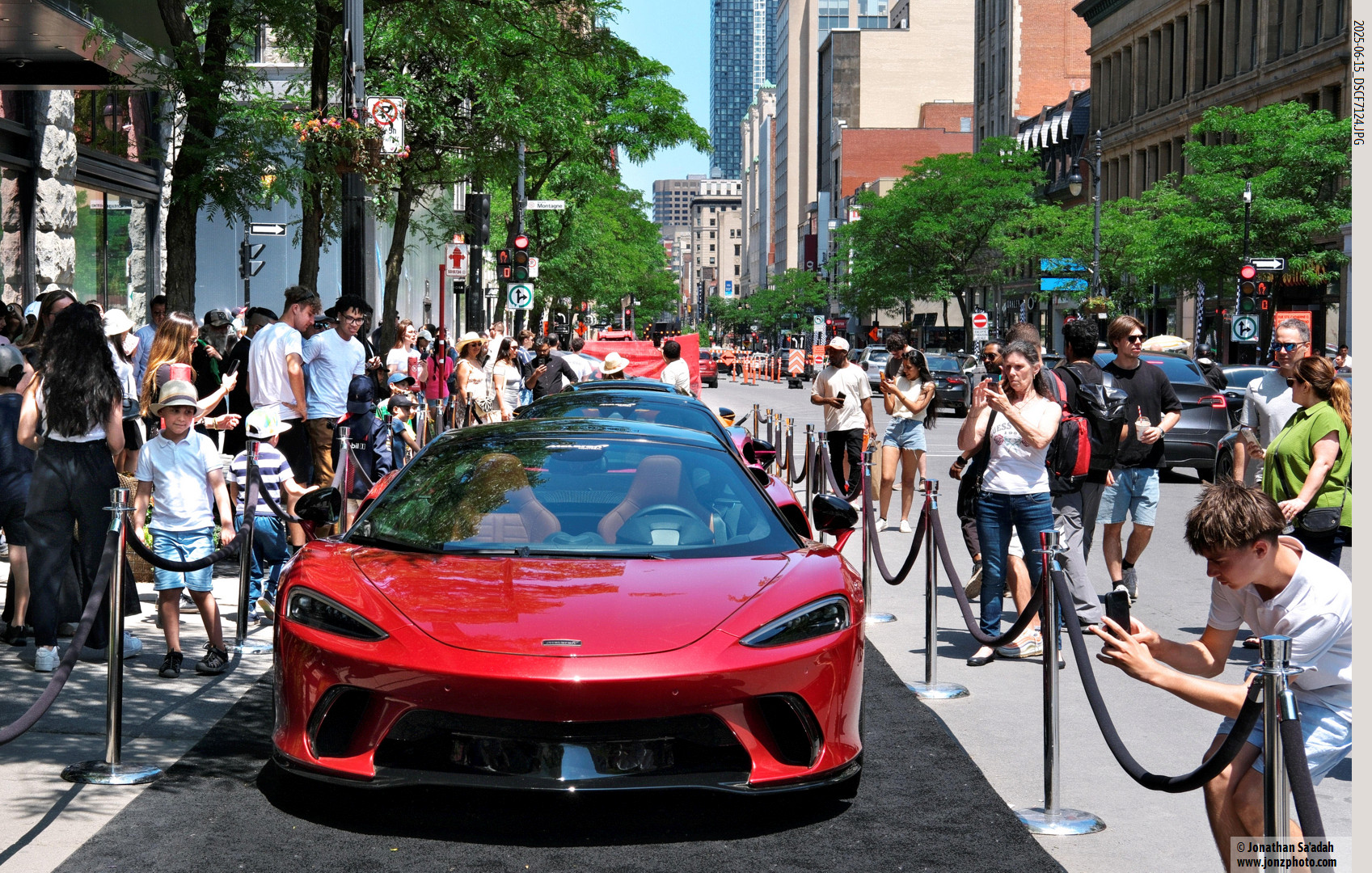
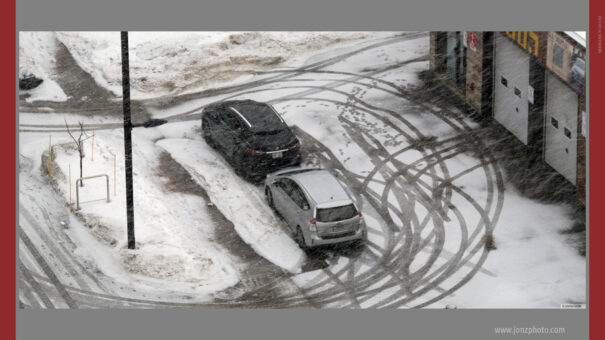
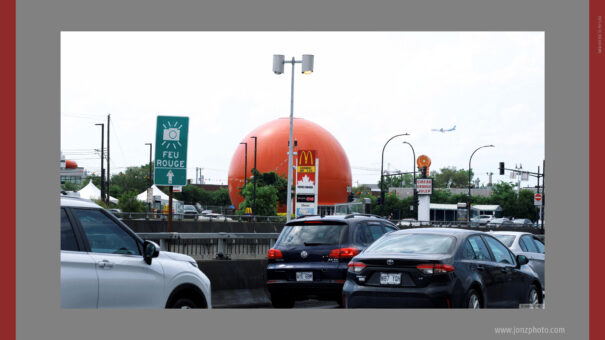
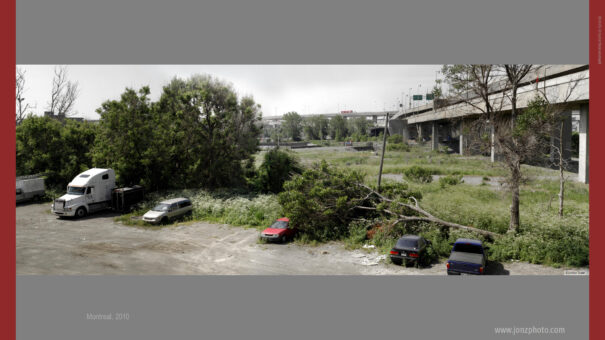
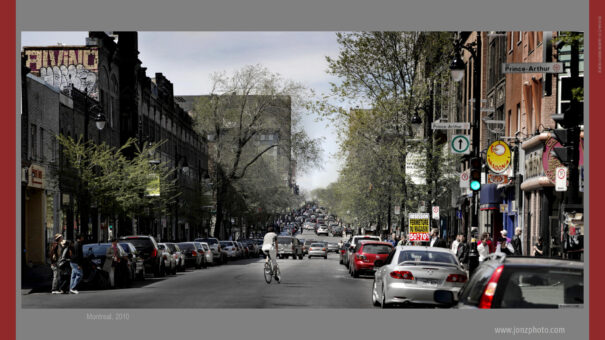
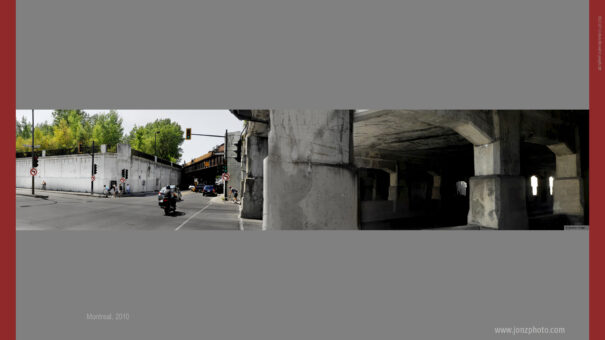
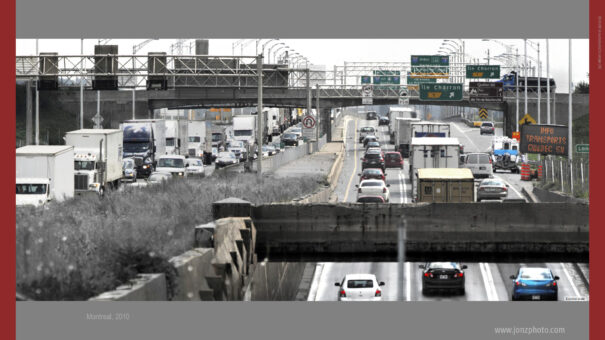
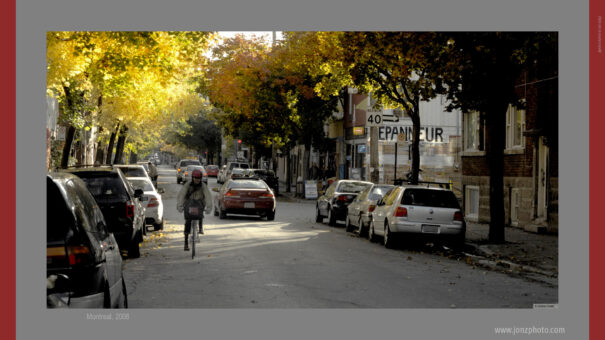
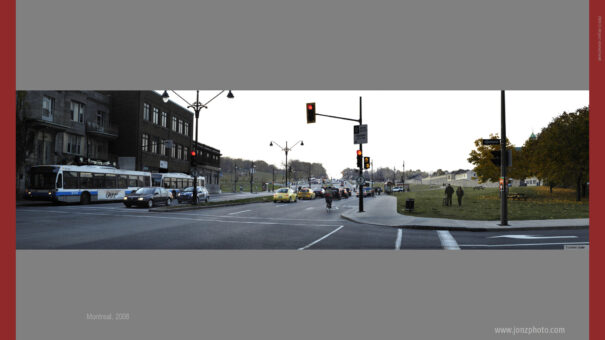
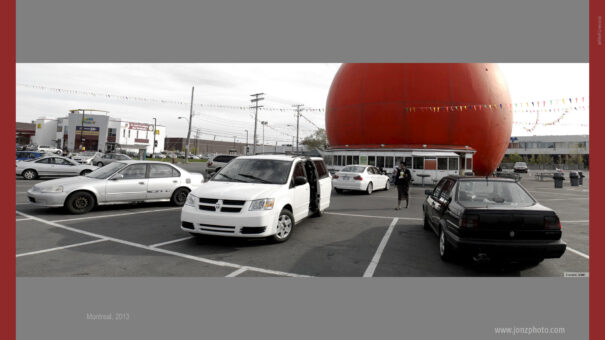
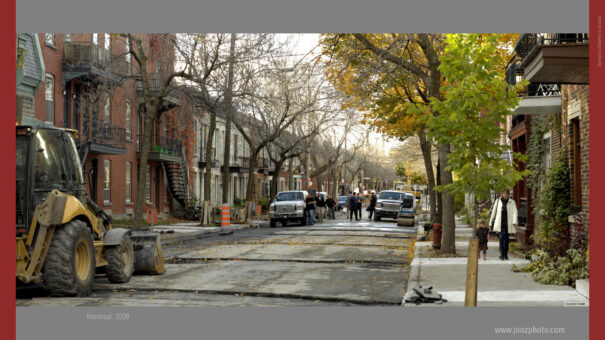
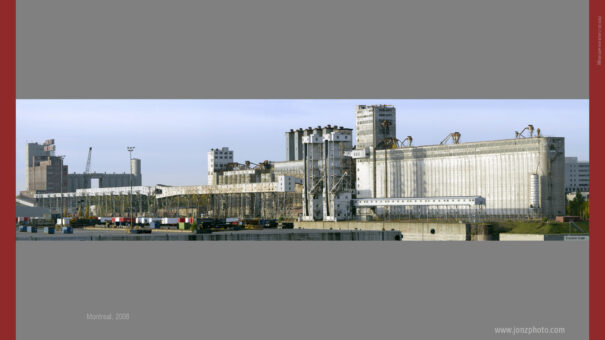
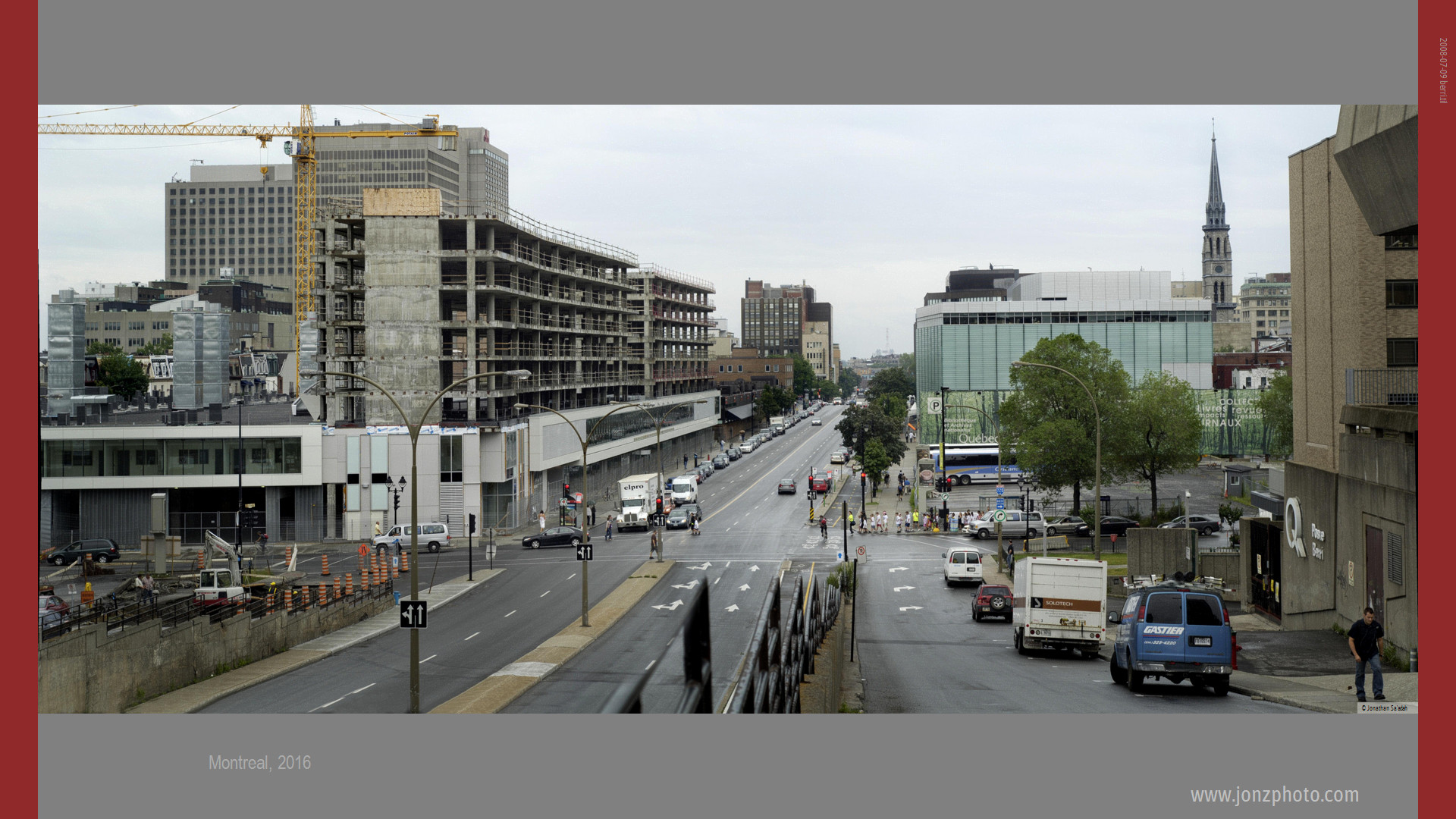
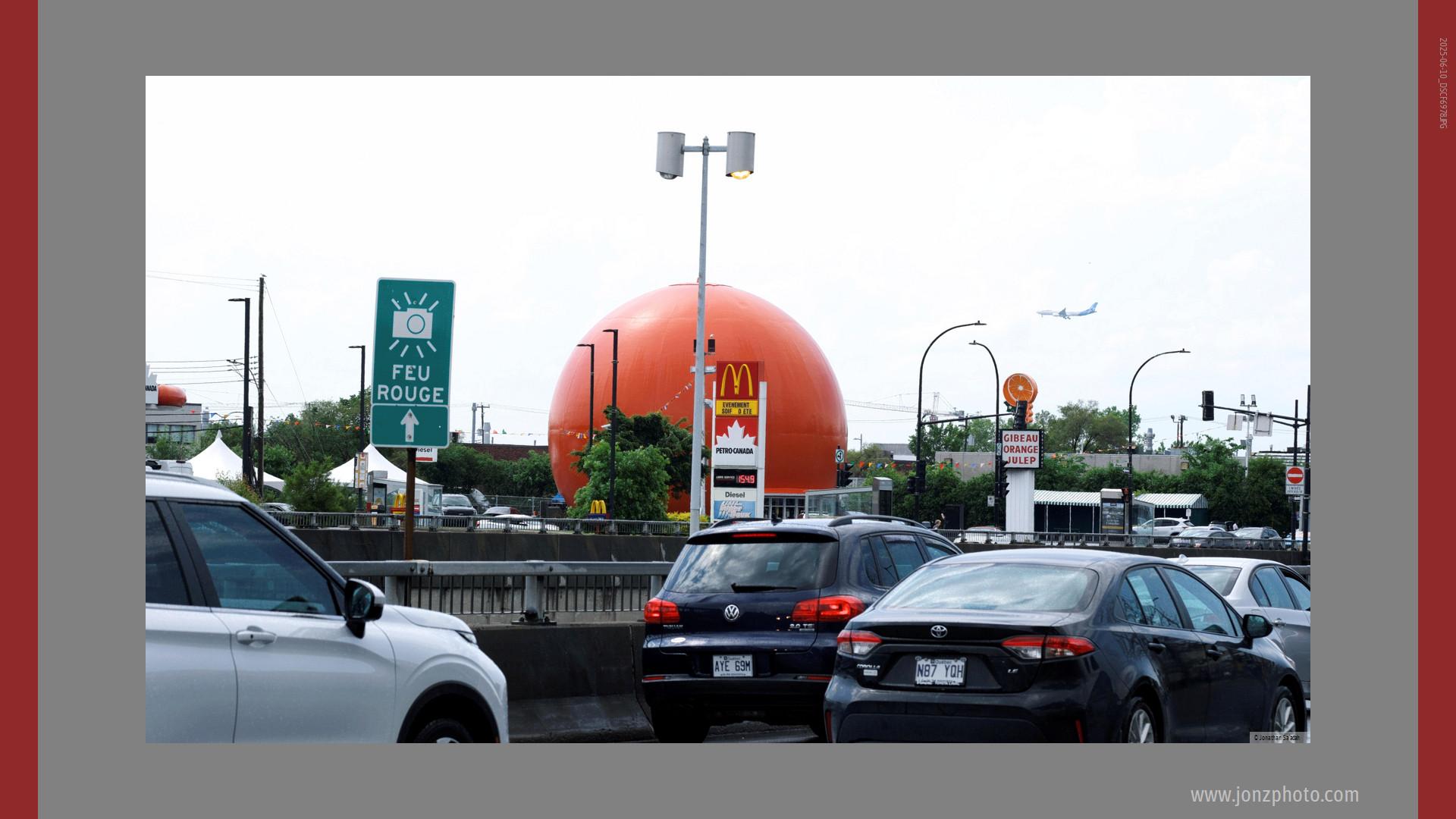
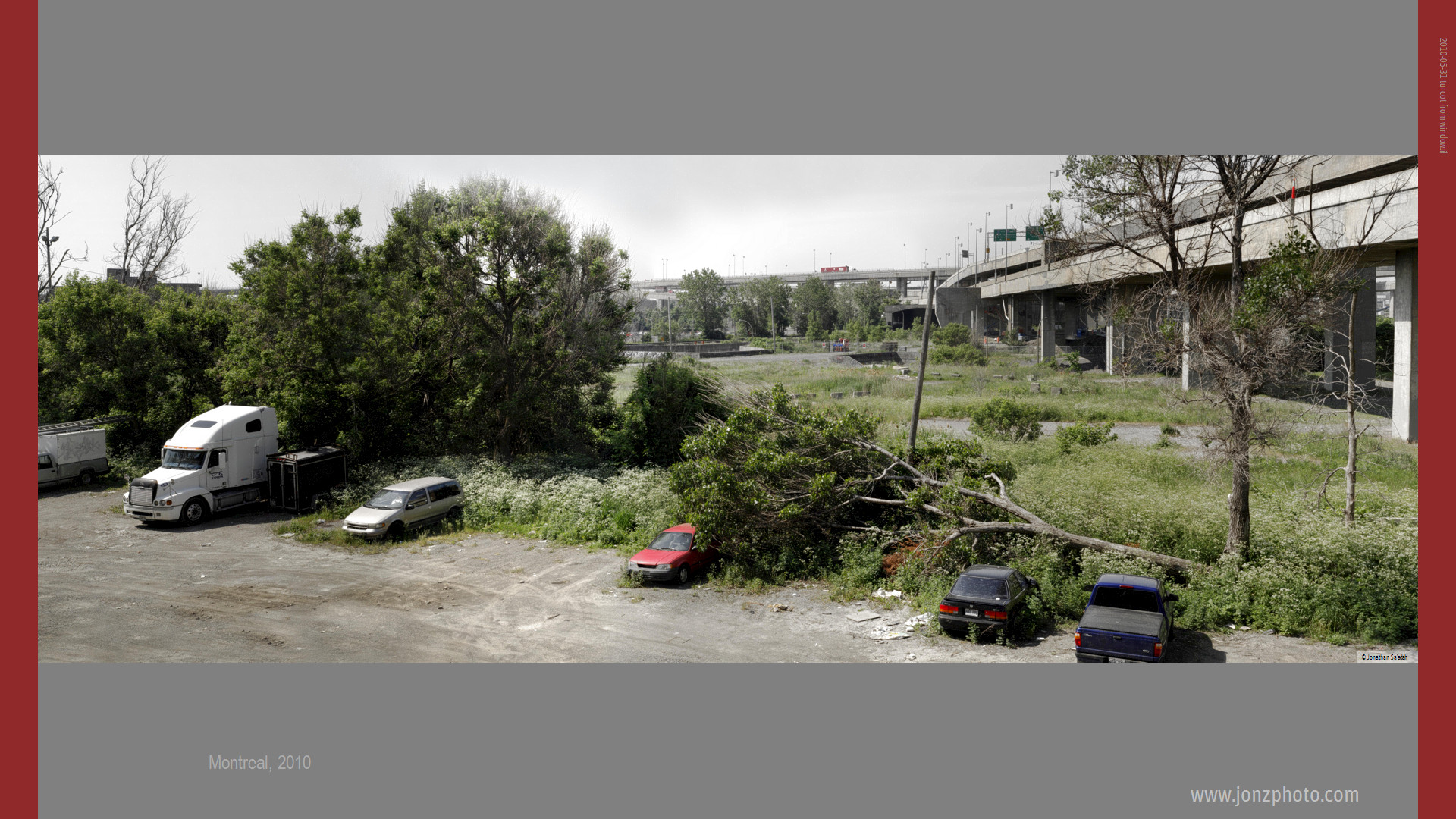
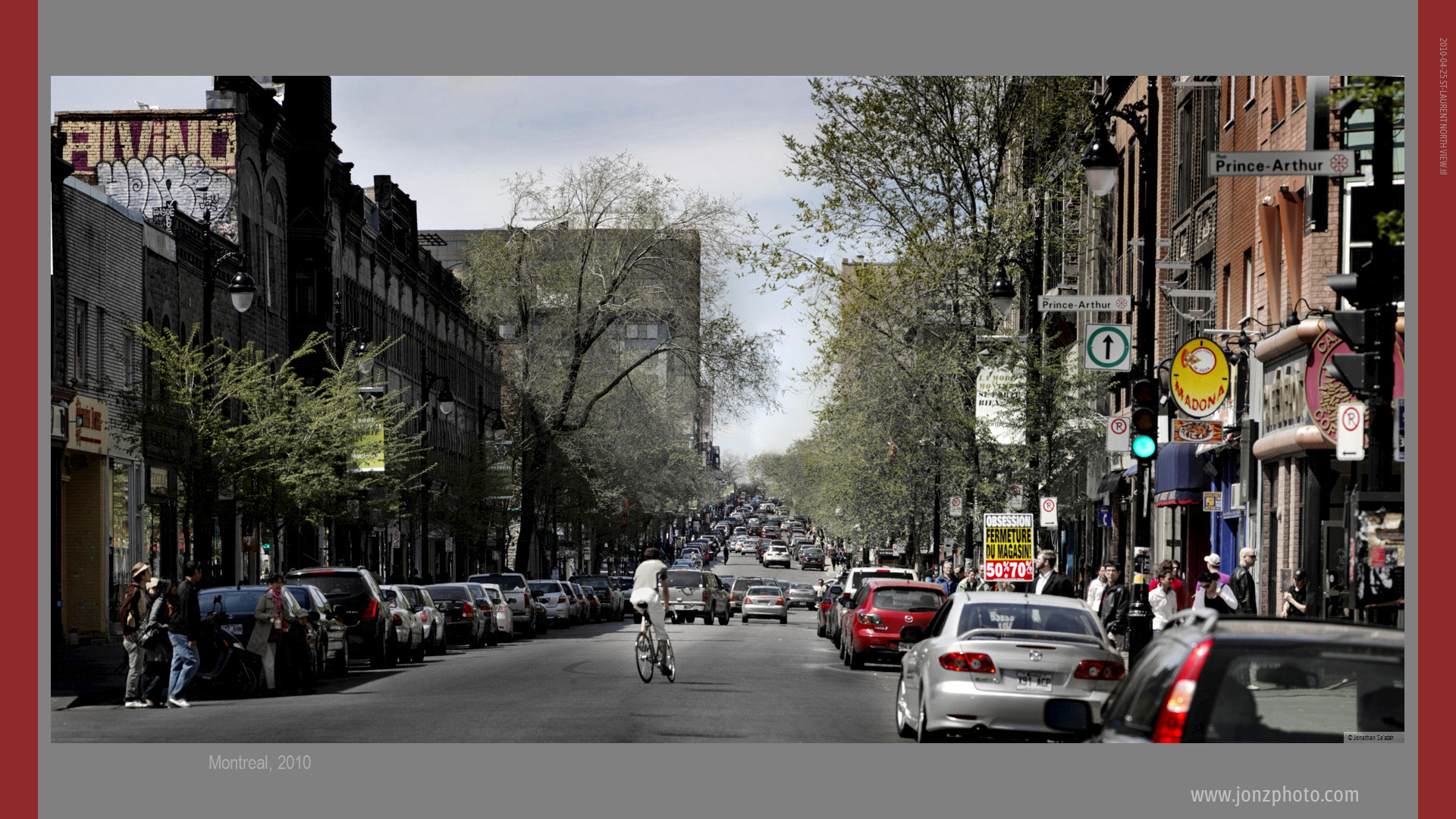
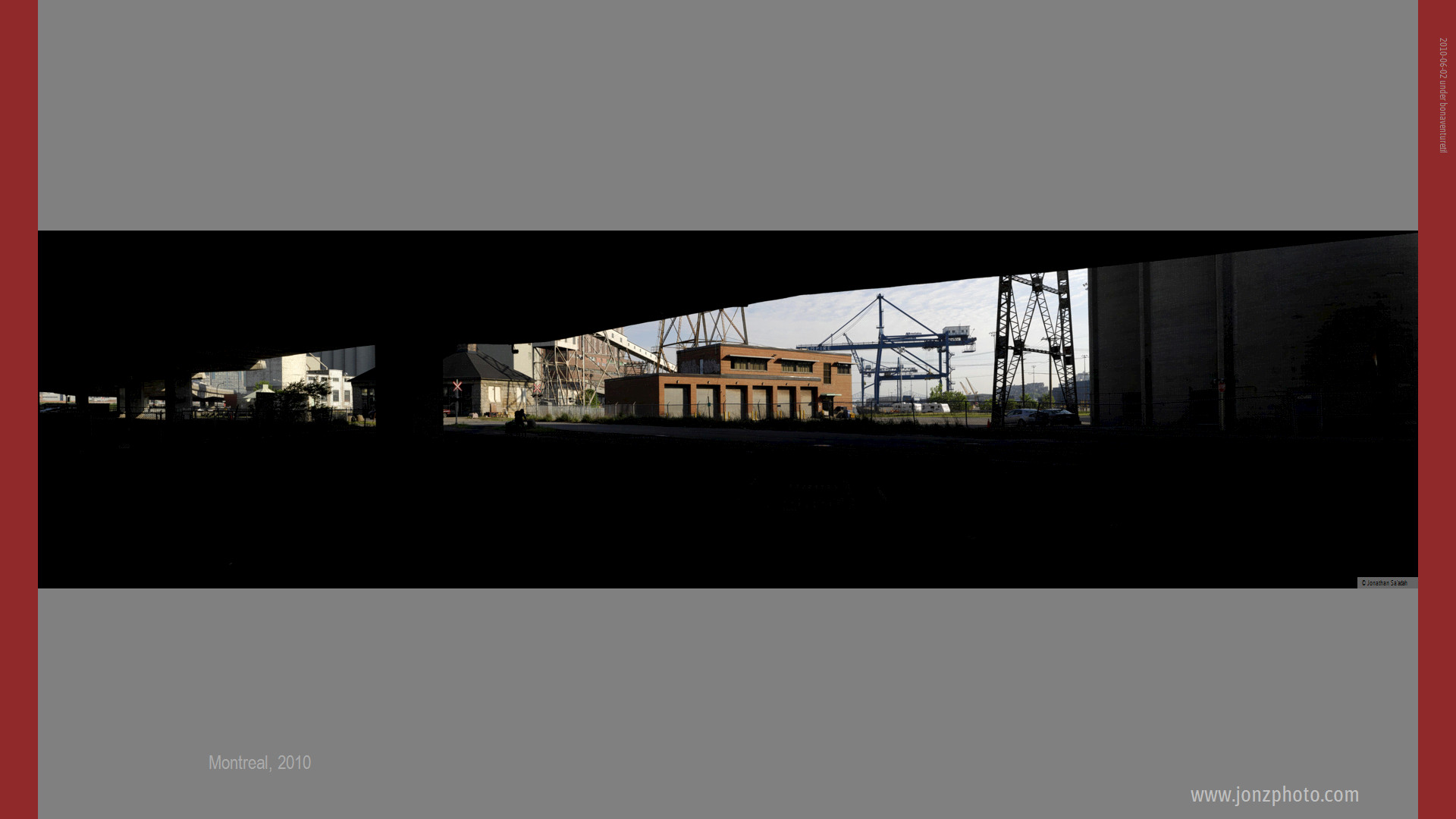
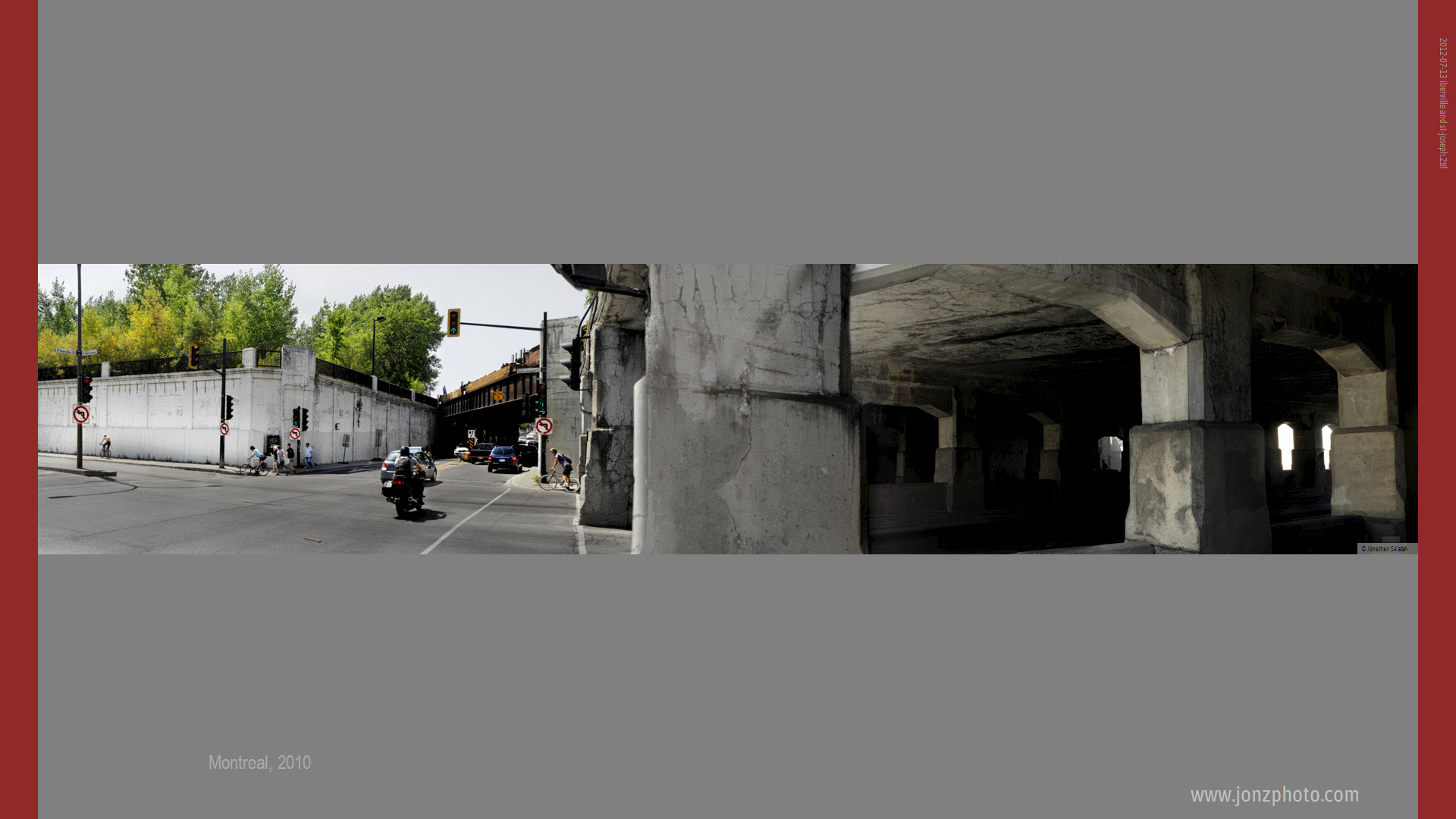
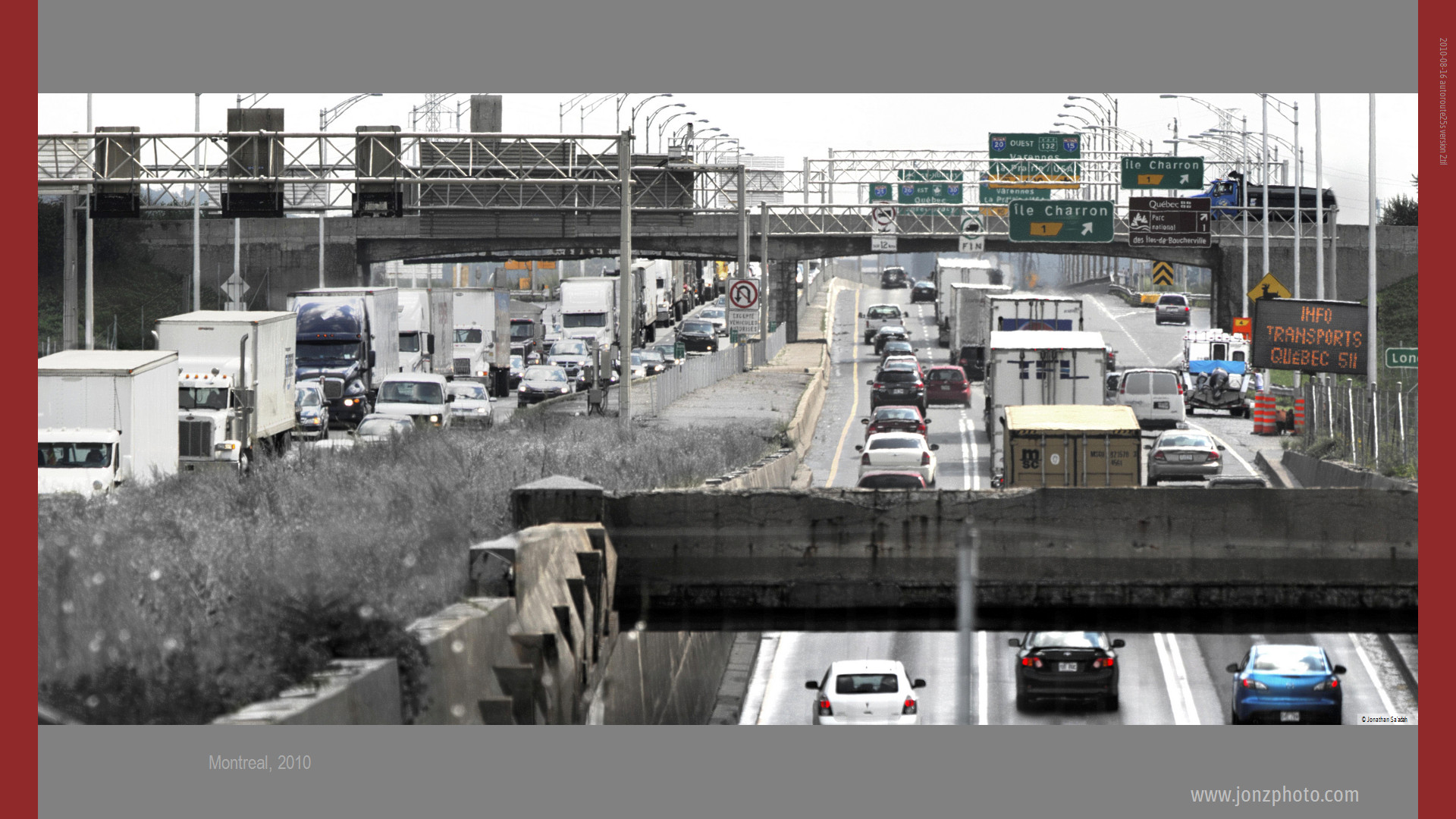
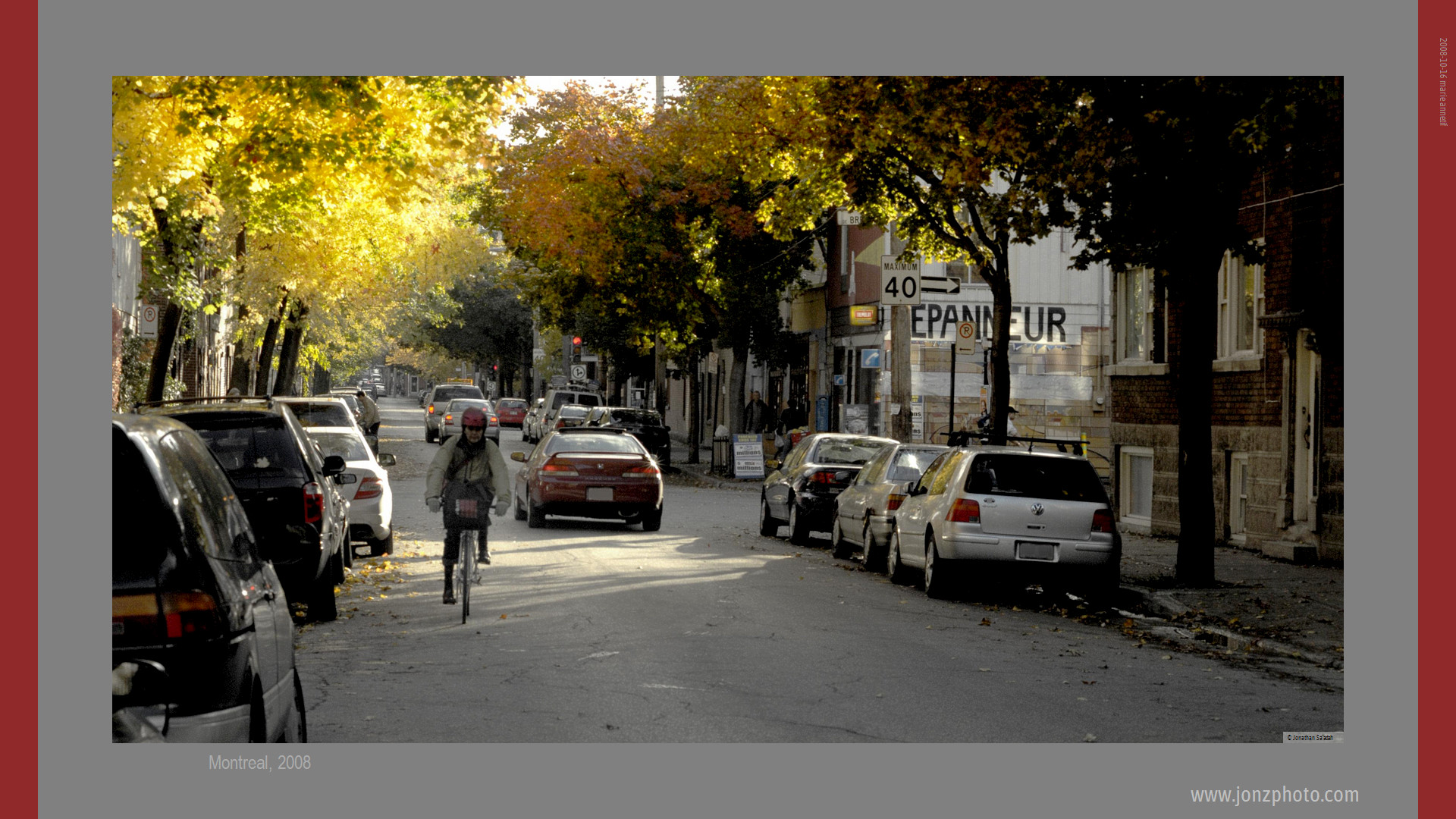
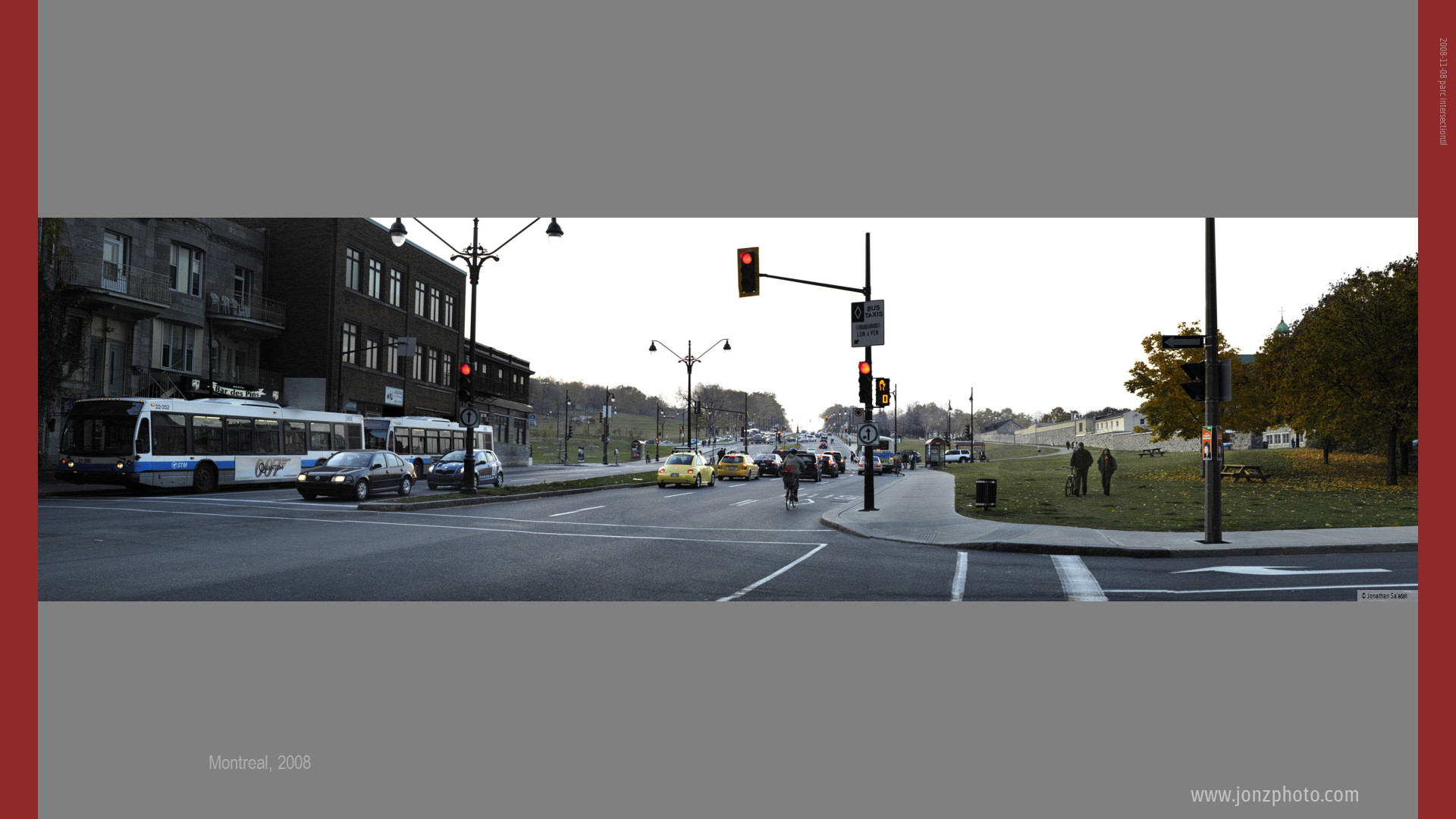
Montreal is a city that refuses to be reduced to picture postcard clichés. Here, the gritty dep and styled food-market, the narrow ruelles and the wide boulevards, the laughter and longing, all exist side by side, unposed and unrehearsed. Montreal Unfiltered is an invitation to witness the city as it truly breathes: raw, restless, and radiant in its imperfection.
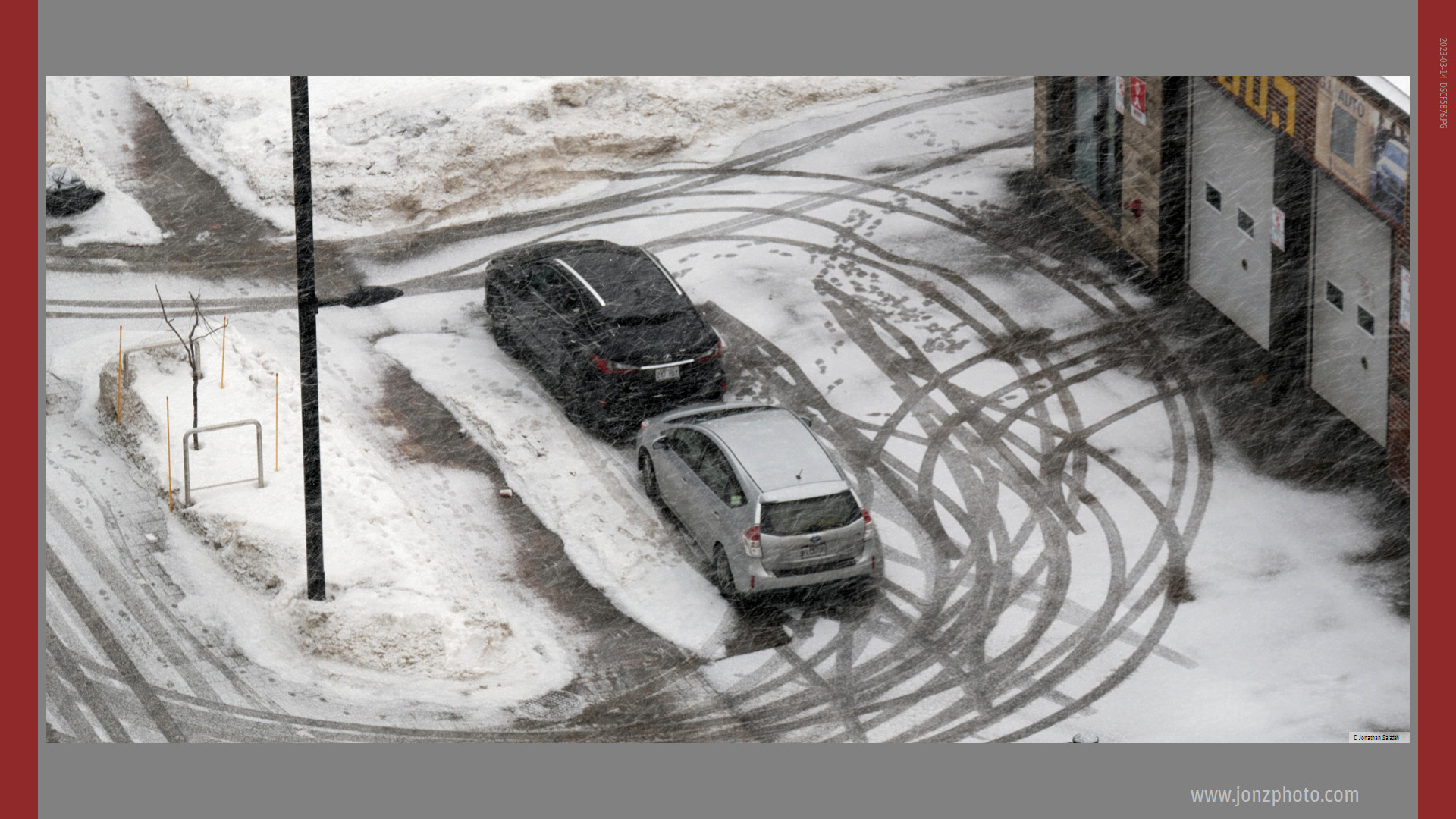
These photographs trace the pulse beneath the surface, capturing moments where the city’s true spirit flickers – in the crunch of a cyclist powering through snow at night, in the quiet dignity of a solitary reader, in the small sidewalk flower plots and community gardens. This is a city of contradictions: winter’s hush and the noisy summers, solitary figures and crowded streets, languages colliding and coexisting.
Let these images draw you into Montreal’s daily poetry – its grit and grace, its shadows and sudden bursts of color. Here, nothing is staged, nothing is concealed. This is Montreal, seen not through a filter, but through the honest lens of life itself.

Posted in Montreal, Photography, Québec
Tags: , ,

Homage to Margot Capelier, Casting Director for M Klein

One in a series of posts describing the making of the film M Klein, by Joseph Losey.
Previous related post: Introduction to the film and Shooting on location

Margot Capelier died in 2007 after a long career as a casting director in the French film industry. She was known and admired by many in French cinema for her dedication to actors. A deep humanity pervaded her professionalism. She loved actors and understood them, while maintaining an overview of the business, combining the professional and creative sides of film.

Despite her talents, she wasn’t rewarded with a glamorous lifestyle or widespread recognition. She is an example of someone who put her heart into her profession, helping many recognized individuals while herself remaining comparatively in the shadows.

Margot Capelier blvd de Clichy
▲ Margot Capelier at the first-day rehearsal for the film’s cabaret scene in which professional actors performed alongside professional dancers. This was typical Capelier: there to help and encourage. The rehearsals went smoothly with a sense of cooperation and air of excitement.

My friendship with Capelier was limited to the time M Klein was in production. I was never in her home and she never told me her story in great detail. On the other hand, she was one of two or three top people on the production side of the film who from the beginning accepted me as I was – a young still photographer brought into a tightly-knit world of successful professionals because of a connection with Losey – and she didn’t make a big deal out of it. Probably she was treating me the same way she would treat a young actor under her watch, and she has always kept a place in my memory as a person who stood out in the group surrounding Losey.

▲ The hoop dresses were actual cabaret garb and it was hard to learn how to swing them around still looking graceful. Capelier helped. She had the official capacity as Casting Director but was more: knowing the actresses and wanting to make sure everything worked out.

This account is drawn from what I knew of her personally, a few interviews, the radio interview linked below, and news articles that appeared during her life and at the time of her death (see the end of the post). I also acknowledge an excellent book by Corrine Bacharach (Reine du casting, published in 2022).

I’ve always wanted to contribute to her memory, first of all because she deserved it, but also because of the strength of her spirit. She battled adversity while seeing the world through a lens of compassion and understanding. To me, she was inspirational while being straightforward, a rare combination.

Margot Capelier Paris
▲ Capelier speaking with an assistant as actors and production people mill around outside the location being used to stage the first scene in the film. It shows a French doctor coldly doing physical measurements on a naked woman, identifying her as “more or less Judaic” – essentially a death sentence. The doctor was based on George Montandon, an “ethno-racial expert” who collaborated. It was his decision where the imaginary boundary lay between being “Jewish” and “non-Jewish”.

Capelier was born Margot Leibowitch in Paris in 1910, the middle child of Jewish immigrants originally from Odessa. She grew up in a small apartment on the north edge of the Marais, the Jewish ghetto in Paris, living with an older sister, a younger brother, parents, and her grandmother.

It wasn’t a happy childhood. “I think I’m afraid of myself, I’m afraid of others. I think it’s because I was unloved when I was a child. Well, I thought I was unloved, and then I was as soft as a rag…” This was her reflection in a 1990 interview broadcast by Radio France.

Her parents made her feel ugly and intellectually inferior to her siblings. In school, she faced ridicule from teachers for being Jewish. Instead of caving in, she learned early to fight back, becoming fiercely combative, a trait I occasionally observed.

▲ Capelier during an art auction scene using many extras. She is watching closely as the audience is assembled (see below) on location at the Paris Hotel Intercontinental. The sound man, Jean Labussière, is setting up his Nagra sound recorder in front of her.
▲ These people are all extras, except for the man on the left with the herringbone coat and dark tie (a stand-in for Alain Delon). The people nervously moving in the back are assistant directors and crew people.
▲ With their finely detailed clothing and upper-class demeanor the extras formed a perfect audience for a wartime art auction.
▲ The same actors in a frame from the film. Robert Klein is in the centre of the frame. (Ⓒ Lira Films – Nova Films)

Margot Capelier brought to M Klein qualities based on fierce professional competence, strong ethical and political beliefs based on 1930s leftist ideology (shared with Losey), and deep roots in the French acting community gained through her personal life-long involvement. She could accurately gauge whether an actor would fit Losey’s personality and directing style, and that’s a good part of what made her so valuable to him.

Her familiarity with actors was inherited from her father, who loved theater, and took Margot to stage performances from an early age. He supported the family by selling hand-painted signs from a stall called “Michel” at the corner of rue Montmartre and Étienne-Marcel just north of Les Halles. Her mother was a reader, favoring Russian literature, while her grandmother could neither read nor write. The family were secular Jews trying to fit in to French society and culture while still maintaining an ethnic identity.

▲ The casting of these children worked out well, but not all did. These children …
▲ …. who were hired to be angelic at the altar rail turned out to be little monsters, giving Assistant Director Phillipe Monnier a headache.

In 1926 her parents gave up on schooling their sixteen-year-old daughter, and sent her to spend nine months with a family in England. There she gained proficiency in English, which later would be of great value to her professionally.

On returning to France, she initially worked for her father, but couldn’t tolerate his angry and abusive personality. “He was very violent, very, very nervous…so it was a bit difficult.” At twenty-four she decided to search for a path that aligned more closely with who she was.

Through her brother, she was introduced to the radical-experimental theater (Le Groupe Octobre) of Jacques Prévert. Prévert’s popular productions played to working-class audiences, similar to the Agitprop style that Losey was exploring in New York during the same period. Both Prévert and Losey were influenced by Russian theater and communist ideals.

▲ Capelier (center of photo) trying to keep warm in her dark coat watches as others around her are hoping to get a glimpse of Alain Delon. The filming this day was happening in a nearby tenement building, where Klein was heatedly grilling a concierge, trying to track down his double. Rue des Panoyaux, Paris 20.

“I used to go to the theater, I’d cry and sob in the back row of the Comédie Française. I always told myself that when I had money, I’d go to the front row.” She did more than that; she made up her mind to join Prévert’s troupe despite having no acting experience. In April 1934, she was interviewed and accepted into Prévert’s talented group.

Initially, she was given small roles and gradually migrated to more production-oriented tasks.

In theater she knew that she had found the freedom that she sought. Working in the exciting and chaotic orbit of Prévert gave her experience and confidence to move forward. After her time with Prévert she played a few parts in films, and worked on many films as a production manager, but her true vocation was to, in the early 1960s, become France’s first Casting Director. It was a position that had originated in American film but migrated to Europe as more American directors came to France to work.

She married Auguste Capelier (1905-1977) during the Second World War while they were both hiding and in the Resistance in southern France, and together they had a child. Auguste Capelier was himself an accomplished French art director. Later in his career he worked for Losey’s French Art Director (Alexandre Trauner). Of course it was helpful to Losey that she had lived through the Nazi occupation and the Jewish roundups in Paris.

▲ The emotions show on Capelier’s face. This scene in the movie mirrored July 16-17, 1942 (the “Grande Rafle”), when Nazi-directed mass arrests took away many Parisian Jews. Capelier wasn’t in the city at the time but lost members of her family. This scene called for over 2,000 extras and an expanded production staff, taking place in a Paris stadium.

Capelier’s role in M Klein drew on her personal familiarity with French actors. She used that knowledge to suggest good candidates for each role. The candidate actor or actress would be interviewed jointly with Losey, and after that a decision would be made. In most cases the interviews were primarily in English.

Casting interview Capelier questions an actress as Losey watches. Losey was gauging the actor’s understanding of the screenplay and whether they would need coaching. He preferred professionals who had strong opinions and weren’t shy in stating them. In Losey’s office, Studios de Boulogne, October 1975.

Losey’s questions to actors focused mostly on their interpretation of the screenplay and trying to get a feel for the person. What he was looking for were professionals who would hit the ground running, and be sure-footed, intelligent, and self-confident in playing their role. In presenting each actor Capelier was making a prediction of what their chemistry with Losey might be and whether it would work. She was often right in her assessments, which of course made the casting process much easier.

One of the secrets behind the strength of Capelier’s position in French cinema stemmed from her early passion for following actors through her love of their craft. She continued to live within the theaters of Paris, watching actors develop and encouraging their careers.

She encouraged many but also provided brutally honest feedback if she thought an actor was on the wrong path. Ironically, she brought together her father’s business acumen with a sensitivity to people she gained from her childhood traumas.

Notes:
Bacharach, Corinne. Margot Capelier, Reine Du Casting (1910-2007): De Jacques Prévert à Patrice Chéreau. Arles : Lyon: Actes Sud ; Institut Lumière, 2022.
Hamsy, Cécile. Mémoires Du Siècle – Margot Capelier, Directrice de Casting, 1990.
Berthomé, Jean-Pierre. “Margot Capelier 1911-2007,” Paris, France: Positif Editions, 2007.

Cast of M Klein

ActorRole
Alain DelonRobert Klein
Jeanne MoreauFlorence
Francine BergéNicole
Juliet BertoJeanine
Jean BouiseLe vendeur
Suzanne FlonLa concierge
Massimo GirottiCharles
Michael LonsdalePierre
Michel AumontLe fonctionnaire de la préfecture
Roland BertinL'administrateur du journal
Jean ChampionLe gardien de la morgue
Etienne ChicotUn policier
Magali ClémentLola
Gérard JugnotLe photographe
Hermine KaragheuzLa jeune ouvrière
Elisabeth KazaYvette (Château d'Esclimont)
Dany KoganMichelle
Carole LangeLa Caissiere (La Coupole)
Lucienne Le MarchandPlace Lucien Herr, Petite Place
Jacques MauryLe professeur Montandon
Fred PersonneLe commissaire
Francine RacetteFrançoise / Cathy
Rosine RochetteLa dame aux encheres (Hotel Intercontinental)
Isabelle SadoyanLa femme à la consultation
Louis SeignerLe père de Robert Klein
Maurice VallierL'homme (Cabinet du Prof Montandon)
Pierre VernierUn policier
François ViaurLe concierge theatre
Brigitte ArielUsine Citroën
Marius BalbinotLe Garcon (Bistrot telephone)
Maurice BaquetUn musicien (Château d'Esclimont)
Philippe BrizardLe facteur collabo (Appartement Robert Klein)
Jenny ClèveL'infirmière-secrétaire (Le professeur Montandon)
Raymond Danon(uncredited)
Thierry de Brem(uncredited)
Christian de TillièreLe commissaire-priseur
Michel DelahayeAccompagnateur Pere Klein
Bernard-Pierre DonnadieuExtra
Pierre FragLe marchand de journaux
Mireille FranchinoLa femme bus
David GabisonLe groom
Maurice JanyLe chauffeur à Ivry-Bataille
Joseph LoseyUn homme au Vel d'Hiv
Stephane QuatrehommeLe fils de Pierre
Nathalie RigauxUne petite fille au Vel d'Hiv
Jean TopartLa voix du speaker (voice)
Danielle VerneUne déportée

Posted in Joseph Losey, Paris
Tags: , ,


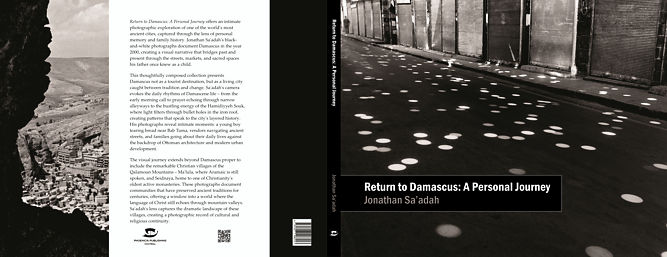
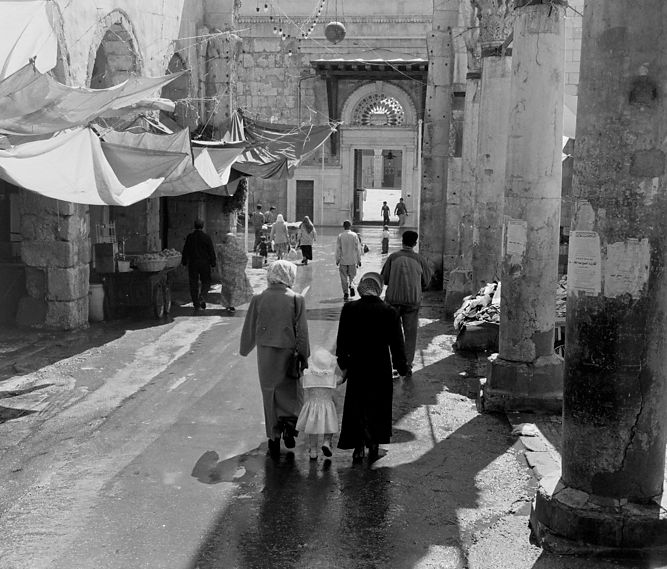
Return to Damascus is my new book of photographs, available for order, that preserves fleeting impressions and the spirit of a place through the lens. Accompanied by brief reflections and memories, the photographs offer a tribute to the place and its people, focusing on enduring character and the subtle interplay of light, architecture, and tradition. Return to Damascus is a quiet celebration of observation and memory, inviting viewers to participate.

custom styled page
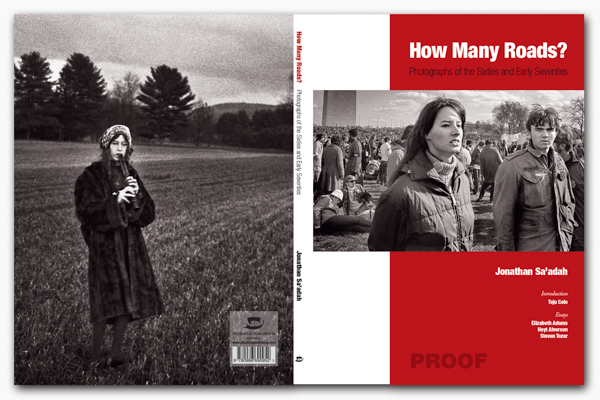
How Many Roads? is a book of photographs by Jonathan Sa'adah, available for order, offering an unglossy but deeply human view of the period from 1968 to 1975 in richly detailed, observant images that have poignant resonance with the present. Ninety-one sepia photographs reproduced with an introduction by Teju Cole, essays by Beth Adams, Hoyt Alverson, and Steven Tozer, and a preface by the photographer.
If you'd like more information, please have a look at this page.
Jonathan's photo blog

Sign up to receive an email
each time I post new content

Please check your email for a confirming link to click on.

No spam! Read my privacy policy for more info.

To see more work
To visit my blog

Contact information

All material © Jonathan Sa'adah no use without written permission